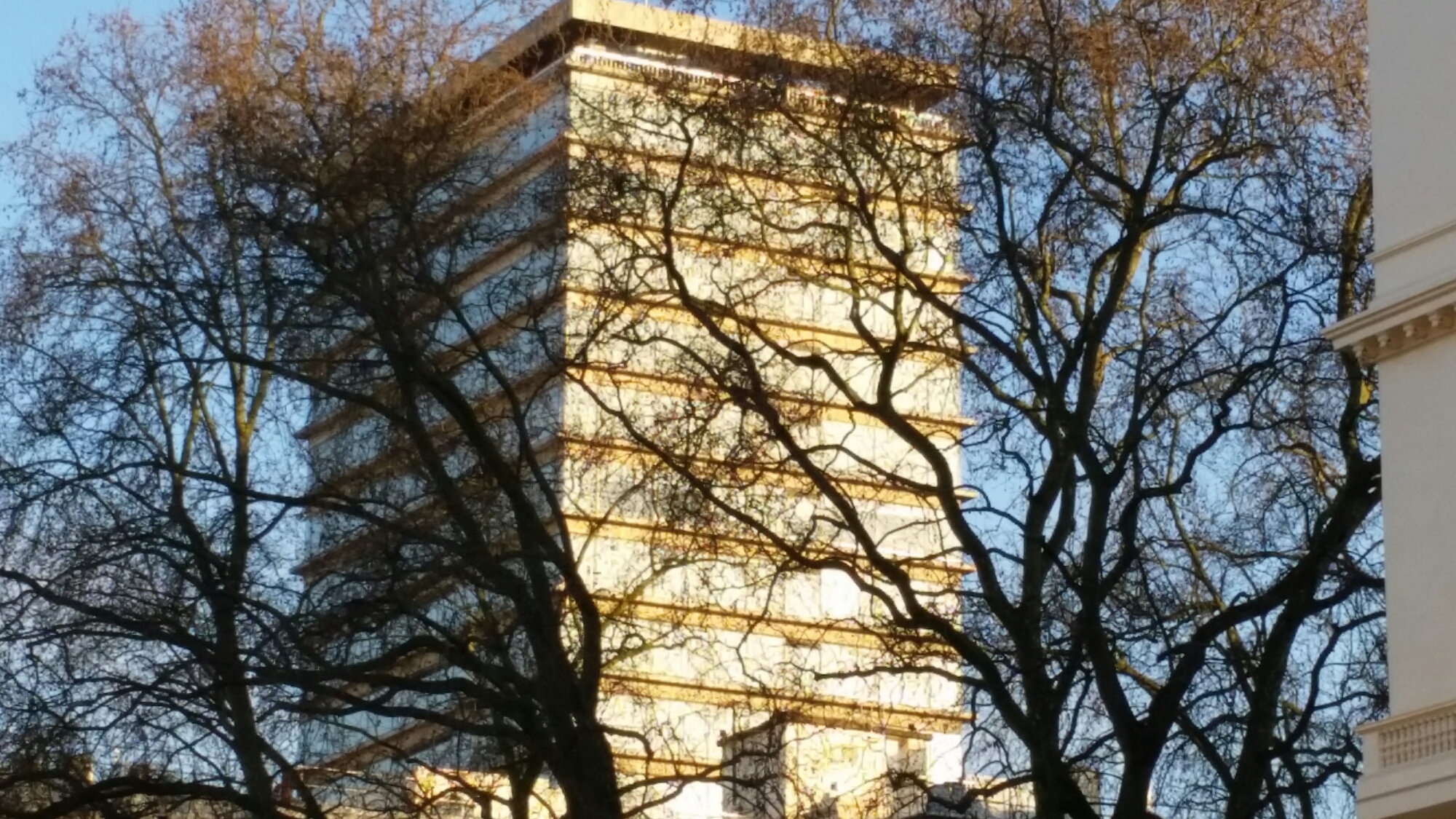
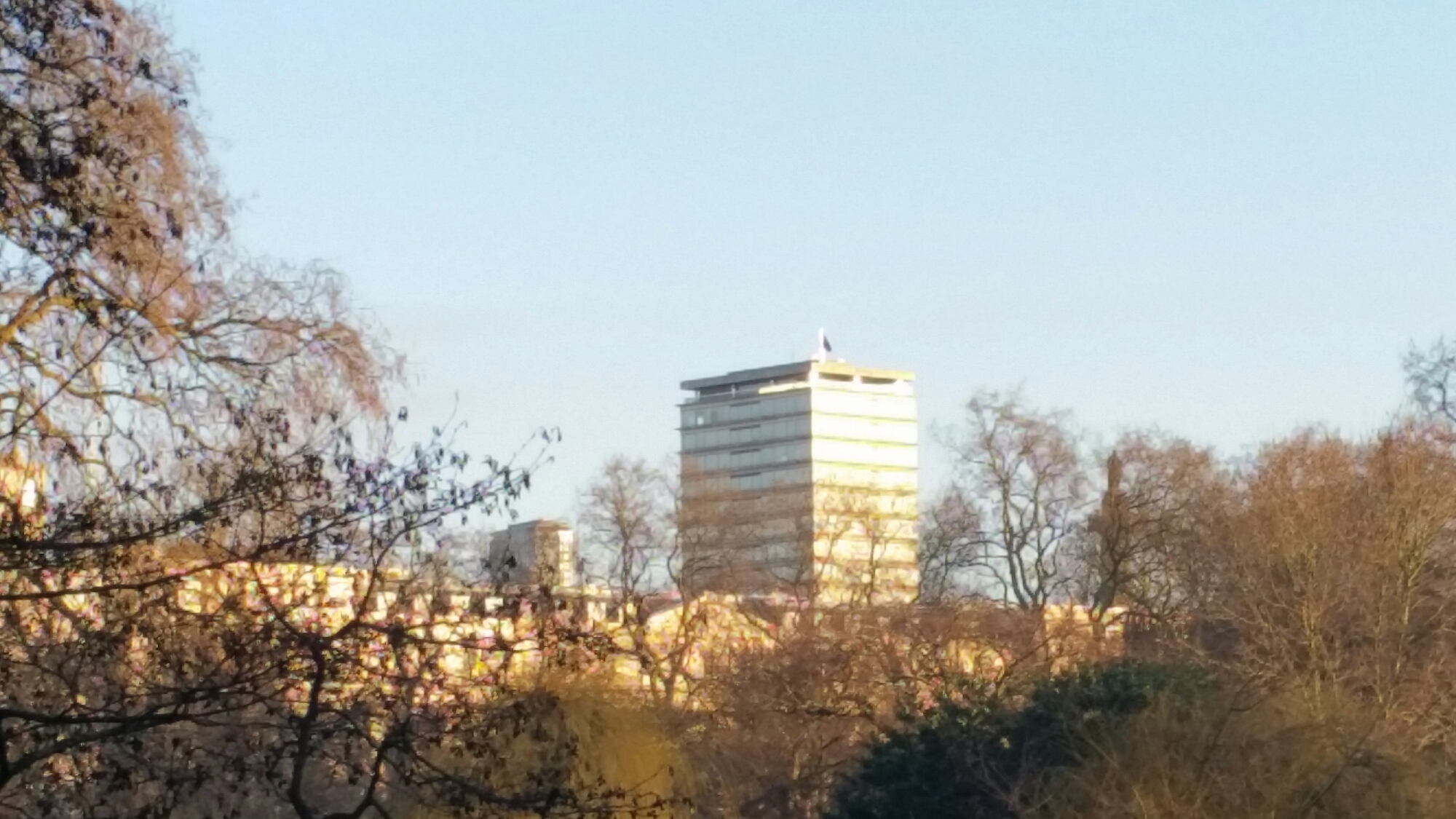
I have been meaning to take a photograph of New Zealand House gleaming across the lake in St. James’s Park and this morning I remembered. It looks like a rather alien spaceship hiding behind Carlton House Terrace, as indeed it was when it landed in central London in the early 1960s. I remember being bemused that Ian Nairn was so enthusiastic about it – ‘full of small virtues, of the accommodating kind for which one will willingly forgo a grand gesture’. But, unlike Nairn, I have never seen the view from the roof:-
Tag Archives: England
China Exchange
I attended the opening of the new China Exchange in the old telephone exchange building on Gerrard Street. It’s an initiative of Sir David Tang and the Prince of Wales to foster Anglo-Chinese cultural relations, including art, calligraphy and Confucianism. As it’s the Chinese New Year (is it the year of the sheep or the goat ?), the event began with Chinese dragons serenading
the Prince and Camilla en route to eating dumplings in Dumplings’ Legend:-
There was then a line-up, speeches and a short piano recital by a Chinese Harrovian:-
Banks and Barry
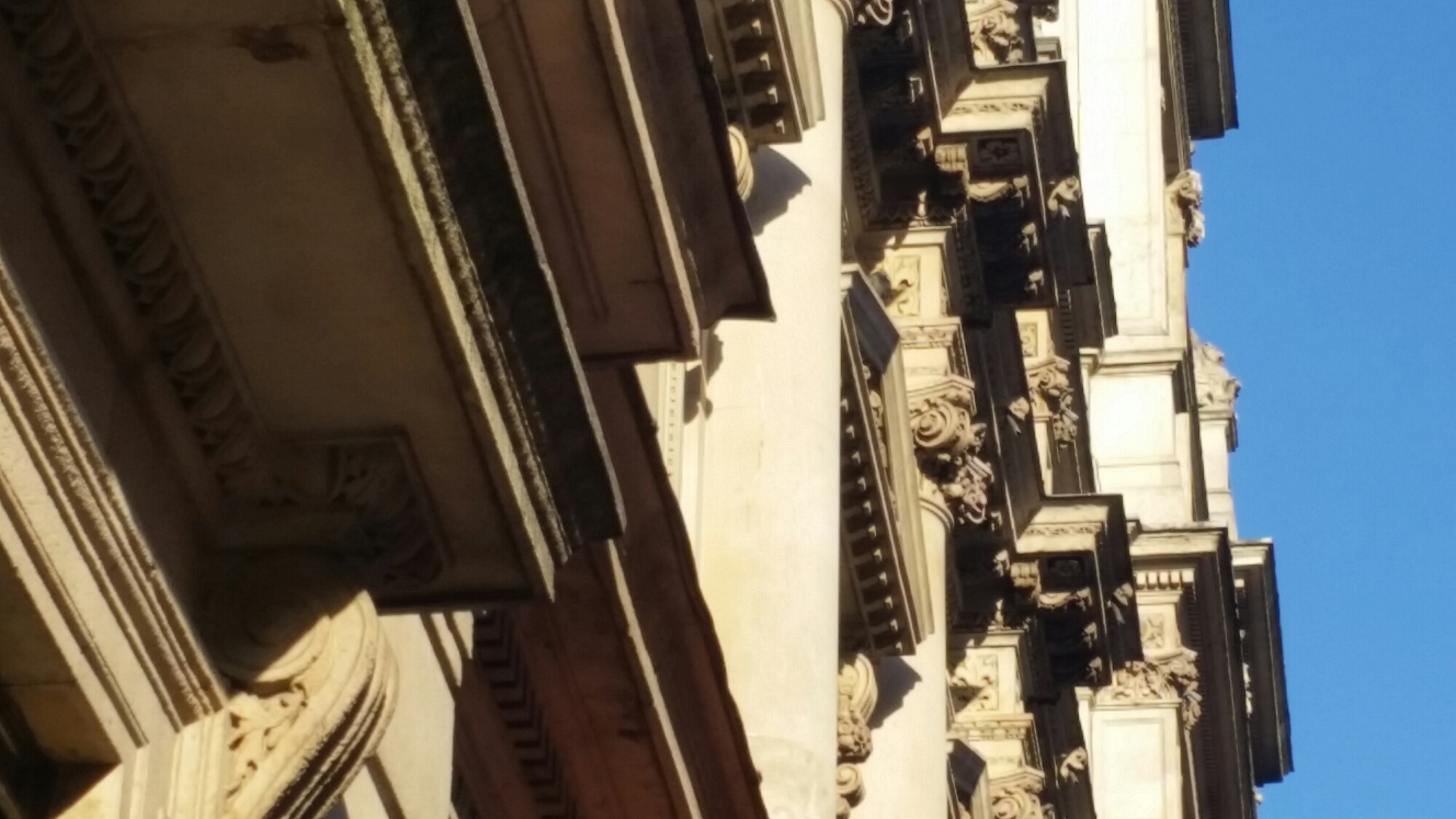
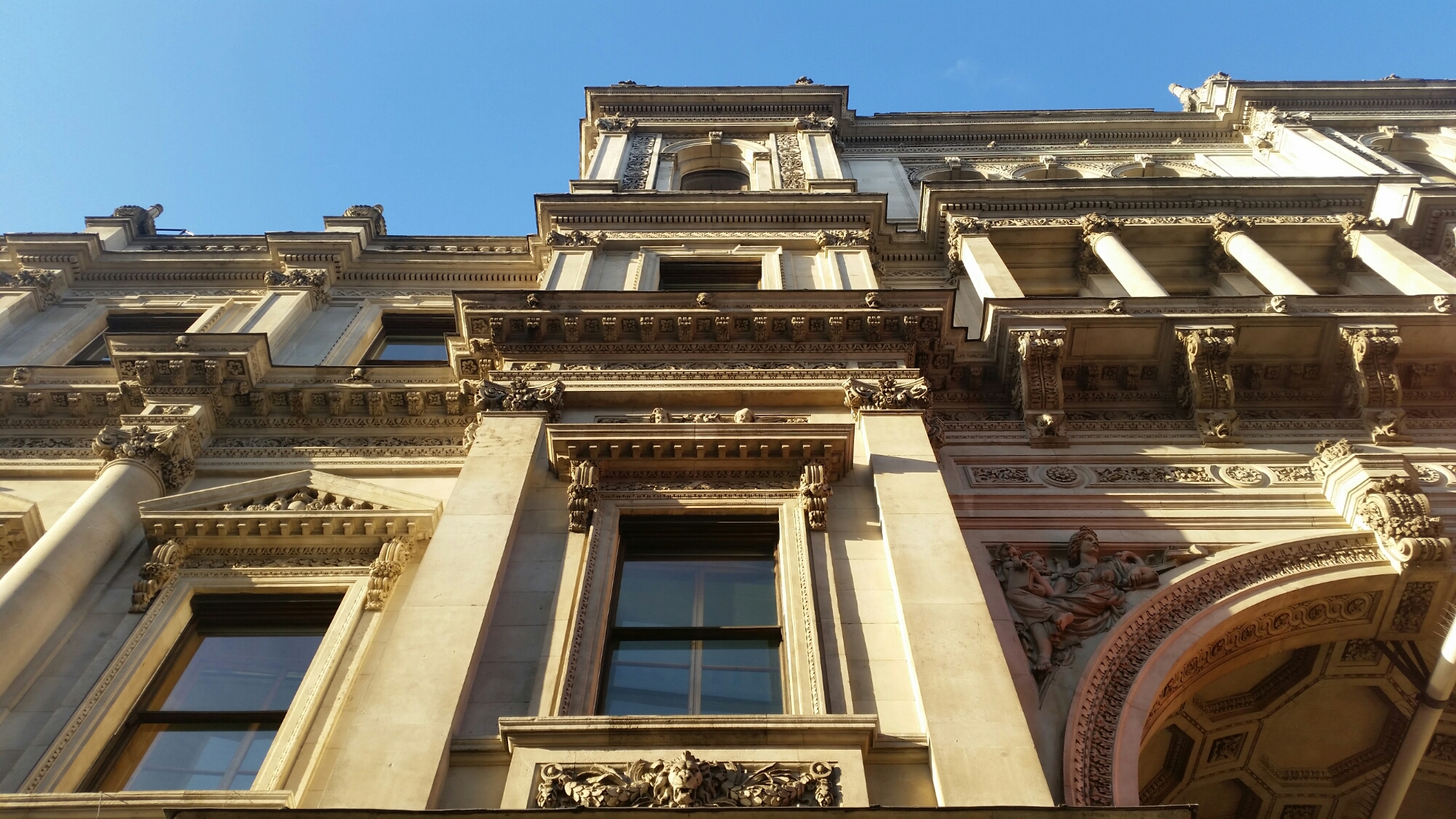
I don’t normally pay much attention to the architecture of the great portico leading into the Royal Academy courtyard, but – in the fierce winter sun – I realised how fine some of the decorative detailing is. The façade was designed by Robert Richardson Banks and Charles Barry Jnr., in March 1867, but it’s not clear who was responsible for the sculpture. Someone must know.
Hazlitt, Gooden & Fox
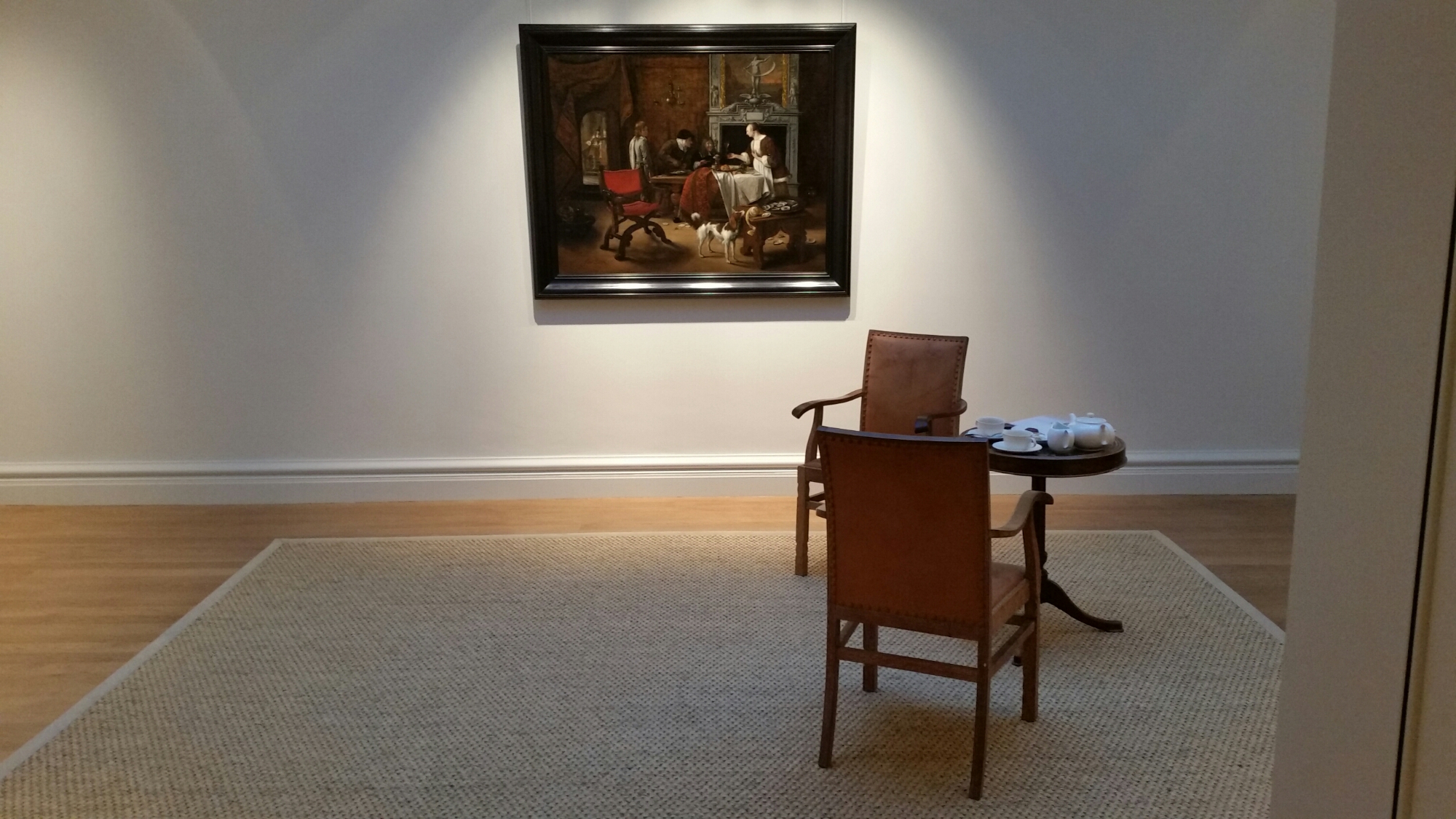
I had a cup of tea today in the newly refurbished viewing room at Hazlitt’s, one of the most old-established (and reputable) of the London Old Master dealers. Its viewing room used to be all old-fashioned plush, redolent of the conservatism of the market, but has now been modernised so that twentieth-century work, including a great Howard Hodgkin, can be hung alongside the Old Masters:-
Working Lads Institute
Every morning as I come out of the London Hospital, my eye is caught by the very faint lettering on the tall building next to the tube. It says, but so faintly as to be scarcely legible, WORKING LADS INSTITUTE and down below there are entrances to what were once a Lecture Hall and Gymnasium. It goes back to late Victorian philanthropy which launched the Institute at Mansion House in 1876 and opened the building, designed by George Baines, in 1884. It had a library, gymnasium, bank and swimming baths to give boys something to do outside work and provide a home for those coming out of gaol. In 1896, it was taken over by the Rev. Thomas Jackson as the headquarters of the Whitechapel Methodist Mission, which continued the good work of helping orphans and destitute lads, sending them to work on farms in Devon:-
Whitechapel Station
I’ve always liked Whitechapel Station, where the District line emerges blinking into the daylight and curves round to head eastwards towards West Ham and Upminster, whilst below one could catch the old branch line of the Metropolitan down to New Cross, now revitalised by becoming part of the London Overground. The station opened in 1902 and one used to be able to get the Whitechapel & Bow Railway all the way to Southend. It had four platforms, now reduced to two, and it’s gradually losing its character as it is submerged by the changes required for Crossrail:-
Paul Mellon Lecture
I was able to attend only the last of Penelope Curtis’s Mellon Lectures at the National Gallery tonight. The series as a whole was called Sculpture on the Threshold and has been about the way that sculpture is viewed and constructed in different settings and in space. The last was entitled The Ensemble and, like – I assume – the rest, ranged widely historically and provocatively, including The Temple of the Four Winds at Castle Howard, Stourhead, as well as contemporary work, Roger Hiorns and Rosemarie Trockel, not always understood as formally related, ending up, as she began, with Rilke. I wish I had been able to go to them all.
The London Hospital (2)
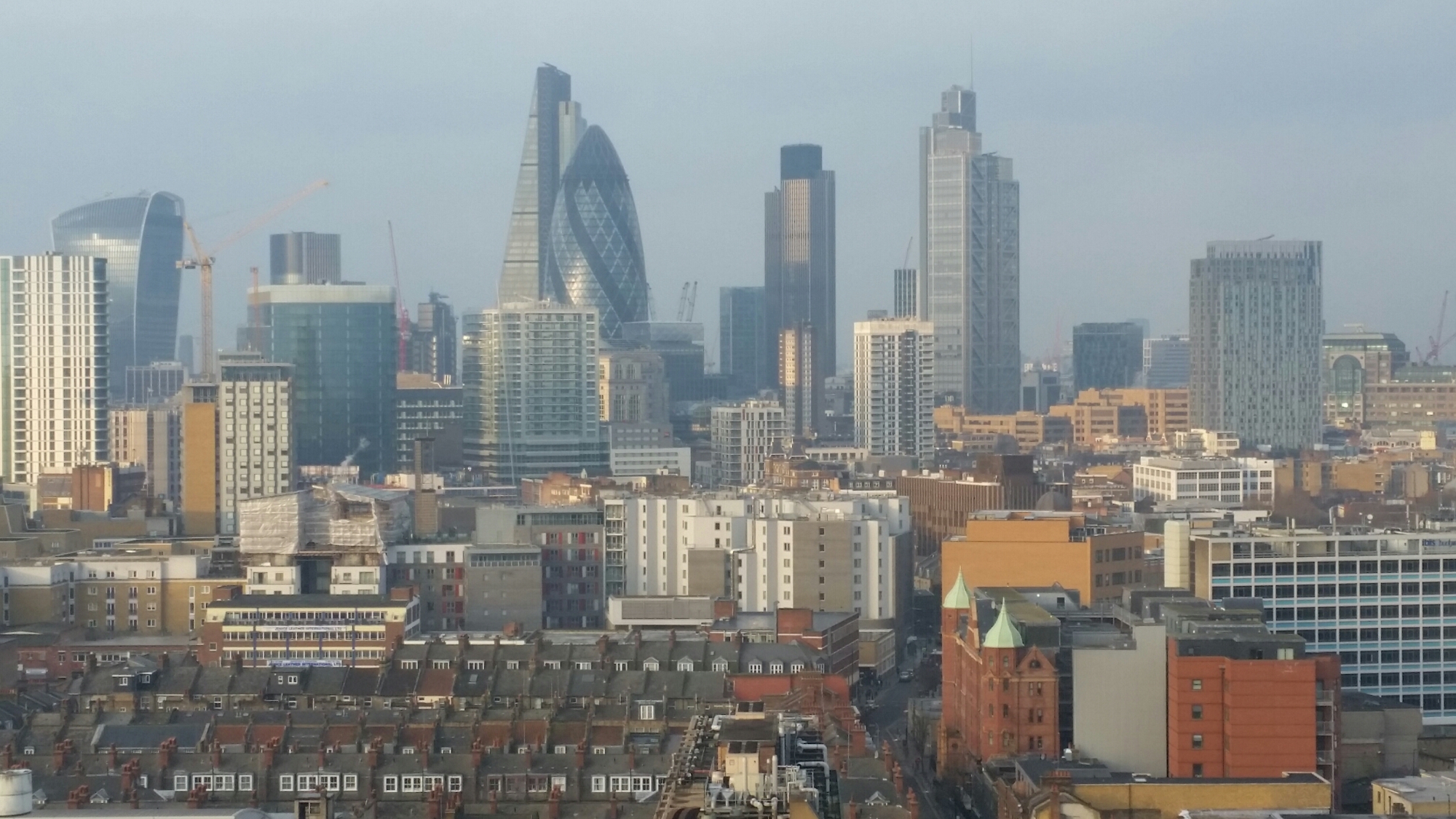
I have realised that it was fatal to do a post about the London Hospital without explaining what I was doing there. The short answer is that Romilly went into hospital last Wednesday with a small blood clot and is still there under observation. I am really grateful to the well wishers from around the globe.
For two days, we were able to enjoy the view:-
It certainly makes a change from the old London Hospital which is due to be developed as the new Town Hall:-
Victoria Cottages
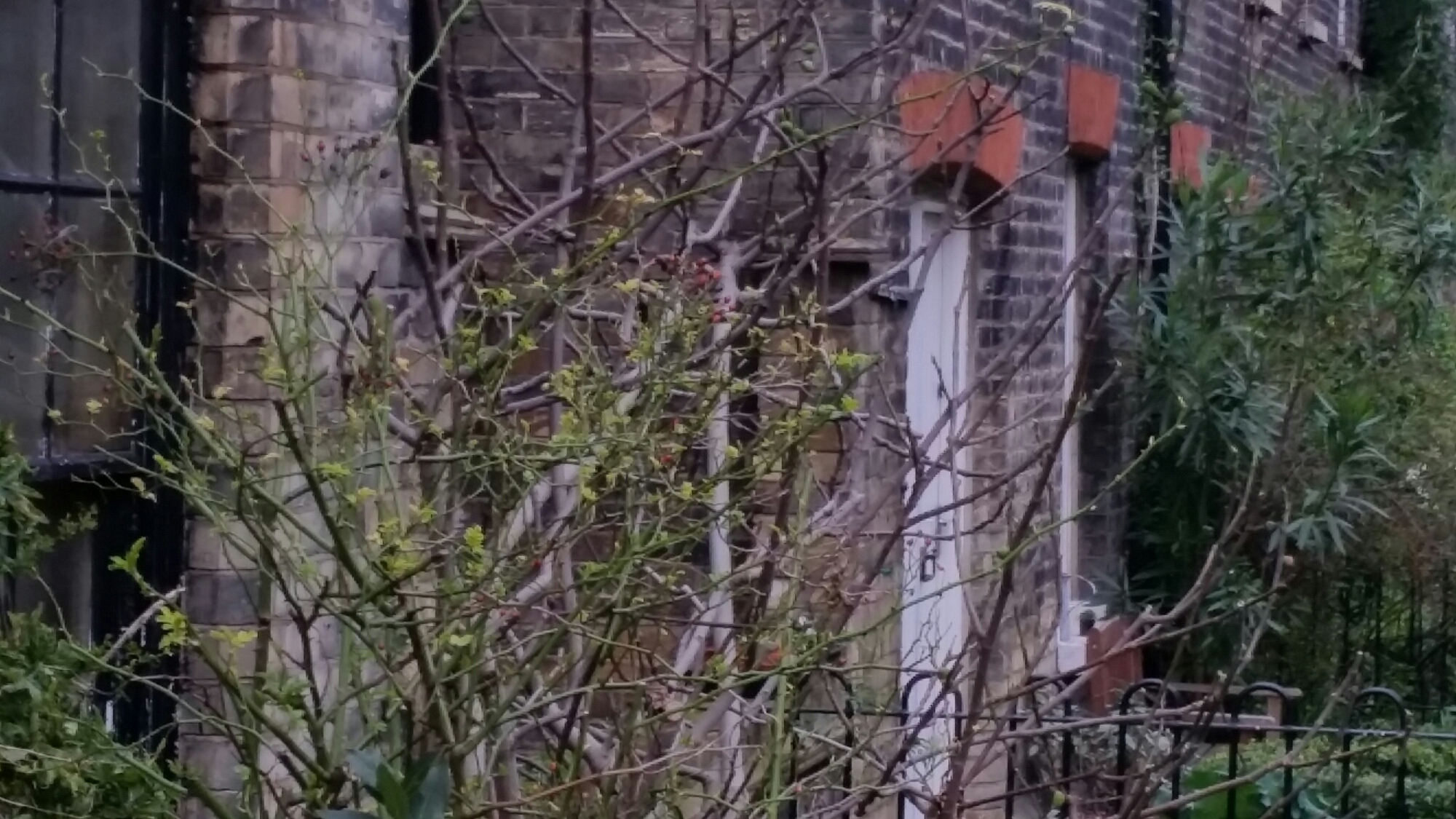
I’ve often passed, but never investigated, the little run of Victorian cottages off Deal Street. They were designed in 1864 for the Metropolitan Association for Improving the Dwellings of the Industrious Classes (founded 1842) and are a relic of the low-rise, more domestic east end, community-oriented and pre-war, as documented by Young and Willmott in their very influential 1957 study of Family and Kinship in East London:-
St. Anne’s, Underwood Road
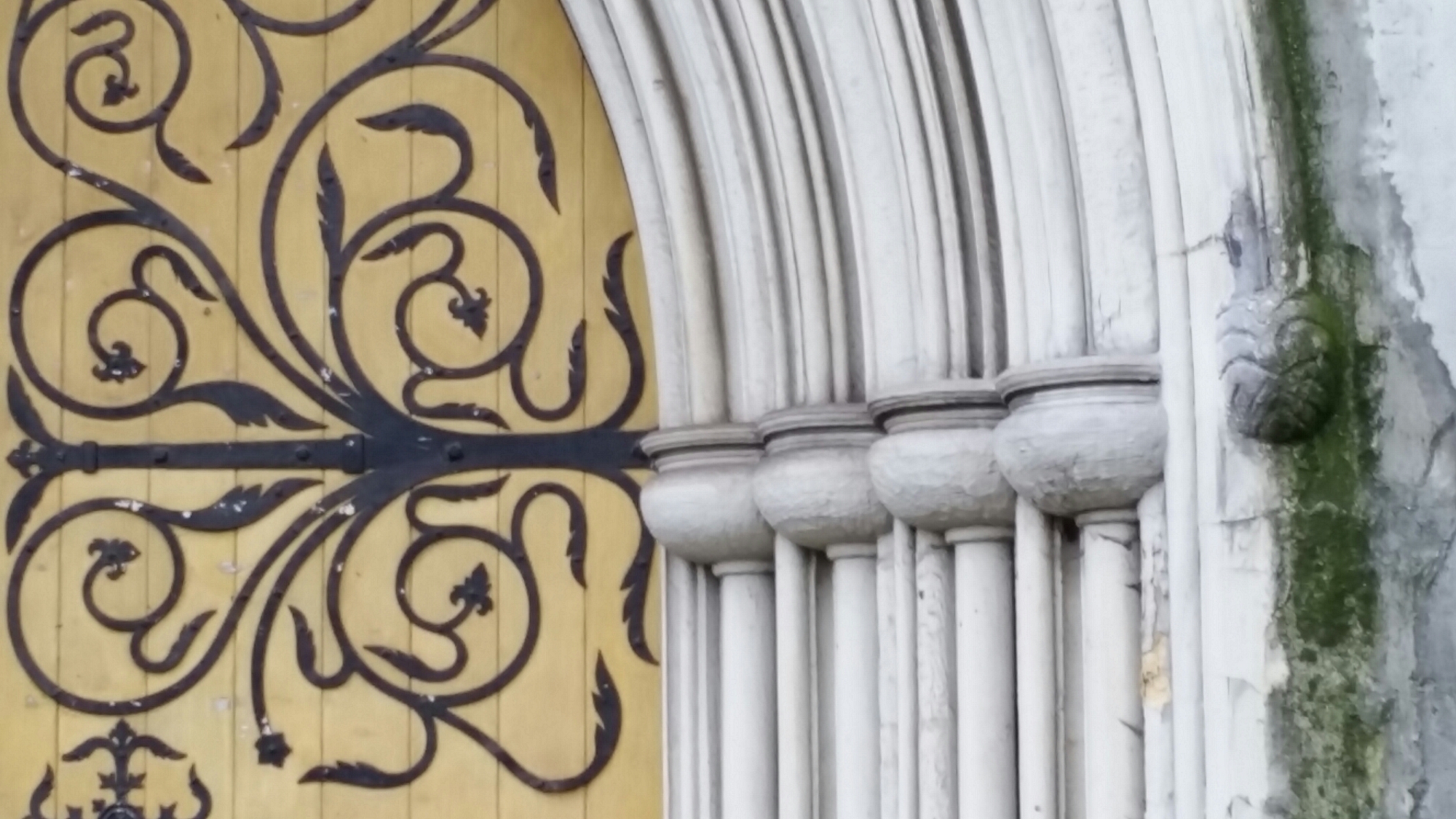
The east end is full of surprises. This is the Roman Catholic church of St. Anne’s, designed in the 1850s by Gilbert Blount, a pupil of Pugin, to bring catholicism to the Irish poor who had moved to east London as labourers after the potato famine. The church and adjacent Presbytery, both built in Kentish ragstone, were in the heart of what was Mile End New Town and are now lost amidst an area of flatlands created by urban clearance and bombing, next door to Spitalfields urban farm. This is the front door of the Presbytery:-
And this is the door of the church:-


You must be logged in to post a comment.