
This is to wish my followers a Happy Christmas, together with scenes from around the house in the last couple of days:
Tag Archives: England
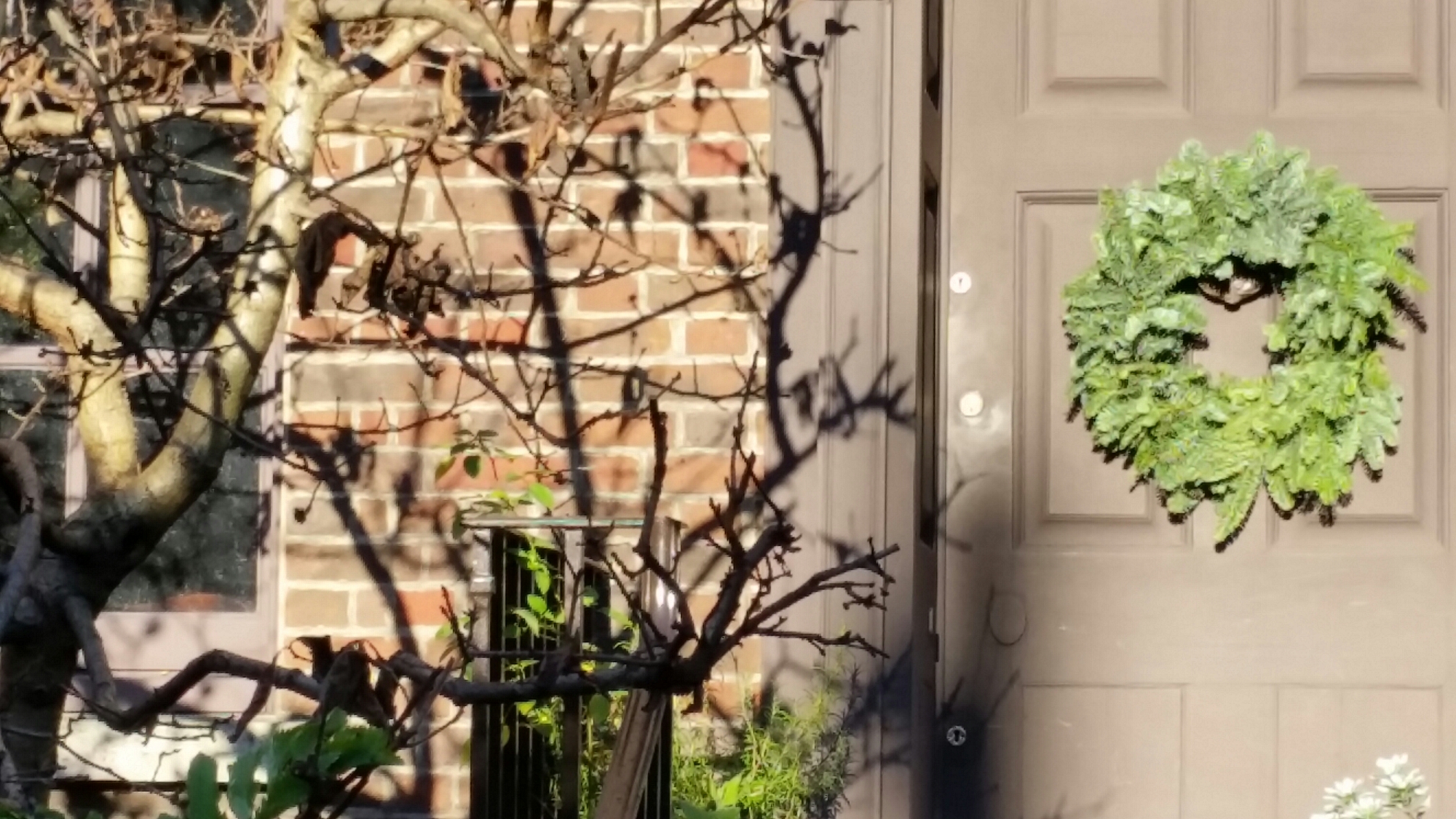
Cable Street
Cable Street was the heartland of the old east end, bombed in the war, the Tarling estate erected after it, but still with good early nineteenth-century houses in a row just north of the church.
This is the Tarling estate:-

Niall McLaughlin
I went to see the new building which Niall McLaughlin has put up in amongst some classic Peabody buildings just short of the Tower of London on John Fisher Street (previously Glasshouse Street). The original estate consists of nine buildings, each one labelled according to a letter of the alphabet, designed by H.A. Darbishire and built in 1880. Niall McLaughlin has added a thin, free-standing block, in appropriately austere pale brick, not aping the surroundings, but in sympathy with them:-

Whitechapel
I spent the morning wandering round Whitechapel, so much more densely built than Stepney, still with its tight nineteenth-century street formation. I particularly admired the work that the Spitalfields Trust has done in regenerating the streets off New Road – Turner Street, Walden Street and Varden Street – where the small artisans’ houses have been spruced and gentrified:-

The Deli Downstairs
A quick excursion in search of Stilton and a Christmas pudding took me to the Deli Downstairs, the headquarters of the Lauriston Road revival, past the long queue for the Ginger Pig and an opportunity to stock up on local ale from the Bottle Apostle:-

St. Bartholomew’s, Brighton
A Christmas outing to Brighton gave us an opportunity to call in on St. Bartholomew’s, the huge, neo-Byzantine barn which dominates arrival on the railway line. Austere brick and drainpipes outside, it is huge and numinous within, high vaulted, with the dusk falling on Henry Wilson’s richly ornamented baldacchino and the mosaics on the wall behind. It was built for Father Wagner, a wealthy, old Etonian tractarian, a bachelor who spent his wealth building big churches for the poor:-

Cressy House
The east end is full of surprises. Yesterday morning I walked down a road I’ve walked down a thousand times not far from our house and wandered into a courtyard where I found myself in a time warp of 1890s communitarian social idealism: a well-cared-for courtyard full of plants, a small house for the caretaker, bicycles and beehives. It’s Cressy House, austere on the outside, designed by Davis & Emmanuel, architects of the West London Synagogue, for the East End Dwellings Company, with communal staircases leading off the internal courtyard:-
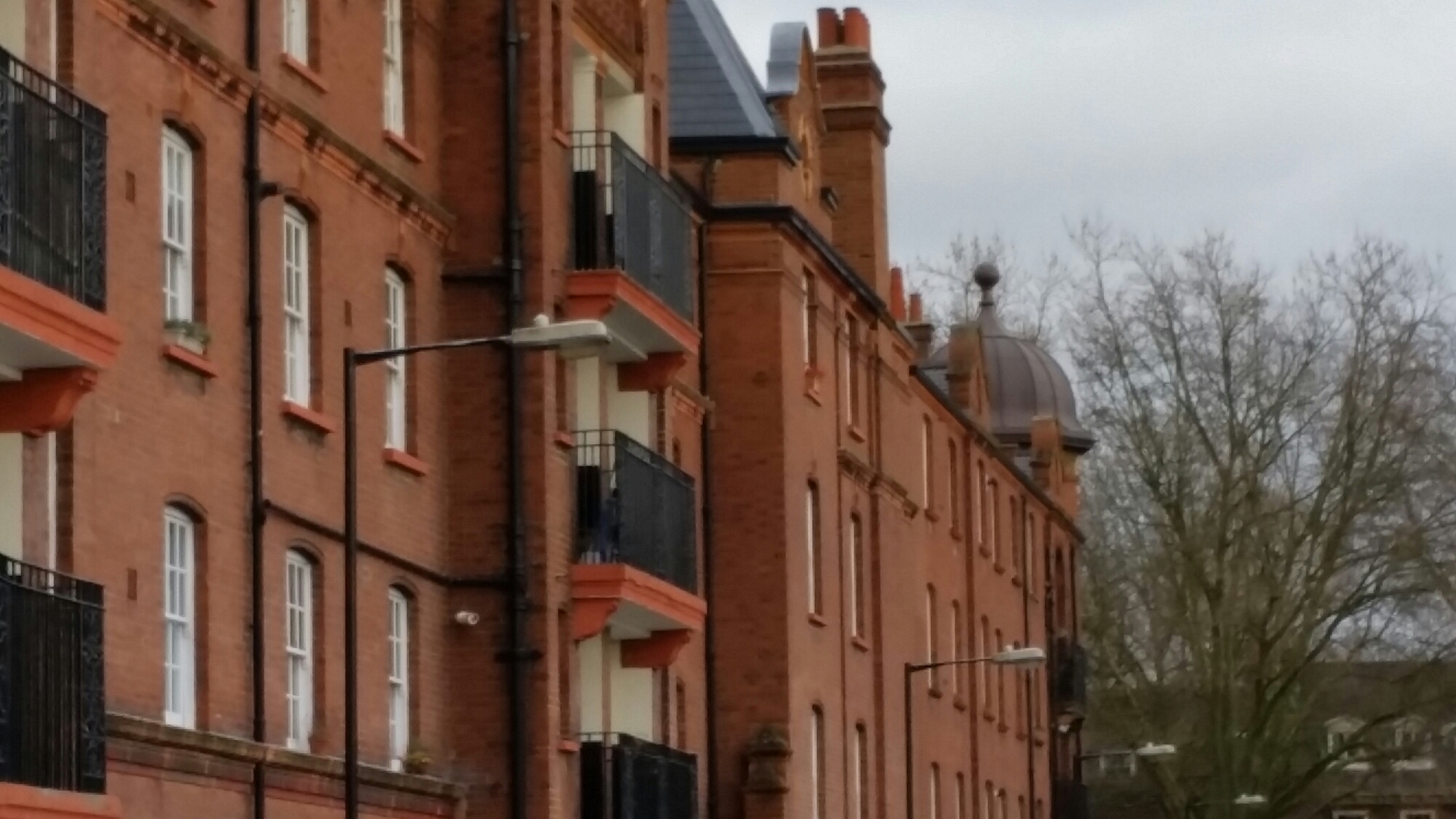
Albert Square
Just off Commercial Road, half way to Limehouse, is Albert Square, a square of nearly perfect, neat, early Victorian houses, laid out in the 1840s, with a garden in the middle by the Metropolitan Public Gardens Association and a sculpture of a ‘Shepherd Boy’ with sheaf and sickle, dated 1903 and bought in Paris:
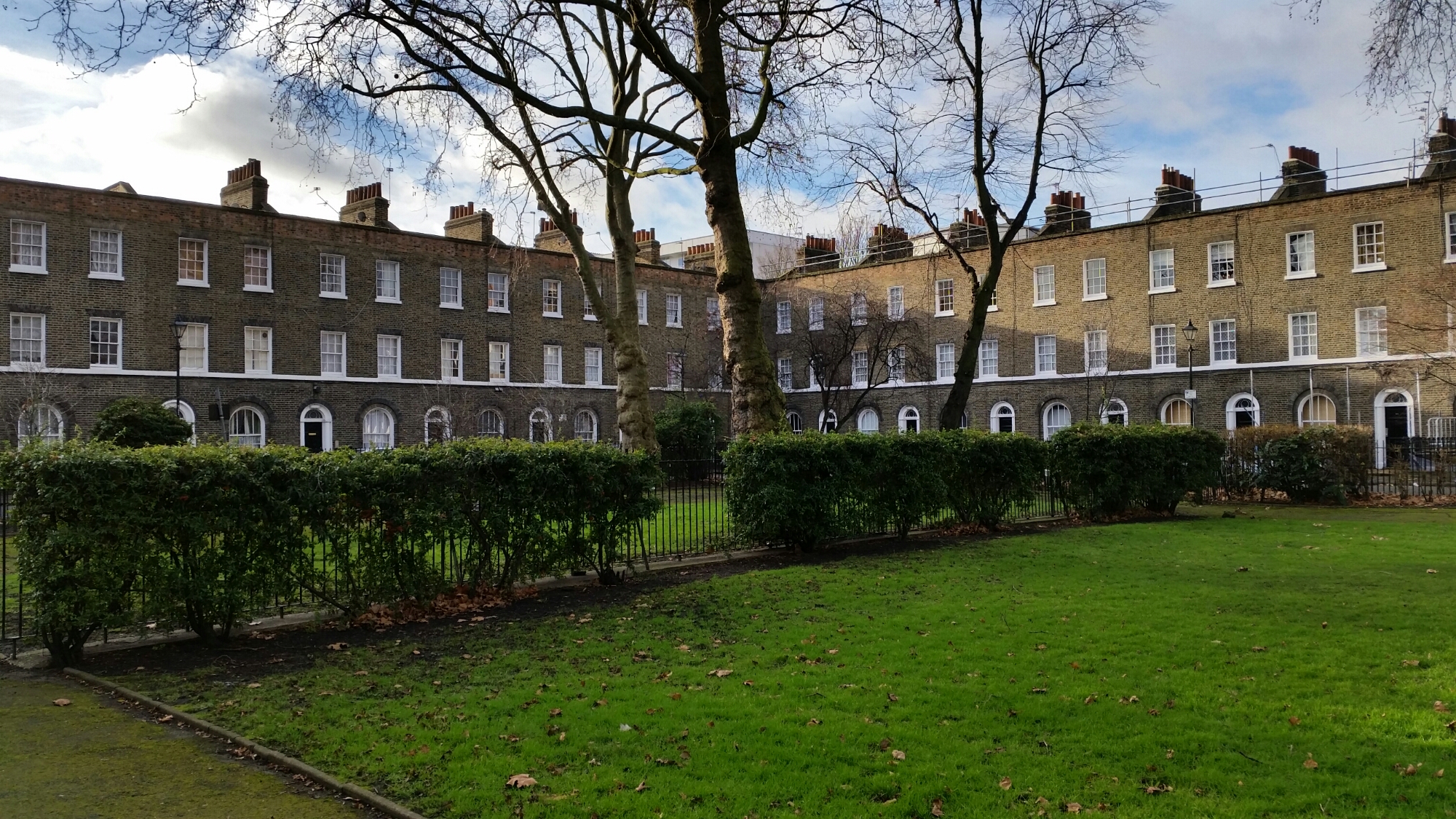
Arbour Square
I often get in a muddle as to which of the east end squares is which and which was the model for EastEnders. Arbour Square is just north of Commercial Road, laid out in 1819 and built as a consequence of Commercial Road being driven through the neighbourhood to give direct access to the docks. Two sides of the square retain terrace houses:
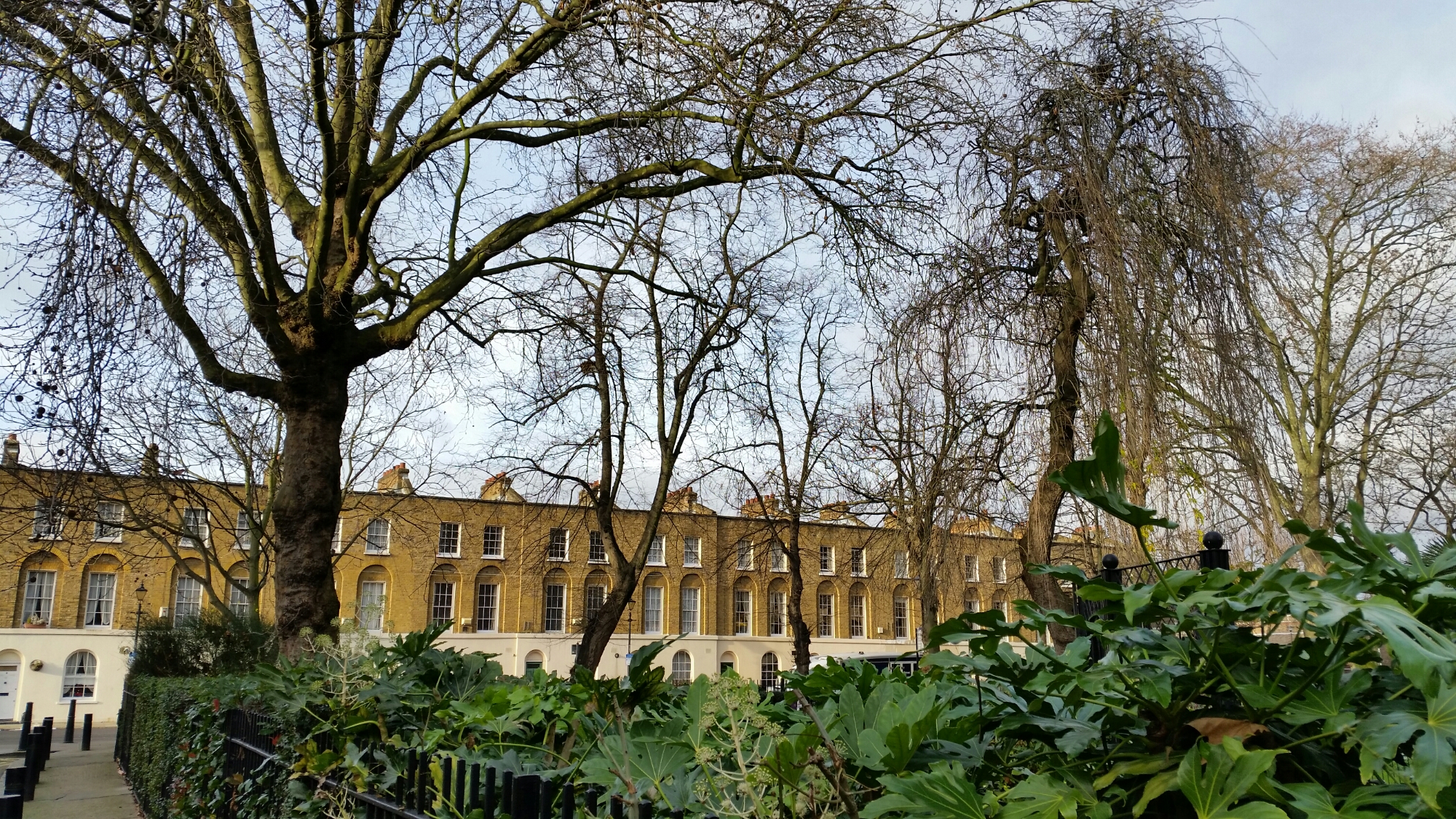
Bishopsgate Institute
The Bishopsgate Institute was opened in 1895 to provide enlightenment to the east end and was designed by Charles Harrison Townsend, later architect of the Whitechapel Art Gallery and Horniman Museum too. It’s got fine, quite free art nouveau detailing on the terracotta entrance façade:-

 | Charles | Saumarez | Smith |
You must be logged in to post a comment.