
After breakfast, I did some more exploration.
In Crispin Street, next door to what was Tracey’s shop, there’s the Convent of the Sisters of Mercy, with separate entrances for Men and Women:
After breakfast, I did some more exploration.
In Crispin Street, next door to what was Tracey’s shop, there’s the Convent of the Sisters of Mercy, with separate entrances for Men and Women:
After my Christmas haircut, I wandered round Spitalfields.
The church as majestic as ever, presiding:
My eye was caught this morning by the sculpture in the pediment of Bush House, which is in a style of 1920s neoclassical idealism which is not often seen in England. Indeed, the architecture of Bush House is essentially American, like Canary Wharf, designed by an American architect, Harvey Wiley Corbett, for an American developer, Irving T. Bush, who employed an American sculptor, Malvina Hoffman, to produce a sculpture symbolising Anglo-American friendship:-

A meeting in the Economist building this morning gave me an opportunity to try and analyse its place in the pantheon of early 1960s cool, Miesian modernism (I don’t see it as brutalist) and in the Smithson’s career. I remember visiting it in the early 1970s, Nairn in hand, and have never quite seen the point of it, the type of high spec modernism which is routine in New York, but was much more striking in impoverished, anti-modernist Britain, particularly in conservative St. James’s:-
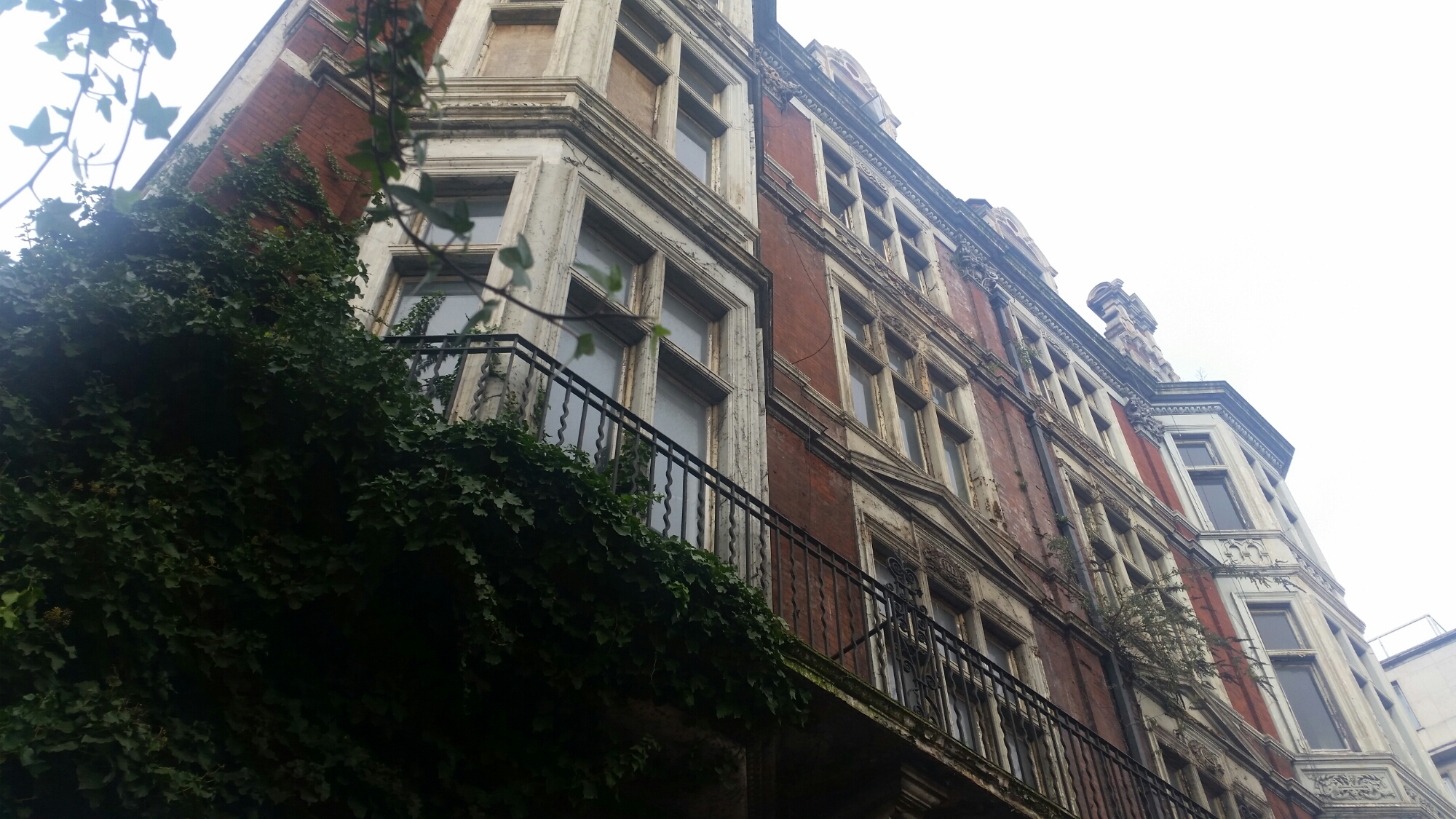
Right next door to the In and Out Club and on the corner of Half Moon Street is another large property which is in a surprising state of semi-dereliction with creepers growing out of the first floor. It’s 90-93 Piccadilly, designed by J.G.F.Noyes in 1883:-
Every so often I go past the old In and Out Club to check that it’s still unrestored. It’s on the north side of Piccadilly, just west of Half Moon Street. It was built in 1756 by Matthew Brettingham for Charles Wyndham, second Earl of Egremont, a smart and smooth politician who died of over-eating in 1763 (shortly before his death he commented that he had ‘three turtle dinners to come, and if I survive them I shall be immortal’). In the 1820s, the house was owned by the Marquess of Cholmondeley and was known as Cholmondeley House and then in 1829 was taken over by the Duke of Cambridge and was known as Cambridge House. After being owned by Lord Palmerston, it was bought by the Naval and Military Club, always known as the In and Out because of the signs on the entrance gates:-

I had a Christmas lunch in Spencer House, always a pleasure, not least for the opportunity of seeing inside one of the best preserved of the eighteenth-century mansions in the west end. It was originally designed by John Vardy for John Spencer, first Earl Spencer. According to the terms of his inheritance from the ghastly Duchess of Marlborough, Spencer was not able to take government office, so devoted himself instead to the construction of Spencer House and the pleasures of garden parties and shooting at Althorp. At Spencer House, Vardy was replaced by James ‘Athenian’ Stuart, who decorated it in a style which is heavier and more emphatic than his rival, Robert Adam:-

The rest of my tour of the sights of Wapping included:-
Phoenix Wharf, one of the best preserved of the riverside warehouses, less poshed up and neo-Victorianised than the others. It turns out that it was designed by Sidney Smirke RA, the architect of our exhibition galleries, in 1840:-

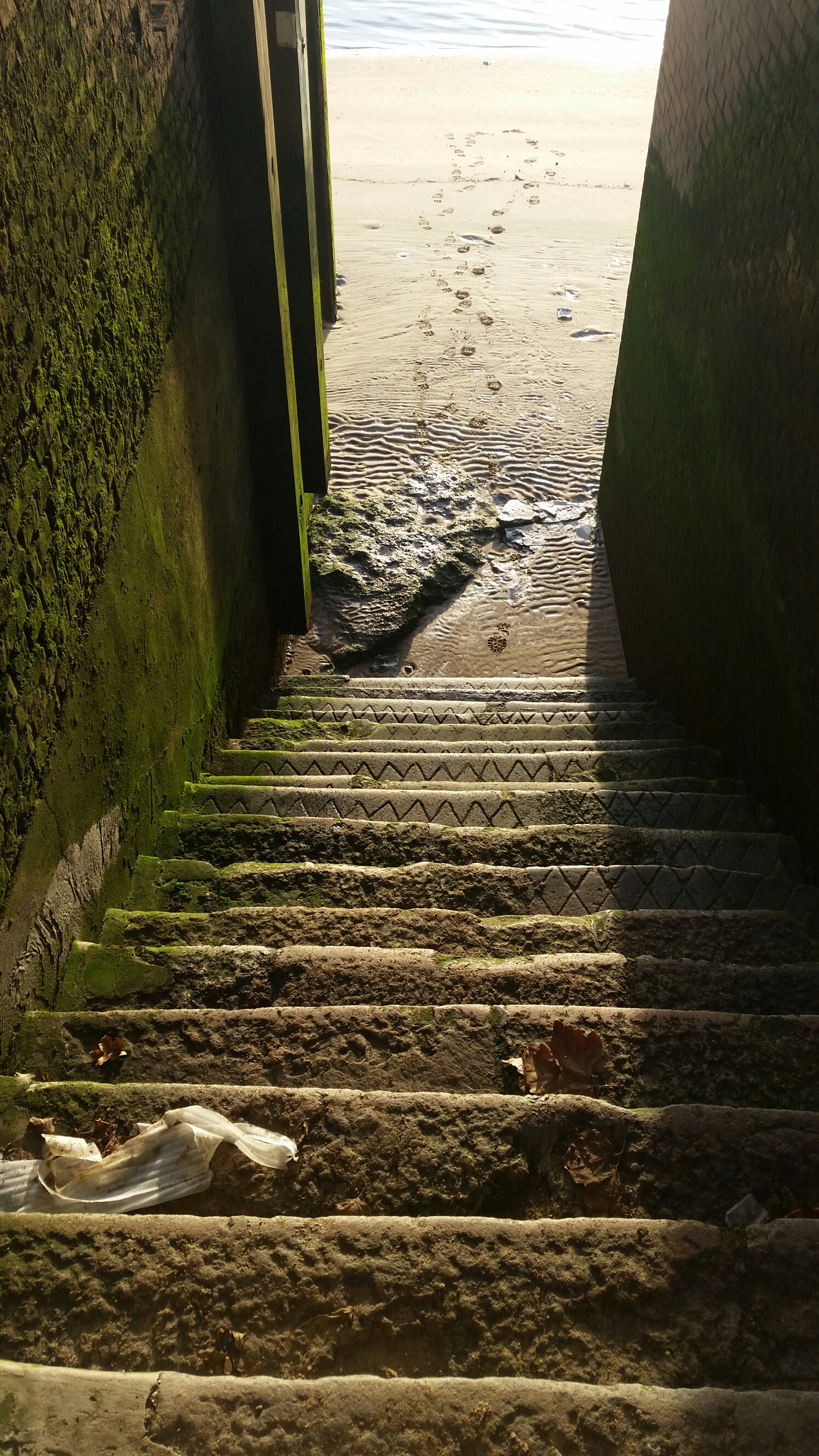
I have been totally jinxed on a post at the weekend from Wapping. For some reason, it seems impossible to file.
Suffice it to say that I discovered, which I should have known, that it’s possible get down to the river by way of two small alleyways off Wapping High Street. The first is alongside New Crane Wharf:-
The last of my Poplar sights is the Catholic church of St. Mary and St. Joseph, which is said by Pevsner to be at odds with the picturesque surroundings of the Lansbury estate (‘the mannered modernistic Gothic detail is totally at odds with the character of the surroundings’). It is by Adrian Gilbert Scott, grandson of Sir Gilbert Scott, younger brother to Sir Giles Gilbert Scott and architect of the Anglican cathedral in Cairo and, to my eyes at least, is an effective marrying of Scandinavian modernist brickwork with robust French gothic massing:



 | Charles | Saumarez | Smith |
You must be logged in to post a comment.