The more time I spend in Blackfriars, the more I realise how the area round St. Paul’s has been wrecked by big monolithic and characterless office blocks which have invaded the area and destroyed the integrity of the medieval streetscape, which is presumably partly why it is now much cheaper to occupy offices in the City than Mayfair. But it has made me love and admire the architecture of St. Paul’s the more and understand why it was such an emblematic building in the Second World War – so stolid in its understated grandiosity. This morning I walked out of breakfast in Bread Street and there it was in the morning sun, flanked by the tower of St. Augustine, Watling Street and One New Change:-
Tag Archives: London
St. Dunstan’s, Stepney
I don’t know if it was the wintry atmosphere or the sudden glimpse of the church tower through the trees which made me pay more attention to St. Dunstan’s than I usually do and appreciate the strange sense of it still being a rural parish church on the edge of a big city.
This was the view of the church through the trees:-
The back door:-
Stepney Meeting Ground
My eye was caught by the fragment of a tomb on the path I take every Sunday morning through the old burial ground of Stepney Meeting House:-
The burial ground is the residue of a Meeting first established in 1644 during the Civil War. A meeting house was built nearby in 1674 by Matthew Mead, the Puritan pastor and former morning lecturer at St. Dunstan’s (he was the father of Richard Mead, the great doctor and collector). The burial ground was opened in 1774 together with almshouses and a charity school. The almshouses were destroyed in the war:-
Shoreditch
It’s been a while since I’ve walked through Shoreditch. What struck me today and when I walked from St John Bread and Wine up to Old Street roundabout last weekend is the extreme rapidity of the process of urban change, the number of large vacant sites occupying spaces of buildings which were not especially memorable, but when gone leave a large hole. I am not anti-development. London, and most especially the east end, has benefitted from a process of rapid urban improvement and change, first begun long ago under the LDDC. But it’s the speed of it which is disarming and the way big new office and apartment buildings damage the ecology of mixed neighbourhoods. Artists move in. Then small fashion boutiques. Now there’s a branch of J. Crew in Redchurch Street. It happened long ago in Chelsea. Now it’s happening in Shoreditch:-
Hackney Road
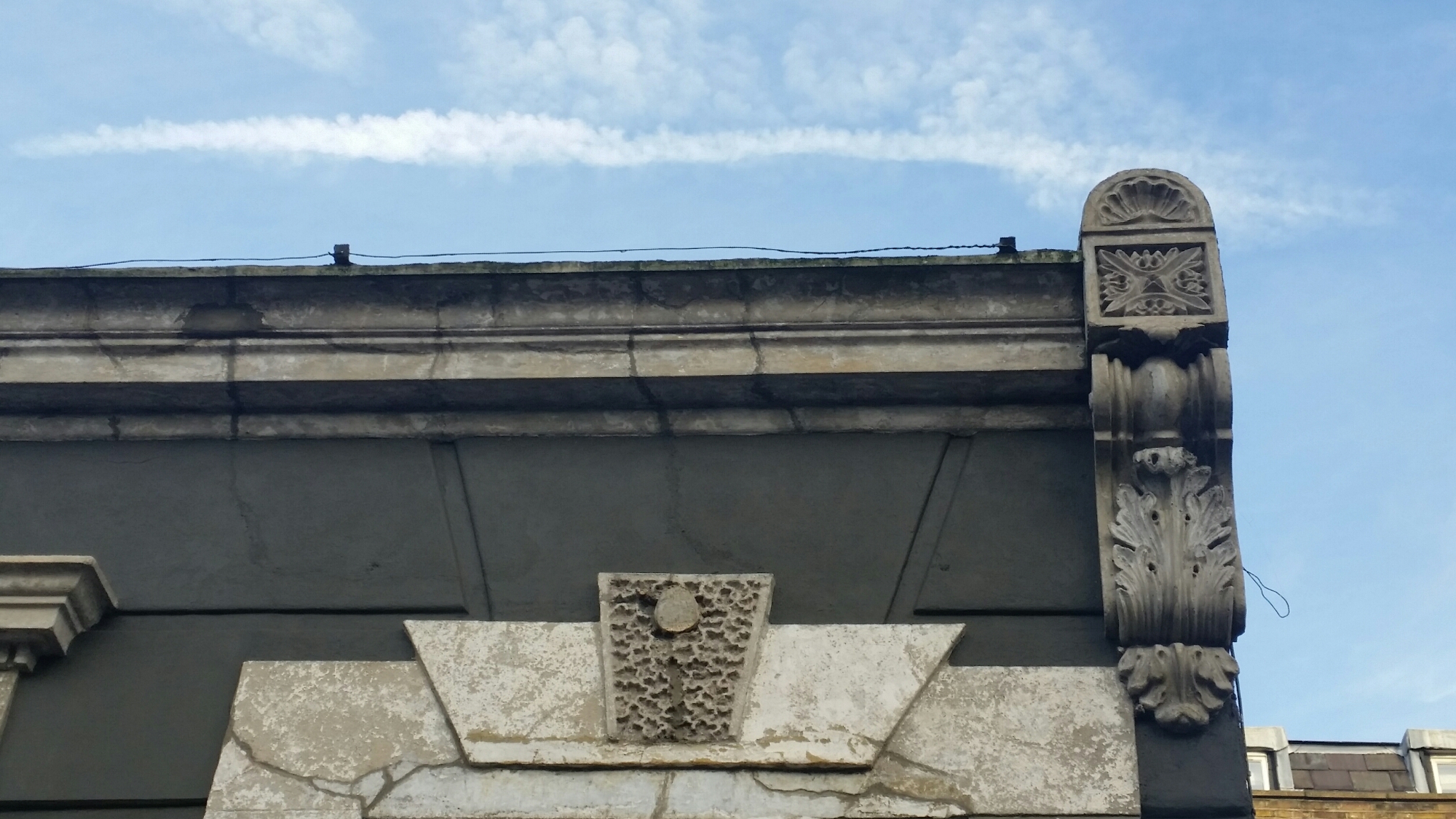
I walked down the Hackney Road which shows all the signs of being gentrified, with new cafés at every street corner. I liked the decoration on the old doctor’s surgery:-
Broadway Market
It being the weekend before Christmas, I set off in search of Christmas shopping to Broadway Market:-
The market is getting smarter and smarter, not just a pseudo-old fashioned butcher called Hill & Szrok:-
Albany
We had a party last night for the residents of Albany, to reassure those people who occupy the highly desirable bachelor sets on either side of the historic ropewalk that we will try to ensure that our major building project involves minimum disruption. I was told that the only sound that is heard at night is seagulls hunting for rubbish.
This is the façade of Melbourne House as it was designed by William Chambers in the early 1770s, just before he embarked on the project of designing Somerset House. It is the residue of one of those grand aristocratic houses which lined the north side of Piccadilly and was converted by Henry Holland in 1802 by the addition of 69 bachelor sets on either side of a courtyard at the back:-
Abbey Mills Pumping Station
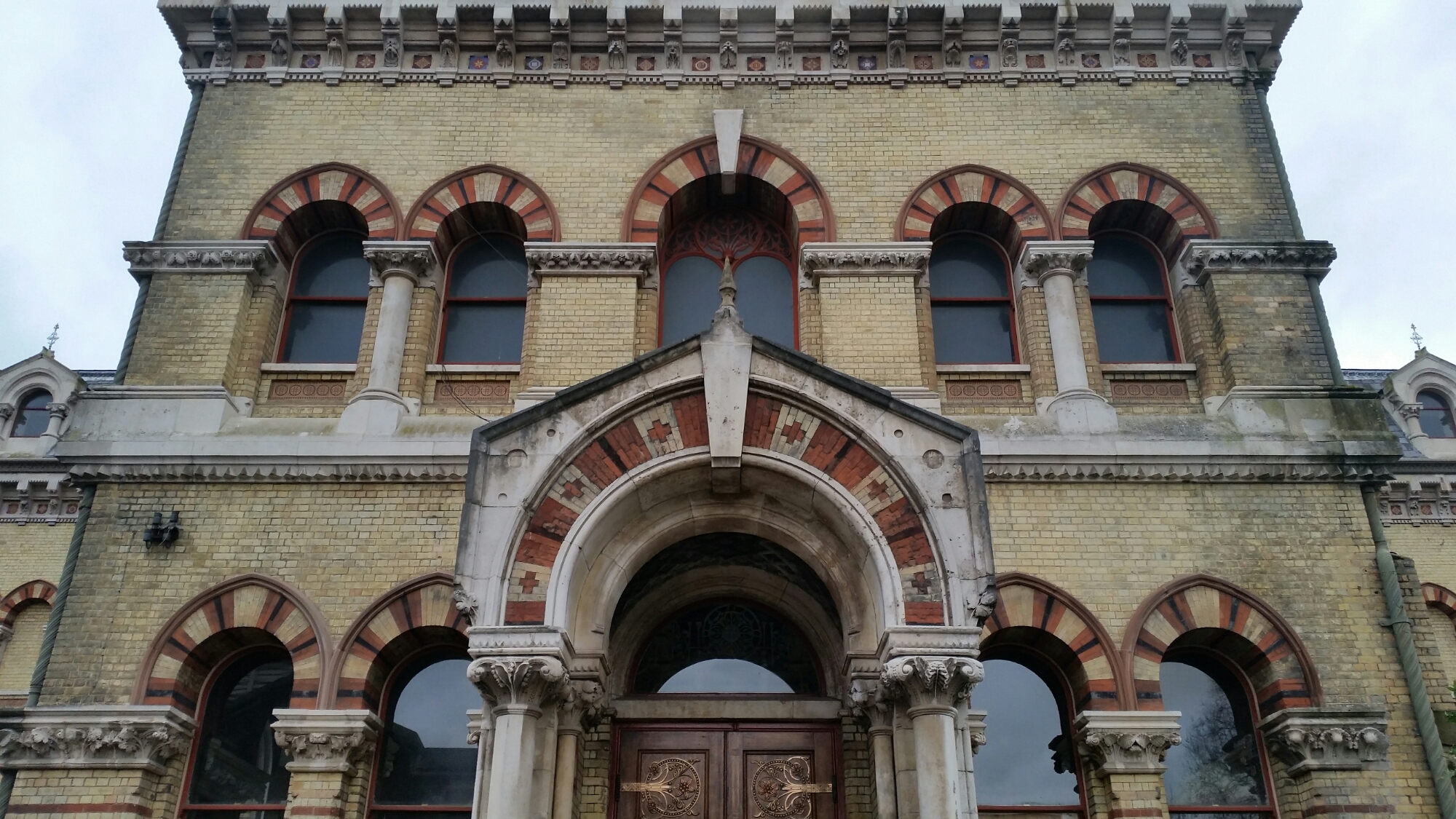
Brendan Finucane very kindly arranged for us to have a private tour of Abbey Mills Pumping Station, the so-called ‘Cathedral of Sewage’ which stands proud in the valley of the river Lea on the site of a monastic water mill. It’s an amazing building, with so much decorative care and Byzantine and Gothic detail lavished on Sir Joseph Bazalgette’s powerhouse of engineering. Inside is full of hand dials and maps of London’s sewers and Piranesian vistas down to the big pipes which transport London’s sewage out to Beckton, all of it constructed after the Great Stink of 1858.
This is the grand entrance:-
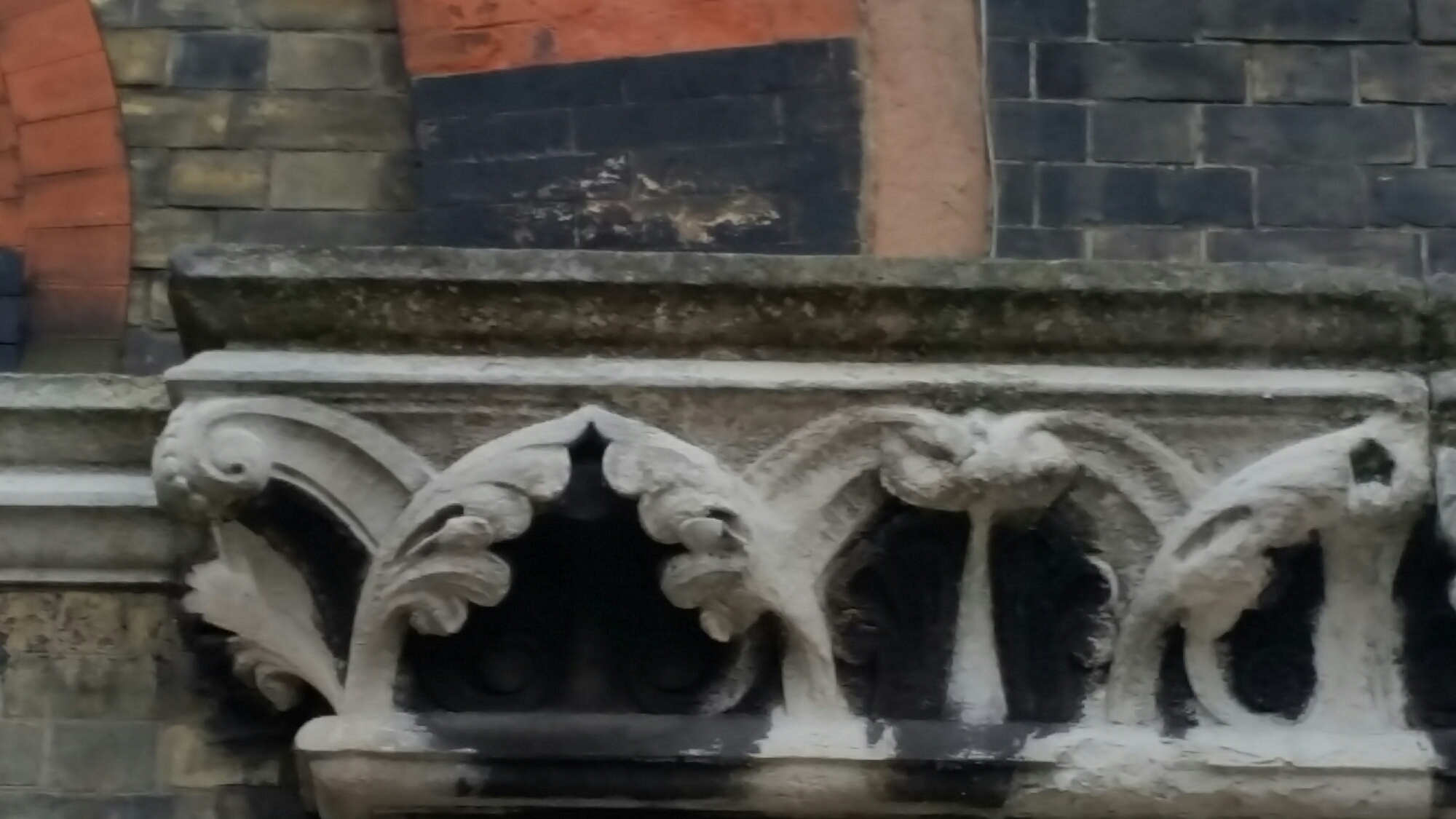
Details of the decorative carving:-
Portcullis House
I am doing a post rather belatedly of my visit on Friday to Portcullis House. I was there to see Adam Dant’s Election Special in which he trailed the politicians and recorded not so much them as their public in a large graphic collage based on Leeds Town Hall. But I was also taken upstairs to see the run of recent political portraits, including Tony Benn by Andrew Tift which I had seen before, Margaret Beckett in egg tempera by Antony Williams, and, most impressively, Michael Foot as a snowy white magus by Robert Lenkiewicz, the eccentric painter of Plymouth.
Embankment Gardens
I found myself walking through Embankment Gardens this morning en route to Portcullis House in amongst statues to forgotten Generals and behind the back of the Ministry of Defence. The gardens themselves were retrieved from the river by Sir Joseph Bazalgette and have been used to park the victors of colonial wars.
This is the entrance to the garden which could be Nice:-
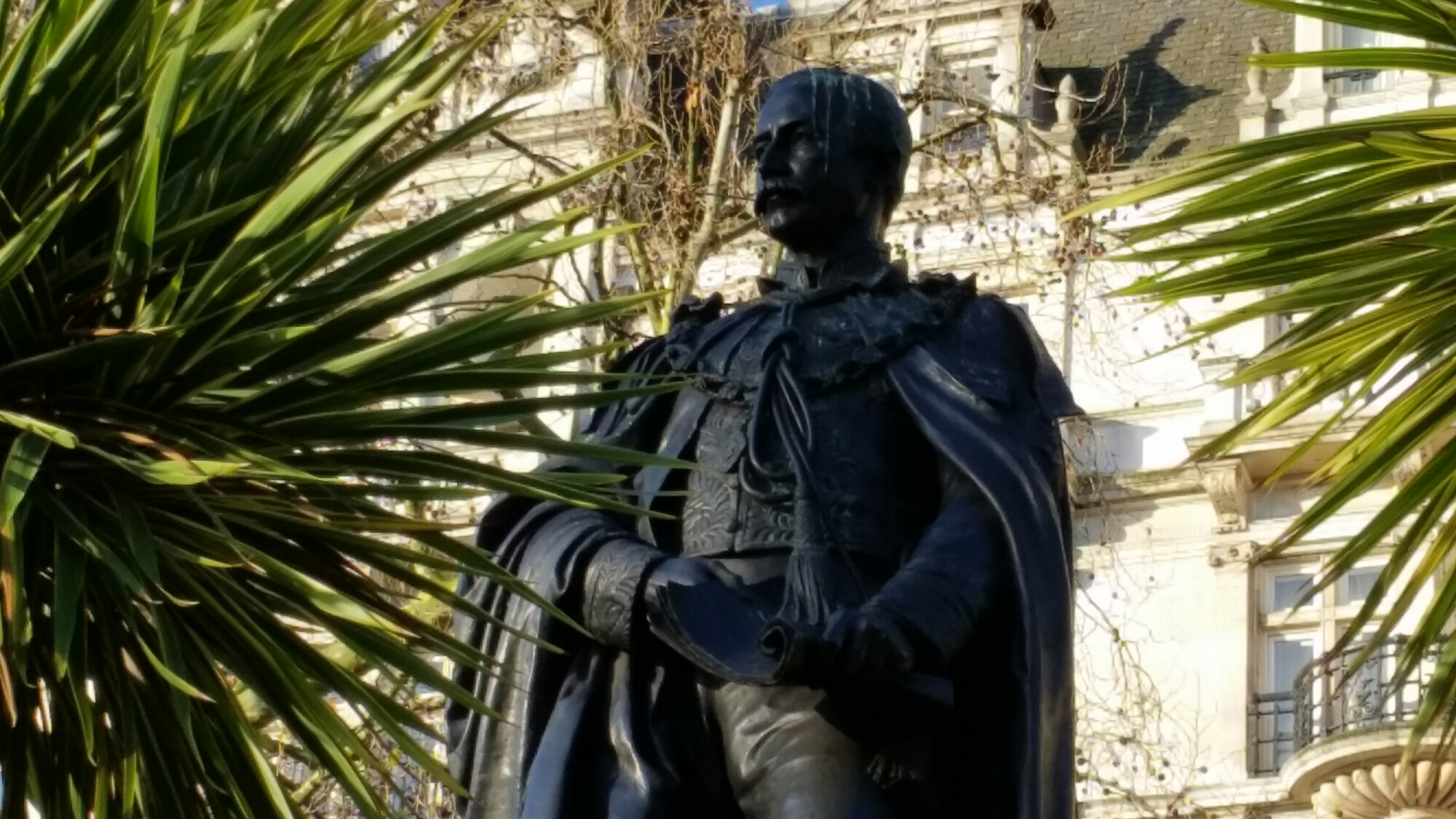
This is the statue to General Sir James Outram, the Bayard of India and responsible for the capture of Lucknow:-


You must be logged in to post a comment.