
I went to Andrea Rose’s leaving party last night. It was held not in the British Council, where she has been the long-standing Director of Visual Arts (she joined the British Council in 1979), but just outside, with hordes of the art world present. It seemed appropriately symbolic, since there were many references to the fact that she was a formidable member of staff and not always in agreement with official policy. She will be a great loss.
Tag Archives: London
Linnaeus in London
I was interviewed on Japanese television this morning about eighteenth-century gardens. I was asked if I knew about the response to Linnaeus when he visited London. I didn’t. The answer is that he came to London in July 1736 to visit Sir Hans Sloane, the founder of the British Museum, and Philip Miller, who was chief gardener of the Chelsea Physic Garden. Apparently neither of them was impressed by Linneaus’s new system of classification, since it was too obviously sexual. They preferred the taxonomy of John Ray. Thomas Knowlton, who was Lord Burlington’s gardener at Londesborough, thought the Linnaean system ‘altogether whimsicall and ridiculous’. But I could find no confirmation of the suggestion that Linnaeus called a particularly prickly plant after Miller in revenge.
Newcome’s School, Hackney
Now that I am back in London, I have been able to answer the question which had been perplexing me as to why Lord George Cavendish, the early nineteenth-century owner of Burlington House, was educated in Hackney. The answer is that he, along with a number of other children of the Whig political élite, was sent to Newcome’s School in Hackney, where Henry Newcome, the headmaster who gave the school its name, was a noncomformist minister known for his Whig principles, whilst Hackney was known for its healthy green fields. From 1756 to 1779 the headmaster was Peter Newcome, a Fellow of Queens’ College, Cambridge and of the Royal Society, and an expert on earthquakes. Pupils were taught Latin, French and natural sciences, as well as drawing and dancing; they went on excursions to study natural history; played football and cricket (there was a cricket pitch next to the school); and every three years they performed a Shakespeare play. During the 1780s, one of the masters was Coleridge’s older brother.
Lord George Cavendish
My interest was pricked by a statement that the beadles of Burlington Arcade wear the uniform of Lord George Cavendish’s regiment, the tenth Hussars, to find out more about Lord George Cavendish, the early nineteenth-century owner of Burlington House. There is not much information about him online other than the fact that he was a grandson of the third Earl of Burlington (the architect Earl), son of the fourth Duke of Devonshire, and an MP for Knareborough, Derby and Derbyshire from 1775 to 1831 (61 years). The admirable volumes of the History of Parliament tell me more. He was educated in Hackney and Trinity College, Cambridge, an unusual combination for the son of a Duke (where in Hackney, I wonder ?). A member of Brooks’s and a Whig, he lived mainly at Holker in Lancashire and inherited £700,000 from his uncle Henry in 1810 which enabled him to extend Burlington House and build the Arcade. His politics were said to be abominable and ‘his manners insolent and neglectful’.
Burlington Arcade
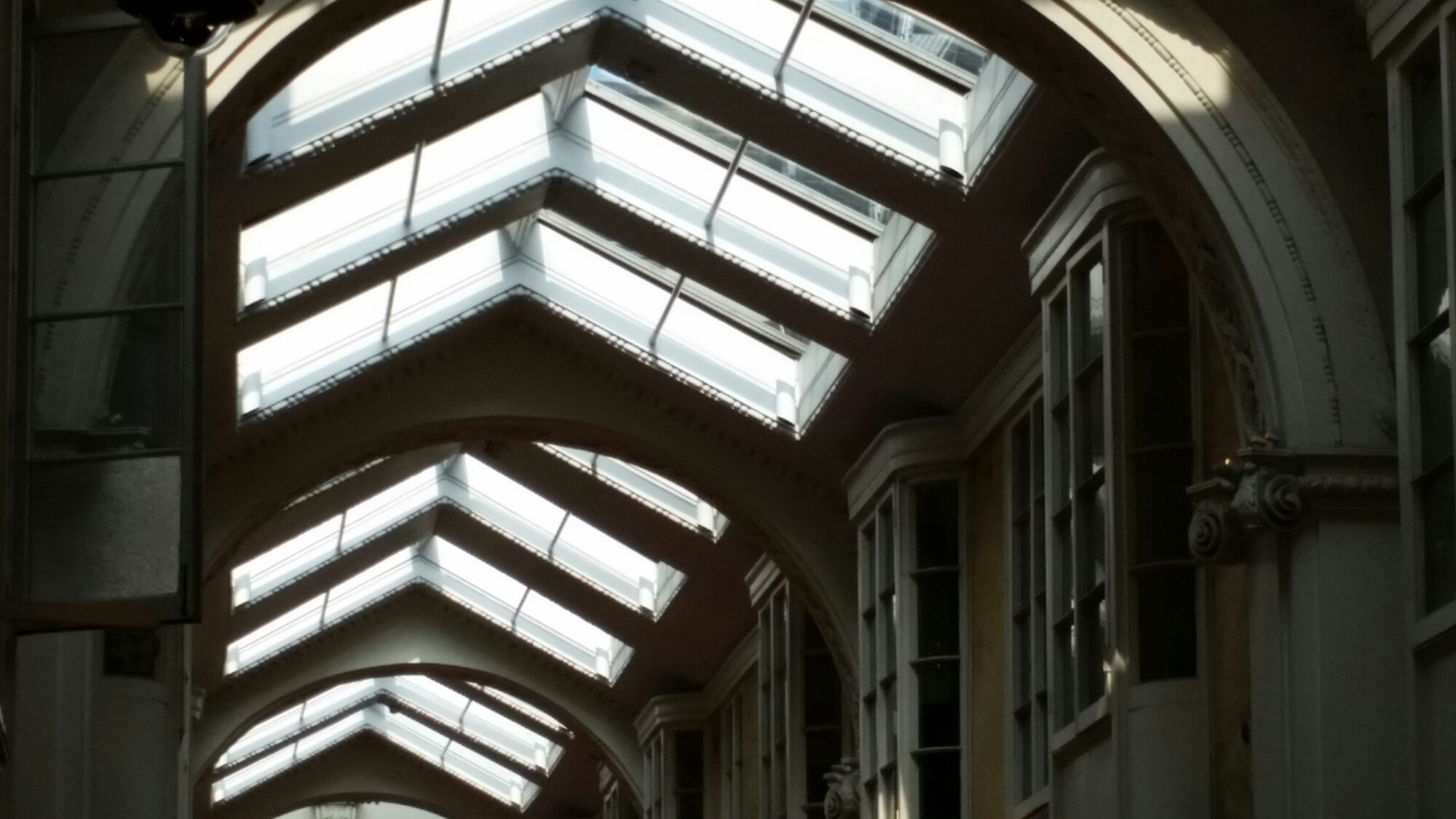
I had the pleasure of meeting representatives of Burlington Arcade’s not-so-new owners today (it was sold in 2010). Not surprisingly, I’m interested in its history, built as it was alongside Burlington House, as well as its future, since it’s such a prominent part of the local neighbourhood. It opened in 1819, the original shopping arcade and was progenitor of all those grand arcades in Brussels, Paris, Milan and St. Petersburg. The architect was Samuel Ware, former student of the Royal Academy Schools, who was also responsible for the new main staircase in Burlington House for its then owner, Lord George Cavendish. Part of the purpose of the arcade was to stop people throwing rubbish, particularly oyster shells, over the garden wall into the courtyard of Burlington House. The front entrance was added by Professor Beresford Pite, designer of the cathedral in Kampala, in 1931:

Buckingham Palace
Occasionally in the morning I allow my eye to wander down the Mall towards Buckingham Palace. In writing a recent article about royal patronage for the forthcoming art issue of Vanity Fair, I found to my embarrassment that I couldn’t remember who was the architect of the main façade. I guessed correctly that it was by Aston Webb, but got it wrong that it was done in the reign of Edward VII. It was done in 1913, just before the first world war, as a setting for ceremonial duties for George V to replace the much more Germanic, mid-Victorian front by Edward Blore. People always think of the twentieth-century monarchy as low key, but it doesn’t look low key to me:

Prince’s Drawing School
It being the beginning of the new season there was an exhibition at Blain Southern of work by graduates of the Prince’s Drawing School. It felt like a symbolically important occasion, not just because of the quality of the work. First, because none of the work was conventional drawing (many people only associate the Prince’s Drawing School with traditional drawing skills). Second, because the exhibition is at Blain Southern rather than a more traditional space. Third, because the work looked so well in the space – imaginary views of the city and its borderlands, including particularly strong watercolours by Kathryn Maple who lives in the Balfron Tower.
Green Park
This morning I resumed my early morning walks across the parks, which gives me time to think and reflect before the start of the day. I have written several times of St. James’s Park, less often of Green Park, its less ostentateous sibling, rising up from Buckingham Palace to Piccadilly in a series of barely discernible undulations. I like the atmosphere of people walking diagonally across the park on their way to work from Victoria as the sun rises and the shadows are longer at this time of year:


40 under 40
I was asked to a party to celebrate Apollo magazine’s new initiative in identifying the next generation of movers and shakers in the art world, including young artists, collectors and curators. On the list are Lynette Yiadem-Boakye (they do not mention that she was at the RA Schools), Victoria Siddall, the Director of Frieze Masters, Abraham Thomas, the Director of the Soane Museum and Bendor Grosvenor, whose website (arthistorynews.com) they also don’t mention. Not surprisingly, I felt over the hills surrounded as I was by the young and thrusting.
Scott Crolla
I was interviewed yesterday by Mayfair magazine about my attitudes to Mayfair and experience of it over the years. The thing I remembered most vividly was walking along Dover Street one Saturday morning in 1981 and coming across the grand bow window of Scott Crolla’s new shop. It was a cornucopia of delights, full of the grandest and most luxurious jackets and shirts at the height of the New Romantic revival. Of course, I could never afford to buy anything or now it would be a collector’s item, but I can remember the sense of voyeuristic pleasure after a long diet of Moss Bros.


You must be logged in to post a comment.