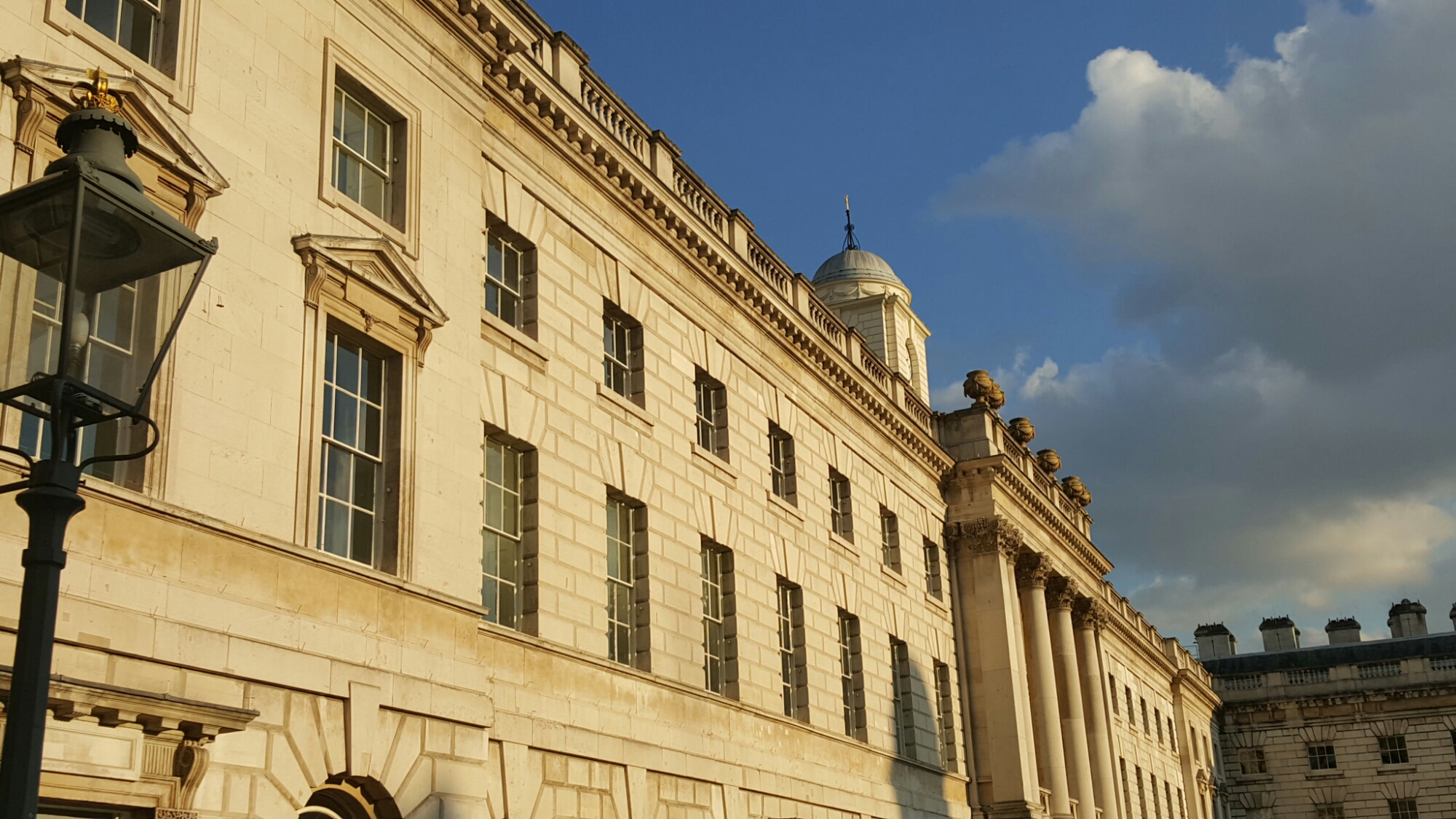
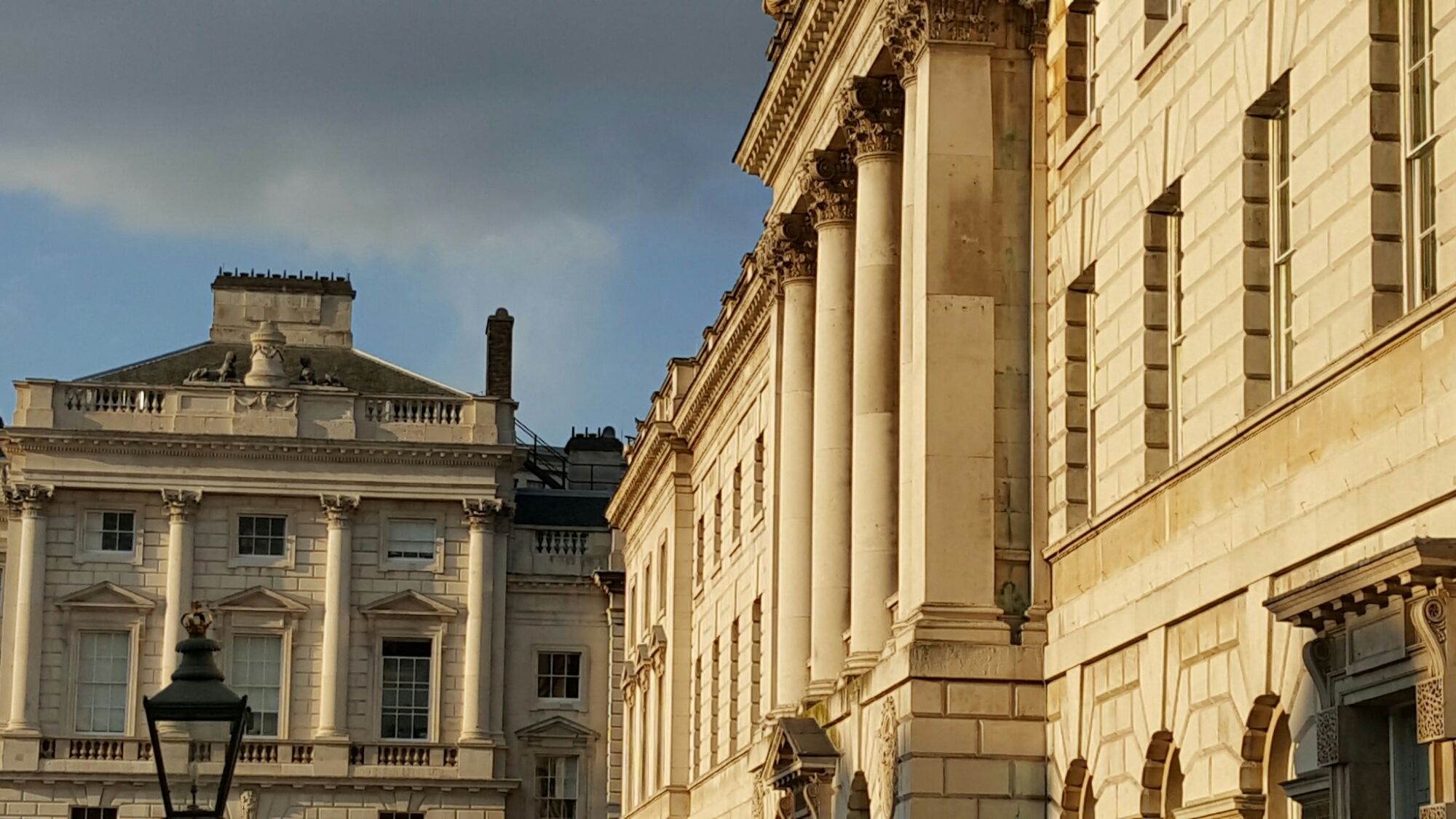
I’ve done blogs on Somerset House before. One of the pleasures of working in Blackfriars is that it provides frequent opportunity to walk through its monumental courtyard, free now of the parking of tax officials and I prefer it free of skating, so that one can see and appreciate the qualities of William Chambers’s restrained style of scholarly French classicism, informed by his training in Paris under J.F. Blondel and his studies in Rome, together with sculpture by the first generation of RAs:-
Tag Archives: London
Green Park
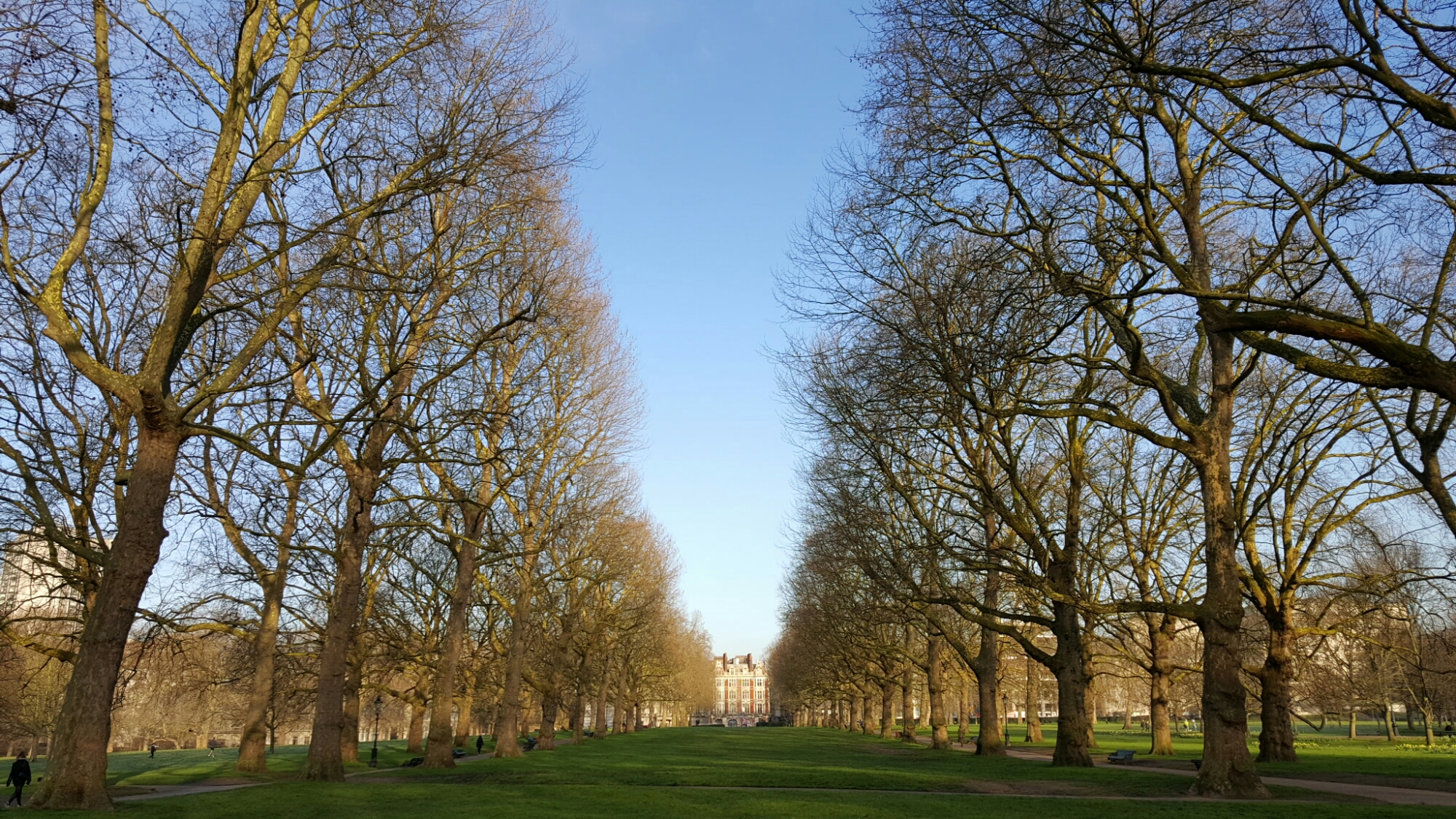
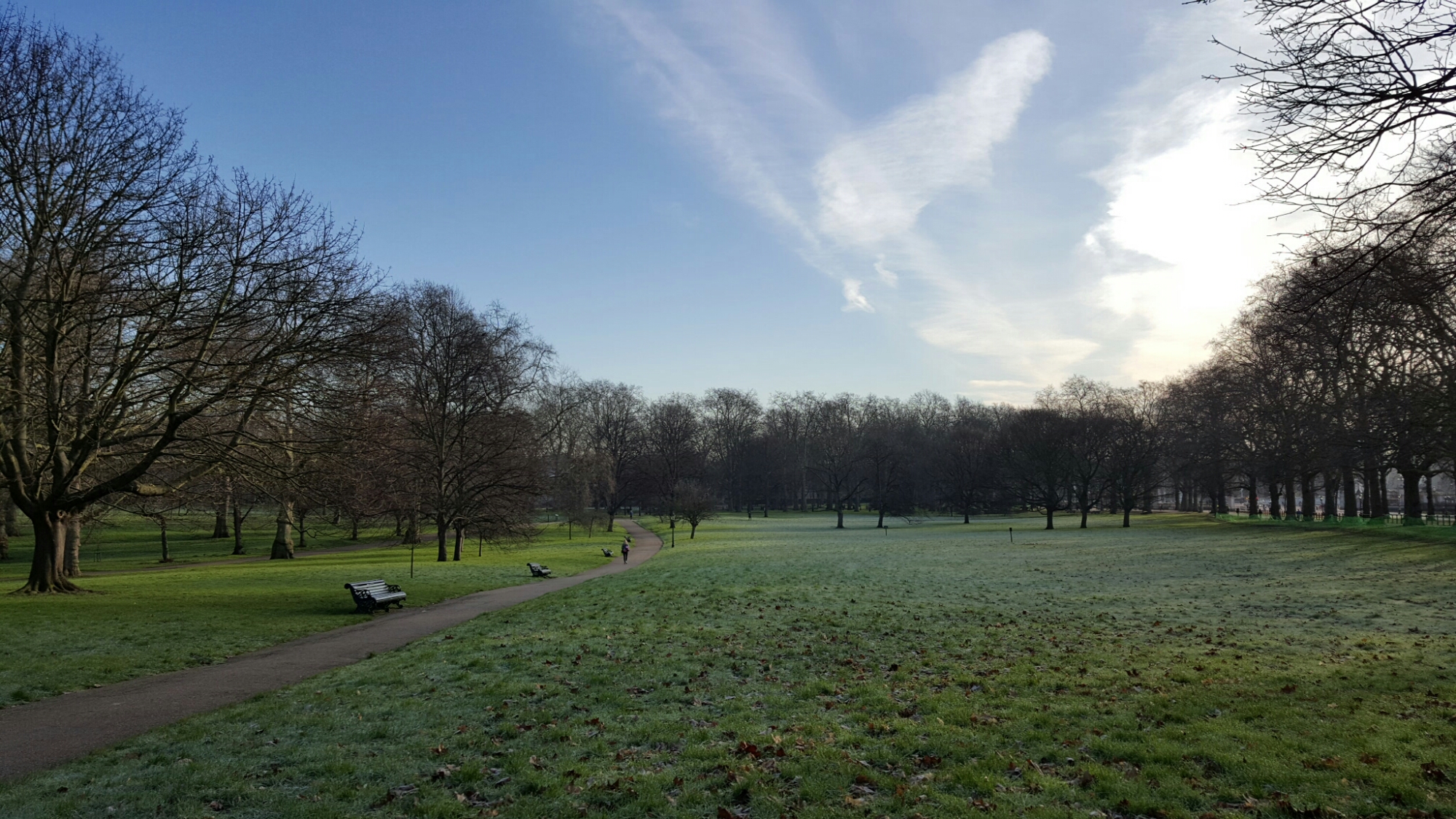
I had a meeting in Knightsbridge first thing this morning which I walked to across Green Park. It’s an oddly indeterminate shape, an empty bit of grass and trees alongside the rushing hoardes down Constitution Hill. I was surprised by a) how empty it was b) how attractive it is that it leads from nowhere to nowhere and c) how spacious it can feel with trees and what is nearly a field, so that you can lose any sense of London fragmentarily:-
Piccadilly
I’m not that keen on Piccadilly as a street, which never seems to have the monumental coherence of Regent Street, nor the opulence of the shops in Bond Street. Maybe it’s a memory of it being yellow on the Monopoly Board, a bad square to land on, next to Jail. But tonight, walking across Piccadilly Circus, with the sun going down beyond the carriage lamps, it had vestiges of its Edwardian stateliness, looking past the old Swan and Edgar building, designed by Sir Reginald Blomfield in 1910, hit by a Zeppelin in 1917 and then rebuilt, down past the columns of Norman Shaw’s Piccadilly Hotel, his last work, towards the RA somewhere in the distance:-
Norton Folgate Almshouses
Whilst thinking about the pros and cons of the development of Norton Folgate, I noticed that the small group of Victorian almshouses in Puma Court, just off Commercial Road, is called Norton Folgate Almshouses. As the inscription reveals, they replace an earlier group of almshouses built in 1728, but demolished to create ‘The New Street’ – presumably the north half of Commercial Street laid out by James Pennethorne in the 1850s to connect the docks to Great Eastern Street:-
The new almshouses were designed by T.E. Knightley and opened in 1860:-
11, Princelet Street
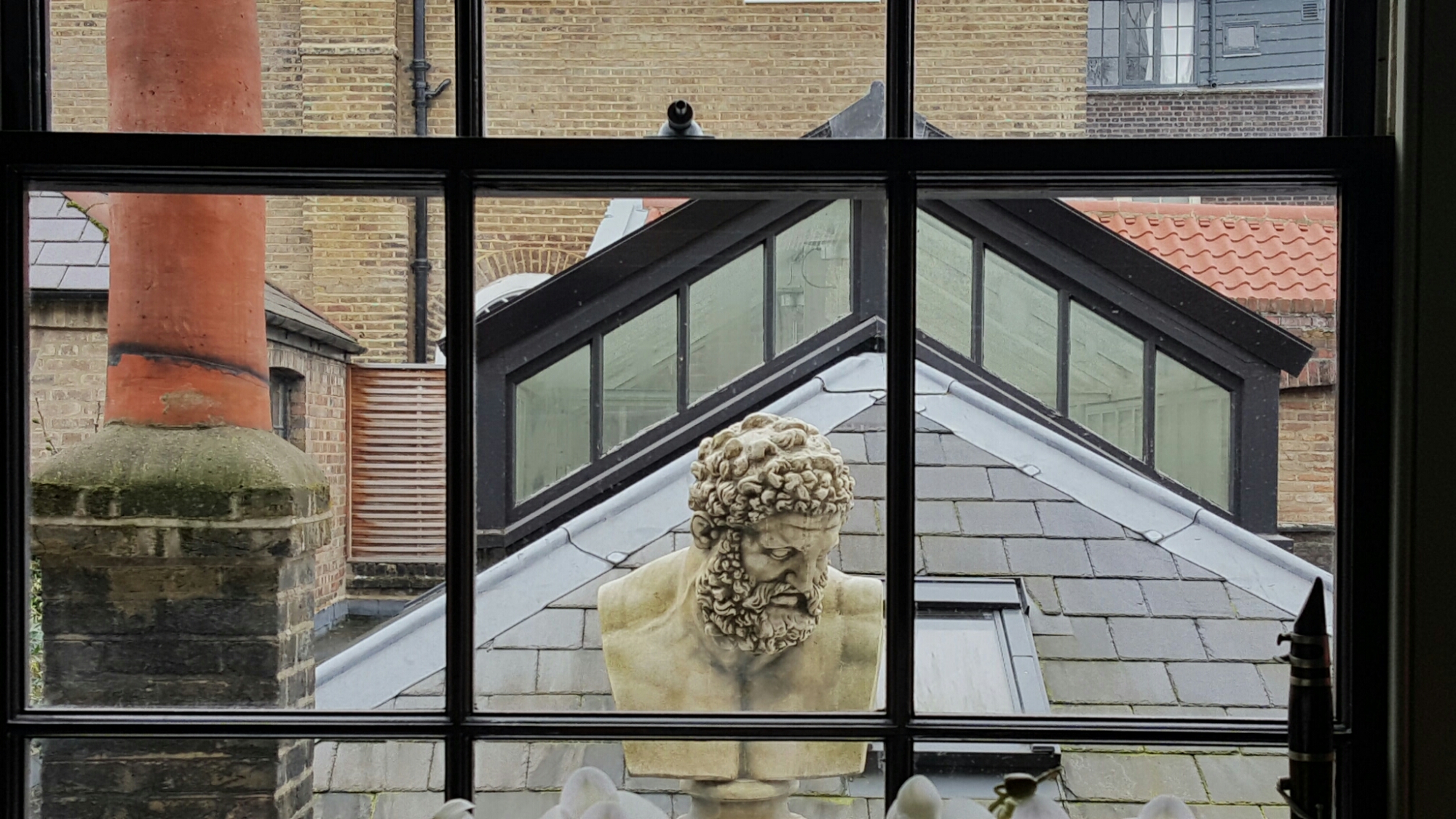
I went to see Miranda Argyle’s very nice small exhibition upstairs in Chris Dyson’s drawing room at 11, Princelet Street. I should probably have photographed the work, but it is quite delicate, made up in many cases of stitching on linen, intermingled with dark and atmospheric photographs. Instead, I took photographs out of the window at the back:-
Ye Olde Axe
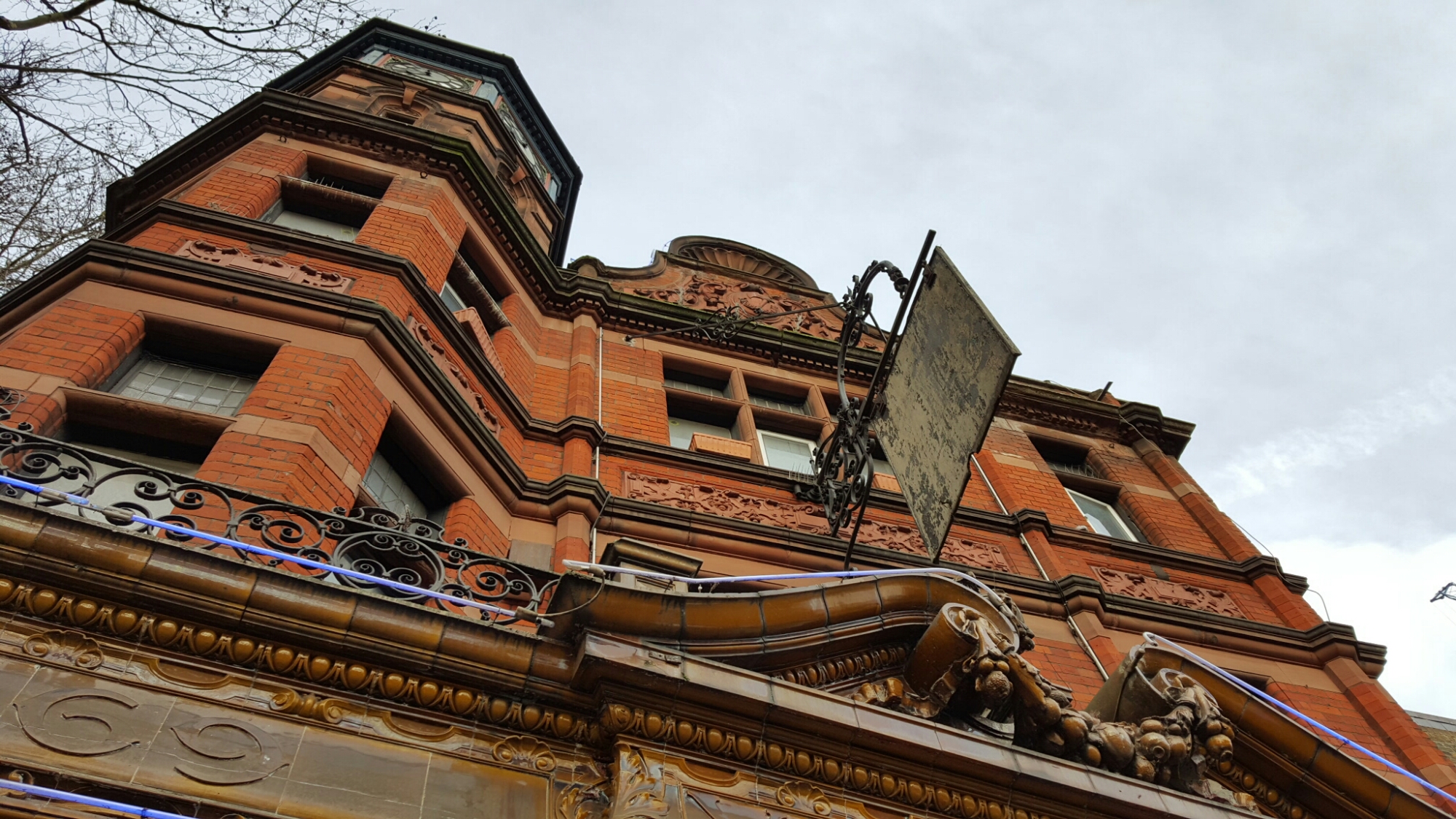
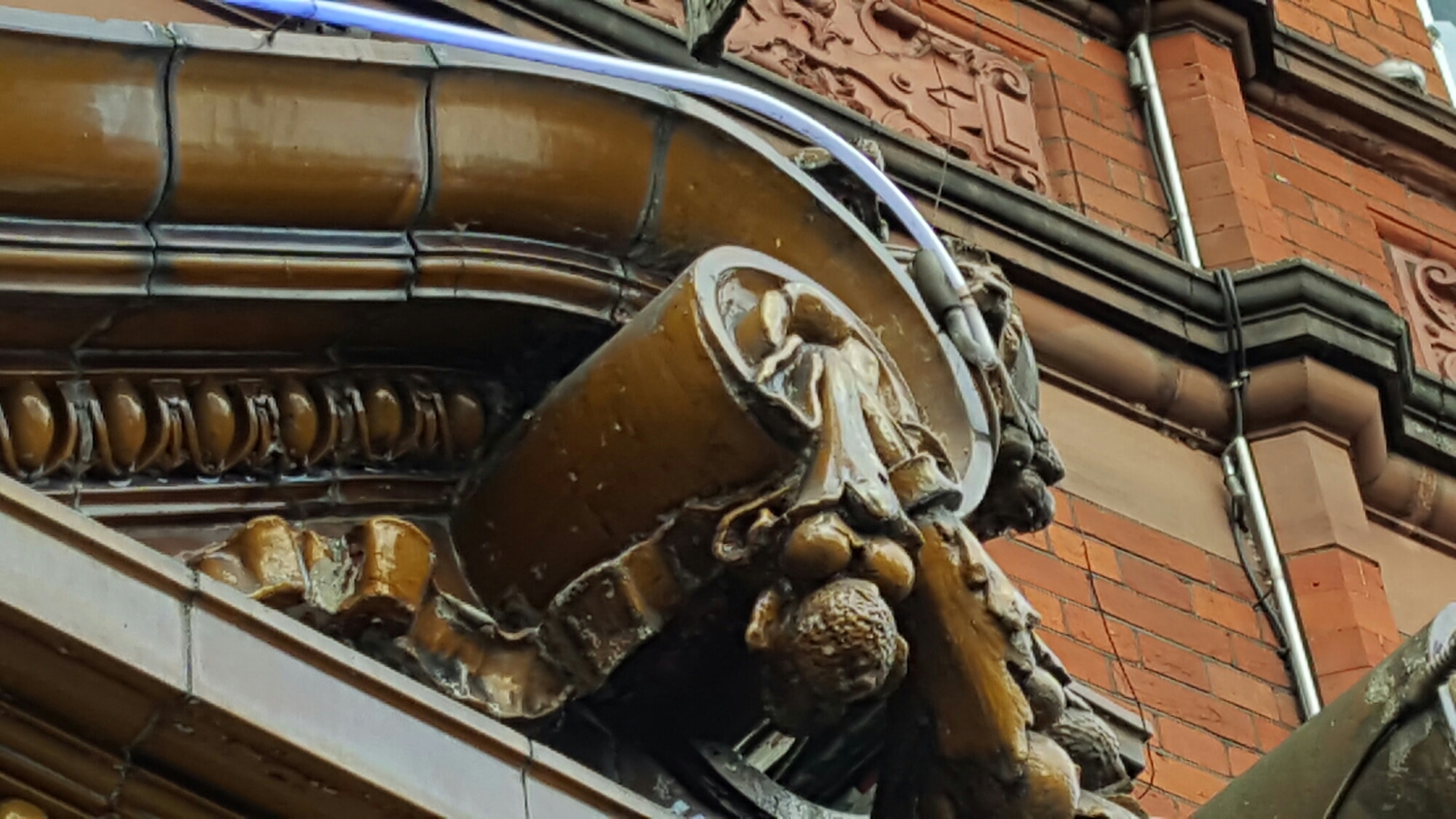
At the lower end of the Hackney Road where it meets Shoreditch, there is what I thought was a deserted pub, but turns out to be a striptease joint, called Ye Olde Axe, which looks slightly as if it belongs in the Wild West with its turret and pub sign swinging in the wind, but has good terracotta lettering and very fine capitals:-
Wells & Company
I have been meaning to do a blog about Wells & Company, the old commercial ironmongers opposite St. Leonard, Shoreditch. It was opened in 1877 for Edward Wells & Company, which sold stoves, gutters, pipes and decorative ironwork to the building trades. The building, designed by Fowler & Hill, is part-Gothic, part- Moorish, with a surviving mosaic inscription, ‘Wells & Company Commercial Iron Works’, in spite of the fact that it ceased trading in 1895 and became a bank:-
Norton Folgate (2)
I have been drawn, without particularly intending to, into the controversy surrounding the development of Norton Folgate, an ancient liberty immediately north of the City, where a group of old houses on what was once Ermine Street have been gradually bought up by the City for ruthless commercial development. Rather than the City developing the properties themselves through their architecture and planning department, they are doing it in conjunction with British Land. What is unusual is that the houses are nearly adjacent to a street of old industrial warehouses, relics of the industrial and trading roots at the fringes of the City. One street away is Elder Street, one of the most important historic streets in Spitalfields. An alternative plan for the development of the neighbourhood has been drawn up by Burrell Foley Fischer which respects its original mixed character. The plans drawn up by British Land were rejected by Tower Hamlets, but have now been passed by Boris Johnson over the heads of local planning. It’s a battleground between two forms of development, one monolithic and corporate and the other low rise and conservationist. The paradox is that the latter is almost certainly better at preserving the long-term prosperity and energy of the City as an engine of economic growth.
Goldsmith’s Hall
I went last night to dinner at Goldsmith’s Hall, not one of the livery companies that I had been to before. It’s in Foster Lane, close to St. Paul’s. Designed by Philip Hardwick of the Euston Arch and built between 1829 and 1835, it’s a robustly classical building with rich polychrome decoration, bombed in the war, but restored in such a way that the vigour of the original is undiminished. In his speech at the dinner, Peter Murray, the Master of the Worshipful Company of Architects, claimed that the idea of a bridge across the Thames from Temple to Waterloo had been his and derived from a competition held at the time of the Royal Academy’s exhibition Living Bridges. I hadn’t heard this before. It helps give the current controversy over the Garden Bridge a historical perspective.
Blackfriars Station
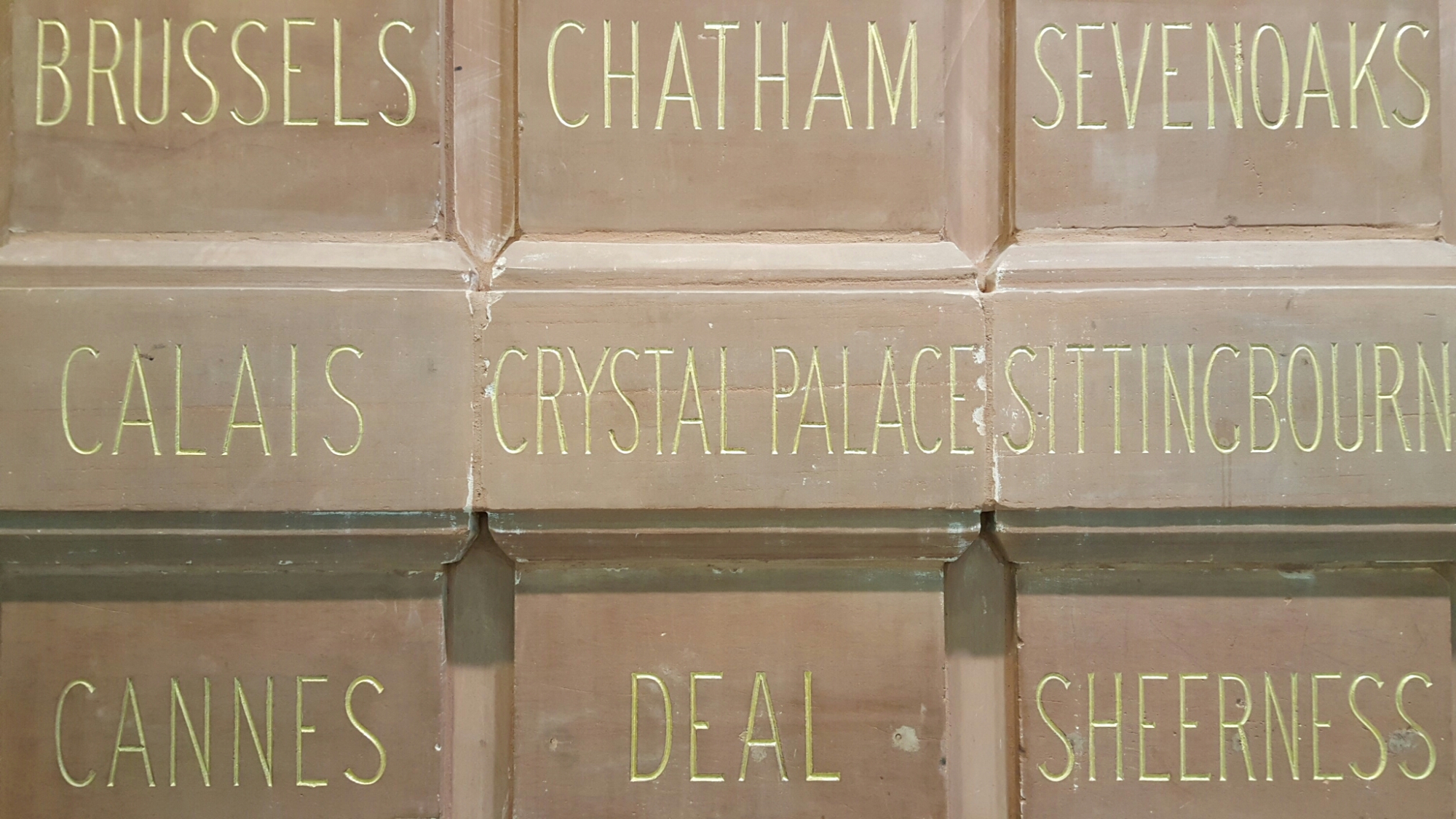
I go through Blackfriars Station several times a week and sometimes more than twice a day, but it was only today that I spotted the great carved sandstone lettering commemorating the destinations that could be reached when the London, Chatham and Dover Railway originally opened what was called St. Paul’s Station in 1886 (the name was only changed in 1937). I like the idea that one could take the train to Cannes, Deal or Sheerness:-


You must be logged in to post a comment.