
I’ve just walked to the London Library by way of the Regent’s Canal. It’s a long time that I’ve done the full stretch from Bow in the east to Regent’s Park in the west. In fact, I’m not sure I’ve ever done it except on a bicycle. It’s a pleasure to see London from the back view, as from a railway train, past Victoria Park, past Broadway Market, past the Towpath Cafe which was setting up for breakfast and the smarter gardens east of Duncan Terrace, up and over Islington by way of Chapel Street Market and down through some of Islington’s seedier estates to Dixon Jones’s King’s Place, which I’ve never seen from the canal, through the new developments north of King’s Cross, past Nick Grimshaw’s smart aluminium pods at the back of his Camden Town Sainsbury’s and the egg cups which are all that remains of Terry Farrell’s tv-am to the creamy Regency houses on the north side of Regent’s Park which have canal boats moored at the end of their gardens and the brilliant green of the canal-side as it goes through the zoo. Apart from a brief detour to pich up a map of Piedmont in Daunt’s in Marylebone High Street, it took the best part of three hours, ending with a cappuccino at the Royal Academy. I recommend it.
Monthly Archives: April 2014
Catherine Goodman (5)
Another day, another sitting. I quite like the way the sessions drift between music, observation, occasional stretching and a lot of high class gossip. Yesterday I was given an enormous bowl of coffee and then made to sit dead still for two hours which is a form of Japanese torture. For some reason, we discussed my very brief and disastrously unsuccessful career as the opening bat for my prep school 1st. XI. I suppose it is inevitable that being painted engenders a degree of self reflection. Today was quieter and more reflective. We tried to remember the brilliance of Humphrey Ocean’s speech last night. As I sat, bits of it came back to me: the fact that he regarded himself, like Constable, as a flatearther and that Constable retained a strong affinity for the ground. He’s the only person I know who can speak intuitively entirely from the left side of the brain.
Catherine Goodman (4)
As Catherine’s exhibition at the NPG looms, my sittings have moved to early in the morning, although not quite as early as I used to sit for Leonard McComb. So, I find myself walking through Chelsea past Bram Stoker’s house in St. Leonard’s Terrace. I remember a cousin of mine saying that when they set up house in Chelsea in the early 1950s it was regarded as bohemian and scandalised her relations who expected them to live in Mayfair. Hard to imagine now as I pass the merchant bankers on their way to work. John Morton Morris is very pleased because my portrait is smaller than Sally Clarke’s. I don’t know how he knows because I haven’t seen either.
Christo
Have just been to a talk by Christo: not just a talk, but an event, performance and peroration. He spoke a bit about his life – actually not quite enough: born in Bulgaria, escaped from Prague, educated at the Academy of Fine Arts (as an artist or as an architect ?) in Vienna, moving to Paris and then to New York in 1964 where he has lived in the same tenement block ever since, using the small studio at the top of the building, doing all the work on his projects with his wife Jeanne Claude and without a big office of assistants. He showed images of many of his projects – the Valley Curtain in Colorado, the Running Fence in California, the wrapping of the Reichstag and of the Pont Neuf. It’s completely obvious that he likes the process and politics of the gestation at least as much as the finished result. What wasn’t entirely clear is how he uses the process of drawing which he does after the project has been conceived in order to support it financially. There was a quality of enthusiastic innocence about his presentation which has won over audiences internationally, including most recently in Abu Dhabi where he is building up community support for a project in the desert. So, the question nobody asked is why he’s never done anything in Britain: umbrellas in the Lake District ? wrapping the Royal Academy?
Winterreise
Sunday evening. We went to hear Jonas Kaufmann sing Winterreise in a concert performance at the Royal Opera House. I’ve been brought up on recordings of Dietrich Fischer-Dieskau singing them and I got a frisson from hearing them sung so slowly, so quietly and with such extraordinary control, shiveringly not just because they are about winter, the graveyard and snow. At the end, the man behind me said ‘Would you give it a four or a five ?’. A funny comment as if it was a football match against Fischer-Dieskau.
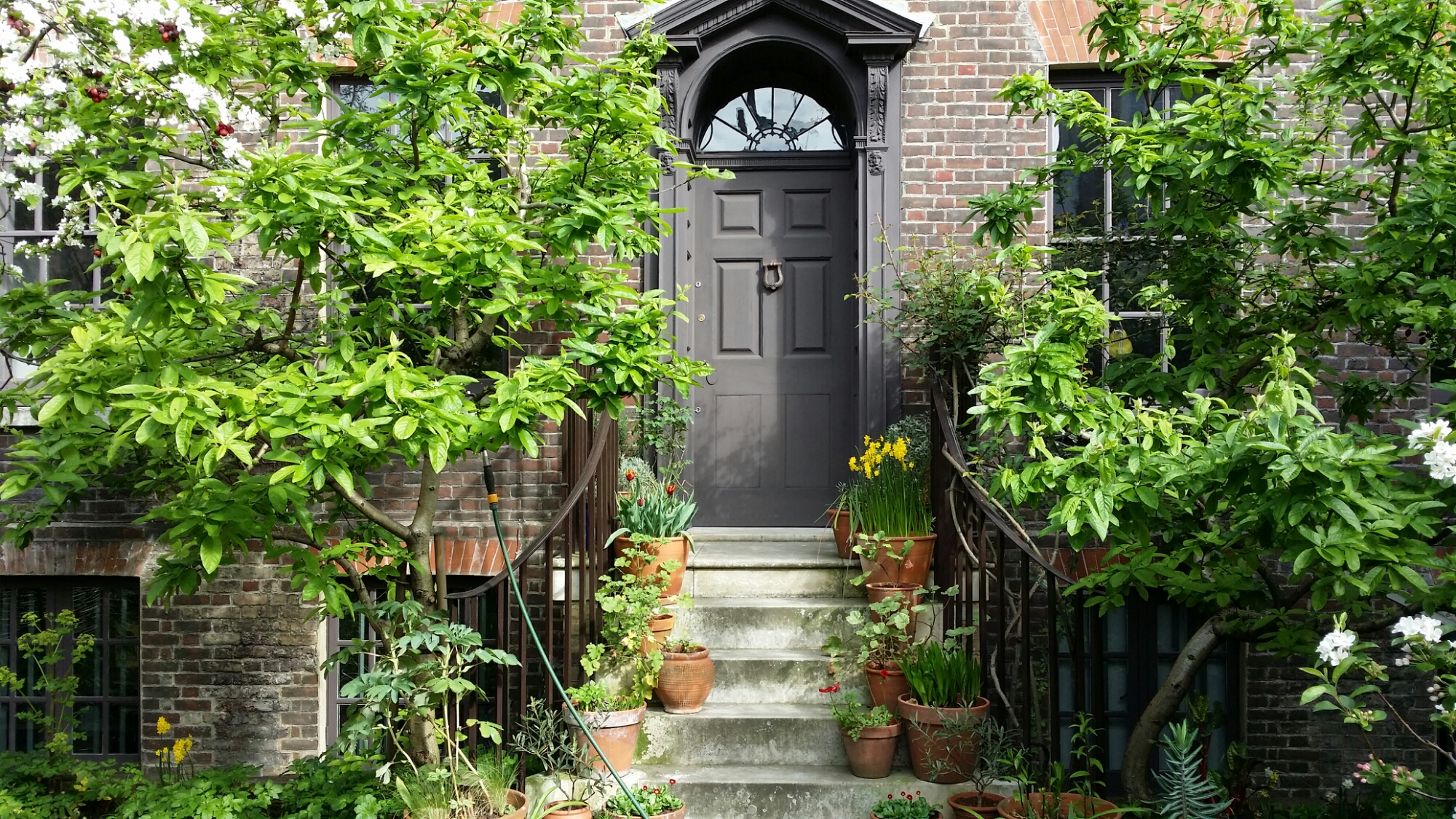
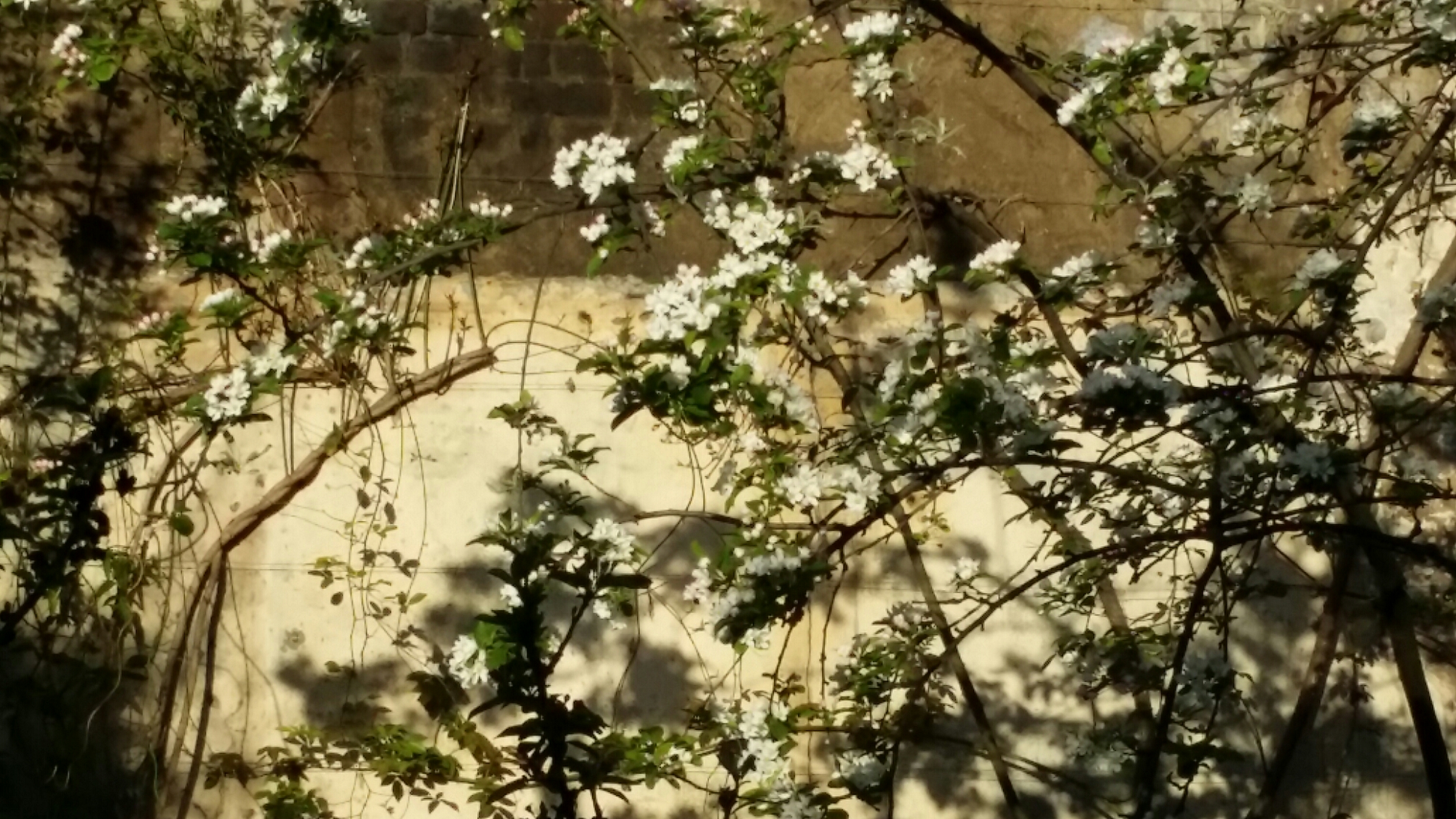
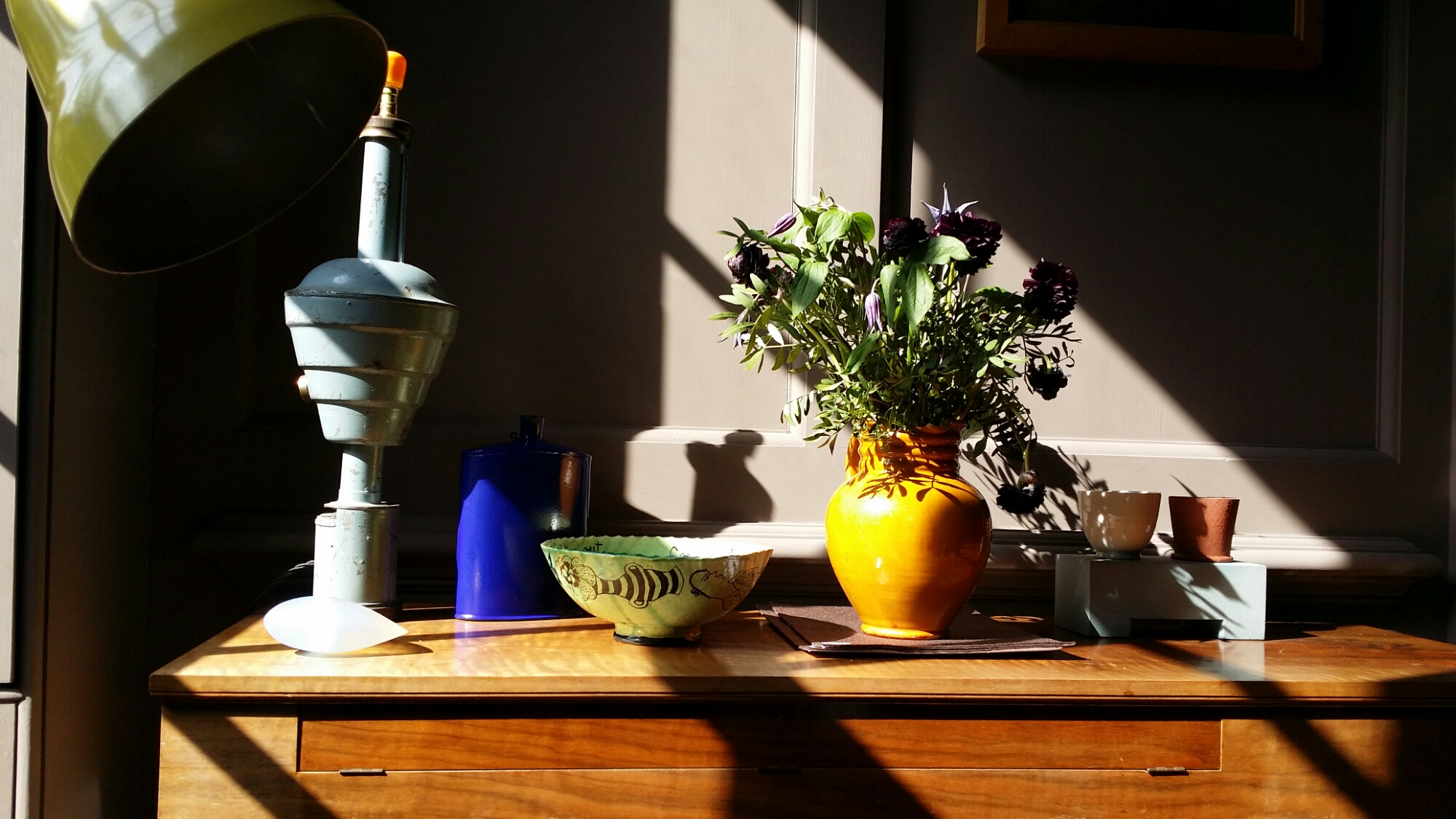
Springtime in Stepney
Having just read an email about how beautiful it is in the Valley of the Kings, I am posting some photographs of how beautiful it is in the Mile End Road:

Marlene Dumas
Our last appointment in Amsterdam was to go to the Van Loon house where we had arranged to meet Marlene Dumas, who has recently been appointed as an Honorary RA. She said that she hadn’t been sure whether to accept or not, but did so on behalf of women artists everywhere. I attach a photograph of us both raising a glass to this (sorry about my suit).

Rijksmuseum
I’ve been looking forward to seeing the reopened Rijksmuseum, having missed the opening this time last year. It’s been discussed and debated for as long as I can remember, the plan to integrate art and Dutch history causing controversy when it was first proposed by Ronald de Leeuw. He resigned five years into the project when it was delayed another five years by Dutch bicyclists wanting to retain their rite of passage through the centre of the building. Duncan Bull, the curator of paintings, explained the background to the museum, which was founded out of the Catholic emancipation movement in the 1860s when Dutch ecclesiastical treasures were being exported, not least by Duveen’s father to England. The King refused to open the original Cuypers building on the grounds that it looked like a monastery. Duncan then took me on a whistlestop tour of the medieval collections, which looked as if they had been very beautifully displayed by Jean-Michel Wilmotte down in the vaulted undercroft originally used for the manufacture of plastercast copies, and then to the eighteenth-century galleries, sparser and less impressive, apart from the wonderful group of pastels by Jean-Etienne Liotard bequeathed to the Dutch state by Liotard’s granddaughter. The official part of the trip was to the Gallery of Honour at the top of the building where we were able to contemplate Vermeer’s Milkmaid and Rembrandt’s Night Watch on our own. The picture which made a deep impression on me was The Oath Swearing of Claudia Civilis, which I now realise is on loan from the National Museum in Stockholm and which I must have seen in Stockholm. It’s so freely painted, in loose slabs of paint, and so savage.

Jan Six House
When I had breakfast with John Morton Morris on Wednesday, he said ‘Oh, if only I had known you were going to Amsterdam, I could have arranged for you to go to Jan Six’s house’. It turns out that it had already been arranged and I have never been anywhere so strongly redolent of mid-seventeenth century patrician Dutch culture: the small number of well established families, closely intermarried and full of civic conscientiousness, made prosperous by the profits of the Dutch East India Company and surrounded by images of the streets, houses and churches of Amsterdam, as well as their family portraits. Best of all is the astonishingly vivid portrait of Jan Six I by Rembrandt showing the man who had so often bailed him out, painted with a combination of casualness, intelligence, swift brushwork, human sympathy and vim. We went out into the garden, which gave a feel for the private life of Dutch families, normally maintained so visibly on public display, but not in their gardens behind. The Six’s only moved into their current house in 1915, but it still has the layering of the last eleven generations.

Gemeentemuseum, Scheveningen
Lo and behold, the Gemeentemuseum, the great cradle of modernism, designed by H.P. Berlage in 1919, and not completed till 1935 after the Wall Street crash, has inaugurated a version of the Summer Exhibition, modelled on the Royal Academy’s, as a way of showing a wide range of contemporary art in a democratic way. I find this intriguing as the art world in London is so often inclined to regard the Summer Exhibition as absurdly old-fashioned, reactionary, without acknowledging it’s democratic characteristics and the way it allows a broad range of artists to show their work independently of the gallery system. I was also pleased to see Berlage’s system of diffused daylighting, so much admired by Caruso St. John, the quality of the tile work, not to mention a finely considered display of Mondriaan’s evolution to pure abstraction in 1914 and Victory Boogie-Woogie bought for the museum by the Dutch government in 1998 for $40 million.

 | Charles | Saumarez | Smith |
You must be logged in to post a comment.