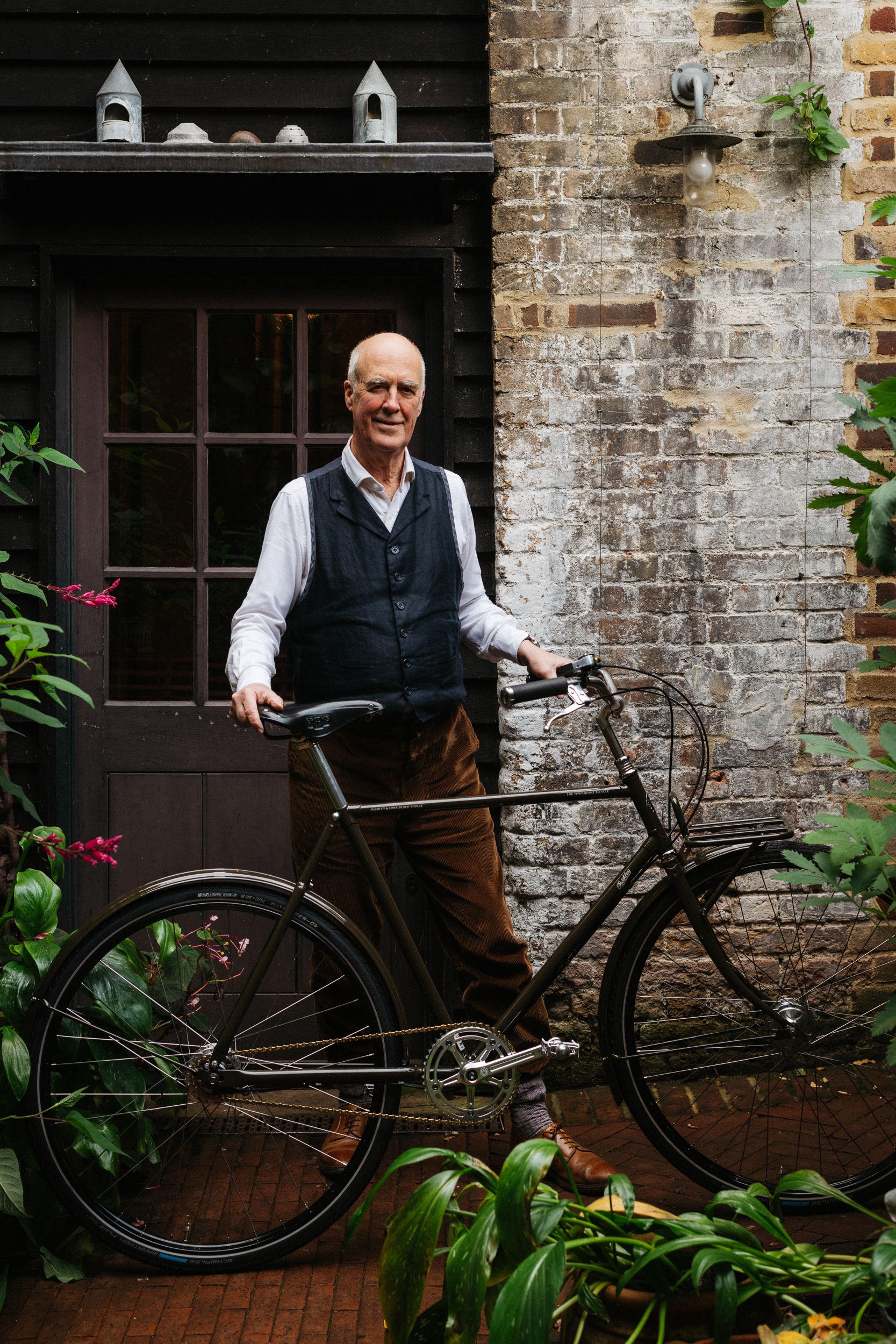
I have been pondering the subtext of Elisabeth Fairman’s exhibition as to whether it was mainly women who documented their experience of the natural world. I don’t think it was mainly women who joined all those field clubs, who went out into the countryside with their microscopes and butterfly nets and hammers. It was the earnest middle classes, especially the clergy, who were inspired by the writings of Erasmus Darwin and thought that it was a necessary accomplishment to know and understand and document the natural world (it was God’s world). But not any more. I was once given a butterfly net. But there were no butterflies left to catch.
Monthly Archives: August 2014
Of Green Leaf, Bird & Flower
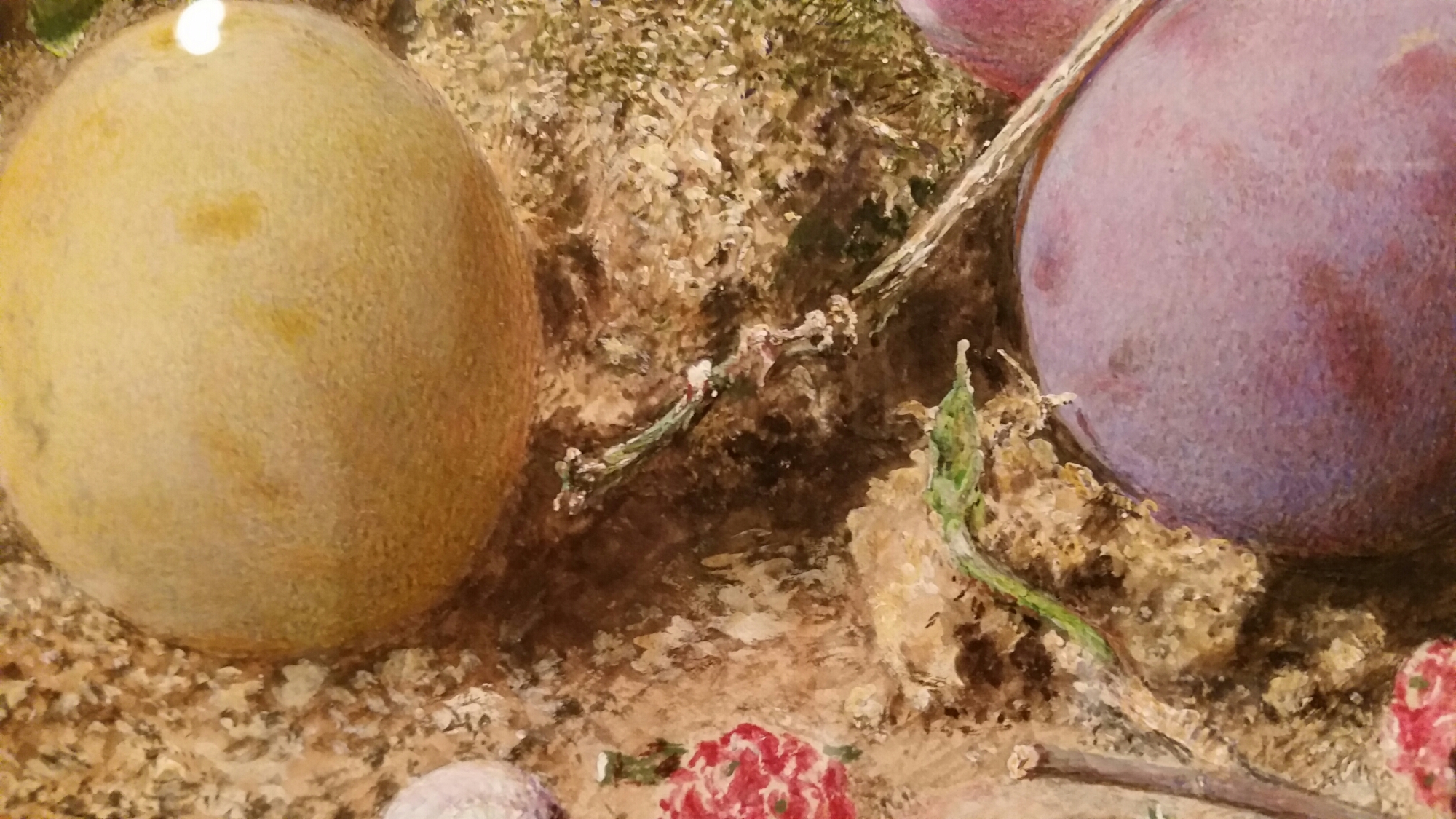
Elisabeth Fairman, the curator of rare books at the Yale Center for British Art, took us on a tour of the exhibition she has organised about traditions of British botanical illustration, partly inspired the Helmingham Herbal which Paul Mellon acquired and reproduced for the Roxburghe Club. I particularly enjoyed two astonishing gouaches of two goldfinches by Peter Brown, a Danish naturalist, who apparently exhibited work as a flower painter in the early days of exhibitions at the RA. The point of the exhibition is to show not just the work of well-known artists, although there are plenty of those, but more the drawings and illustrations of passionate amateurs and enthusiasts who went out into the countryside to record the natural world. They include, for example, a Miss Rowe who arranged botanical specimens in envelopes illustrated with appropriate watercolours for a competition organised by the Liverpool Naturalists’ Field Club. I had never seen watercolours by William Henry Hunt, known as birds-nest Hunt, whose work was much admired by Ruskin:
Route 8
We followed the precepts of another of my favourite American books (alongside Roadfood), which is Road Trip USA: Cross-Country Adventures on America’s Highways. We took Route 8 down nearly all the way from North Adams to New Haven, down through the wooded hills of western Massachusetts and into rural Connecticut through small towns including Becket and Otis. The principle of the book is straightforward: avoid all Interstate highways, which plough through the countryside ignoring the contours of the land, and instead take the older roads which criscross America and retain the relics of an older industrial and pre-industrial culture, through small towns, past barns and farms and houses which have seen better days. We used the book to travel from Chicago to San Francisco and have adopted the idea of it ever since.

The Empire State Plaza
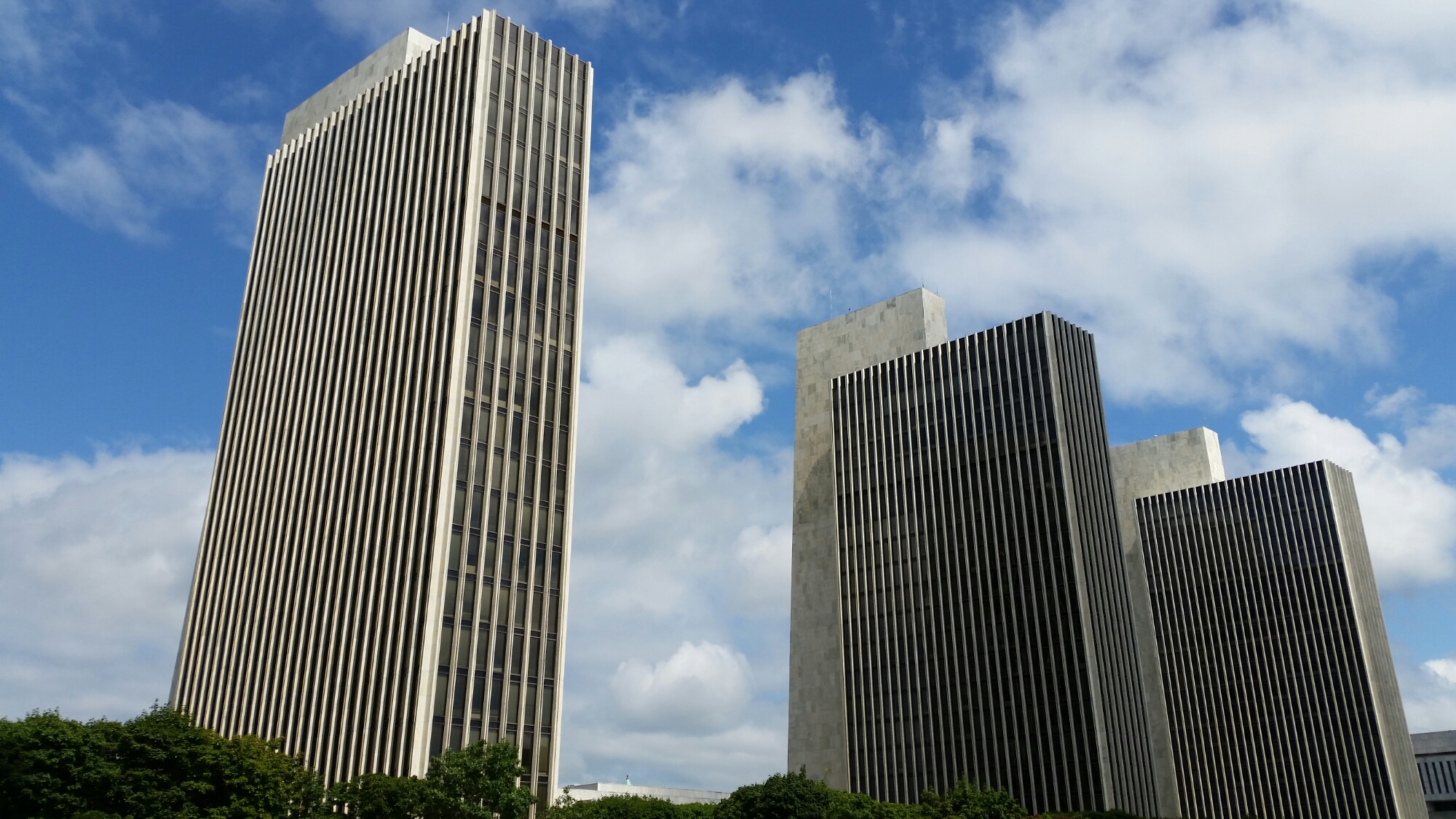
We had the pleasure, if it was a pleasure, of visiting the Empire State Plaza in Albany, one of the great monoliths of 1950s town planning, a combination of gigantism and Thunderbirds. It was designed on the model of Versailles and Chandigarh by an architect called Wallace Harrison. Robert Hughes called it ‘The International Power Style of the Fifties’:

Clark Art Institute
Michael Conforti very generously took us on a tour of the new Tadao Ando extension to the Clark in Williamstown. He began to think about how to connect the two existing buildings – a 1950s piece of polite neo-classicism and a 1972 work of brutalism – when he first took over as Director in 1994. He devoted the 1990s to thinking and consciousness raising and preventing the extension to the conservation building which would have scuppered any future plans. He first met with possible architects more than ten years ago, including Renzo Piano and David Chipperfield. He chose Tadao Ando in 2001 because of his skill at designing buildings underground which have access to natural daylight. Much of the building is buried, including the loading dock and services in order not to change the scale of the existing small-scale buildings and surrounding university campus. Conforti then spent the next decade raising the necessary funds and doing the detailed designs, travelling to Japan once a month. The first building Ando did (although the last to be designed) was a small exhibition pavilion called the Lunder Center at Stone Hill:


Gilbert Stuart
We called in at the birthplace of Gilbert Stuart, the local artist who made good in London. Born in North Saunderstown, he moved to Newport aged seven. His father operated a small rural snuff mill. Aged 14, he was taught to paint by Cosmo Alexander, a travelling Scot, who took him away to Philadelphia, Virginia and ultimately to Edinburgh, where Alexander died. Stuart then worked his way back to Newport as a crewman on a collier. In Newport, he made a living painting rather wooden portraits of local grandees, but he left for London in 1775, when trouble was brewing in the colonies. He worked to begin with as a church organist until he appealed to Benjamin West to take him on as a pupil. In 1782, he made his reputation by exhibiting a portrait of a Scotsman, William Grant, skating (now known as The Skater and in the NGA Washington) in the RA’s annual exhibition. He claimed to have been ‘lifted into fame by a single picture’. Two years later, he greatly annoyed Reynolds by painting an unidealised portrait of him looking old, a bit bleary eyed and taking snuff. Continue reading
MASS MoCA
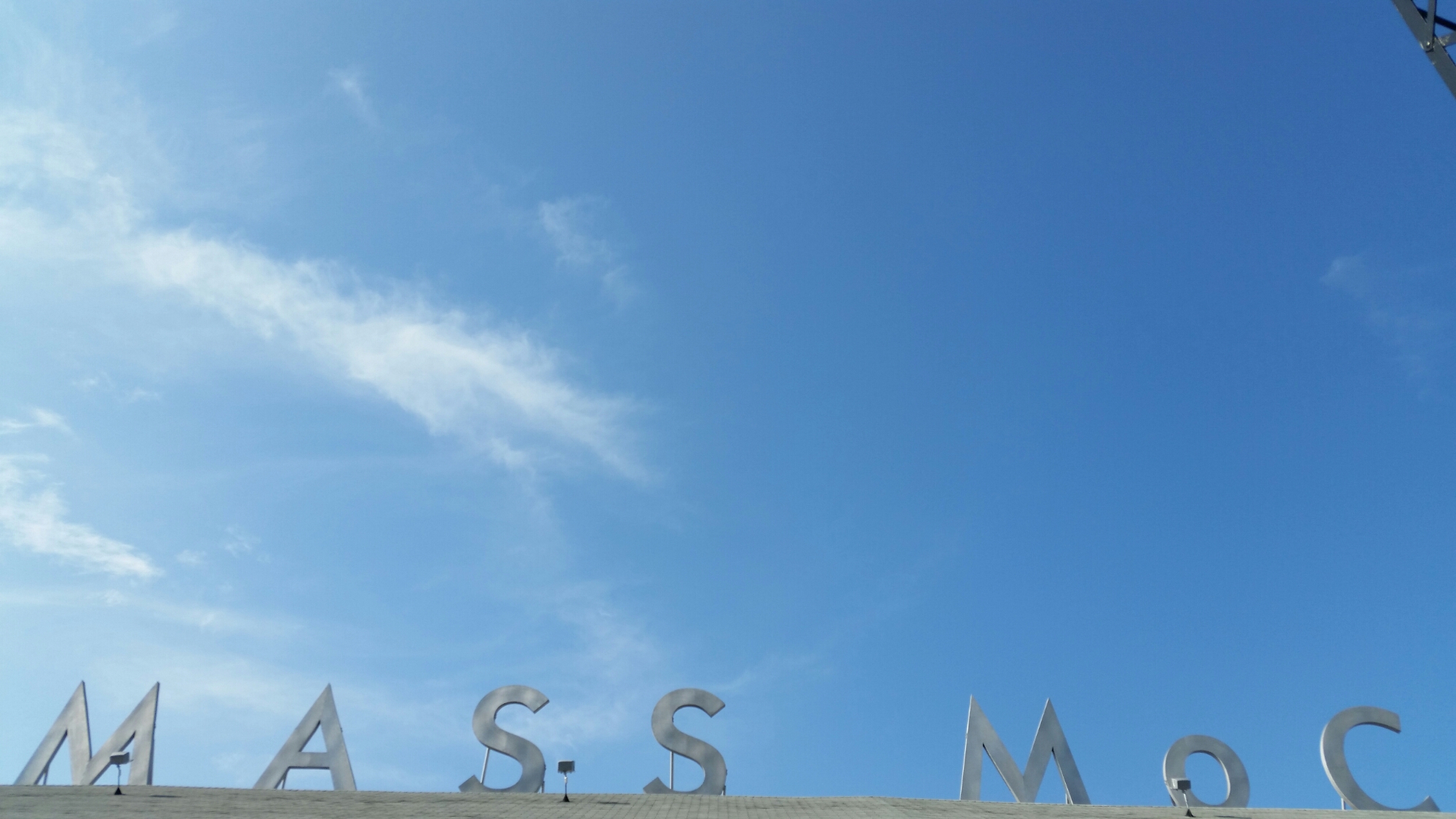
We headed out west along the Mohawk Trail through the hills and valleys of western Massachusetts to the Berkshires, stopping only for a hermit and ice cream at a junk store in Erving en route. We wanted to see MASS MoCA, which was established in a set of disused industrial buildings in North Adams in 1999. The buildings are fine, particularly the Boiler Room installed by the Sprague Electric Company in 1947:

Redwood Library
I’ve wanted to go to the Redwood Library for a long time. It’s a surviving eighteenth-century subscription library, founded in 1746 by a gift from Abraham Redwood, a Quaker slave owner (he inherited a plantation called ‘Cassada Garden’ in Antigua). He gave £500 ‘for purchasing a Library of all arts and sciences, whereunto the curious and impatient inquirer, after resolution of doubts, and the bewildered ignorant might freely repair for discovery and demonstration to the one, and true knowledge and satisfaction to the other’. The language of the gift admirably exemplifies early eighteenth-century free thinking, the quest for knowledge which led the citizens of Newport to greet the arrival of George Berkeley en route to establish a university in Bermuda and themselves to form a Literary and Philosophical Society in 1730. This was half a century before the foundation of literary and philosophical societies in provincial cities like Manchester (1781), Newcastle (1793), and Hull (1822).
Newport RI
I had forgotten the relentless opulence of Bellevue Avenue in Newport, Rhode Island, the so-called ‘cottages’ towering over the street. We drove through the drizzle admiring their oppressive grandeur, many of them still private residences. The question was, which to visit ? The Breakers or the Marble House ? We chose the Isaac Bell Jr House by McKim, Mead and White, built in the early 1880s, just after they had designed the Casino nearer the centre of town. It’s in a wonderful, over-elaborate Arts-and-Crafts style with rich shingled exterior, a bulbous roof based on a French windmill and an interior stripped of most of its furniture, but with elaborate decorative details drawn from historic French interiors, mantelpieces based on designs by E.W. Godwin, a big inglenook, and silk and rattan in the ceilings.


Mariana Cook
Before leaving Martha’s Vineyard, we called in at Mariana Cook’s forthcoming exhibition at Tanya Augoustinos’s A Gallery in Oak Bluffs (opens tomorrow). It was only half hung. I’ve previously known Mariana’s work mainly as a portrait photographer (she took the official portrait of me on the website and Chris Smith for the NPG), but her work has now diversified into semi-abstraction, including details of a black silk dress, steps, window frames in France, an interior in Santorini, light on the pavement, trees in Central Park and a door in Oak Bluffs. Some of these have been published in her book, Close at Hand.


 | Charles | Saumarez | Smith |
You must be logged in to post a comment.