I have been very sorry to hear news of the death of Bob Pirie, a great book collector and anglophile, lawyer, banker, specialist in the works of Donne, and all-round colourful character. I first met him in Boston in the mid-1970s when he invited me to lunch at the Club of Odd Volumes and I used to see him when I was in New York and vice versa. He was one of the people involved in the early days of the American Associates of the Royal Academy. I will miss his advice.
Monthly Archives: January 2015
Late Rembrandt
I slipped into an early morning viewing of Rembrandt:The Late Works, really only to be able to commune with a small number of the greatest works before they return home: the extraordinary Conspiracy of the Batavians under Claudius Civilis which is owned by the Royal Academy of Fine Arts in Sweden, but lent to the Nationalmuseum; The Syndics, of course, from the Rijksmuseum; the two portraits from the National Gallery in Washington, acquired, I note, in 1942 (there is detailed information about the provenance of these and other paintings online in order to make clear their immunity from seizure); the astonishing Jacob blessing the Sons of Joseph from Kassel where I have never been; and what is presumed to be his last work, Simeon with the Infant Christ in the Temple, also from Stockholm, so profound even if, or perhaps because, unfinished. As rich an exhibition as I’ve seen in a long while.
Judith Aronson
I have just received in a large brown paper parcel a copy of Judith Aronson’s book, Likenesses. I’ve always liked and admired her photographs, some of which we acquired when I was at the NPG. She knew Avedon when she was a student, but they are much less direct and confrontational than his, more meditative and much more often informal. They’re photographs of a world we have lost (or maybe it’s only I who have lost it), of writers and intellectuals, when ideas ruled the world. I think they’ve just gone on display in Cambridge University Library.
Brown’s Hotel
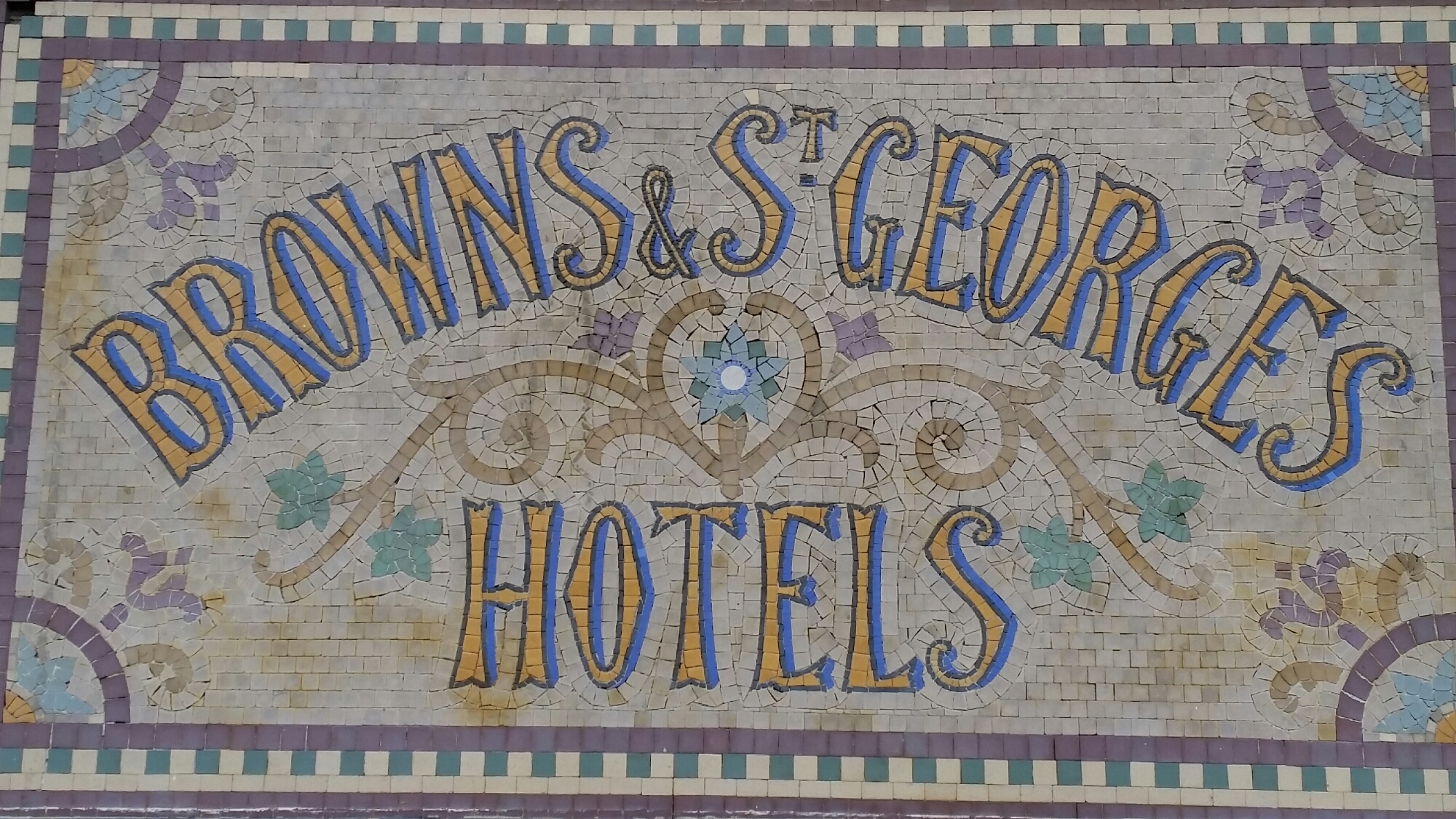
As I was walking past Brown’s Hotel at lunchtime today, I noticed, which I never had before, that there are mosaic plaques along the façade which announce that it is Brown’s and St. George’s Hotel. Brown’s itself was opened by Lord Byron’s butler in 1837 (or was he his valet ?) and his ambitious wife Sarah, who had been Lady Byron’s maid. In 1859, it was taken over by James Ford, who had owned stables in Oxford Street, before setting up Ford’s Hotel in Manchester Square. In 1889 (at least this is the date given in The London Encyclopedia) his son, Henry Ford, who had been the recipient of the first telephone call ever made in 1876 by Alexander Graham Bell from Brown’s, was able to buy St. George’s Hotel on Dover Street behind. The plaques mark the moment of the opening of the new stucco front when the two hotels were combined:
Die schöne Magelone
We went to Die schöne Magelone, a seldom performed song cycle by Brahms: seldom performed not because they are not wonderful musically, but because it is not clear what the connecting narrative should be and if it should be in German. On this occasion, the narrative was supplied by Iain Burnside (in English). He gave one an understanding of the chivalric adventure, half explaining what was going on, but not so as to diminish the singing of Roderick Williams, who afterwards was awarded an honorary degree.
Creative Industries
I have just been on Sky News talking about the new government report which details the success of the cultural industries: the growth not just of film, IT and computer gaming, but the ways in which these are related to art, design and architecture and creativity more generally. The report reveals how much these industries have grown (10% in 2013) and how much they contribute to the British economy (5%). So, the question is: what is the government doing about this ? The answer is, buggering up arts education.
Lascars
I was asked for a definition of Lascar and realise I got the answer wrong. They were Indian sailors who were employed on ships travelling out to Asia and back, particularly by the East India Company, although their numbers were restricted by the Navigation Acts and there were anxieties about the numbers of them in London which led to the Committee for the Relief of the Black Poor in 1786, intended to help lascars as well as ex-slaves. Large numbers of them came to London in the late nineteenth century which is why they figure so prominently in the literature of the east end.
Winterreise (2)
We went to a performance of Winterreise at the Barbican, with Ian Bostridge singing and Thomas Adès accompanying. It’s hard to imagine a more fiercely intelligent combination of singer and pianist or a more deeply thought and felt performance. They came to the Barbican having performed it in Hamburg, Warsaw, Budapest and La Scala in white tie. There must have been 3,000 people in the hall, so it was not exactly a chamber performance, but charged. Afterwards, Bostridge talked about the book which he has just published on Winterreise and which he has performed so many times since turning to singing full time from eighteenth-century witchcraft. A pity Adès wasn’t on the rostrum with him.
Greenwich Peninsula
In looking across at Greenwich Peninsula yesterday morning, I thought of something I was told about Michael Heseltine earlier in the week: that he had not minded the failure of the dome because his primary interest had always been in the opening up of the Greenwich Peninsula to new development through a programme of decontamination; and that he, more than anyone in government, had been responsible for the gradual opening up of, first, the Isle of Dogs, then Greenwich Peninsula, and so on to the Lea Valley beyond:-

Limehouse
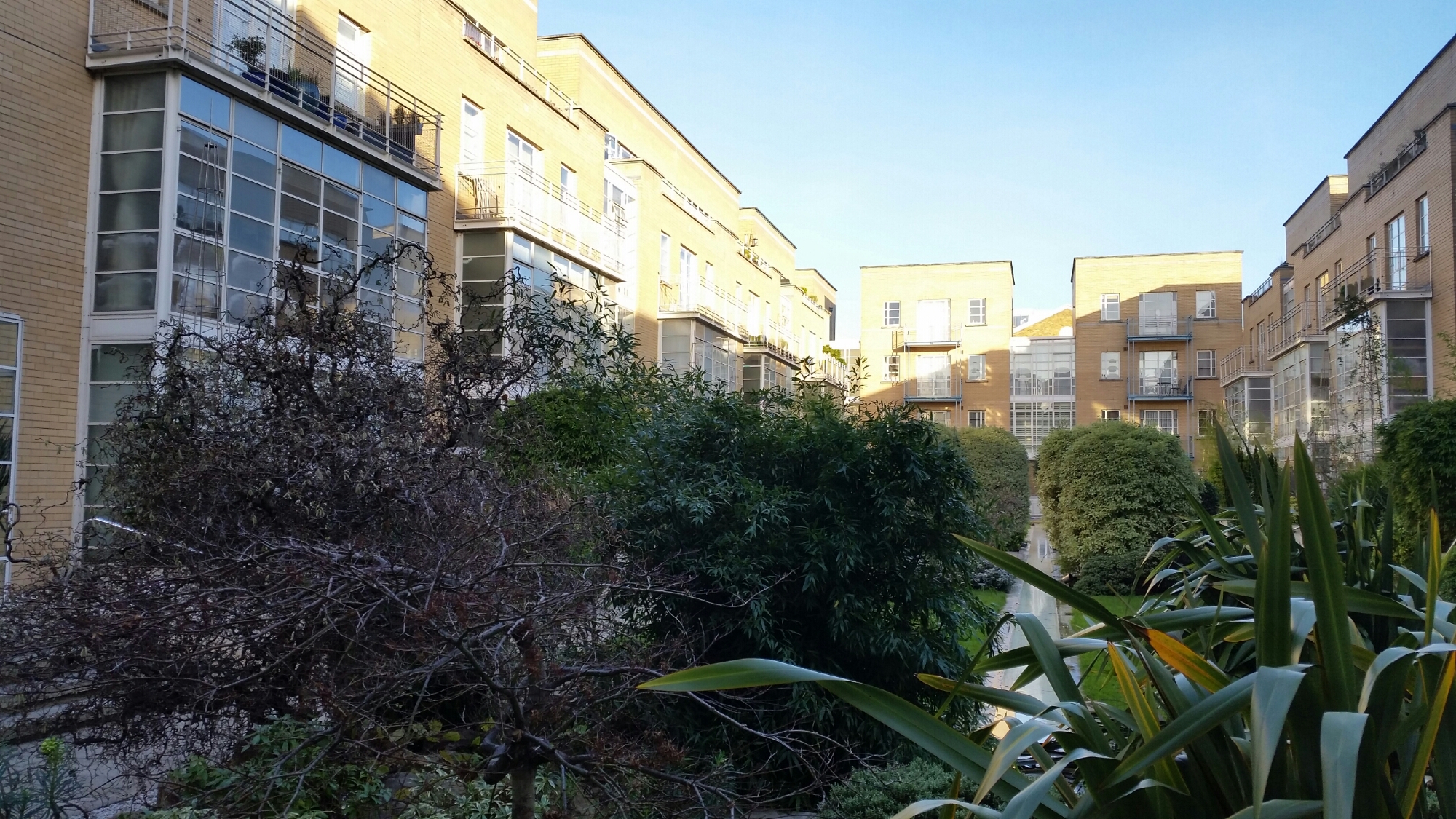
In wandering round Limehouse this morning, I found my way into Roy Square (originally named after its developer and now coyly called The Watergarden), another of the early examples of docklands housing, designed by Ian Ritchie in 1986. It wasn’t helped by being used for the displacement of tenants from the Barleymow Estate five years later:-
 | Charles | Saumarez | Smith |
You must be logged in to post a comment.