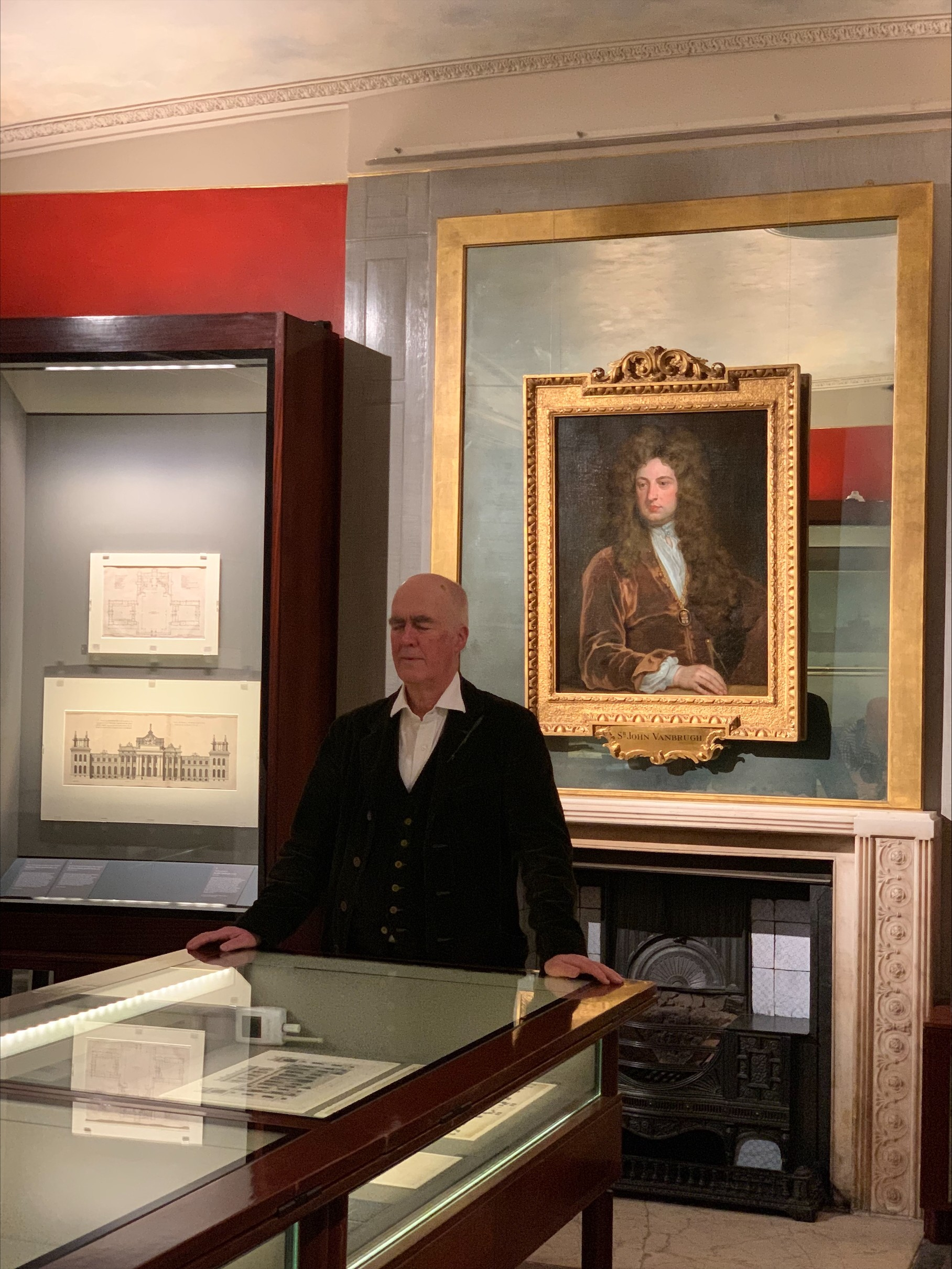
I woke up and looked out of the window at the box hedges:-

I have wanted to write about Andrew Sayers for some time, ever since his premature death aged 58 in October. He was the Director of the National Portrait Gallery in Canberra from 1998 to 2010, built it up as an institution, and was responsible for overseeing their immensely impressive new building. He was from Yorkshire, worked for a long time at the National Gallery of Australia, was a scholar of Australian art, and made the Australian National Portrait Gallery into an institution at the heart of Australian life (Australians have a different relationship to portraits). He left Canberra for Melbourne after a brief and probably unsatisfactory period as Director of the Museum of Australia and devoted himself to painting which he did with total single mindedness. I last saw him for lunch at Heide. After being diagnosed with cancer, he travelled through Europe visiting the greatest works of art for the last time. Today there is a memorial event in the NPG in Canberra. I wish I could be there to honour him.
We were taken to admire the old roller skating rink in Norwich with its magnificent Russian pine ceiling. It was opened on 19th. September 1876 at a cost of over £9,000 with music provided by an automatic piano and closed the following year when it was turned into a Vaudeville Theatre. This didn’t last either and in 1880 it was turned into a store for tinned meat:-

We arrived early at Romilly’s exhibition – of course – so were able to see and admire it without the distraction of other visitors, including the big Glasbau Hahn display case with individual works supported by fish hooks hanging in front of the Foster windows:-
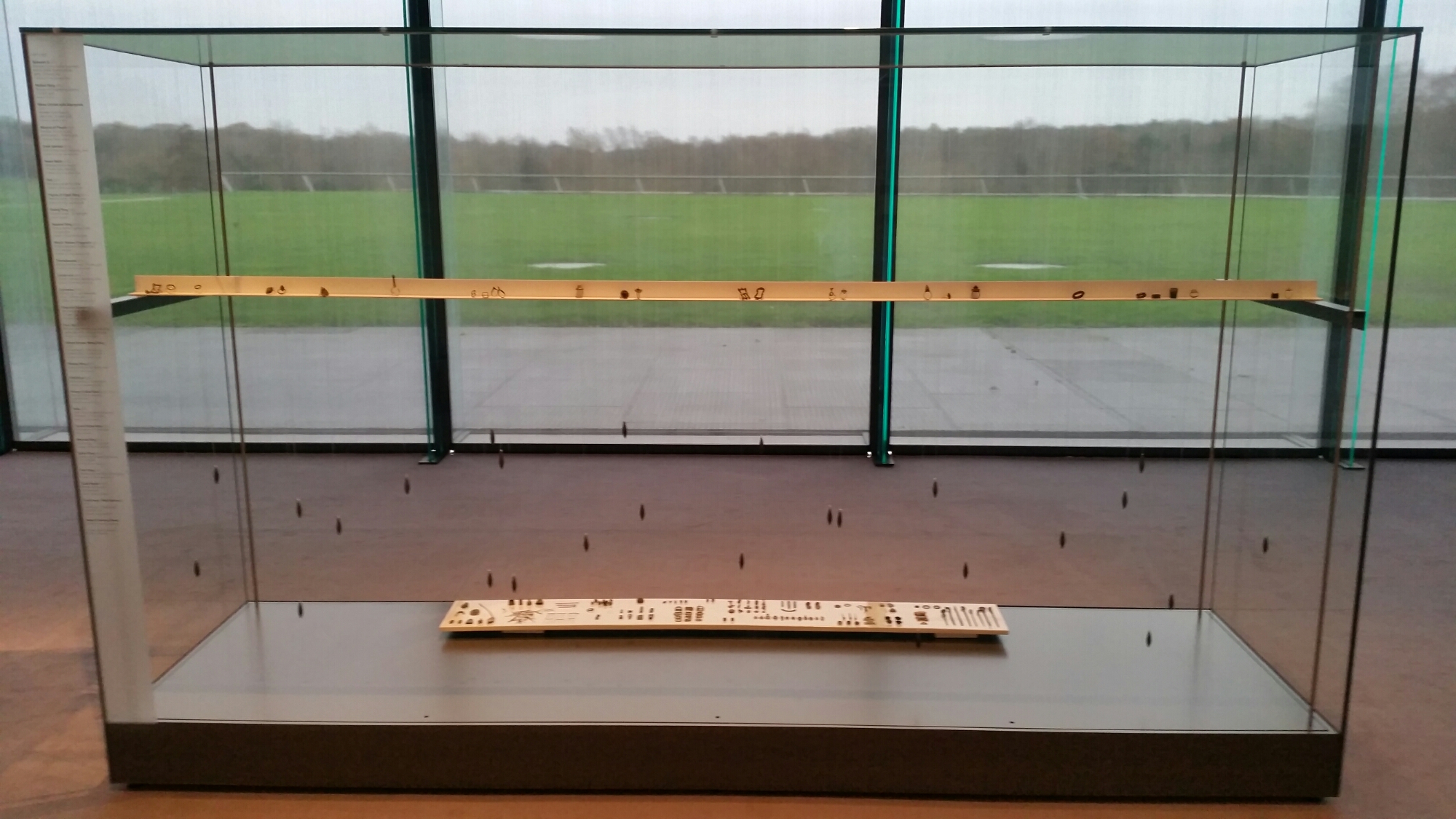
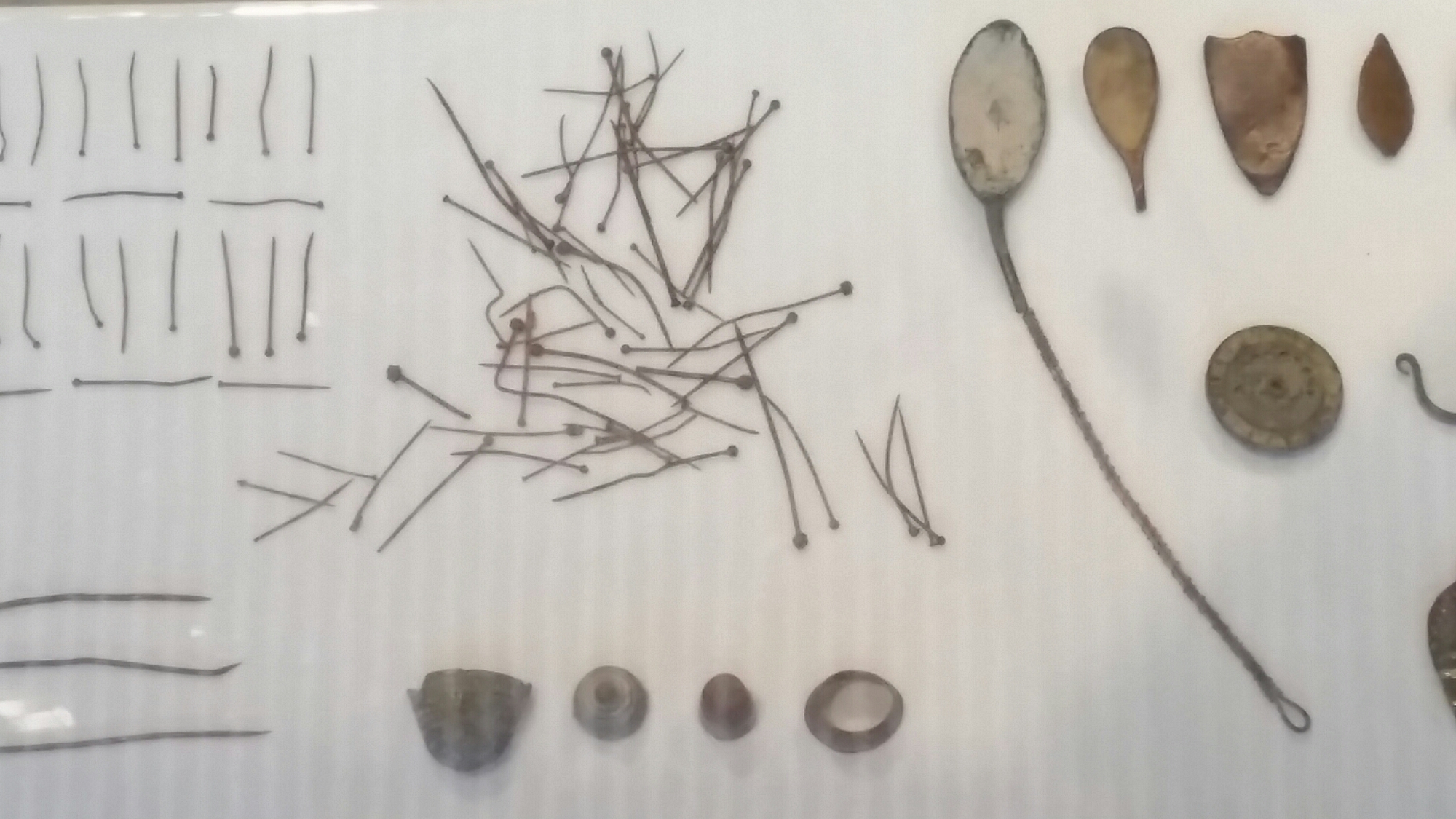
The case – and, indeed, the whole environment of the Foster shed, its mix of work, both ethnographic and contemporary – showed off Romilly’s jewellery to best effect alongside a display case full of Hans Coper pots:-
The issue raised at the John Golding conference yesterday was whether or not it was possible to be taken seriously as a writer and a painter with the presumption that if, like John, one was very successful as a writer, then one’s standing as a painter would suffer. Then I thought Lawrence Gowing was a brilliant writer. Maybe people didn’t rate him later as a painter. Ian McKeever is a very thoughtful writer. I think it has only enhanced an understanding of his painting. Tim Hyman is a significant historian of Sienese painting. Does it mean that people undervalue his painting ? Michael Craig-Martin has just published a volume of essays. Have we become more tolerant of painter’s writing ? Or is it that deep down Golding himself suffered anxieties about his painting, like Cartier Bresson devoting the second half of his life to drawing.
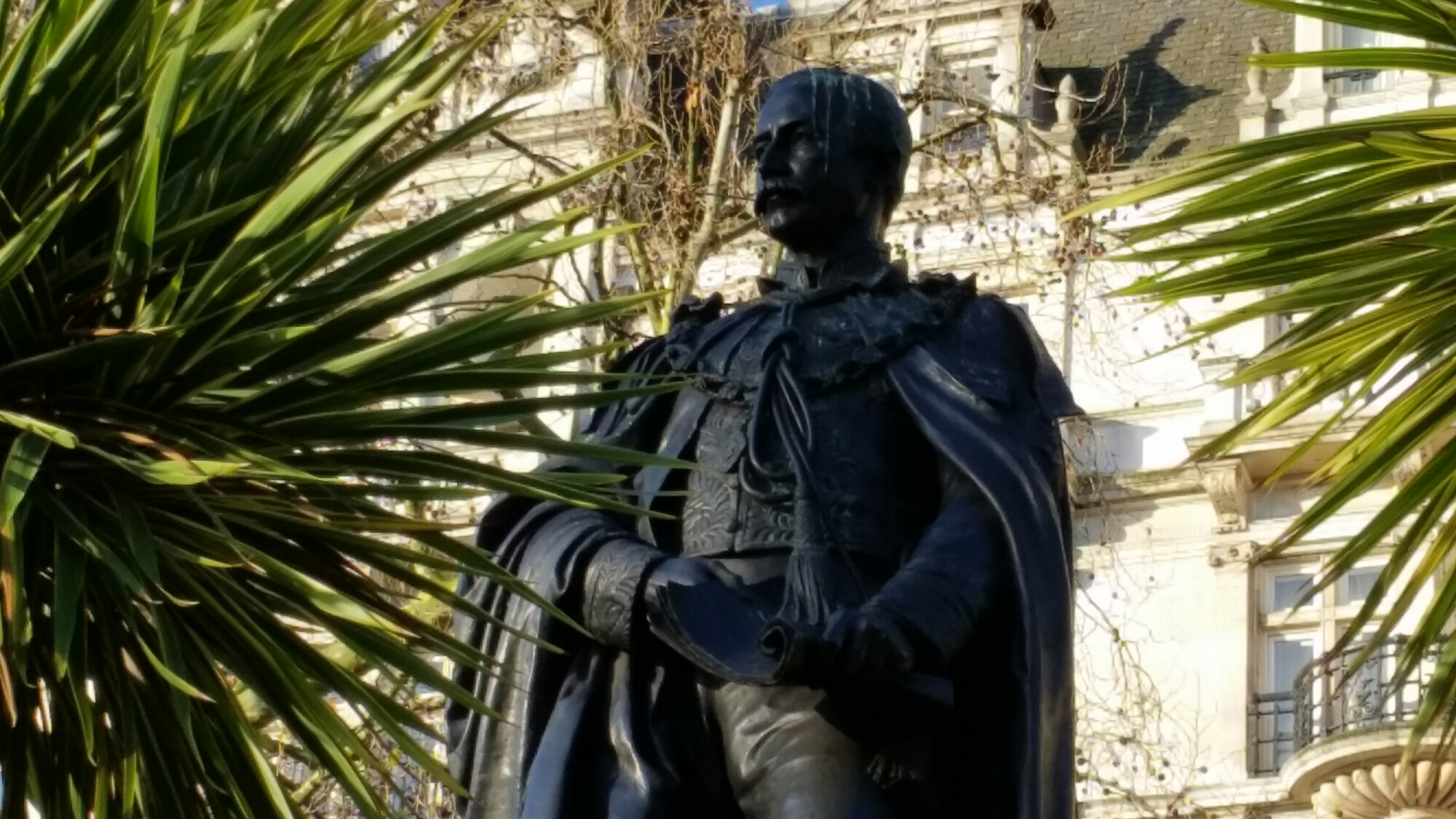
I found myself walking through Embankment Gardens this morning en route to Portcullis House in amongst statues to forgotten Generals and behind the back of the Ministry of Defence. The gardens themselves were retrieved from the river by Sir Joseph Bazalgette and have been used to park the victors of colonial wars.
This is the entrance to the garden which could be Nice:-

This is the statue to General Sir James Outram, the Bayard of India and responsible for the capture of Lucknow:-
I had hoped to go to more of the conference about John Golding at the Courtauld Institute than just seeing the film, A Path to the Absolute, that Bruno Wollheim has made, but not finished, about him. I knew John Golding only slightly, admiring him and his writings from afar, meeting him only occasionally with Bruno where dinner would be dominated by Richard Wollheim, leaving John as a drily amusing and slightly saturnine memory. Through the film I learned more: his upbringing in Mexico; returning to London in 1951 to go to the Courtauld Institute; nothing about being taught by Anthony Blunt, an odd gap as Blunt must have supervised Golding’s PhD. on Cubism; his friendship with Douglas Cooper; his hands shaking before lecturing; then turning to pure painting and teaching at the RCA. There was much about Golding being known primarily as an art historian and his relative neglect as a painter. But he was great as an art historian, bringing qualities of intellectual precision to the study of twentieth-century art, and important for his influence on a generation of students including T.J. Clark, whereas no-one is suggesting he had quite the same importance as an artist.
I spent the second half of the afternoon going round Edmund de Waal’s exhibition in the RA Library with Edmund himself. It inevitably makes one look and pay attention to the objects differently if one is told how and why they have been chosen: the elephant folio; the Cy Twombly sculpture which I had not noticed previously and about which he was lecturing at Tate Britain last night; the Rachel Whiteread; Turner’s beautiful ceramic palette; and the Renaissance bust which is the only record of a bust destroyed in Berlin in the war. What is nice is the sense of a treasure hunt in the shelves, guided by his pleasure in the private world of the library and lent artefacts.
I spent part of the afternoon attending a community art club for the homeless who come once a month to look at one of our exhibitions and then make art work inspired by it. I found it unexpectedly therapeutic to be encouraged to look carefully at the work, talk about it and comment on its meaning – not much different from what art historians do, but maybe undertaken with a more open mind. We ended under the chandelier, which looked, as was pointed out, full of bling in the evening light:-

On my return home, I have looked up the Wentworth Estate in my battered copy of Ian Nairn’s text for Pevsner’s Surrey, a volume Nairn completed, unlike Sussex which defeated him. He had an ambivalent attitude towards the county, which, as he described on the flyleaf was where he was brought up and produced ‘a deep hatred of characterless buildings and places’. Of the Wentworth Estate, he writes, ‘Wentworth is a battered, roughcast Gothick house whose grounds were cut up for housing estates and a golf course early this century. All the natural pinewood landscape was preserved, the houses sited with the utmost care, and the trim kept quite informal – largely gravel roads, no kerbs, rhodedendrons everywhere. The result is the best expensive suburb on Surrey, well worth a visit in itself’.

 | Charles | Saumarez | Smith |
You must be logged in to post a comment.