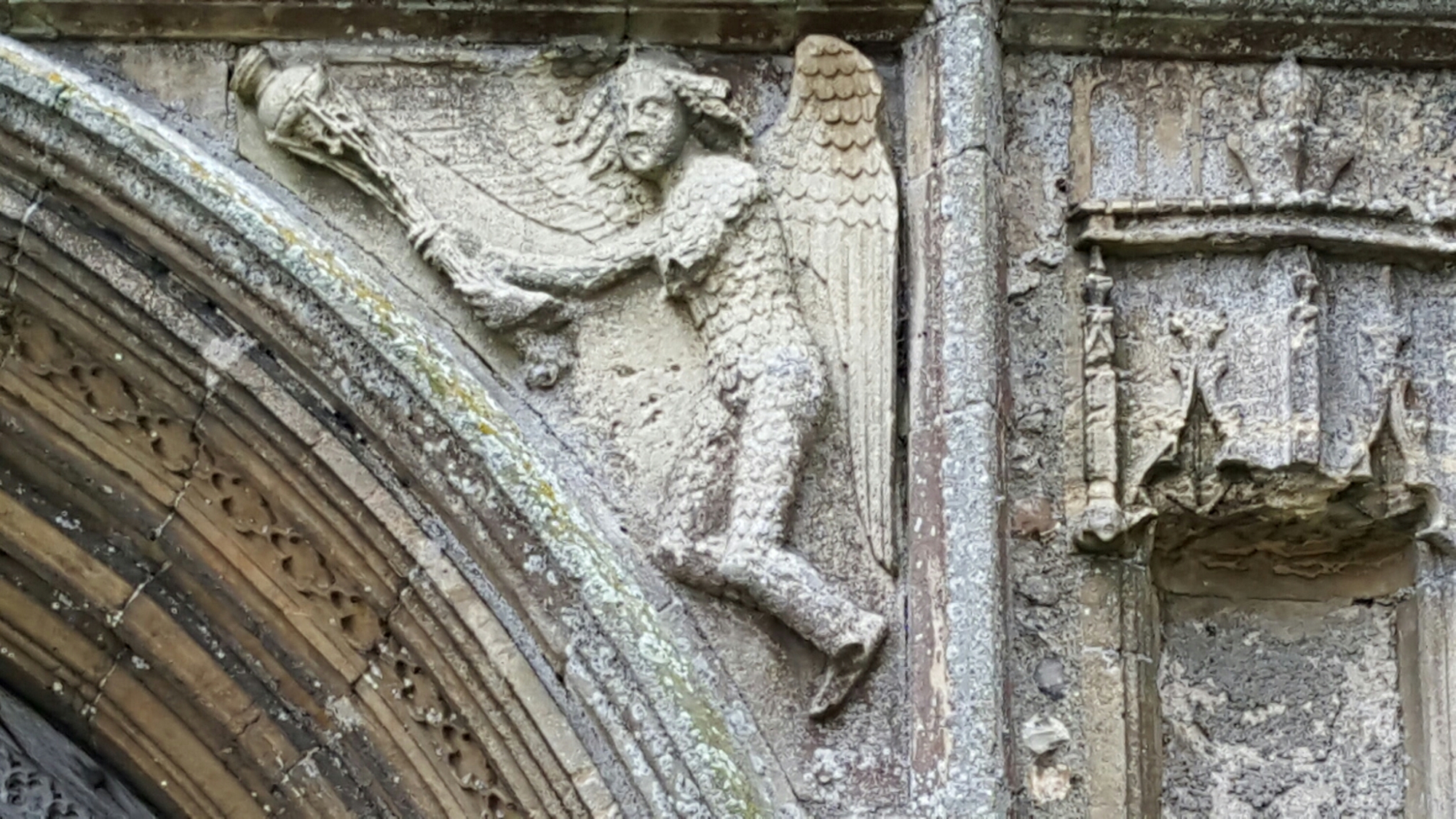
I was keen to see Salle parish church which I remembered as being on its own in the middle of a field, which is not quite true. It was surrounded by snowdrops. A fine west door with two angels in the spandrels above:-

I was keen to see Salle parish church which I remembered as being on its own in the middle of a field, which is not quite true. It was surrounded by snowdrops. A fine west door with two angels in the spandrels above:-
I had a romanticised idea of Cromer as a late nineteenth-century seaside resort, opened up by the railway which arrived in 1877, with a direct service from Liverpool Street from 1897, stopping only at North Walsham. The pier was opened in 1897:-

Nice brickwork lettering in one of the side streets:-

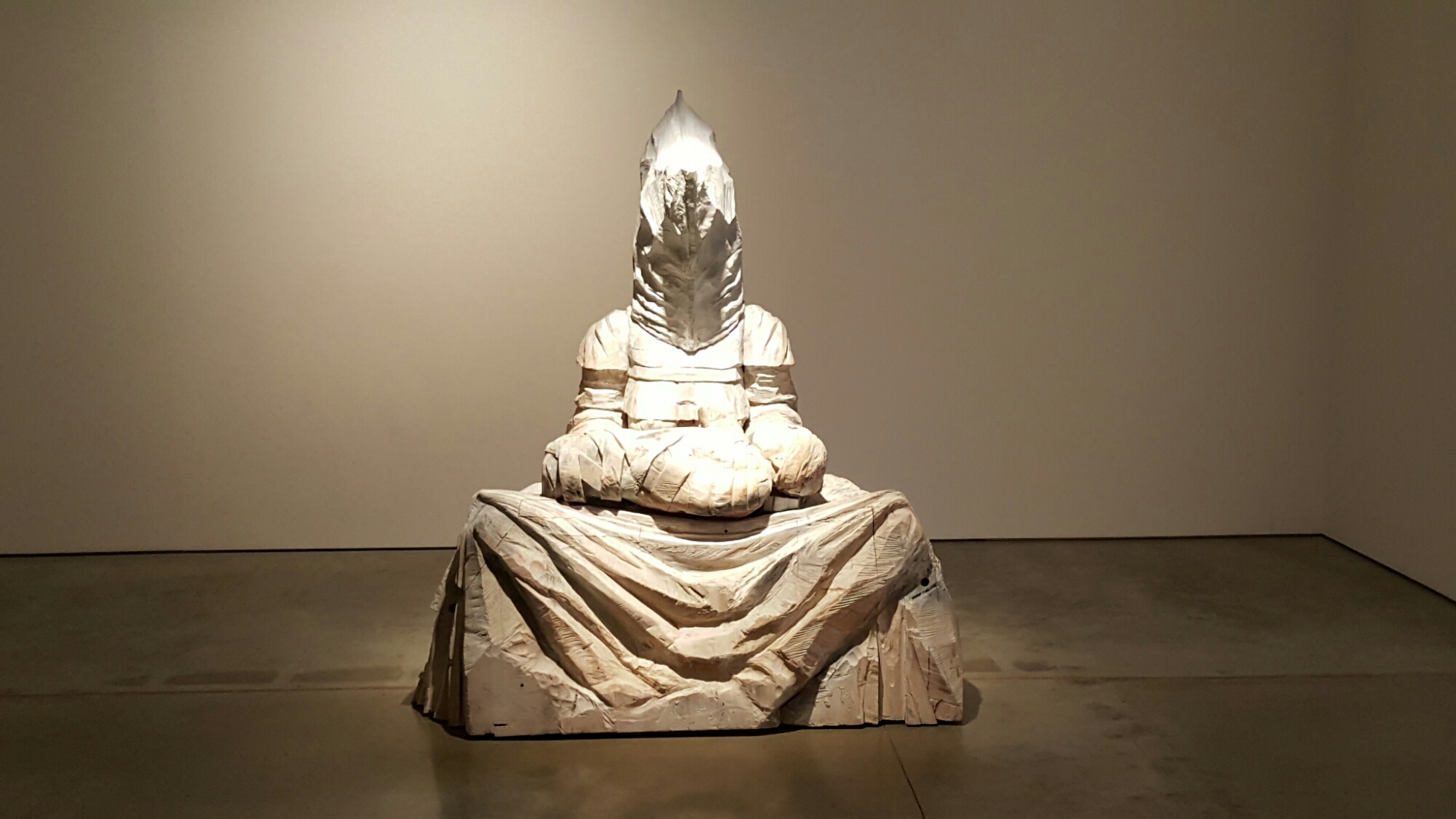
I wanted to see Michael Sandle’s exhibition at Flowers East, as I am a long-standing admirer of his work, having tried – and failed – to get him to undertake a commission for the NPG (the Trustees turned down a proposal that Michael should do a bust of W.G Sebald on the grounds that Sebald was insufficiently British). Much of the work is from the 1980s, dark and monumental, and now wildly and magnificently unfashionable. Particularly strong is his limewood carving Iraq – The Sound of Your Silence (2009) which was shown at the Summer Exhibition:-
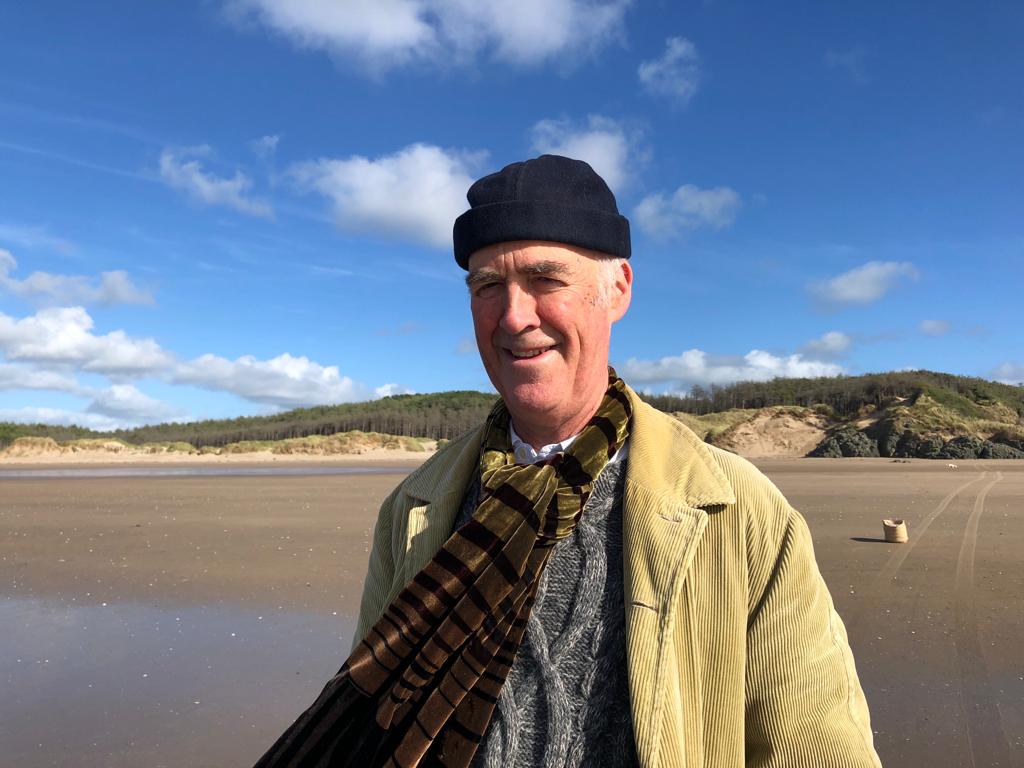
The artist happened to be there, looking a bit dark himself:-

I have been drawn, without particularly intending to, into the controversy surrounding the development of Norton Folgate, an ancient liberty immediately north of the City, where a group of old houses on what was once Ermine Street have been gradually bought up by the City for ruthless commercial development. Rather than the City developing the properties themselves through their architecture and planning department, they are doing it in conjunction with British Land. What is unusual is that the houses are nearly adjacent to a street of old industrial warehouses, relics of the industrial and trading roots at the fringes of the City. One street away is Elder Street, one of the most important historic streets in Spitalfields. An alternative plan for the development of the neighbourhood has been drawn up by Burrell Foley Fischer which respects its original mixed character. The plans drawn up by British Land were rejected by Tower Hamlets, but have now been passed by Boris Johnson over the heads of local planning. It’s a battleground between two forms of development, one monolithic and corporate and the other low rise and conservationist. The paradox is that the latter is almost certainly better at preserving the long-term prosperity and energy of the City as an engine of economic growth.
Philip Hardwick is one of those architects who, like James Pennethorne, pops up all over Victorian London. Trained in the Schools of the Royal Academy, he visited Paris in 1815, drawing its ironwork, then spent time in Italy where he drew the temple at Paestum. In the 1820s, he was responsible for the design of the warehouses in St. Katharine’s dock. In the 1830s, he built in the style of the Renaissance Revival, as at Goldsmith’s Hall. In 1836, he designed the great propylaeum for the London and Birmingham railway terminus at Euston. In 1842, he designed a new gothic Hall and Library for Lincoln’s Inn. He grew rich from his multiple surveyorships, was a founder member of the RIBA in 1835, and was elected an RA in 1841, serving as Treasurer in the 1850s. He’s buried in Kensal Green.
I went last night to dinner at Goldsmith’s Hall, not one of the livery companies that I had been to before. It’s in Foster Lane, close to St. Paul’s. Designed by Philip Hardwick of the Euston Arch and built between 1829 and 1835, it’s a robustly classical building with rich polychrome decoration, bombed in the war, but restored in such a way that the vigour of the original is undiminished. In his speech at the dinner, Peter Murray, the Master of the Worshipful Company of Architects, claimed that the idea of a bridge across the Thames from Temple to Waterloo had been his and derived from a competition held at the time of the Royal Academy’s exhibition Living Bridges. I hadn’t heard this before. It helps give the current controversy over the Garden Bridge a historical perspective.
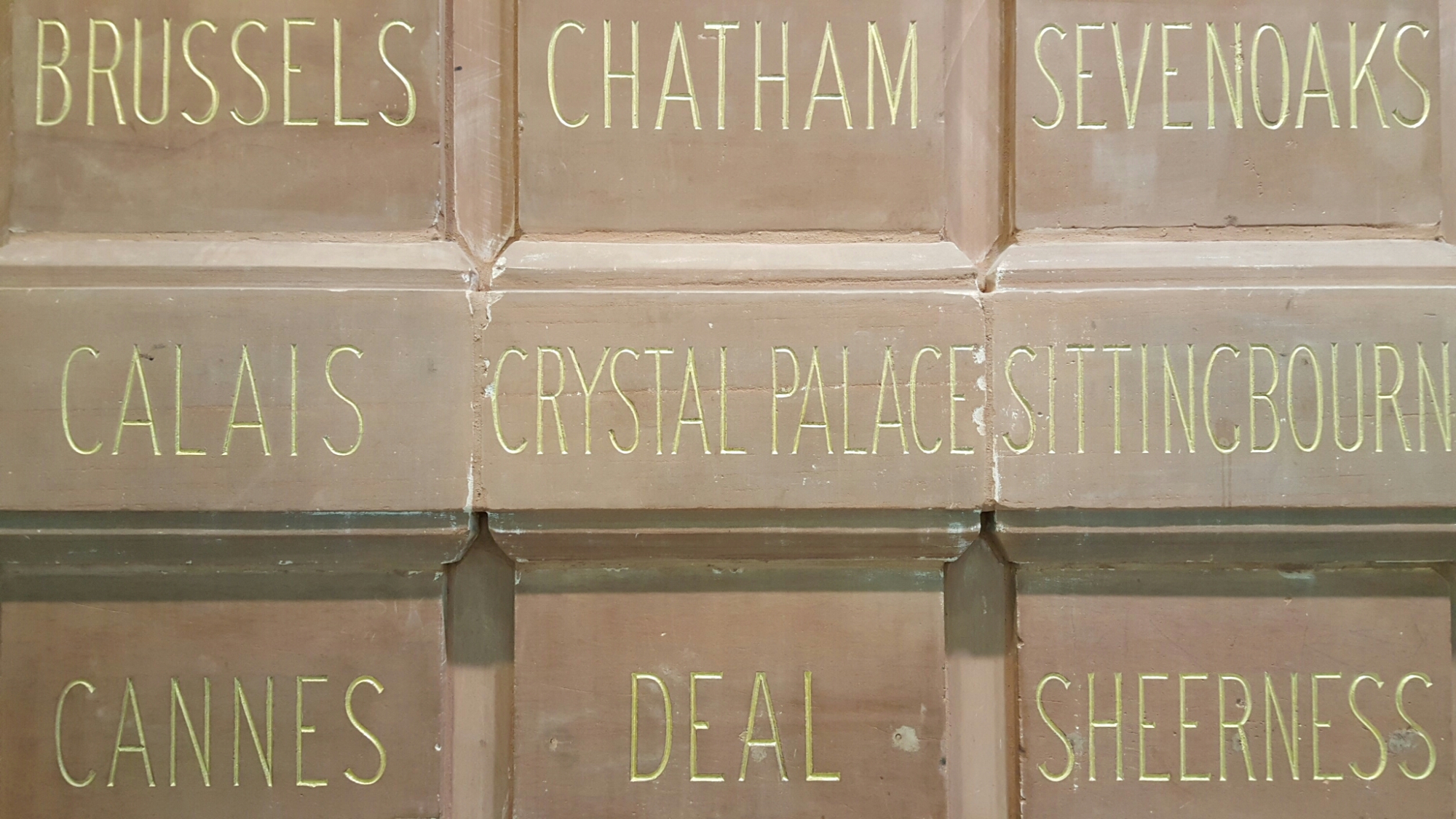
I go through Blackfriars Station several times a week and sometimes more than twice a day, but it was only today that I spotted the great carved sandstone lettering commemorating the destinations that could be reached when the London, Chatham and Dover Railway originally opened what was called St. Paul’s Station in 1886 (the name was only changed in 1937). I like the idea that one could take the train to Cannes, Deal or Sheerness:-
I went to the opening of Chris Orr’s exhibition tonight, organised by Jill George in a small gallery off the Tottenham Court Road. It was very nice to see his faintly satirical depiction of contemporary London in all its Hogarthian enormity, including Tate Modern from the west with the Shard only half built and the new Tate no more than a hole in the ground. Also, Tower Bridge made even more fantastical and animate than it already is. And the Isle of Dogs, all shown in meticulous but only half realistic detail.
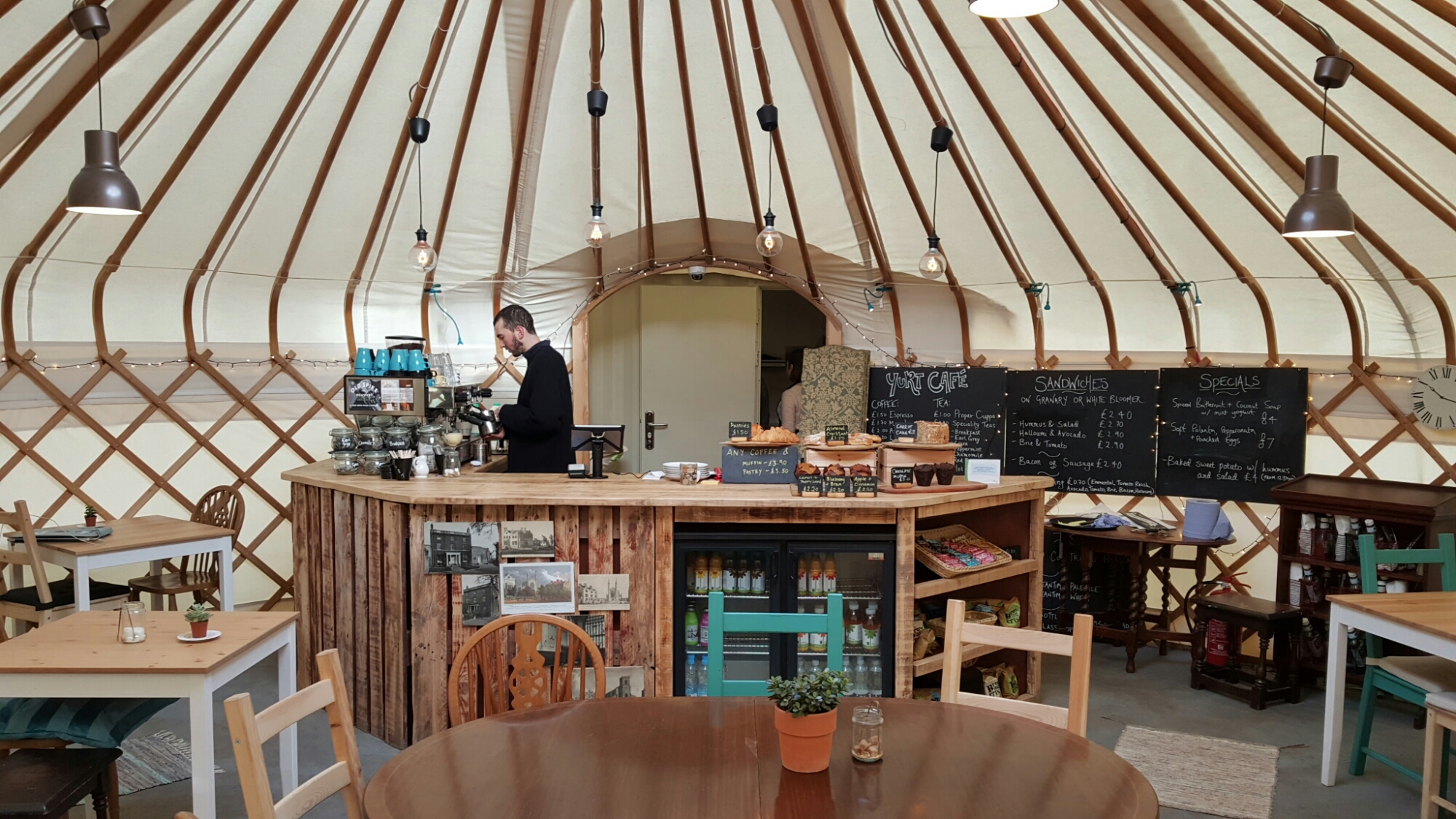
Ever since we first moved to Limehouse in the early 1980s I have been intrigued by the Royal Foundation of St. Katharine which occupies a large site on Butcher Row, but always seems impenetrable. Today I was told that they had opened a Yurt. They have indeed:-
I was walking across York Square when I spotted in the distance the rooftop lettering of the Half Moon Theatre shining in the morning sun:-
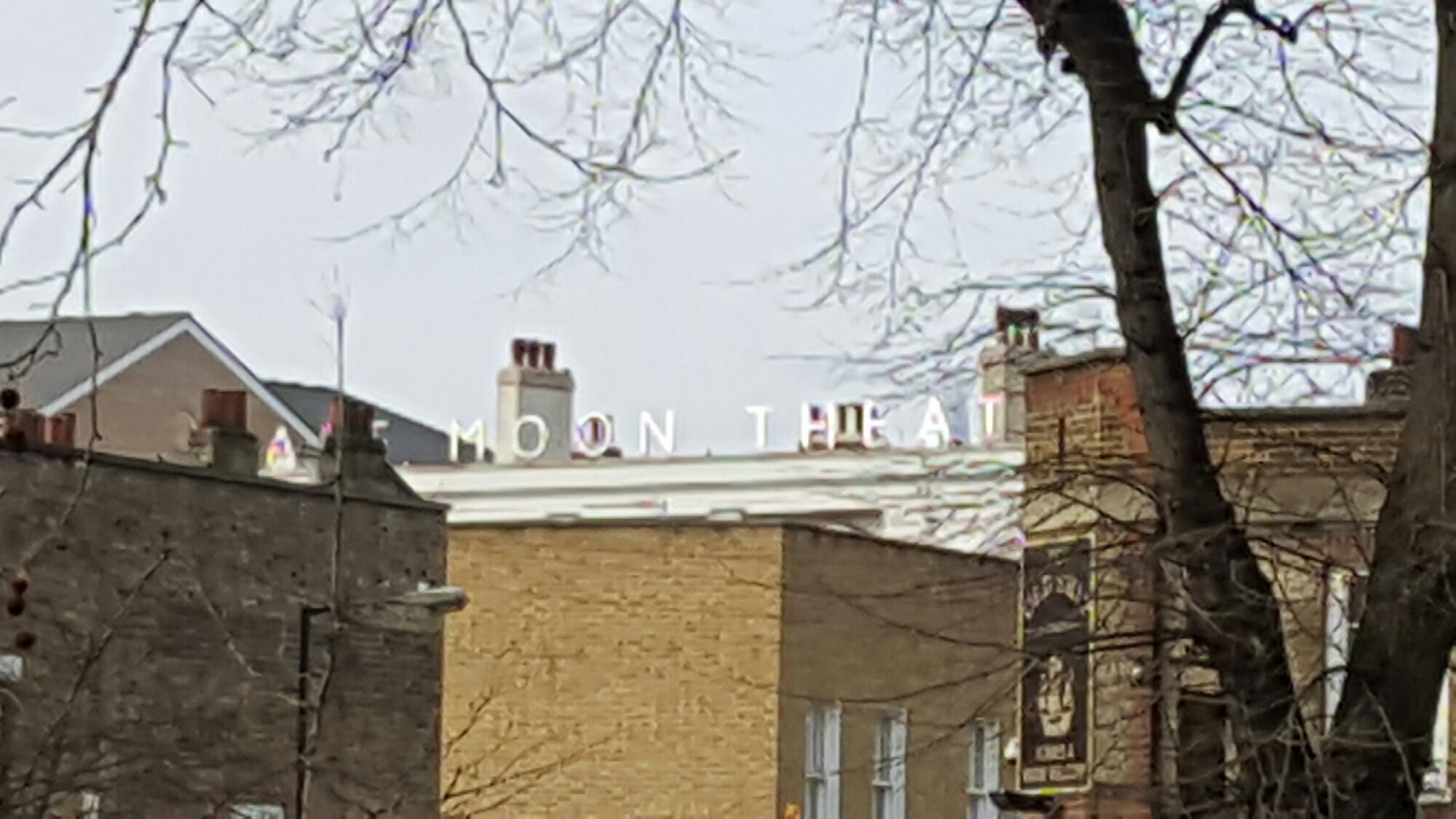
I had never noticed it before. It’s what survives of the Half Moon Theatre which used to be in premises just beyond Stepney Green tube station, but was closed in 1990 and turned into a Wetherspoon pub. The building the Youth Theatre occupies in White Horse Road was originally the local District Board of Works, designed in 1862 by C.R. Dunch:-
 | Charles | Saumarez | Smith |
You must be logged in to post a comment.