The fate of the Whitechapel Bell Foundry continues to be a matter of local, and not so local, concern. It turns out that the whole site has been sold to an East London property developer who is likely to want to demolish as much of it as he is allowed to in order to maximise the return on his investment. He may think that this will be straightforward as there is so much redevelopment in the area. But it would be the loss of a building whose value lies precisely in its continuity of use. As the GLC said when demolition was proposed in 1972 before the rise of industrial archaeology as a discipline, it’s the home of ‘a unique and important living industry where crafts essentially unchanged for 400 years are practised by local craftsmen’.
Monthly Archives: February 2017
Vladimir Ashkenazy
We had the amazing experience this evening of hearing Vladimir Ashkenazy talk about the experience of musicians through the aftermath of the Russian Revolution: how Tchaikovsky remained acceptable throughout; Rachmaninov was removed from the repertoire when he emigrated to the United States, after leaving on a sled for Finland in December 1917, but reinstated after he expressed support for Russia in the early years of the second world war; and Shostakovitch fell from favour after being attacked by Pravda for his Lady Macbeth. All of this is doubtless familiar to musical historians; but sounds different when described by someone who himself had difficulties with the Soviet authorities.
Then he played.
Roman Jakobson
I am impressed that one of my correspondents knew Roman Jakobson before his death in Boston in 1982.
I have been trying to find out more about Jakobson’s involvement in Russian avant-garde culture after the Revolution. The answer is that he was indeed in Moscow at the time of the Revolution, where he was a student in the Historico-Philological Faculty, received his Master’s degree in 1918, and was involved in the Moscow Linguistic Circle which developed the study of semiotics. He didn’t last long because he migrated to Prague in 1920. He remained till 1939, when he fled to Copenhagen then Norway and Sweden, where he studied aphasia, before crossing the Atlantic on a boat with Ernst Cassirer, to join the New School with Lévi-Strauss.
Quite a life.
Burlington Gardens
It’s a while since I’ve been round our building project – in fact, I haven’t been since just before Christmas. It’s making progress, never as fast as I would like, but moving forwards.
The entrance staircase if full of scaffolding:-
The lift has been removed:-
The floor of the Senate Room has been taken up:-
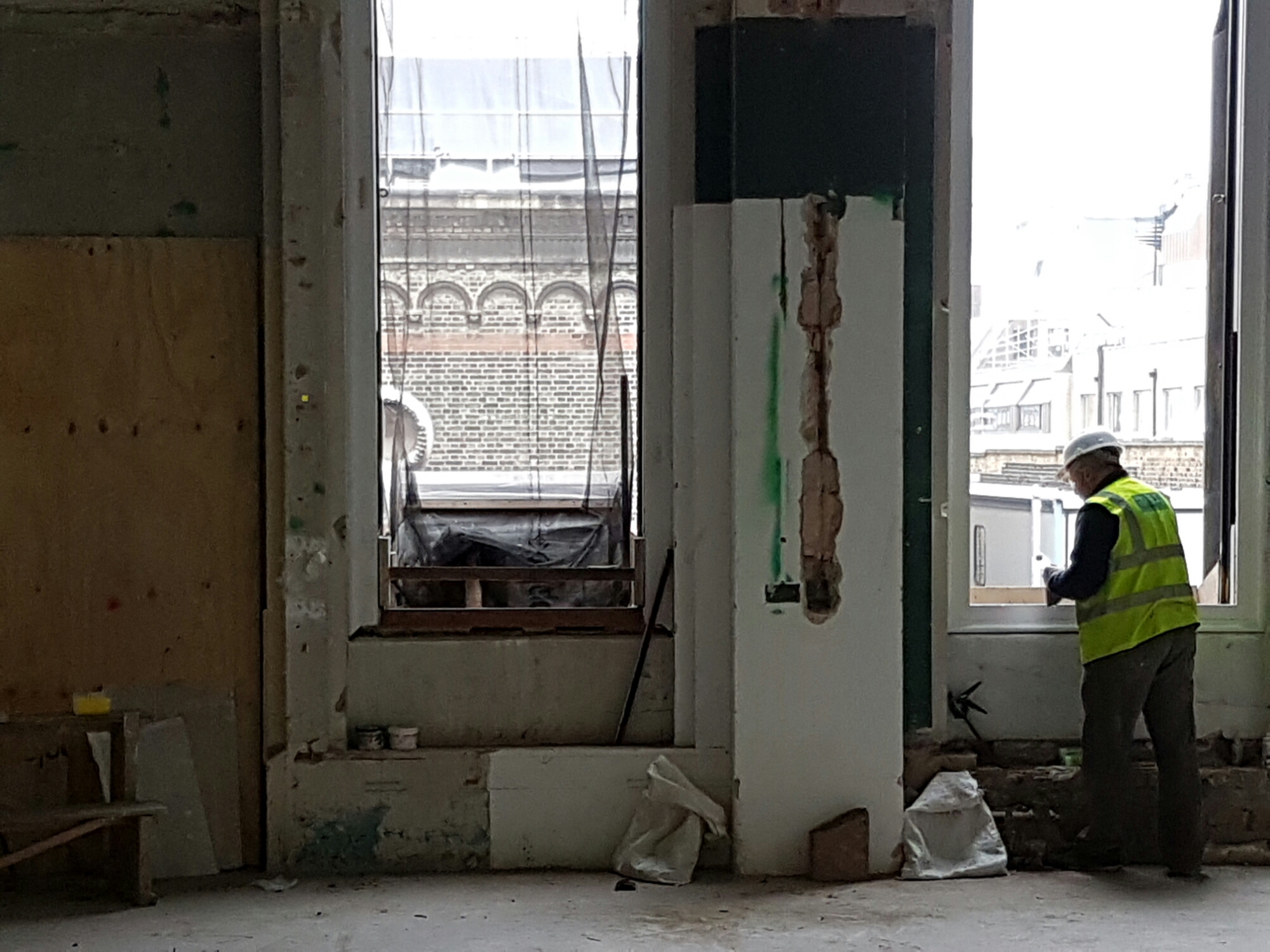
The windows in what will be the Collections Gallery are being repaired:-
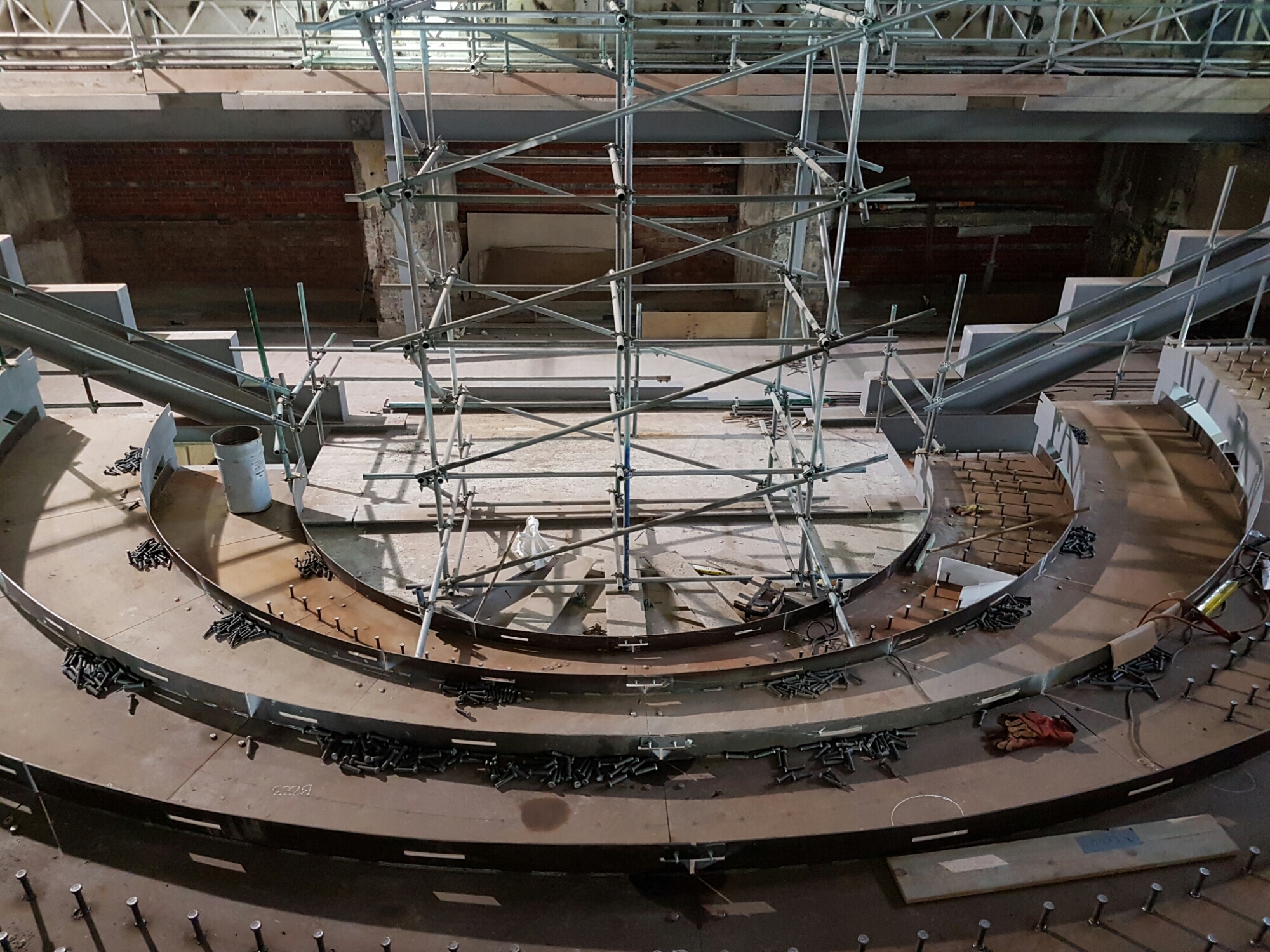
The Lecture Theatre is taking shape:-
There is a gap in the middle of the Schools:-
The south west corner tower is taking shape:-
David Hume is under wraps:-
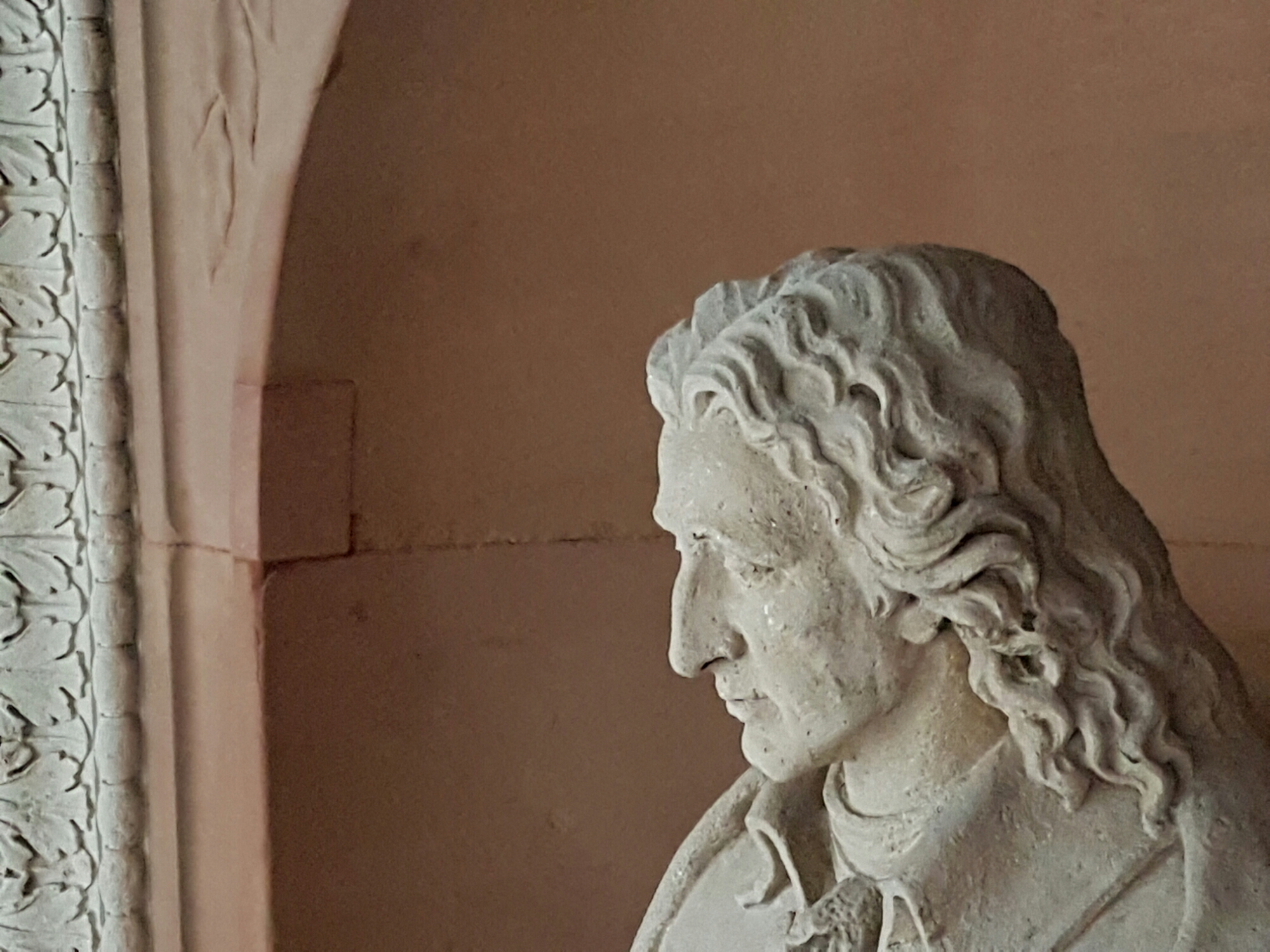
Locke is pensive:-
Revolution
We had the patrons’ preview of our exhibition Revolution: Russian Art 1917-1932 last night, the first opportunity to see the reality of an exhibition which has been planned over a long period and was originally expected to try and reconstruct the survey exhibition of Russian painting shown first in Leningrad in 1932 and then in a reduced form in Moscow. It has been accused in the Guardian of being unduly heroizing of a period of political tyranny, but this was written without Jonathan Jones having seen the exhibition. In fact, it is just the opposite. It starts by demonstrating the sense of optimism and opportunity released during the early stages of the Revolution, the experimentation of El Lissitzky and the avant-garde, but then shows the increasing disillusion, the romanticisation of history, the anxieties of social realism, ending with the horror of the Gulag.
Hopton Street Almshouses
In clearing away the debris of last week, I remembered that I had meant to write a post about the Hopton Street almshouses which I saw as a small oasis from above, close to Tate Modern:-
Not much is known of Charles Hopton. He was born in c.1654, was a member of the Fishmonger’s Company, a bachelor who left the residue of his estate for the establishment of almshouses, which required the demolition of a group of houses to the east of what was then known as Green Walk. They opened in 1752:-
Canary Wharf (3)
One of the contributors to my radio programmes about East London said that Margaret Thatcher had been very annoyed when the Independent revealed that the pyramidal roof of Canary Wharf concealed radio transmitters belonging to MI5. I can find no evidence of this. But what I did discover, which I had never recognised, but does sound plausible, is that its profile and distinctive shape is modelled on that of Big Ben; and that the pyramid conceals the machinery for washing the windows:-
Thomas Sharp
After returning from Oxford, I looked out my copy of Town and Townscape which I must have bought in Blackwells soon after it appeared in 1968 and first got me to look closely at how cities are constructed. It’s got a period feel – of course – illustrated with black-and-white photographs of streetscapes full of the cars of the 1960s and in some cases much earlier. I hadn’t realised that he had published an earlier book Oxford Observed in 1952 and that, after teaching town planning in Durham, he set up a town planning consultancy in Oxford, annoyed that he hadn’t been made a Professor. He was the person who advocated putting a bypass across Christ Church Meadow and was also the person who first used the idea of townscape as distinct from landscape in a book called The Anatomy of a Village, published in 1946.
Basil Willey
I went to Oxford partly in order to hear one of Stefan Collini’s Ford Lectures, which was devoted to a deep and occasionally contemptuous analysis of Basil Willey’s Seventeenth-Century Background, which was first published in 1934 and still in print when I was a student in a Peregrine edition. I was made to feel badly that I had enjoyed and admired his books, particularly the later Nineteenth-Century Studies, which I remember as a highly literate and wide-ranging introduction to the relationship between literature and the history of ideas. At least I discovered this morning that Collini’s DNB entry on Willey is more sympathetic, although not without a sense that it was Willey who took Cambridge English in the direction of moralism.
Oxford
I only had time for a short walk round the centre of Oxford.
Up the High, which I can only ever see through the eyes of Thomas Sharp, the town planner, whose Town and Townscape, published in 1968, first taught me to look at the way streets are constructed:-
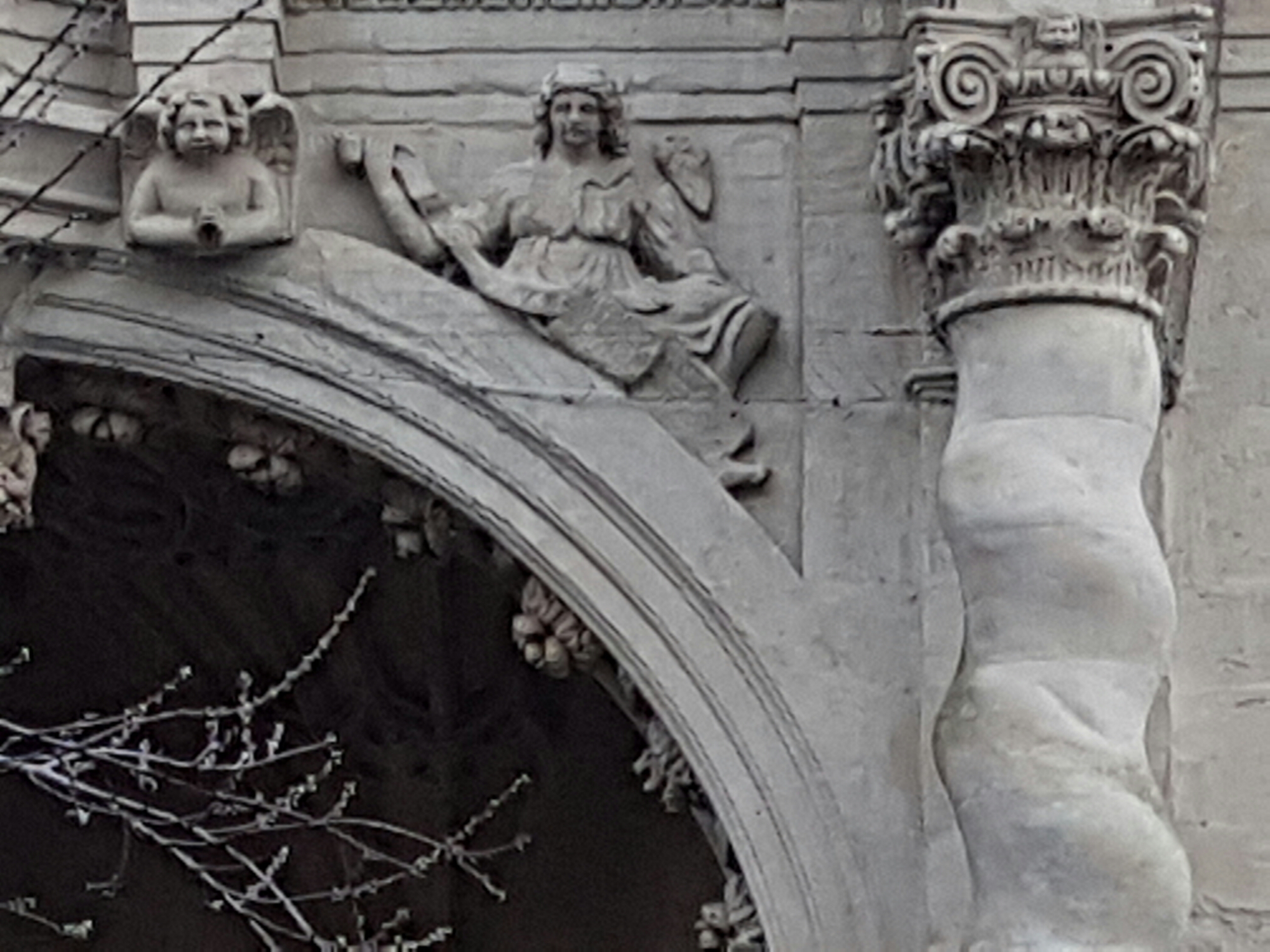
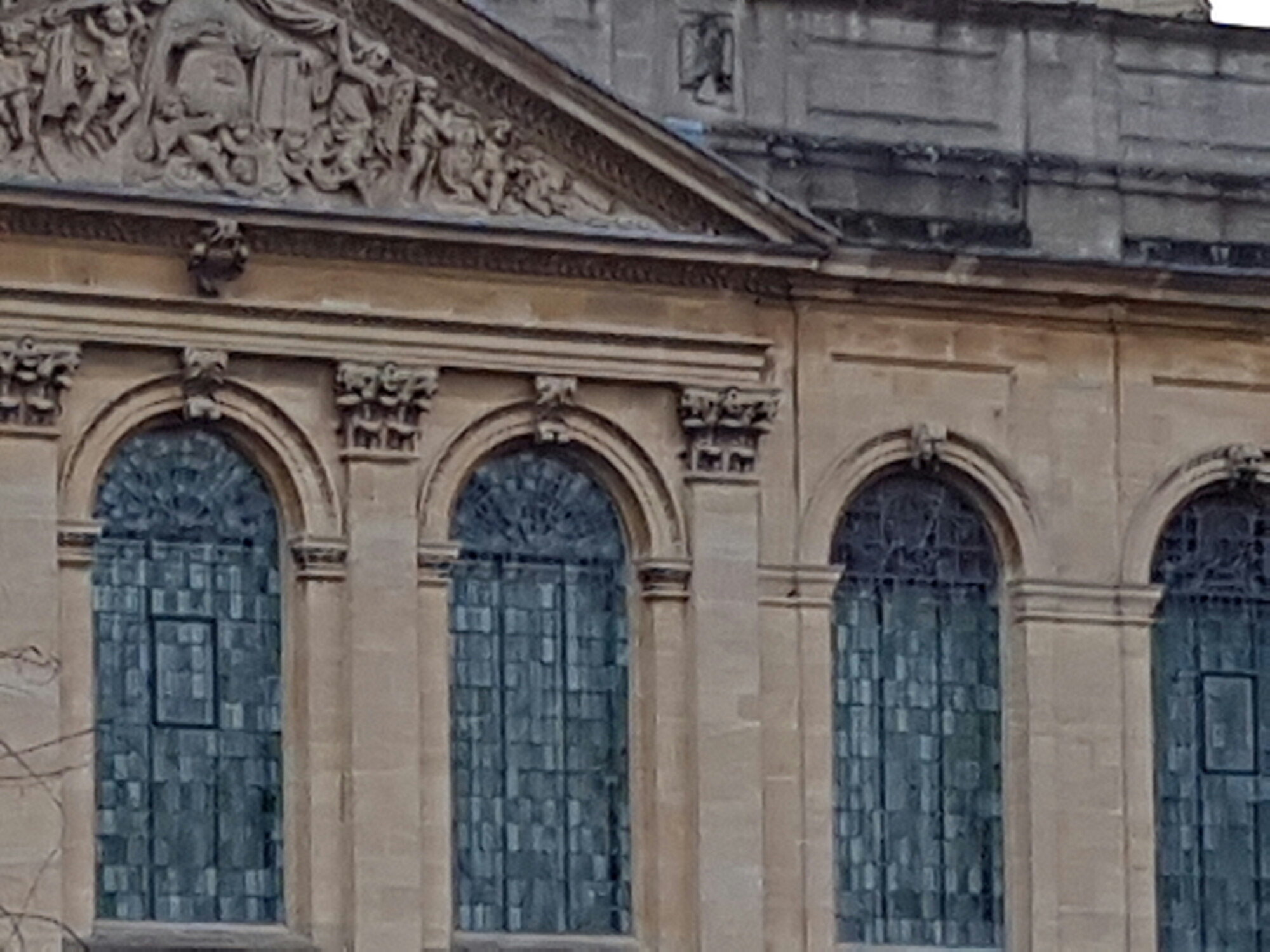
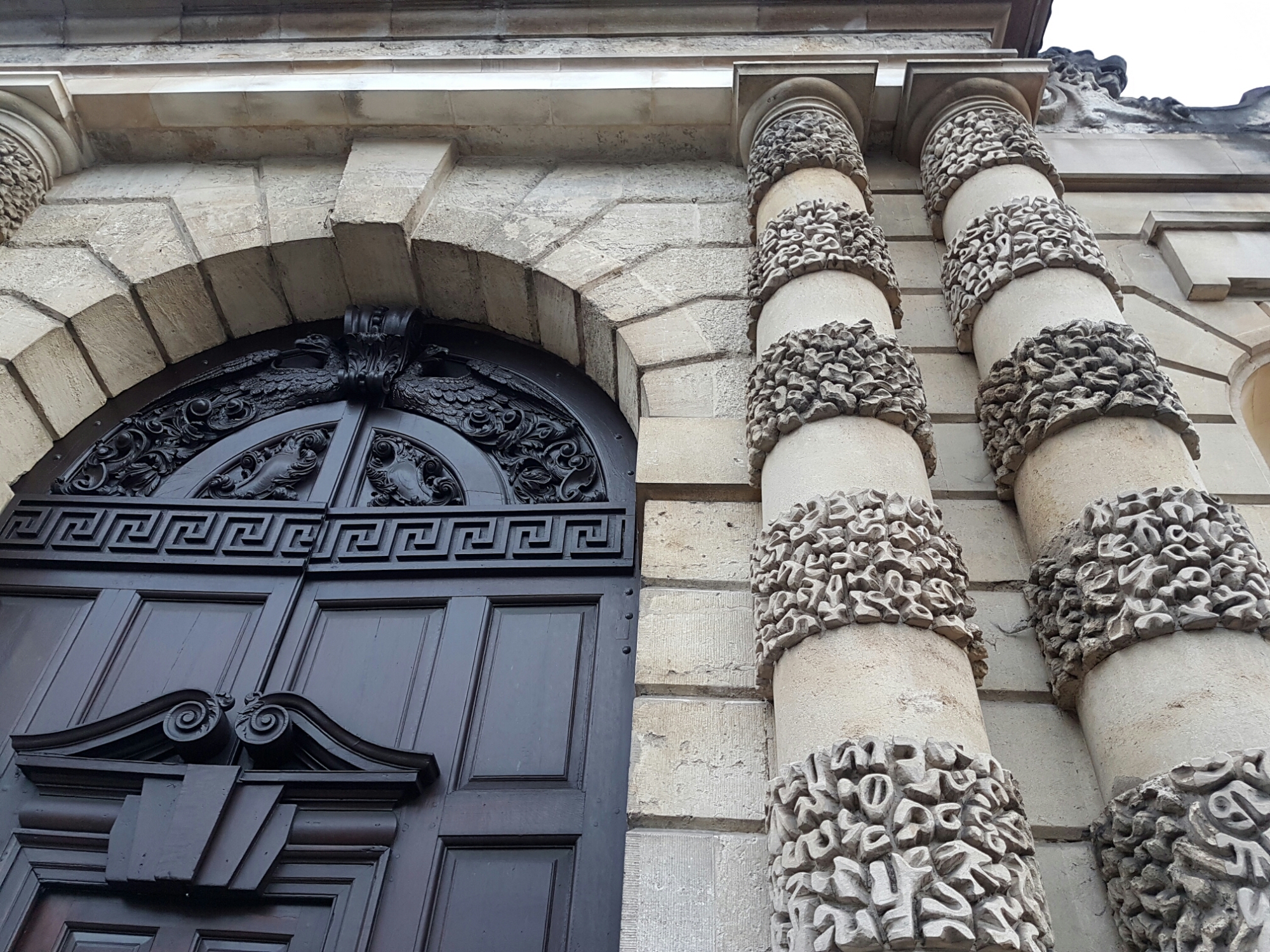
I had forgotten how extraordinarily baroque the entry portal to St. Mary the Virgin is, designed by Nicholas Stone in 1637 and paid for by Archbishop Laud’s chaplain:-
I deeply admire the Radcliffe Camera, designed by James Gibbs long after his style of Roman baroque had ceased to be fashionable:-
Then I slipped down New College Lane:-
Past the back of Queen’s where a new library by Rick Mather is being constructed alongside the old:-
Back to its front door:-


You must be logged in to post a comment.