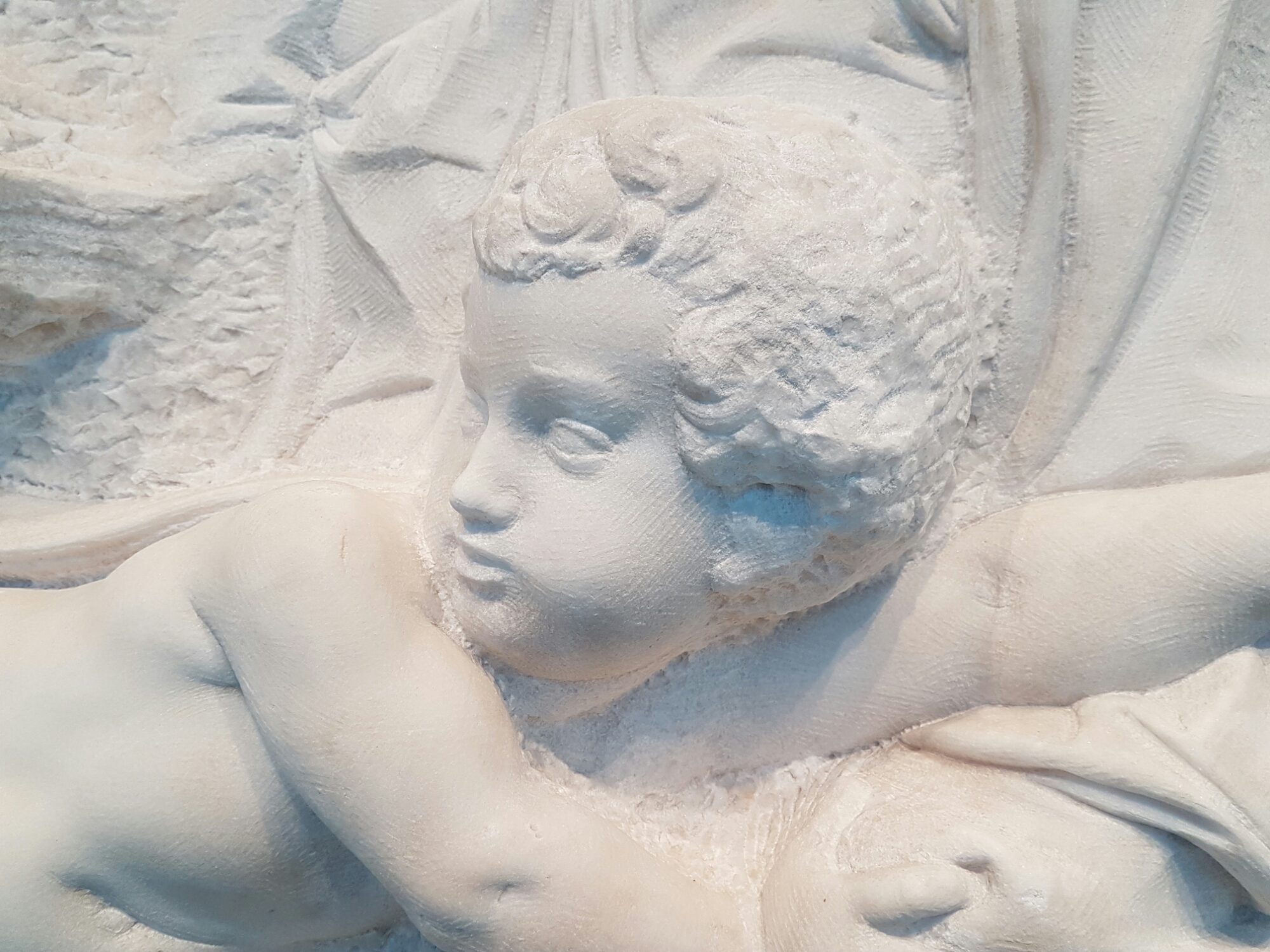
The Taddei Tondo (1)

I have been holding back a post on the Royal Academy’s Michelangelo Tondo because of an embargo pending the announcement of its loan – very exceptionally – to the National Gallery for its exhibition Michelangelo Sebastiano in its north galleries.   

The exhibition looks at the friendship of the two artists after Sebastiano arrived in Rome from Venice in 1511, and includes the Tondo, which was donated to the Royal Academy by George Beaumont, a key person behind the foundation of the National Gallery and gave his collection to it.

The Tondo was commissioned by Taddeo Taddei, a patron of Raphael, who lived in Florence, was keen on contemporary art, and died of the plague in 1528.   Vasari records how Michelangelo ‘blocked out (without ever finishing) two roundels of marble, one for Taddeo Taddei (which is to be found in his house today)…’ and he probably stopped work on it when he left Florence for Rome in 1505.   It remained in Florence in the hands of Taddei’s family until it was bought in 1812 by  Jean-Baptiste Wicar, one of Napoleon’s commissars, sent to Italy to loot the country on behalf of the Louvre.   Not only did he acquire the tondo, but also a big collection of Michelangelo’s private papers and drawings from Corsica.   It was then bought by Beaumont on his visit to Rome in 1822.   He wrote to Thomas Lawrence PRA, ‘I have been fortunate enough to gain possession of an undoubted work of M. Angelo !!…You may be sure I was made to pay for this, & but for the assistance of our excellent friend Canova probably I should not have succeeded’.   He boasted to Wordsworth how much he looked forward to him seeing it once it was installed in his house, 34, Grosvenor Square.   It was seen and enjoyed over dinner parties by a generation of artists, before being bequeathed to the Royal Academy on Beaumont’s death in 1827;  and it will now be seen and enjoyed by the many visitors to the exhibition:-
Standard

Christian Levett

I went to a conversation tonight between the PRA and Christian Levett, the hedge fund trader and collector of antiquities.   Levett talked more openly and more engagingly than anyone I have heard about the psychology of collecting:  how he started as a child collecting Roman coins and modern medals in his home town of Southend;  moved into becoming a commodities trader in the City in the early 1990s and then an early hedge fund manager;  he mentioned casually that he would earn fees of 20% on deals worth over £1 billion, which left quite a bit of money to invest in antiquities;  he realised from auction catalogues that it was possible to buy antiquities relatively cheaply;  and amassed so many that he opened his own museum in Mougins in the south of France.   What he made clear was how the psychology was the same in the two fields:  a knowledge of the market;  a certain steely determination (he refused to buy works which were overpriced);  and decisions which were motivated by passion and instinct as much as calculation.

Standard

The Garden

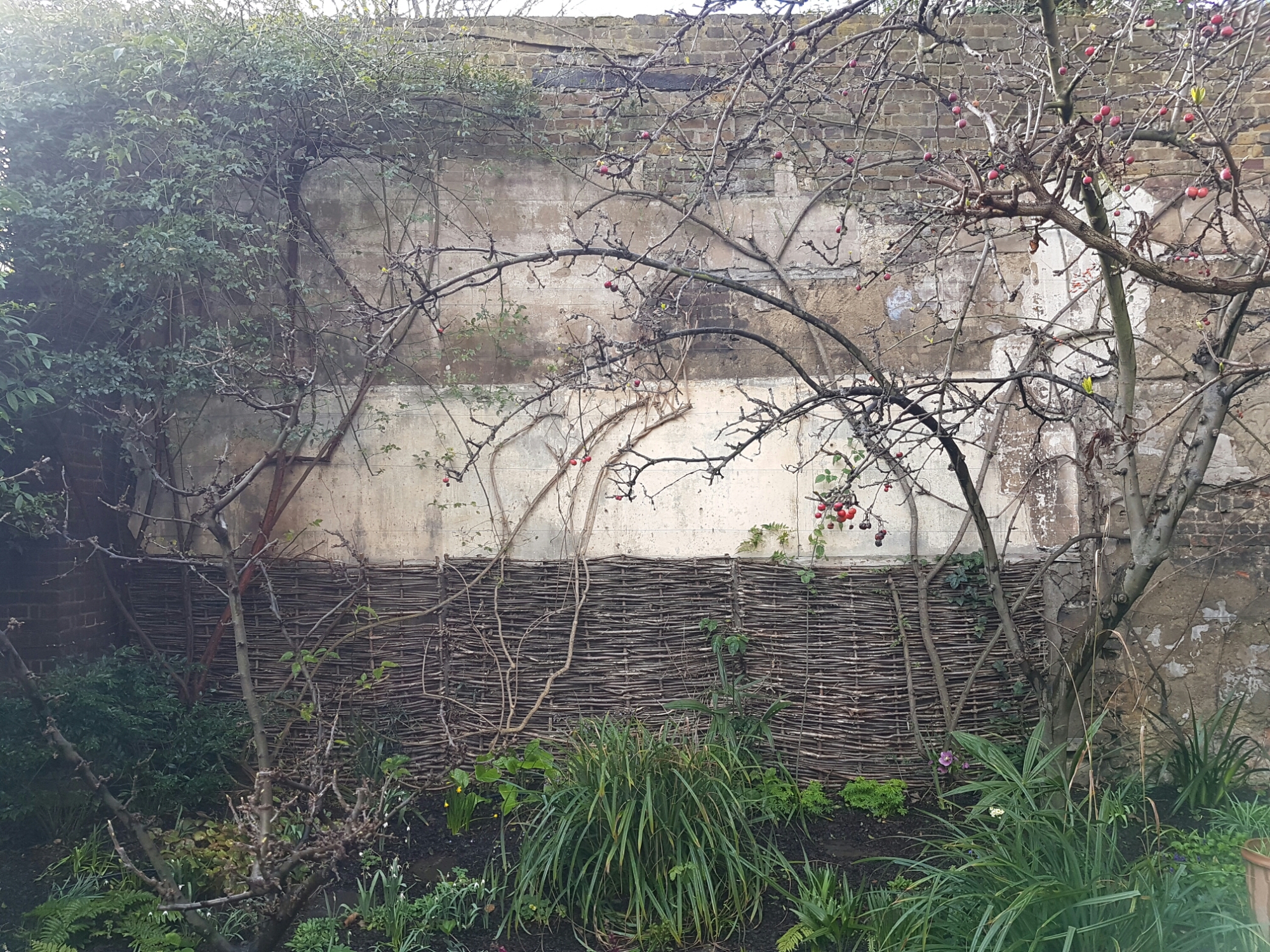
I have nothing to post today apart from two views of the garden walls which I took in the brief intervals of the afternoon spring showers:-

Standard

Philip Core

I was interviewed this morning for a German website about collecting.   The result has been that I have spent the rest of the day remembering things that I should have mentioned.   One of the artists we knew in the late 1970s was Philip Core, an extravagant and in many ways remarkable American artist, who arrived in London in the mid-1970s and lived in a flat in what was known as the Kennington triangle (not the Elephant and Castle as it says in Wikipedia) which he painted completely black.  I remembered that he made his name on a television quiz show about art on which he appeared jointly with Maggi Hambling and George Melly.   But I completely forgot to mention that one of the first works of art which we acquired (at considerable expense) was a large picture by Core entitled The Double Triangle which he had exhibited in an exhibition shown by Francis Kyle framed in rope and which I had to walk across the Elephant and Castle in a high wind.   I hope it’s rolled up in the attic.

Standard

Roger Mayne

I called in on the Roger Mayne exhibition at the Photographer’s Gallery because I was interested in seeing his very influential street photography of the 1950s, including the photographs he took on Southam Street (now under the Trellick Tower) which were exhibited at the ICA in June 1956.   They look like the visual equivalents of Willmott and Young’s Family and Kinship in East London, published in 1957, which demonstrates the same sense of discovery that there is an abundance of life in the slums.   This is hardly surprising as Mayne worked with Peter and Iona Opie when they were undertaking research for their Language and Lore of Schoolchildren (1959) and provided the cover photograph for Peter Willmott’s Pelican Special on Adolescent Boys of East London (1966).   I was also interested in the exchange of letters with Kenneth Clark (whose name is mis-spelt in the caption), acknowledging the fact that Clark had lectured at the Royal Photographic Society  on the artistic merits of nineteenth-century photography and lamenting the fact that the Arts Council wouldn’t do photographic exhibitions.

Standard

Thyssen Collection

I was interested to read in this month’s Art Newspaper of the strenuous efforts made by Margaret Thatcher to secure the Thyssen Collection.   I knew about this because there was a proposal, which does not appear in the government papers which have been released, to offer Thyssen the building of the National Portrait Gallery and to move the Portrait Gallery to a very prominent site on the river by Canary Wharf.   The proposal was enthusiastically supported by John Hayes, the gallery’s then Director, but not by the Trustees who were determined that it should remain on what they described as ‘the processional route’ (ie close to parliament, Whitehall and Trafalgar Square).   Although the Art Newspaper describes Robin Butler as having conducted the negotiations, I have always understood the key figure to have been Sir Claude Hankes-Drielsma, a collector said to have been an ally of Thatcher.

Standard

For the love of London

I went to a book launch tonight in the Alex Eagle Studio in Lexington Street for a book about young London in which, slightly to my surprise, I am represented.   Leafing through the book and the people it represents, I grieve that it is precisely those aspects of London which are at risk from gradual loss through Brexit – the young, diverse, transient, creative population which will migrate or probably already find London less hospitable than it was.   There’s a faint irony that this was the London over which Boris presided and this is the London which, more than any other individual, Boris has destroyed.

Standard

Castle Howard (2)

I spent the day with a group convened by the Paul Mellon Centre, Tate Britain and York University to ponder the history of the room arrangements at Castle Howard which are very complex, each generation changing the hang, adding more objects, moving the pictures round, and not necessarily keeping a record of what was done.   

We started in the Great Hall, which occupies much of the central volume of the house, an extraordinarily and unnecessarily stately entrance to the house with two flanking staircases essentially invisible behind.   Below Phaeton in the dome (repainted after the fire) are Pellegrini’s four elements.   Earth:-

And Air:-

Huge columns:-

And the overmantel is by the great Italian stuccadore, Giovanni Bagutti:-

Then down the formal enfilade of the south front:-

Past the fifth Earl who is now the property of Tate:-

Not sitting on the tapestry chairs which are maybe all that remains of the third Earl’s furnishings:-

To the Long Gallery in Thomas Robinson’s wing, as depicted by John Jackson:-

The questions we were being asked were: to what extent should one treat a country house as an aggregate, a set of complex accretions, each generation adding a new layer ?  Or should it be treated like a museum with each layer being carefully documented and revealed ?  I agreed with those who argued that a country house is not a museum and that its owners have a different set of responsibilities and freedoms to do what they want in terms not of museum-style installation, but more theatrical and aesthetic forms of interior decoration.


Standard

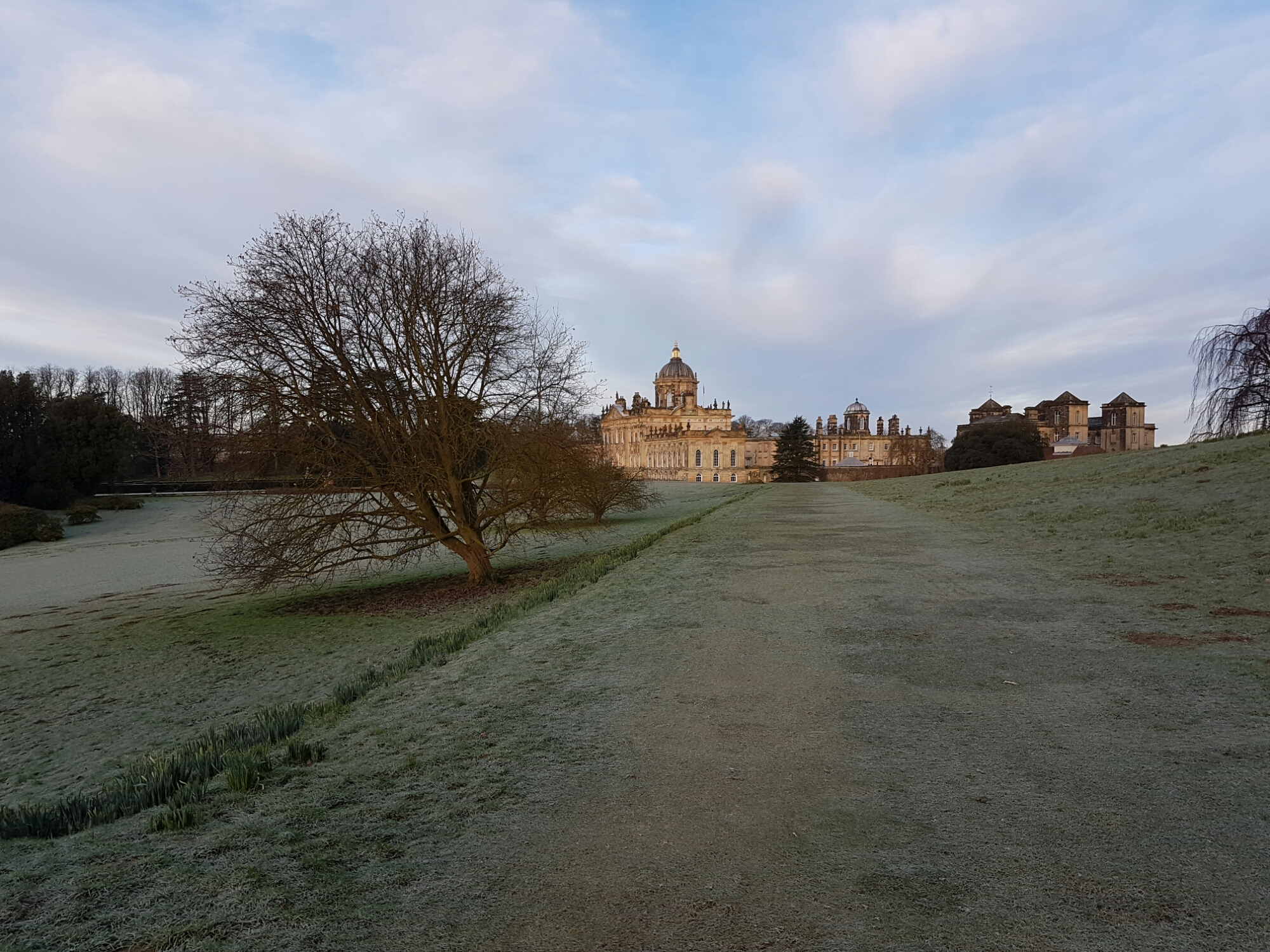
Castle Howard (1)

I was told that my bath would have one of the great views of England and indeed it did:  out across the lawns to the north of the house towards the Great Lake, which was dug out by the fifth Earl when he had recovered his finances some time in the 1790s and, beyond that, to the estate village of Coneysthorpe and, in the distance, the Howardian Hills:-

Looking out of the other window, I could enjoy Vanbrugh’s playful pinnacles, like chessmen, on the south front as the sun came up over the parapet:-

To the north, I saw the Pyramid, constructed in memory of Lord William Howard, across the nineteenth-century parterre:-

And across the parterre and South Lake to the mausoleum:-

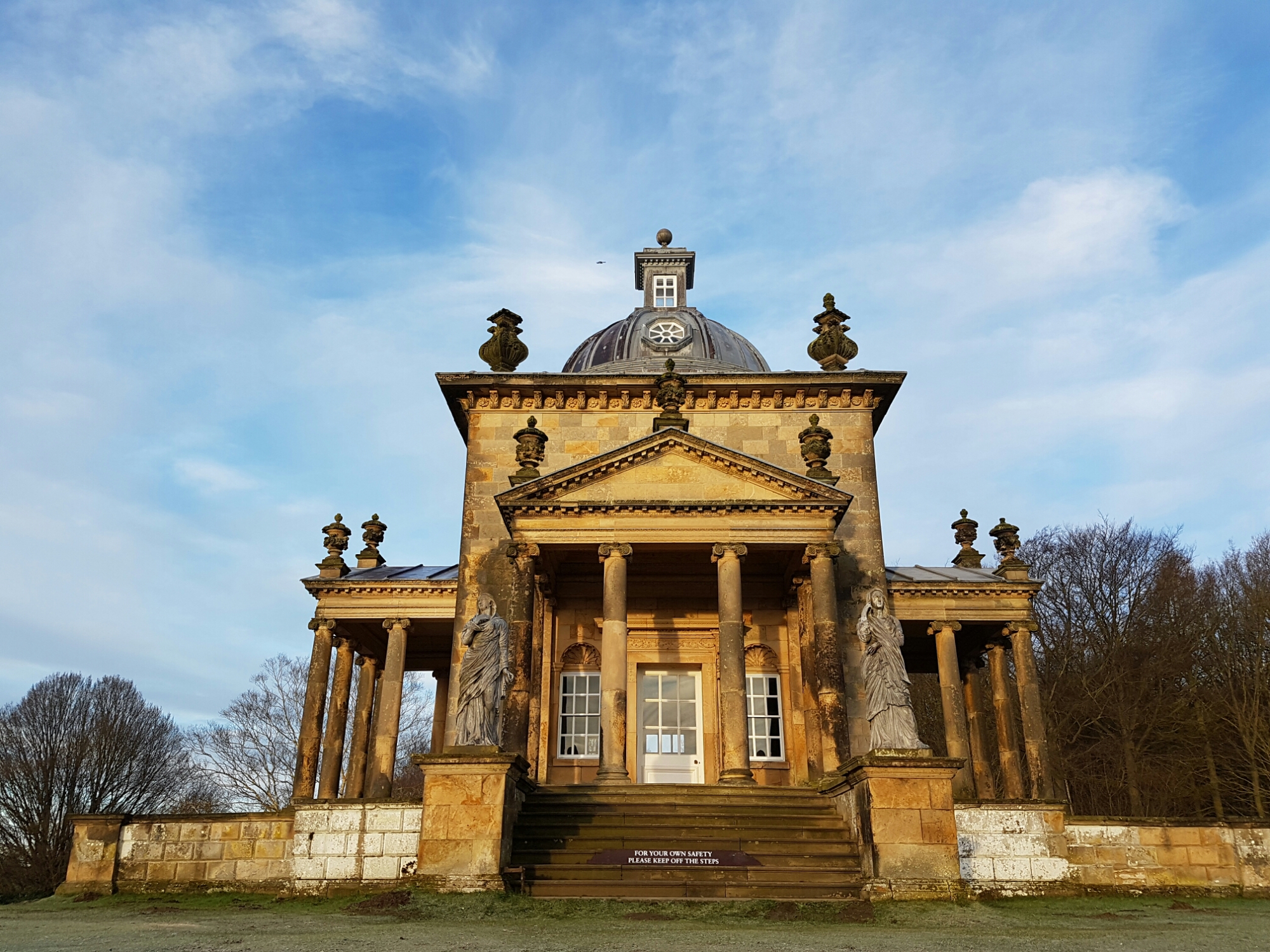
Before breakfast, I went on a brisk, early morning pilgrimage out along the terrace to the Temple of the Four Winds and across the fields to the mausoleum.   I love the Temple of the Four Winds, so crisp, so controlled, Vanbrugh at the end of his life answering his critics who regarded him as incapable of understanding Palladianism:-

The lead Sibyls were supplied by Carpentière:-

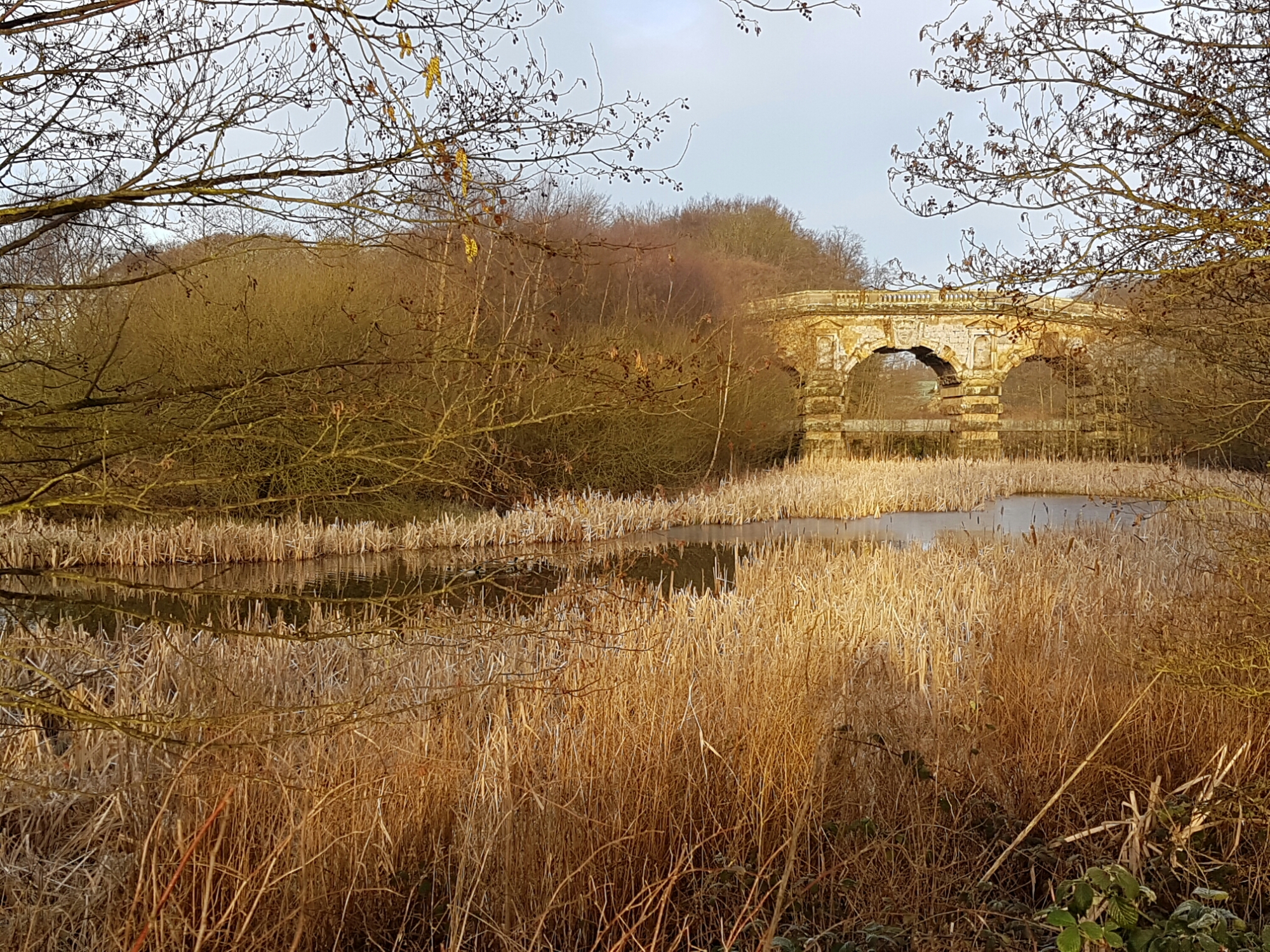
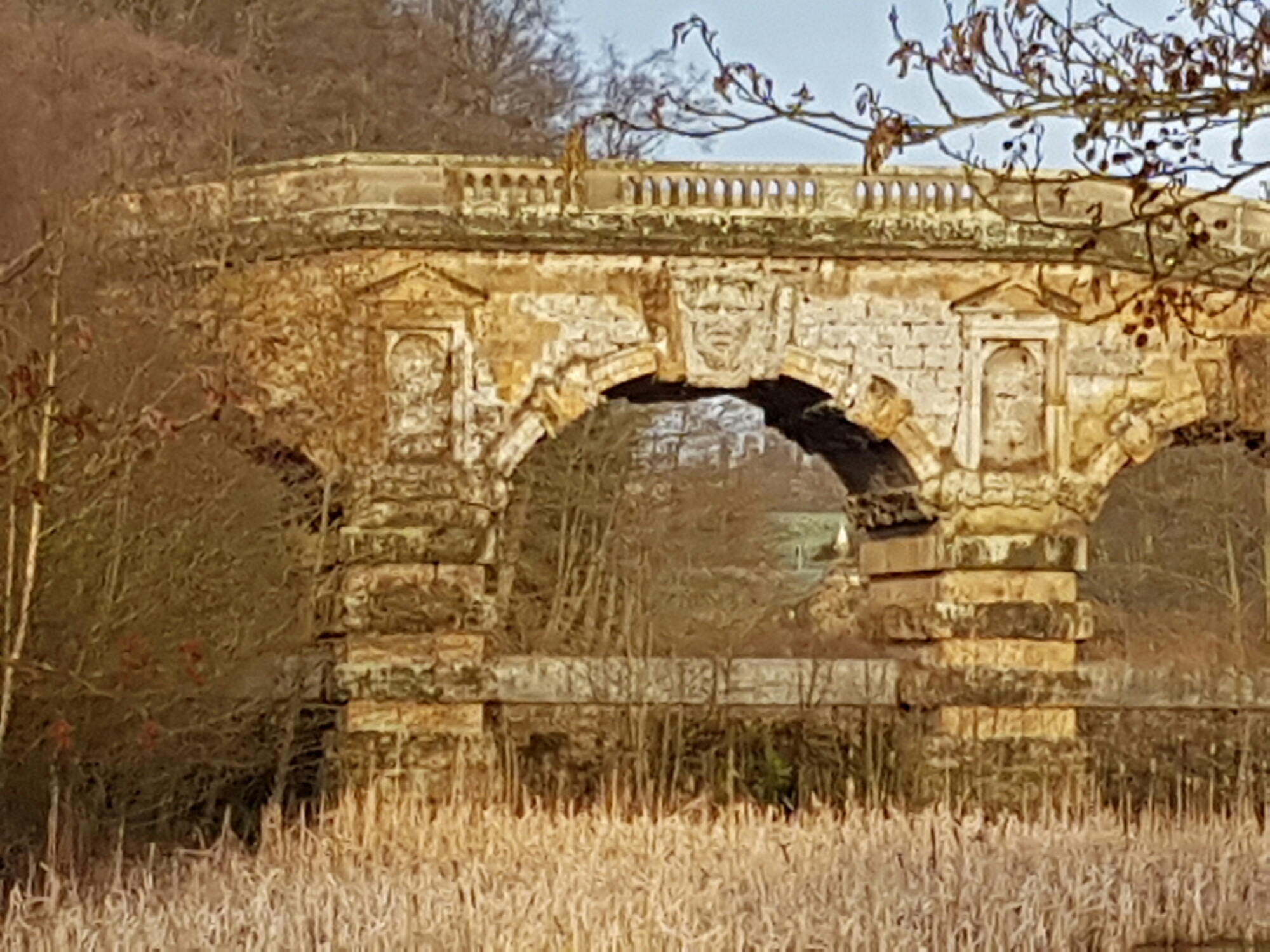
It’s hard to photograph Daniel Garret’s bridge:-

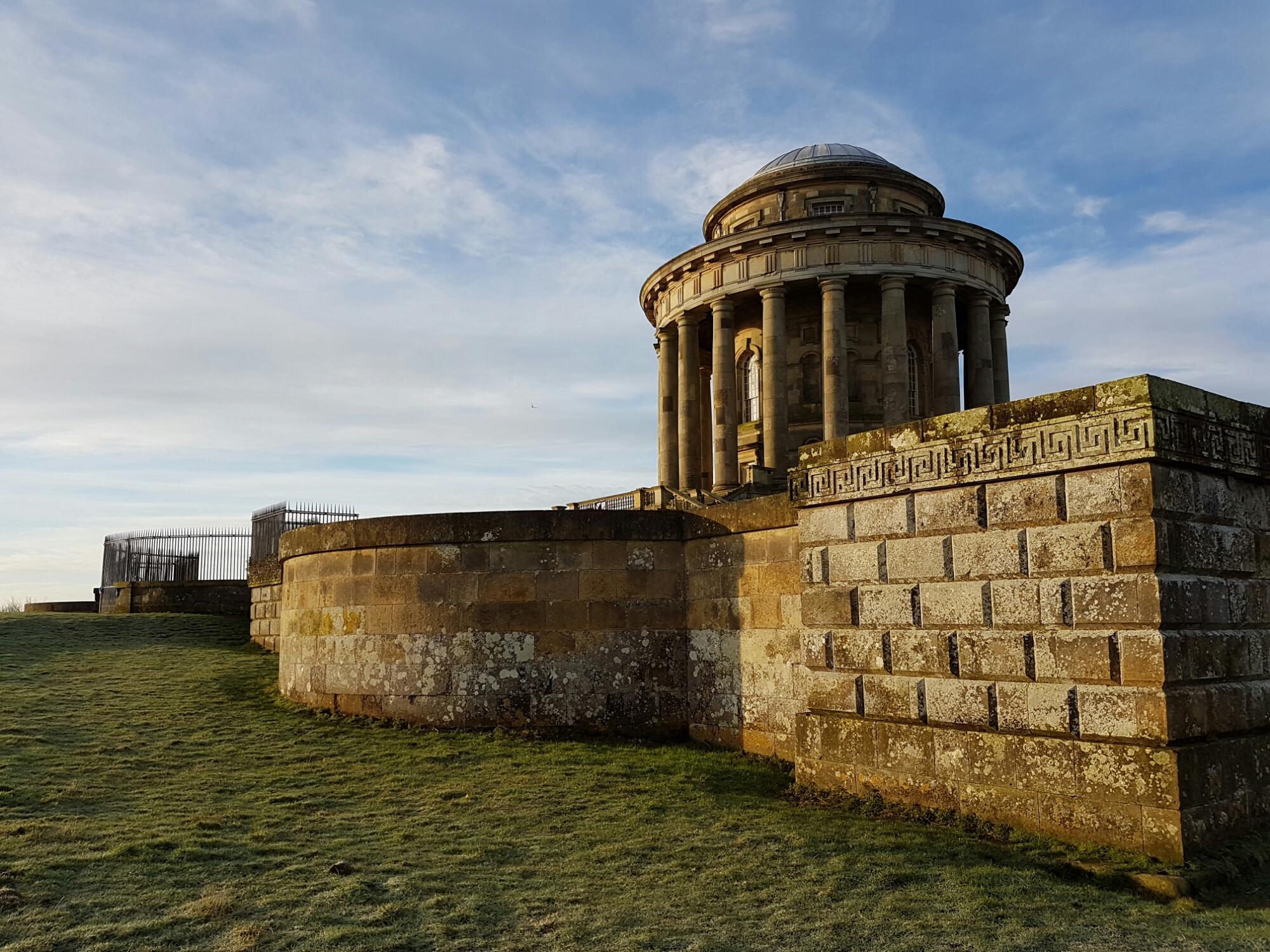
Then up to the mausoleum:-

And back for breakfast:-

Standard