
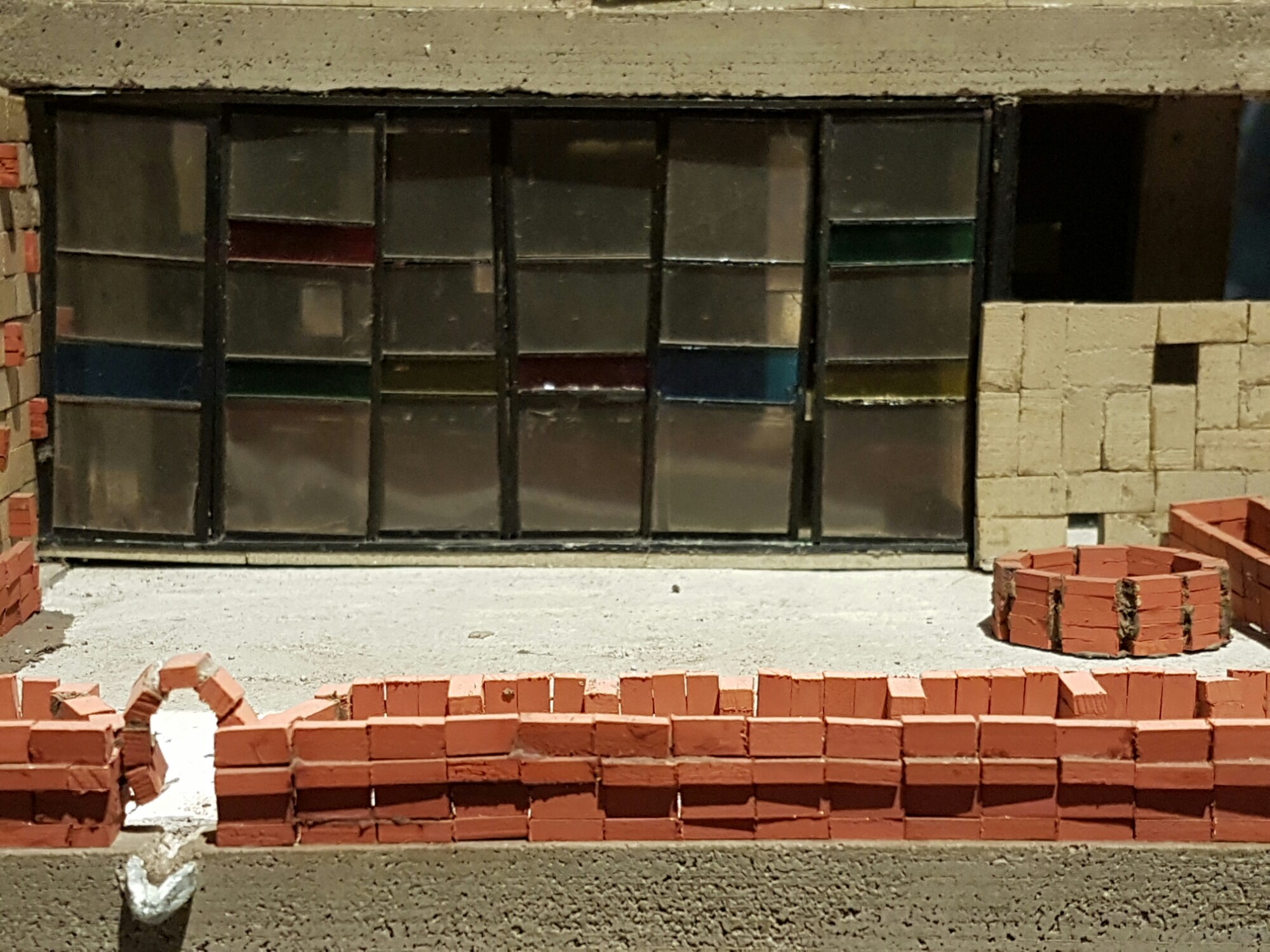
We went to the exhibition about Japanese post-war housing at the Barbican: good in many ways, but demonstrates the way that the history of housing is too often written through a small number of highly idiosyncratic architects’ houses, rather than an analysis of broader patterns of housing or houses not lived in by architects. I liked one of the early concrete models:-
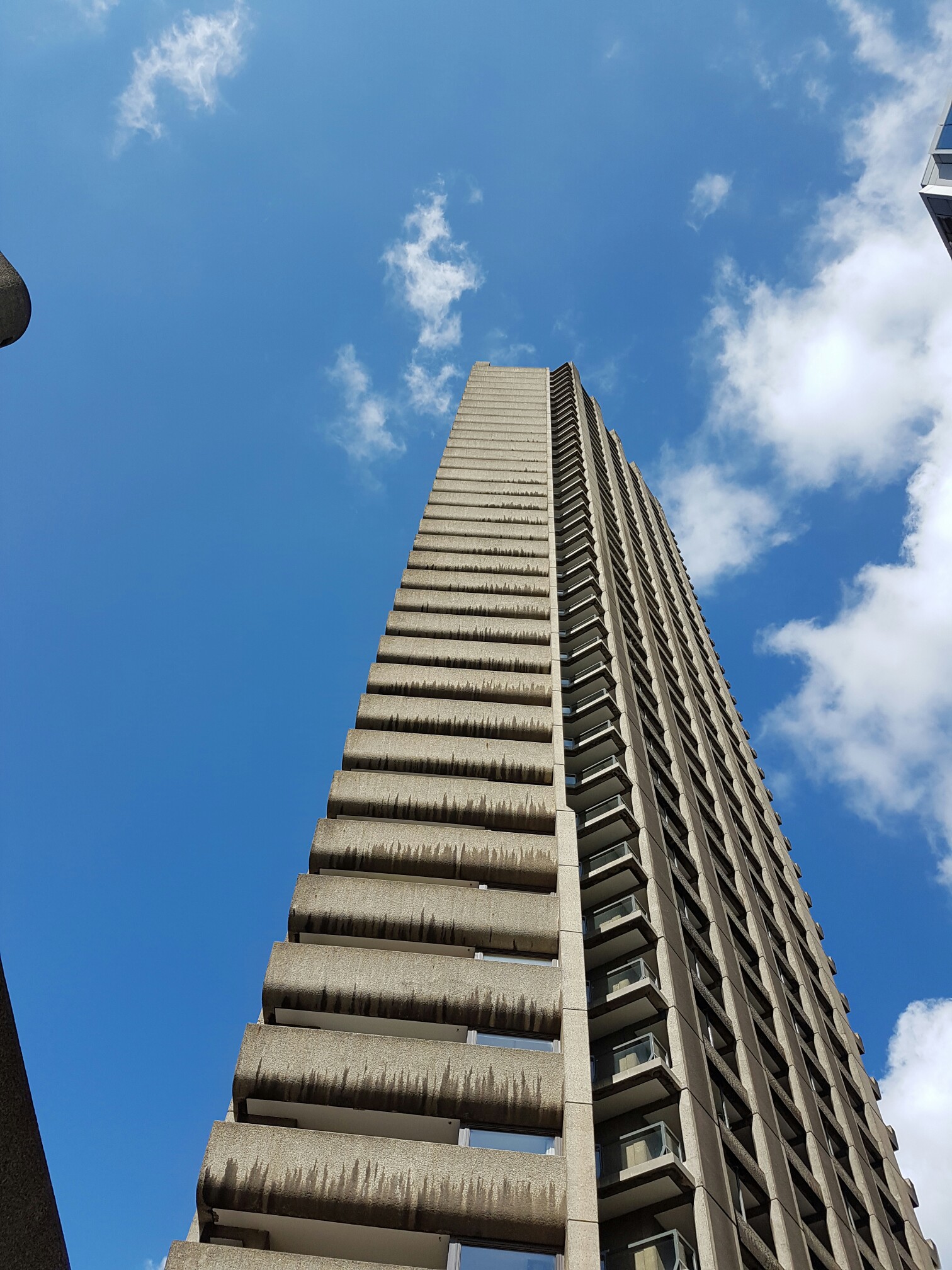
And the Barbican in the sun:-
 | Charles | Saumarez | Smith |
We really enjoyed this although we were left with questions similar to yours – namely what sort of places do most Japanese people live in? But really enjoyed the creative (particularly mathematical) thinking brought to bear on trying to construct things in very small spaces and with constraints like high voltage overhead cables. Before the exhibition my only reference point for Japanese housing was the animated films of Studio Ghibli. Good to see that they got a mention too.
Yes, good that they showed clever and inventive thinking, but I felt that there was so much more than was shown. Maybe it was in the catalogue. Charles
You are right that very little attention is paid, here in UK, to the architectural quality of public, social housing. That’s not so true of Holland, where Rotterdam social housing has had the same attention given to it.
This applies across the public sector, to schools, sports centres etc, although Hampshire in the 1980s, under DID build some wonderful schools, with thoughtful architectural designs. This is simply aesthetic snobbery – given the right brief, architects solve problems and do not inevitably increase the cost of buildings.
Yes, agreed. Could it change ? Charles