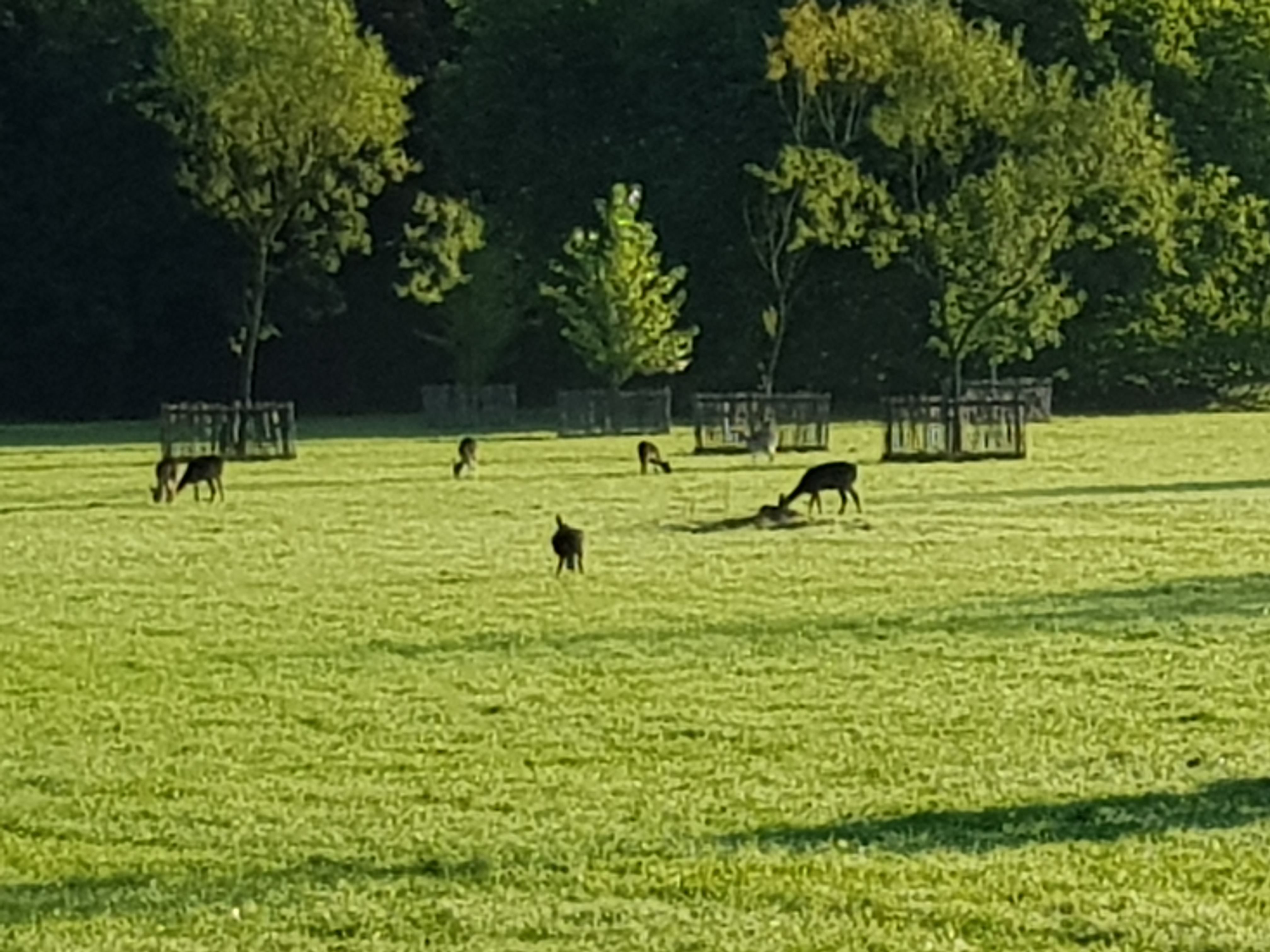
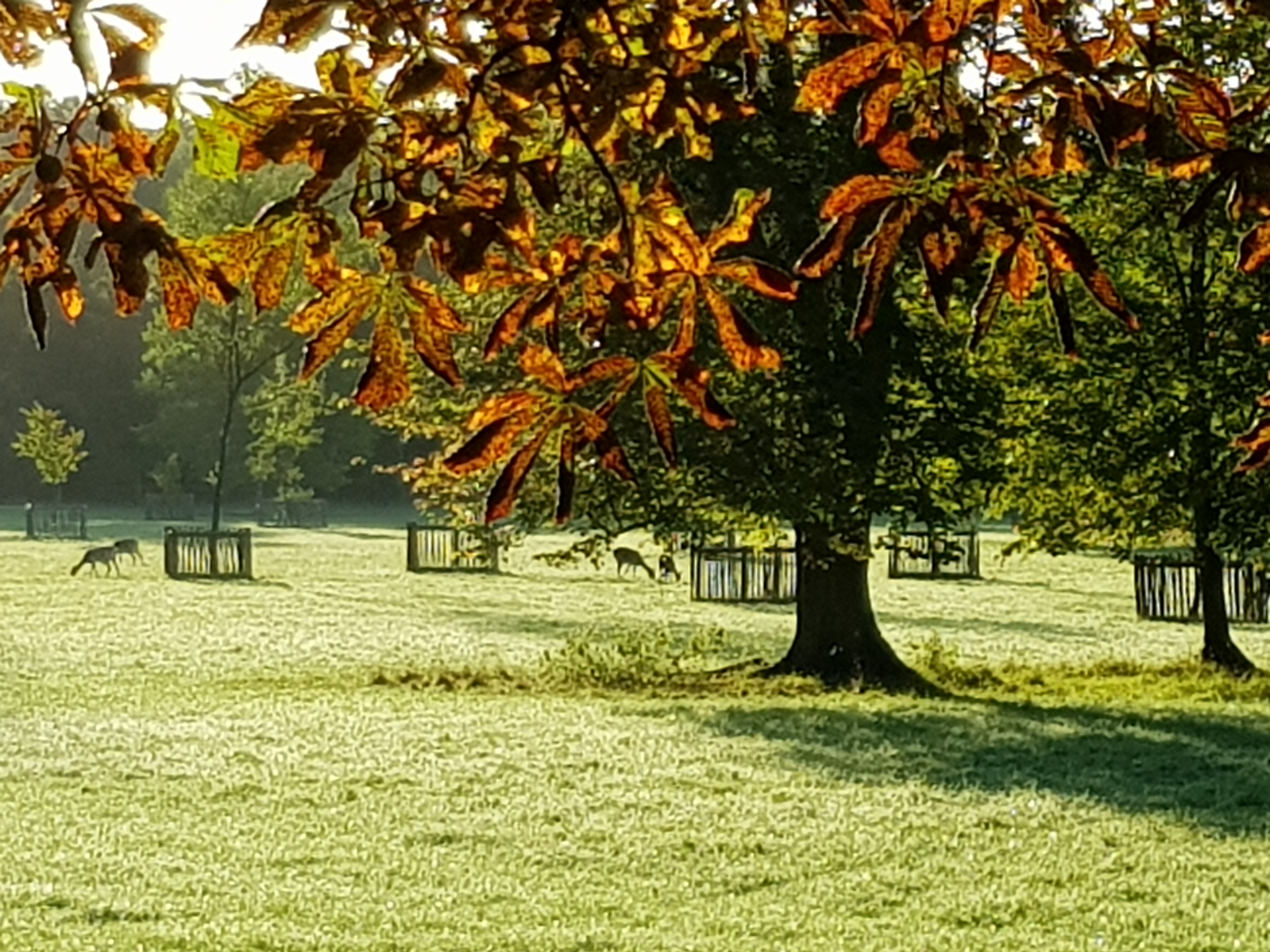
I got up early to walk round Addison’s Walk, so called after Joseph Addison, who entered the college in 1689, became a fellow in 1698, and wandered round the park by the river while composing essays for the Spectator:-

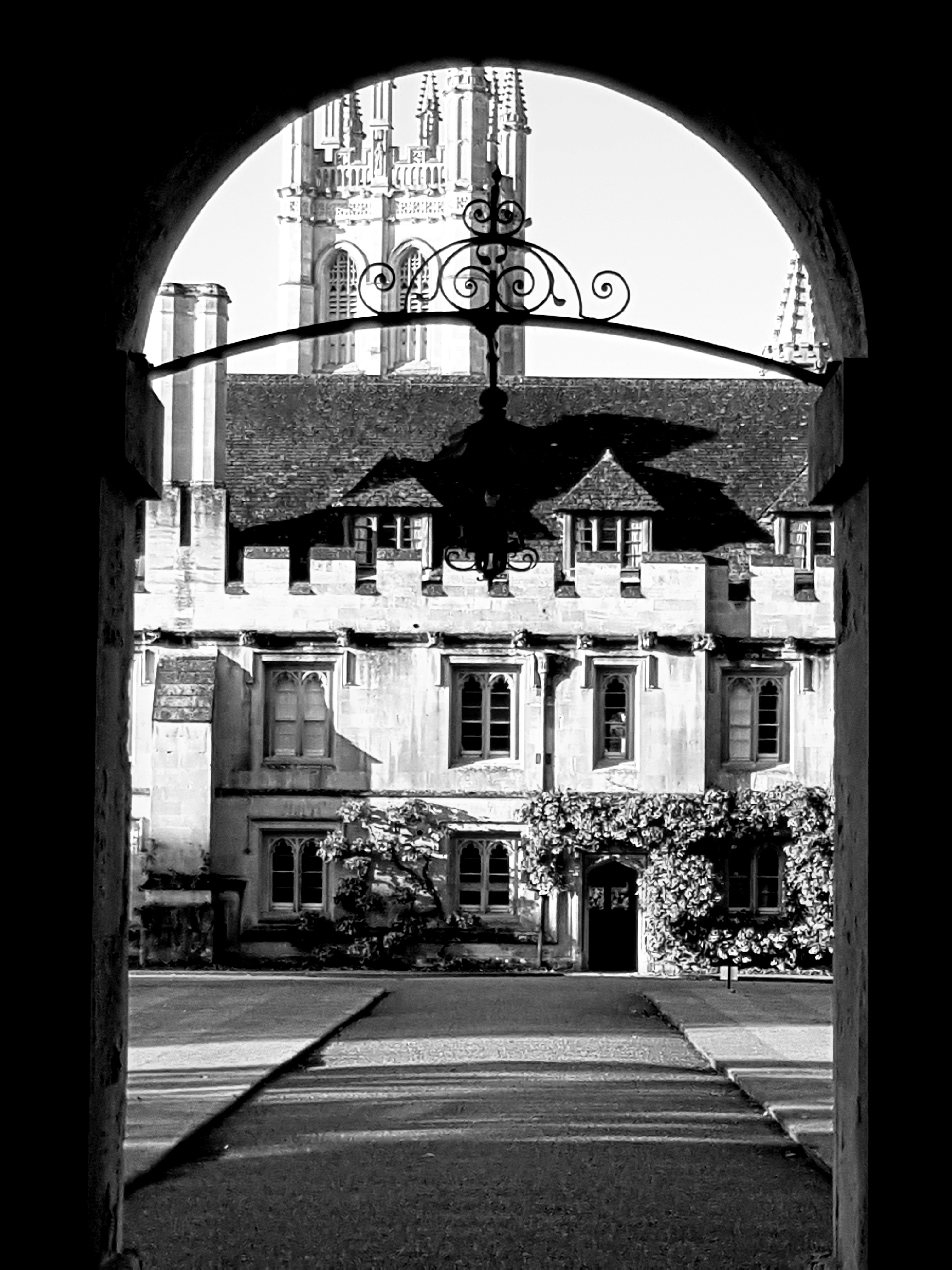
Then back to the college:-
I got up early to walk round Addison’s Walk, so called after Joseph Addison, who entered the college in 1689, became a fellow in 1698, and wandered round the park by the river while composing essays for the Spectator:-
Then back to the college:-
It is quite a treat to stay in Magdalen:-
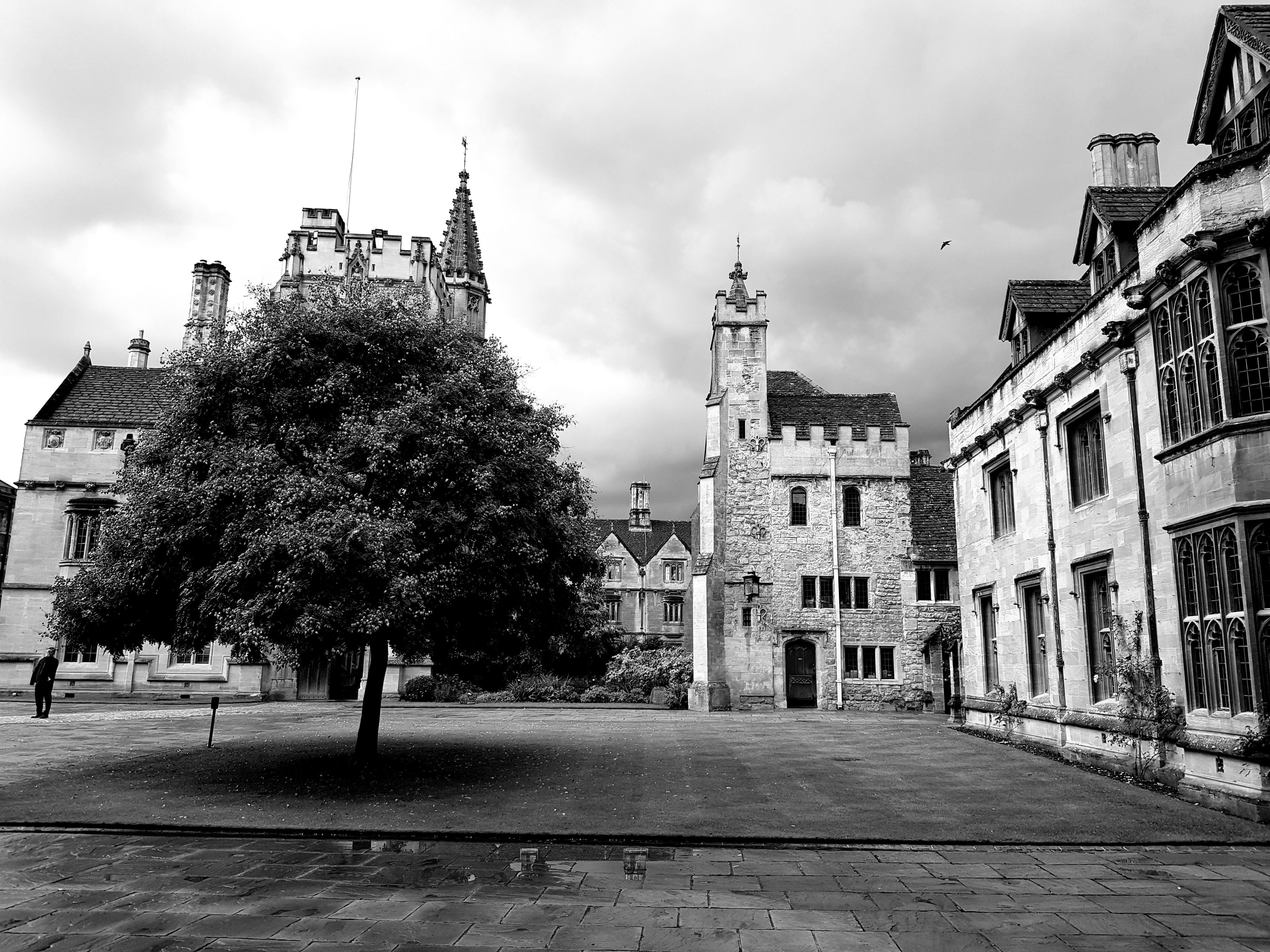
To walk through to the fifteenth-century cloister:-
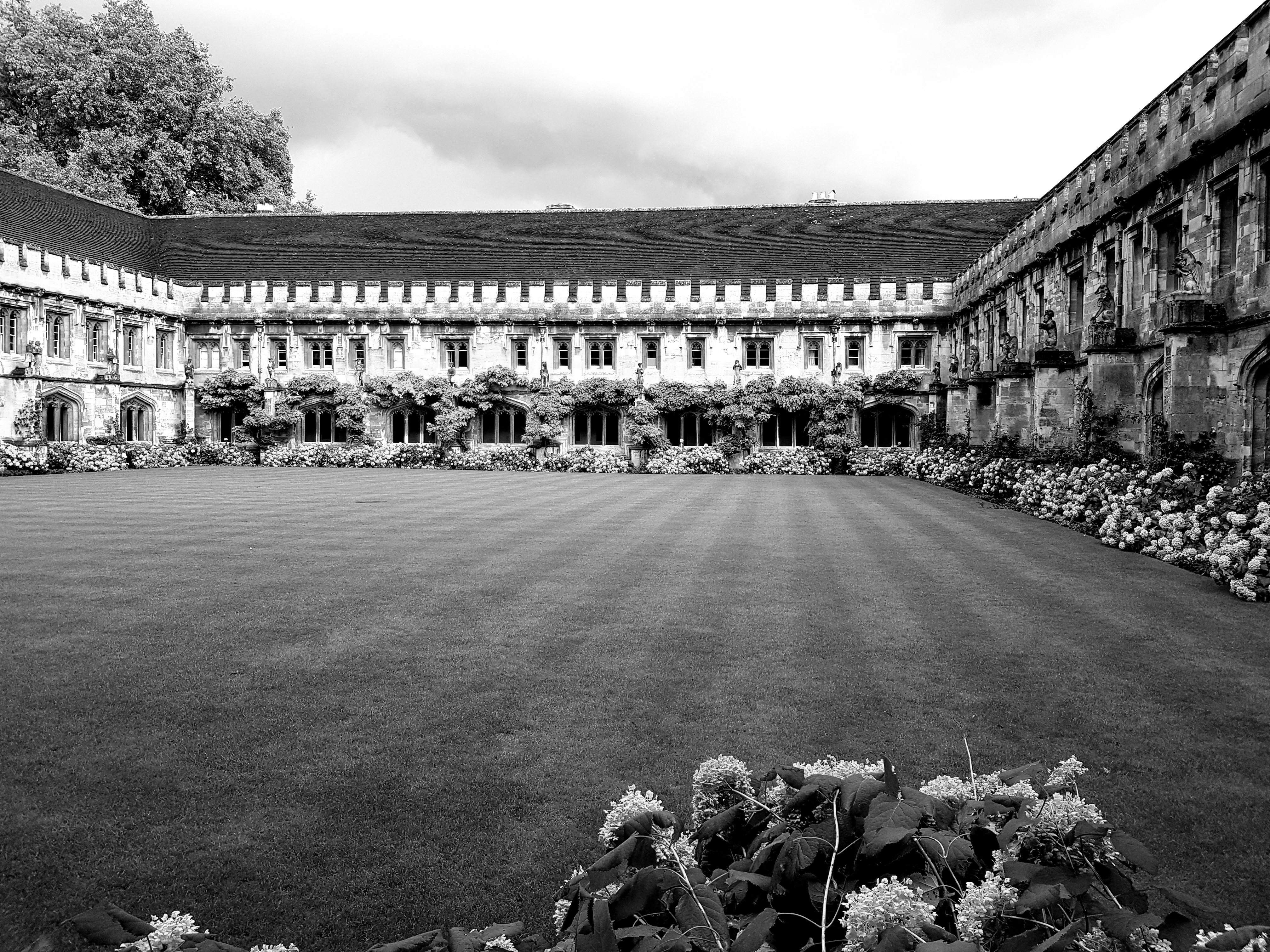
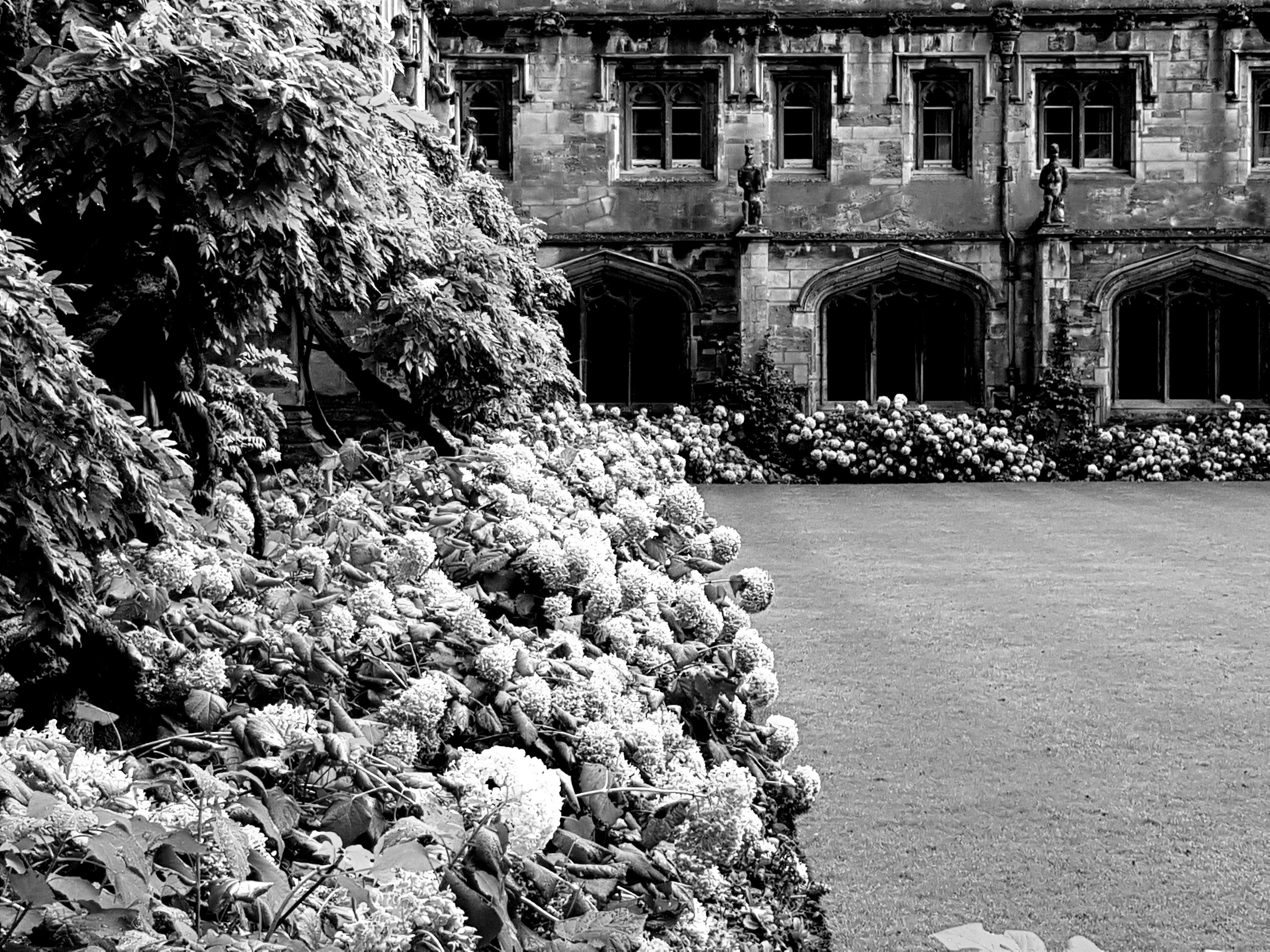
Then through to the New Building, designed by Edward Holdsworth, a Jacobite classicist who would have become a Fellow had he been willing to take the oath of allegiance to the Crown, with help from Gibbs who was paid 20 guineas for his advice:-
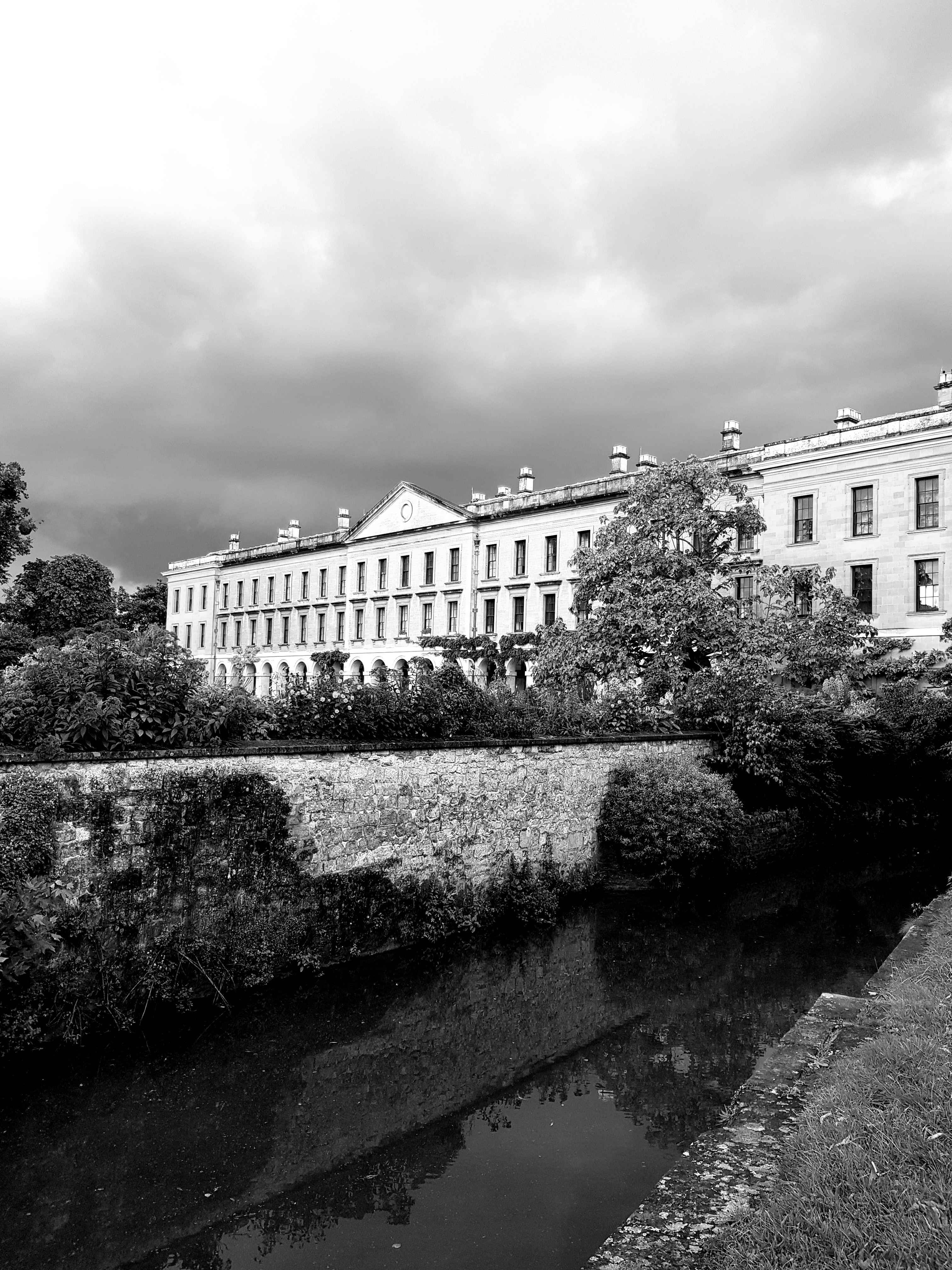
And back to the Chapel:-
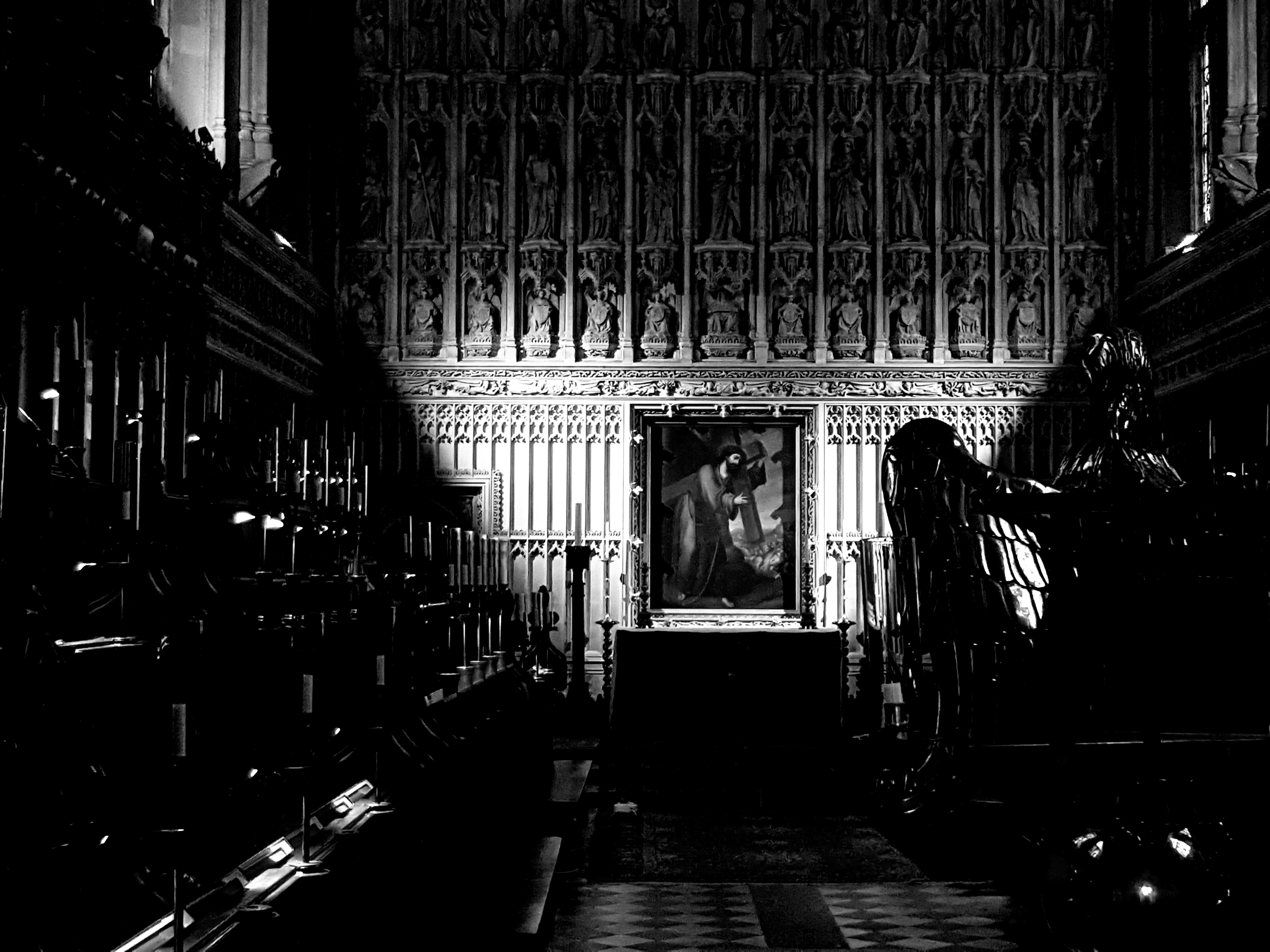
There can be few more dramatic sequences of buildings so close to a city centre in Europe.
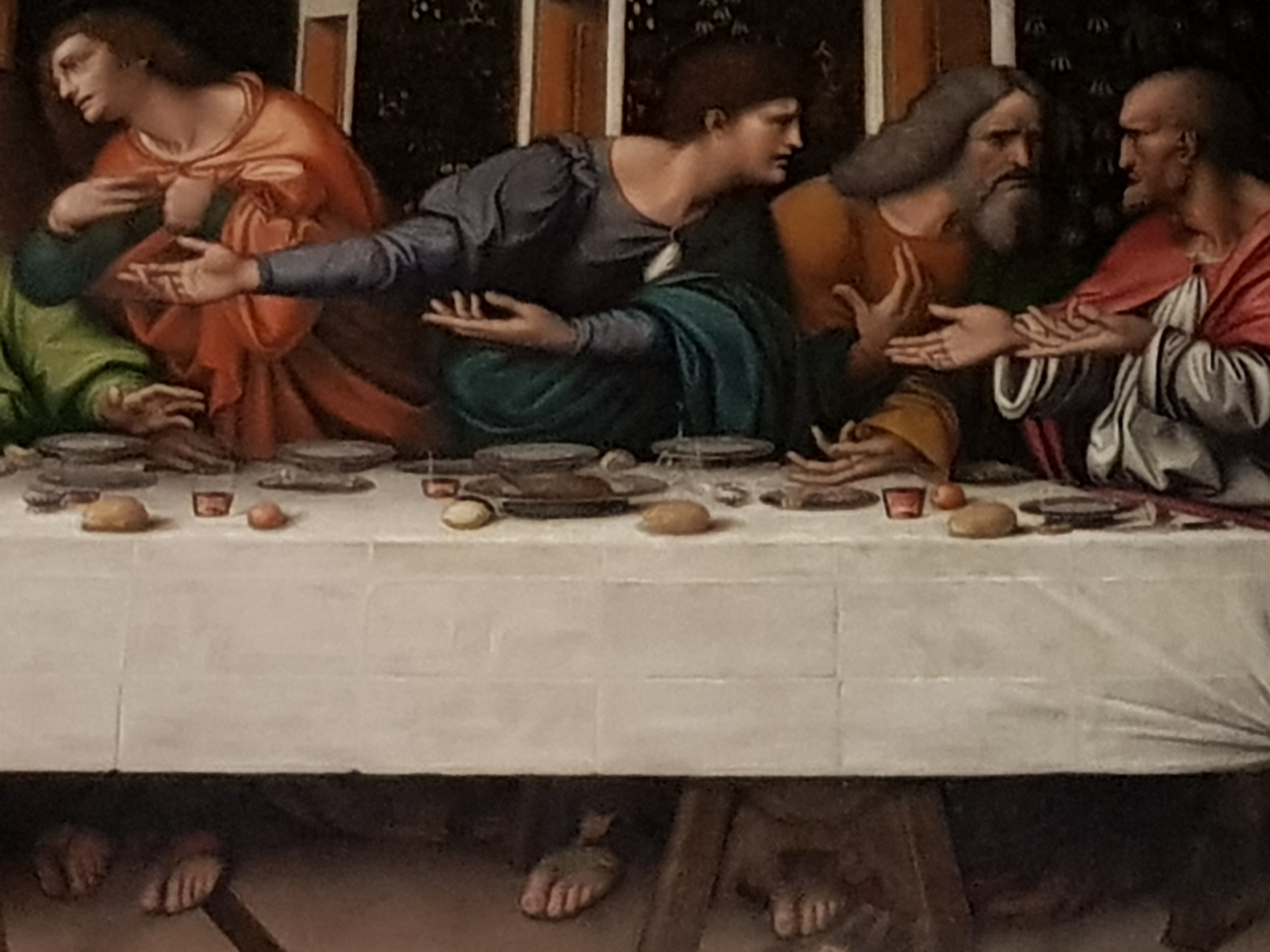
I came down to Magdalen College, Oxford for the last public appearance of the early copy of Leonardo’s Last Supper, bought by the RA in 1821 for 600 guineas, before it returns to the RA on Monday in preparation for its display in the new Collections Gallery in Burlington Gardens next year. I had never seen it hanging high in the ante-chapel at Magdalen, where it looks much more convincing than when lent to the Leonardo exhibition at the National Gallery: seen from below compels one to concentrate on the qualities of the original picture’s composition, rather than on the size of the feet in the copy. Martin Kemp lectured about the history of the original, which has been a ruin practically from its beginning because of the experimentalism of Leonardo’s technique. It was described by Kenneth Clark as ‘a tragic ruin’ in his great monograph published in 1939; narrowly escaped bombing in 1943; and was subjected to a meticulous 20-year restoration beginning in 1977 which began by describing the surface as ‘completely ruined’ and muted the colours to pastel. Hence the importance of an early copy, which is assumed to have been done by one of Leonardo’s immediate followers and at least retains the full authority and expansive apostolic gestures which have been all but lost in the original:-
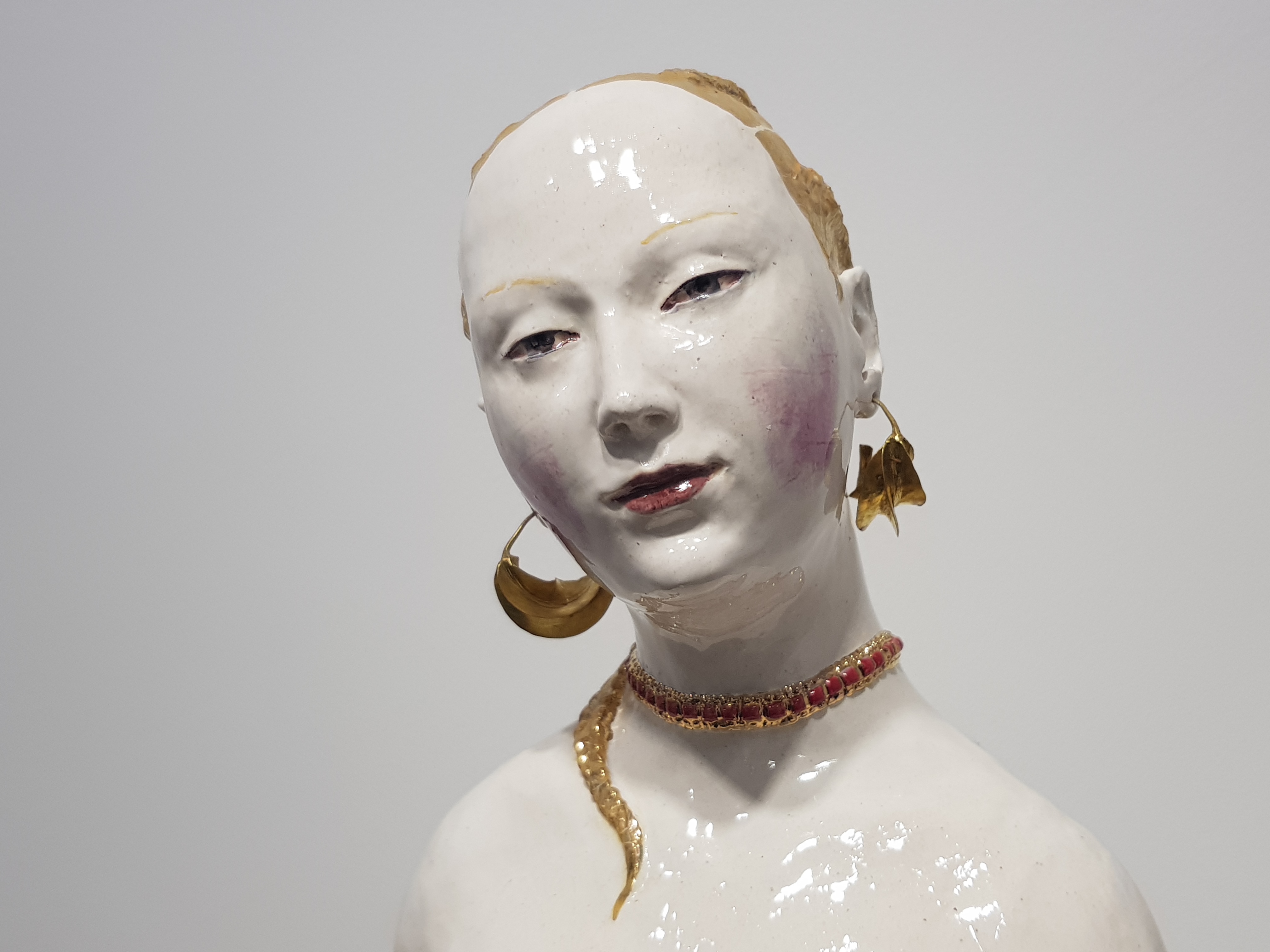
I called in at the opening of Claire Partington’s exhibition at the James Freeman Gallery in Upper Street. I’ve admired her work ever since spotting a very elaborate ceramic piece out of the corner of my eye when I was meant to be judging the Young Masters Painting prize. It was a work which was very obviously based on Jan van Eyck’s Arnolfini Marriage Portrait, but not in a reproductive way – detached, reverential and subversive all at the same time. It was called Urban Planner and I somehow ended up buying it (she holds a tower block in her hand as well as having a cigarette butt at her foot). As a result, I was asked to write a short appreciation of her work, which I did in July, based on seeing her recent work in her studio. But I should have learned long ago how different work looks when properly lit in a gallery, instead of roughly arranged round a studio.
In her current exhibition, she has a work based on Cranach’s Lucretia:-
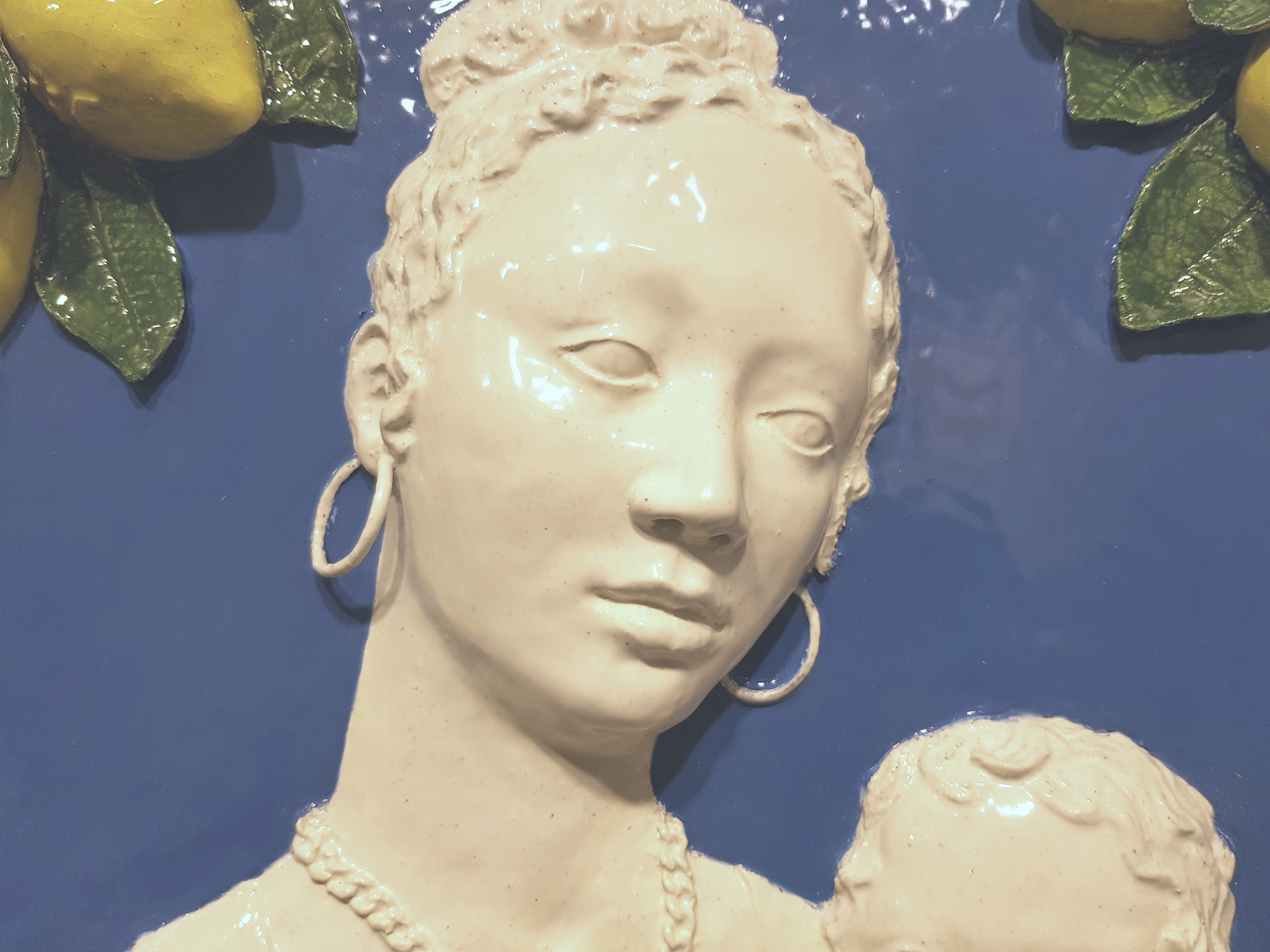
Another which is a version of a della Robbia:-
And a third which she thinks is a homage to medieval tomb sculpture, and I think bears some of the characteristics of Lydia Dwight (I think she used to work as a technician at the V&A):-
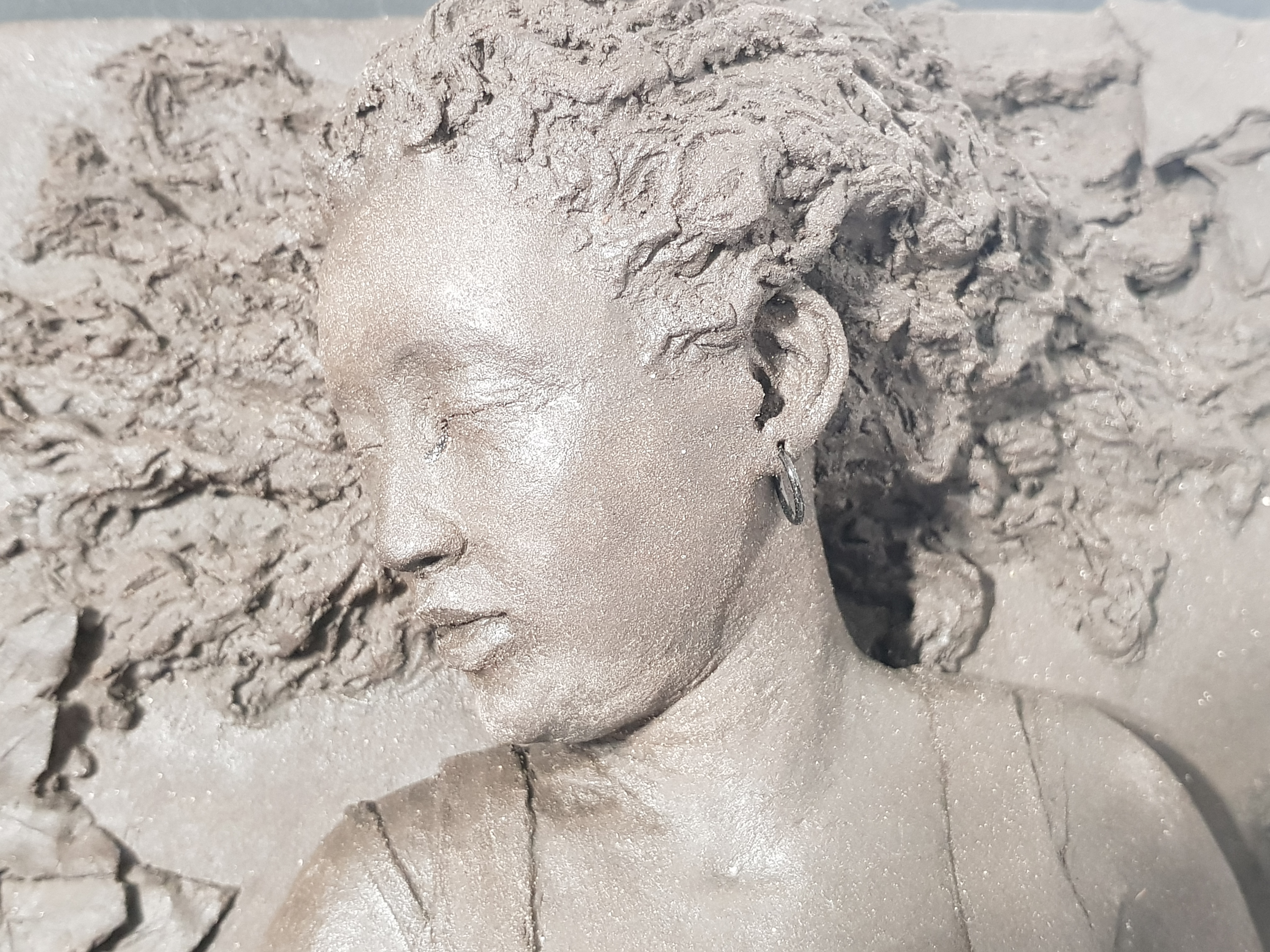
Most contemporary fine art ceramics is distinguished by rough execution. Claire’s is remarkable for the quality of its execution as well as its depth of historical reference.
A couple of weeks ago, I was asked about a piece which I had written about the early history of the V&A/RCA MA Course in the History of Design, which I was involved with in its early days. I thought the piece would be available online, but apparently not (I thought everything was available online). So, I promised to post it, not necessarily in its final version:-
At the Open University’s recent conference ‘40 Years On: The Domain of Design History – Looking Back Looking Forward’, Professor John Styles gave an account, ‘Design History enters the Museum’, of the history of the V&A/RCA MA course. Styles applauded Dr Charles Saumarez Smith, now Secretary and Chief Executive of the Royal Academy but then Assistant Keeper in the V&A’s education department for his contributions. He was the first person to head the course; in the first years of its existence there was considerable resistance to students in the museum. It was Saumarez Smith’s hard work and diplomacy, Styles asserted, that allowed the course to flourish.
A History of the History of Design
I will start with the V&A’s side of the history. Roy Strong realised that it would be good for the Museum, and for its staff, to be involved in the world of postgraduate study. The decorative arts as a subject area had developed its own traditions of study, subordinate to, and not nearly as sophisticated as, art history. Some of the staff had been trained as art historians (I think of Anna Somers Cocks, Assistant Keeper in the Department of Metalwork, a classic product of the Courtauld; Simon Jervis, Deputy Keeper in the Department of Furniture and Woodwork, who had read art history under Michael Jaffé at Cambridge; and Michael Kauffmann, the Keeper of the Department of Prints and Drawings, who had been a Research Fellow at the Warburg Institute). But the majority were amateurs, like Peter Thornton, the Keeper of the Department of Furniture and Woodwork, who had been trained as an engineer, before reading modern languages at Cambridge, and John Mallet, the Keeper of the Department of Ceramics (Keramic as he always called it), who had worked at Sotheby’s. The core discipline at the V&A was regarded as the identification and attribution of works in the collection. There was not much sense that objects could, and should, be subject to a rigorous programme of academic study.
The initial idea was that the V&A might link up with the Courtauld Institute, regarded, with excessive reverence, as the home of art history. It was John Physick, Roy Strong’s Assistant and author of a book about the V&A’s architectural history, who apparently suggested that the V&A should join up with the Royal College of Art, with which it shared common origins.
The folk memory of the origins of the Course was that Roy Strong met Christopher Frayling, Professor of Cultural History at the Royal College of Art, half way up Exhibition Road. I thought that Chris was already a Trustee of the V&A, but discover that this had not yet happened when the Course was first devised. Chris had his own ambitions for the Department of Cultural History at the RCA. Design History was already an active subject of study at the polytechnics, developed as a result of the Coldstream Report, which required academic teaching alongside studio courses in art colleges. This teaching was initially provided by art historians, but students wanted teaching which was relevant to what they were studying. So, teachers began to develop knowledge and expertise in the study of twentieth-century industrial, product and graphic design.
Chris Frayling, who had studied Jean-Jacques Rousseau at Cambridge, realised that if one combined the nascent study of design history with the V&A’s resources for the study of decorative arts, it would help to give intellectual authority to the subject area and make the Royal College of Art into the capital of the emerging discipline. He was allowed to recruit not one, but two members of staff, to establish the Course. Gillian Naylor was already the grande dame of design history, a veteran of the editorial staff of Design magazine and author of works on the Bauhaus and the Arts and Crafts Movement. Penny Sparke was younger, a friend and protégé of Gillian’s. She had written her Ph.D. under Reyner Banham on ‘Theory and Design in the Age of Pop’, was teaching at Brighton Polytechnic and had helped to establish the Design History Society with Stephen Bayley.
The Course was launched in 1982. Students arrived in late September. I joined the staff of the V&A in October 1982, recruited as an Assistant Keeper in the Education Department of the V&A to run the V&A’s half of the Course. It was, at least from my perspective, somewhat haphazard in its methods of teaching, based on lectures by outside experts, some good, but without any underpinning system of organisation. We decided early on to run one full two-year cycle and then re-plan the Course for the next cohort of students.
Many of the characteristics of the Course derive from this process of replanning, which was greatly assisted by the intellectual drive and ambitions of John Styles, a visiting tutor from the history department at Bath University. We retitled the Course ‘The V&A/RCA Course in the History of Design’ (it had previously been called ‘Design and Decorative Arts: History and Technique’). We regarded History of Design as a new discipline, distinct from design history. We introduced the idea that the first term would involve the systematic study of a single object in the V&A’s collection, based on the object analysis which had been pioneered by Jules Prown at Yale and Benno Forman at Winterthur. The second term was about nineteenth-century technology and involved studying methods of making in the studios of the Royal College of Art. The third term was about twentieth-century design and theory. The second year was devoted to writing a 20,000 word dissertation.
It was a revolutionary course, making use of the resources of the V&A, the stacks of the National Art Library and the collections, as well as the expertise of its curators, whilst, at the same time, encouraging and expecting students to be knowledgeable about contemporary design and making. The history of manufacture and of interiors, the scholarly study of the crafts, material culture studies and fashion history: a world of study was opened up.
The idea was that students would be trained to go out into the world to develop new areas of research, to teach in the new universities, to work in museums, and write about design. Over the last thirty years, they have done so. The discipline of design history has been enriched.
We just had a press event to announce next year’s exhibition programme and I realised for the first time the full impact of having an extra run of exhibition galleries in Burlington Gardens (the Gabrielle Jungels-Winkler Galleries), which we are launching with an exhibition by Tacita Dean and will enable us to show an exhibition of work by Renzo Piano, an Honorary RA, in the autumn. We have always had a lot of exhibitions, but the range will become that much bit wider, with a more consistent run of architectural exhibitions, with one every year, and, I hope, more work involving current RAs, like Tacita Dean, as well as Honorary RAs, like Renzo Piano. The other big news is our Oceania exhibition which has been many years in the planning, including a research programme studying the European holdings of Oceanic material. It looks fantastic.
Last Wednesday, I found myself in Westminster Abbey where Hawksmoor’s east towers were looking their best:-
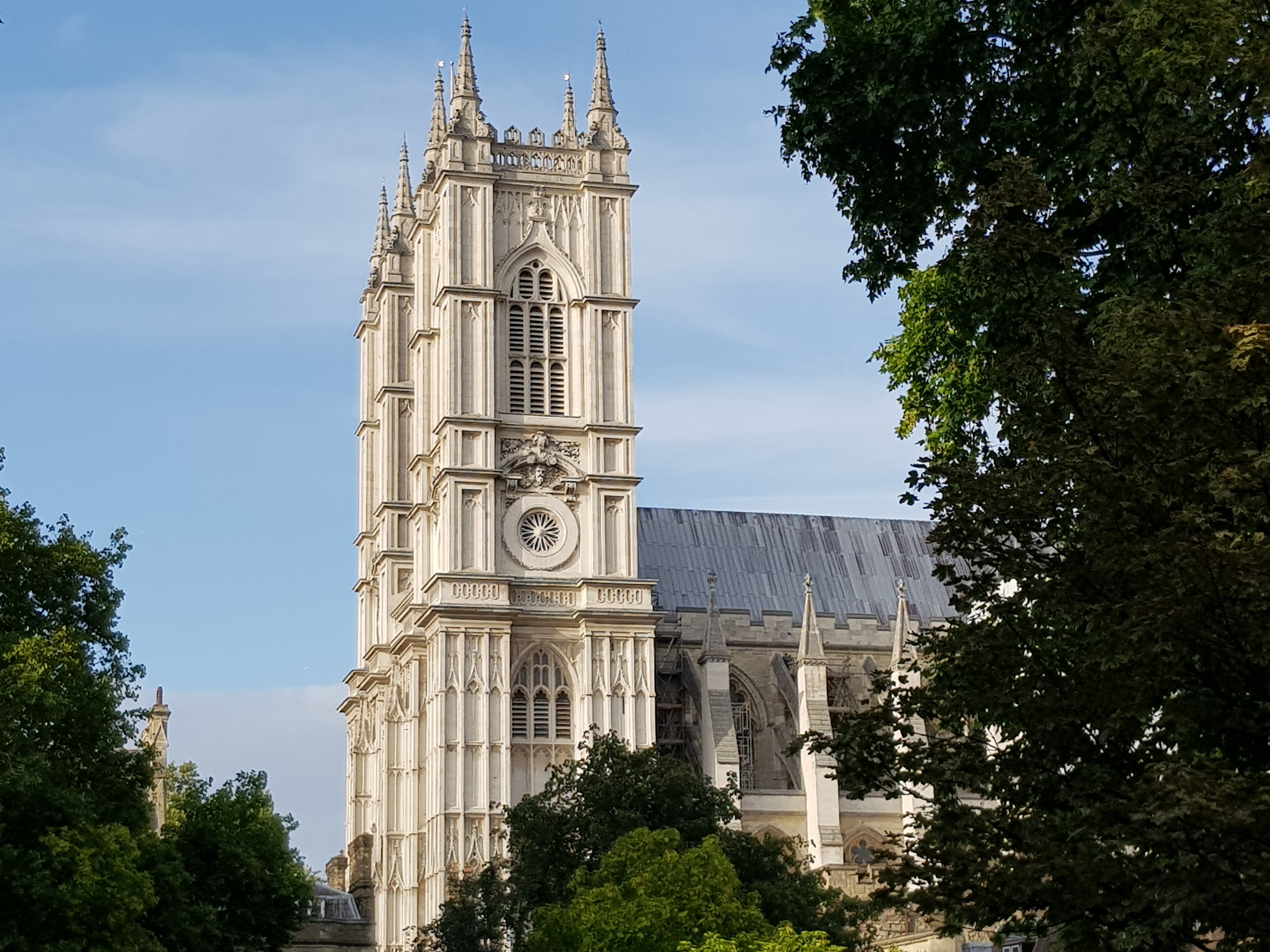
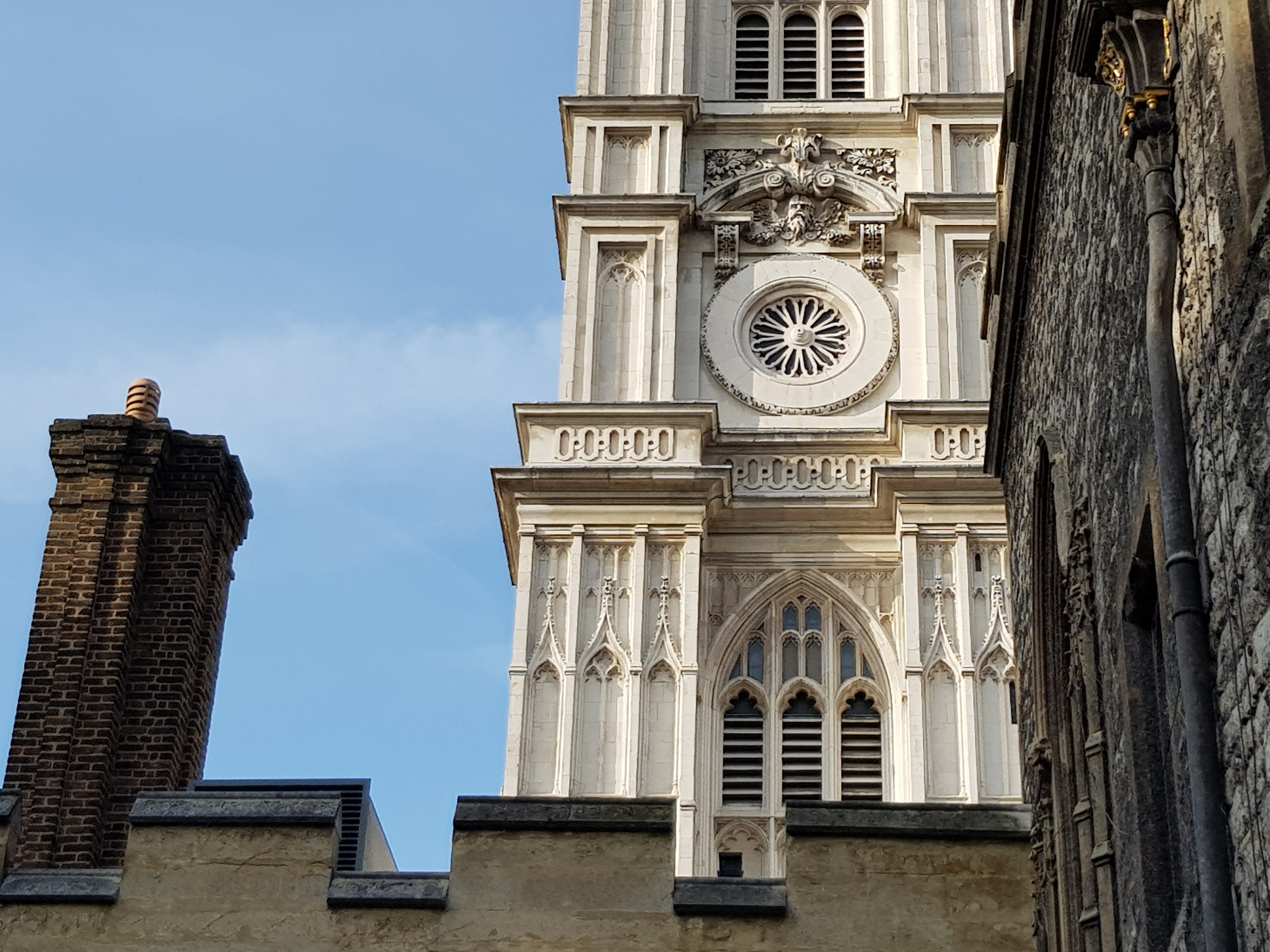
It was also a pleasure to see the tombs. I had forgotten what an extraordinary miscellany the nave presents of the great and the good: Thomas Tompion, so well known that he needed no description; Congreve, erected by the Duchess of Marlborough; Newton, so prominent. And the unremembered.
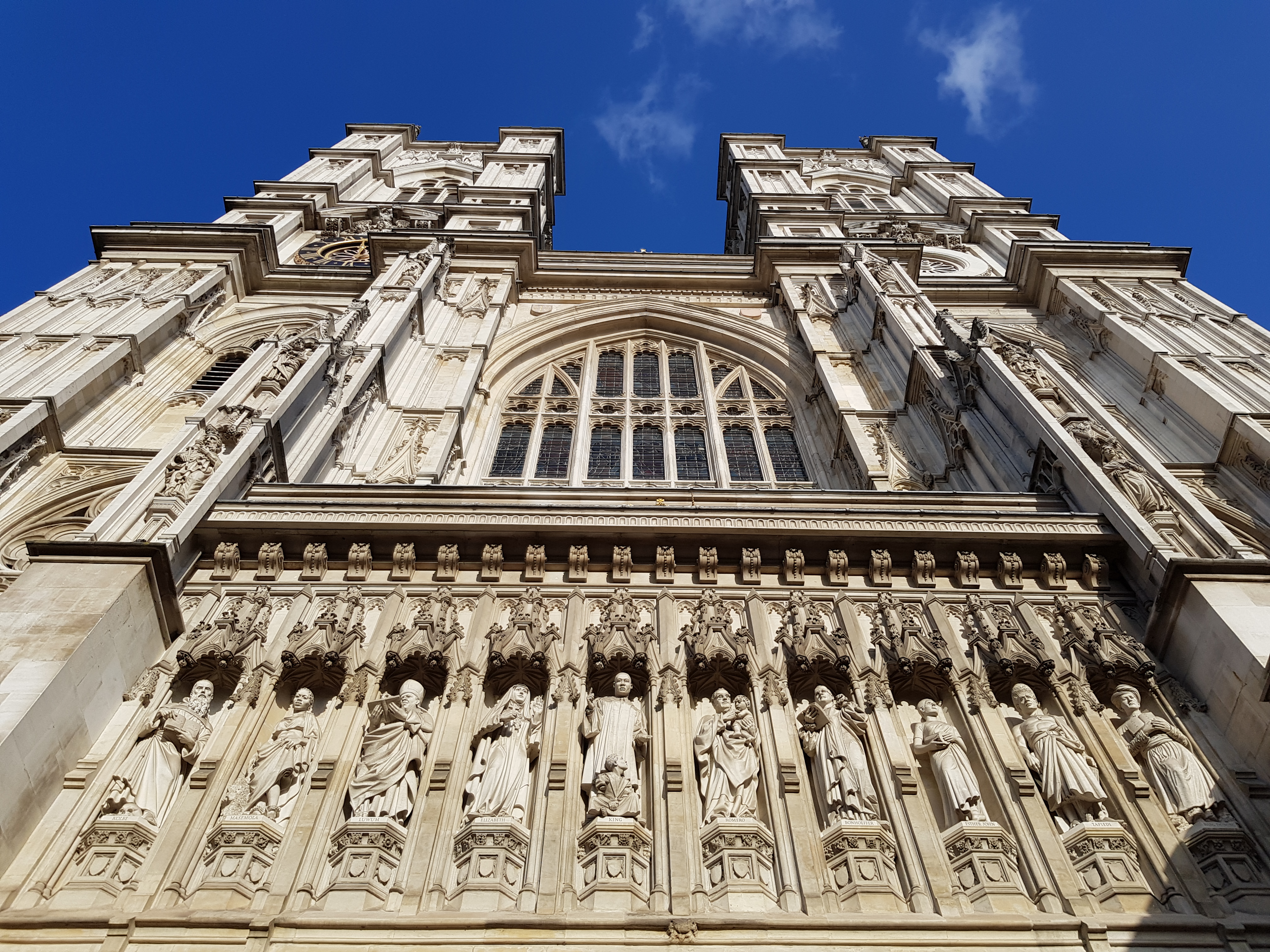
I came out by the West door:-
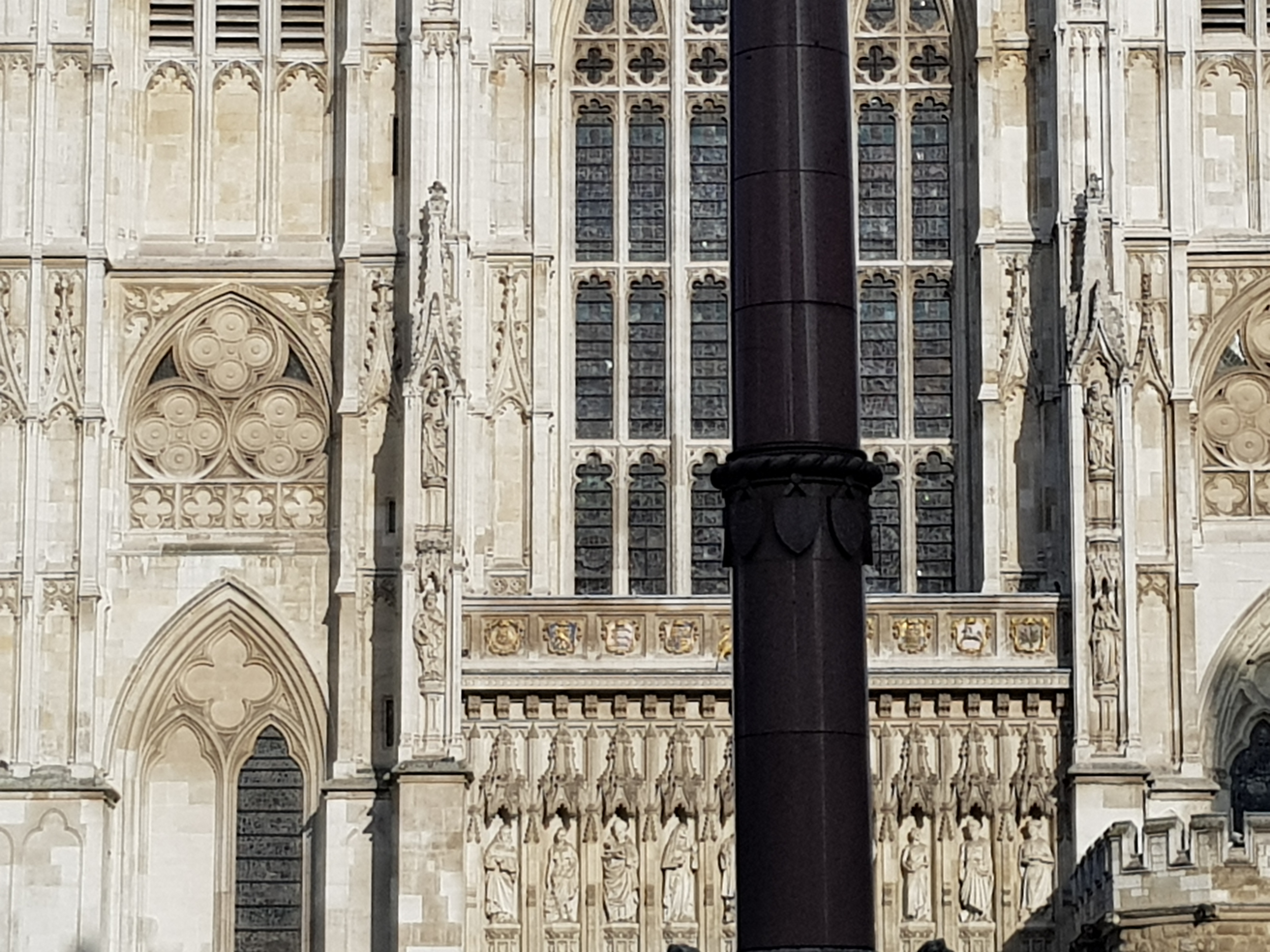
I have spent most of the day at the annual Art Business Conference, held, rather spookily for me, in Church House, where my father worked in the early 1960s. The best of the sessions from my perspective was the one on the phenomenon of private museums: two in particular, the astonishing growth of the Auckland Castle Trust, in which Jonathan Ruffer has invested a mere £160M so far, first buying a historically important group of Zurbarans, then acquiring the Castle in which they have been housed, and now making it an agent for the regeneration for south west Durham; and, second, Jupiter Artland Foundation, run by Robert Wilson, whose wealth is owed to homeopathic medicine. What came across was how publicly spirited they both are, passionate about new audiences and youth programmes, not because they have to be, but because they want to be and recognise art’s social value.
I went to the launch of Richard Rogers’s new book, A Place for all people, which grows out of the exhibition that he did in Burlington Gardens in 2013 and is similarly personal, reflective and wide-ranging. It starts (this is as much as I have had time to read) with an account of his unexpectedly privileged upbringing, born in an apartment overlooking the Duomo in Florence, surrounded by furniture designed by his cousin, Ernesto, then translated into the ghastliness of an English private school where he seems to have survived by a mixture of cunning, good looks and brawn (these characteristics maybe served him in his architecture as well). Looking at the picture of Ernesto’s Torre Velasca in Milan, designed when Richard was working in the office, it looks at least as radical and disruptive, although designed in traditional materials, as the Centre Pompidou was to be fifteen years later. The influences on his architectural development were what one might expect of someone of his generation – New York, Mies, the Smithsons, industrial buildings and Jim Stirling. What was distinctive were his interest in radical methods of lightweight construction and the depth of his social concerns.
I have been told by the film buffs in my family that I shouldn’t admit to having enjoyed the Limehouse Golem, owing to the hamminess of much of the acting (much is wilfully exaggerated) and the absurdity of the inclusion of Karl Marx (this is a feature of the original novel). But I did enjoy it. It was partly due to the complexities of the plot, which I half remember from the original 1994 Peter Ackroyd novel – half a parody of Conan Doyle in just the way that Ackroyd specialises. Then, I found it an interesting evocation of the world of the late nineteenth-century music hall. Dan Leno (the real one) first performed in Foresters’ Music Hall in Mile End and later in The Queen’s Theatre in Poplar. The fact that it was about music hall surely permits a degree of parody and burlesque. And I also thought it conveyed something of the roughness and brutality of the late Victorian docks – the Limehouse opium dens, the murders on Ratcliffe Highway, the prostitution on Cable Street. So, I’m not supposed to recommend it, but I do.
 | Charles | Saumarez | Smith |
You must be logged in to post a comment.