I had not heard (or had forgotten) the story behind the acquisition of the National Gallery’s great Combing the Hair: that it was on the list of the paintings that Charles Holmes wanted to buy when he travelled to Paris with the International Financial Mission at the end of the first world war to buy pictures at the auction of Degas’s studio effects; but that Lord Ribblesdale, one of the stupider and more arrogant of the Gallery’s Trustees, crossed it off the list on the grounds that it was unfinished. It was acquired instead by Matisse and later sold by his son Pierre in New York, where it was acquired by Kenneth Clark for the National Gallery in 1937: a story which does not appear in my history of the National Gallery, nor in James Stourton’s recent history of Kenneth Clark, nor, oddly (assuming that it’s true) on the National Gallery’s website.
Monthly Archives: November 2017
Jeremy Hutchinson
I have been mourning the death of Jeremy Hutchinson, the RA’s Emeritus Professor of Law, who was a last relic of old Bloomsbury, the son of Mary Hutchinson, who was Clive Bell’s mistress, and taught to tie a bow tie by Lytton Strachey. I remember him for his amazing sardonic performance not so long ago at the Charleston literary festival when he was already 100 demonstrating how Mary Whitehouse wasn’t able to tell the difference between a penis and a thumb.
Degas (1)
We had the very intense experience of seeing the Degas exhibition Drawn in Colour at the National Gallery with Julien Domercq, its curator. It assembles the Degas works from the Burrell collection, acquired by Sir William Burrell, the Glasgow shipping magnate, from 1900 onwards from his dealer, Alexander Reid. Many of them have not previously been displayed and so are scarcely known to Degas scholarship. It’s an amazing opportunity to see the paintings next to pastels and compare the flatness and experimentation of his technique, the freedom of his composition, and his obsessional observation of the privacy of female form. The label for Dancer adjusting her Shoulder Strap adduces this to Degas’s putative misogyny, but the tenderness and fascination of the observation doesn’t suggest misogyny.
East London (1)
I have just got my copy of Maryam Eisler’s new book about East London, called Voices, which, like mine, is published by Thames and Hudson. Hers is a different East London from mine: about people more than places; much more punky funky; about music venues and motorbike shops and street art; nightclubs and digital start-ups; flamenco dancers and pearly queens; opening with a hymn (or a prayer) to the area by Gilbert and George. There’s a serious aspect to it as well because in attempting to describe and record the characteristics of the modernday east end through interviews with the people who live and work there, it demonstrates the odd mixture of characteristics which makes for a creative neighbourhood and the risk of it becoming antiseptic through the current process of radical urban development. I appear towards the end – sitting in the garden ruminating and eating breakfast in the recently defunct Foxcroft & Ginger. Her excellent photographs will appear above my blog once they have been reformatted.
Emptiness
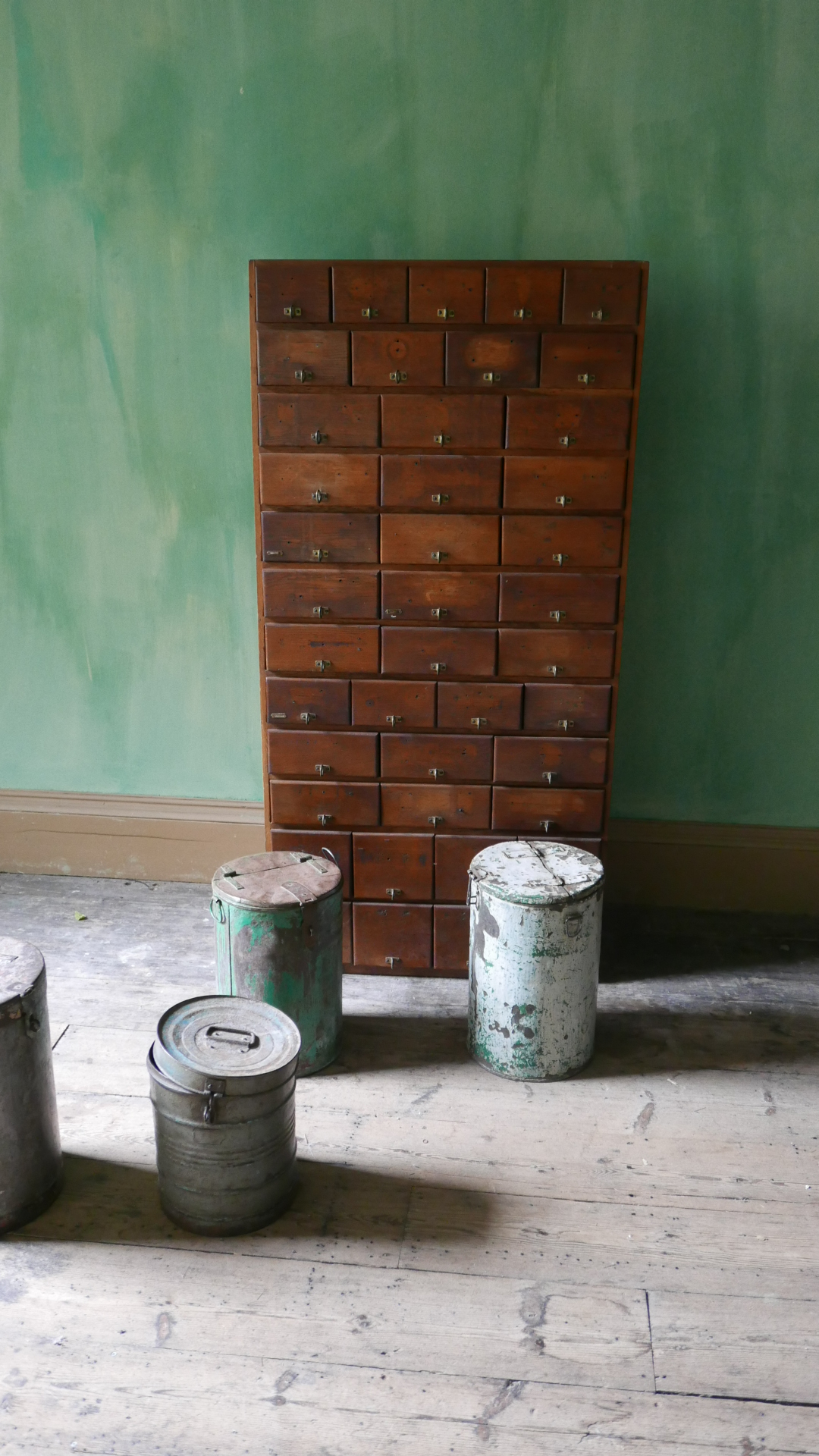
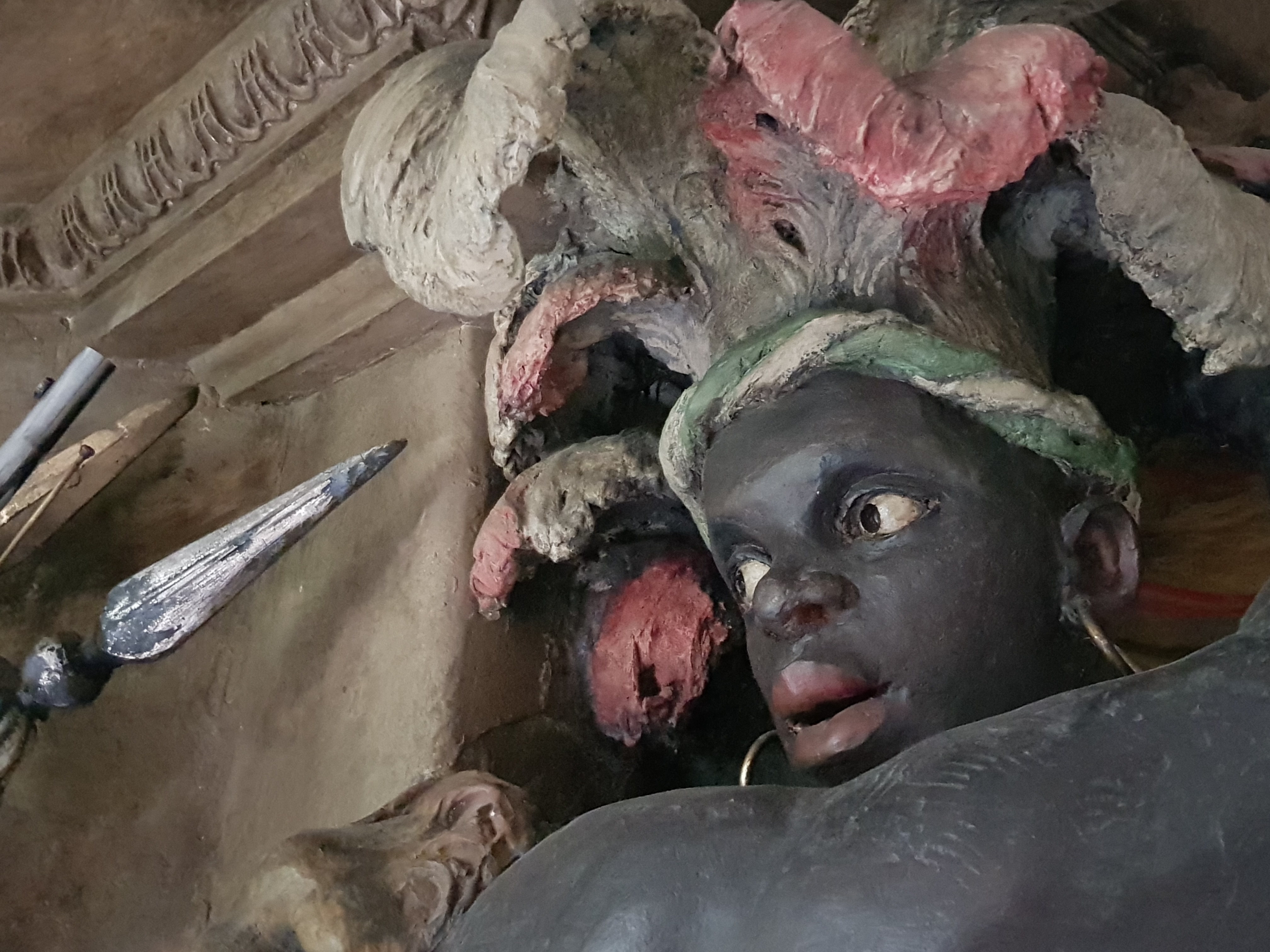
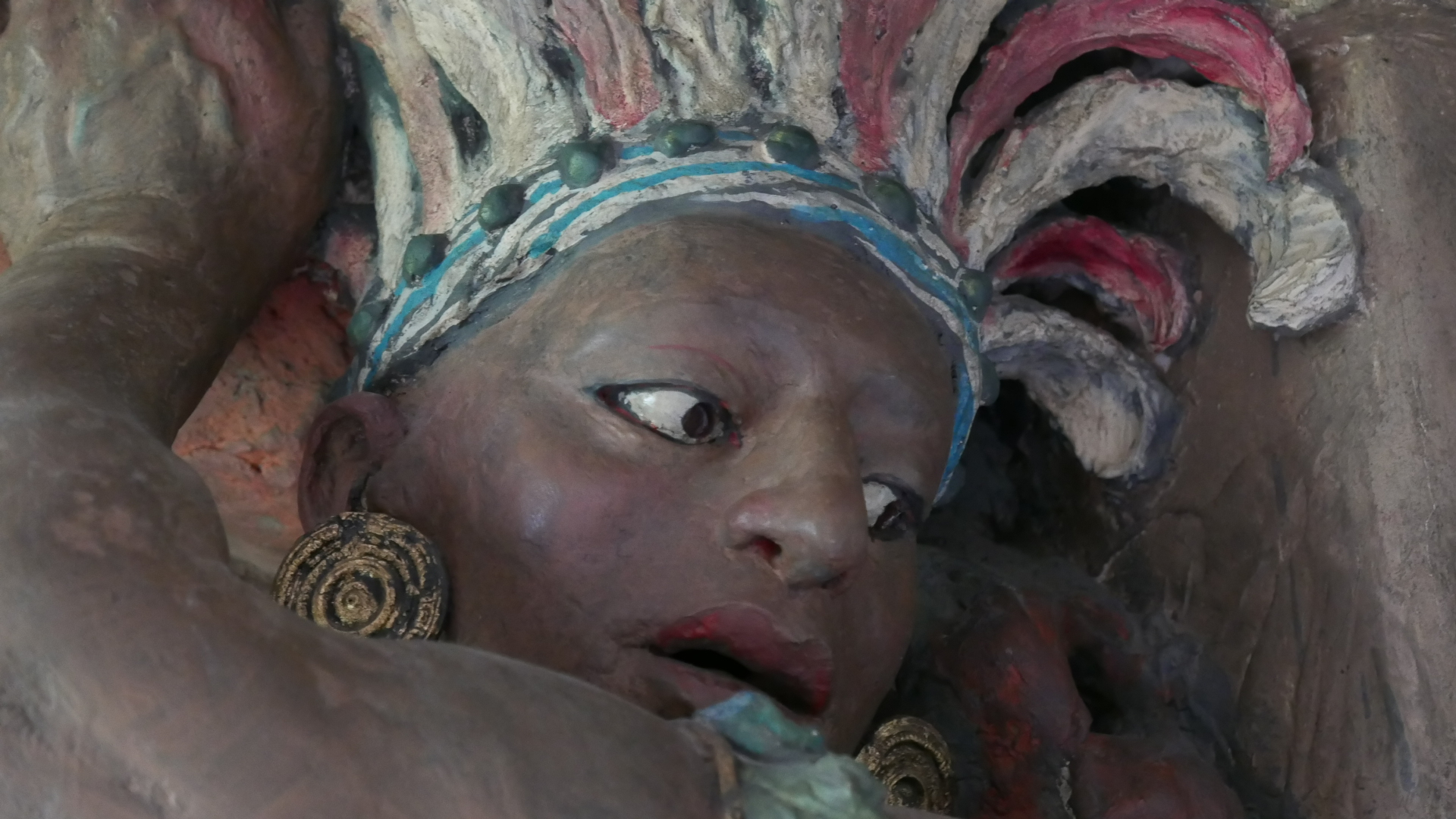
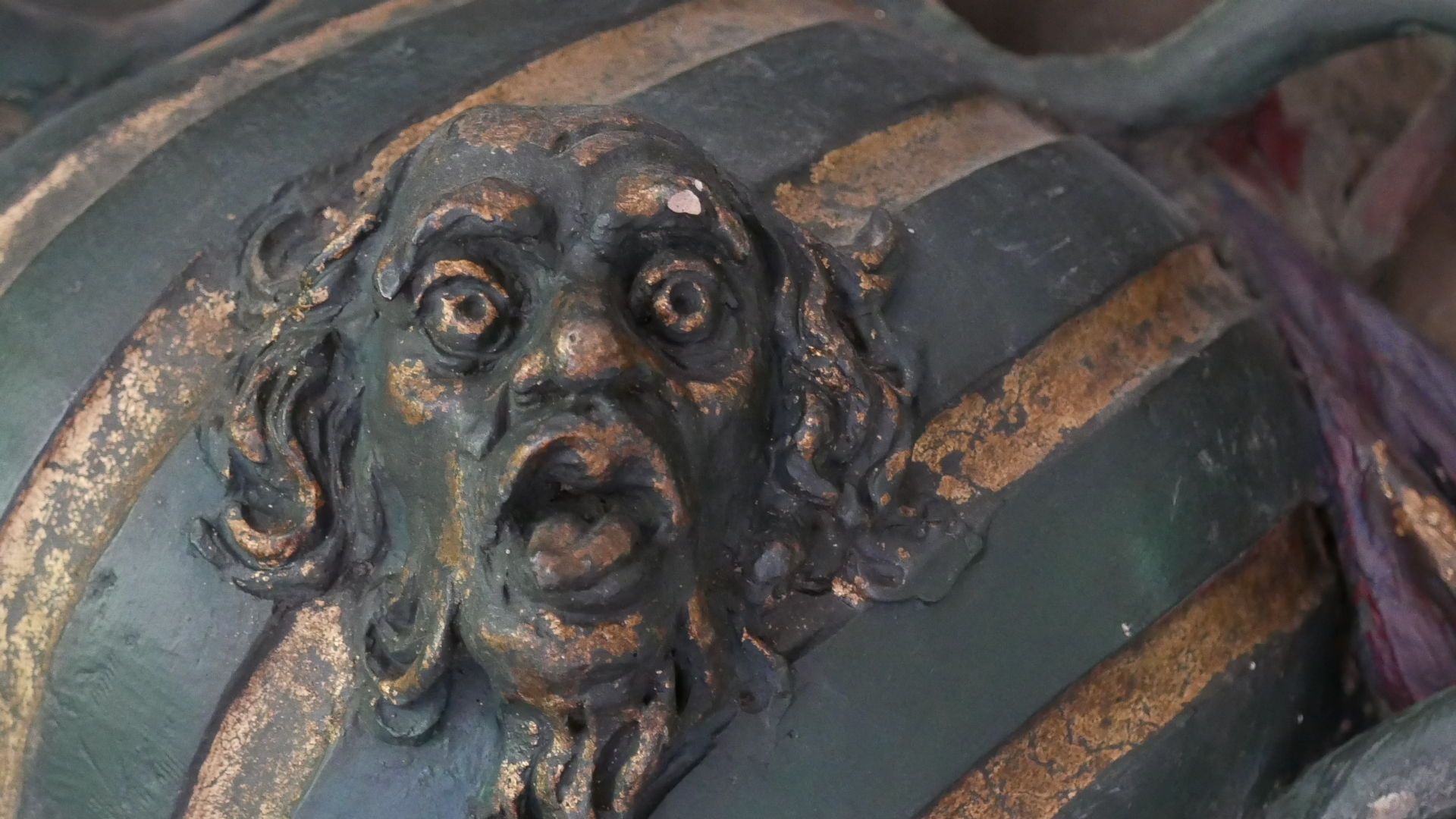
I like the aesthetic of empty houses which show off the quality of their architectural spaces, particularly if they have fragments of sculptural magnificence:-

Nicola Hicks
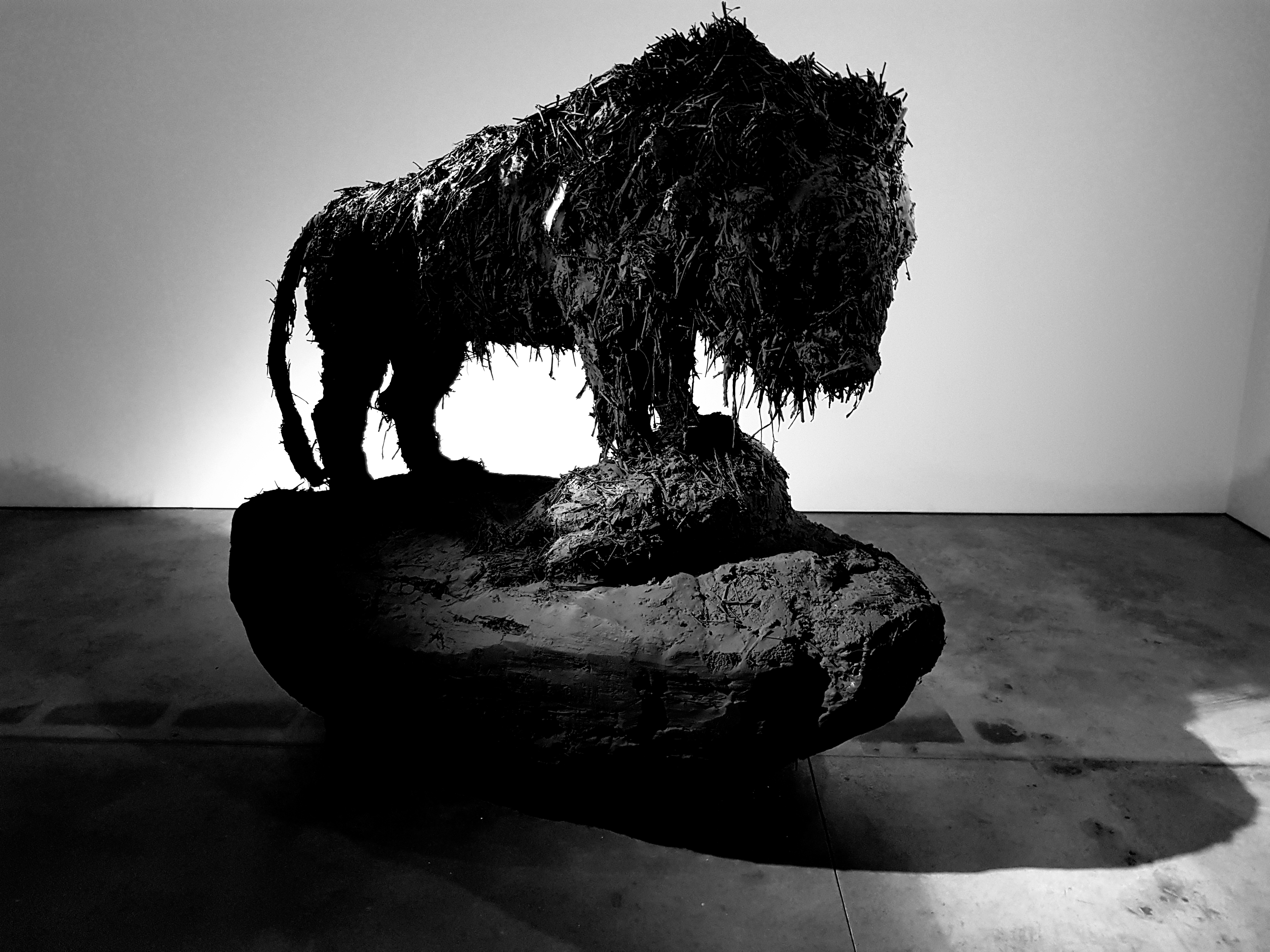
I was asked by Matthew Flowers to call in on Nicola Hicks’s latest exhibition Keep Dark. I’ve admired her work ever since she was commissioned (by Derry Irvine) to do a portrait bust of Tony Blair (I’ve always assumed, without evidence, that it was scuppered by Alastair Campbell). She’s good at modelling. Upstairs is a display case with two portrait busts: Epicurius:-

And Family Portrait:-

The rest is much darker – a room full of her animal sculptures emerging out of straw:-

I preferred the work upstairs which is less portentous:-


Antwerp (2)
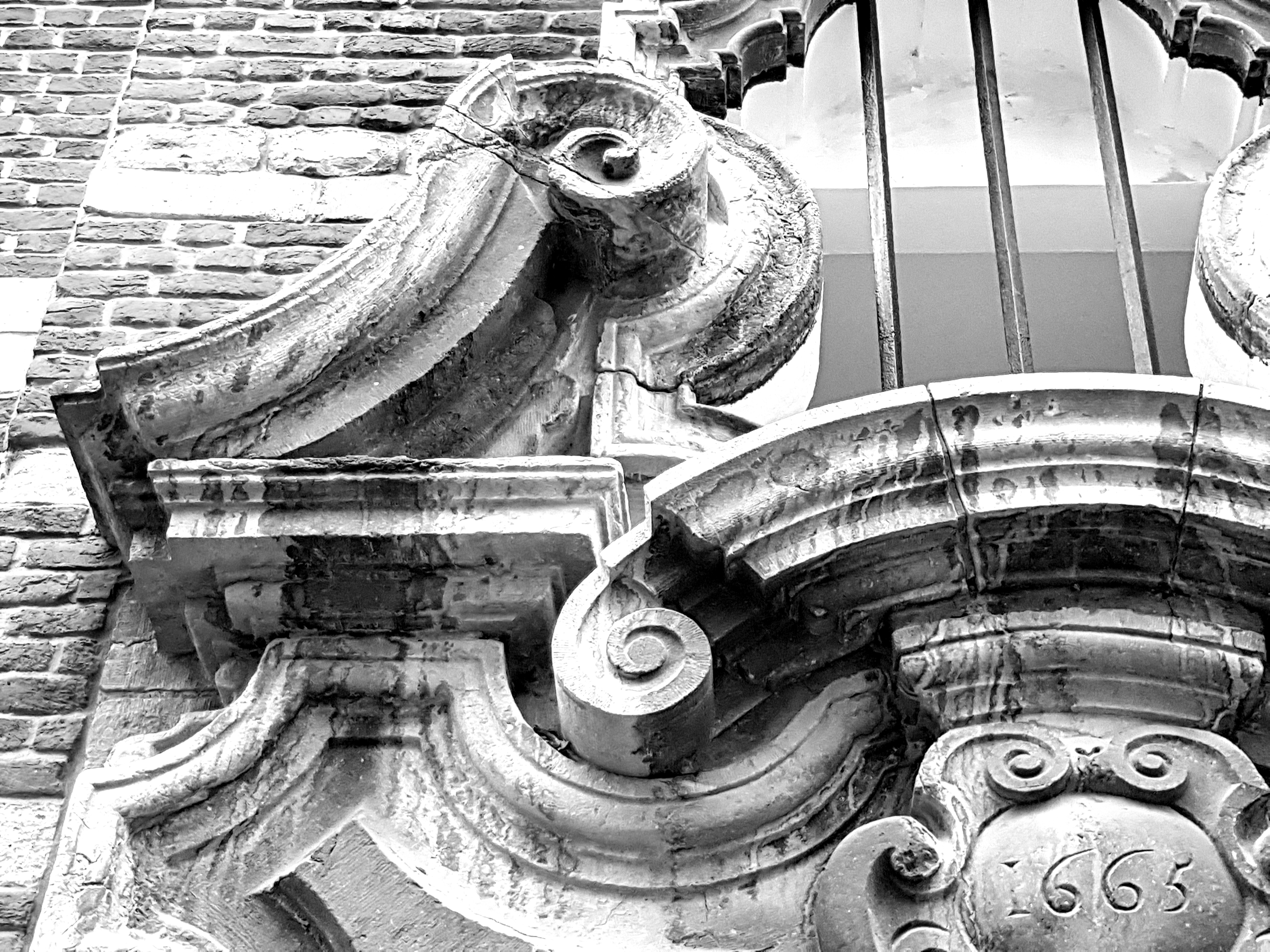
I left out of my previous post about Antwerp some views of houses and street fronts which help to create the atmosphere of dense medievalism in the centre of the city. I am posting them now as a supplement on my return.
Two gables in Korte Nieuwstraat:-
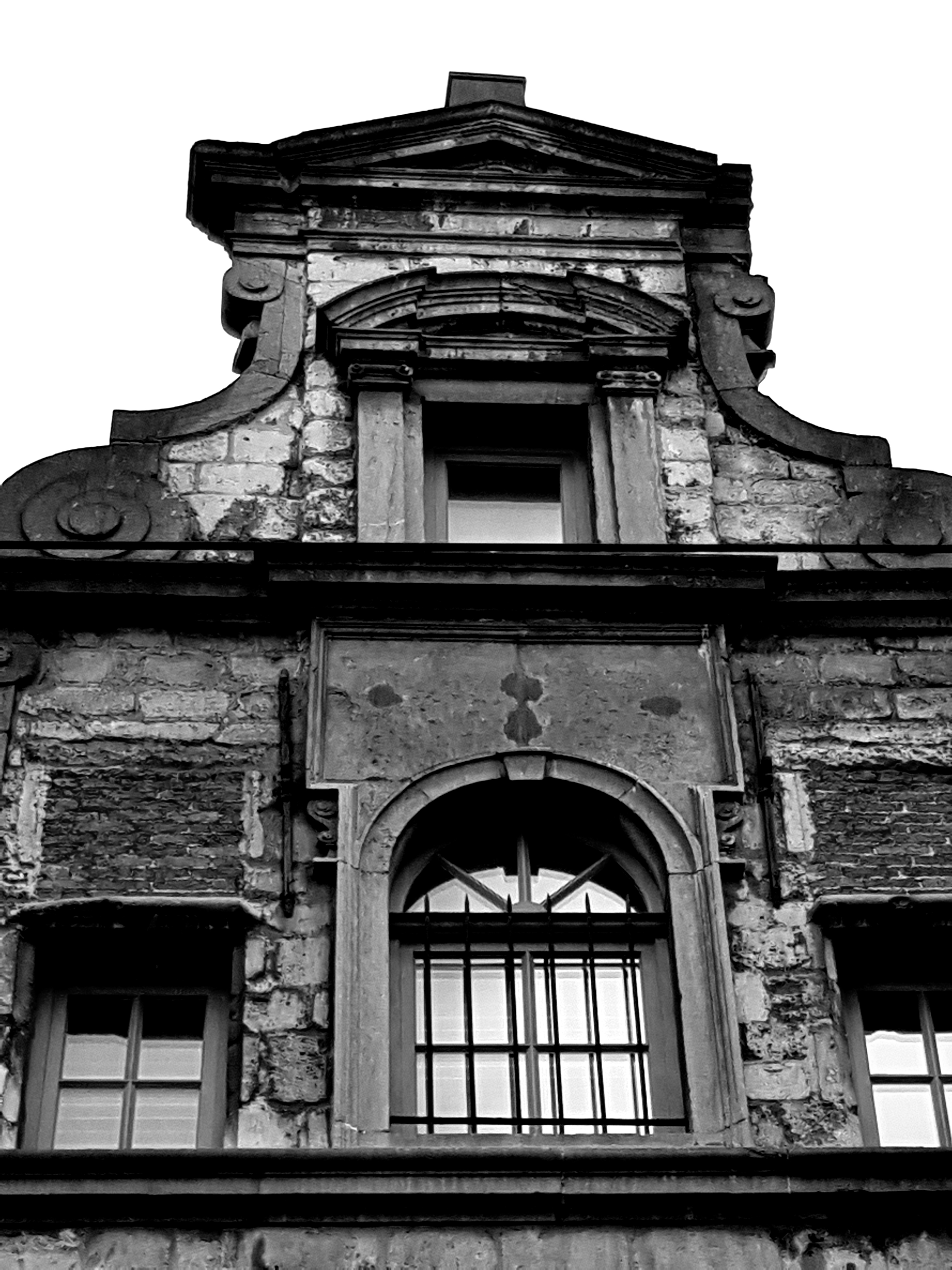
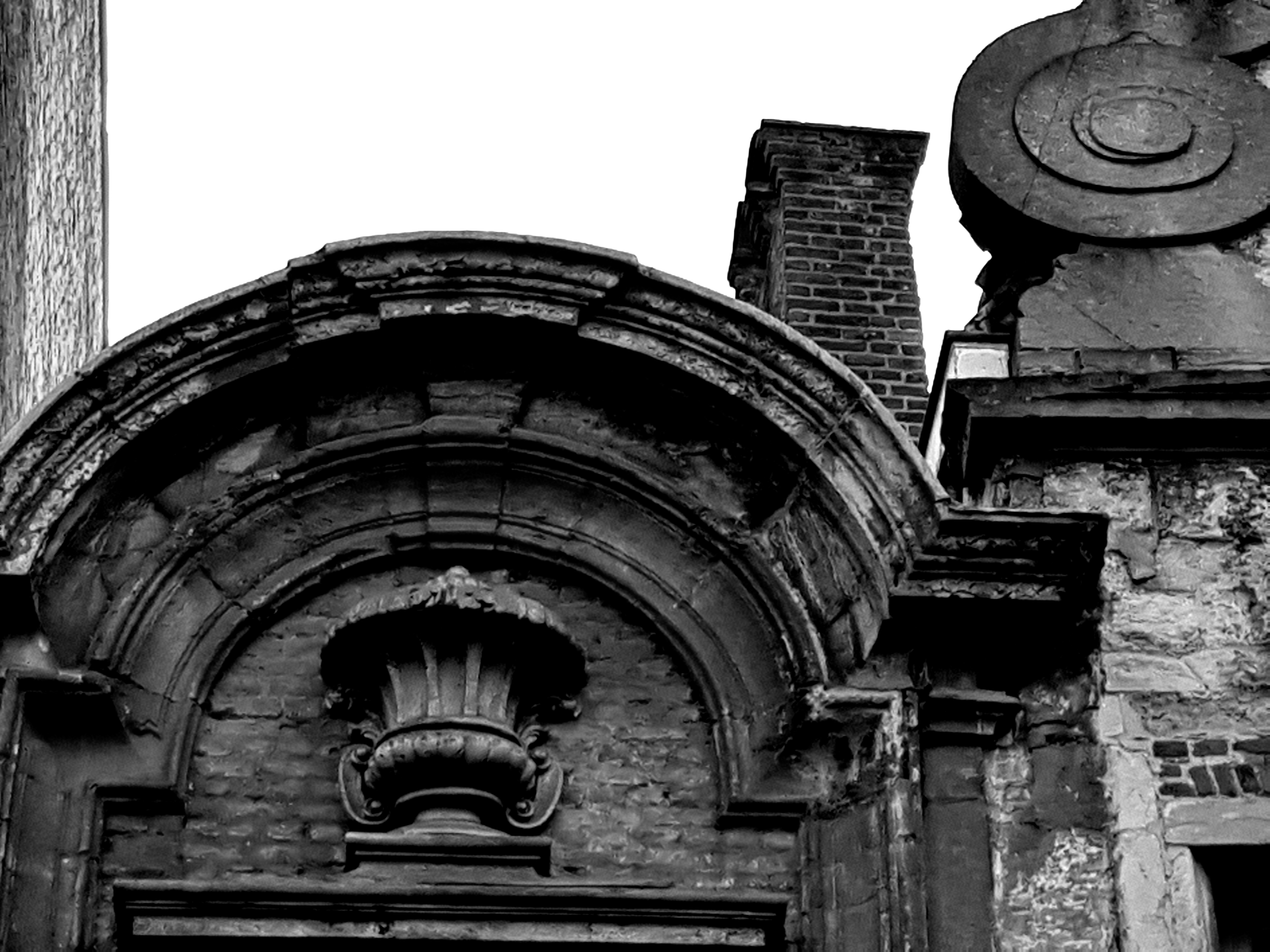
The details of two façades in Melkmarkt:-
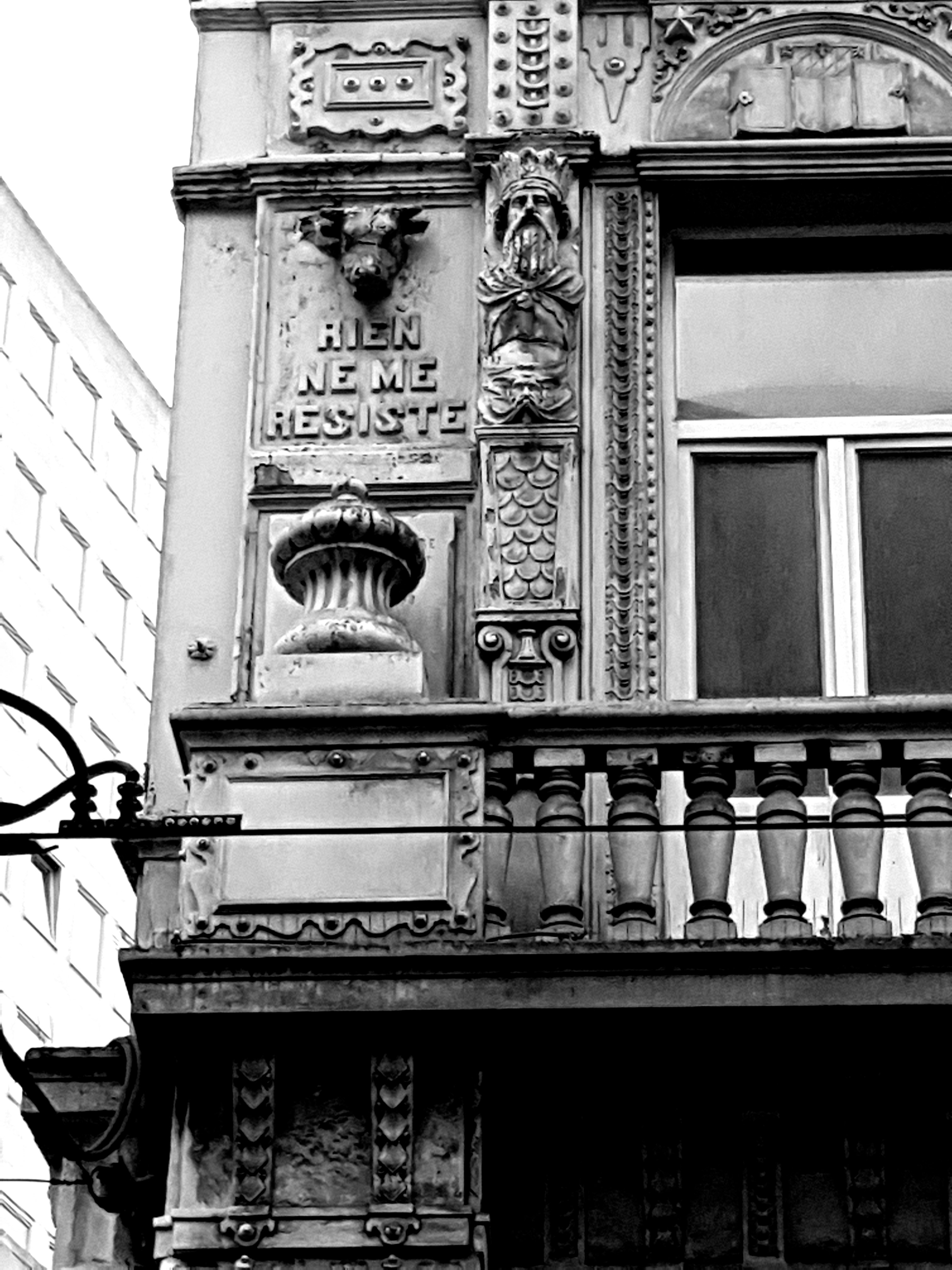

And an opulent baroque doorway as I was walking up the Nieuwstraat to Sint-Jacobskerk:-
Axel Vervoordt
Having spent so much of the day touring Axel Vervoordt’s empire, I have become intrigued as to how he has built up not just a big commercial operation, but international authority in the exercise of taste.
He was born in 1947. His father was a successful horse trader and his mother bought a series of houses in the Vlaeykensgang, close to the cathedral in Antwerp:-
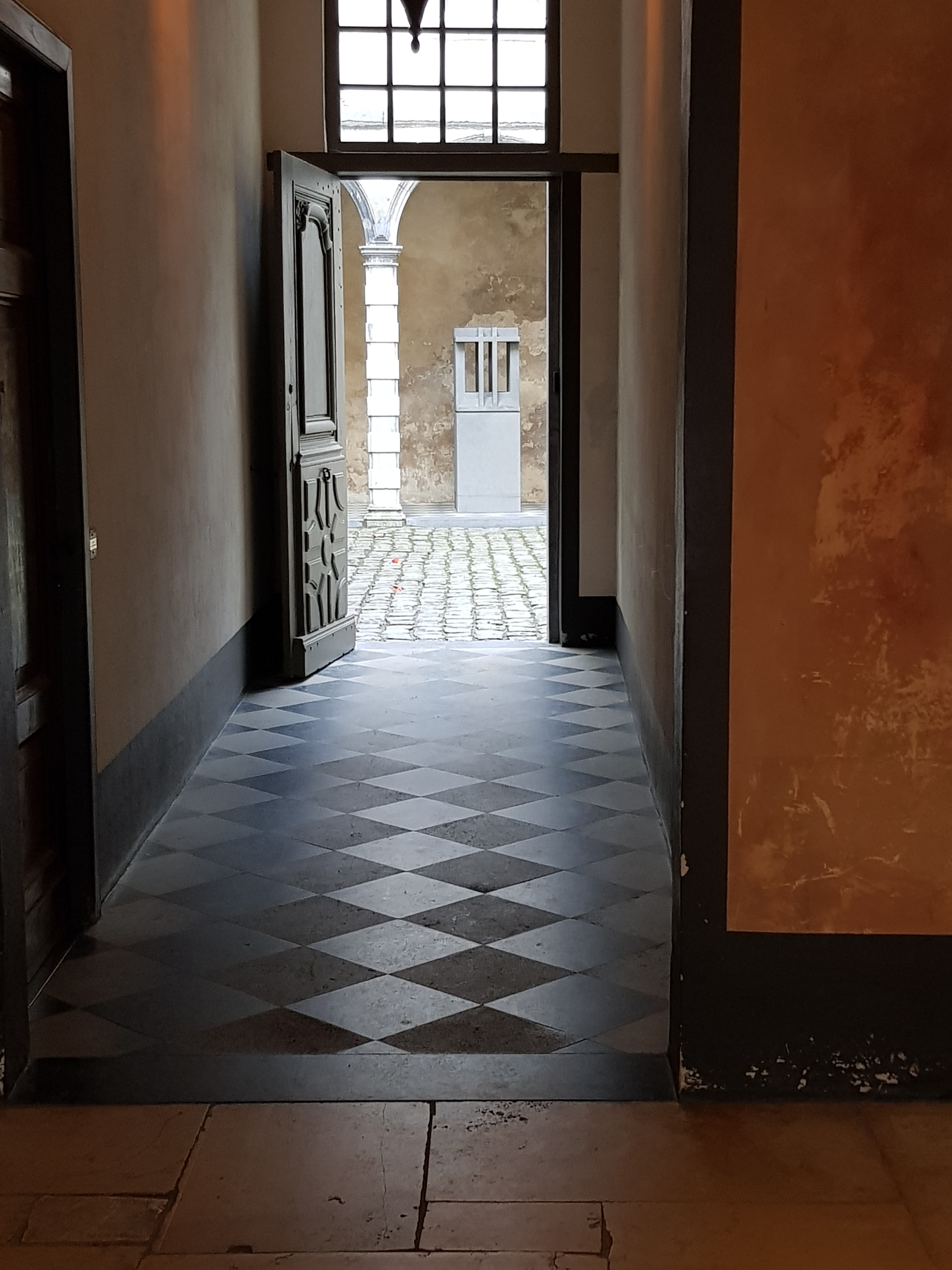
He started dealing in English furniture which he bought in bulk from impoverished landowners, combining his shop with his living arrangements and thereby creating a distinctive aesthetic based on eclecticism, combining old and new, and valuing the patina of age and use. He became well known in terms of the trade when he invested so heavily in the ceramics which emerged from.the wreck of the Geldermalsen in 1984, but more so when he began making a series of exhibitions at the Palazzo Fortuny in Venice in 2007, including hanging an El Anatsui off its façade.
We can learn more from his autobiography, published by Flammarion next month:-

Castle s’-Gravenwezel
We had lunch in the Vervoordt’s castle, which he bought in 1984, having last changed hands in 1729:-


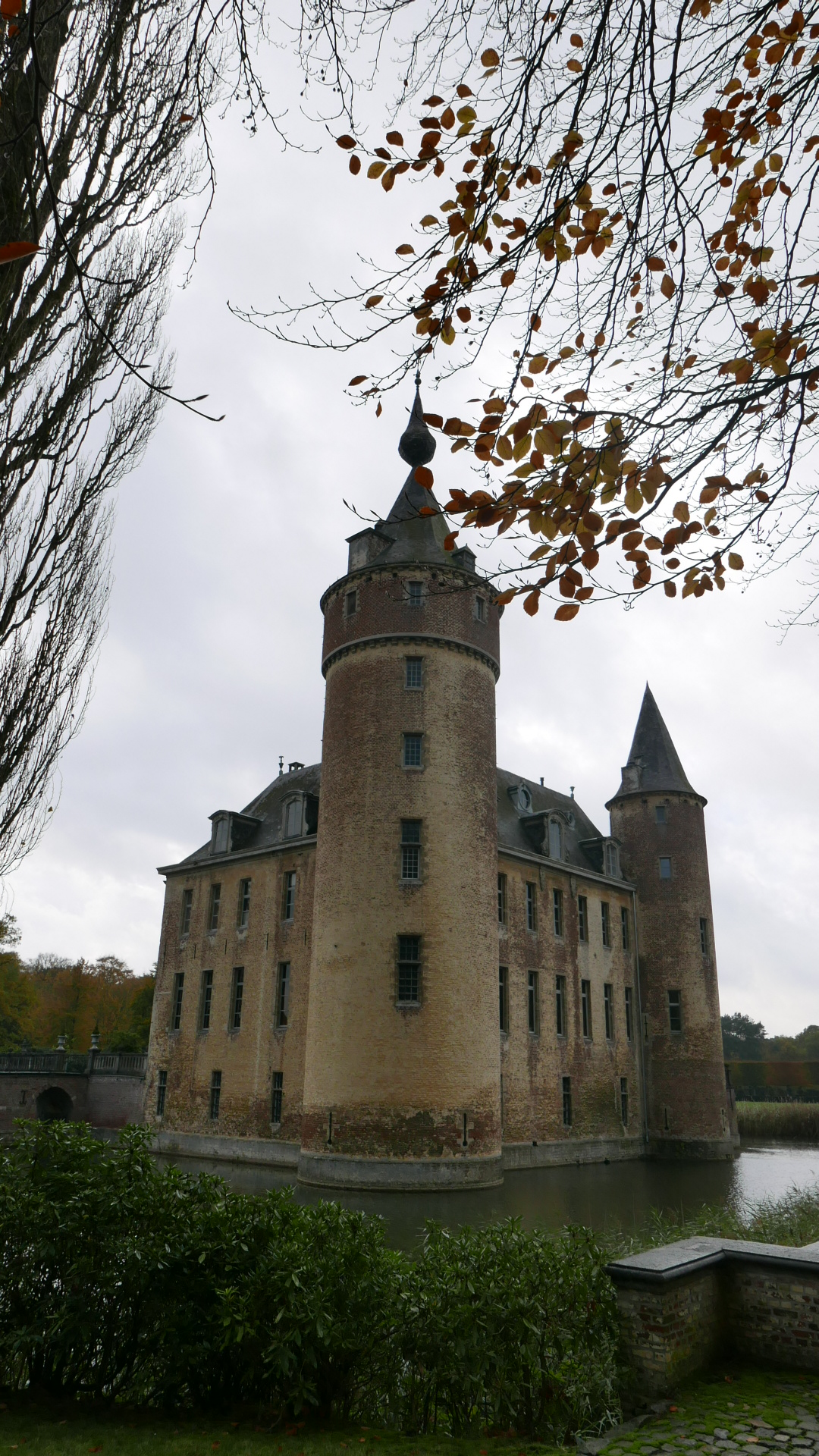
The sun obligingly came out not just on the Castle, but on the landscape garden:-
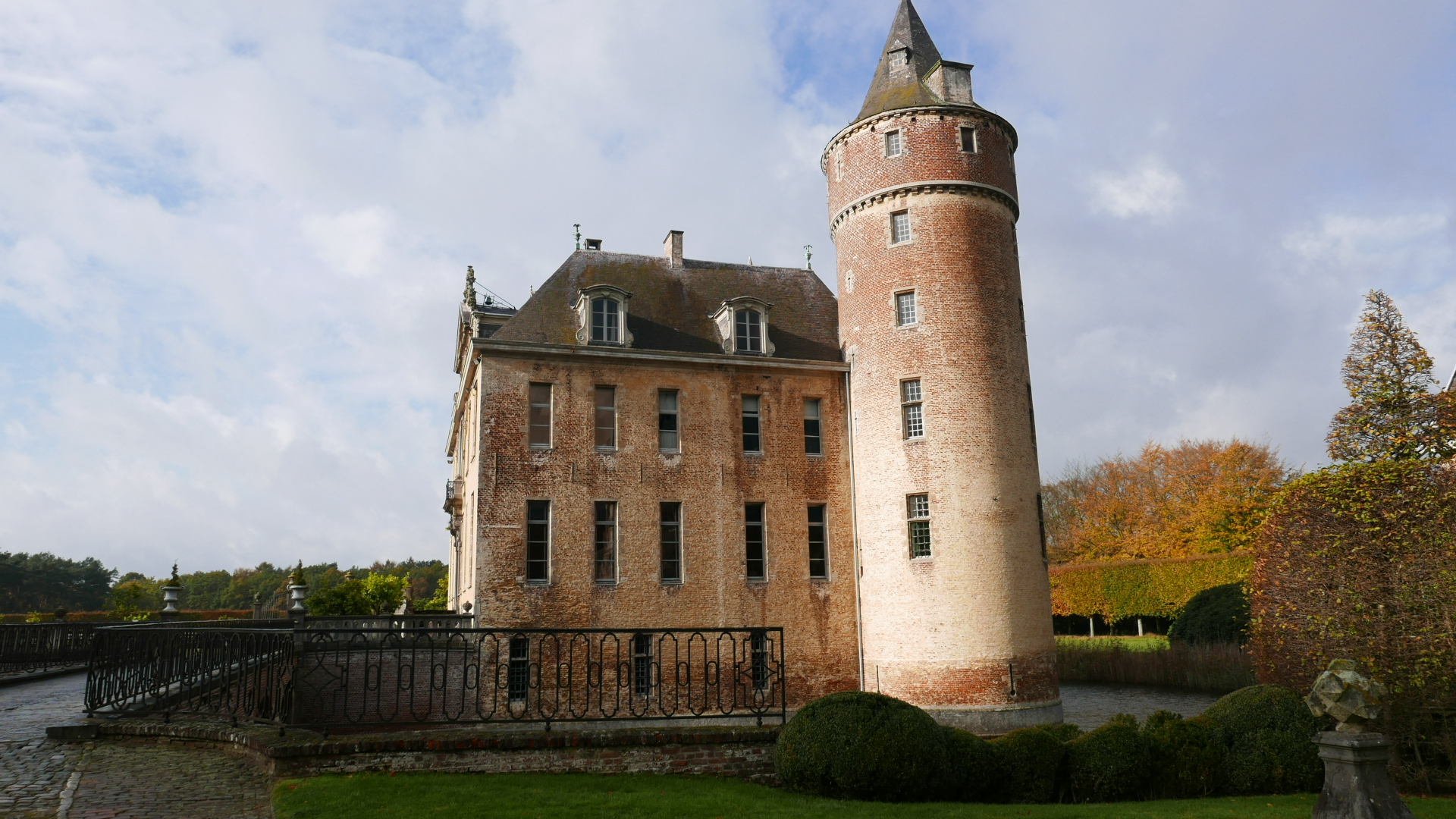


The interior is highly atmospheric – a combination of historic interiors, good furniture and modern paintings, arranged with an intelligent eye.
This is the hall:-

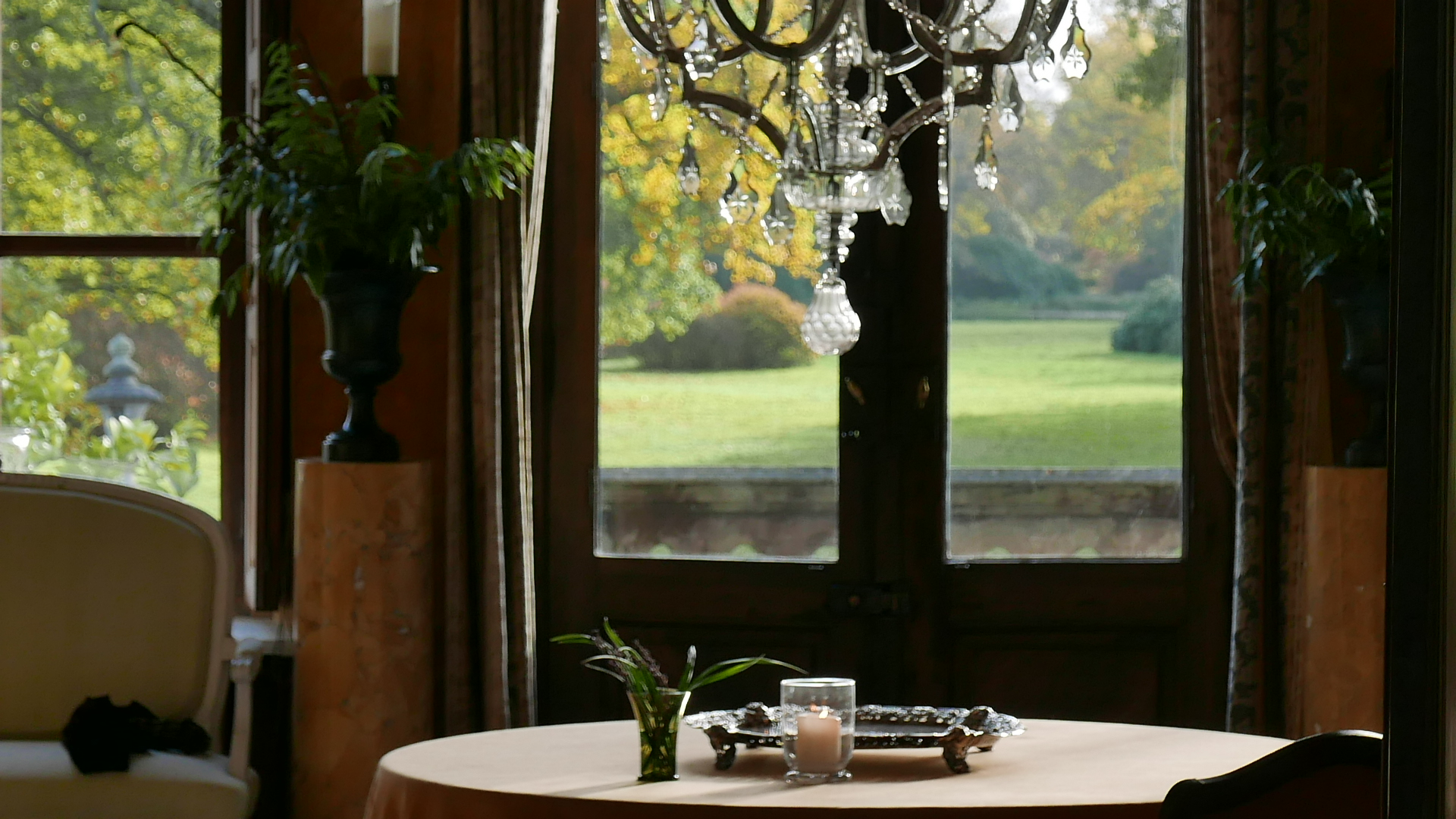
The room next to the hall:-

A room full of books (I like that):-

And the view out of the window into the garden:-
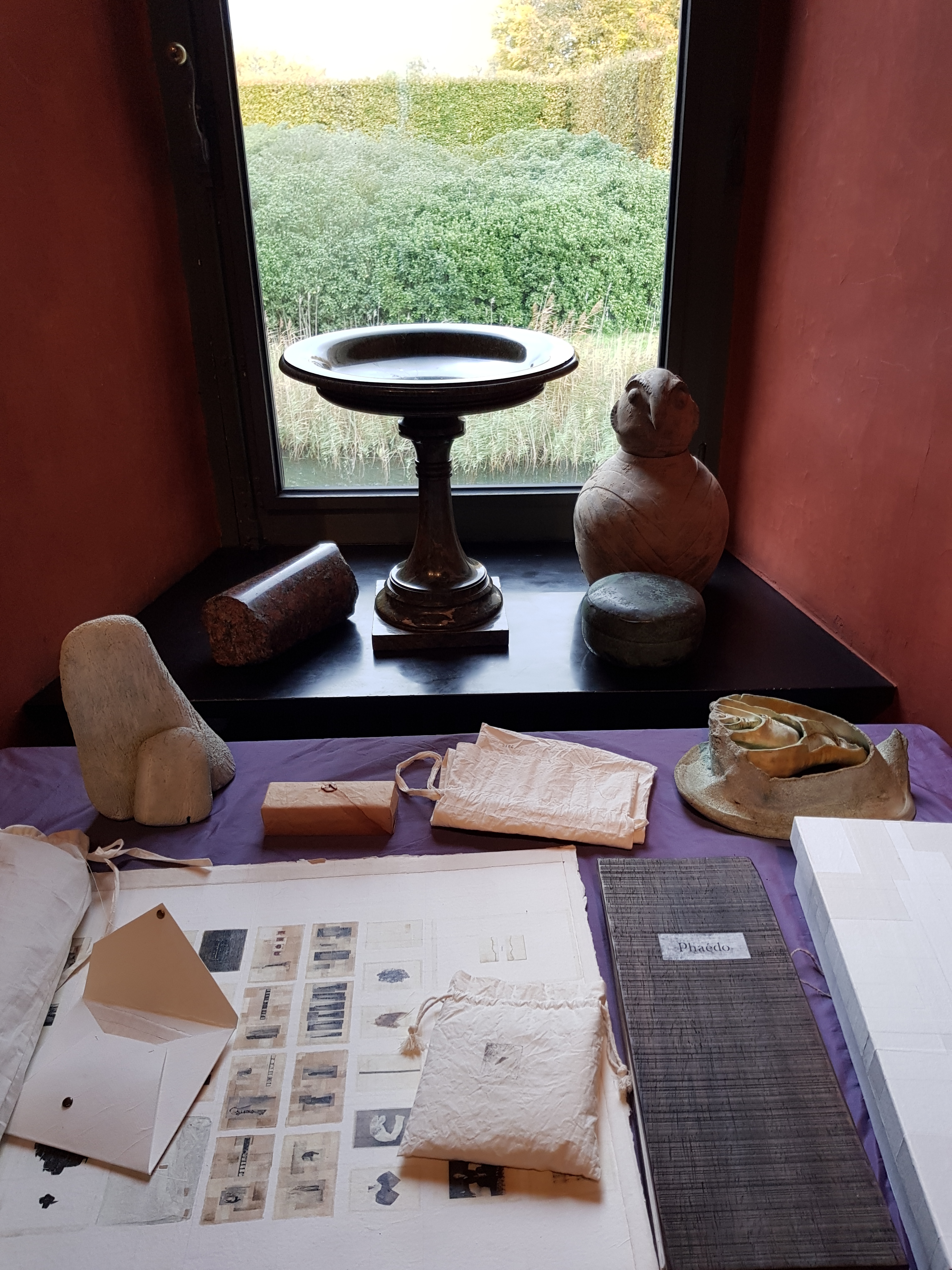

The chapel in the tower:-

The room which shows off the ceramics which he bought from the wreck of the Geldermalsen, known as ‘the Nanking Cargo’:-

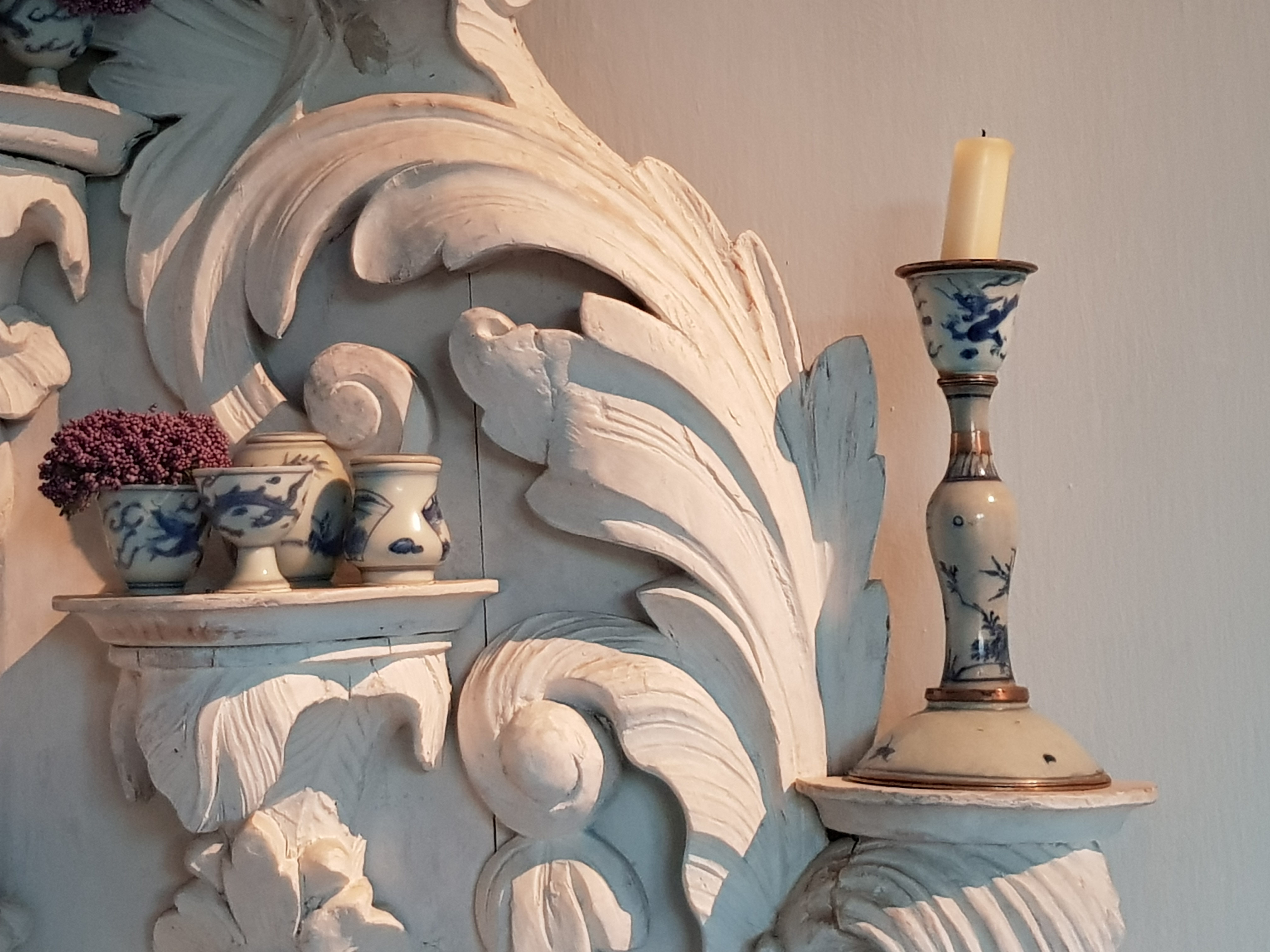

This is the room where we had lunch:-
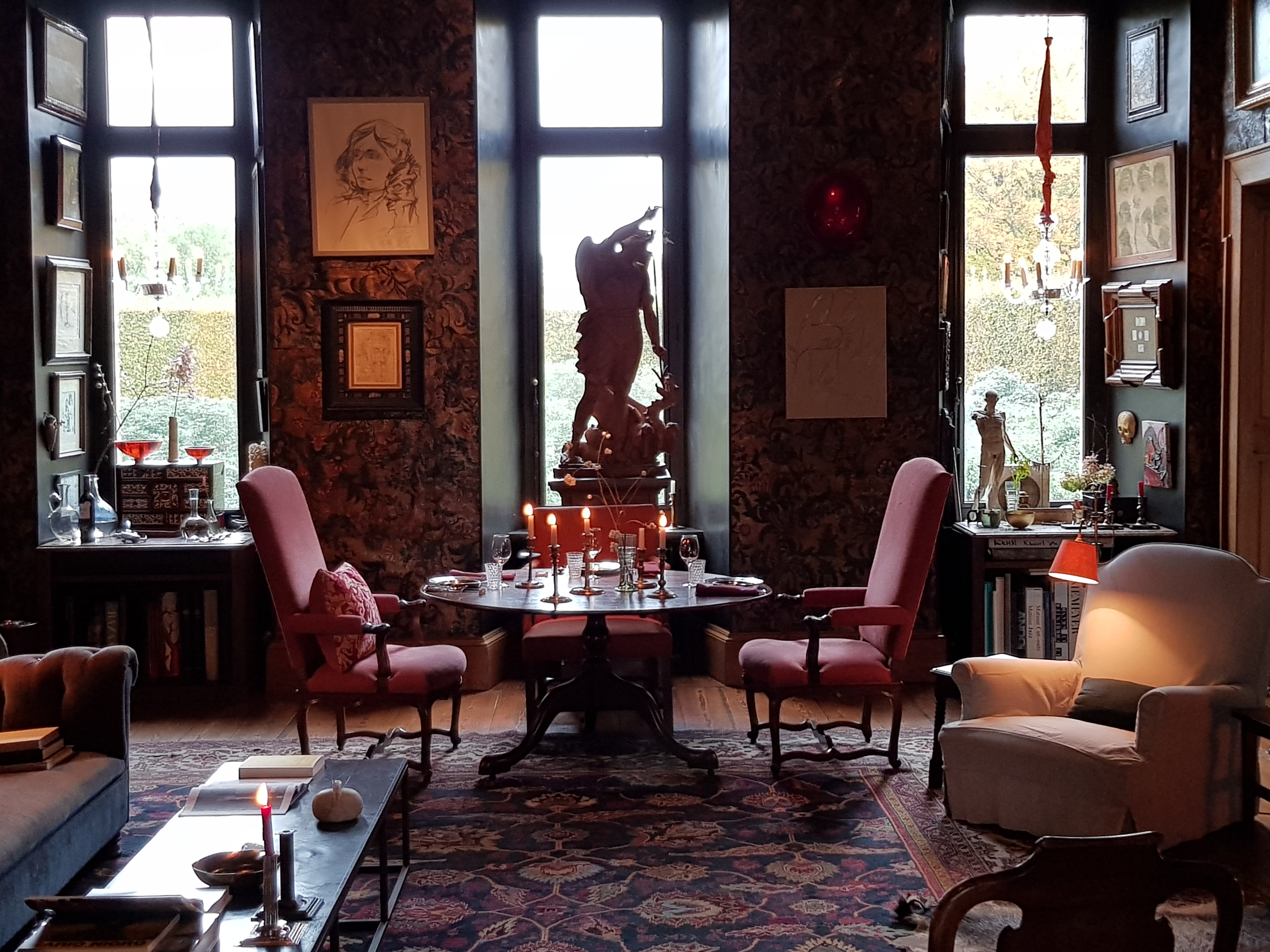
The top floor is done in a style that Vervoordt describes as ‘wabi’, based on the Japanese philosophy of wabi sabi which values simplicity in everyday objects:-
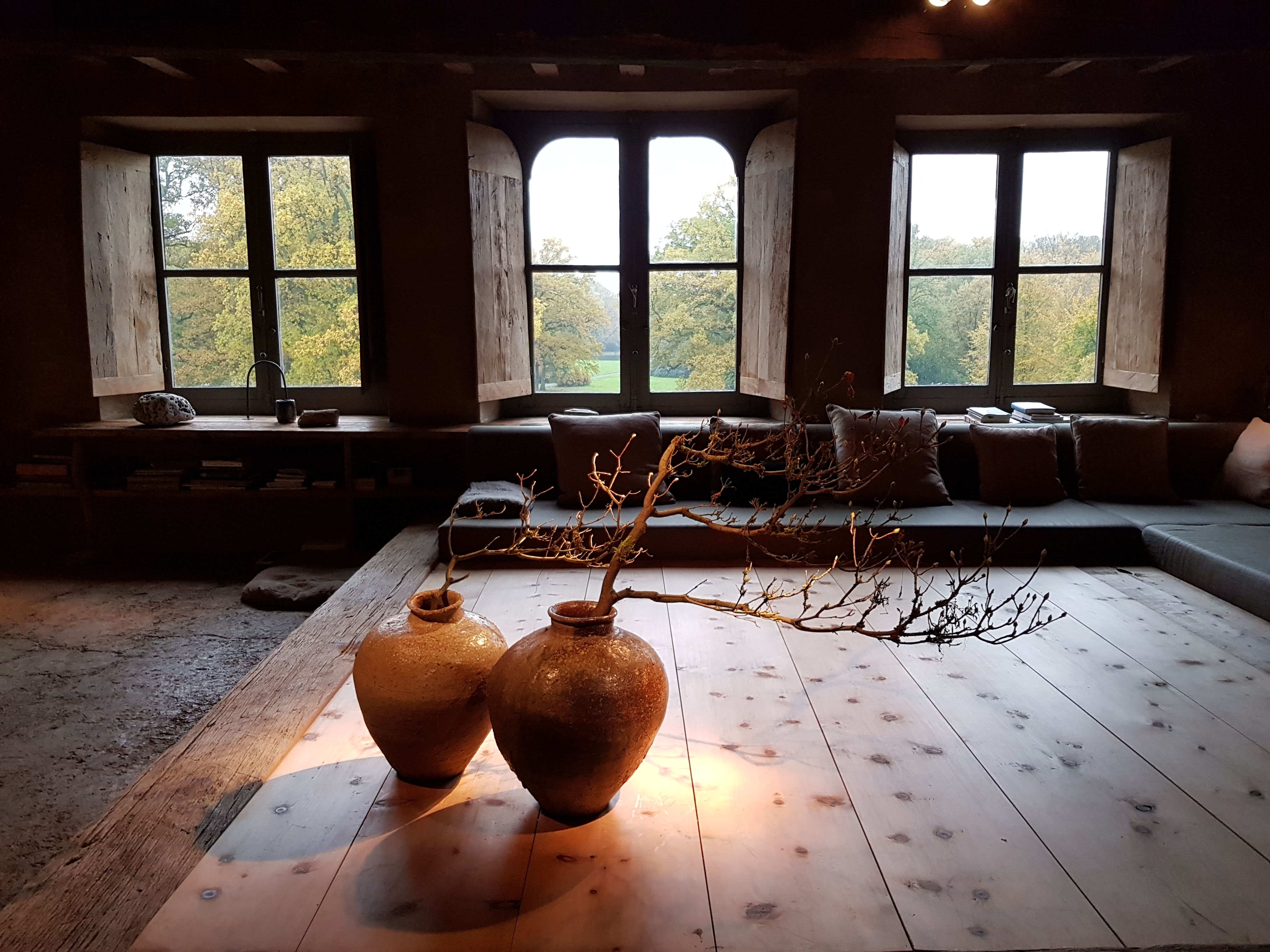

Even the basement is beautiful:-

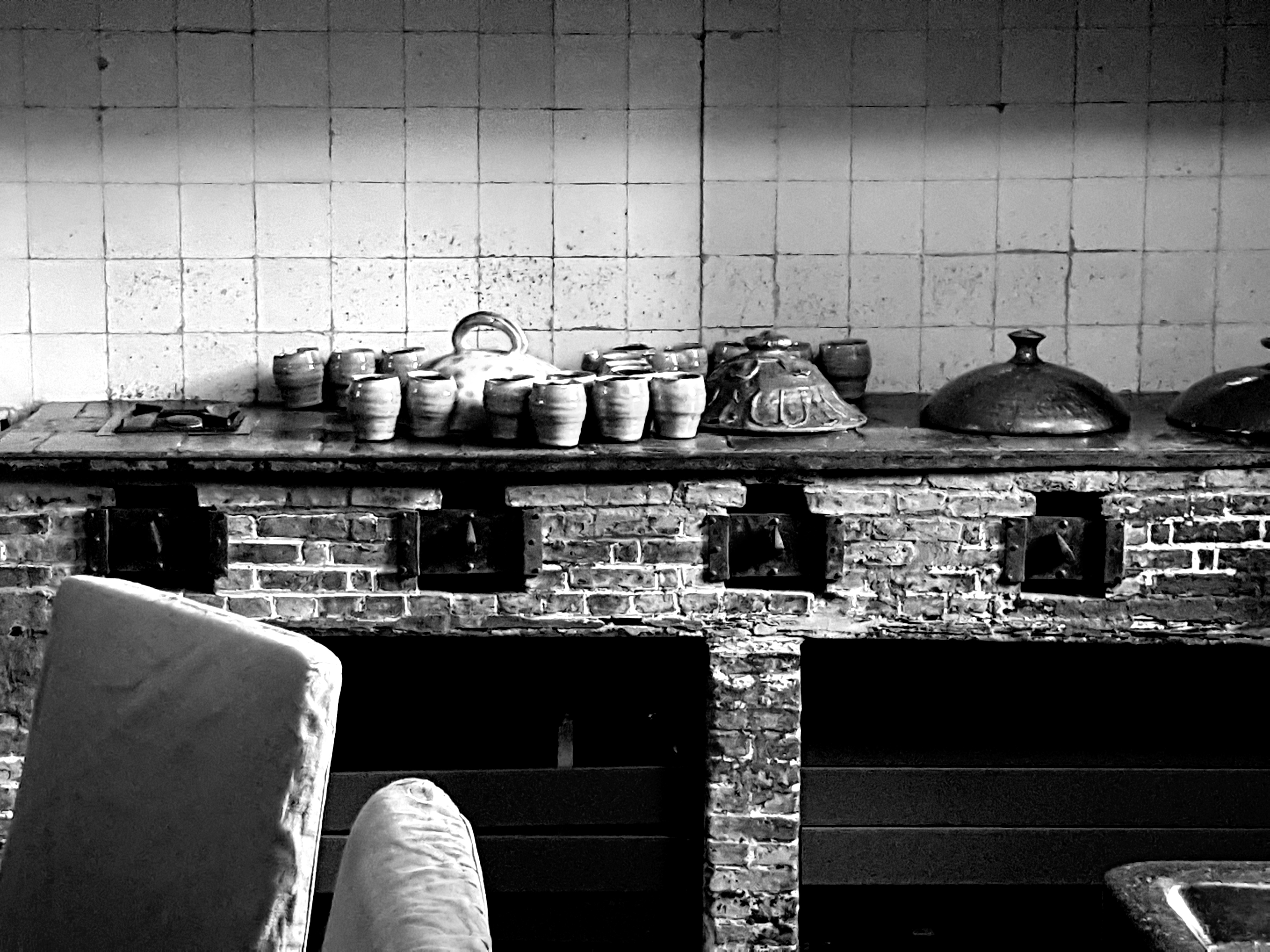
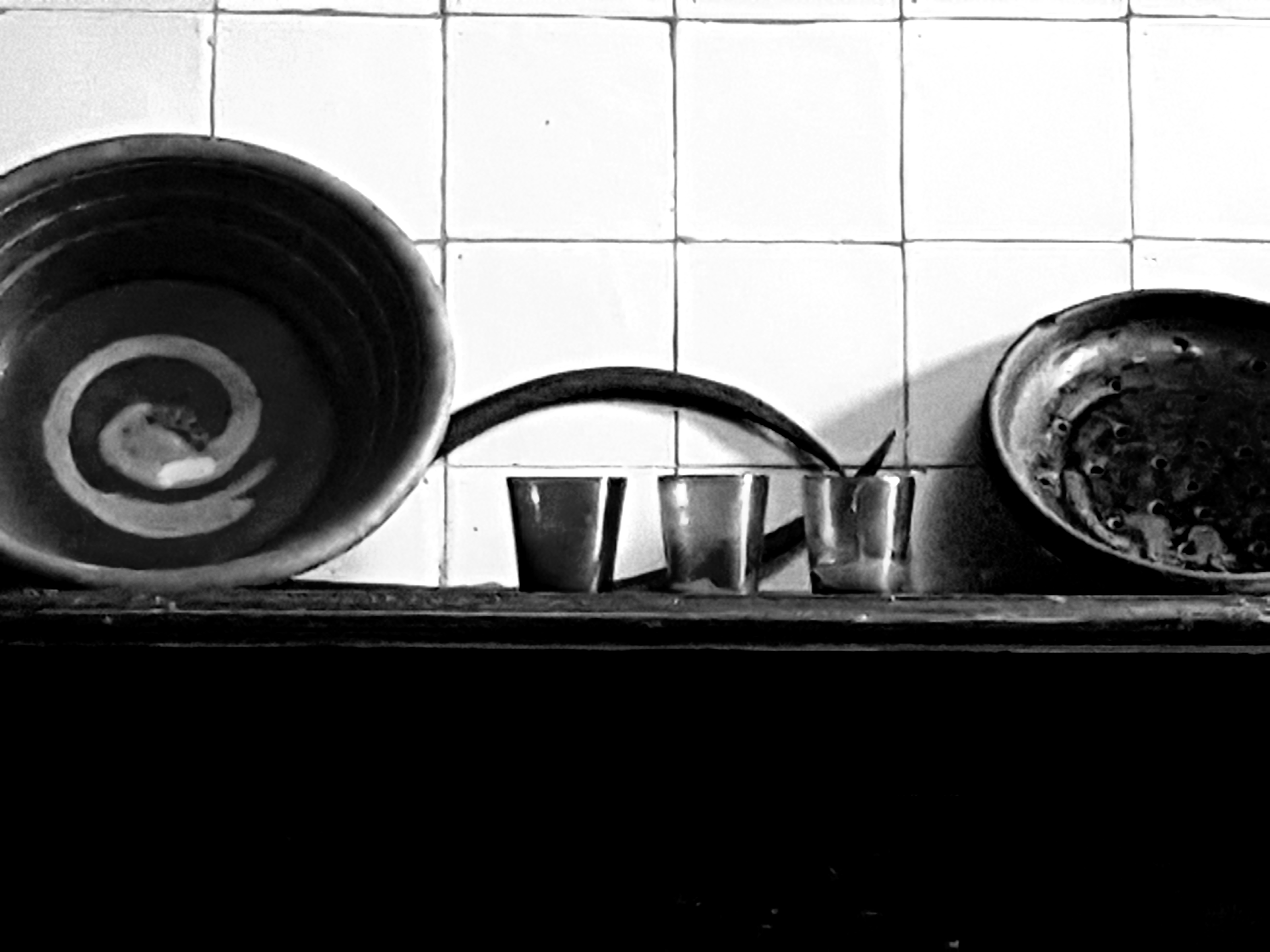
As I left, we photographed the sheep:-


Kanaal
I spent the morning at Kanaal, Axel Vervoordt’s astonishing art-cum-industrial complex, which was once a gin factory, then, from 1956, a Malthouse, now a very 21st. century environment in which to experience art and buy it at the same time. The Foundation is due to open later this month. The workmen are busy putting the finishing touches to the buildings (the black shed which looks like the most modern of the structures and houses Anish Kapoor’s At the Edge of the World is actually a building of the 1950s):-

We walked through an old industrial corridor:-


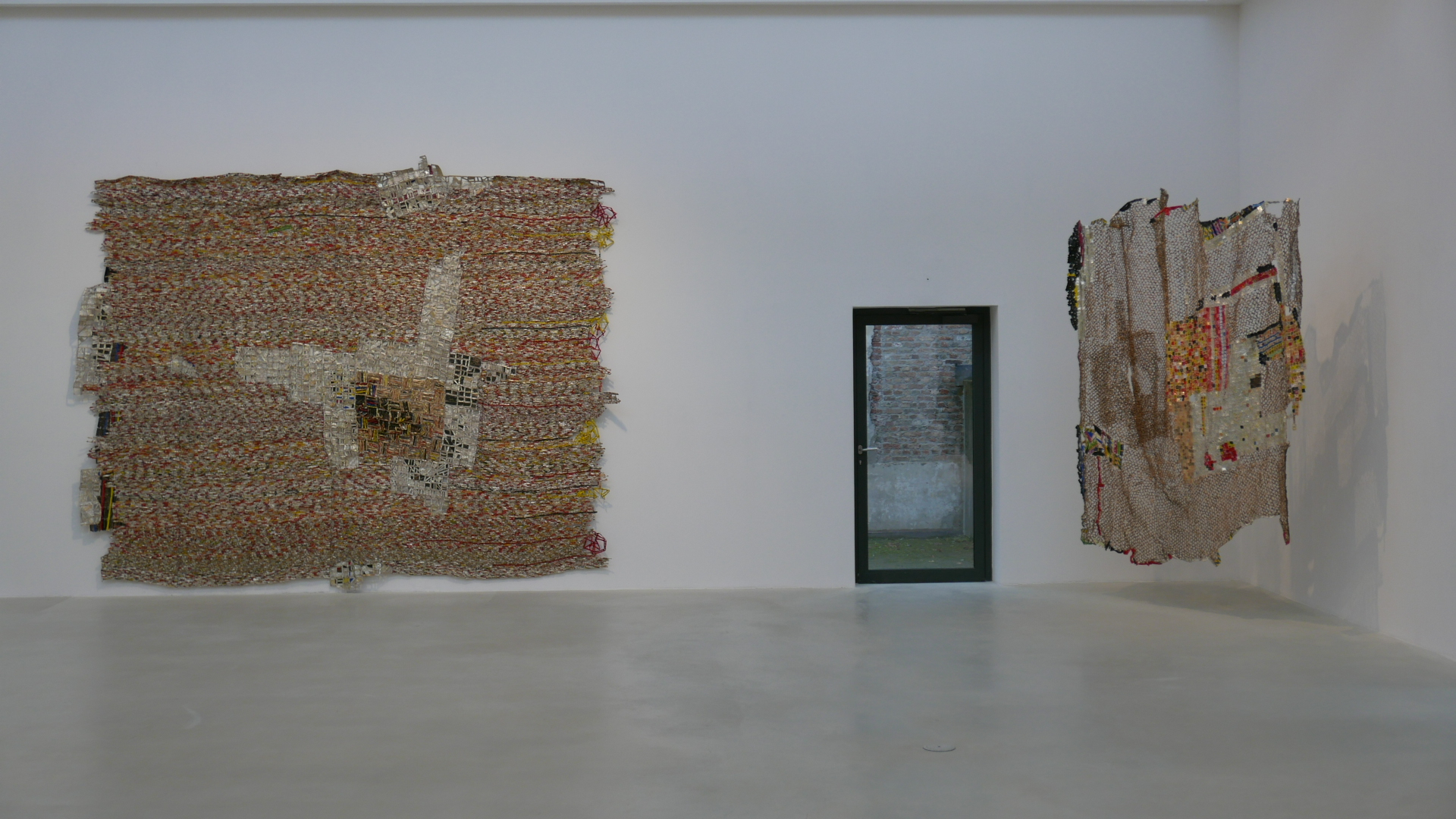
To a new set of galleries which have been designed by Vervoordt in conjunction with the Japanese architect Tatsuro Miki and which have an exhibition of El Anatsui:-


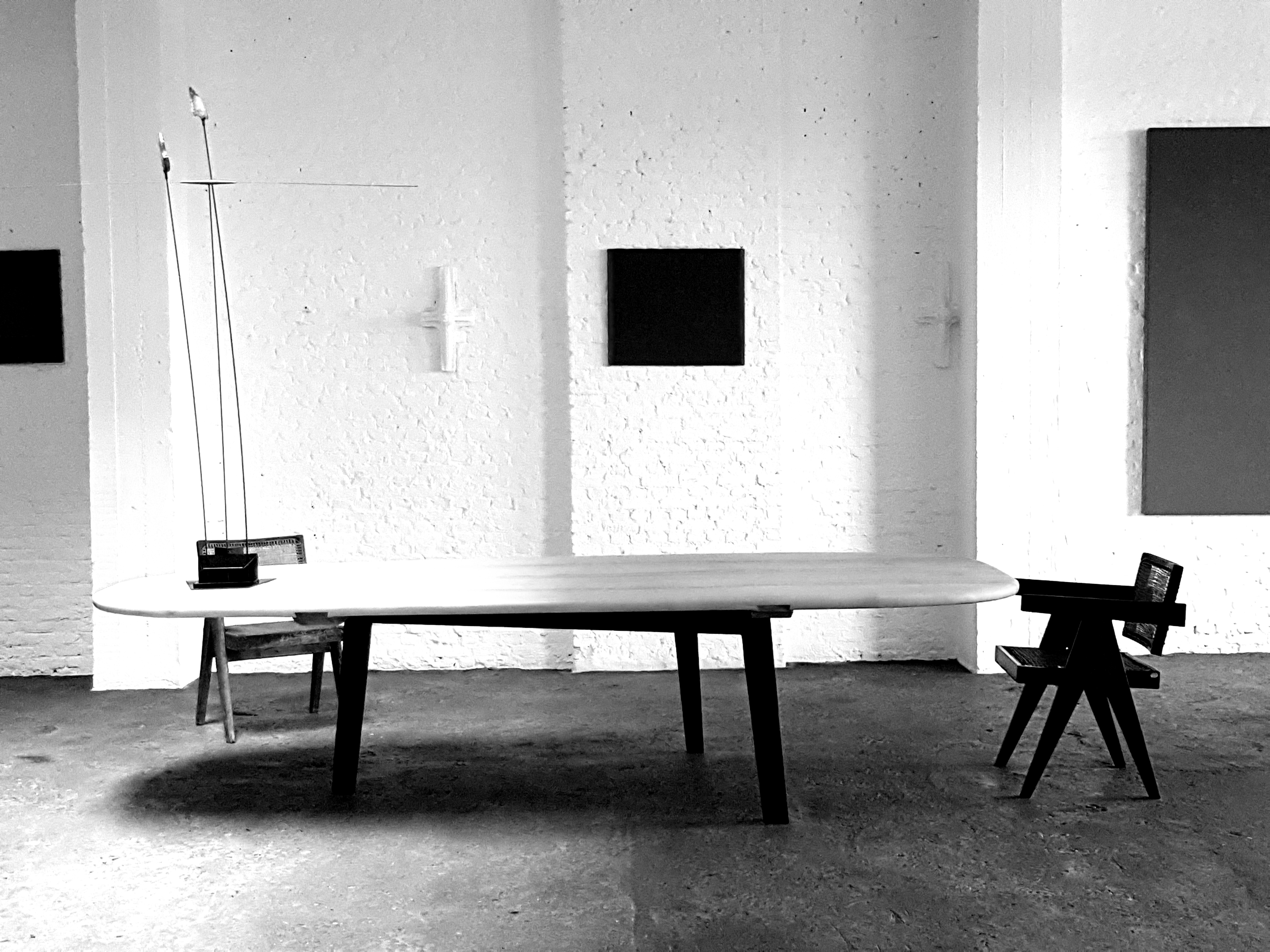
Upstairs in the original building, we returned to the returned to the rooms where the concert was held, which are filled with modern antiques sparsely displayed:-



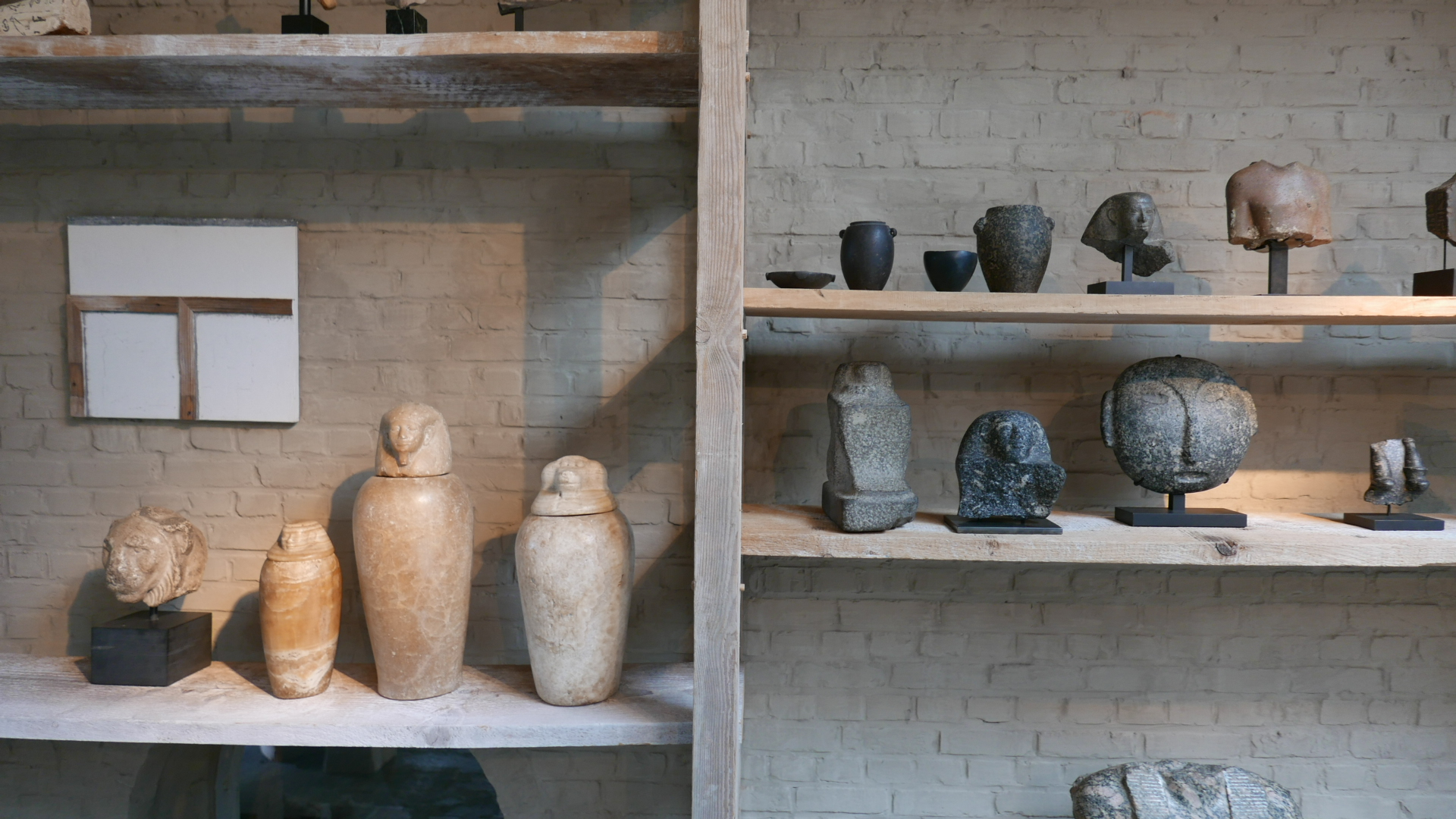
And antiquities:-


In the attic floor are shelves of art which I assume is for sale:-


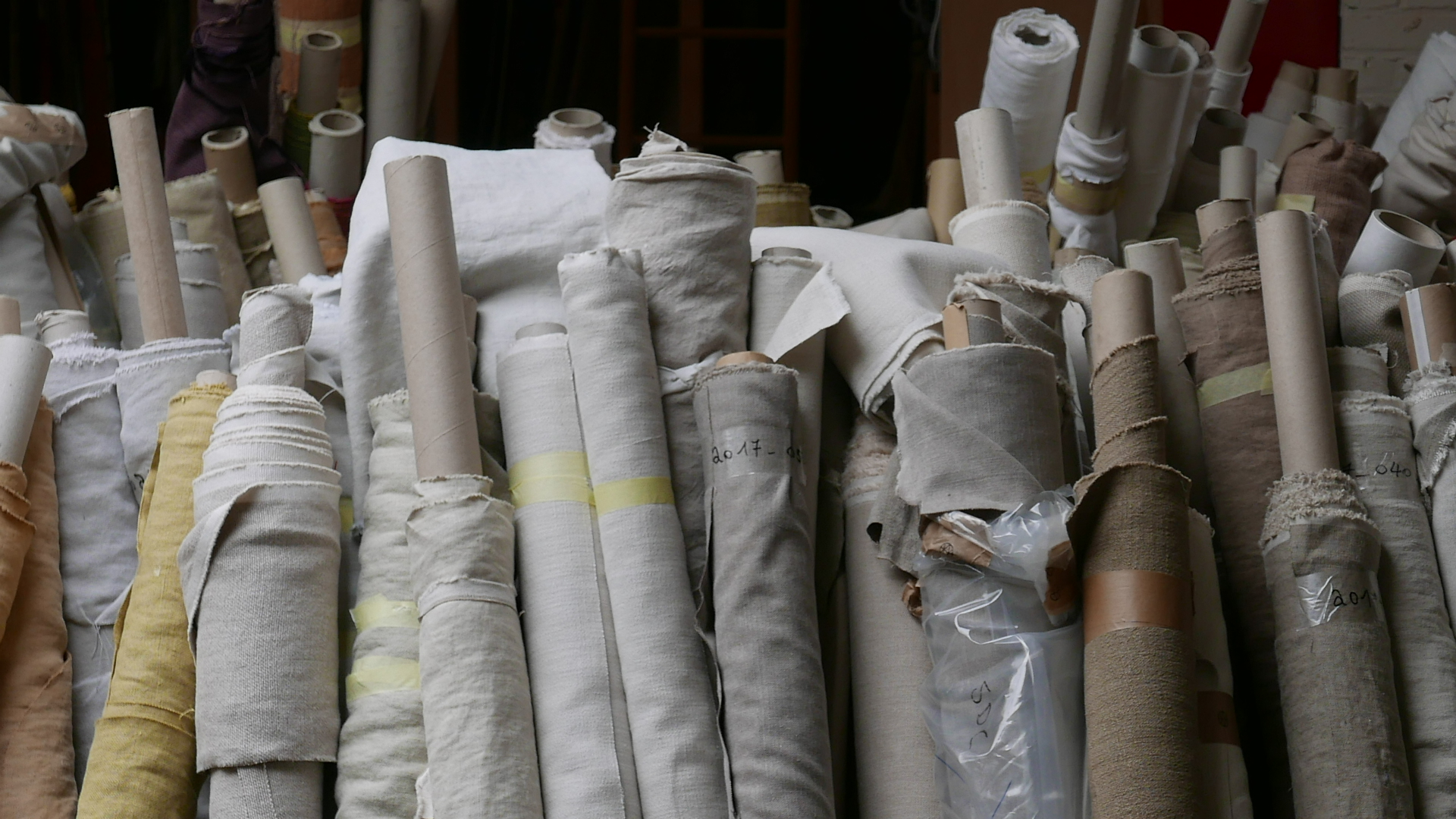
And you can choose fabrics as well:-
 | Charles | Saumarez | Smith |
You must be logged in to post a comment.