HLF

While I’m on the subject of the New RA, I should document the role of the HLF in making it possible.

I discovered last night (which I had not known) that the origins of the project go back to 1992, when Sir Piers Rodgers, my predecessor, but three – or four, depending on who you count – first learned that the British Museum was planning to vacate the building and went to see Virginia Bottomley, the then Secretary of State, to seek her support for the RA to secure it (they had apparently previously tried to acquire it in 1900 when the University of London left).   It was the same era as the establishment of the lottery by John Major as a way of escaping Treasury control on major capital projects.

During the 1990s, there were endless discussions as to its appropriate use, including a common one that it should be a centre for the display and discussion of architecture, vigorously promoted by Philip Dowson, the then PRA.

The HLF turned the first project down in 2001.   The RA asked for too much money and it was after the HLF had turned its funding – for good reason – away from London.   But they did give the current project £12.7M in 2013;  and one of the pleasures of last night was seeing Jenny Abramsky, the then chairman, who supported the project after lying on a bed in our then louche café, Wesley Kerr, the then chair of the London committee, Christopher Woodward, who supported the project when it went to the main Board against those who felt that the RA was a private institution, Jane Stancliffe, the original project officer, and Patricia Lankester, who has been a project monitor since the beginning, as well as being able to walk Peter Luff, the current chairman, through the building.

I mention all this because fewer people are buying lottery tickets;  the HLF is no longer able to give big lottery grants;  the Arts Council has absorbed its lottery funding into its routine grant-giving.   So, Burlington Gardens may be one of the last grand monuments to a long and fertile period of lottery funding:-

image

Standard

The New RA (3)

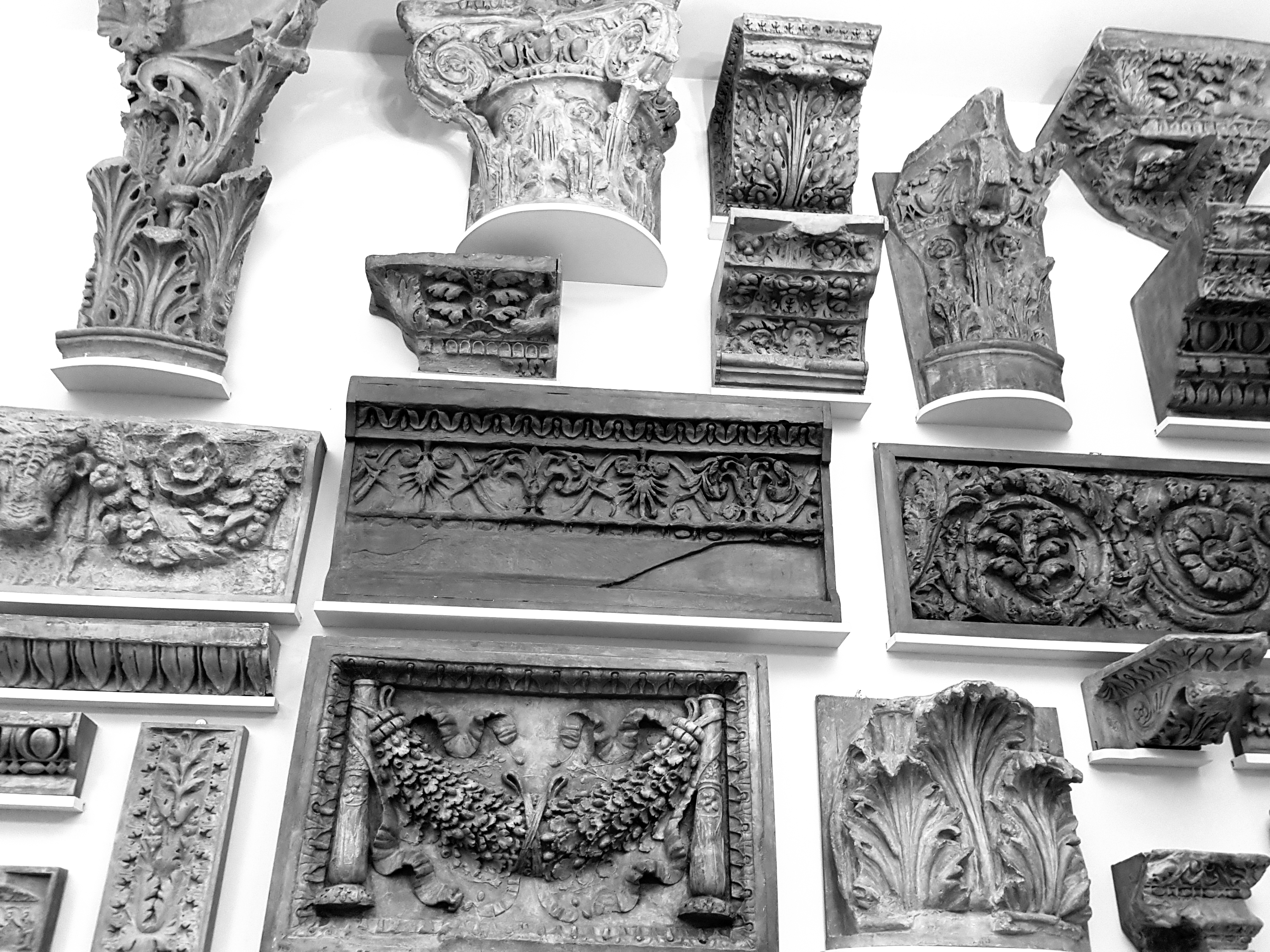
We had the opening of the New RA last night – young and old, long-term supporters, donors, patrons, all those who have been involved in the project since the beginning, artists, RAs, all in a great impenetrable swirling mass throughout the building. It is a slightly strange experience after many years (at least ten) of looking at ground plans and CGIs of the various spaces to see them realised in three dimensions: some exactly as conceived from an early stage of the project; some, like the Dorfman Architectural Court, bigger and more important to the experience than expected, filled with architectural casts from Thomas Lawrence’s collection:-

image

There were moments that I particularly enjoyed: two people who came on a hard hat tour sitting enjoying the seats that they sponsored; seeing Roy Strong, who gave me my first job at the V&A, and Isaac Julien, one of the recently elected RAs; and lots of staff who contributed to the project at an early stage seeing the results of their labours.

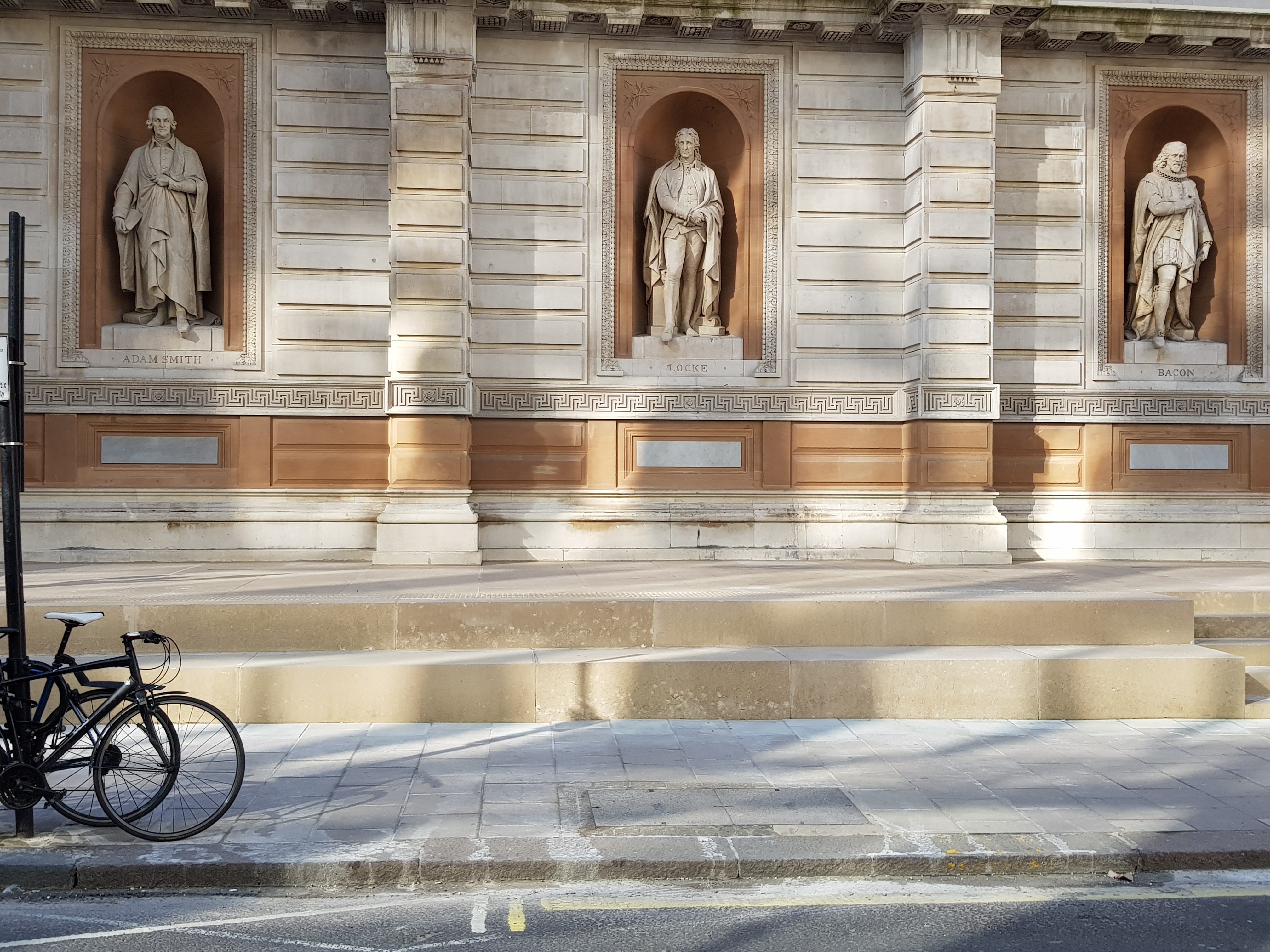
I took only one photograph, which was from the bottom of the disabled ramp at the front, a solution to the problem of convenient and permanent access from the street which was reached after many false attempts:-

image

Standard

Will Alsop RA

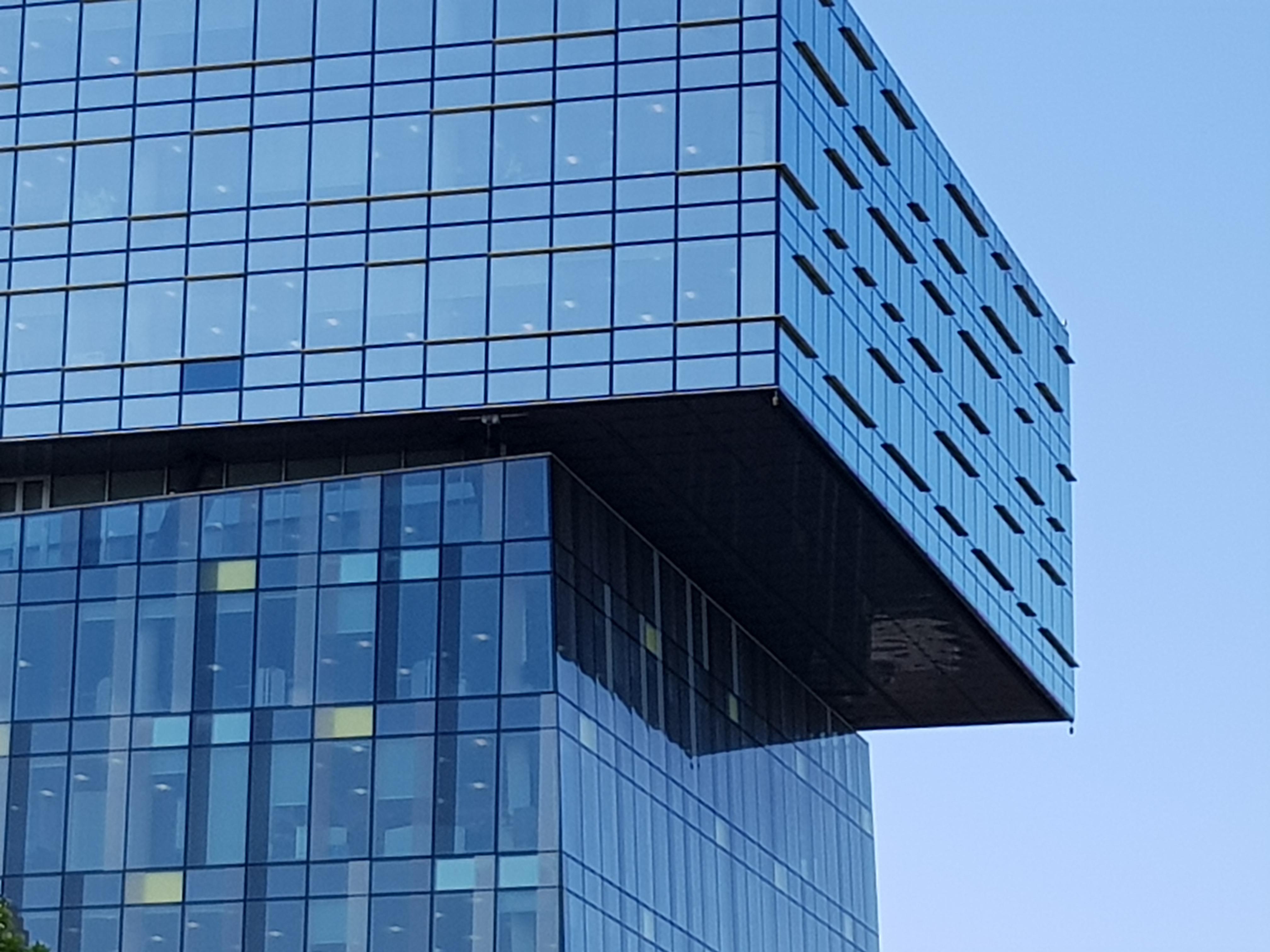
Because the Circle line was down this morning (signalling problems in South Kensington), I walked across Blackfriars bridge and was able to pay my respects to the Palestra Building, one of the relatively small number of Will Alsop’s grandly individual, multi-coloured, disrespectful and freely creative buildings.   He didn’t actually build that much, but like his mentor, Cedric Price, was at least important in the world of architectural ideas:-

image

image

Standard

James Legg

The first work of art to appear in the new brick arched vaults which now lead the visitor from the Cast Corridor of the Royal Academy Schools through to the front entrance hall of Burlington House was the crucified figure of an elderly Irish Chelsea pensioner called James Legg. It first appeared wrapped in a plastic bag:-

image

The work was produced as a result of an argument between Benjamin West, the then President of the Royal Academy, Thomas Banks, the sculptor, and Richard Cosway, the miniature painter as to what a crucified figure looked like in its anatomy. They commissioned Joseph Constantine Carpue, a surgeon, to acquire a corpse, so they could find out. He acquired the corpse of Legg who was hanged on 2 November 1802, the body was cast by Thomas Banks shortly thereafter, and has been used to teach students in the RA Schools ever since:-

image

image

image

image

Standard

Farnese Hercules

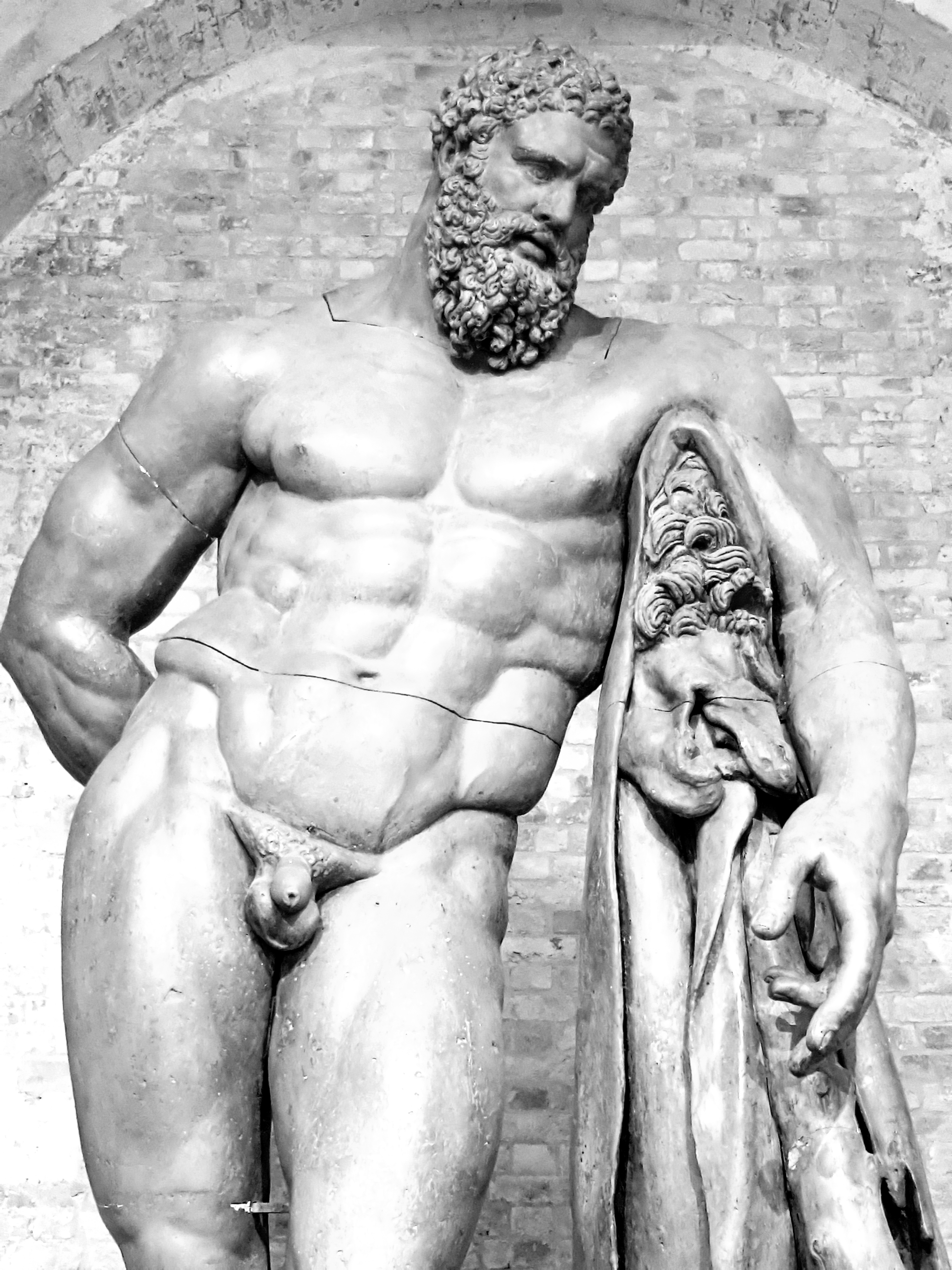
The Farnese Hercules looks suitably magnificent installed in the large niche downstairs in the RA’s vaults:-

image

It is a cast of one of the best known classical antiquities, which is said to have been found in the Baths of Caracalla in 1546, six years after its head had been found in a well in Trastevere.   By 1556 it was installed in the first courtyard of the Palazzo Farnese, where it remained until 1787 when it was restored by Carlo Albacini and transferred to the Museo degli Studi in Naples.   This cast was acquired for the Entrance Hall in Somerset House in 1790 when Council agreed ‘that the President be empowered to make an Agreement for the Cast of the Farnese Hercules – the whole Expence to the placing of it in the Royal Academy not exceeding seventy five guineas’.   In the event the cost of transport alone, arranged by Joseph Bonomi, was £108.   He greeted visitors at the foot of the precipitous staircase in Somerset House until transferred to the Academy’s entrance hall in 1837.

Standard

The New RA (2)

Some scenes from the press launch.

Sir David Chipperfield:-

image

Our Artistic Director putting the finishing touches on the Weston Bridge:-

image

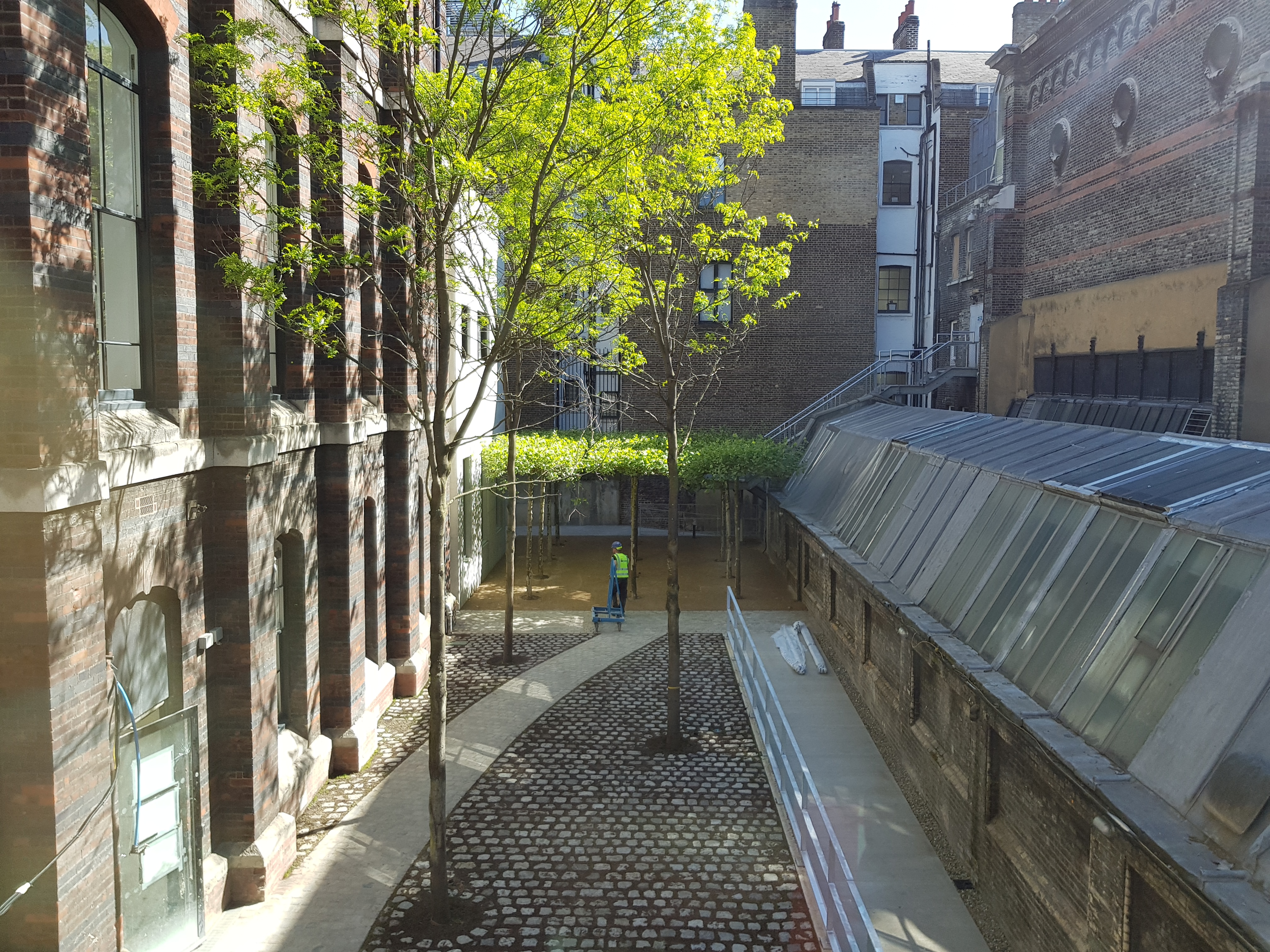
The Lovelace Courtyard:-

image

image

image

And the plinth at the front finally cleared of builders’ debris:-

image

Standard

The New RA (1)

Today is the day when the press come to see and examine our new building.   There have already been good write-ups by Rowan Moore in yesterday’s Observer (https://www.theguardian.com/artanddesign/2018/may/13/royal-academy-london-new-extension-david-chipperfield) and this morning’s Guardian by Olly Wainwright (https://www.theguardian.com/artanddesign/2018/may/13/royal-academy-of-arts-expansion-reveals-hidden-life-art-schools).   Meanwhile, the sun is shining and there’s a huge banner in the Courtyard:-

image


Standard

Tacita Dean RA

In preparation for Tacita Dean’s exhibition which opens later this week in our new Gabrielle Jungels-Winkler Galleries, I have started reading her Selected Writing which the RA has published to accompany the exhibition.   I very strongly recommend it for the poetry of its evocative descriptions, its explanation for her obsession with clouds and four-leaf clovers, her description of the formation of collections, of the Gellért Baths in Budapest and the beach at Dungeness, written in the intensely allusive, memory-laden style – idiosyncratic and observational – of W.G. Sebald, but many of the pieces published before Sebald was (she first read Rings of Saturn in Fiji in September 1999 after her style was formed).

Standard

Bust of John Rennie

I was talking about the pros and cons of Postmodernism this morning, prompted by Edwin Heathcote’s long article about it in this weekend’s FT, when I spotted a characteristic piece of docklands pomo, which is a bust of the engineer, John Rennie, in a prominent position on Spirit Quay, itself a monument to that era of docklands development.   It’s by a sculptor called John Ravera.   Very hard to photograph against the light:-

image

Standard

Regent’s Canal

Since publishing my book on East London (bizarrely and belatedly reviewed in this month’s World of Interiors), I have been much less adventurous in my excursions.   But today in walking up the Regent’s Canal, I was pleased to spot on a hundred yard stretch of the Regent’s Canal a multi-coloured version of the Venus de Medici:-

image

A new museum which opens this afternoon, described as an ‘archive of dreams’:-

image

image

The Widgeon Theatreboat which has a jazz evening next Sunday evening:-

image

Not to mention the copy of the Alcibiades Dog which guards the entrance to Victoria Park presiding over an ice cream van:-

image

Standard