The Senate Room

I am (unusually) doing a post purely in order to promote something at the Royal Academy, having had Sunday lunch in the new-ish Senate Room restaurant upstairs in Burlington Gardens where we were able to enjoy the attention to detail.

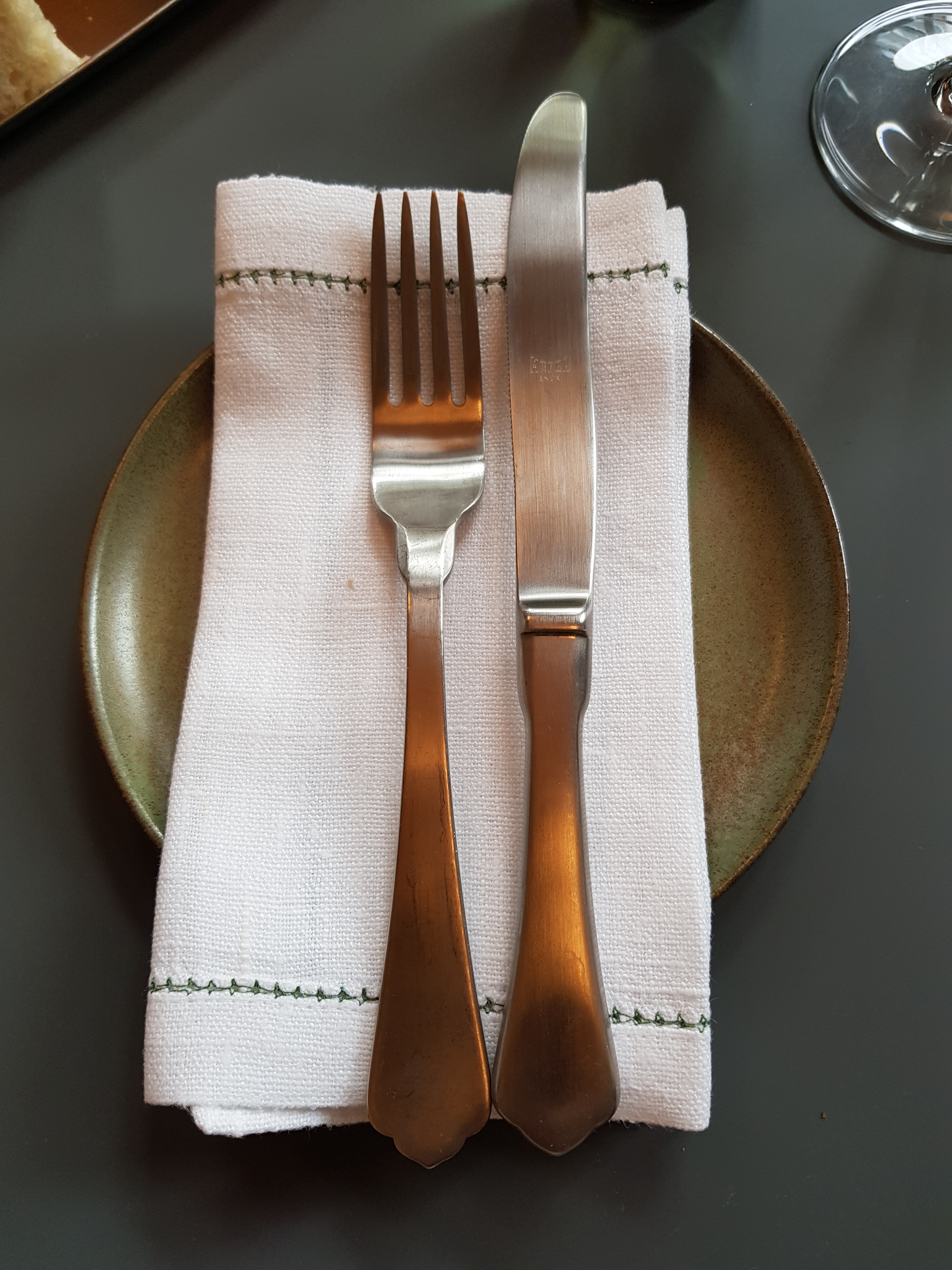
Pewter cutlery by Mepra:-

image

The ceiling painting, probably not original, but which has been retained:-

image

The view through to the Lloyd Dorfman Architecture Studio:-

image

And the mixed cured meat platter:-

image

Standard

Richard Woods

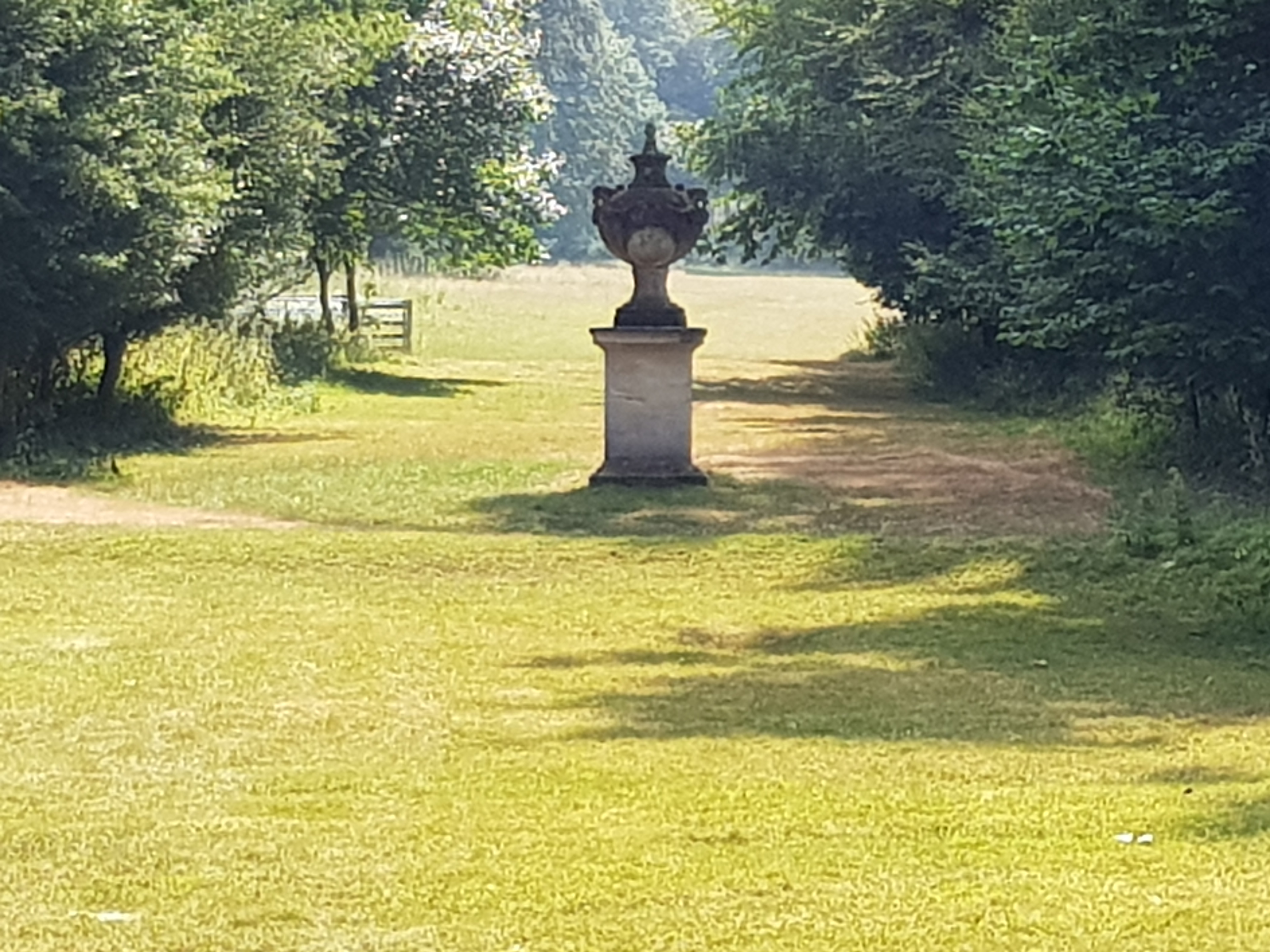
Until today, I knew nothing of Richard Woods, the landscape designer who designed the park at Wormsley in Buckinghamshire and a great number of other gardens, not just round London, including the grounds of Hartwell House, also in Buckinghamshire, where he designed ‘a new Garden Greenhouse and Pinery’, but also in Yorkshire, where he worked at Harewood, and in Wiltshire where he laid out the park round James Paine’s mansion at Wardour in a style that was admired by Capability Brown.   He was forgotten because his style, like Brown’s, was naturalistic, but much less well documented.

Standard

The Chilterns

We had lunch in a remote valley of the Chilterns – strangely unspoilt given its proximity to London:-

image

The walled garden looked out over a ha-ha, the residue presumably of the garden laid out by Richard Woods in 1775:-

image

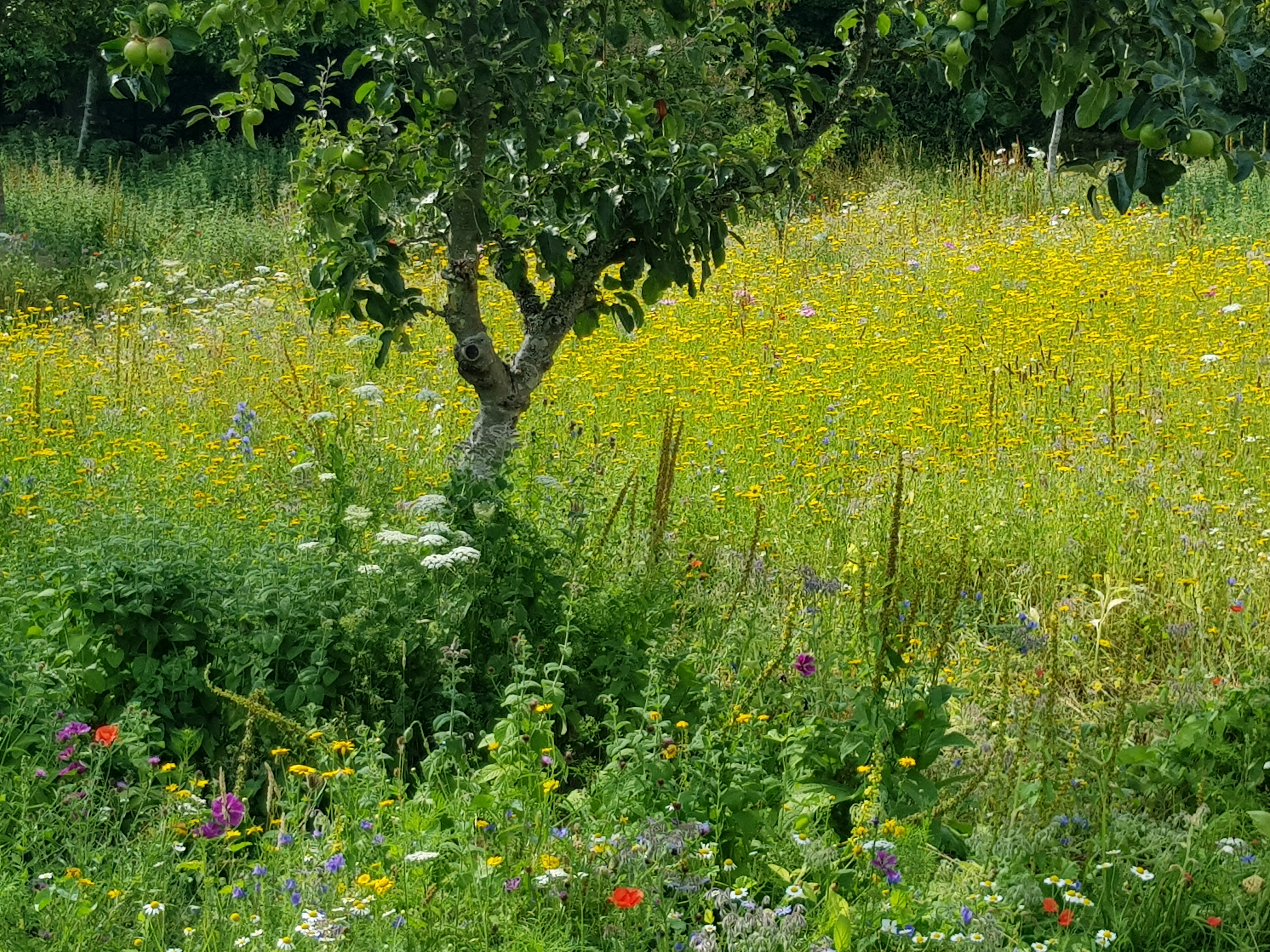
And had good wild planting:-

image

image

image

Standard

Denmark Hill

I had a meeting in Camberwell which meant that I took the Overground to Denmark Hill, a surprisingly grand Victorian station with passing wagon lits:-

image

image

I was able to walk through the leafy late Georgian streets of Camberwell Grove, begun in the 1770s and with a few eighteenth-century houses surviving, and the grand terrace at the north end of Grove Lane:-

image

image

image

image

Standard

Frenemies

I only made it to the afternoon session of the academic conference Frenemies: Friendship, Enmity and Rivalry in British Art 1769-2018 (odd that the start date chosen was 1769 and not 1768, as if the first RAs were all friends – definitely not the case – and that it was only in 1769 that differences of opinion and artistic rivalries first surfaced). It was organised by the Paul Mellon Centre alongside the exhibition The Great Spectacle. I heard three papers: Hannah Westley describing and exploring the implications of her interviews of Paul Huxley, John Hoyland and other artists who first came to prominence in the early 1960s; Hammad Nassar who gave a fascinating account of a gallery in Cumbria, which I knew nothing about, but whose proprietor, Li Yuan-chia, had an exhibition co-organised by Mark Jones at Modern Art Oxford in 1972, while Mark was still an undergraduate; and Amy Tobin who is researching and writing about women’s art in the 1970s and 1980s and how and where it was exhibited on both sides of the Atlantic. The purpose of the conference was to describe what were described as ‘affective relationships’. In the concluding session, an anxiety was expressed that this could end up just being a new form of antiquarianism, about people rather than art. I thought that social anthropology gave thick description and the analysis of social networks an intellectual currency long ago and that art history hardly needs to be embarrassed about borrowing its legitimacy as an academic pursuit.

Standard

Great Tew (2)

St. Michael, Great Tew is a nearly perfect village church.   One enters opposite the late eighteenth-century vicarage by way of an early seventeenth-century stone gateway:-

image

Then, one sees it from the south-east walking through the churchyard:-

image

And from the south:-

image

Inside, there is a tomb of Mary Anne Boulton by Sir Francis Chantrey:-

image

And the graveyard is overgrown:-

image

Standard

Great Tew (1)

I haven’t been to Great Tew since the late 1960s, when the estate was owned by Major Eustace Robb, who kept it in a state of picturesque decay.   A chunk of the estate has now been bought by Nick Jones and converted into an estate hotel, in which guests stay in rustic, sometimes corrugated iron, cabins.   I realise I am not supposed to say any of this because it is a social media free zone (although I couldn’t help but notice that everyone was taking photographs).   I took only a small number of photographs as a record of a rural idyll:-

image

image

image

Standard

Olivier Bell (2)

This is my obituary of Olivier Bell, written some years ago, but regularly revised.   I hope it conveys the full magnificence of her life and character:-

https://www.theguardian.com/artanddesign/2018/jul/19/anne-olivier-bell-obituary?CMP=Share_AndroidApp_WordPress

Standard

Olivier Bell (1)

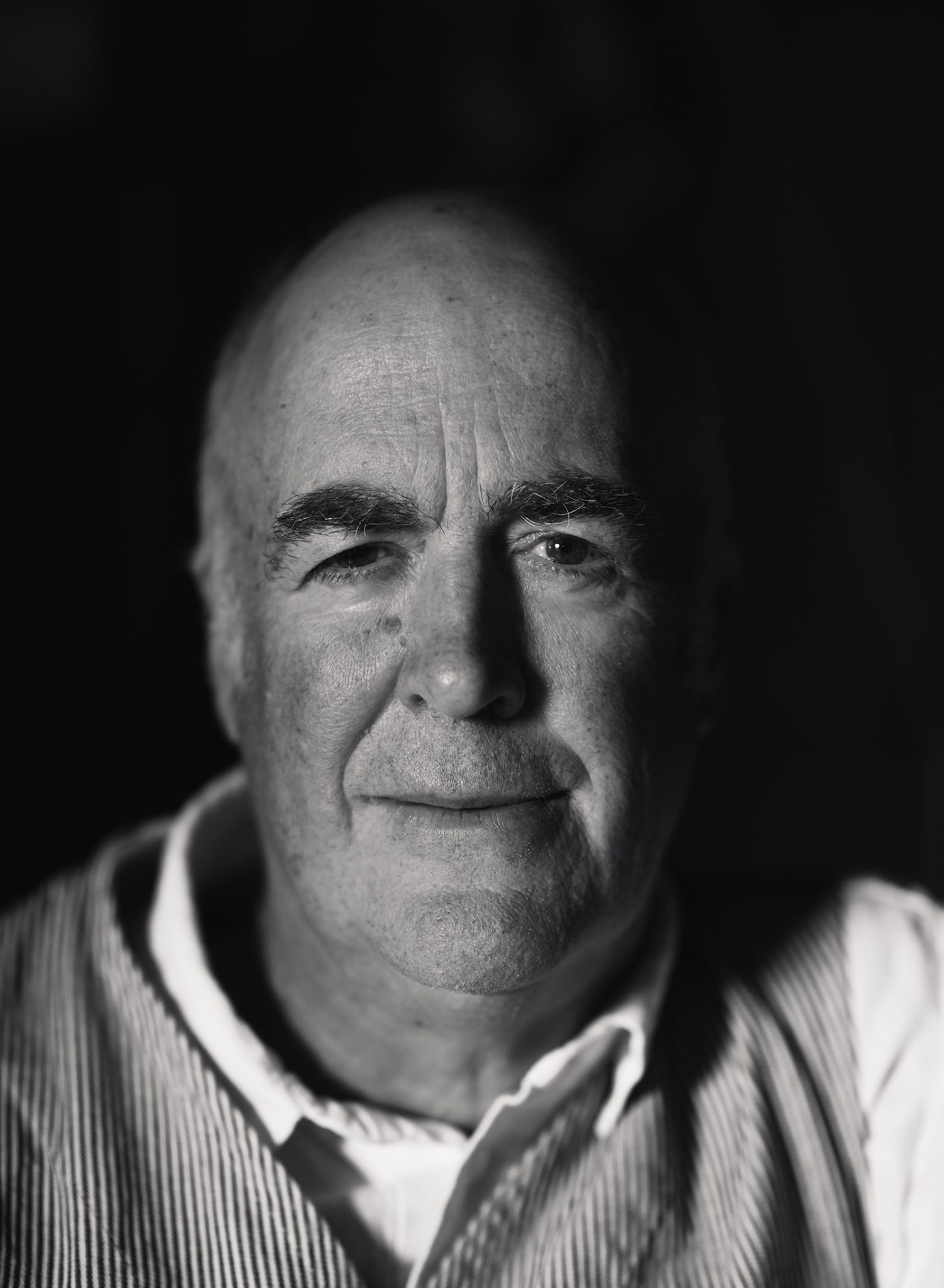
I heard last night of the death yesterday of Olivier Bell, one of the more remarkable people that I have known: a survivor of Bloomsbury, her father was A.E. Popham, the Keeper of Prints and Drawings at the British Museum, her mother Brynhild Olivier, a member of the Olivier family (Laurence Olivier was a cousin) and a Neo-Pagan, who went off with a younger man during the first world war, and had to be helped financially by H.G. Wells and George Bernard Shaw. Olivier was one of the first students of the Courtauld Institute, a great admirer of Anthony Blunt, and was taught how to make a particularly delicious cocktail, made of gin, lime juice and ginger beer, by Guy Burgess. I knew her late in her life, presiding over the kitchen at Cobbe Place in Sussex, conveniently close to Charleston, later in Heighton Street, in a cottage overlooking the Firle Estate, and, most especially, as a very active Trustee of Charleston. She was a formidable guardian of the shrine of Bloomsbury and all it stood for.
Standard