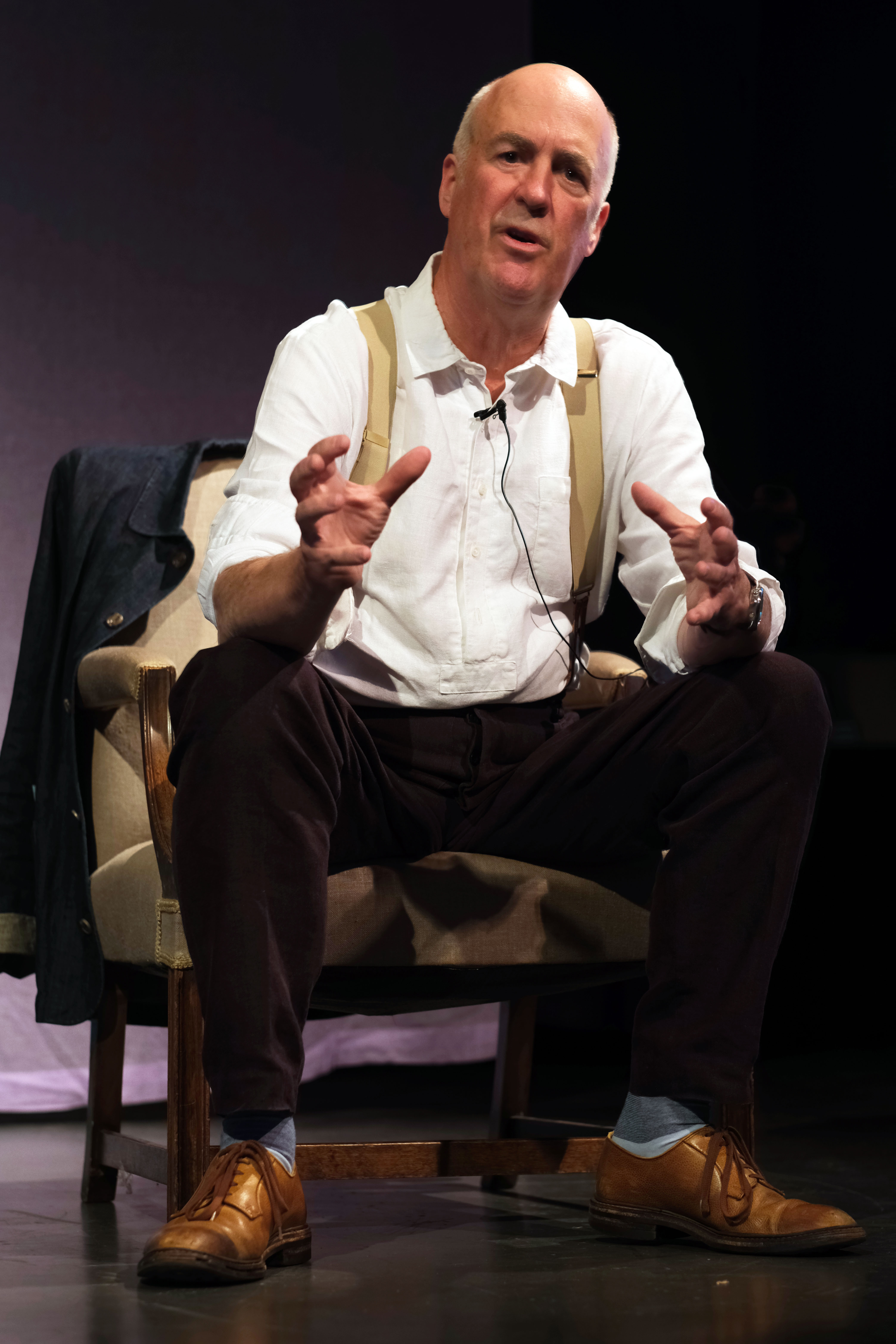
While I’m on the subject of Mari Lending, the author of Plaster Monuments, she has also just published a conversation with Peter Zumthor, A Feeling of History, beautifully produced in austere sans-serif script, which discusses Zumthor’s approach to history, principally in his two Norwegian projects – most of all, in his Allmannajuvet Zinc Mine Museum, completed in 2016, but also his Steilneset Memorial in Vardø – and with reference, too, to the Kolumba Art Museum and his ambitious plans for the Los Angeles County Museum. I particularly love Zumthor’s distinction between “history-history” – ‘an intellectual system that works from document to document, from paper to paper; ten papers become 100, and so on’ – and ‘the history that is accumulated in landscapes, places, and things’.
Monthly Archives: August 2018
Colin Amery
The sad news of the death of Colin Amery has reached Anglesey. I liked and admired him. He was a key figure in the early days of the Spitalfields Trust, in the picture behind the gate in the sit-in at Spital Square and tall and bespectacled when a group went to protest at the offices of British Land and co-author with Dan Cruickshank of The Rape of Britain in 1975. Then he was important also in the Lutyens revival, involved with Gavin Stamp in the exhibition at the Hayward Gallery held in 1981. He was recruited – I assume by Jacob Rothschild – to advise the Trustees of the National Gallery on the choice of an architect for the Sainsbury Wing and he helped to organise the trip to America to look at the work of American architects. He wrote the book on the Sainsbury Wing. But his architectural tastes were broad. He advised Sainsburys on their choice of architects, which included Grimshaw’s in Camden Town and Dixon Jones outside Plymouth. How significant was he as an advisor to the Prince of Wales ? We may never know.
Plaster Monuments
I have been reading an excellent book, Plaster Monuments and the Power of Reproduction by Mari Lending, a Norwegian architectural historian (it wasn’t on my reading list). It’s about the desire on the part of nineteenth-century museums to collect reproductions at least as much as originals in order to demonstrate the history of art in as systematic and comprehensive a way as possible.
Things I have learned from it:-
1. Winckelmann’s Thoughts on the Imitation of of Greek Works in Painting and Sculpture was inspired by a collection of casts in Dresden.
2. The collection of casts at the Pennsylvania Academy of Fine Arts was acquired before the majority of the cast collection at the RA by bulk order from Monsieur Getti, who was the official caster at the Musee Napeoleon (i.e. the Louvre).
3. Lord Elgin had casts made of the Elgin marbles before he removed them. These were used to show how much the originals had corroded between the time when they were acquired and an article in the Illustrated London News in 1929. This was partly why Duveen wanted them ‘restored’ when they were installed in his new galleries.
4. Friedrich August Stüler’s Neues Museum acquired its collection of casts from the Berlin Academy.
5. At the time of the foundation of the Metropolitan Museum, it was expected to be a collection of casts, not originals, on the grounds that it is ‘harder and harder to get hold of the chefs d’oeuvres of antiquity’. America was expected not to try and create ‘ideal and impossible museums, filled with masterpieces of original art, but museums mainly composed of reproductions’.
6. Edward Robinson, the fifth Director of the Metropolitan Museum, had previously been Director of the Museum of Fine Arts in Boston, but stood down when Isabella Stewart Gardner and others got rid of the casts from the MFA in 1905 while Robinson was away in Europe. He was promptly appointed Curator of Classical Art at the Met. and its Director in 1910.
7. One of the greatest collections of architectural casts, still extant, is the Hall of Architecture in the Carnegie Museum of Art in Pittsburgh, which was assembled at great speed at the behest of Andrew Carnegie. But no sooner had the Hall opened than John Beatty, who had assembled, lamented how the ‘Institute’s dependence on casts, reproductions, and paintings of a rather sentimental Victorian tradition would seem to be one of the weaknesses of the permanent collections’. This is the first sign of the institutional shift in taste against casts, motivated partly by changing tastes, but also by the increasing difficulty of obtaining casts, due to the reluctance of museums to allow their monuments to be copied. The change in attitude was evident at the same time in the Museum of Fine Arts in Boston’s determination to deaccession its cast collection.
8. Charles Swann much preferred his experience of the portal of the church at Balbec in the Musée de sculpture comparée in the Trocadéro to his experience of the real thing, frustrated by having to endure the reality of its surroundings.
9. Walter Benjamin was the first person to translate Proust into German. Benjamin saw the usefulness of photography in the experience of works of art since it ‘can bring out aspects of the original that are accessible only to the lens’.
10. Josef Albers chucked out all the casts he discovered on arrival at Yale’s School of Fine Arts in 1950 (the fine arts as a title was also chucked out and he made the nude models pose in their underpants and bra), but Paul Rudolph retrieved them from the basement of Street Hall to enliven the wall surfaces of his new brutalist Art and Architecture building.
The book is incidentally illustrated with wonderful images of cast collections, including those of the the Soane Museum, Crystal Palace and the Met (before and when they were sold off).
In its honour, I am posting a picture of our redisplay of Thomas Lawrence’s collection of Italian architectural casts which was previously boarded up in the RA Schools where the cast collection apparently narrowly escaped being chucked out as recently as 2000:-

And our cast of the Farnese Hercules, given to the RA by the Prince Regent in 1815, which has come out into the daylight to animate and vitalise the experience of the basement vaults:-

Whitechapel Bell Foundry again
The architects involved in the development of the Whitechapel Bell Foundry have, not surprisingly, launched a defence of their scheme in Architect’s Journal, which attempts to be scrupulous within the requirements of the current owner, a New York based venture capitalist who has been behind the development of Soho House. There are some minor inaccuracies. The Factum Foundation scheme is not for a pure bell foundry; it recognises that church bells are a declining market. Instead, it proposes maintaining the existing use of the bell foundry as a fine art foundry, including the making of bells, and the character of the building as an economically sustainable, working environment, rather than turning the historic parts of the bell foundry into a wine bar and losing manufacturing from Whitechapel.
Under these circumstances, I don’t think Historic England should support change of use, not least because they are compromised by having acted as paid advisors, particularly now that they know there is an economically viable alternative:-
https://www.architectsjournal.co.uk/news/31/44-architects-defends-plans-for-whitechapel-bell-foundry-scheme/10034093.article
Llanddwyn Beach (2)
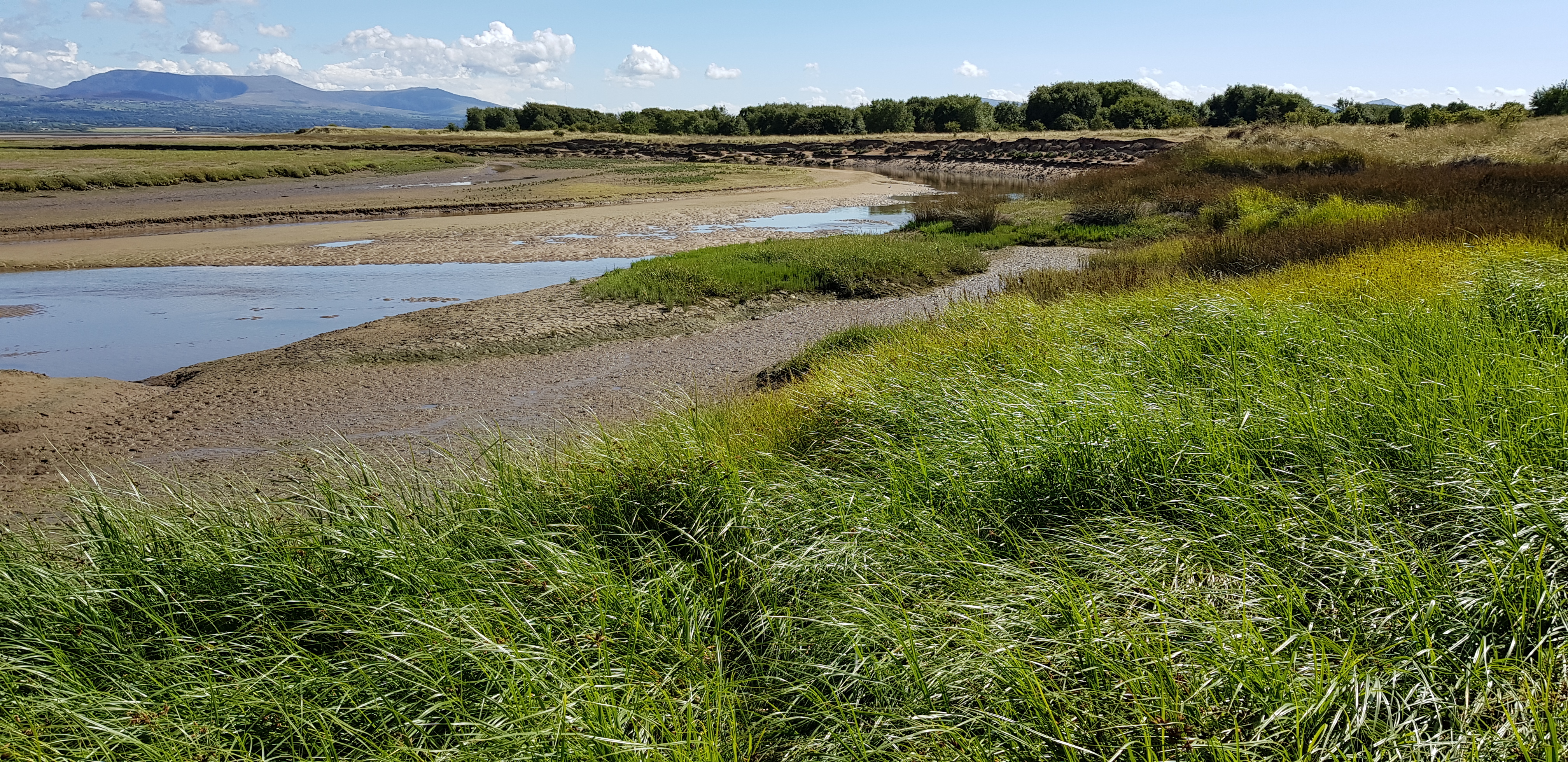
We walked down to the other end of the beach across the fields to the tumbledown barn and then along the track which runs alongside the warren with distant views across the estuary towards Caernarvon: sea holly and evening primrose and then across the dunes to the sea:-


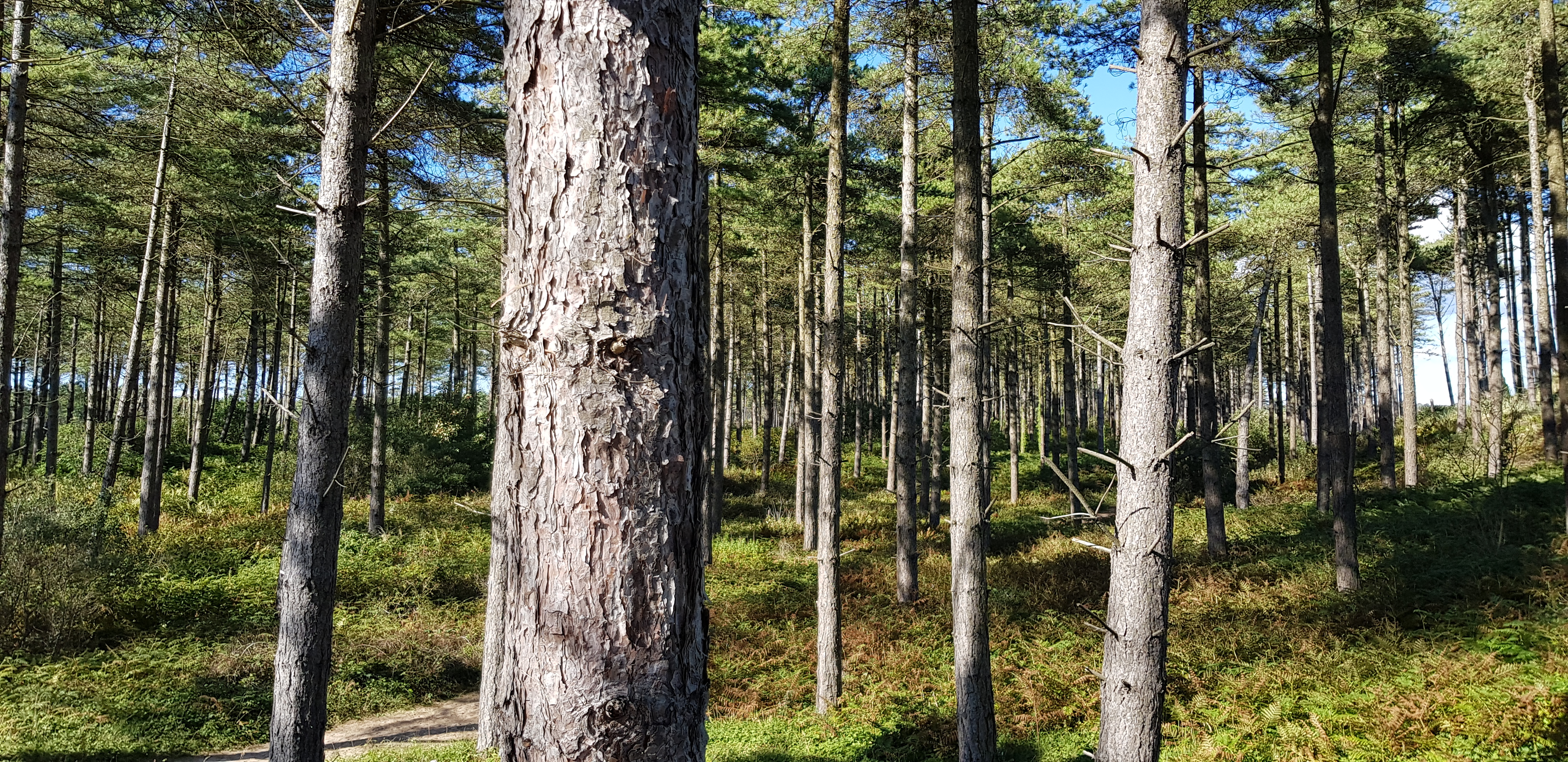
Back through the forest:-
Art of the invisible
This article has only just appeared online and seems to get closer to Chipperfield’s intentions – his doggedness and lack of obvious ego (at least in this project) than anything else so far written about Burlington Gardens:-
http://www.designcurial.com/news/royal-academy-by-david-chipperfield-6274523/#.W21T2G2qpPM.twitter
The Vegetable Stall
I was worried that the vegetable stall was defunct, but this morning I found multiple varieties of tomato for sale – mostly, Tastyno, but, also, a packet of Bloody Butchers and the larger Octavio, plus fresh runner beans and courgettes, all grown, I presume, on the farm behind and available on a system of trust whereby one puts payment in the box alongside:-

The Marram Grass
Off to The Marram Grass for lunch:-


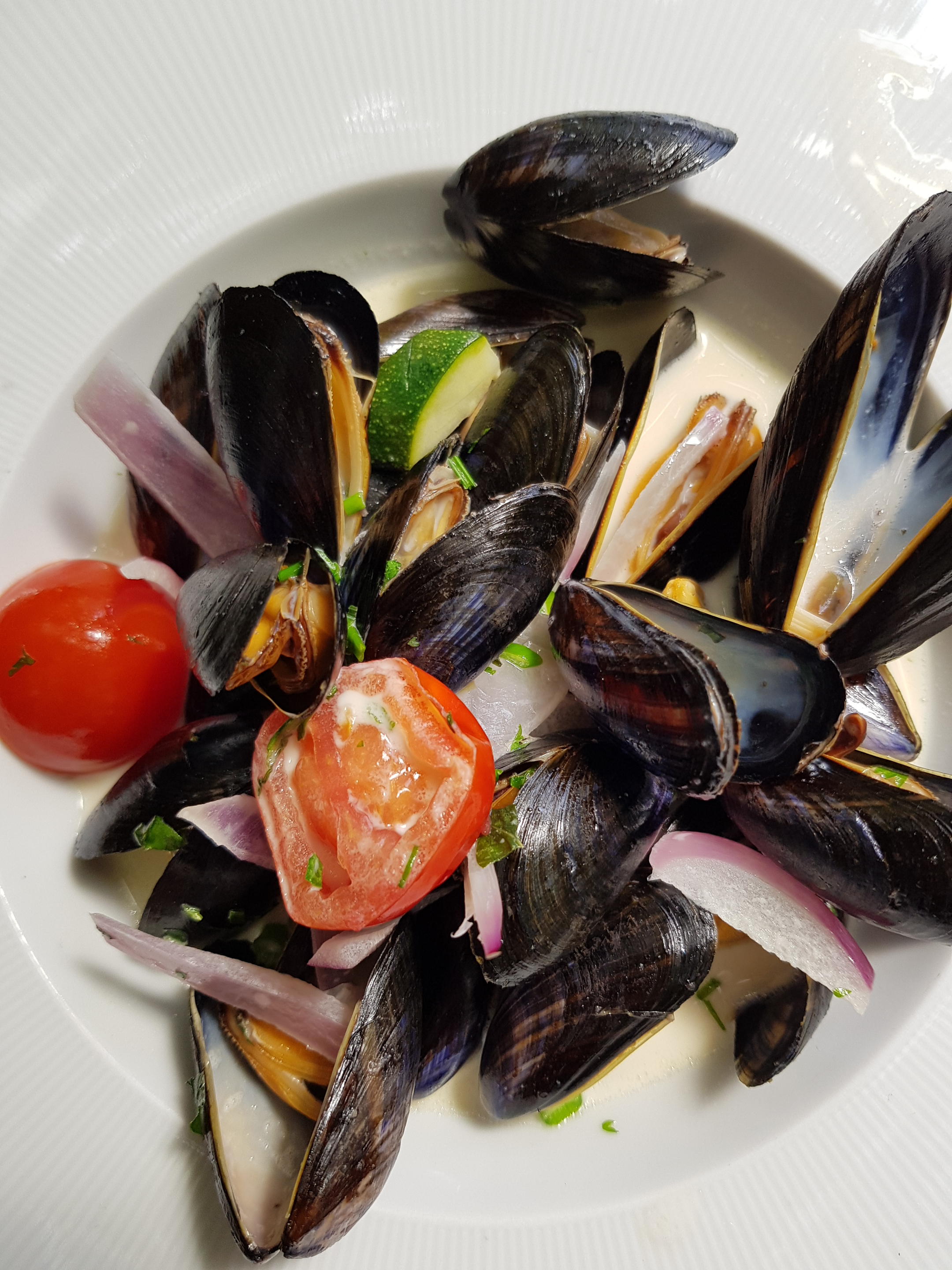
Everything is local: Anglesey seabass, Anglesey mackerel, Menai mussels. Anglesey water ‘filtered by an ancient layer of glacial gravel’. Snowdon Lager. Local wines from the Conwy Valley (£60 a bottle, so I’m not trying it for lunch). They’ve got grapes growing on the veranda outside:-

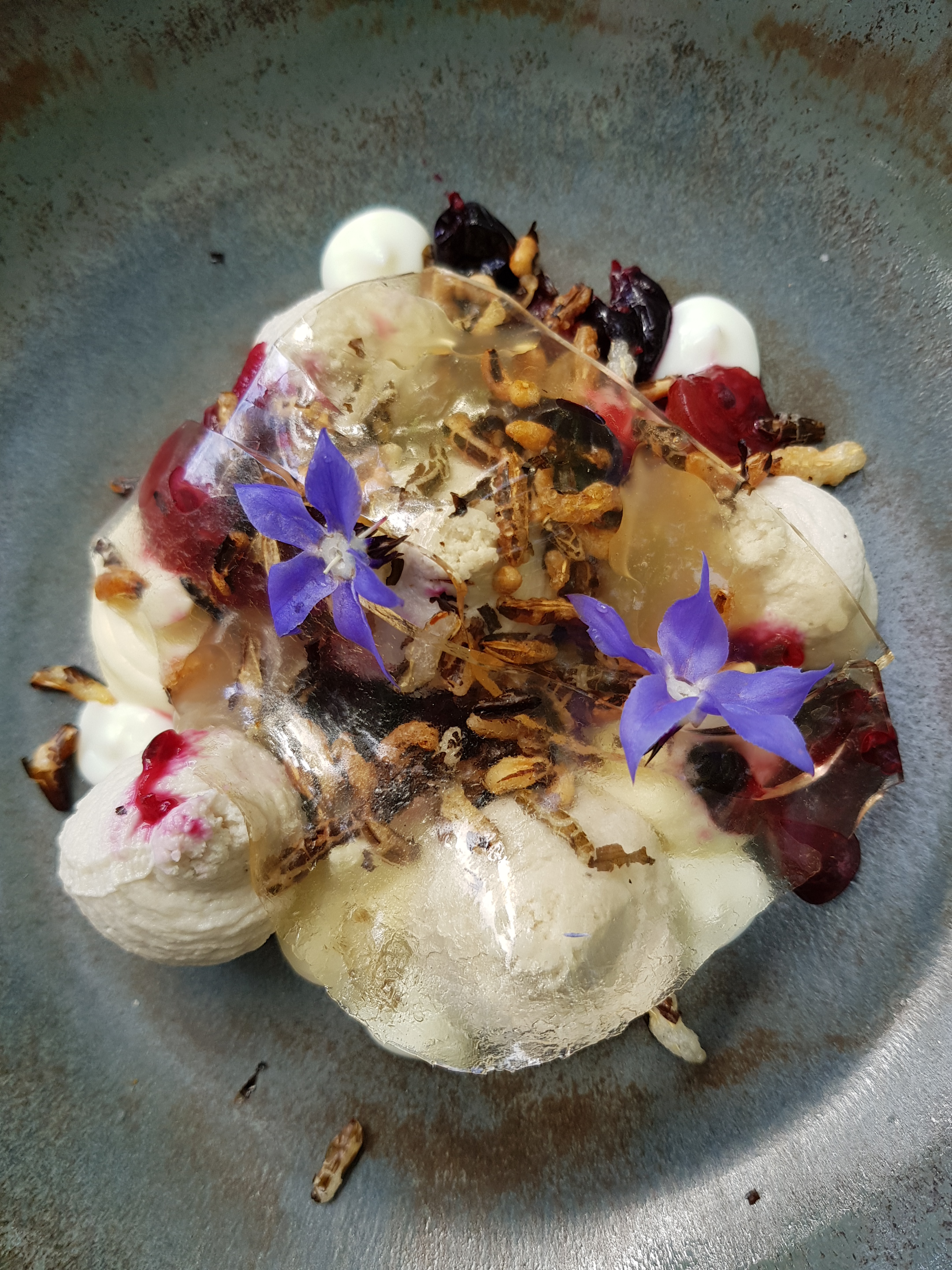
This is the Mackerel Mousse with sheep’s yoghurt, goat’s cheese, Jaspel’s cider jelly and preserved local fruit:-
And mussels:-
I used to go there for breakfast to use the wifi.
Museum Numbers
I have been pondering the report in today’s Times that museum chiefs are perplexed that the numbers of people visiting the London museums are down. But this is surely inevitable given anxieties about terrorism: nobody from Tunbridge Wells is going to be particularly keen to come to London if there is a chance of being blown up, even if they can get there, given the state of Southeastern trains (it may not have escaped people’s attention that the teenager recently prosecuted for terrorism had been planning to blow up the British Museum). The other issue which is more problematic is the way that international tourism gradually creates its own special places, which domestic tourists and people living in cities then try and avoid. I feel this myself when I come out of Westminster tube station. You are in tourist-ville. The National Gallery has generally managed to avoid this atmosphere, but Trafalgar Square has not. The answer surely is what one does to attract non-metropolitan visitors, rather than lament their absence.



 | Charles | Saumarez | Smith |
You must be logged in to post a comment.