
I went to the first of a series of Mellon Lectures at the National Gallery by Tim Barringer, the Paul Mellon Professor at Yale, on the subject of Global Landscape in the Age of Empire. It was a highly intelligent and thoughtful exposition of the phenomenon of panoramas, which were extremely fashionable in the late eighteenth centuries, patented by George Barker and shown to dramatic effect in special installations in the streets off Leicester Square: sensational use of art to show off different corners of the globe. It’s a technology equivalent to the Imax cinema – strong on visual impact. He was right to end with Lisa Reihana’s epic video installation in the Oceania exhibition, which used a traditional technology of panoramas to good, but deliberately subversive, effect.
Monthly Archives: January 2019
Leonardo Celebrations
As we move into the 500th. anniversary of Leonardo’s death on 2 May 1519 at the château of Amboise, according to Vasari, in the arms of the French king, I was asked to appear on the Today programme in connection with the objections of an Italian junior minister of culture, Lucia Borgonzoni, to the fact that by far the biggest single exhibition is being held not in Italy, but at the Louvre in Paris, which has the largest and most important holding of Leonardo’s paintings. She has discouraged Italian museums from lending to the exhibition. In fact, only Parma is lending, as the Uffizi had already turned down the request on grounds of condition. And Italy is itself doing multiple exhibitions – in Milan, in Florence at the Galileo Museum, and in Turin. So, we can surely celebrate Leonardo as an uomo universale, not a subject of nationalist ambitions.
Brexit
I have tried to insulate myself from worrying too much on a day-to-day basis about the consequences of Brexit; but, now that we are into the New Year and have less than three months before we are compelled (and have volunteered) to leave the EU, I for the first time feel a deep sense of foreboding. Every option seems equally implausible: the Deal which is on the table nobody seems to support, not even the Cabinet itself; a second Referendum feels increasingly unlikely – too disruptive and merely re-opening existing wounds; so, we increasingly face the likelihood of leaving the EU with No Deal, with all the short-term consequences that will entail, including problems in food and medical supplies, leading to the possibility of civil disorder. No wonder the Prime Minister looks ever more anxious and unconfident. But maybe someone can tell me otherwise.
Ruby Wedding
It’s our Ruby Wedding. We were married forty years ago today in Wellesbourne Church in Warwickshire. It was icy cold and had snowed, so many people didn’t make it to the ceremony. We all look cold in the black-and-white photographs and I look thin. We went for a three day honeymoon in the Harp Inn in Old Radnor, which was run by the Landmark Trust. It’s a long time ago.
Lorenzo Lotto
We went to the Lorenzo Lotto Portraits exhibition downstairs in the basement of the National Gallery – free and mercifully uncrowded, whereas the upstairs galleries (and the National Dining Rooms) were packed.
He comes across as an unexpectedly uneven artist- some wonderful work, psychologically penetrating, including major works from the National Gallery’s own collection, Giovanni Agostino della Torre and his son, Niccolò, painted not long after Lotto had moved to Bergamo, the Portrait of a Woman inspired by Lucretia, and Andrea Odoni from the Royal Collection; also, a wonderful late Lotto from the National Gallery of Canada, Portrait of a Man with a Felt Hat, only acquired in 1998. But I found it hard to get a sense of his career as a whole, flitting across northern Italy, apparently increasingly depressed, ending his career as a lay brother in Loreto.
Chalkwell Station
One of the views of the Estuary that I admired by John Wonnacott was his view through the window of the station at Chalkwell:-
http://johnwonnacott.co.uk/?id=85
This is how the view looked as I left:-
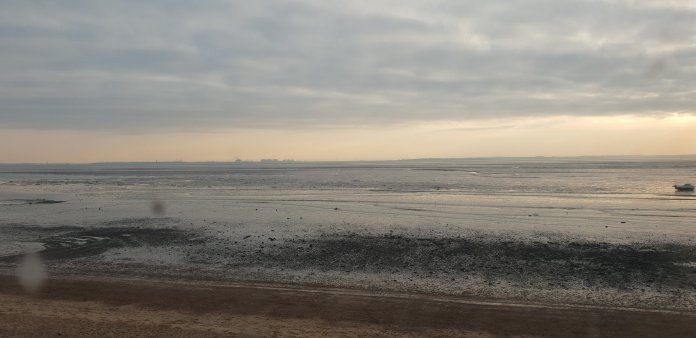
John Wonnacott
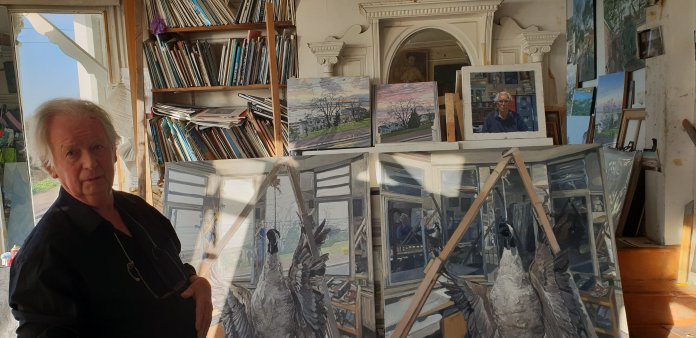
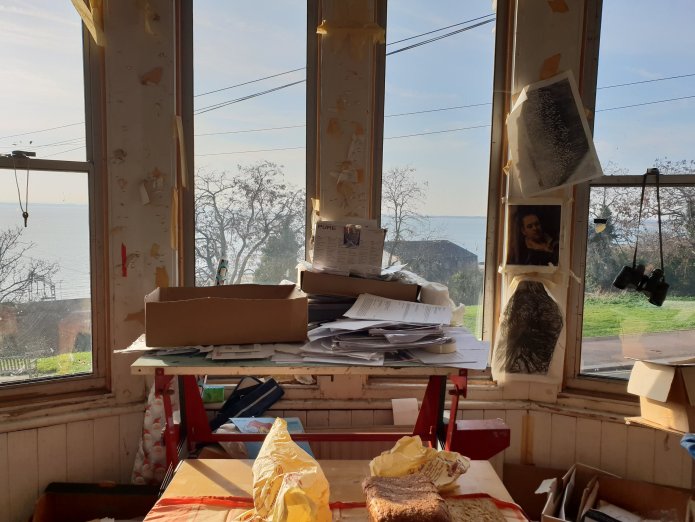
I spent most of the day with John Wonnacott, a painter I much admire and whose landscape paintings are going to be the subject of an exhibition at the Focal Point Gallery in Southend-on-Sea, opening on May 4th.
This is him in his studio (it looks like one of his paintings because he uses wide angle perspective and often paints the view out to sea):-
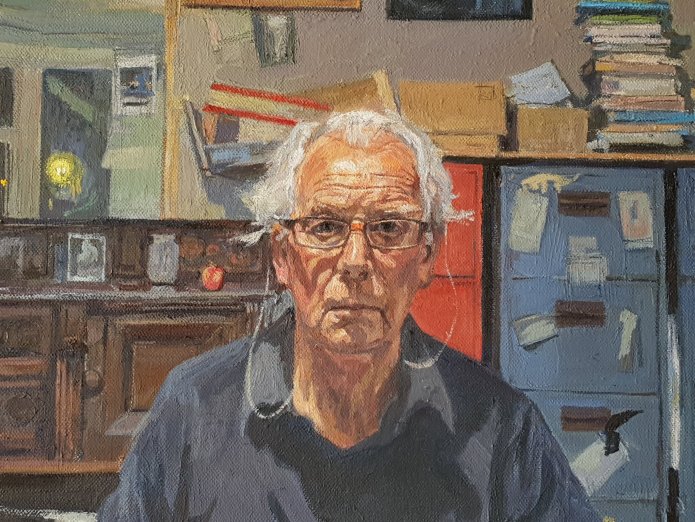
This is a recent Self-portrait:-
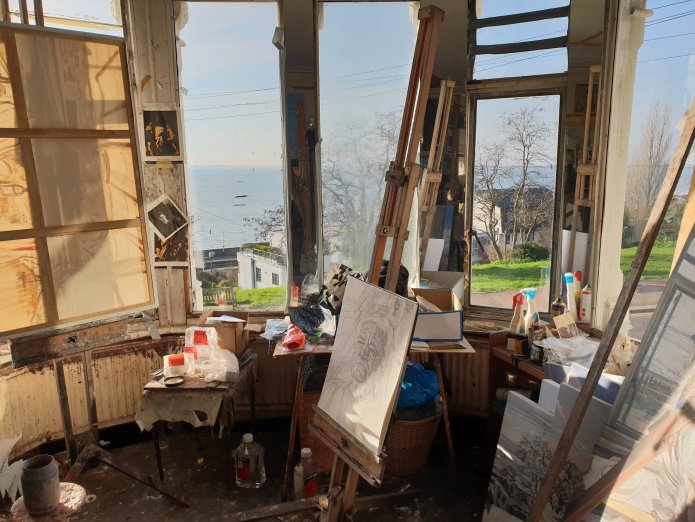
And an older Self-portrait:-

This is the view out to sea:-
This is lunch because he thinks my blog is obsessed by food:-
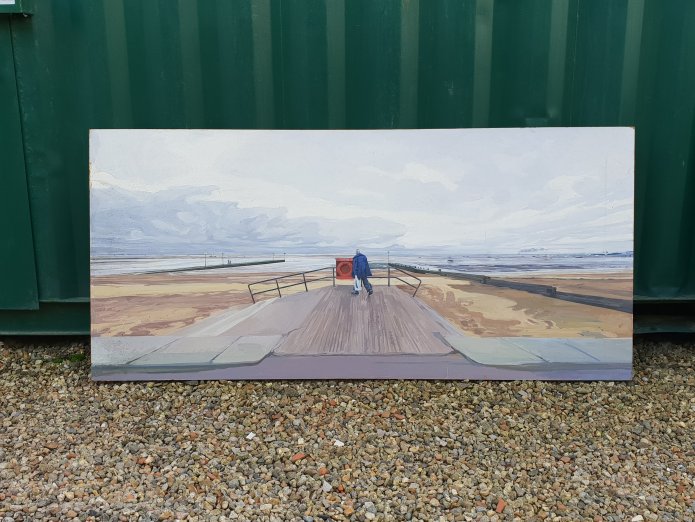
And this is a painting which I like and he doesn’t which I hope he’ll include in the exhibition:-
Mary Banham
Following news of the death of Mary Banham, Peter (Reyner) Banham’s widow, I have been reading the transcripts of her interviews for National Life Stories, which tell one quite a lot that I did not know: that she was born in 1922, so must have been 96 when she died; how she and Banham got married in 1946 when she was teaching in Norwich and he had returned from service in the war (his father worked for the Norwich Gas Works); how she supported him through her exiguous earnings as a teacher while he was a student at the Courtauld Institute; that her leg was amputated in the 1950s, not the 1980s as I had always assumed; how central they both were to the activities and discussions surrounding the ICA in the mid-1950s; how enamoured their social circle of architects and pop artists (most especially, Sandy Wilson, their next door neighbour, Jim Stirling and Richard Hamilton) was with American imagery – food, cars, magazines, advertising; how she took a course in architectural drawing to provide the illustrations required for his books. She was remarkable – a great force for good in her own right.
Zwolle
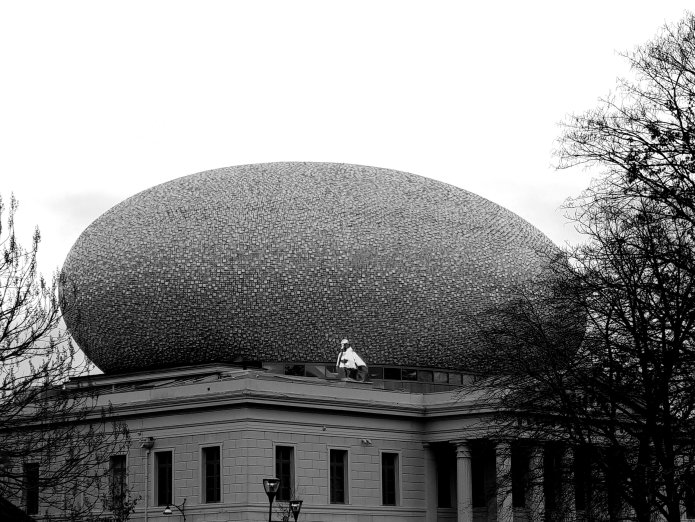
As well as visiting the Museum de Fundatie in Zwolle for its Giacometti-Chadwick exhibition and prominent egg roof (shades of Ledoux) by Bierman Henket:-
I also explored the town, a medium-sized, prosperous city in the flatlands midway between Amsterdam and Groningen, a former member of the Hanseatic League, with two grand churches in its centre:-
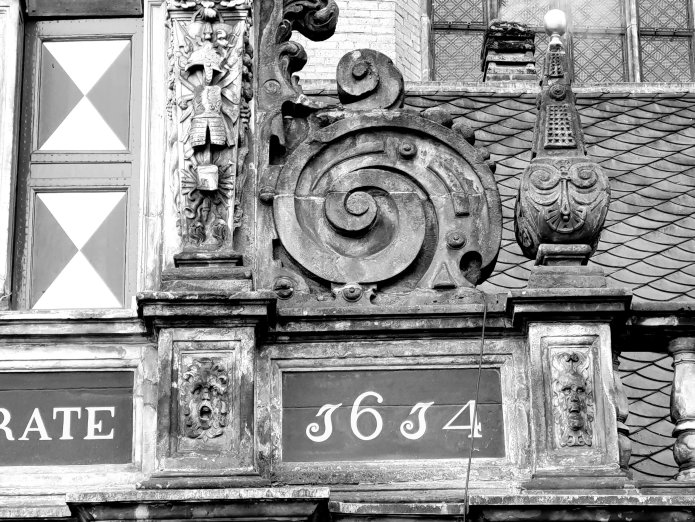
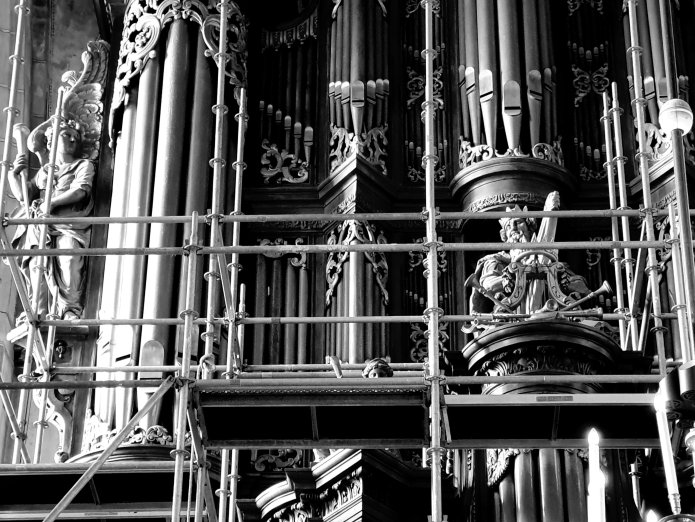
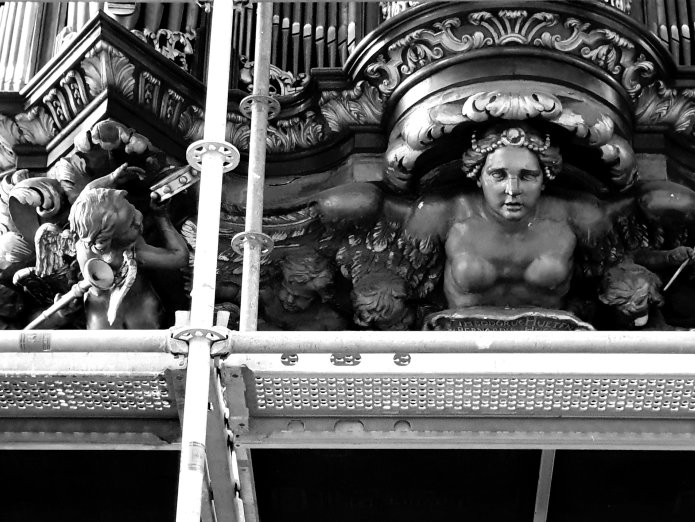
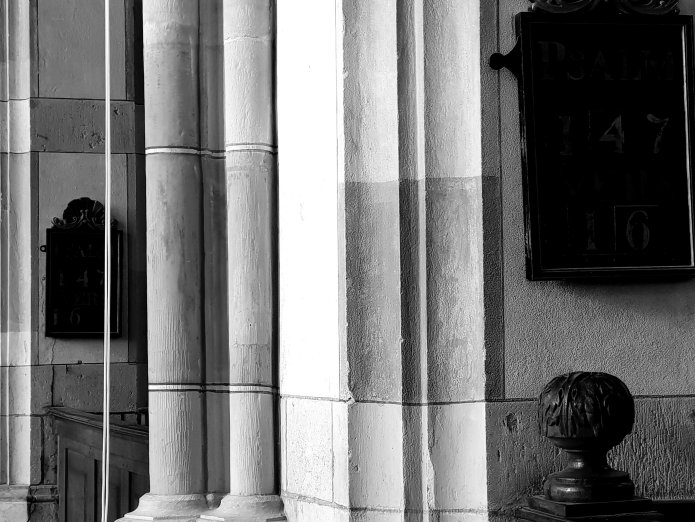
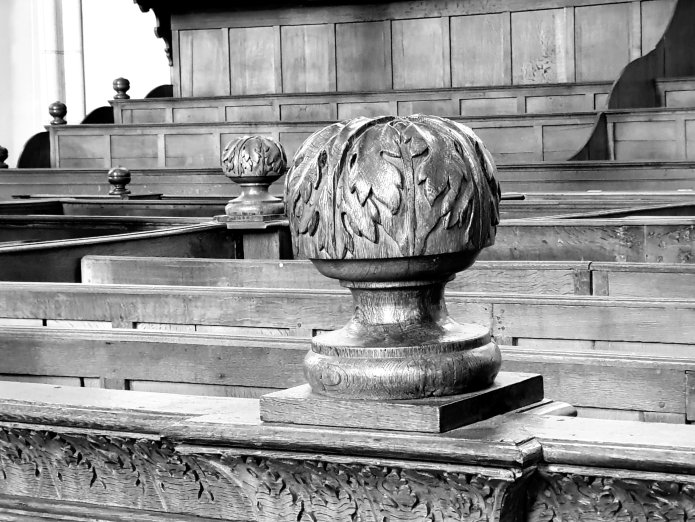
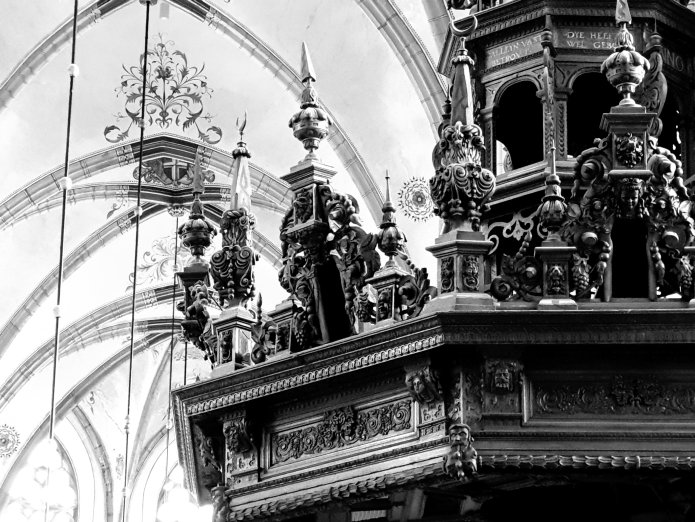
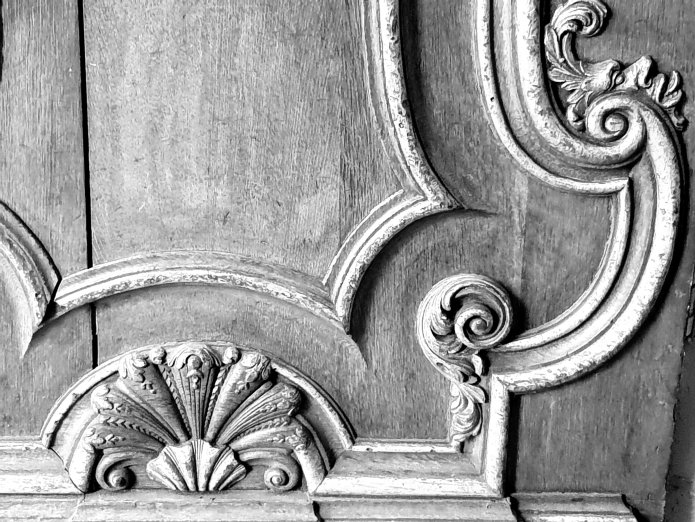
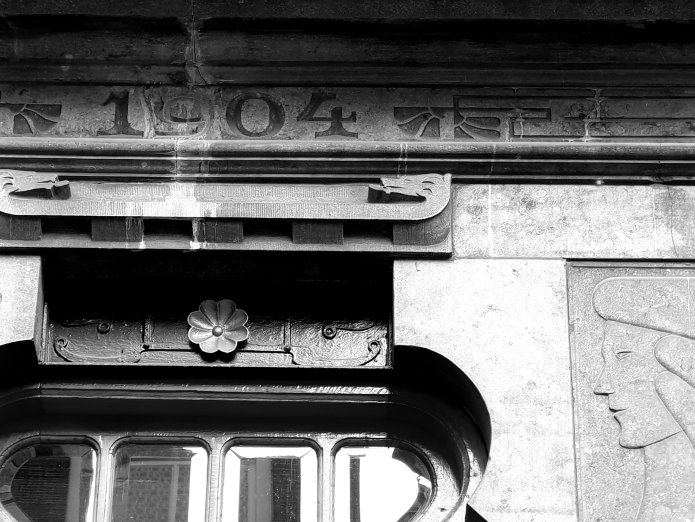
And some surviving historic decoration in its streets:-
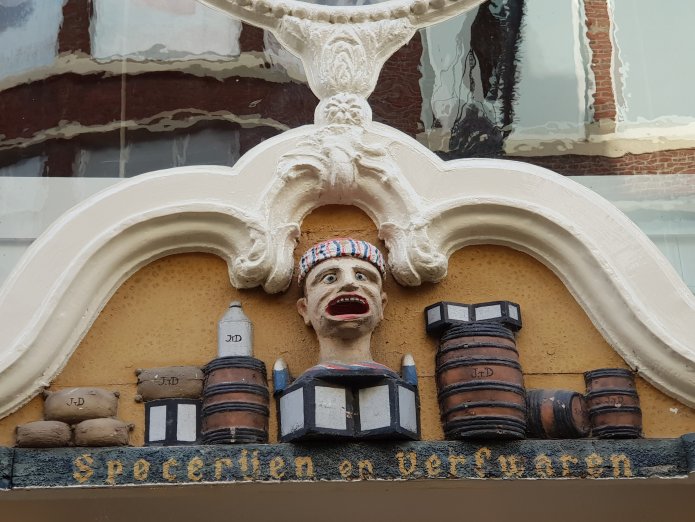
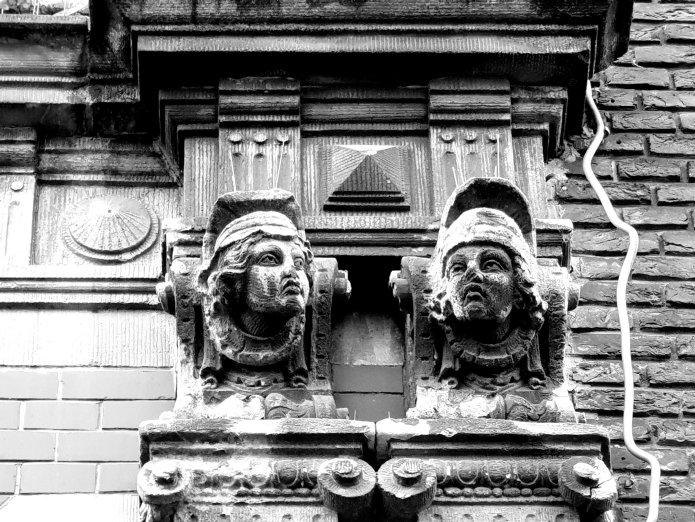
Lynn Chadwick
As part of my crash course in teaching myself more about the artists represented by BlainSouthern, I went to see the exhibition about the work of Giacometti and Lynn Chadwick in the Museum de Fundatie in Zwolle before it closes this Sunday.
The exhibition is based on the fact that Dirk Hannema, the politically dubious, but deeply knowledgeable former Director of the Boijmans Museum (he had collaborated with the Nazis), whose collection forms the basis of the Museum’s, bought a maquette by Lynn Chadwick, Dance IV in 1955 and a further major work, Teddy Boy and Girl in 1956. 1956 was the year that Chadwick, to everyone’s surprise, won the Grand Prize for Sculpture at the Venice Biennale when Giacometti was expected to.
It was a competition between, on the one hand, a highly sophisticated, intense Swiss artist based in Paris since the 1920s, internationally well known, working in a long-established tradition of observational drawing and modelling, and, on the other, a much younger, inventive, self-taught, post-war sculptor (Chadwick was only 42 in 1956 and had served in the Fleet Air Arm) making novel, spiky, energetic, non-figurative constructions. Chadwick won.
This is The Stranger (1954):-
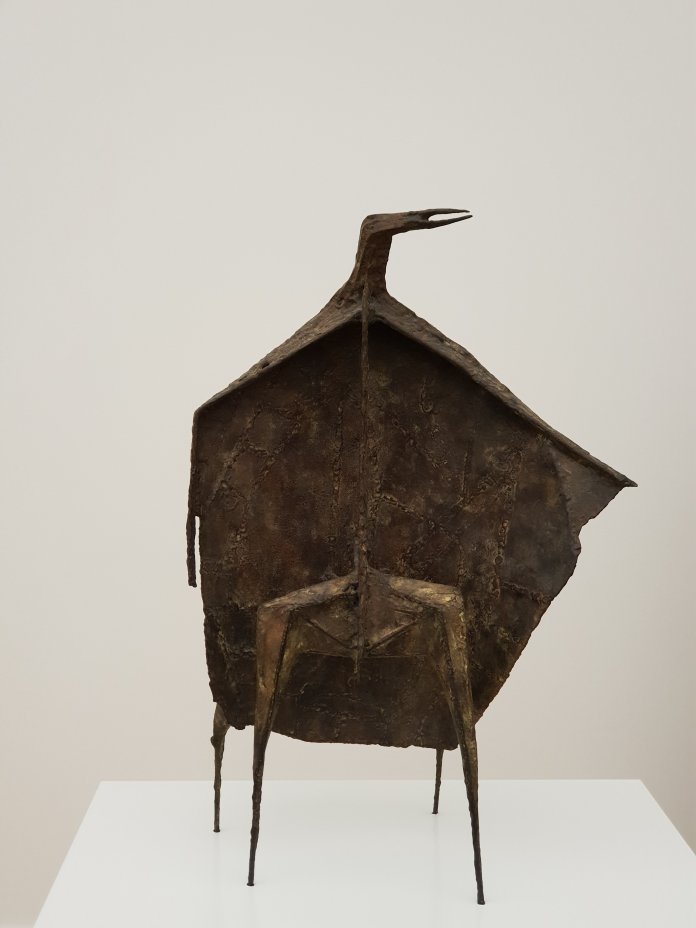
This is Dance III (1955):-
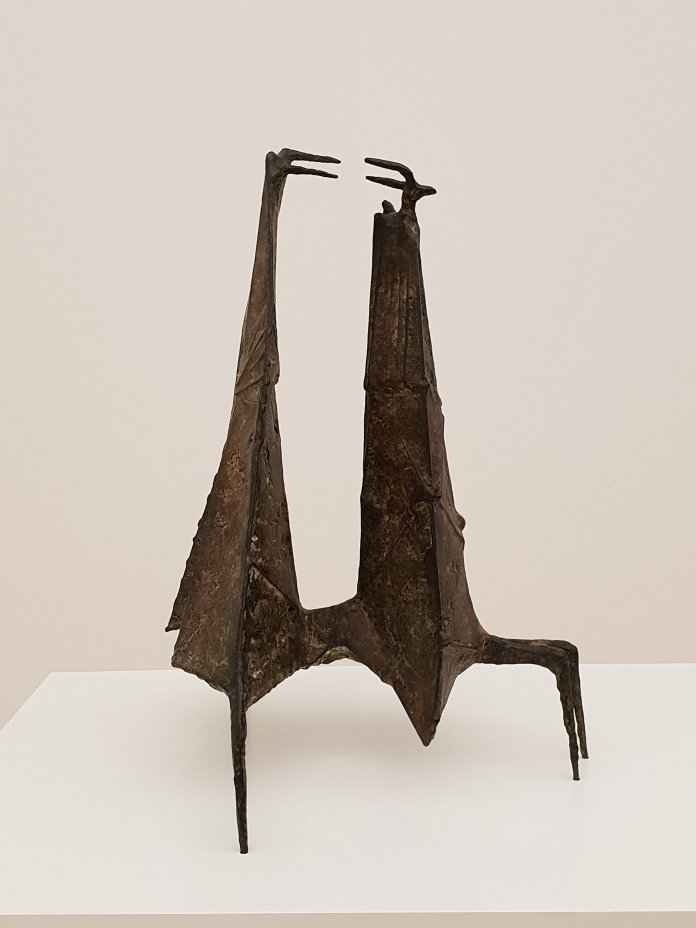
This is Dance IV, also 1955:-
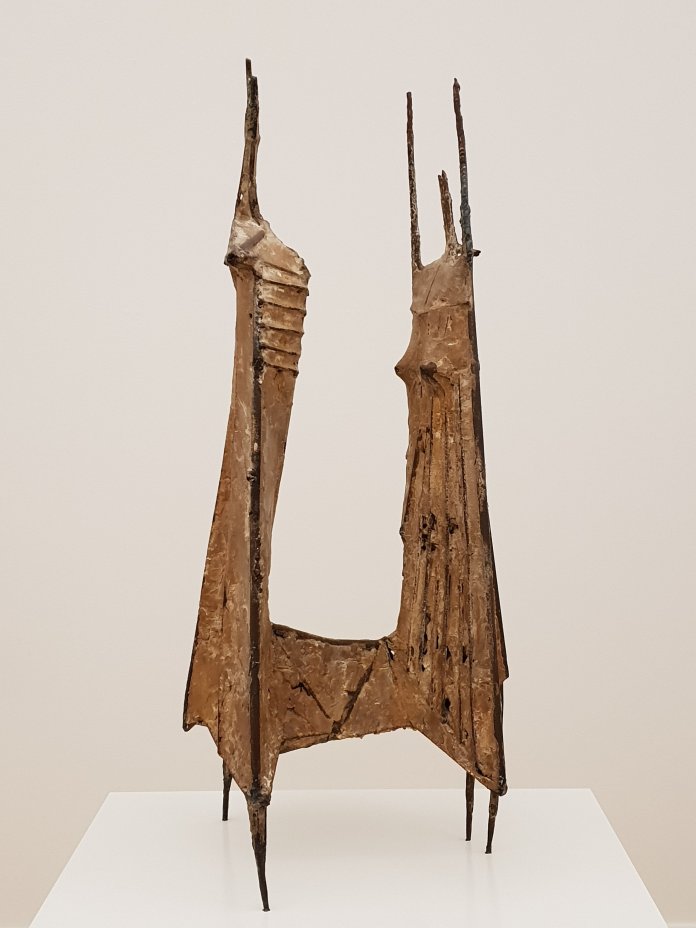
In September 1958, he bought Lypiatt Park in Gloucestershire, his own form of elysium, and thereafter pursued his own route – increasingly monumental, free-standing, more figurative and also many small works.
This is Maquette II Stranger (1968):-
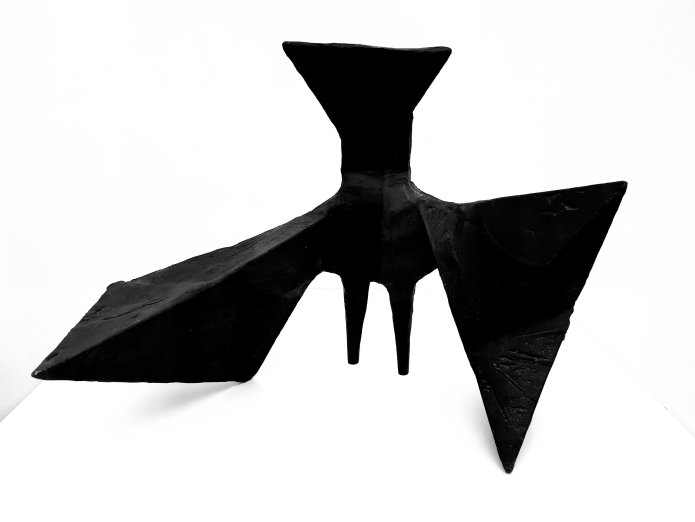
This is Walking Cloaked Figure (1976):-
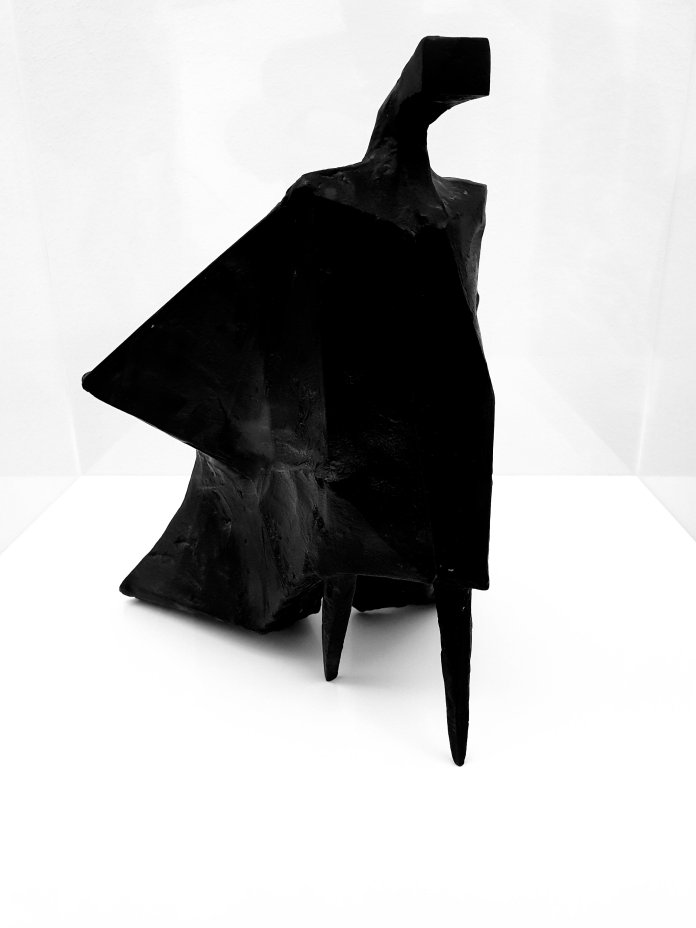
He died only in 2003, the year of his retrospective at the Tate.
 | Charles | Saumarez | Smith |
You must be logged in to post a comment.