Eileen Hogan

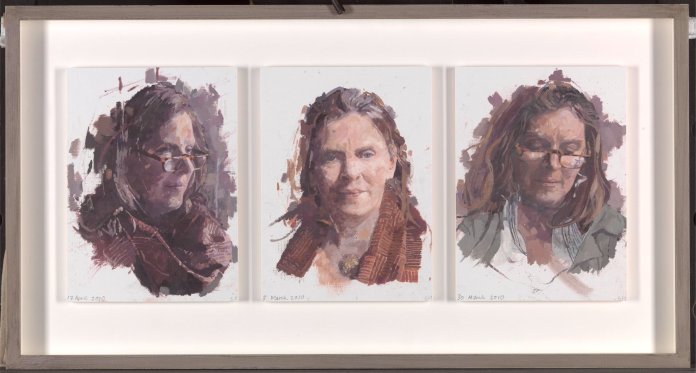
We were sent a copy of the catalogue of Eileen Hogan’s exhibition Personal Geographies at Yale Center for British Art in May. It includes a reproduction of the middle portrait of the triptych Eileen did of Romilly SS between March 10 and April 17, 2010 (the catalogue information is wonderfully precise) in oil, wax and charcoal on medium, rough, white paper mounted on board. I reproduce it, partly in celebration of the book and forthcoming exhibition, which together will be a meticulous record of Eileen’s work as a portrait painter (occasional), but more as a topographical painter recording the secret gardens of London with passionate visual intensity; and, also, because I discovered last night that Yale Center for British Art allows anyone to reproduce any work in their collection, providing it is out of copyright (ie more than 70 years old), without fear of the copyright police, in the interests of free scholarly knowledge and investigation of their collections:-

Standard

Bauhaus in Britain

In the intervals of going to the Maastricht art fair, I have been reading Alan Powers’s book on the reception of bauhaus ideas in Britain in the 1930s – Bauhaus Goes West: Modern Art and Design in Britain and America. The myth is that Britain provided an inhospitable environment to Gropius & co., but Powers demonstrates very clearly how Gropius was greeted on his arrival at Victoria Station by a welcoming party, consisting of Jack Prichard, who housed him and Ise at little or no cost in the Lawn Road flats, found him work and introduced him to other architects, and P. Morton Shand, who had already written extensively on German architecture in Architectural Review and was to translate Gropius’s New Architecture and the Bauhaus, published by Faber and Faber in 1935. When Gropius left for Harvard in 1937, Prichard organised a dinner for 100 of his artist and scientist friends at the Trocadero with a menu designed by László Moholy-Nagy. So, it’s hard to view Gropius and the many other graduates of the Bauhaus who emigrated to London, including Breuer and Moholy-Nagy as wholly unappreciated.

Standard

Maastricht

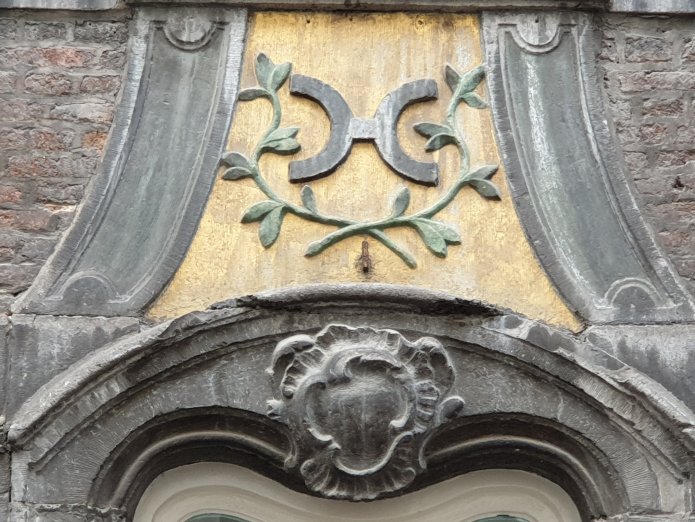
I had remembered in wandering round Maastricht before that there are interesting fragments, carvings and odd sculptures set into the walls, mostly above the doors, of old house fronts, sometimes as street signs:-

Standard

John Richardson

I’m sad to read of the death of John Richardson, aged 95, older than I thought, whose grandfather, rather amazingly, was born in 1817, in the reign of George III. One of his many remarkable characteristics was that, although he had written short books in the 1950s, including one on Braque for Penguin Modern Painters and a book on Picasso’s watercolours in 1956, he was already 67 by the time that the first volume of his magisterial four-volume biography of Picasso (one still to appear) was published and was still going strong writing, publishing and organising major exhibitions on Picasso for Larry Gagosian well into his eighties. A lesson to us all.

Standard

Gropius and Christ’s

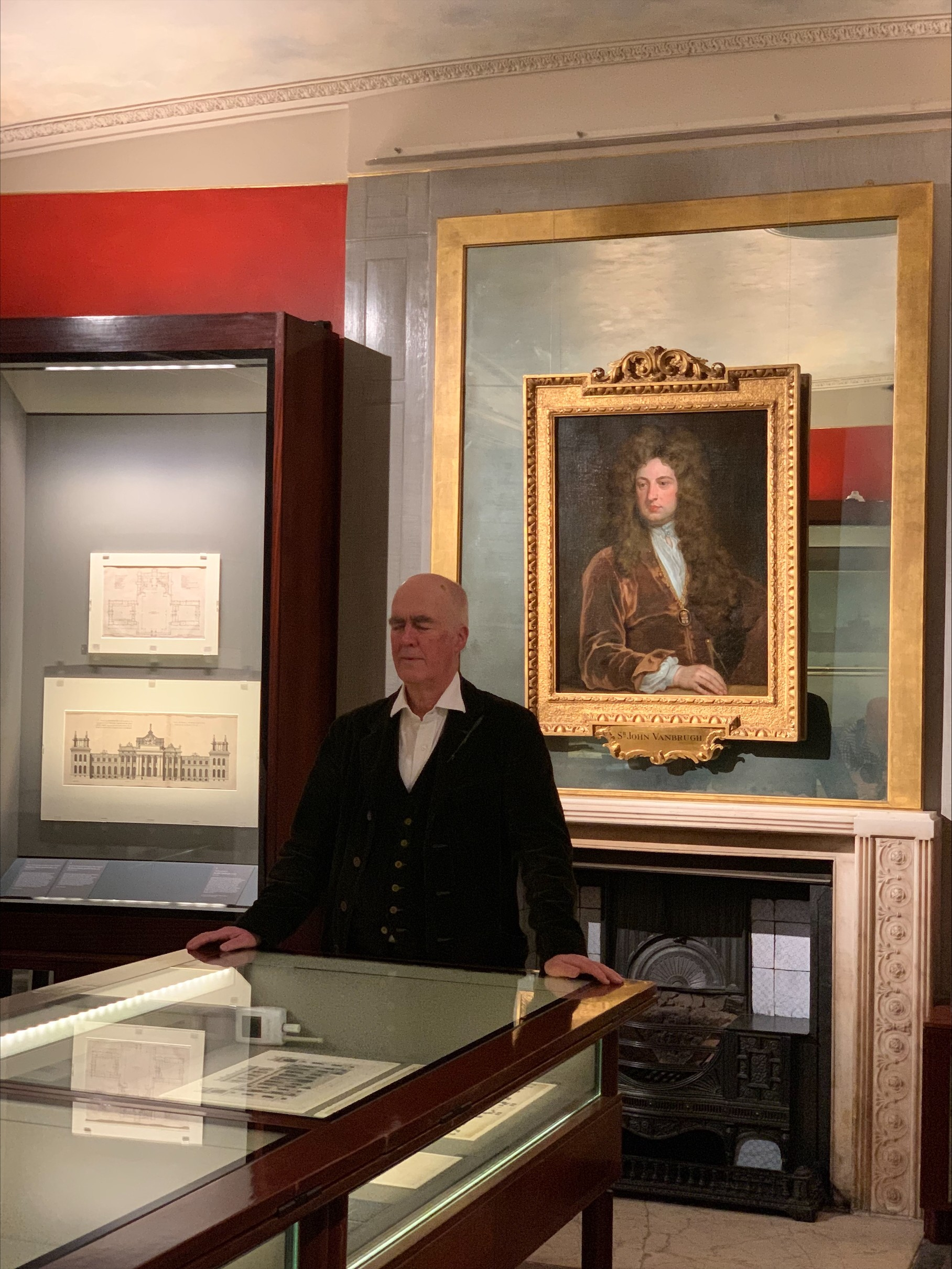
In reading about Gropius, I have been interested to find out more about the context surrounding the decision of Christ’s College to turn down a set of proposals for a new building on Hobson Street, drawn up and presented to the Fellows by Walter Gropius on 2 March 1937, ten days before he set sail for America and regarded by his partner in professional practice, Maxwell Fry, as one of the reasons why he left.

But the story is, perhaps unsurprisingly, not quite so simple. The college had commissioned a set of plans from Oswald P. Milne, a much more conservative architect who had worked with Lutyens. Conrad Waddington, one of the younger fellows, an evolutionary biologist with wide cultural interests, including expertise in Morris dancing, had recently divorced. Through his close friendship with John and Myfanwy Piper, he had met Justin Blanco White, a young, avant garde architect who he married. She had studied at the Architectural Association in the late 1920s and corresponded with Gropius ‘in connection with a book about housing’. He suggested that the college should consider alternative plans drawn up by their friend, Gropius, as an international modernist and recently arrived émigré.

The then Master of the College, Charles Darwin, grandson of the Charles Darwin, described in a letter to the Warden of All Souls, who was also planning to commission Gropius, how ‘The whole college was torn into fragments with passionate hatred of one or both of the architects’. As it happens, this was an occupational hazard of the College which had recently been torn apart by the election of its new Master, as described by C.P. Snow, one of the fellows, in The Masters.

Gropius’s scheme was rejected by the Fellows by thirteen votes to eight.

(I am grateful for this information not so much to Fiona MacCarthy’s biography which treats the episode cursorily, but to a much more detailed article she refers to by Alan Powers in a volume of essays on Twentieth-Century Architecture in Oxford and Cambridge).
Standard

Walter Gropius

I have been enjoying Fiona MacCarthy’s wonderfully well written and highly readable biography of Walter Gropius, which does everything in its power to humanise this stiff, energetic, highly sexed and physically attractive ex-hussar, with a passion for Alma Mahler and cacti, who, after distinguished service in the first world war, was recruited by the Thuringian government to be director of the Weimar Kunstgewerbeschule and turned it, with the help of the more idealistic Johannes Itten, into the first, more craft-oriented version of the Bauhaus, later transferring it to its more technically and factory oriented formation in Dessau. What emerges is that Gropius was excellent at organisation, brilliant at attracting remarkable people to work under him, known as Pius to Herbert Bayer who had a long affair with his wife, Ise.

He was already in his mid-fifties when he was forced, reluctantly, to emigrate from Berlin to London, where he feared his ability ‘to survive in this inartistic country with unsalted vegetables, bony women and an eternally freezing draught!?’ His time in London, living in Lawn Road, was brief and not entirely happy. His English was poor, hoped for architectural commissions fell through, apart from Impington Village College, the English did not embrace his machine aesthetic, and he and Ise left for Massachusetts in March 1937.

Standard

Geffrye Museum

I have just been offered some of the nicest possible and most glamorous museum product for tea (the patrons of the Geffrye Museum apparently came the day before yesterday):-

Standard

Stepney

I took the young patrons of the RA on a walking tour of Stepney this morning.

I always enjoy showing people who are more used to the pavements of Chelsea how green parts of East London are: partly owing to bombing admittedly, but also because of determined efforts of social improvement, which, in the preservation of green spaces, began remarkably early, beginning with the creation of Stepney Green as a public garden in 1872 and the opening of the cemetery of St. Dunstan’s Garden as a garden on 18 July 1887.

The other thing that struck me is how remote the events of the 1980s are to millennials. Standing on the north side of Limehouse Basin (originally known as the Regent’s Canal Dock) and remembering how it was open water at least twice the size before it was filled in by the LDDC in the 1980s to create a marina, surrounded by urban dereliction as the result of the closure of the docks, I felt how remote the creation of Canary Wharf and the Docklands Light Railway now are, fragments of ancient history.

Standard

Phyllida Barlow

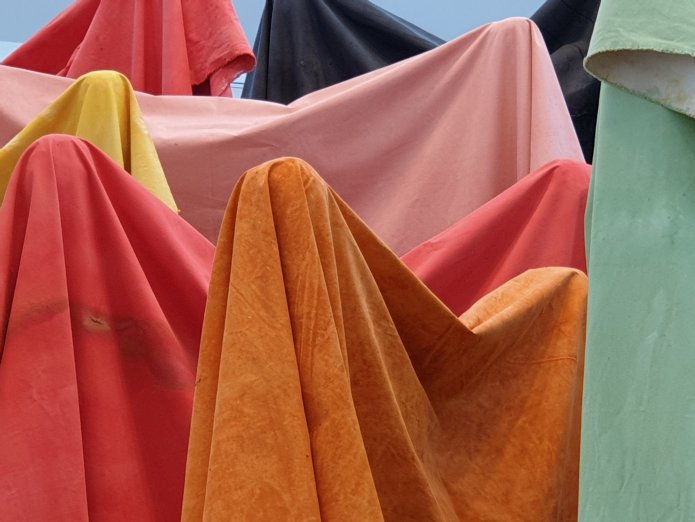
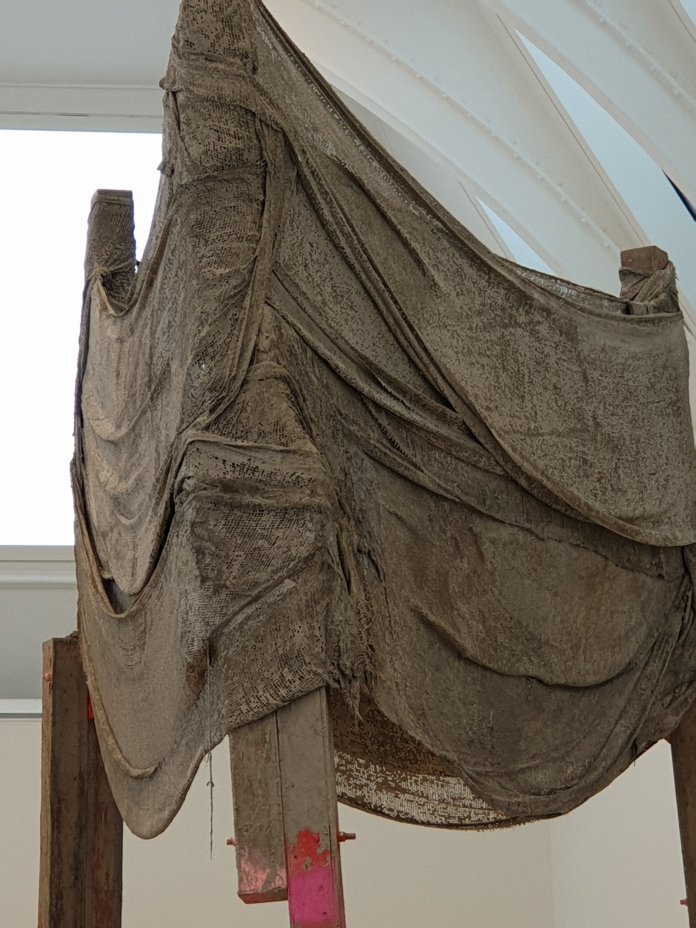
I enjoyed Phyllida Barlow’s exhibition, which makes adventurous use of the old laboratories at the back of Burlington Gardens, filling the high vaulted Victorian spaces which the engineers wanted to abolish with objects like triffids – strange and imaginative and full of danger:-

Standard

Renaissance Nude

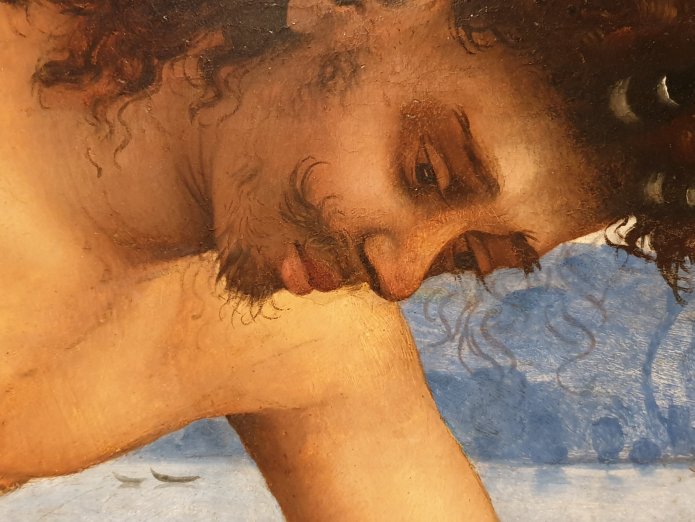
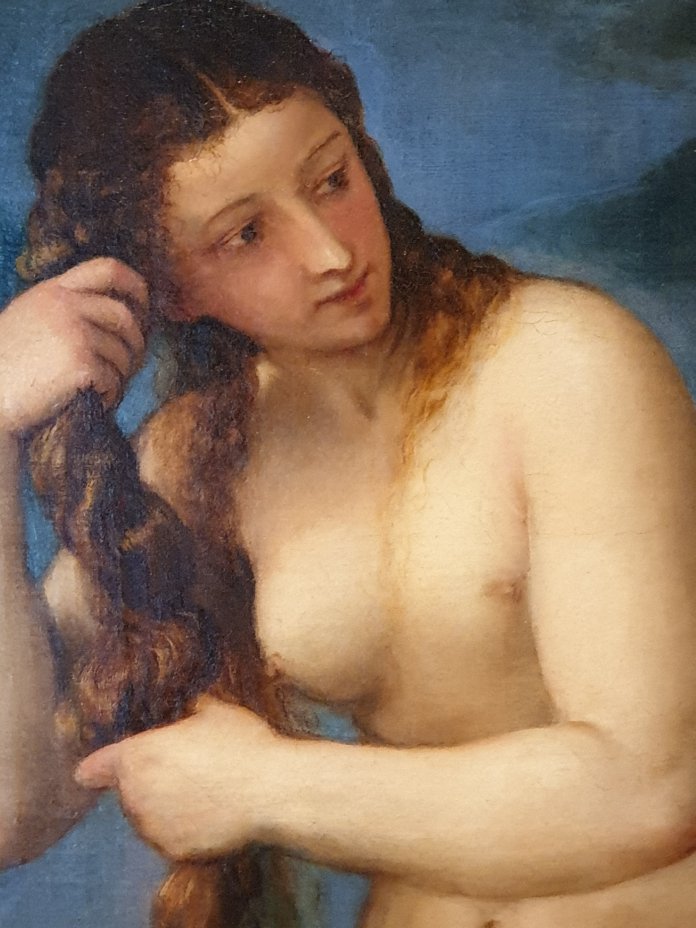
I wasn’t prepared for the incredible range and quality of work contained in The Renaissance Nude, the exhibition which the RA has organised jointly with the Getty.

Cima’s Saint Sebastian from the Musée des Beaux Arts in Strasbourg:-

Piero di Cosimo’s Satyr Mourning over a Nymph generously lent by the National Gallery:-

Perugino’s Apollo and Daphnis from the Louvre:-

Titian’s Venus Anadyomene from Edinburgh:-

It’s an amazing feast in different media from north and south of the Alps.

Standard