Frank Auerbach

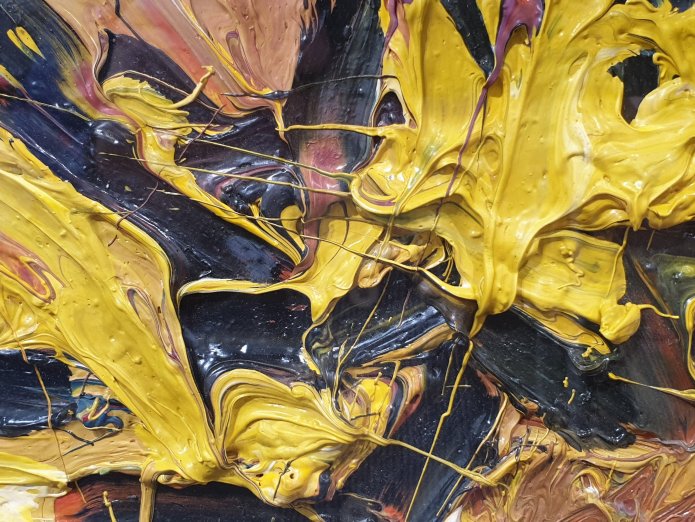
In amongst the melee of Art Basel, I came across a beautiful, small Auerbach on Bernard Jacobson’s stand. It has one of Bernard’s charmingly idiosyncratic labels in which he writes, ‘Sadly I have cooled towards his work in recent years, actually I much prefer the work of his great friend Leon Kossoff’. This is a new form of reverse salesmanship:-

Standard

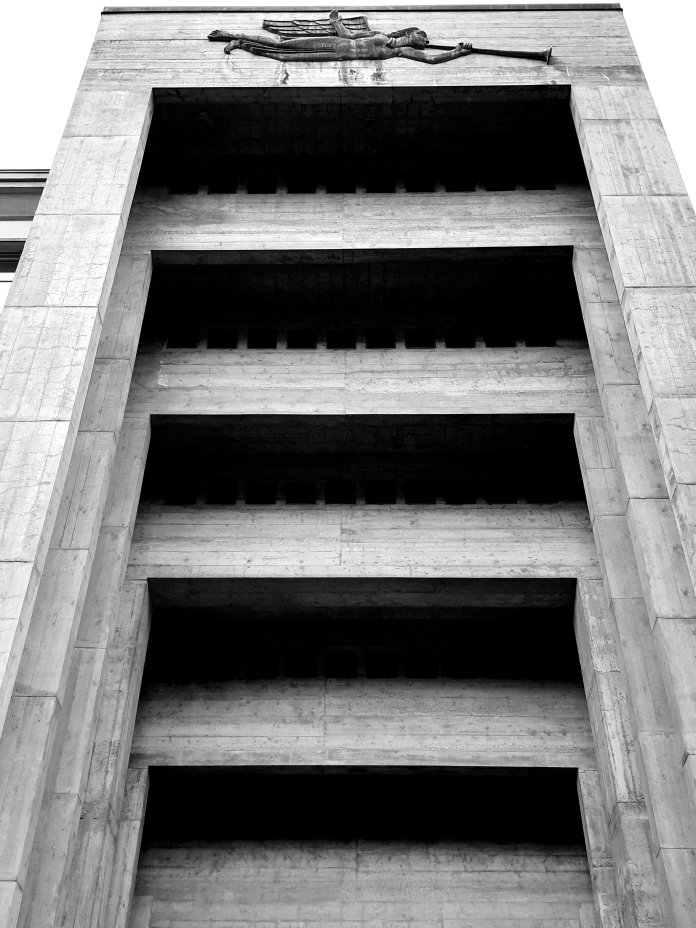
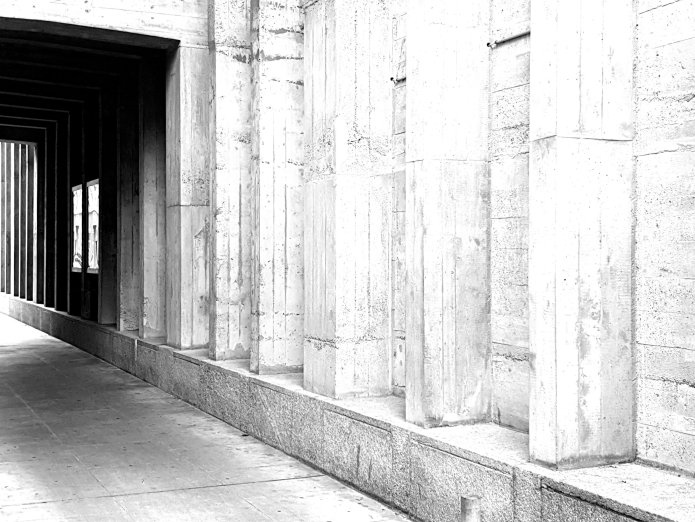
Antoniuskirche

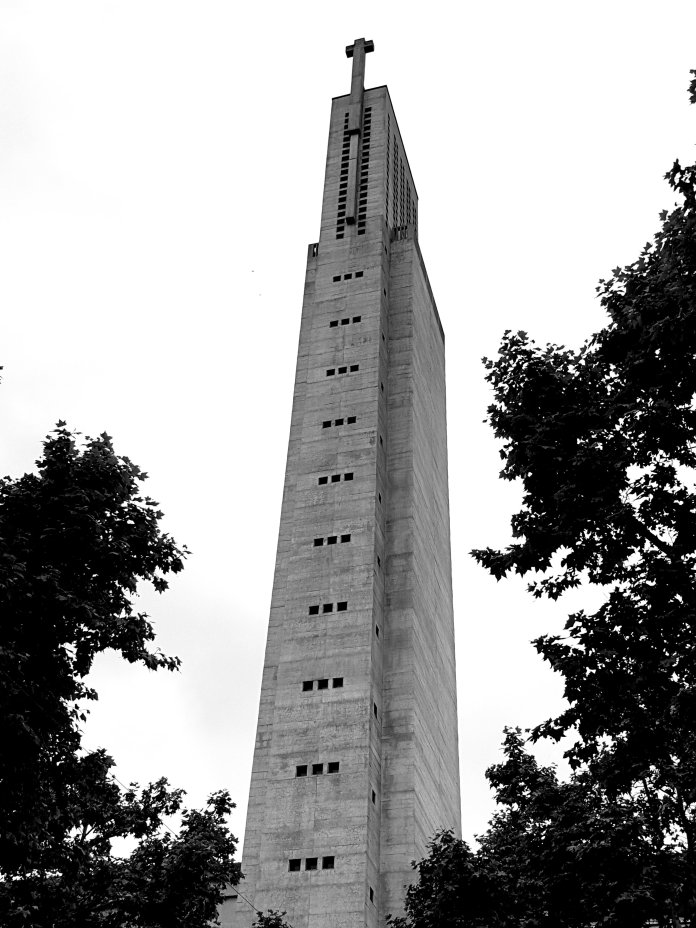
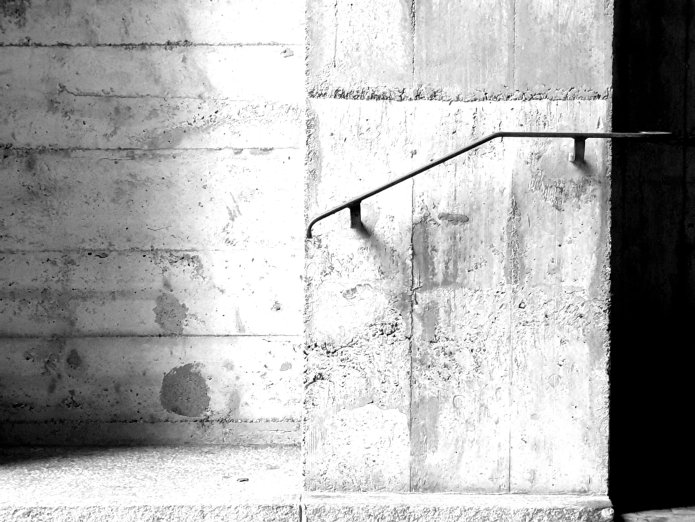
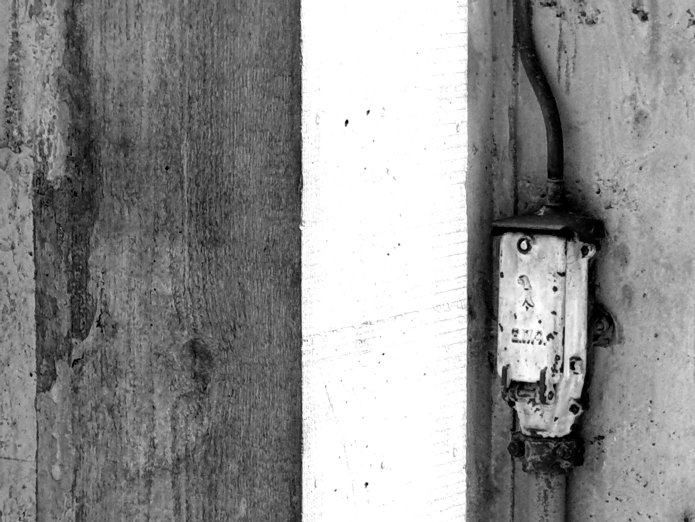
I discovered that the place where I’m staying in Basel is a short walk away from the Antoniuskirche, the magnificent concrete church designed by Karl Moser, a Professor of the ETH in Zurich and soon-to-be President of the CIAM, and Gustav Doppler between 1925 and 1927, an austere 1920s monument:-

Standard

Adam Gopnik

A long train journey has given me an opportunity of reading more of Adam Gopnik’s A Thousand Small Sanities: The Moral Adventure of Liberalism – a book in which he defends his view of life: liberal, sceptical, cautious, tolerant, humane, deeply well informed, against the rising tide of authoritarianism. There is a risk of it being viewed as too self-regarding, the defence of his own intellectual and academic privileges, but it is extremely understanding, and respectful, of the intellectual position of the opposition – the conservative authoritarians who include Samuel Johnson, about whom he writes with great sympathy, Edmund Burke, Benjamin Disraeli and G. K. Chesterton. He writes particularly well of the downfall of more traditional communities in places like Akron and Lille, which has led to the rise of the nostalgic right, so destructively hostile to the liberalism of the New Yorker elite.

Standard

Muzeum Susch

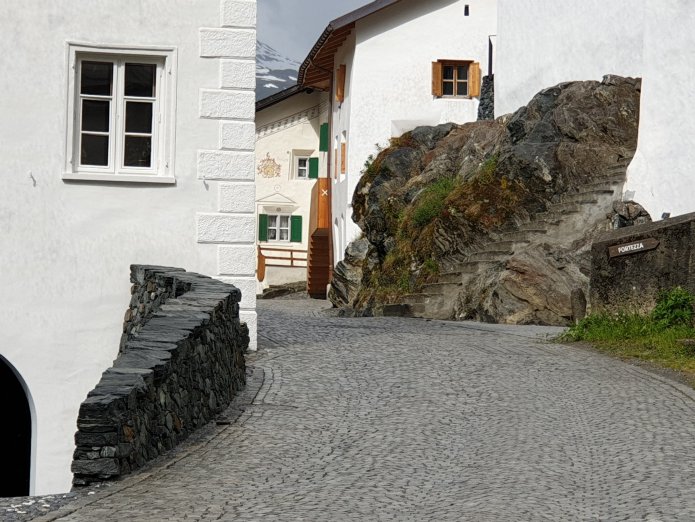
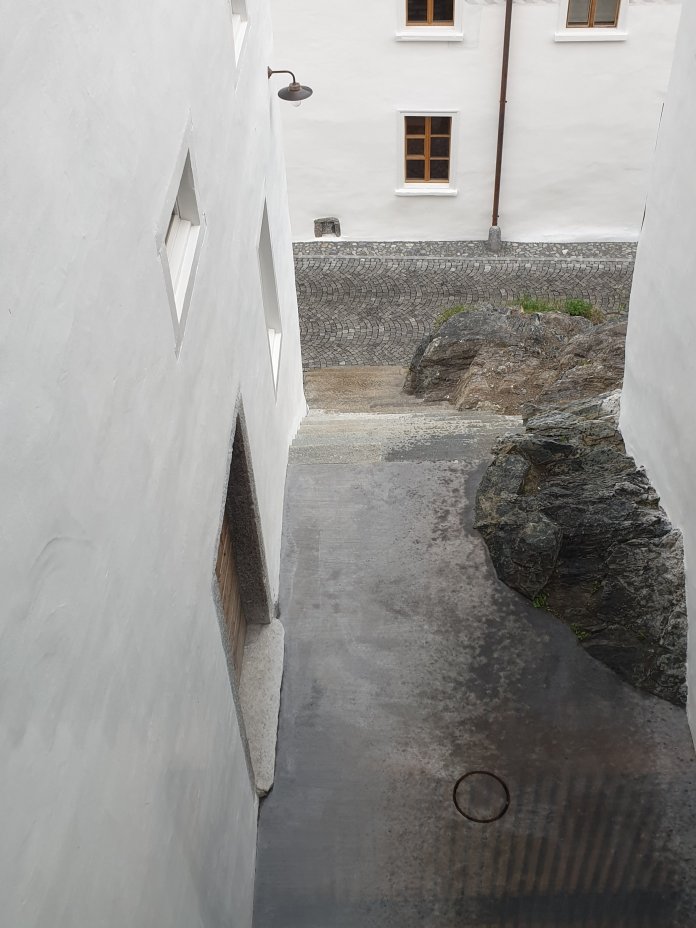
We took a train trip from Zürich up into the Engardin to visit the Muzeum Susch, Grażina Kulczyk’s recently opened, experimental venture to convert an old monastery building, founded in 1157, in a small town (population 300) on the pilgrimage route through the Swiss mountains, alongside a nineteenth-century brewery hard up against the side of the mountain:-
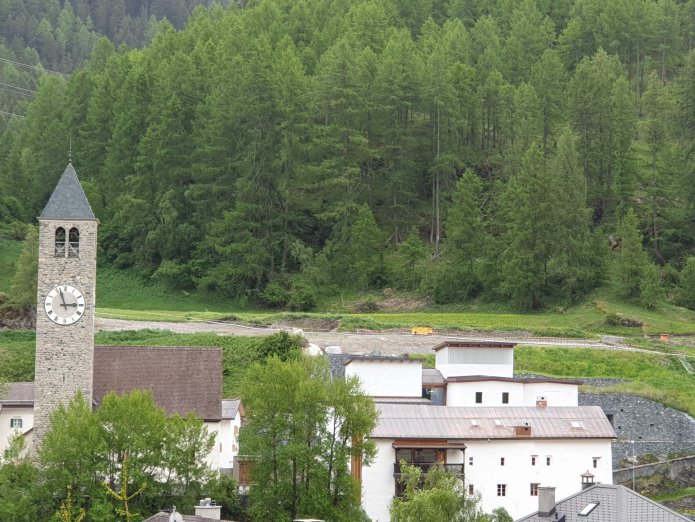
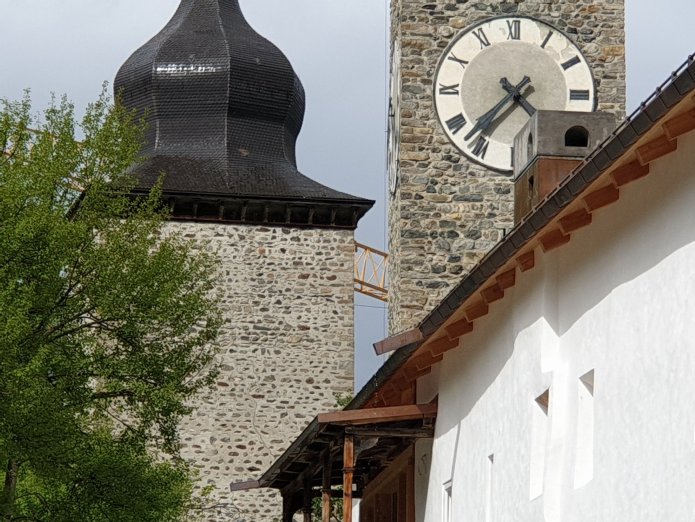
She has developed it as space in which to show two exhibitions a year – the first on A Woman Looking at Men Looking at Women (the title of an essay by Siri Hustvedt), curated by Kasi Redzisz, who works at Tate Liverpool, investigating lesser know, avant garde, feminist art from Poland and elsewhere from the 1960s and 1970s.

The buildings have been beautifully adapted by Chasper Schmidlin and Lukas Voellmy, digging underground to create new spaces, adapting the existing rooms in the monastery and adjacent building and adding a metalwork staircase, such that the experience of going round the exhibition is unexpectedly complex, with differently sized and shaped spaces, highly personal in the choice of work and no labelling. They call it slow art: hard to get to, no instant gratification, no well known names; instead work to explore:-

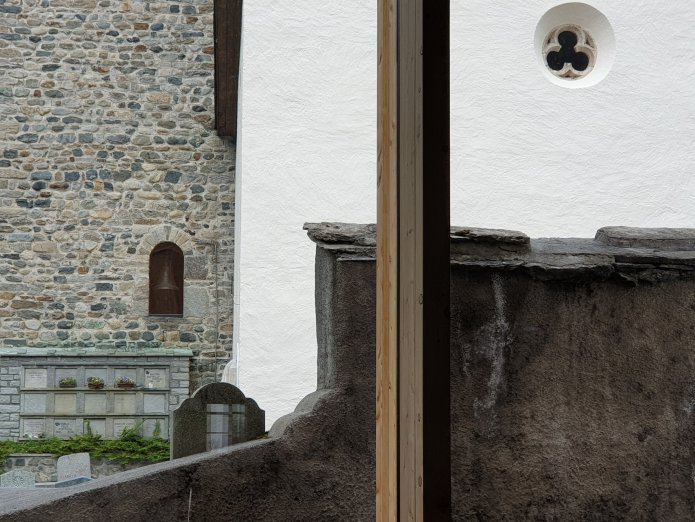
The view out to the adjacent church:-
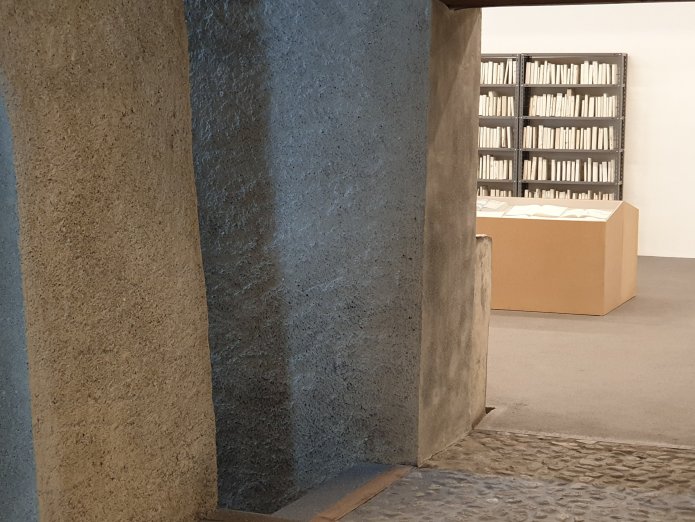
The archive room with works assembled by Jarosław Kozłowski in 1971-2 at the height of the cold war:-
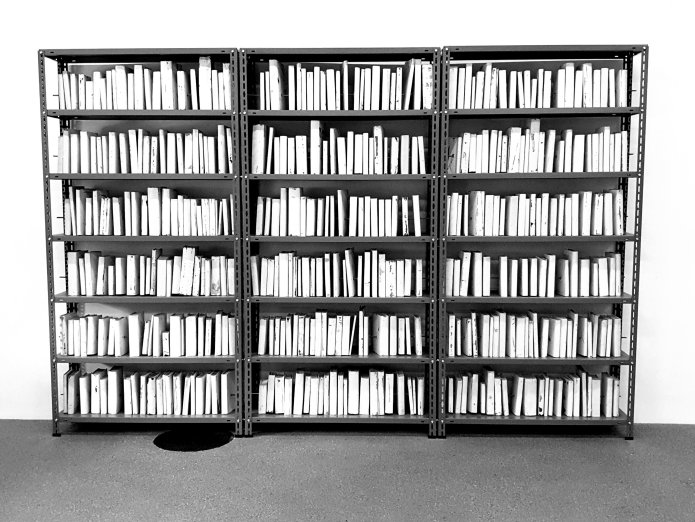
Some works are permanent. From the Series The Theatre of Disappearance by Adrián Rojas:-
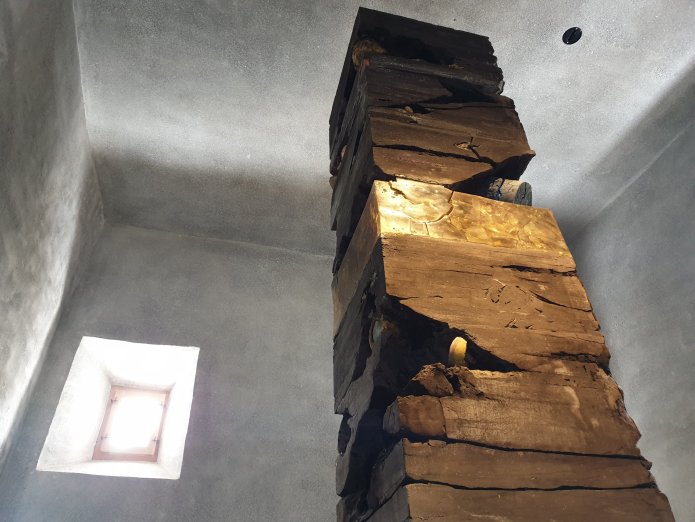
Inn Reverse (2018) by Sara Masüger:-
Stairs (2016-17) by Monika Sosnowska:-

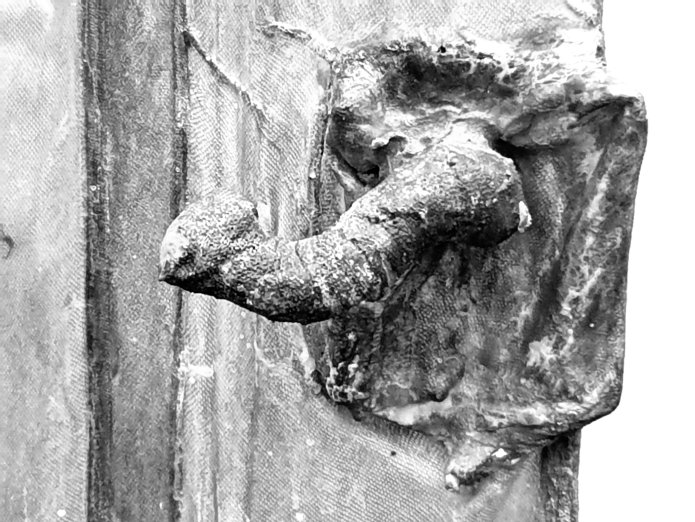
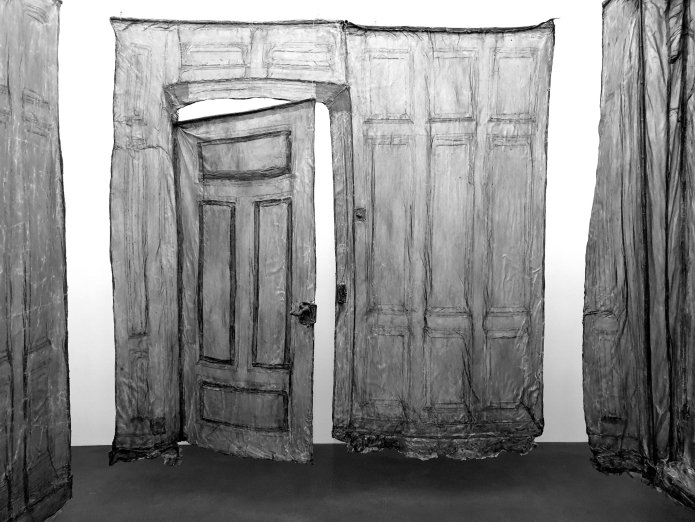
A work, Herrenzimmer by Heidi Bucher, a latex mould of the ‘gentlemen’s study’ in her parents’ house in Winterthur:-
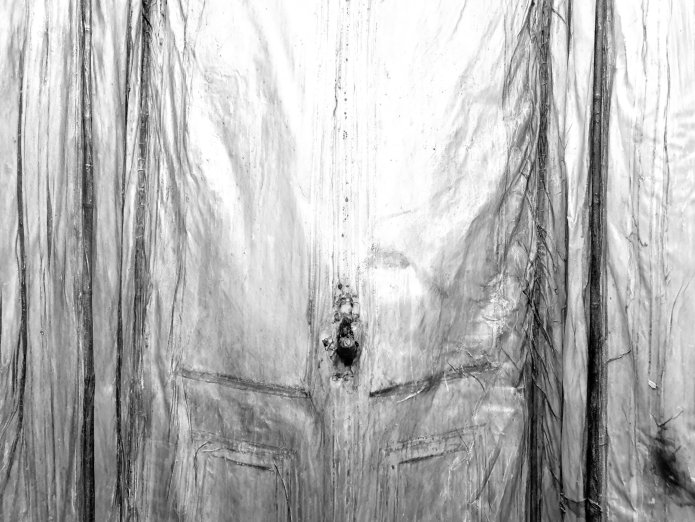
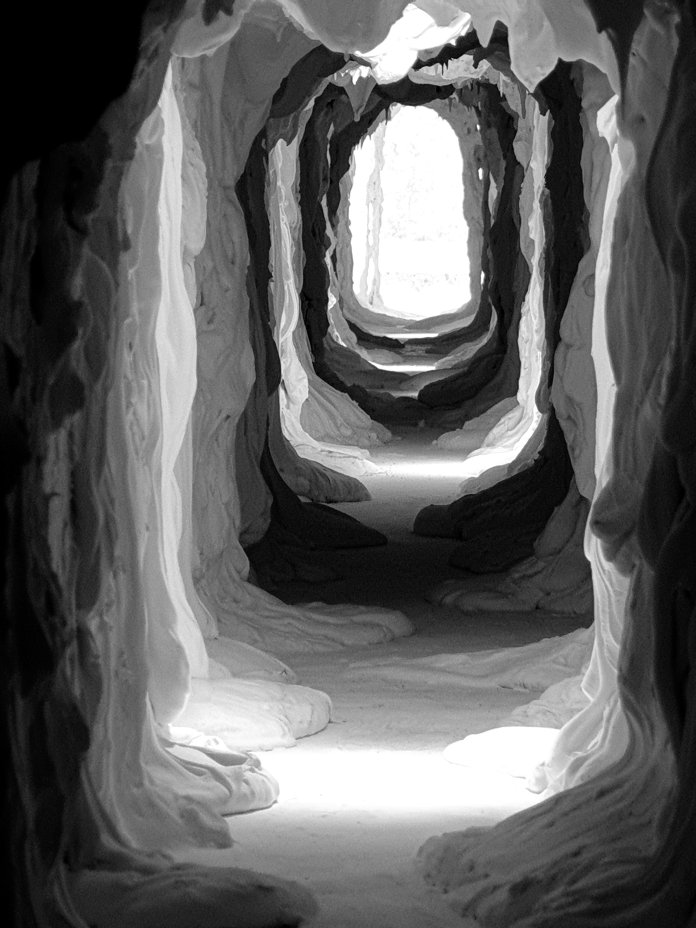
The grotto:-
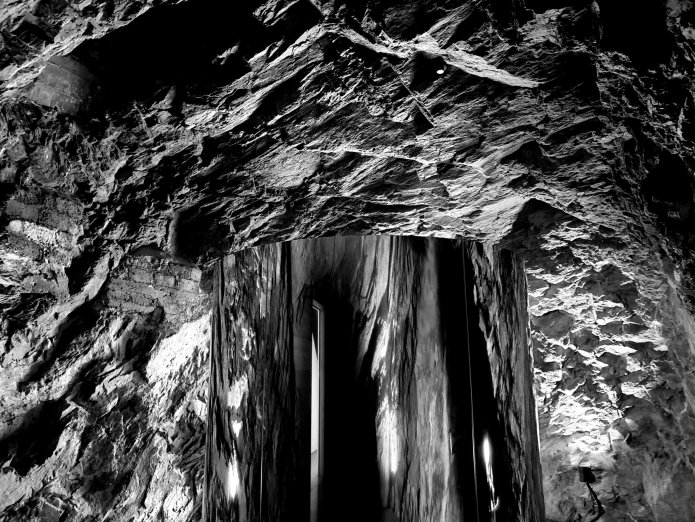
The staircase:-
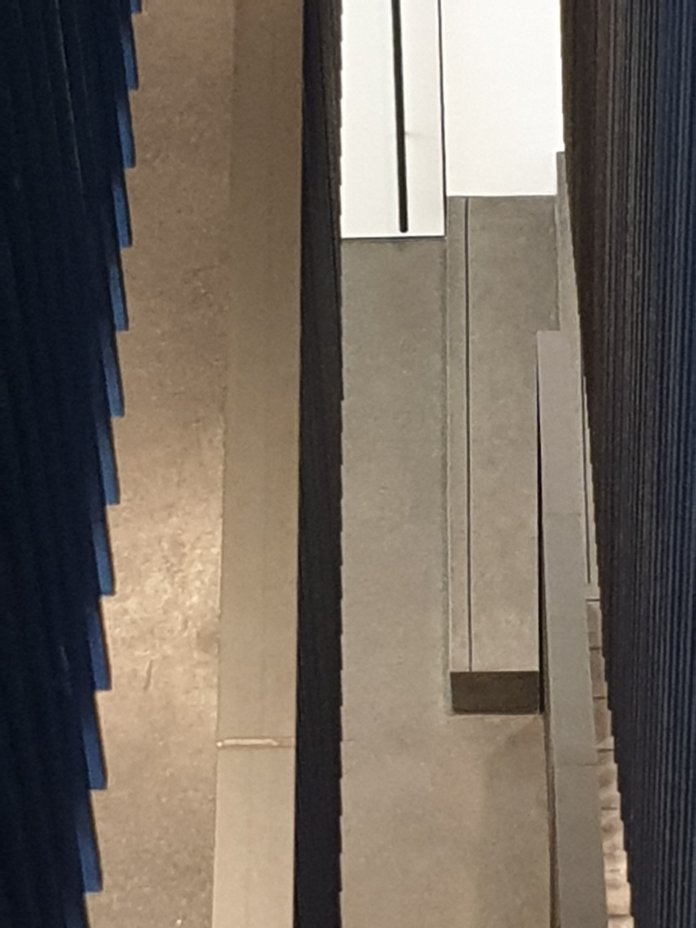
The upstairs corridor:-
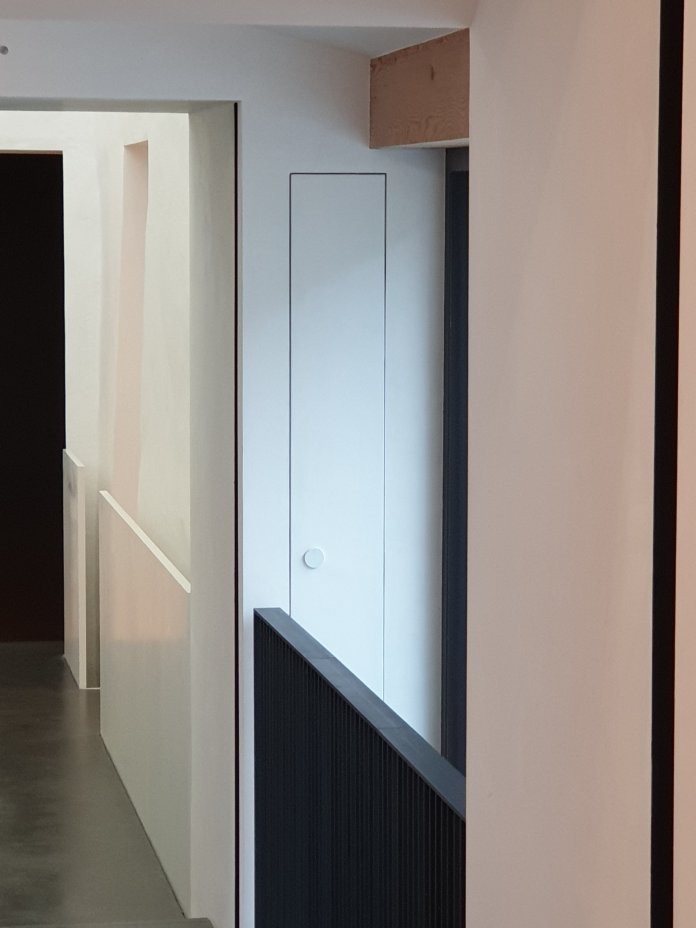
Everywhere, there are beautiful views out to refresh the eye:-
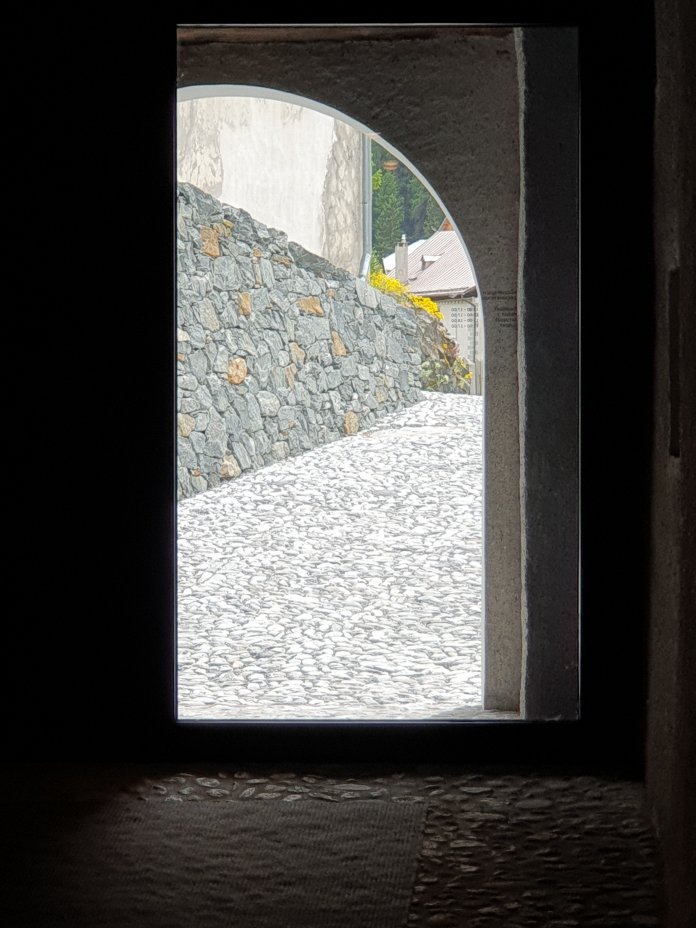
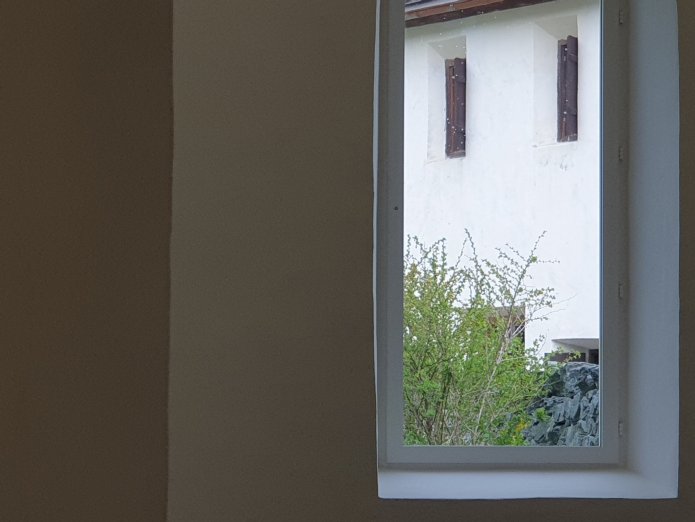
Back to the titchy train station:-
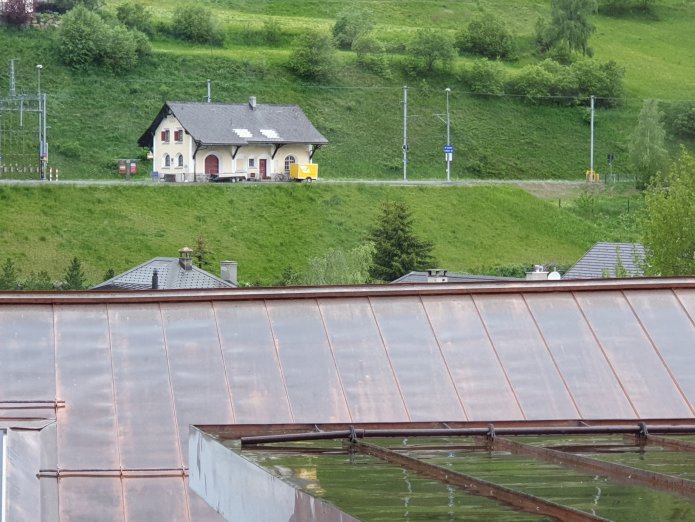
The experience is much more intense than the average municipal gallery because the spaces are smaller, there is not a conventional layout, it is all intended to encourage unmediated visual exploration and discovery, which it does very successfully.
Standard

Picasso/Louise Bourgeois

I didn’t think that the Hauser & Wirth exhibition of Picasso and Louise Bourgeois would be open today, as it’s a bank holiday, but it is: a beautiful set of juxtapositions on the themes of sex, carnality, marriage and desire. No photography, of course, because so much comes from private collections, including wonderful Picasso drawings and a rich group of Louise Bourgeois sculptures, massed in grand glass display cabinets. The best juxtaposition is a Picasso puppet (1935) and one by, or belonging to, Bourgeois (1982). Bourgeois totally lives up to the juxtaposition of fecund form.
Standard

Swiss National Museum

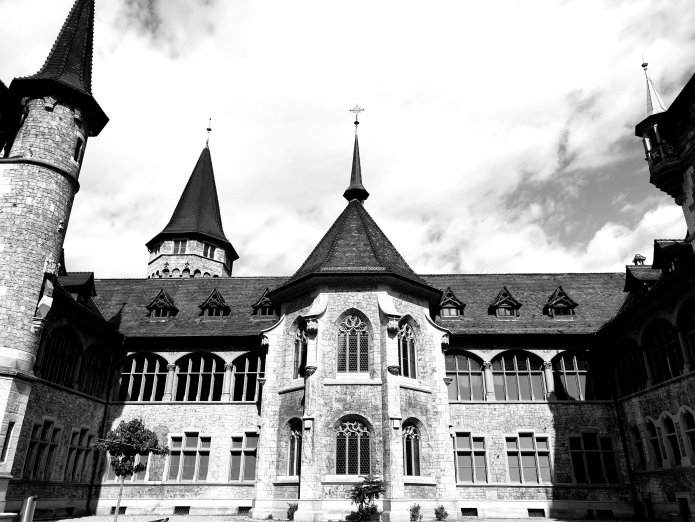
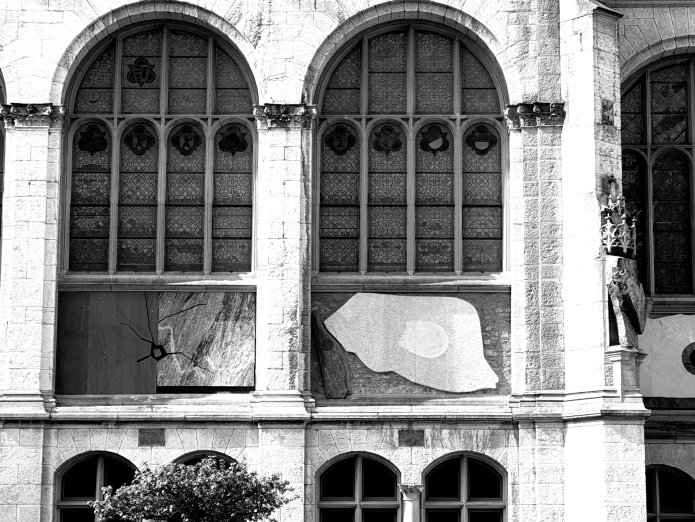
I went to see the Swiss National Museum, opened in 1898 at the height of Swiss nationalism, in the style of a grand French chateau:-

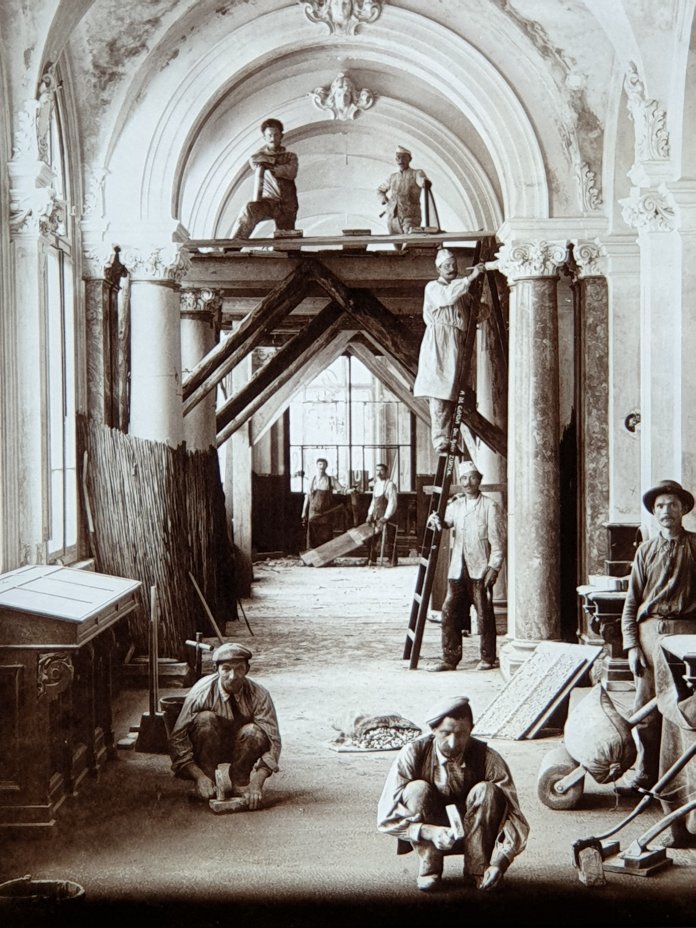
Here it is under construction:-

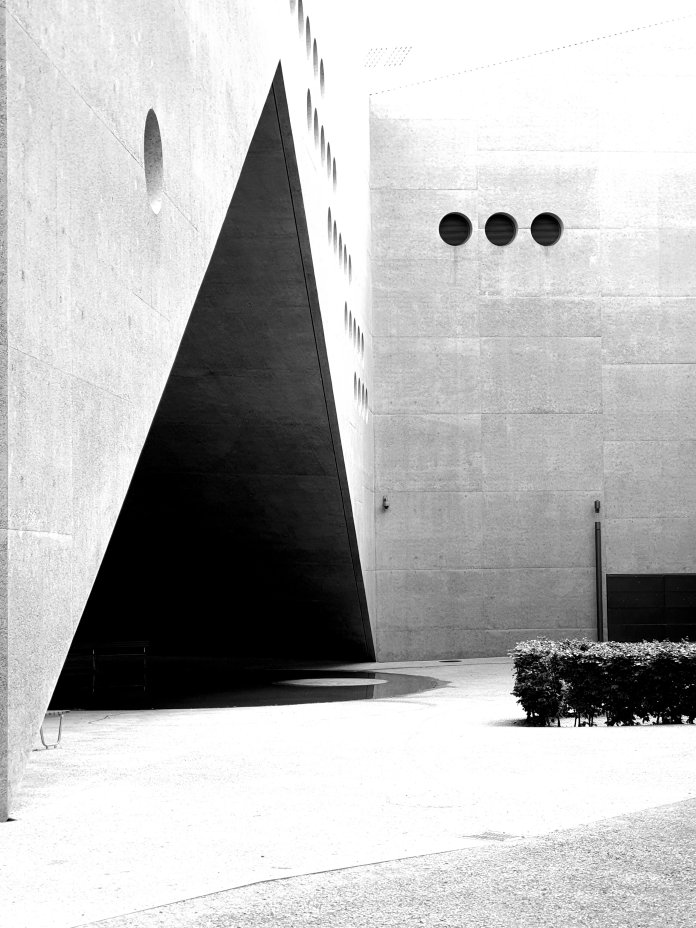
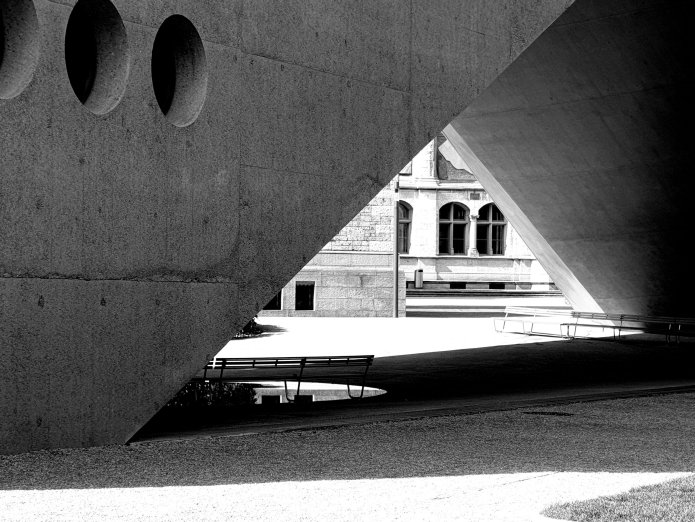
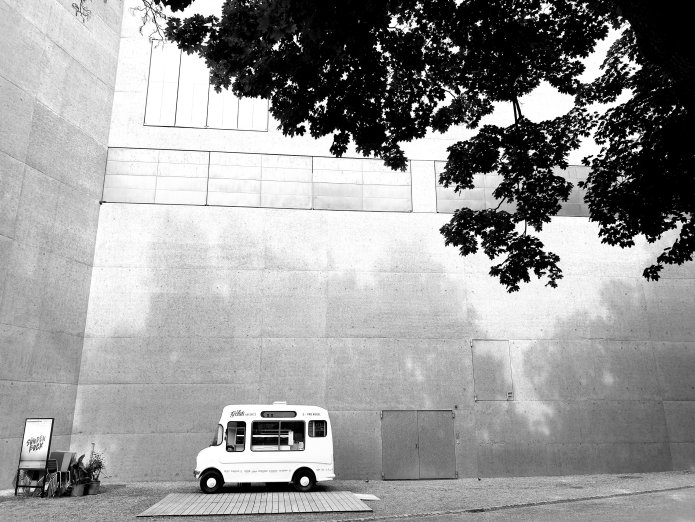
It now has a tough, neo-brutalist extension designed by Christ & Gantenbein and opened in 2016:-

Standard

Zürich

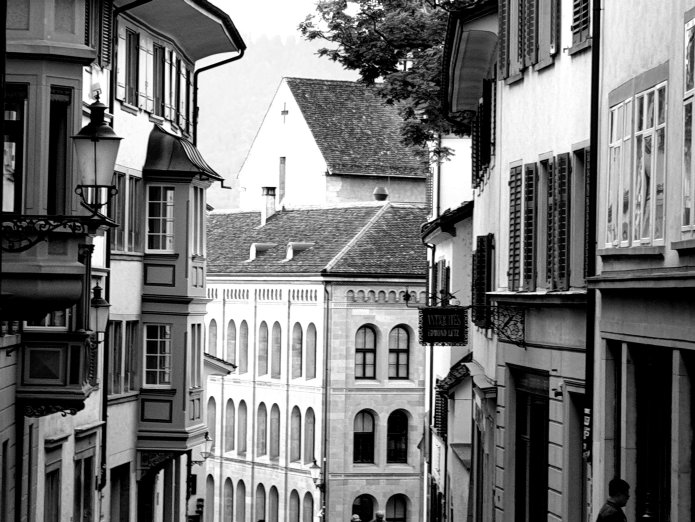
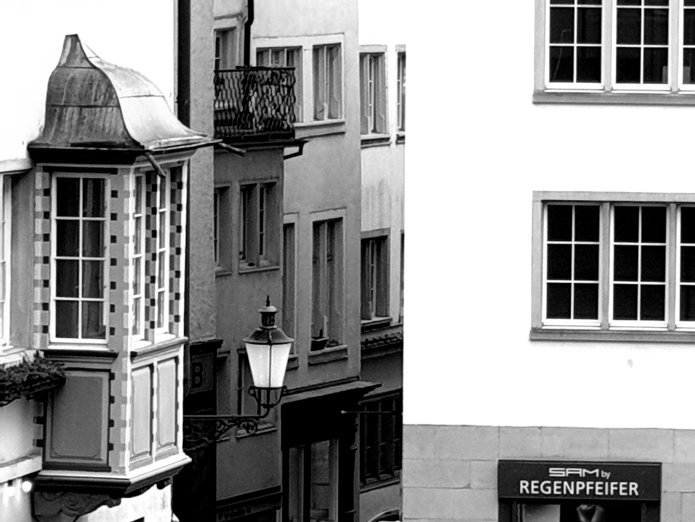
Not knowing Zürich at all, I wandered round the Old Town in the evening drizzle, trying to get a sense of it

Down Kirchegasse with a plethora of bookshops and art galleries:-

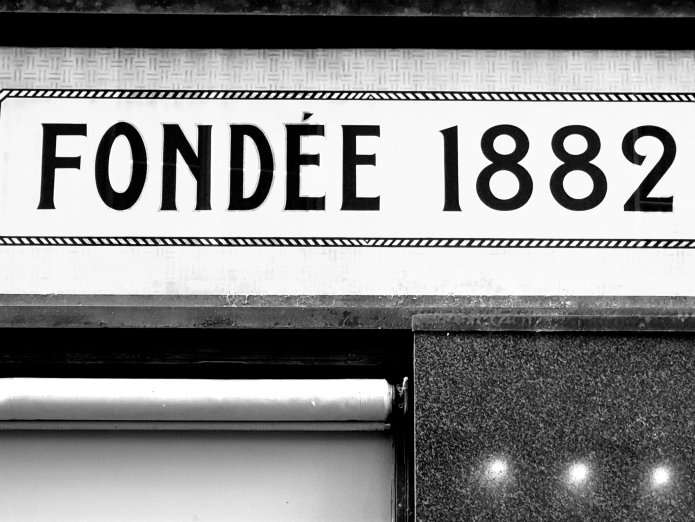
Schuhaus Gräb has good signage:-

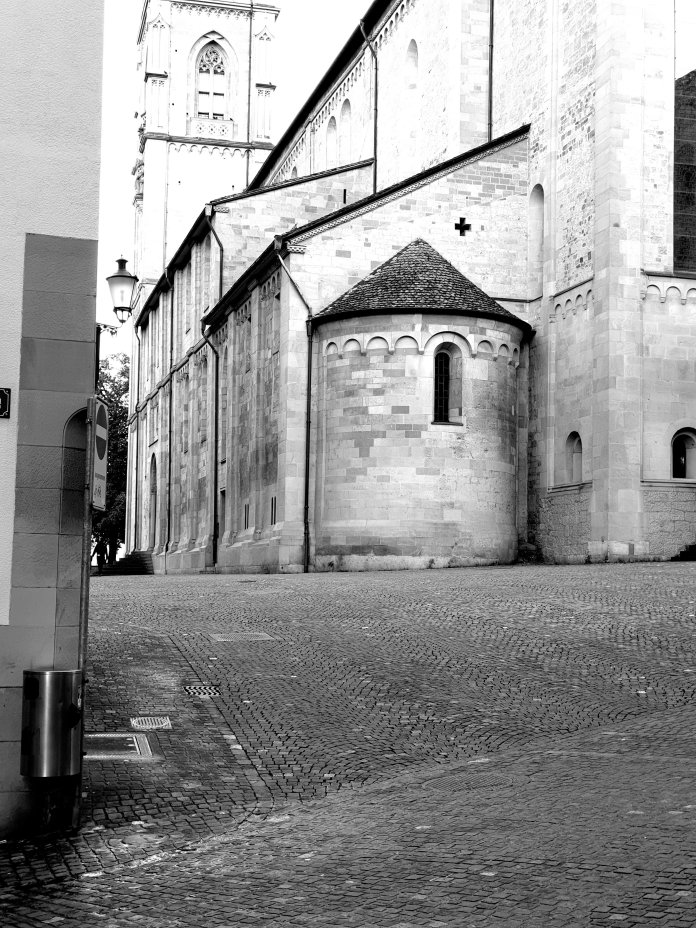
The Grossmünster is Romanesque, but dominated by its late eighteenth-century, gothic tower:-

Then, I walked back up the hill:-

Standard

Kunsthaus Zürich

For some reason I have never been in the Kunsthaus in Zürich – indeed, I have scarcely been in Zürich at all. The bulk of the collection is housed in a 1910 Secessionist building on one of the main squares, pending the completion of a big new building on the other side of the square designed by David Chipperfield and due to open next year.

The collection is choice, all the better for not being familiar.

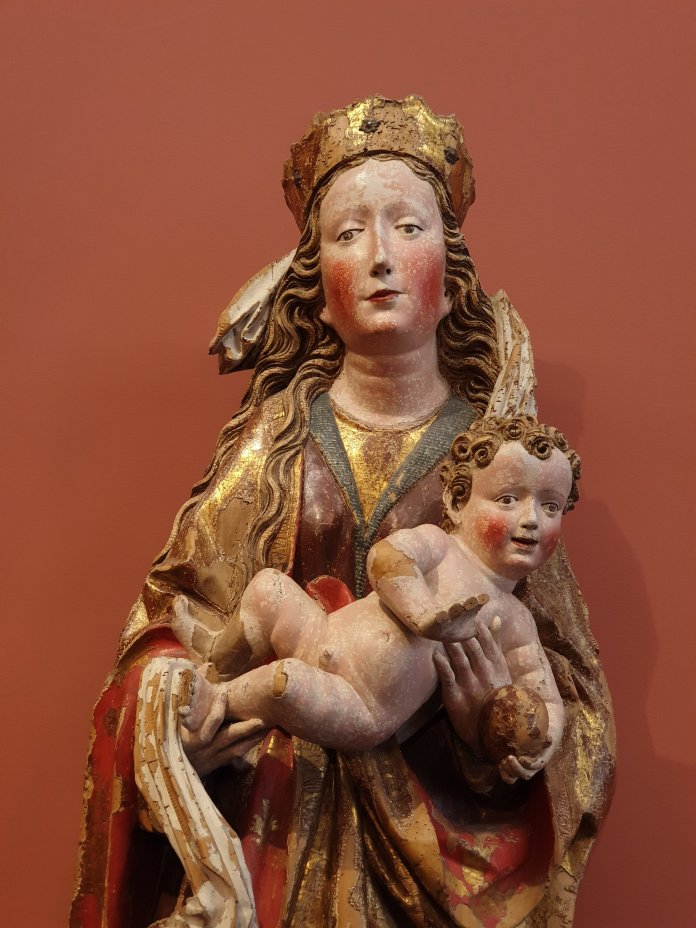
It includes late medieval sculpture – a 1480 altarpiece:-

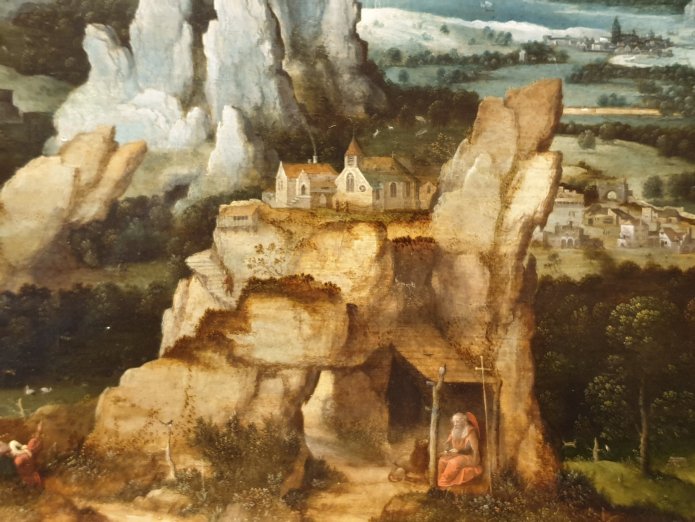
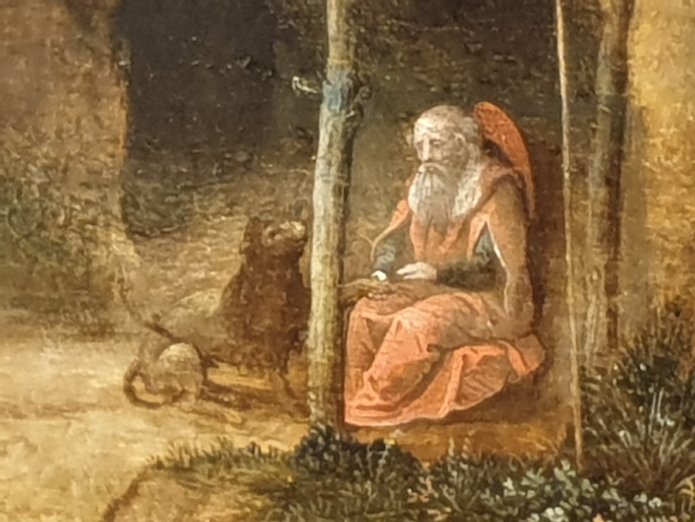
A very beautiful Landscape with St. Jerome by Joachim Patinir:-

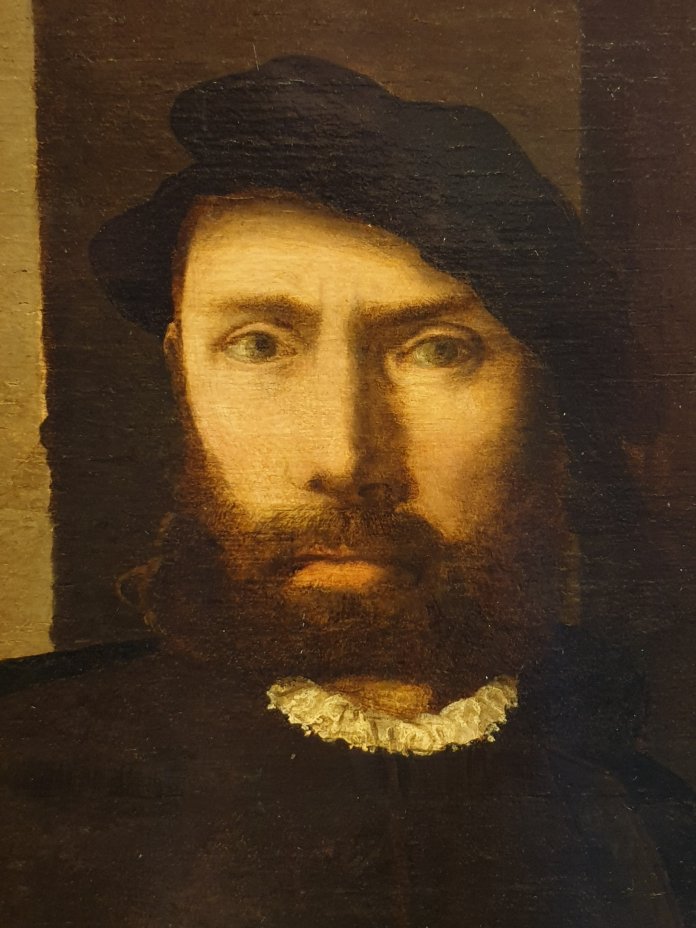
A Self portrait by Pieter Coecke van Aelst:-

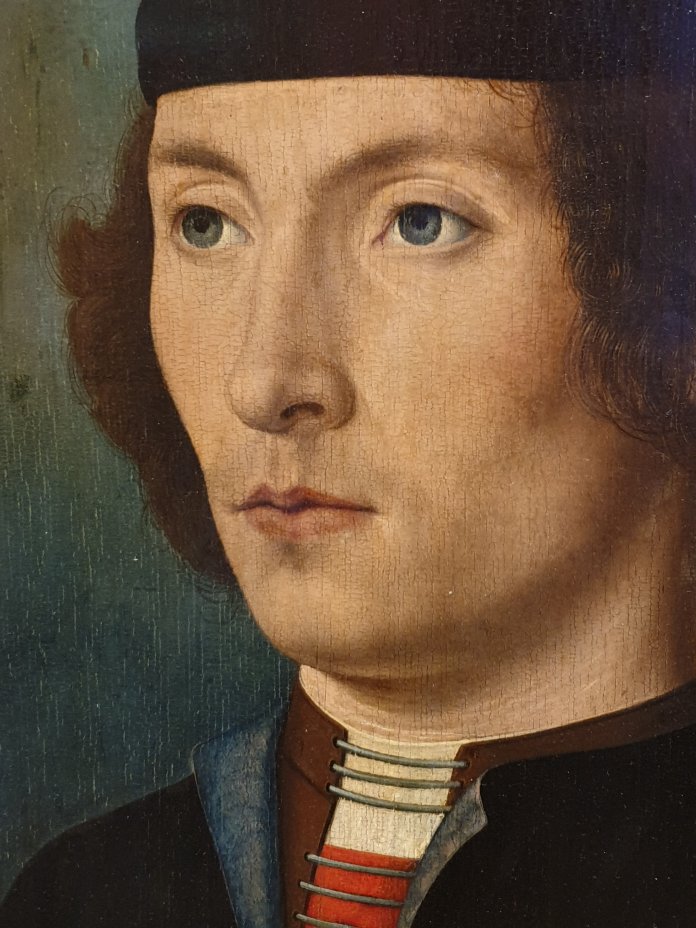
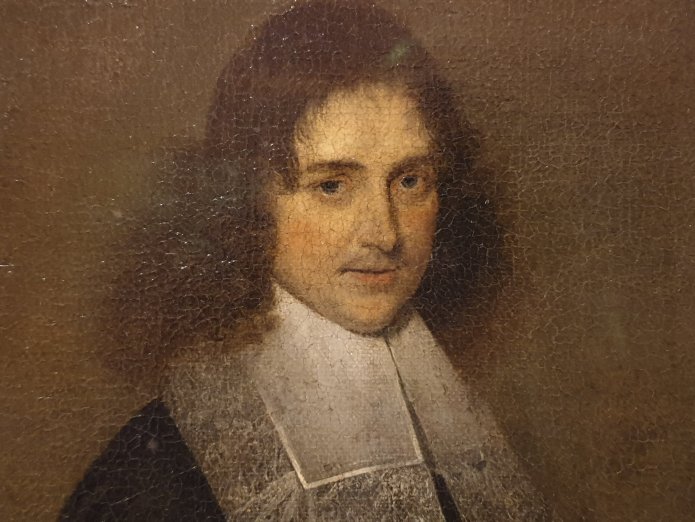
And A Portrait of a Young Man by the Master of the Ursula Legend:-

A portrait by Terborch:-

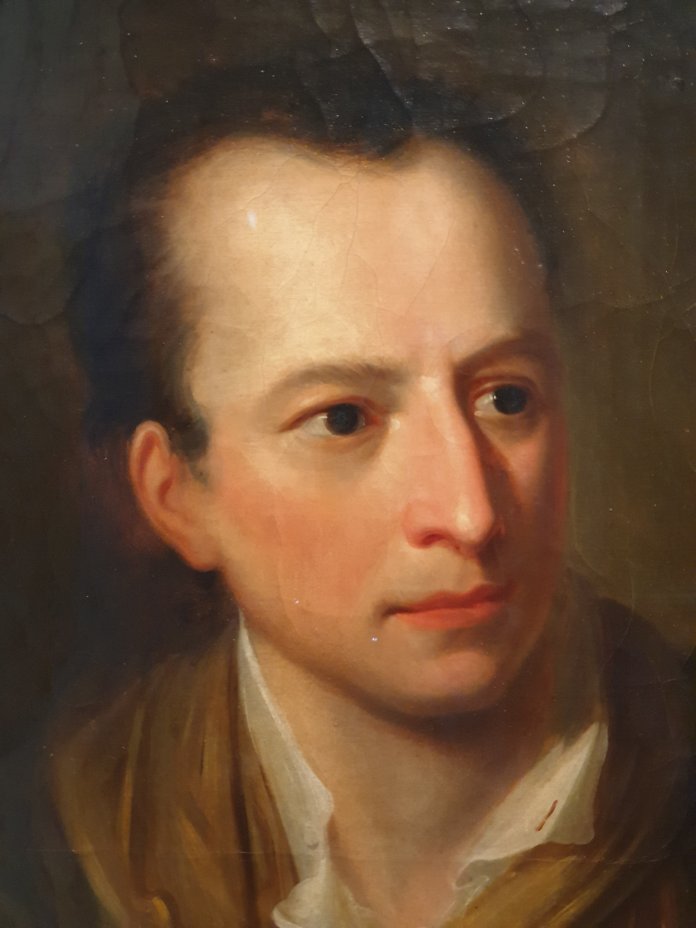
A portrait of Winckelmann by Angelica Kauffmann, painted in Rome in 1764, just before she moved to London:-

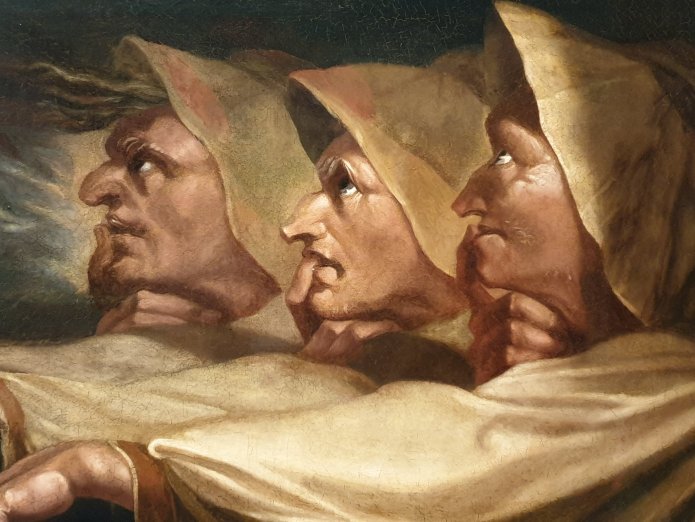
A whole room of Füssli, more esteemed in Zürich, where he was born and educated than in London where he settled in 1779 and was an inspirational Keeper of the RA.

His Three Witches (1783), presumably for the Shakespeare Gallery:-

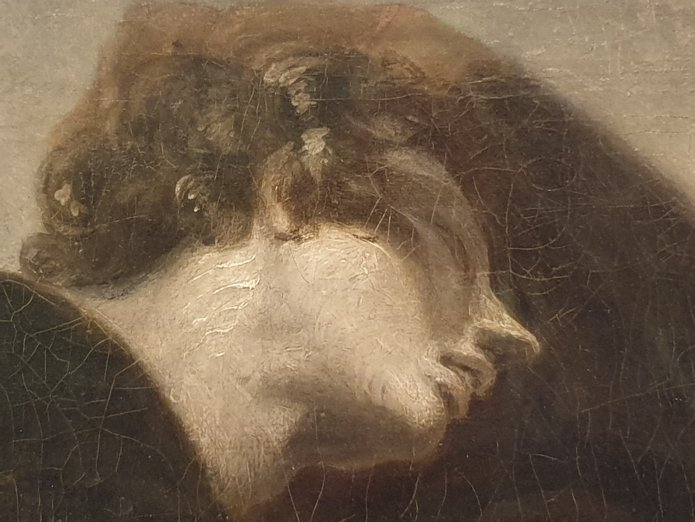
Solitude at Dawn (1794/6):-

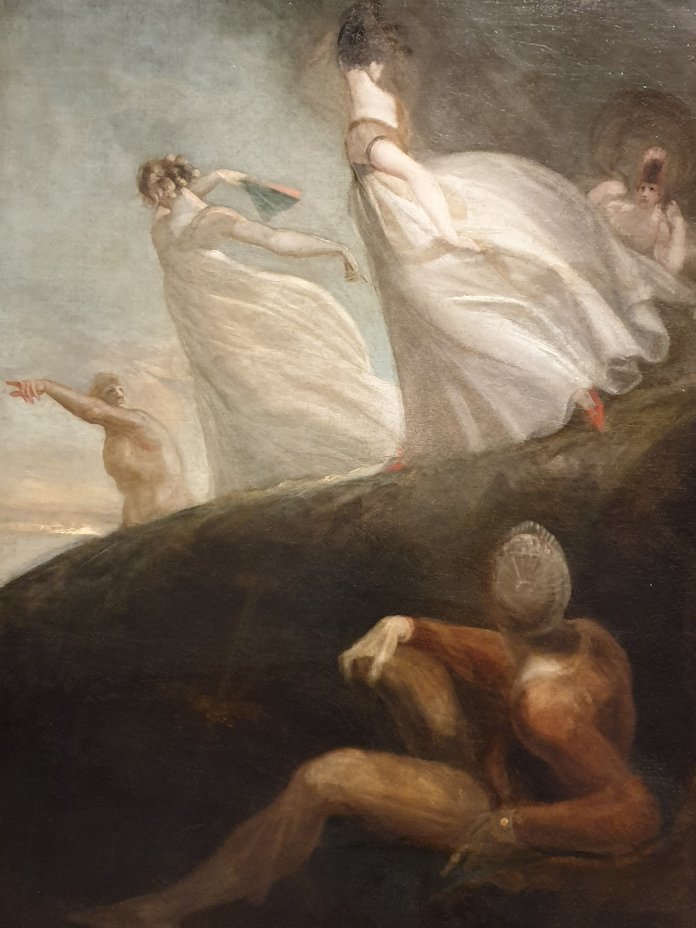
The Ladies of Hastings (1798):-

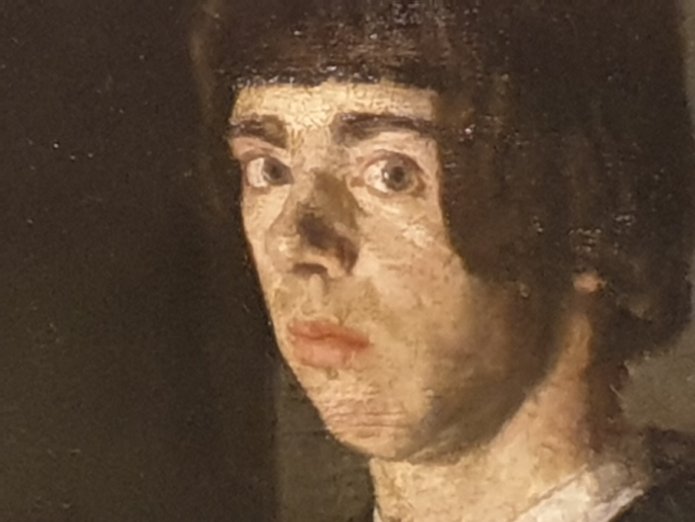
An amazing Self portrait of Hodler as a student:-

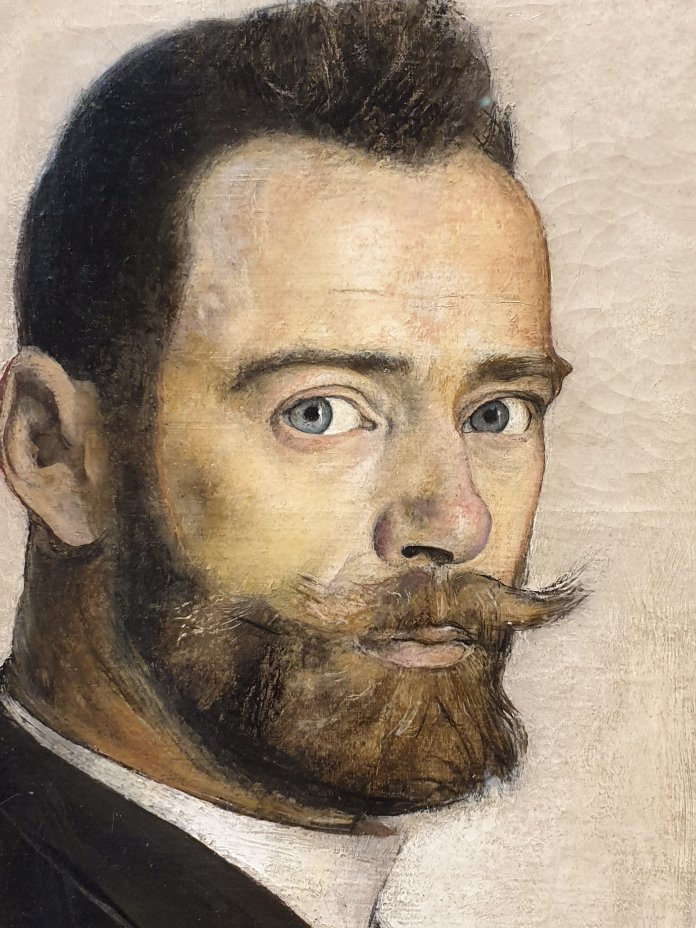
And later in his life:-

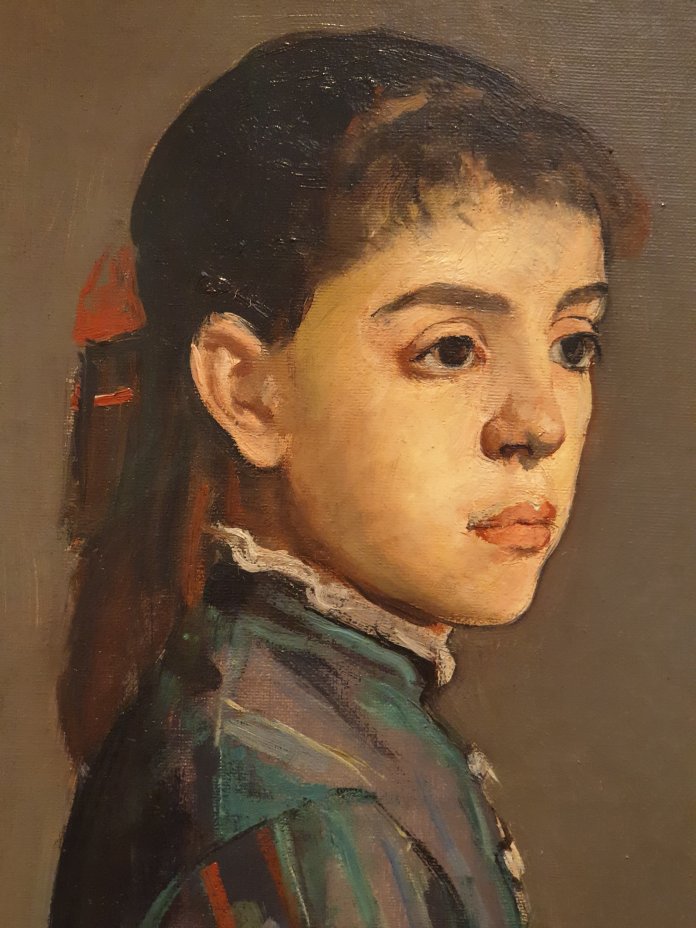
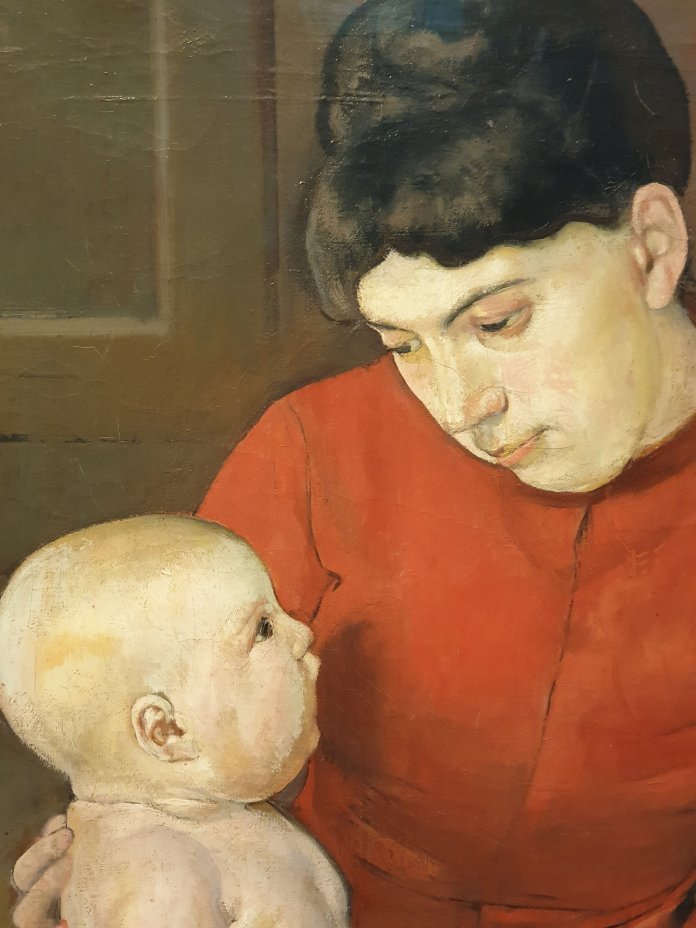
He’s an amazing painter. This is his Portrait of Louise-Delphine Duchosal (1885):-

And his Portrait of Augustine Dupin and Hector (1888):-

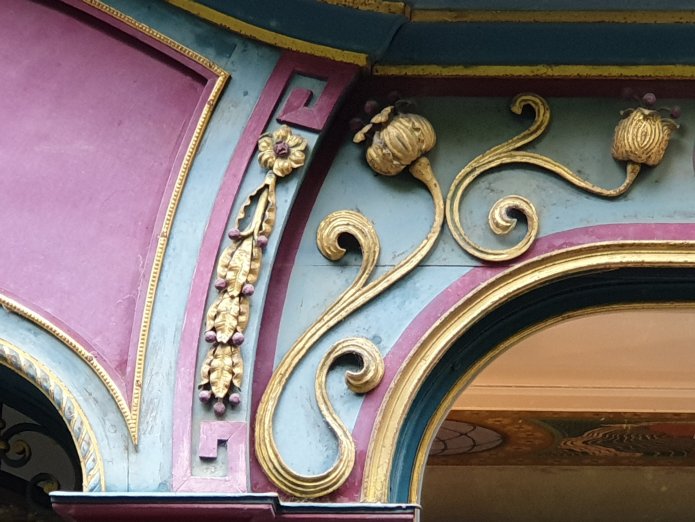
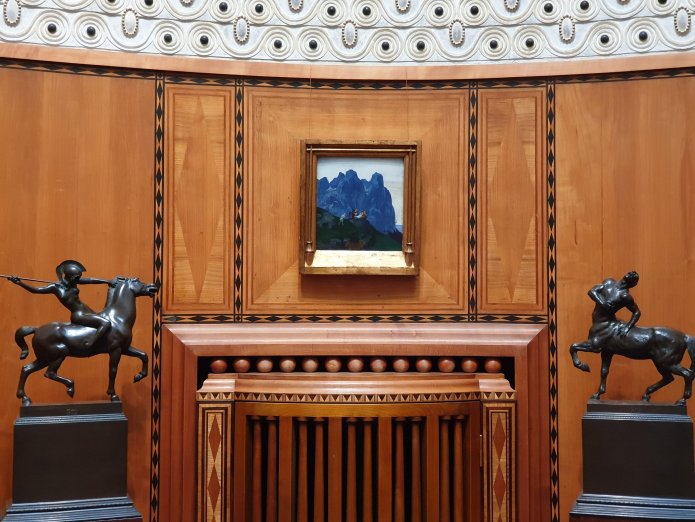
There are very elaborately decorated Secessionist rooms:-

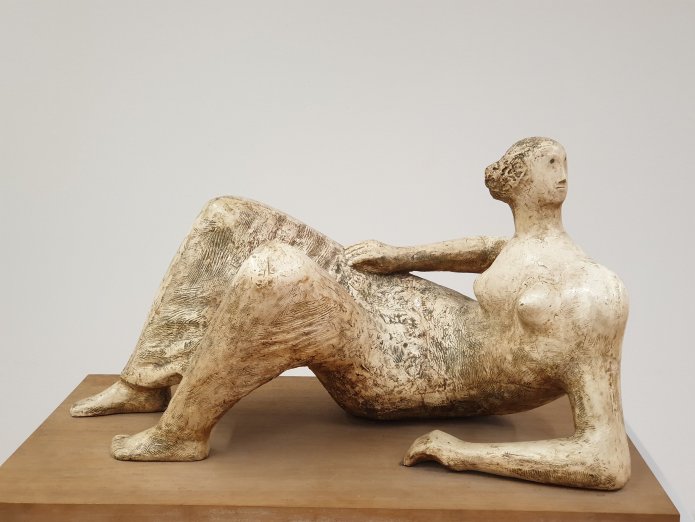
A late Henry Moore (1975/7):-

Then, the bell sounded for closing time.

Standard

Shoeburyness

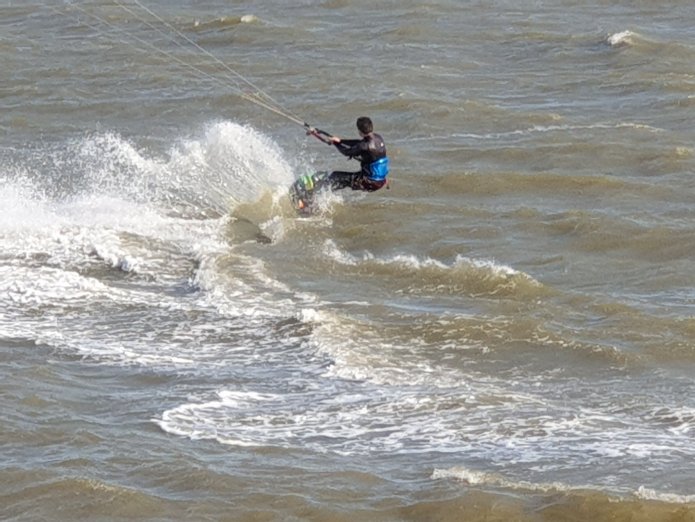
We drove back to London by way of Shoeburyness – not the most direct route, I know, but it meant that we were able to admire the windsurfers:-

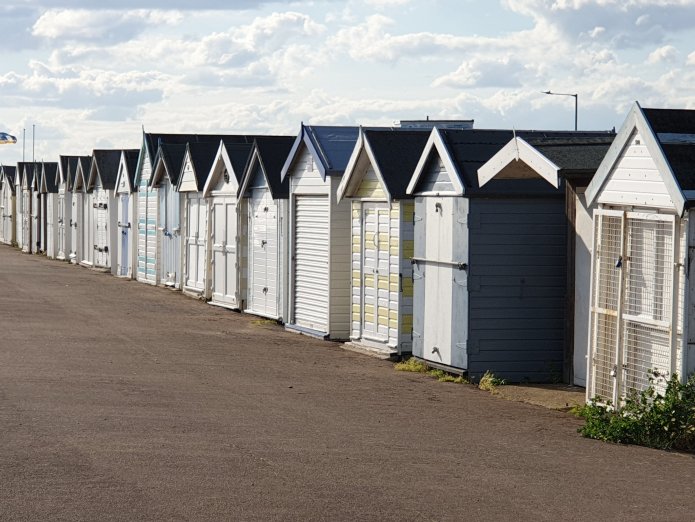
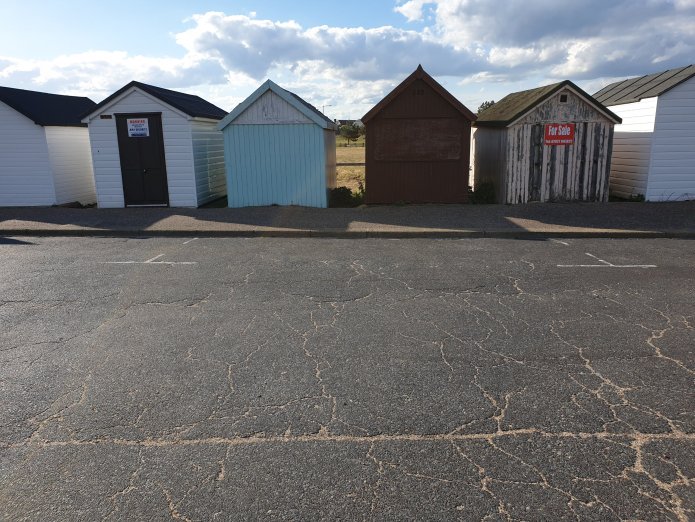
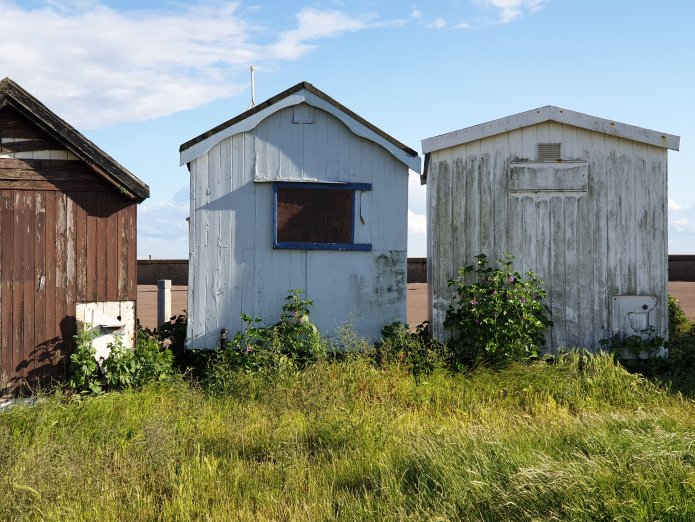
The long line of beach huts:-

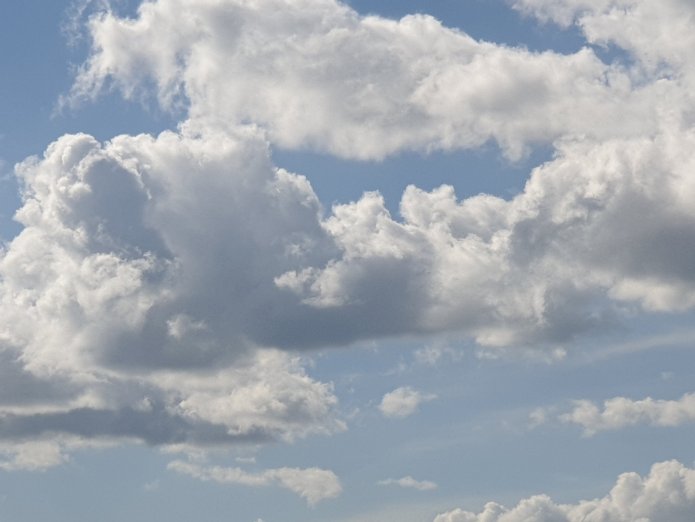
And more Wonnacott sky:-

Standard

John Wonnacott

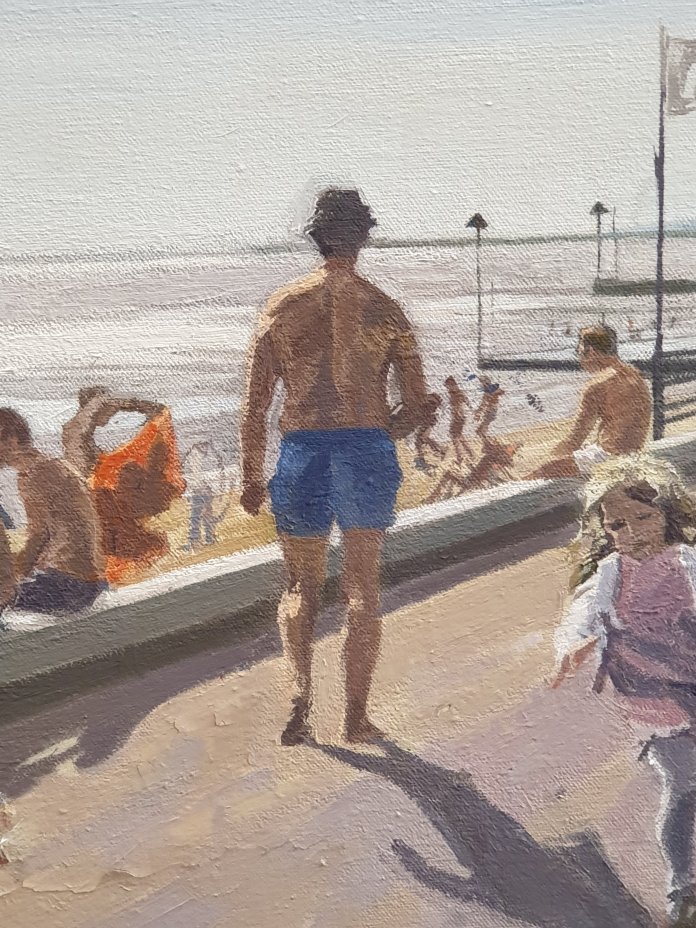
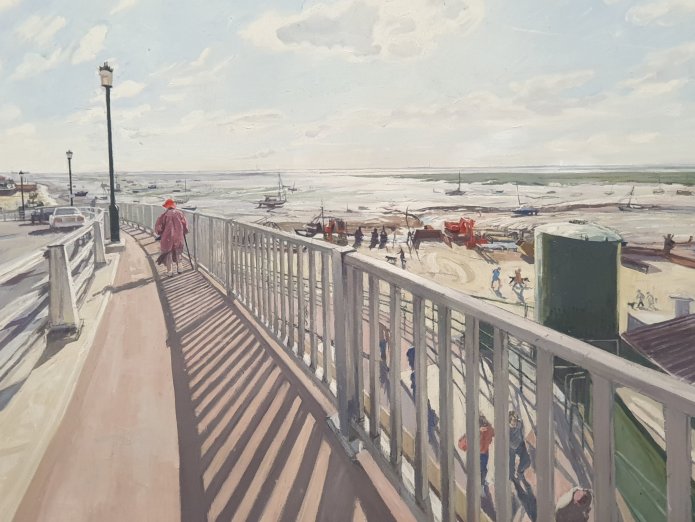
After lunch, I joined a discussion at the Focal Point Gallery in Southend-on- Sea about the work of John Wonnacott, whose excellent exhibition The Estuary is on for another month.

John spoke at length about his work The Family which took eleven years of close concentration from 1963, when he graduated from the Slade, to 1974, when he finished it – eleven years of focus on issues of depiction and perspective.

I hadn’t registered the extent of the influence of Michael Andrews, who taught him at the Slade, whose Colony Room, is a comparably ambitious pictorial composition, and who later got him to teach in Norwich.

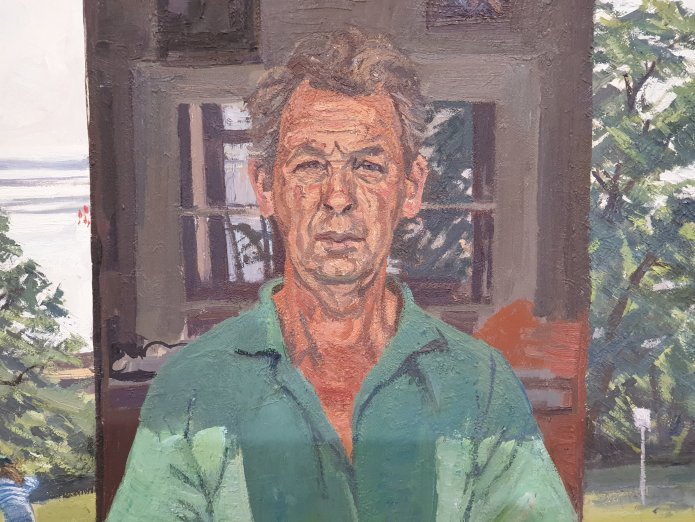
Here he is in Self Portrait with White Ruler:-

This is his back view:-

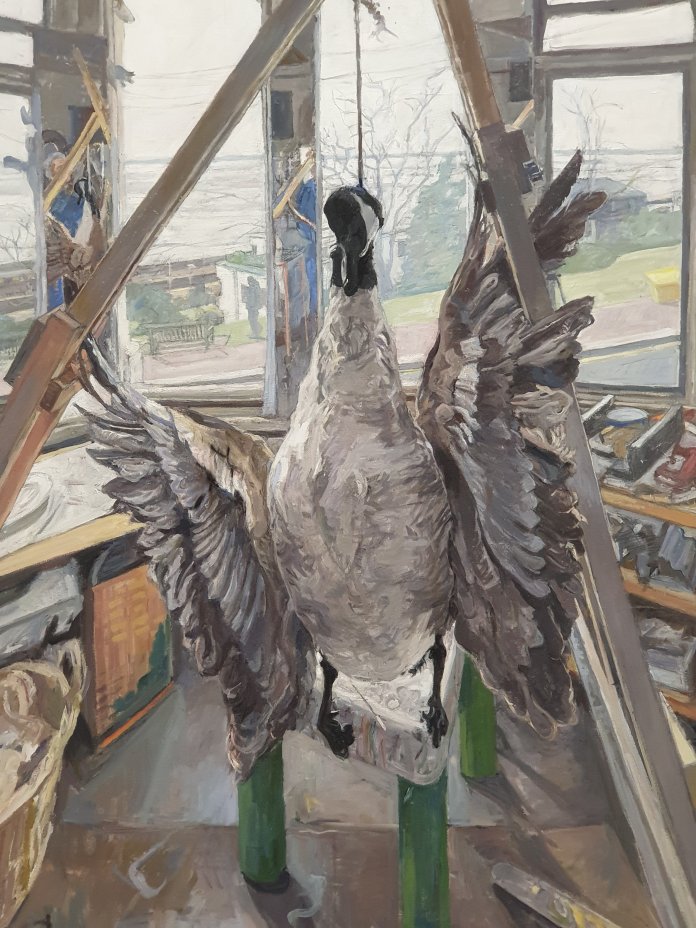
I had discouraged him from including Hanging Goose Day, but it’s a wonderful sacrificial picture of a goose sold by his local butcher:-

I liked the picture lightly greased by cooking fat (ageing and a bit of dirt isn’t bad for a picture):-

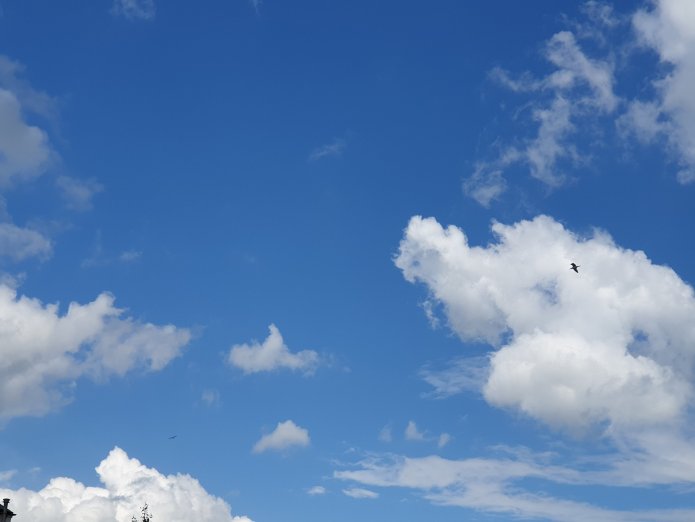
And when we walked out, there was a Wonnacott sky:-

Standard