Views of London

I had a bit of time to spare before a meeting in the City, so was able to call in on the exhibition of topographical paintings at the Guildhall Art Gallery.

The earliest is a view from Observatory Hill, which shows the old Tudor Palace of Placentia, next door to Greenwich Hospital, in the process of being demolished. Oliver Cromwell had turned it into a biscuit factory. Next is a view of the New River Head in Finsbury which supplied water to the city. Canaletto is, of course, familiar – his view through the arches of the new Westminster Bridge which was under construction when he arrived in London in 1746. Less familiar is Samuel Scott painting the palaces facing the river, including the Duke of Richmond’s house and the Duke of Montagu’s.

But what is notable is the number of modern artists who have painted the city. There’s a beautiful Algernon Newton painting the view from a back window in Wimpole Street in 1925. Lucian Freud painting the view from his studio on Gloucester Terrace in the early 1970s. A fine view of London Wall, painted in 1965. Anthony Eyton painting the back yards of Hanbury Street in 1975. Rachel Whiteread photographs of buildings being demolished. Lisa Milroy unexpectedly realist. John Virtue is included with a magnificently dark view of St. Paul’s, painted while he was artist-in-residence at the National Gallery. One of the last is by Carl Laubin, who drew the Ondaatje Wing so beautifully the it got us planning permission.

No photography.
Standard

Loughton

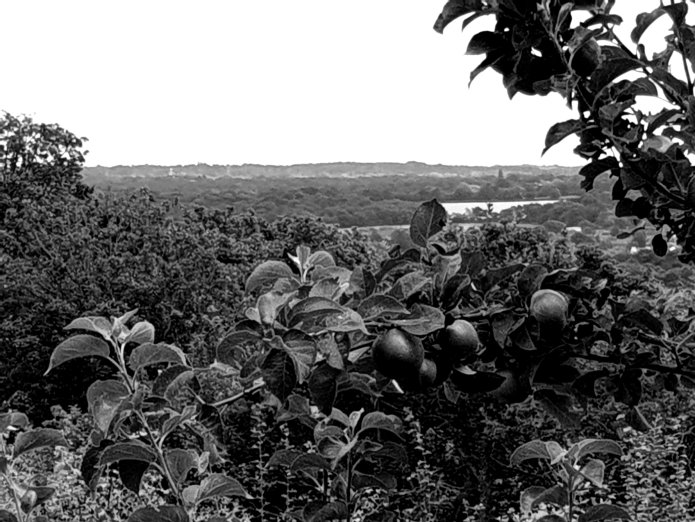
We went to Loughton, the Essex town at the end of the Central Line, where the city merges into the countryside and you can look out over the valley of the River Roding towards Chigwell:-

We passed the house where Jacob Epstein lived and the plot of land where he had his studio, demolished last year, at the back of where there used to be a paint factory.

It’s surprisingly rustic, in a 1930s way:-

Standard

St. Paul’s Cathedral (7)

We sat on a balcony last night on the other side of Blackfriars Bridge from St. Paul’s and were able to admire the way that it still just about commands the horizon against the towers of the Barbican, looking more like Bramante’s Tempietto when seen from a distance, not that Wren had seen it, but he would have known it perfectly well from engravings in his extensive library of travel and architectural books:-

Standard

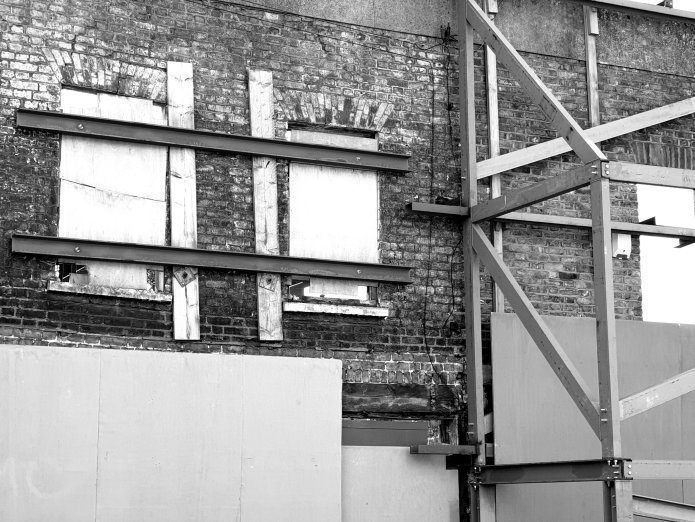
Façadism

I have been following with interest the Gentle Author’s campaign against what he describes as ‘the creeping plague of ghastly facadism’. It is one of those things which, once noticed, is surprisingly common, a result presumably of developers doing deals with local authorities whereby they gut properties on condition that they retain the façade.

One of the odder examples is on Commercial Road on the edge of the Mercer’s estate, where there was an odd and old-fashioned group of shops, including a fishmonger’s open to the fumes of the passing traffic. It has nearly all been demolished, apart from one half-timbered shop which scarcely seems worth the effort of preserving :-

And two façades on White Horse Road where the old bakery used to be which also don’t seem to merit the effort of preserving:-

http://spitalfieldslife.com/2019/06/16/help-me-publish-a-book-of-the-creeping-plague-of-ghastly-facadism/

Standard

Peter Smithson at the RA

A question from Ellis Woodman as to whether or not there are still people alive who were students at the RA Schools when Albert Richardson taught architecture reminded me that Peter Smithson, the well known brutalist, enrolled as a student in 1948, after completing his studies, interrupted by the war, at the King’s College School of Architecture in Newcastle. What on earth will he have made of the teaching of Richardson who liked to be carried round Ampthill in a Sedan Chair ? Anyway, it was at the RA that Smithson met Anthony Caro, another improbable product of its conservative teaching.

Standard

3 Directors

Here we are, three directors of the NPG, Roy Strong, who was Director from 1967 to 1974, me from 1994 to 2002, Nick Cullinan who took over in 2015, together representing a mere fifty two years of the gallery’s history, only missing the late John Hayes and Sandy Nairne:-

Standard

Ian McKeever

I went to visit Ian McKeever, an artist whose work I have long admired, long before I knew him at the RA and before I read his writings on art when I was at the National Gallery. But I had never been to his studio, deep in the deepest Dorset countryside, somewhere near Shaftesbury, where he produces work which it is easier to understand when seen in situ, produced in an atmosphere of the utmost calm and long spells of working on series of abstract works, which are like musical performances, layers of single colours in veils of paint and clouds.

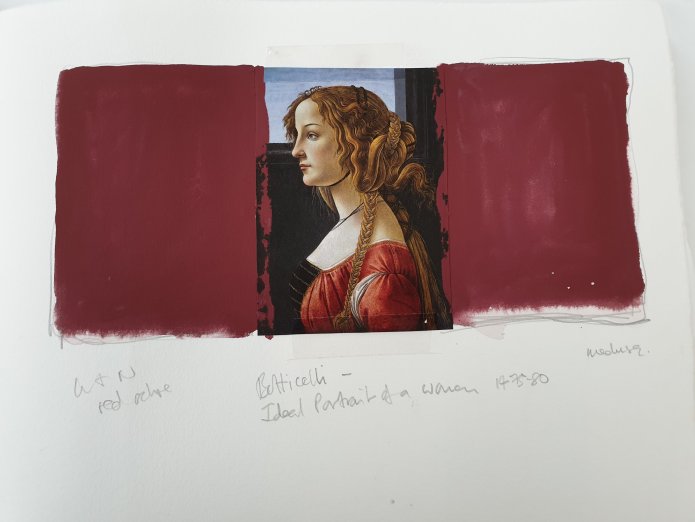
I had only half known, and greatly admired, the way the work is informed by his knowledge of Old Master painting, including a series of gouaches which work with, and in doing so interpret, images of historical portraits:-

Standard

37, Harley Street

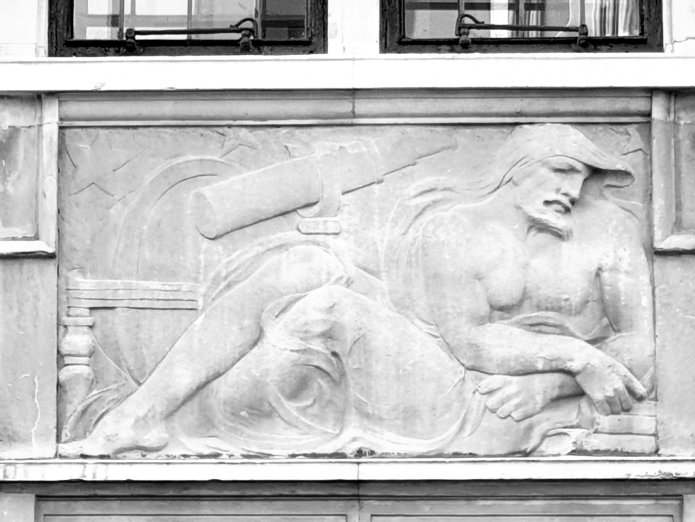
Walking up Harley Street, I stopped to admire the sculptural reliefs on no.37, a house designed by Arthur Beresford Pite and with sculptural decoration by Frederick E.E. Schenk, including a winged figure over the oriel window:-

And other good bas reliefs:-

Standard

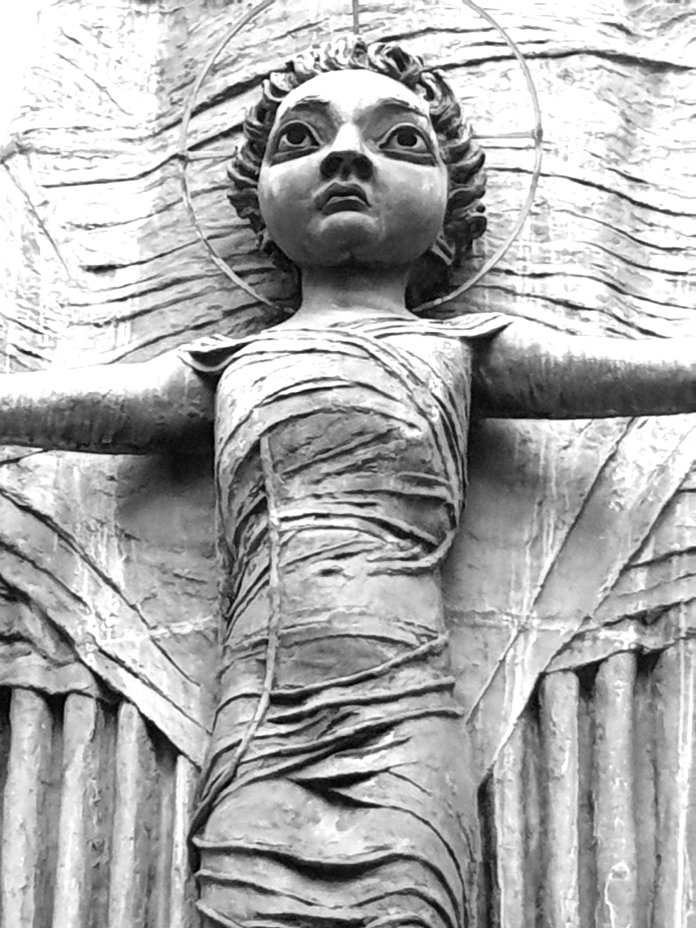
Epstein, Madonna and Child

I was sitting in Cavendish Square, waiting until it was time for dinner – nor a very satisfactory square owing to extensive bomb damage and the creation of an underground car park – when my eye was caught by the fine sculpture of the Madonna and Child which Jacob Epstein did for the Convent of the Holy Child of Jesus after the war, when Louis Osman was commissioned to design a bridge connecting Nos. 12 and 13 and commissioned Epstein without telling the Mother Superior that he was Jewish:-

Standard

Whitechapel Bell Foundry (6)

Well, well, the hearing of the planning application for the development of the Bell Foundry which was due to take place on 30th. July in a fortnight’s time has been postponed. Let’s hope this is good news: that Tower Hamlets has realised that a catastrophe has been due to take place and the historic fabric of the Foundry changed beyond recognition. Now, there is at least an opportunity for some negotiation to take place whereby ownership of the Bell Foundry is sold or transferred to United Kingdom Historic Building Preservation Trust and it becomes a proper working foundry once again, retaining the skills, as well as the fabric of the building, which would otherwise be lost.

Standard