Towards the end of September, I went to see the Cosmic House, Charles Jencks’s extravaganza in Holland Park. I had been once before, but for a party, and didn’t really appreciate its quality and, most of all, its historical significance as a radical statement of post-modernism undertaken at the height of a movement of ideas, which was very much led and promoted by Jencks in his teaching about semiotics at the Architectural Association from 1967 onwards. I got interested in Jencks and his importance during the early 1970s as a thinker and agitator and have written about this in my column in this month’s The Critic.
Monthly Archives: November 2021
Conflicts of Interest
I have been reading with mounting horror and fascination – as many others must be – the increasing number of stories about those MPs who voted for Brexit and the ways in which they have been simultaneously taking money from companies to lobby on the companies behalf in the House of Commons (gambling, racing, Randox, private medicine) without recognising that it was against the rules and without being willing to countenance being punished for it: which is, of course, one increasingly realises, why they voted for Brexit so that they could deregulate, change the rules, and go and live in the British Virgin Islands while collecting their salaries as MPs. Of course, none of them appeared in the debate about corruption in the House of Commons because none of them think they are, and should be, accountable. The message has obviously gone out that this is only a storm in a Westminster teacup. But I enjoyed watching the sense of anger and outrage from conservative voters in Uxbridge. Some think that voters don’t really care about corruption. Let’s see.
Charleston Farmhouse
As someone very interested in Charleston and its history, I was pleased to read the excellent interview with Darren Clarke, its curator in the toa.st magazine (see below): most especially for his differentiation between continental modernism, full of machinery and maleness, and the Bloomsbury version of it, which had a different emphasis:
https://www.toa.st/blogs/magazine/a-curator-s-view-darren-clarke-the-charleston-trust?s=09
The Daily Telegraph
In the discussions about the current behaviour of the government and whether or not it might be open to investigation by the Commissioner for Standards in Public Life, there is a set of connections which I feel might be open to question:-
1. The Prime Minister, according to Dominic Cummings, describes the Daily Telegraph as his boss, if only in jest.
2. Last Christmas, the Daily Telegraph celebrated the fact that it had a guarantee from government that it would provide the Daily Telegraph with a guarantee of enough funding from government advertising to avoid redundancies.
3. I read somewhere, or was told, that a Russian donor was providing the Daily Telegraph with a big sum (I remember the figure £1.3 million) to enable them to continue to pay Boris Johnson a regular salary of £250,000 for occasional columns.
4. The Daily Telegraph is consistently used by the government and 10, Downing Street for advance information on government policy.
5. The Prime Minister left COP26 by private jet to have dinner at the Garrick Club with his old Telegraph colleagues, including Charles Moore, to discuss what he was going to do to protect Owen Paterson.
I don’t know how much of this is true, but it does seem to add up and if so is – at the very least – open to further investigation, since the Daily Telegraph is unlikely to be doing so itself.
John Major
I missed hearing John Major on the Today programme, but have caught up with Nick Robinson’s interview this evening. It’s an impressive exercise in restrained anger: someone who has been, and remains, a natural conservative, disappointed and incredibly upset at the direction the party is being taken: away from any sense or understanding of decency and morality towards a sense of self-serving entitlement. Of course, we know that the Johnsons couldn’t bear the John Lewis furniture they inherited and replaced it with overblown historicist nostalgia paid for in ways we still don’t fully understand, but will probably have involved the scattering of peerages. But at some point, won’t Middle England recognise that they have elected a monster who doesn’t in any way represent them ?
Gold of the Great Steppe
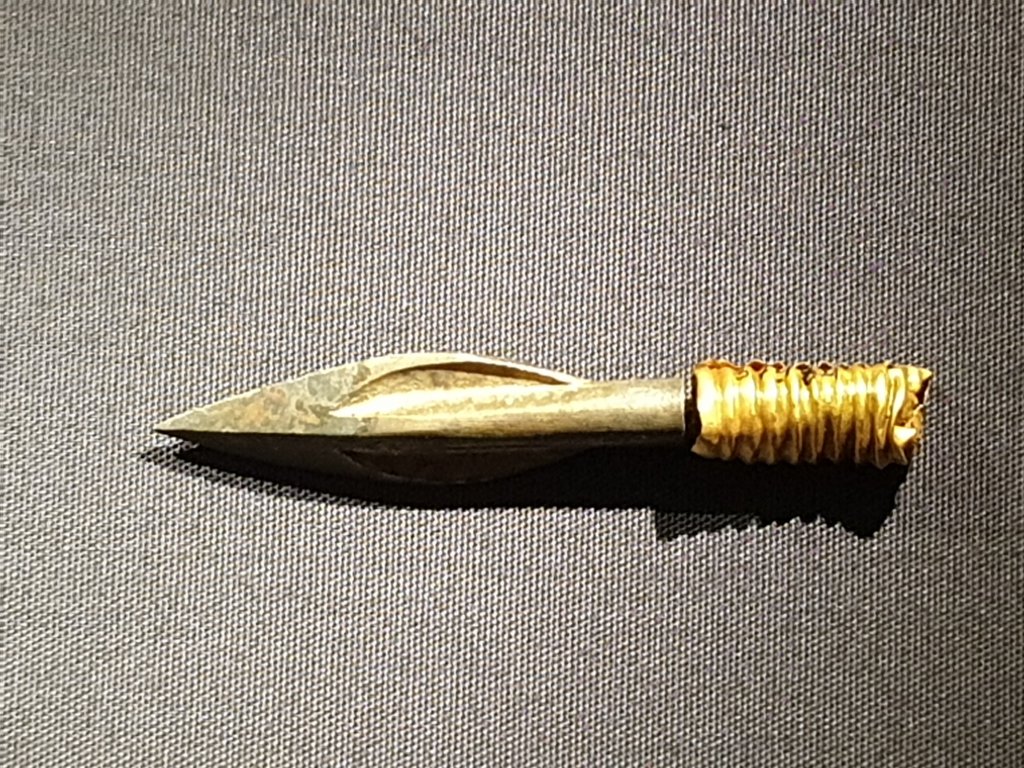
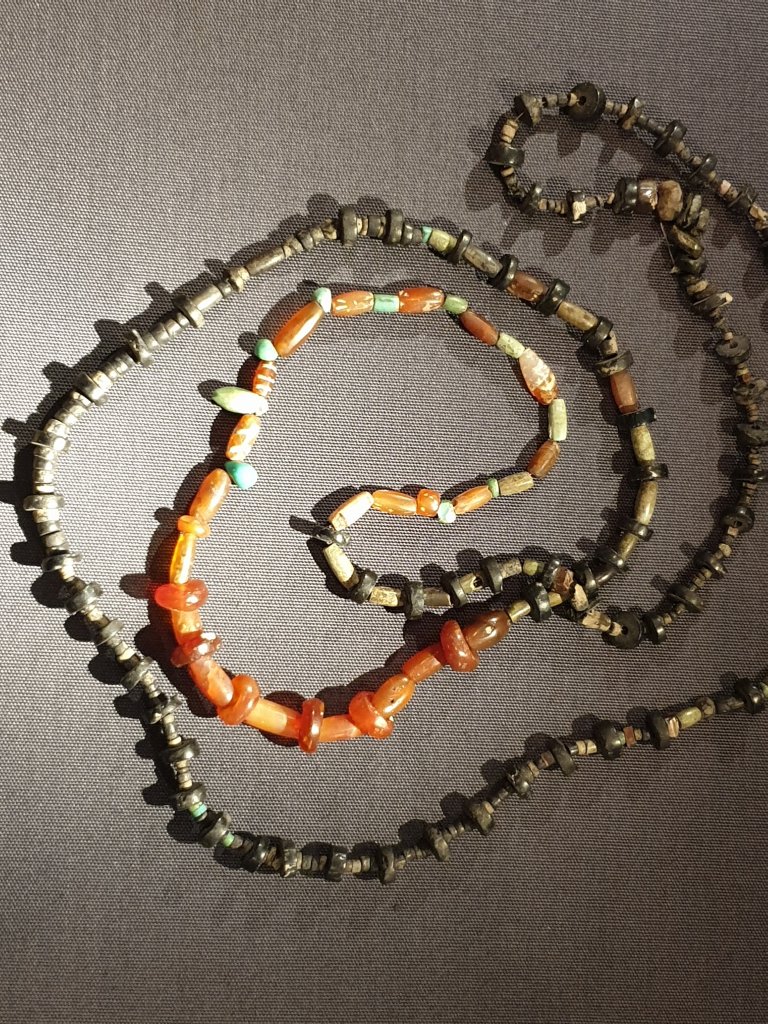
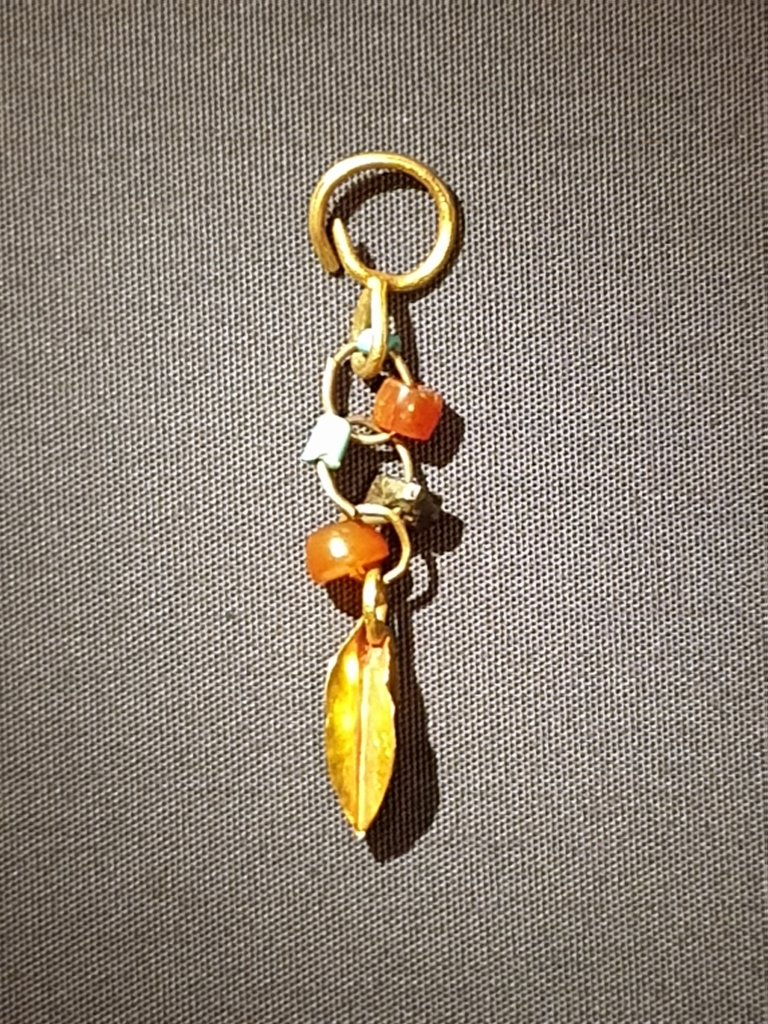
I had been told that the current exhibition at the Fitzwilliam Museum is amazing and, indeed it is: full of archaeological treasure from recently excavated mounds in eastern Kazakhstan which reveal the culture of the Saka people – horse-riding nomads with great skills in metalwork. It’s very beautifully displayed to give a sense of discovery. Many of the objects are very remarkable.
Arrowheads with gold cuffs:-
Hippogriffs:-

A bead necklace:-
An earring:-
Deer:-
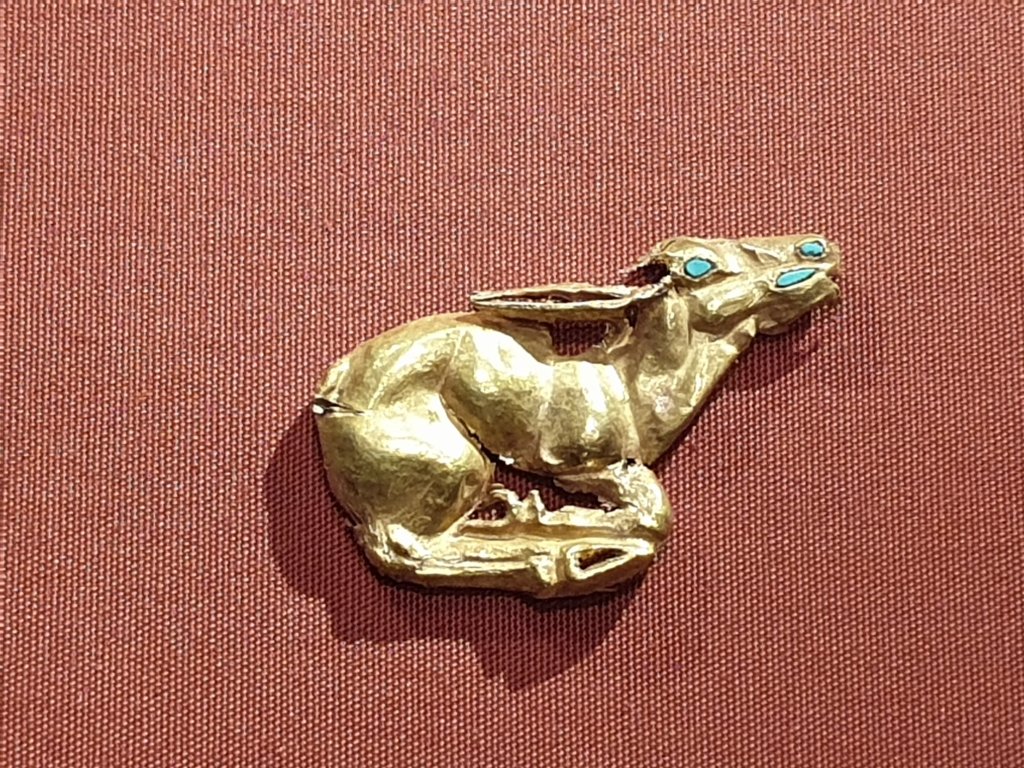
Gold pendants:-
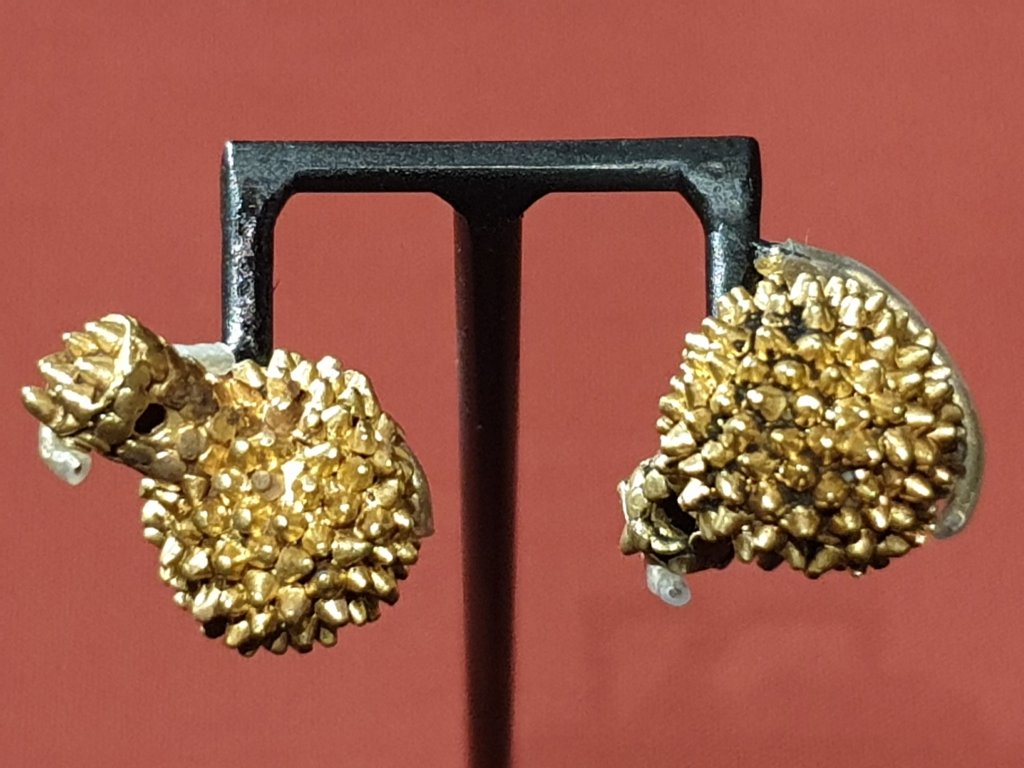
It seems particularly remarkable that so much of this material was only discovered in the last three years.
Highly recommended!
Hélène Binet
I have been looking forward to the exhibition of architectural photographs of Hélène Binet, one of the very best of architectural photographers: very austere, good on form, light and texture, the architectural equivalent of Peter Zumthor, also Swiss, although living in London. I had never seen images of Sverre Fehn’s Hedmark Museum in Norway which suits her aesthetic perfectly – a mixture of concrete bridges, stone walls and rough cobbles, all very deeply textural. She photographs Christ Church, Spitalfields from a distance and brings out its tonal and sculptural characteristics perfectly. I particularly admired her wonderful photographs of the concrete undercarriage of Sergio Musmeci’s Ponte sul Basento in Potenza in southern Italy. There are almost no people. In fact, it’s faintly shocking when there are. Instead, her photographs are records of the purest abstracted form.
What to see in London
I’ve been asked what is worth seeing in London post-lockdown. Top of my list would be two exhibitions at the National Gallery: Poussin and the Dance and the postponed Dürer’s Journeys opening later this month. The Royal Academy’s Summer Exhibition will still be on, plus Late Constable and Hélène Binet. The British Museum is due to open Peru. Tate Britain has just opened a Hogarth exhibition. Then the Hayward Gallery has Mixing It Up: Painting Today (closes December 12). Frans Hals at the Wallace. Everyone says that Gold of the Great Steppe at the Fitzwilliam is amazing. Then, the new Courtauld Gallery opens this month, which should be wonderful. So, there’s lots to see. I’m not the best person to ask about theatre.
Owen Paterson
I’m glad that Keir Starmer has spoken out so clearly against what is happening round Owen Paterson (see below). It is completely obvious that he has broken the rules of the House of Commons which were put in place to stop corruption. He is paid more than £100,000 to lobby on behalf of Randox, a company which has benefited from his lobbying by gaining direct access to 10, Downing Street in March 2020 (the Chief Executive was involved in discussions with Dominic Cummings) and over £500 million has gone to them in government contracts. He has used House of Commons writing paper to lobby on their behalf. His snout is obviously so deeply in the trough that he is incapable of recognising it. Yet instead of accepting his wrongdoing, his mates in the House of Commons, including Jacob Rees-Mogg, have rallied round to change the rules in order to exonerate him. This is corruption on the most grandiose scale, only equalled by the Prime Minister without a mask snoring in the front row of COP26 next to David Attenborough, because the rules of the conference do not apply to him, only to everyone else.
All Saints’, Margaret Street
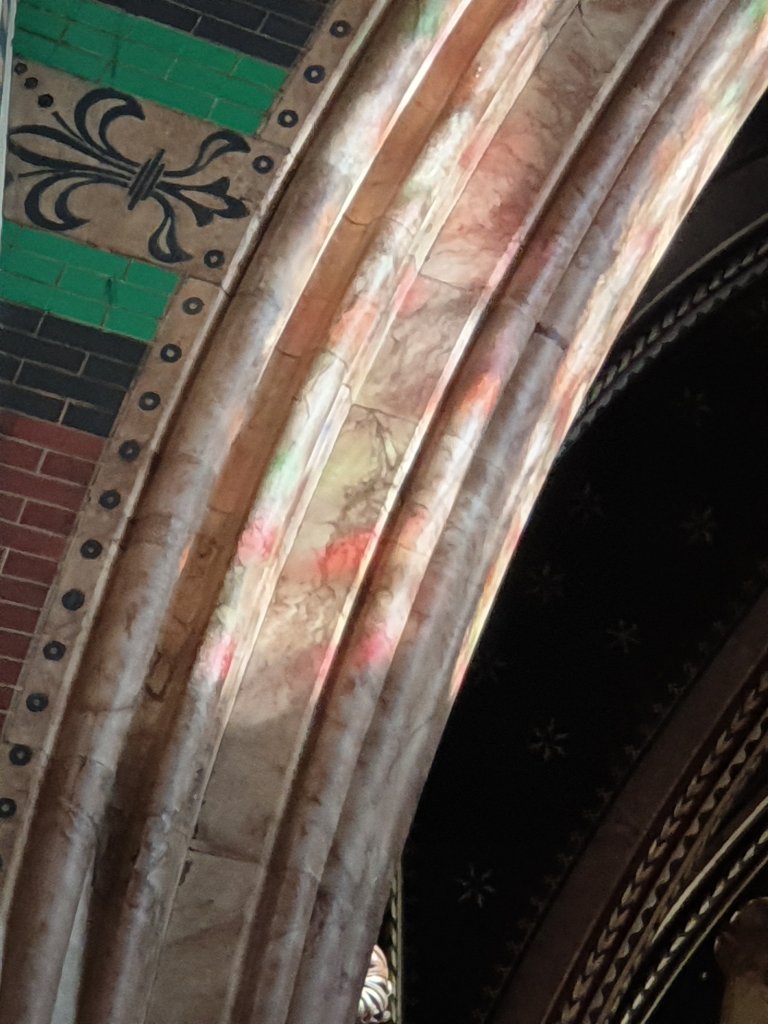
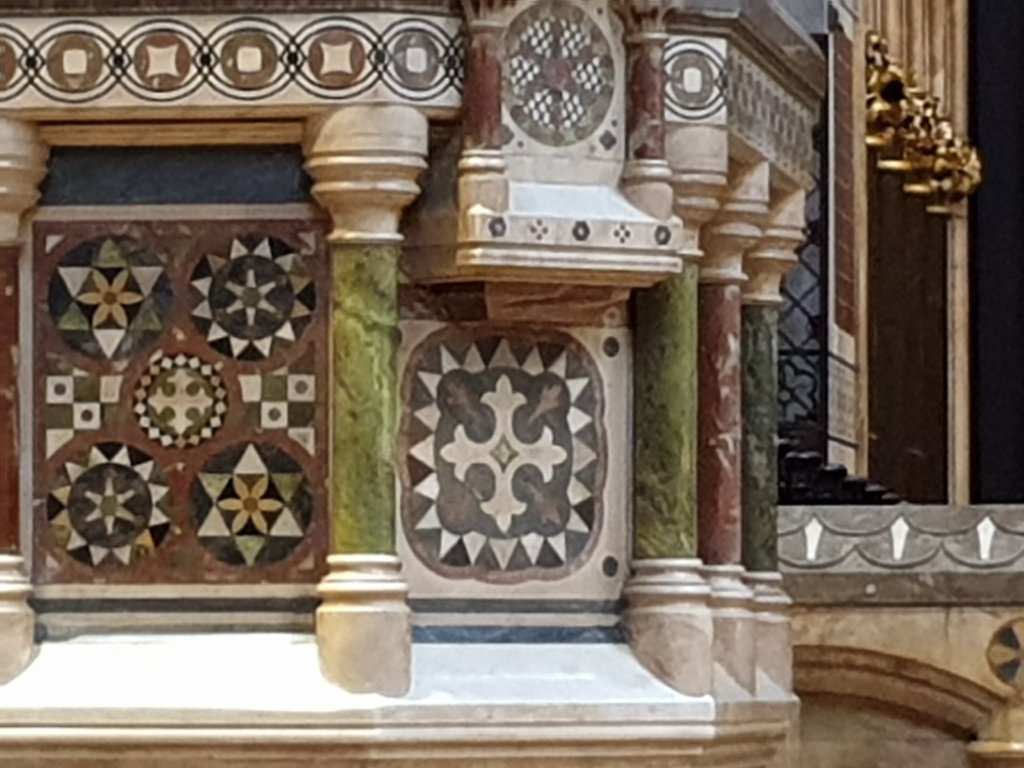
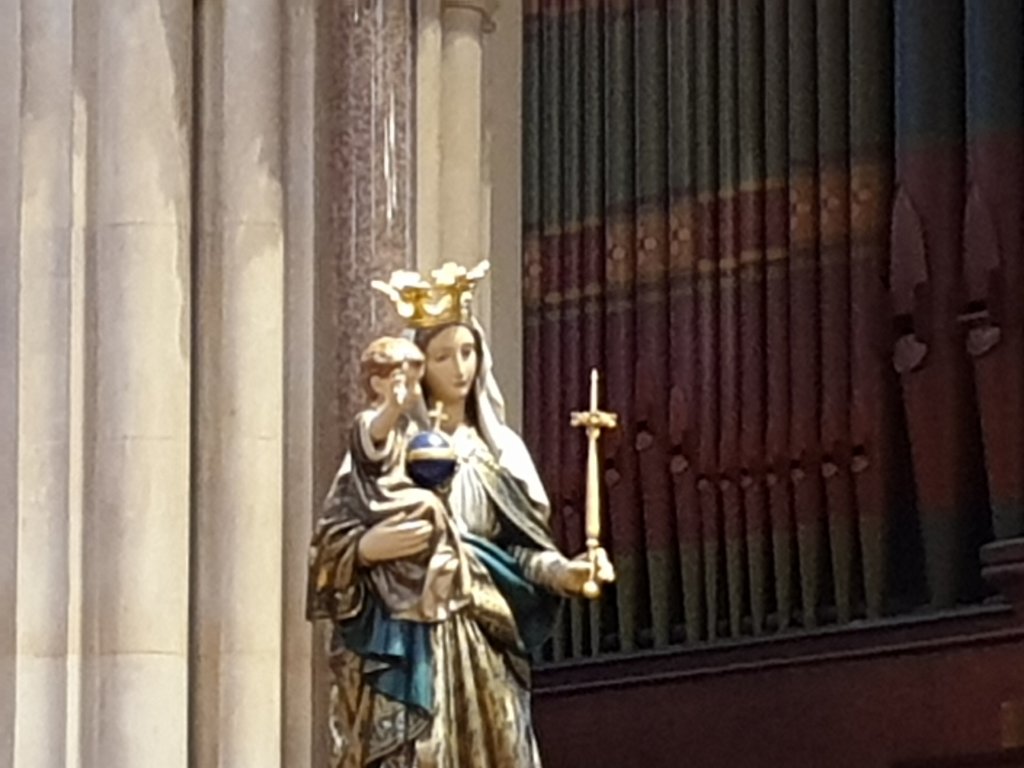
It’s always a treat to re-visit All Saints’, Margaret Street, Butterfield’s great monument to Anglo-Catholicism:-
 | Charles | Saumarez | Smith |
You must be logged in to post a comment.