Raw Sewage (3)

I have had a very helpful explanation of the reasons for the problems of untreated raw sewage which I reproduce because it feels emblematic of the government’s unwillingness to pay attention to long-term environmental issues and the need for infrastructure investment.

Apparently, HM Treasury would not allow money to be spent on curing and repairing the problem i.e. creating more sewage works and making the developers put in treatment plants with every new building project, so that it is not just not an issue of lack of the necessary chemicals, but the capacity of the old existing system – because the work to install more sewage infrastructure would increase costs of sewage and water rents especially to council tenants, necessitating additional huge ‘drains’ for the exchequer.

So, it is not just a consequence of the MPs voting against proper treatment last October, but a wider problem.

Am also reproducing the article from the Mail on the vote last year:-
https://www.dailymail.co.uk/news/article-10125805/Fury-Tory-MPs-vote-allow-water-companies-dump-raw-sewage-Britains-rivers-seas.html

Standard

Raw Sewage (2)

A very straightforward and clear explanation as to what has gone wrong, which seems entirely plausible:-

Standard

Raw Sewage (1)

I know that I am not supposed to be commenting on politics and that twitter is probably a bad way of judging the political mood, but it seems that after six years of debating the pros and cons of Europe, pretty well everyone can understand, whatever their political persuasion, that one of the reasons that we left Europe was so that we didn’t have to obey their diktats on the disposal of raw sewage.

Now that we have been free to change the legislation and are surrounded by a sea of poop, with beaches closed all the way along the south coast, people are beginning to think that perhaps after all it wasn’t such a great idea and are posting pictures of their MPs who are being held responsible for their vote.

At last, we have something which is inescapably a consequence of Brexit and it looks to me that people are possibly not best pleased.

Standard

Gaslights

A year or so ago, I was encouraged to write an article about the fact that Westminster City Council were using the cover of COVID to get rid of their many surviving gaslights, which have been retained in some of the more historical parts of the borough, including the Palace of Westminster, Dean’s Yard, the Mall and the alleyways and courtyards off St. Martin’s Lane. At the time, there was a vigorous campaign to keep them and it looked as if they might back off getting rid of them. But it was only a temporary remission and the work goes on in spite of many councillors being booted out in the local elections.

So, I am re-posting the original article in the hope that the new councillors might think twice before pursuing the same policies as their predecessors.

https://thecritic.co.uk/issues/august-september-2021/gaslighting-london/#

Standard

John Wonnacott: A Biographical Study (7)

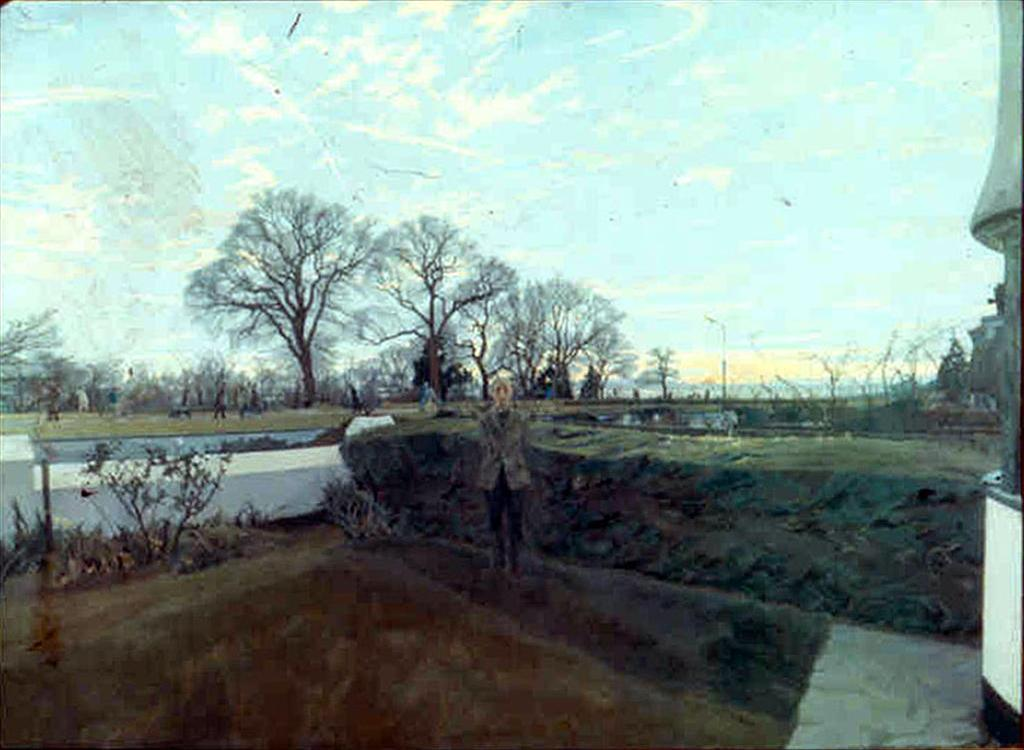
I am witnessing an interesting phenomenon. In general, I have not found it easy to get people interested in the idea of a biography of an older generation figurative artist who lives in Leigh-on-Sea, but I notice that on twitter figurative art is hugely much more popular and of much more widespread public interest than you would think if you look at how it is represented in public galleries and the art world more generally.

Since today is tree day on ArtUK, I am posting an early image, Winter on Marine Parade (copyright: John Wonnacott):-

Standard

Thirteen Lives

We watched the film Thirteen Lives on Amazon last night about the thirteen boys who went exploring in a cave in Thailand and were then trapped deep within the caves by the premature arrival of the monsoon. Of course, I half remember it from when it happened, but had entirely forgotten, or maybe hadn’t known, that it was a couple of British amateurs who went out specially to help with the rescue. This forms an interesting aspect of the plot, which at a time when the British are being viewed, particularly by the current administration, as generally hopeless, lazy and incompetent is somewhat reassuring. But it is, of course, left-field thinking which solves the problems, not skill at elementary maths.

Standard

Margaret Howell

I went to the party to celebrate twenty years of Margaret Howell in Wigmore Street, the company headquarters next door to the Wigmore Hall, an appropriate combination, both being in their different ways so high minded. There is a short, thoughtful and very atmospheric film by Emily Richardson posted online (see below) in which she ruminates about her influences, mainly family and maybe the Suffolk coast, and her approach to design which is unworldly and in no way influenced by fashion, more fabric and how clothes wear over time.

I bought my first Harris tweed jacket from her shop in St. Christopher’s Place in 1979, so I now realise I was a pioneer (it says the shop opened in 1980, but this must be wrong). I used to buy all my ties from her, but I notice that we have both given up on ties during lockdown.

https://www.margarethowell.co.uk/about

Standard

Hoxton Books

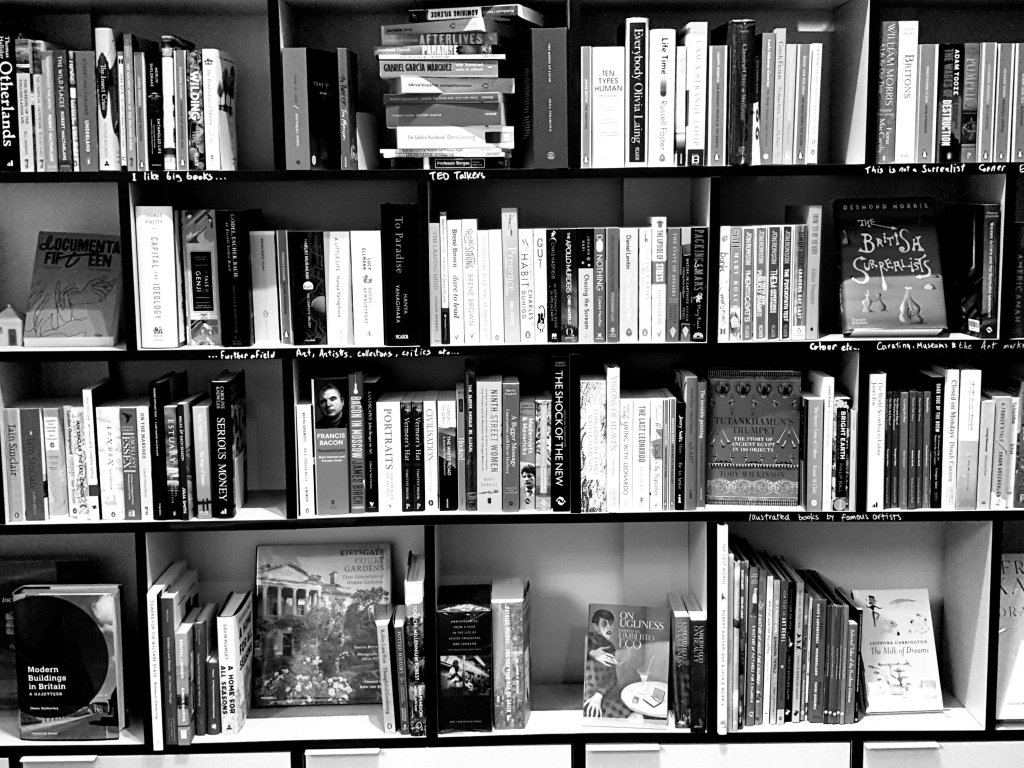
I discovered about Hoxton Books by reading about it online. It would be hard to find out about it any other way as it is nearly invisible on East Road, just up from Old Street roundabout – a tiny space, but impressively well stocked, including a surprisingly extensive selection of recent books about museums:-

Next door is an equally tiny, but equally thoughtful exhibition space, currently devoted to clothes which have been reconstructed from a 1930s fashion magazine. They are surprisingly contemporary – a utilitarian aesthetic, made by a contemporary Chinese designer under the label seventyfive: an exhibition both beautifully presented and informative, but only on for a week:-

Standard

Eye to Eye

I received through the post this morning a copy of an exhibition catalogue, Eye to Eye: Selected Works from the Lambirth Collection, being held at the Djanogly Gallery in Nottingham. Since I am unlikely to make it to Nottingham, I can at least encourage others to in order to see such a thoughtful group of works by neo-romantics including John Craxton and more contemporary figurative artists whose work is often overlooked – amongst them, Maggi Hambling, Arturo du Stefano and Robert Dukes. Not least, I was intrigued to find my blog amongst the footnotes to the catalogue essay on Peter Coker’s print of his son, Nick, the tragic anti-hero of Joanna Hogg’s film, The Souvenir. I have never been able to reproduce the print, but can now:-

Standard

Sands End Arts and Community Centre

It being so blistering hot and not wanting to spend the whole of the hot weather in our back garden, I thought I would bicycle to see the Sands End Arts and Community Centre, the fourth of this year’s Stirling Prize nominees in London (one does slightly wonder how the shortlist is drawn up: the longlist is done by well-established regional committees and provides a wide conspectus of projects from all over the country, but it looks distinctly as if the shortlist is drawn up by the awards committee sitting in Portland Place without nearly such strong regional representation. I am happy to be corrected on this).

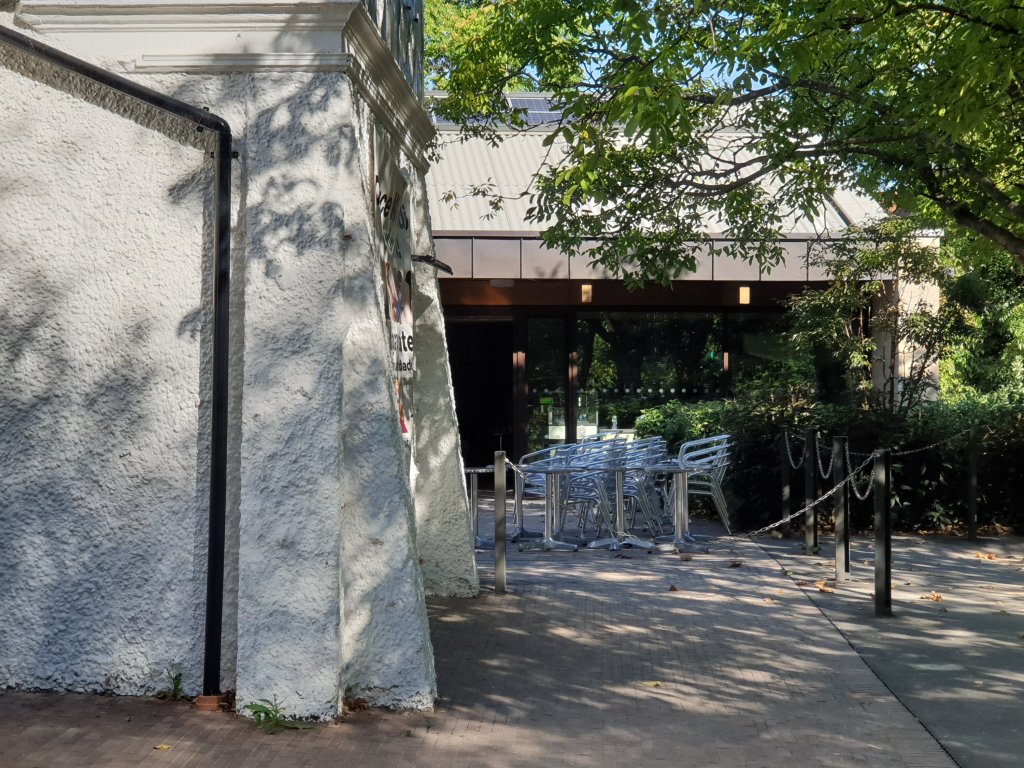
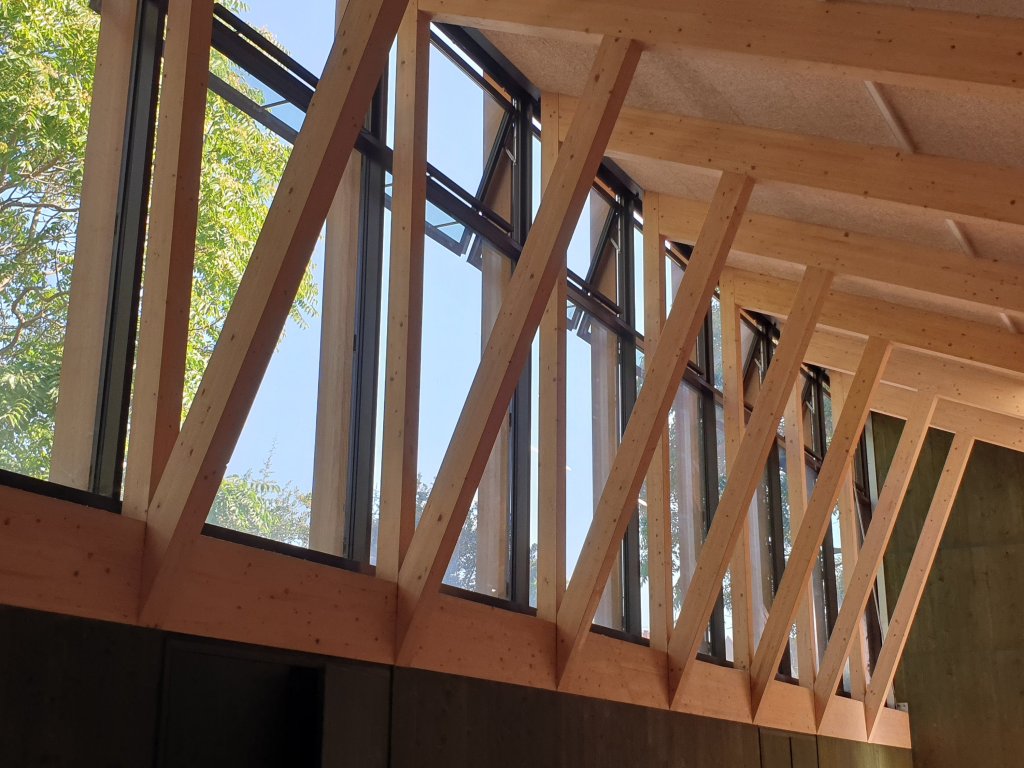
Anyway, Sands End Arts and Community Centre is a nice, small-scale urban project by Alex Ely of Mae Architects: very community oriented, with a big top-lit space for events (there were children in it this morning) and a café looking out onto a grove of walnut trees and a totally parched small urban park. It’s a bit of the city I don’t know: Parson’s Green – quiet and residential.

I can see why it’s been included on the shortlist because it is much more akin to what most architects do than bigger, flashier public projects and it fits well into its surroundings, replicating the form of the glasshouse which apparently previously occupied the site. I can’t quite see it winning, but who knows ? It will depend on the judges and I don’t think the judges have yet been announced, but are likely to include last year’s winner (Grafton Architects), Simon Allford, the President of the RIBA, and a celebrity.

This is what it looks like from the street, set behind a retained brick wall:-

These are views from the adjacent park:-

And this is the clerestory of the big flexible space:-

Standard