I have been reading the two-volume new Survey of London volumes on Whitechapel – at least so far only the first – which tell one so much about the complex pattern of its development, including a good, detailed chapter on the Bell Foundry.
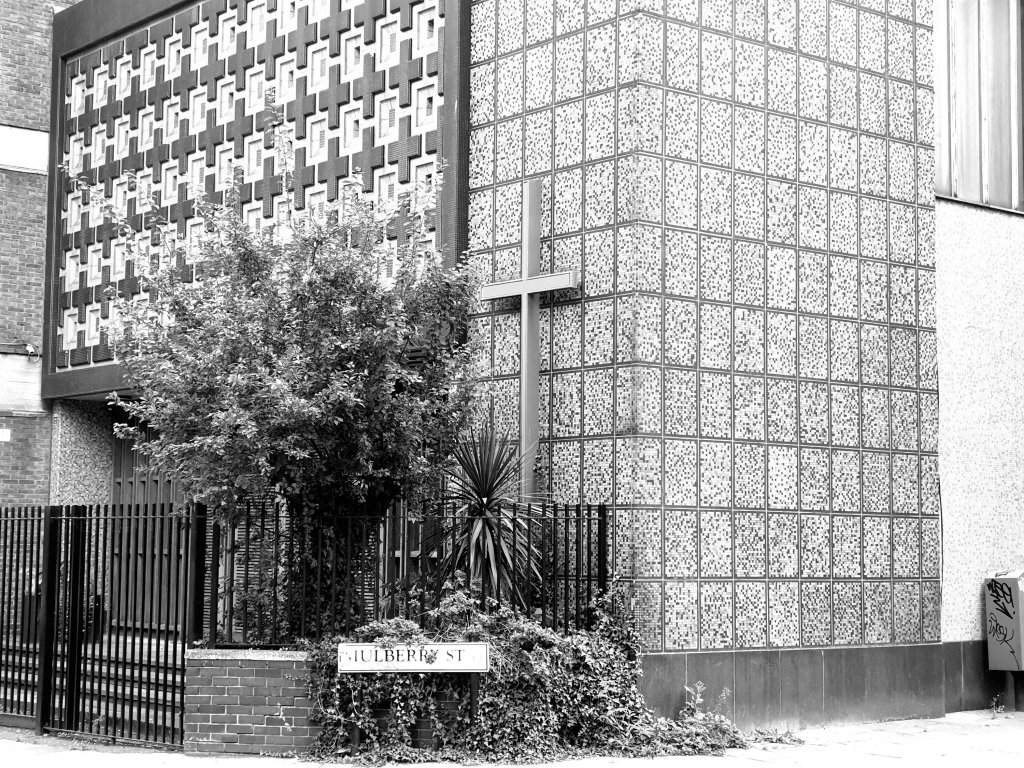
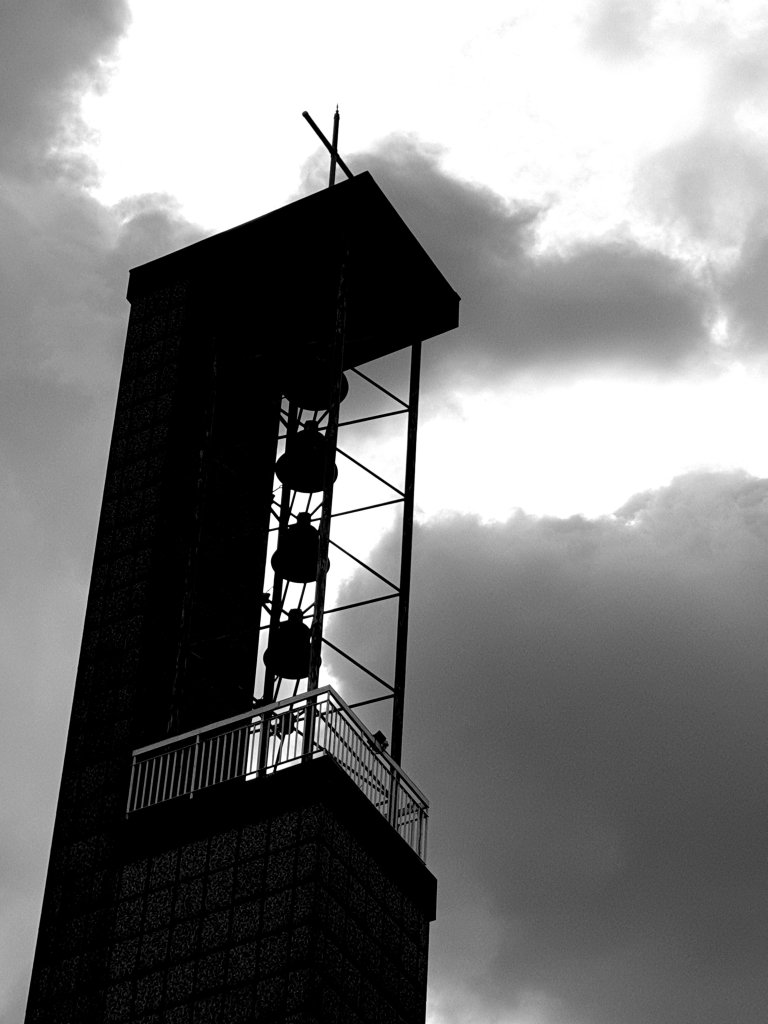
It encouraged me to go out exploring, not least to see St. Boniface, the German modernist church at the junction of Adler Street and Mulberry Street behind the Bell Foundry, designed by Donald Plaskett Marshall as a third scheme, after an even more modernist one by a German architect, Toni Hermanns, had been rejected:-
I always like the Eastern Dispensary, a grand piece of Victorian civic classicism, designed by G.H. Simmonds, the secretary of the dispensary:-
The Princess of Prussia in Prescot Street was redesigned in 1913 by the inhouse architect of Truman, Hanbury & Buxton and is dominated by strong architectural lettering:-
St. Paul’s Primary School, which replaced the Danish Church in Wellclose Square, was designed by Reuben Courtnell Greatorex and Simeon Greatorex, brothers of the rector, Dan Greatorex, who, on taking over the parish, had been worried about the possible extension of the Anglo-Catholic influence of the rectors of St. George-in-the-East:-
Only the lettering survives from the building occupied by Raine’s School after it moved from Wapping to New Road:-
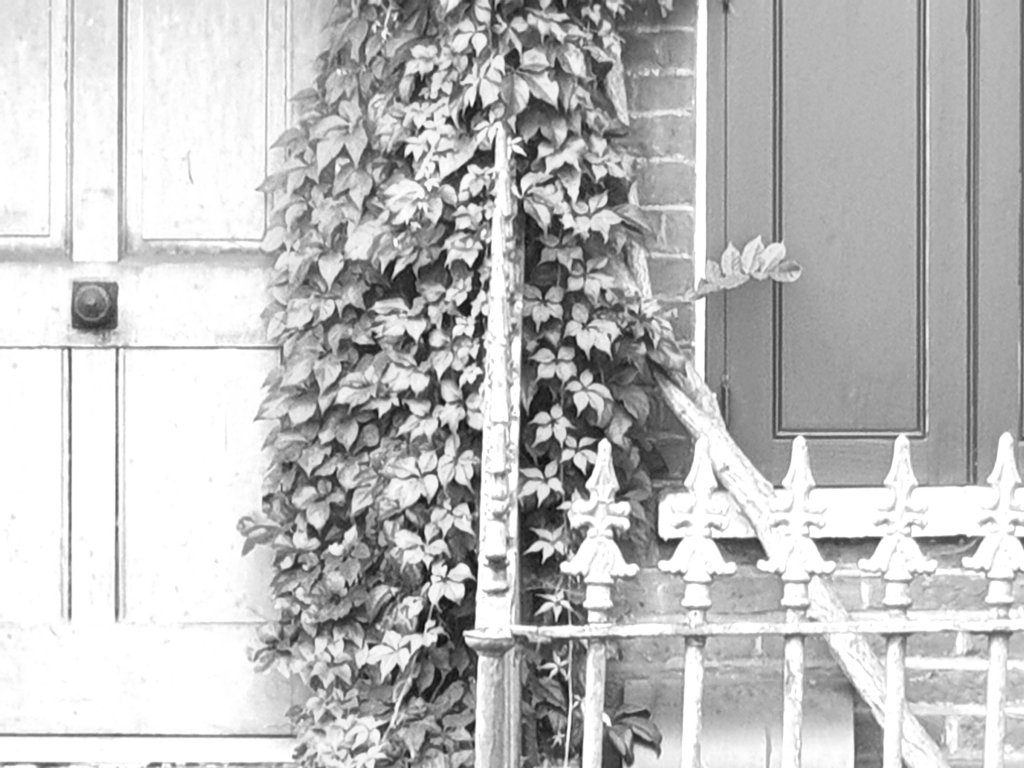
And I was pleased to find that New Road continues to resist being poshed up:-
Very sad news about the death of Andrew Edmunds, who I think of at least as much as an exceptionally knowledgeable print dealer, always with a rich stock of eighteenth-century prints and with a stall at the London Original Print Fair. Also, he always seemed to be sitting at the next door table at the Academy Club, where the food, as in the restaurant below (they share a kitchen), feels eighteenth century too, as if shot in the fields of Somerset. The Literary Review has its office upstairs, Merchant Ivory was in the back, now Karsten Schubert has beautiful rooms on the second floor, Factum Foundation was in the basement, all the beneficiaries of Andrew’s hospitable temperament, maintaining the rabbit-warren and properly bohemian character of Soho intact.
Over the weekend after her death, I was asked to record what I knew of the Queen for the Spanish newspaper, ABC. It has now been published in an abbreviated form in the main paper and in full online.
Since I assume that not all my readers know Spanish, I attach the text in its original form. Many people have repeated a version of my views, possibly ad nauseam, but I am reproducing it as a minor document of the last ten days:-
HM THE QUEEN
I belong to a generation which was brought up to be very royalist. I was born in May 1954, a year after the Coronation. Every Christmas, we would stand round the television set and watch her annual Christmas broadcast, delivered in those days in a much more cut-glass accent than her accent later (this was true of everyone as the idea of standard English pronunciation disappeared in favour of regional accents). At the end of my first visit to the cinema to see Cliff Richard’s ‘Summer Holiday’ in 1963, we stood at the end of the performance to sing the National Anthem. My father had worked for the British civil service [actually, the Indian Civil Service, but it seemed too complicated to have to explain this] and was instinctively deferential, born with a strong sense of hierarchical order, with the Queen very definitely at the top and everyone else a long way below. Although he adapted to a more democratic social order after the Second World War, as indeed she did, he retained certain attitudes to class and a belief in civic ceremony which were universal in Britain before the Second World War.
Attitudes to the monarchy began to change during the 1960s, along with so much else, but the Queen remained very much a representative of her generation: she had served in the war; she had a strong sense of national duty; she liked to listen to what she probably still called the wireless; she is said to have had some of the parsimony of those who had endured rationing, turning off the lights in Buckingham Palace to save money. She did not believe in the expression of public emotion, famously staying up in Scotland following the death of Princess Diana, not realising that by August 1997, the British had given up on the stiff upper lip and were piling flowers outside the gates of Buckingham Palace. I have a faint suspicion that she might have regarded the universal expression of public emotion following her death as a little bit over-blown, since she had already put everything in good order for her successor and was probably looking forward to joining her husband in another place. She had survived just long enough to do her duty in welcoming a new Prime Minister and then may have felt — quite legitimately — that she had had enough.
I met her a few times, but she was not someone it was easy to know. That was her great strength. She was interested in everyone equally, but treated everyone all on the same level, although I had a sense that she was able to be more friendly to the guests she invited to stay for the weekend at Windsor Castle.
She came to open the new Wing of the National Portrait Gallery in May 2000. The Duke of Edinburgh was a bit grumpy, but I have never heard anyone say that of her. She was always immaculately professional, totally able to control her emotions, although I guess she was able to joke with the Duke about the day’s events over a private supper.
When I was Secretary and Chief Executive of the Royal Academy, I was expected to see her every year with the President, although it turned out to be more like every other year. The first time I went, I was told by her Private Secretary that she would be interested in our constitutional reforms, but she turned out to be deeply and passionately interested – and surprisingly well informed – about the difficulties we had had in organising an exhibition of French art from Russian museums. She had read about it, but she wanted to know the details, including the gossip.
I always had a sense of someone who was exceptionally well informed, reading the newspapers in depth every morning over her breakfast, just as carefully as the papers she would have been given in red boxes to prepare her for the day’s meetings. Her room was austere. I don’t think she would have wanted it modernised. There was a sense of systematic order. After exactly half an hour, it was clear that the time had come to leave — I never figured out how it was done. Everything ran like clockwork, punctilious to the end.
The only time I saw just a glimmer of her real personality below the surface was when we went to present her with four drawings which had been done by painters of the Royal Academy to mark her Diamond Jubilee. One was of a group of Kenyan birds, Birds at Ngong, by the artist, Humphrey Ocean. The President of the Royal Academy told her that she would no doubt recognise and be able to identify them. She raised her eyebrow just a touch to indicate that this was unlikely given the style in which they had been painted. But I could have imagined the faint suggestion of humour.
It is clear now that everyone recognised her extraordinary sense of devotion to public duty for 70 years, an exceptionally long reign, even longer than that of Queen Victoria. People admired her for her sense of order, the amazing number of public occasions she attended, travelling round the world tirelessly, totally devoted to the nation and the Commonwealth. Much of it must have been very boring, endlessly ceremonial. But she stuck at it for the full seventy years, never exhibiting a trace of boredom right up to the end when she saw out Boris Johnson and welcomed Liz Truss. Every Prime Minister has said that she was an unexpected source of good advice, standing above the political fray and no doubt shrewd and sensible in her views and quietly independent minded.
Everyone already misses what she represented because she was a symbol of such extraordinary continuity, able to combine a belief in tradition with a recognition that the world had changed. It was this combination of a deep sense of tradition and considerable flexibility in accepting change that made her monarchy so stable.
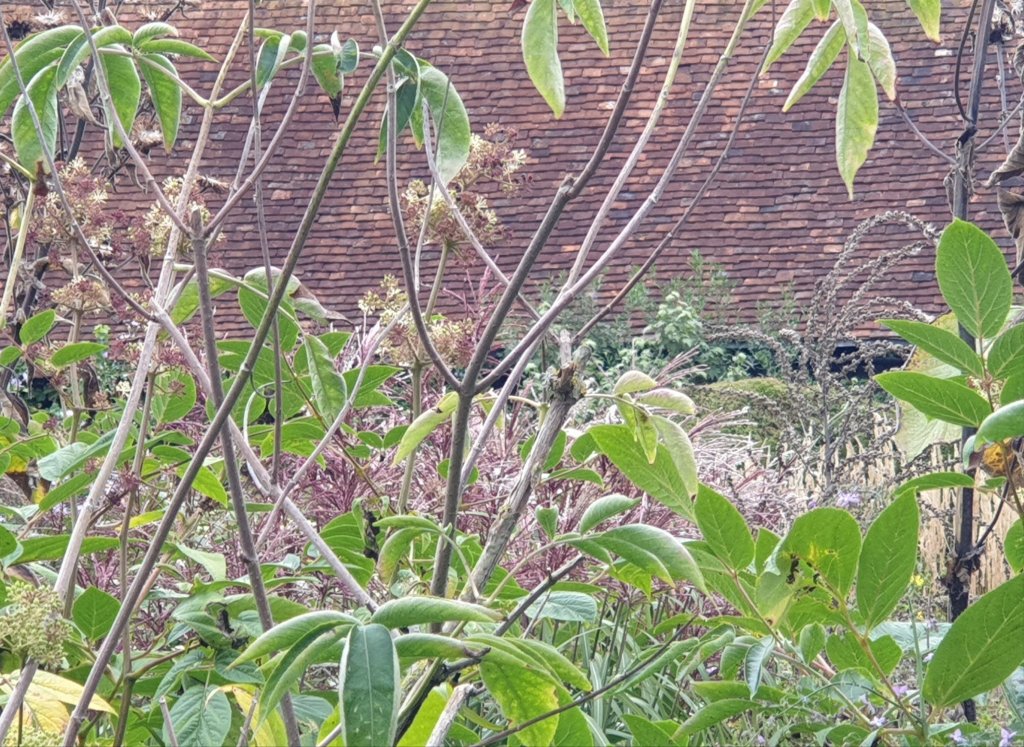
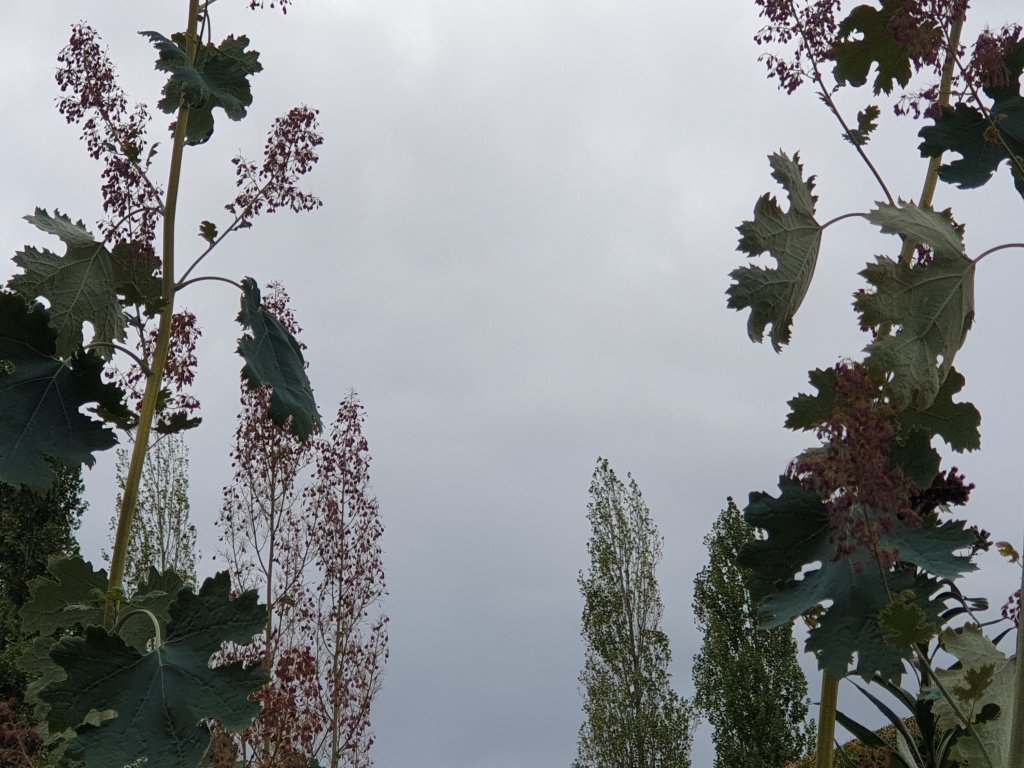
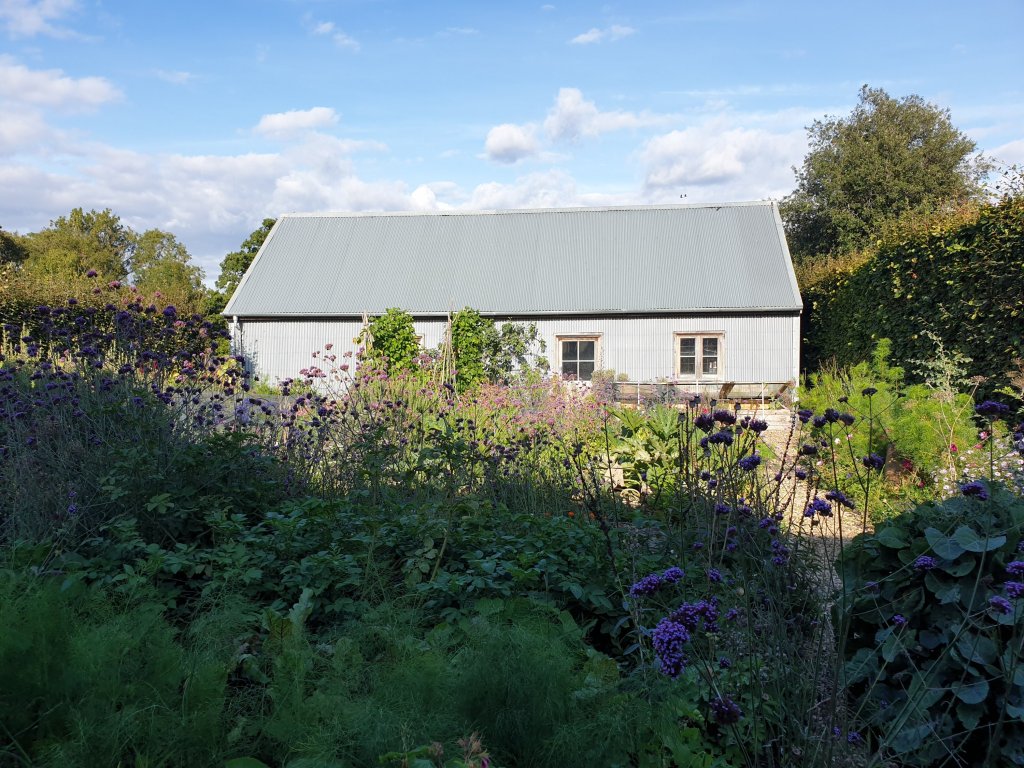
I have been to Serge Hill once before, Tom and Sue Stuart-Smith’s magical garden in a surreal part of Hertfordshire of dangerous country lanes just off the M1.
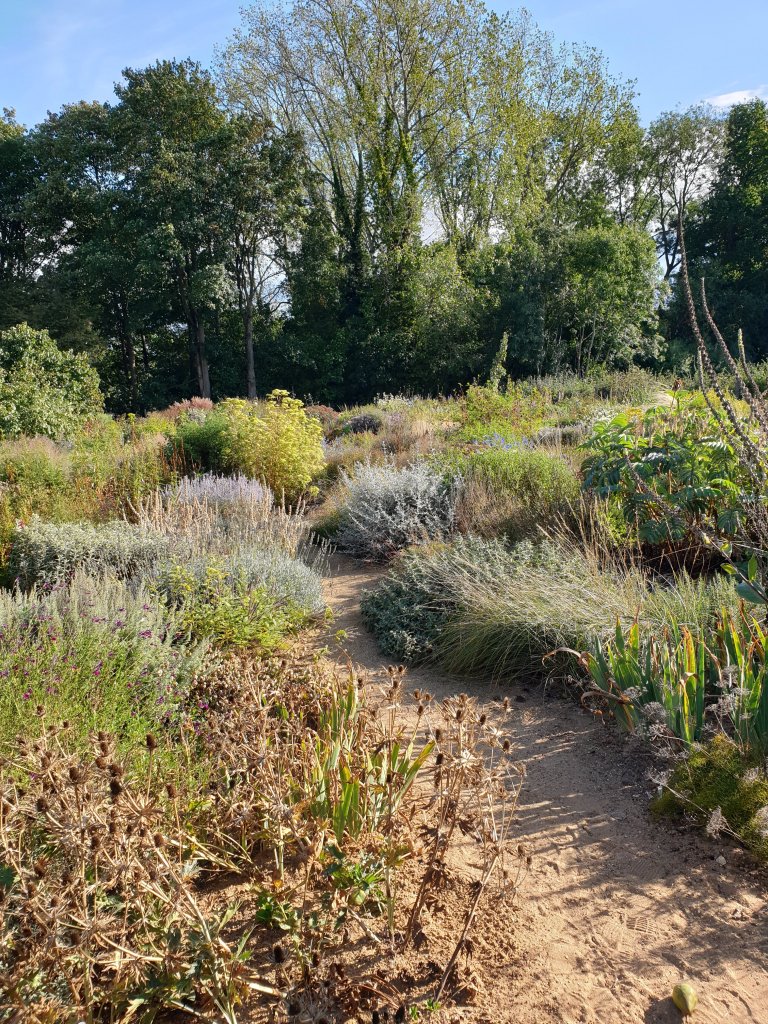
I am no gardener, so I could not tell you how the artful mix is achieved, nor, in most cases, what the planting is. I just enjoyed the colour mix, the sense of autumnal near-disorder, but restrained. I start with the front garden – big borders amongst clipped hedges:-
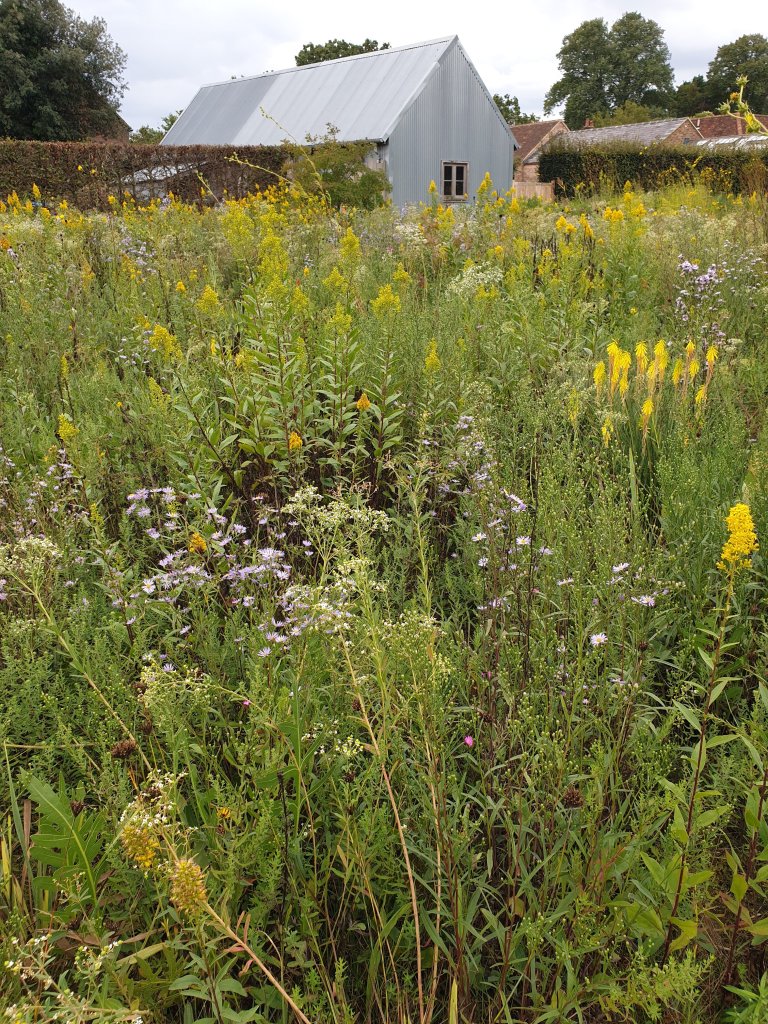
Then, there is the side garden – a sea of yellow in front of Ptolemy Dean’s perfectly configured shed :-
There is a new plant library laid out during Covid:-
And a new building under construction, designed by OKRA Studio:-
There are vegetables, like something from Beatrix Potter:-
I thought it was best when the sun came out, but now I’m not so sure:-
If you are interested, I, of course, recommend a visit to this year’s Goldsmith’s Fair, an annual event where you can see the work of all the leading jewellers, coming up the week after next:-
Romilly Saumarez Smith
Goldsmiths’ Fair 2022I will be showing my work during week one, 27 September to 2 October, and plan to be on the stand during the middle of each day from 11:30am to 3:30pm. The rest of the time my assistants Rachel Jones and Carola Sociola will be there to help visitors. I have a code for booking tickets at half price, so please get in touch if you are interested.
I went to a preview of The Lost King, Stephen Frears’s admirable film about the quest by Philippa Langley for the body of Richard III, found under a car park in the centre of Leicester. I don’t know how true it is to the circumstances of the discovery – probably like all films it uses more than a bit of poetic licence – but it rings true as a dramatic fictionalisation of the neurotic Edinburgh housewife fascinated by the idea of retrieving Richard’s body and the way her determination is constantly thwarted by the powers-that-be, particularly the oleaginous and sexist Assistant Registrar at Leicester University, who is all too believable, and Richard Buckley, the porky archaeologist, who is only too happy to take all the credit and got an OBE for the discovery.
Worth reading the attached account of Poundbury by Oliver Wainwright who I would not have expected to be remotely sympathetic, but turns out to be, if only because it it surely vastly much more desirable than the standardised developer estates which are now dotted arbitrarily all over southern England. And I’m not sure what the RIBA suggests as a good model for large-scale housing development. Certainly, nothing in this year’s Stirling Prize which is nearly all in London.
I have been following the discussion about the use of the Oxford Comma with some interest.
I was taught as a child never to put a comma before ‘and’ in a list – I assume by my father who was a strict grammarian. He also taught me to have three spaces in front of a full stop. Thérèse Coffey – or is it Jacob Rees-Mogg ? – recommends two. I remember the terrible moment when Michael Baxandall added a comma before an and in the draft of my PhD. thesis. He was a pupil of F.R. Leavis. When I questioned the errant comma, he said it improved clarity. Grammar is there to assist understanding. So, I continue to use an Oxford comma, but only sometimes, according to circumstances.
So, my sense if that an Oxford comma is a bit like Jacob Rees-Mogg’s top hat: something for exaggeratedly old-fashioned disciplinarians, which should be used flexibly, not as a cane by an elderly headmaster.
I went to the much-postponed conference organised to commemorate the late, great David Lowenthal, a geographer by profession. He studied geography at Berkeley, California, was employed for a long time by the American Geographical Society, before migrating to University College, London as a Professor of Geography. But he was someone whose range of intellectual interests deliberately evaded all disciplinary boundaries. He got a degree in history from Harvard (only a BS because he couldn’t read Latin), his PhD was in history at the University of Wisconsin, and he is a father figure in heritage studies, following his books, The Past is a Foreign Country (1985) and Possessed by the Past: The Heritage Crusade and the Spoils of History (1997).
What I hadn’t realised is what a big figure he is, also, in Caribbean Studies as the author of West Indian Societies, funded by the Institute of Race Relations and published by Oxford University Press in 1972, a book which sounds like a combination of history, geography and social sciences.
What I learned, much of which I did not know was:-
1. His father, Max Lowenthal was an important New York lawyer, who supported workers’ rights and got into trouble with McCarthy for writing a book critical of the FBI. David’s writing was similar to his father’s: present the written evidence as far as possible and leave the reader to interpret it.
2. He was introduced to the Annales School by the first of his mentors, Jean Gottmann, in Paris after his service doing topographical studies of Eastern Europe for the Intelligence Photographic Develooment Project (IPDP) in the last year of the Second World War. Of course. So much of his technique is that of the Annales School. Look at the environment. Look at everything. Don’t treat history as events.
3. Because much of his life was spent as a researcher at the American Geographical Society, he could choose what he worked on and so wasn’t an orthodox academic. He wasn’t especially good at playing the academic game and was encouraged to take early retirement from University College in 1985, the year of his magnum opus.
4. He was a great man, of boundless intellectual enthusiasm and generosity, who made a multitude of friends, many of whom were there to honour his memory.
I went to hear Kenneth Frampton launch the fifth edition of his book (it actually appeared pre-COVID in 2020) Modern Architecture: A Critical History, first published in 1980, the high noon of Post-modernism, as demonstrated by Paolo Portoghesi’s 1980 Venice Architecture Biennale. Frampton’s book was in some way, I sensed, a riposte, a canonical text of the modern movement, suggested by Robin Middleton, who was Frampton’s successor as technical editor on Architectural Design in the 1960s, and commissioned by Thomas Neurath, the then managing director of Thames and Hudson. What was impressive was – as Frampton was the first to acknowledge – the nearly impossible geographical range of the book, including brief sections on each of the countries of South America, but also how up-to-date the selection of architects: Chipperfield, not just for the Henley Rowing Museum, but also the Jacob Simon Gallery in Berlin (2018); Niall McLaughlin for the Sultan Nazrin Shah Centre in Worcester College, Oxford; and Eric Parry for 4, Pancras Square in London (2017). I just hope I remain as intellectually- and physically – alert at 91.












 Goldsmiths’ Fair 2022I will be showing my work during week one, 27 September to 2 October, and plan to be on the stand during the middle of each day from 11:30am to 3:30pm. The rest of the time my assistants Rachel Jones and Carola Sociola will be there to help visitors. I have a code for booking tickets at half price, so please
 | Charles | Saumarez | Smith |
You must be logged in to post a comment.