It is incredibly heartening to see so much online support for the offer the London Bell Foundry has made to rent the Whitechapel Bell Foundry in order to reinstate its use.
But, it is less heartening that the offer, which is at market value, has so far not been accepted.
The owner may choose to lease it to someone else and hope that Tower Hamlets will allow change of use. Let’s hope they make it clear that they won’t. Or he may just choose to sit on it whilst property values change and the property continues to decay. Or there may be an unexplained fire which would enable redevelopment, as can happen in such situations.
There is no indication that he will accept the offer.
Following Annabelle Selldorf’s lecture at the RIBA last week, I wrote an article for the online edition of The Critic in support of what she proposes.
Obviously, she does not want to desecrate the original building, but instead, she is making changes to accommodate the large crowds which fill up the ground floor of the Sainsbury Wing, now that the National Gallery has chosen to use it as its primary entrance, probably as much for purposes of security, allowing bag searches in a single place, as for allowing everyone, including wheelchair users, to enter at the same level (the original entrance, however noble, is designed for the gentry of the late 1830s, not six million visitors, half of them tourists).
Eight former Presidents of the RIBA have attacked what she is doing, which seems odd since it is a modification of the street entrance and retains the great bulk of the original first-floor floor plate, which creates the compression which was an important feature of the original design. I know that the Twentieth-Century Society has studied what is proposed with the utmost care and has suggested a number of modifications, many of which, although not all, have now been adopted.
I hope that the ex-Presidents might look at what is now proposed, not the CGI which was widely and in retrospect probably mistakenly published in June and which made the proposals look more radical and less in sympathy with the original than they now are.
The London Bell Foundry which is hoping to take over the Whitechapel Bell Foundry in order to re-instate its operation as a working Foundry has just launched an excellent website demonstrating its credentials (see below). It would like to lease the foundry. It is said that there is another, better offer. But have the owners perhaps forgotten that changes to the fabric of the building were made conditional on re-instating a Foundry, as required by current planning legislation, which would surely prevent it being turned into a nightclub/discotheque/art gallery/club, as may be proposed ?
Let’s hope that Tower Hamlets will insist on the original conditions as required by the Planning Inquiry, as it is legally required to. And Historic England too.
I had been told that Victor Margrie had died in early October (on October 5th.) and was bemused that there was absolutely no mention of it online because I have always regarded him as an exceptionally interesting and significant figure in the crafts revival of the late 1970s/early 1980s, when there were grants for graduates and the gallery in Waterloo Place, designed by Terry Farrell, was mainstream, before it migrated out to Islington.
Margrie had a strong belief in the relationship between the crafts and creativity/innovation/the avant garde and supported good writing in Crafts Magazine, when it was edited by Martina Margetts. There was a Crafts Council shop in the V&A and I think Margrie was himself a member of the V&A’s Advisory Council. There were craft demonstrations in the galleries of the V&A. Margrie stood down from directing the Crafts Council in 1984 and was then replaced by a man who was appointed because he refused to comment on the objects which were placed on the table in front of him – he said it wasn’t part of the job. The Crafts Council has never recovered.
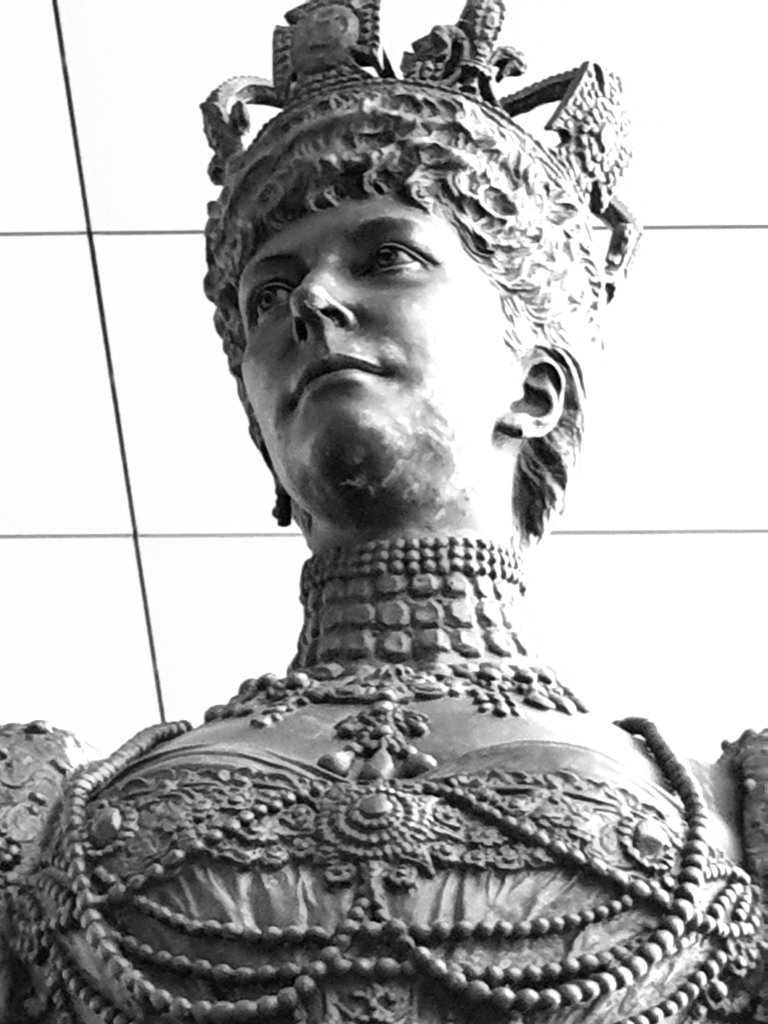
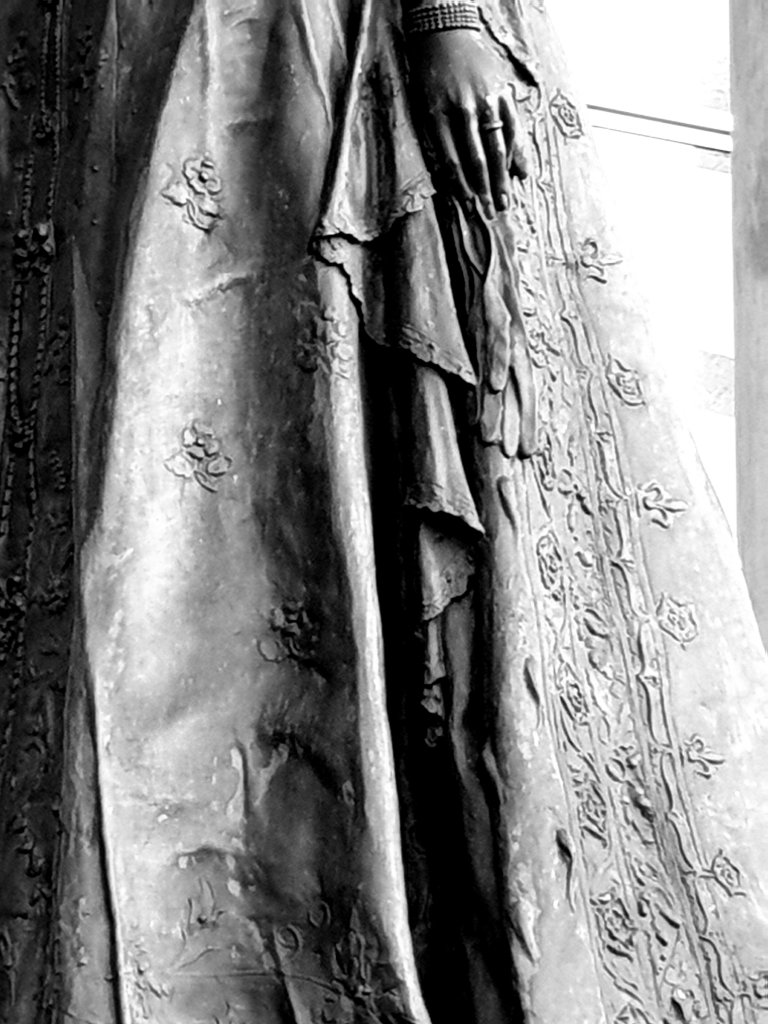
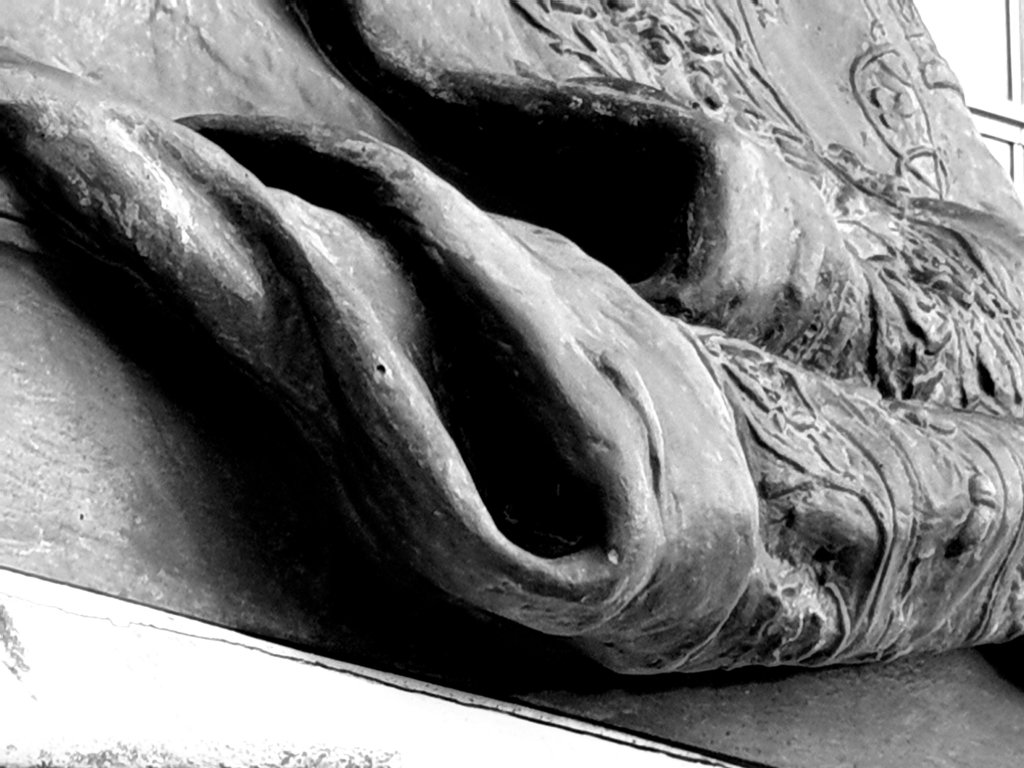
Since Queen Alexandra was on my mind, I went to visit her. She’s currently a bit neglected, but will be in a better place when the new Tower Hamlets Town Hall opens and the park to its south. She is as I remembered: stately:
I was asked by the Public Statues and Sculpture Association (PSSA) to choose a public sculpture that I particularly admired (see below). I chose the fine statue of Queen Alexandra, which is on Stepney Way at the back of the new London Hospital, not perhaps an obvious choice, but deriving from a time when sculpture was a normal part of public commemoration, in a way that it can now feel a touch unnatural or forced – and there are not many artists who can do it effectively:-
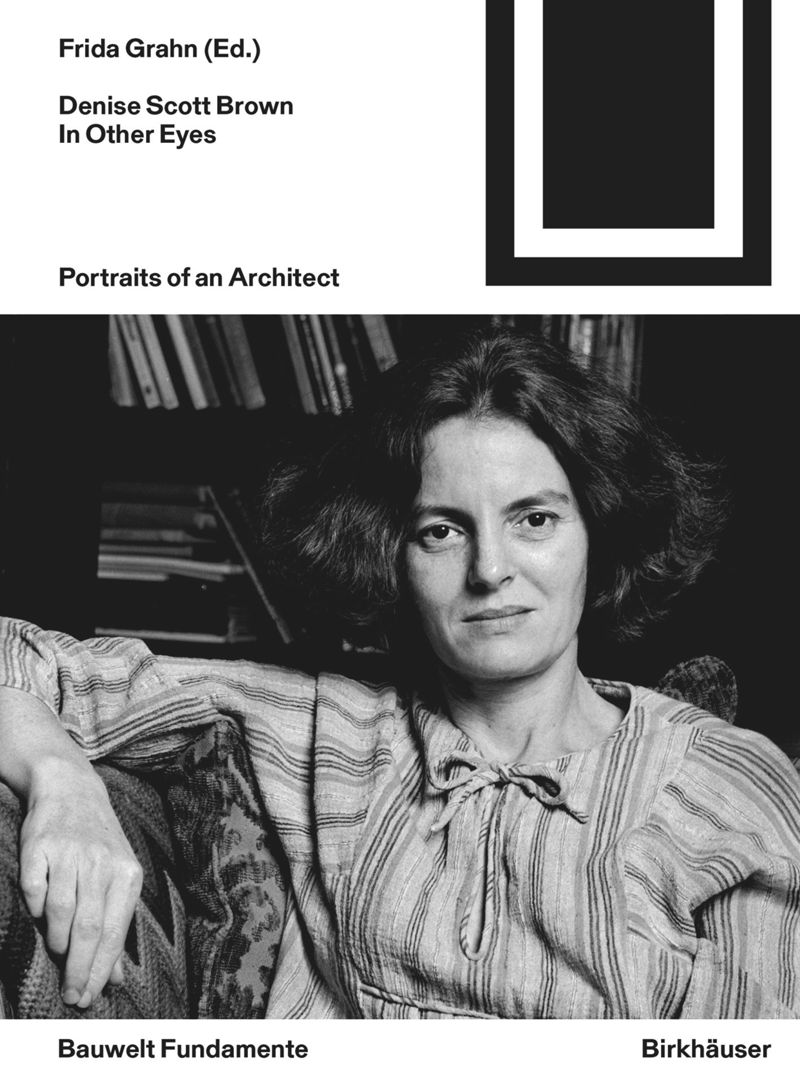
By an odd and fortunate coincidence, my copy of a new and excellent volume of essays about the work of Denise Scott Brown arrived last week just at the moment when I was considering the issues surrounding the original design of the Sainsbury Wing and the current proposals for its redesign by Annabelle Selldorf:-
To an extent I half knew, but only half, Scott Brown was heavily involved in teaching about issues of urban form during the mid-1960s, including courses on ‘Form, Forces and Function’ at the University of Pennsylvania in fall 1963 and fall 1964, and then, again, in the University of California Berkeley in spring 1965 and at University of California Los Angeles in fall 1966 where she was appointed as a professor. She was due to write a book on ‘Determinants of Urban Form’ for which she was given annual leave to write it in 1967, of which the manuscript survives but has never been published. It was then that she first formulated her view of the need for flexibility in architectural design, writing in the notes for her lectures how
City form tailored too specifically to the special needs of one population at one time may become functionally obsolete long before the end of its structural life, whereas form designed to suit ‘functions’ more generally defined may prove less efficient for any one specific need, but over the span of its structural life more useful to more people.[1]
This was when many of the ideas which appeared in Learning from Las Vegas were first formulated and indeed she took Robert Venturi to visit Las Vegas when he came out to stay with her in Los Angeles in November 1966 before they were married in July 1967 and taught a course together on Las Vegas at Yale in fall 1968.
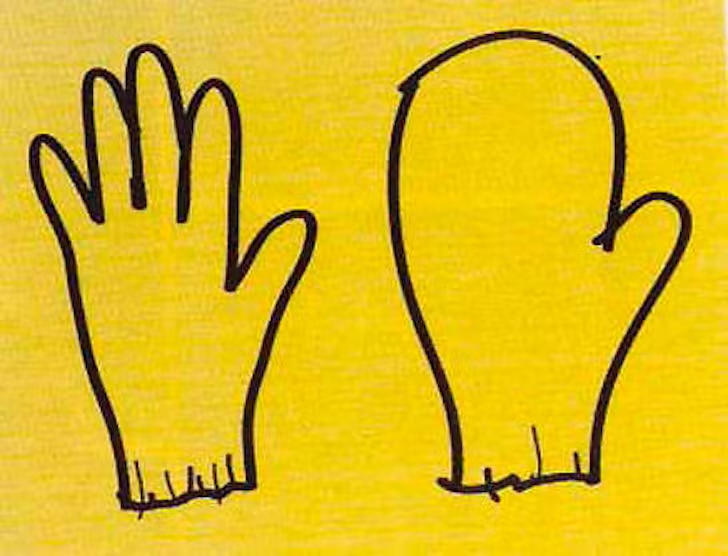
Key to her thinking was the idea of the glove and the mitten, the glove being highly specific in the way that it allows patterns of use, whereas the mitten is more generous and less determined:-
I can see now why Annabelle Selldorf showed this image in her lecture about the Sainsbury Wing. She did not state it quite explicitly, but the issue is clearly whether one treats the Sainsbury Wing as a glove or a mitten. Should its use be precisely as it was when it first opened in 1991 or should its use be allowed to evolve to a limited extent in order to acknowledge the changing requirements of the client and changing attitudes towards public use ?
I can see the argument for retaining the absolute integrity of the Sainsbury Wing in its original form because of its exceptional historical importance; but I am not persuaded that modifying its entrance as is now proposed by Selldorf necessarily damages its essential integrity, particularly now that the modifications are being done in a style that is more in sympathy with the classical language of the original architectural forms and, indeed, the changes to the space immediately outside the Sainsbury Wing, which will be enlarged will, I think, enhance its public visibility and its relationship to Trafalgar Square.
The Sainsbury Wing is indisputably a work of exceptional architectural interest and importance. But upgrading and renovating its entrance, making it more spacious and getting rid of later irrelevant accretions, could be viewed as an act of homage to it, not an act of desecration.
[1] Denise Scott Brown, ‘The Definition of City Form: Form and the Designer’ cit. Denise Costanzo, ‘The Function of Functionalism’ in Frida Gahn (ed.), Denise Scott Brown: In Other Eyes, Portraits of An Architect (Basel: Birkhauser, 2022), p.81.
I went to see the new back extension to Lea Bridge Library a week or so ago and have now spotted that Rowan Moore wrote about it at much greater length last Sunday, both of us admiring its calmness and civic values, a lightweight structure added behind an Edwardian public library for people to sit and work and have a cup of coffee.
I must say I was a tiny bit surprised that eight of the previous Presidents of the RIBA took it upon themselves to condemn the planned changes to the Sainsbury Wing, not least because I do not recall the architectural profession being especially protective of its merits in the past, not least, as it happens, the past Presidents of the RIBA, who turned down suggestions that Robert Venturi and Denise Scott Brown might be awarded its Gold Medal, which was proposed year after year during their time.
So, why the volte face ?
They can’t be especially well informed about what is currently proposed since I didn’t spot any of them at the lecture in which Annabelle Selldorf explained the detail of her latest plans – at a lecture at the RIBA.
We spent nearly half the day at the William Kentridge exhibition, with a break for lunch, which we found you need because of its intensity – the range of media, the use of film, the way it absorbs you into its world, both personal and political, which he seems to have managed to maintain at full blast into his sixties in spite of his fame, using the galleries of the RA very creatively, if a touch cacophonously in Gallery 3. It’s been a long time in the planning – he became an Hon. RA in December 2014 and I think the idea of the exhibition came soon thereafter. Quite an achievement, given that much of the work for it must have been done during lockdown, but then it has an air of work-in-progress, much to its benefit.


 | Charles | Saumarez | Smith |
You must be logged in to post a comment.