
I sadly can’t go to the event on Tuesday to protest against the plans for the redevelopment of Liverpool Street Station (https://spitalfieldslife.com/2023/10/29/save-liverpool-st-station-event/). One of the problems about these big development schemes, as I discovered with the campaign to save the Whitechapel Bell Foundry, is that the forces involved are horribly unequal: on the one side you have big developers who are able to pour money into legal fees and PR companies; on the other you have private individuals who are compelled to devote huge amounts of time and energy to trying to fight the system. I was also left with the a feeling that the way that the system is constructed leaves little scope for a public voice to be heard. In the end approval for such projects lies with a planning inspector who comes in from Bristol and adopts a narrowly legalistic view which pays very little attention to, and is probably antagonistic towards, public opinion. Then, occasionally, opinions are referred to the Secretary of State. But who actually makes them ? I have not forgotten that when the final decision was made on the Bell Foundry, the Secretary of State, Robert Jenrick, tweeted that it was a bad decision until it was pointed out that he had himself made it.
So, the plans for putting two huge new buildings designed by world famous architects directly on top of two historic Victorian listed buildings trundle their way through the system, while, as it happens, demand for office space is reduced, prices in the neighbourhood are dropping, working patterns have changed and even the City planners have changed their attitude towards development, probably too late. So, these monstrosities may well be redundant by the time they have received planning approval – vast glass boxes plonked surreally on top of a surviving Victorian railway hotel. Maybe in time they will themselves be listed as grandiose monuments to the follies of a forgotten early twentieth-century Tory government which destroyed so much of the character of historic London.
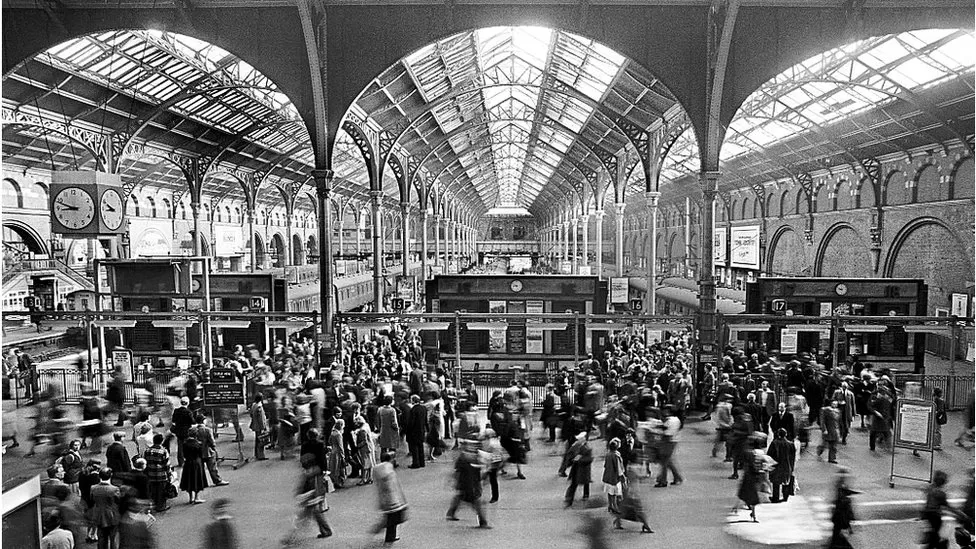
As it was:-
As it is planned to be:-

 | Charles | Saumarez | Smith |
I agree totally with your sentiments here and, like you, I am also unable to attend the meeting on 7th November. I see the heaps of tourists who visit London for its history, not for it’s glass and steel monstrosities. Destroying the remaining Victorian buildings in Broadgate area won’t make it a more visitable place. The pandemic taught us that we don’t need to commute every day and office working has become less significant. We don’t need this development but ground rent, business rates and a gimmicky swimming pool are seen as dead-cert money-makers. Just awful.
Some comments on social media claim that objections are “nimbyism” and “anti-progress”. “You can’t live in the past,” they say. I, for one, don’t want to, but, once we have lost a landmark building, it’s gone. The short-sightedness of the Liverpool Street plans is shocking-we just don’t need this. However, don’t despair, there is always hope – never give up, never give in!
Yes, I noticed that there were quite a few comments suggesting that anyone who objected to the scheme was ‘anti-progress’. I’m afraid I took it for granted that they were written by PR Professionals employed by James Sellar to suggest the inevitability of progress. Like they said that 100% of people who had commented on the scheme supported it, which is transparently implausible ie a lie. Charles