Duncan Robinson (1)

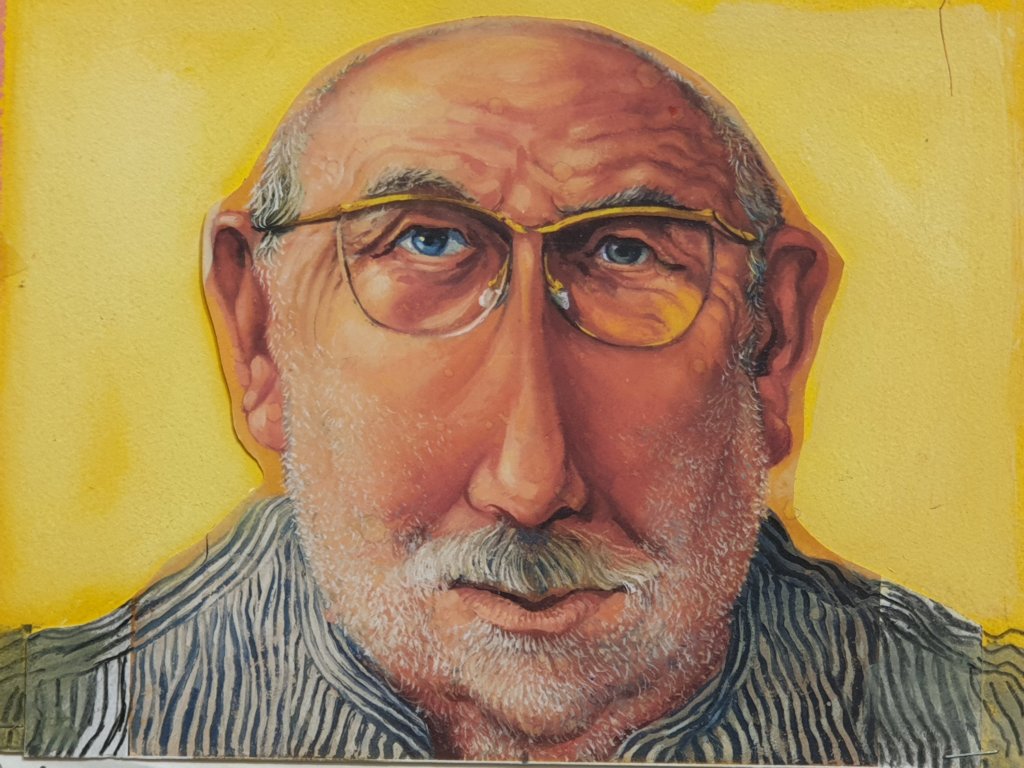
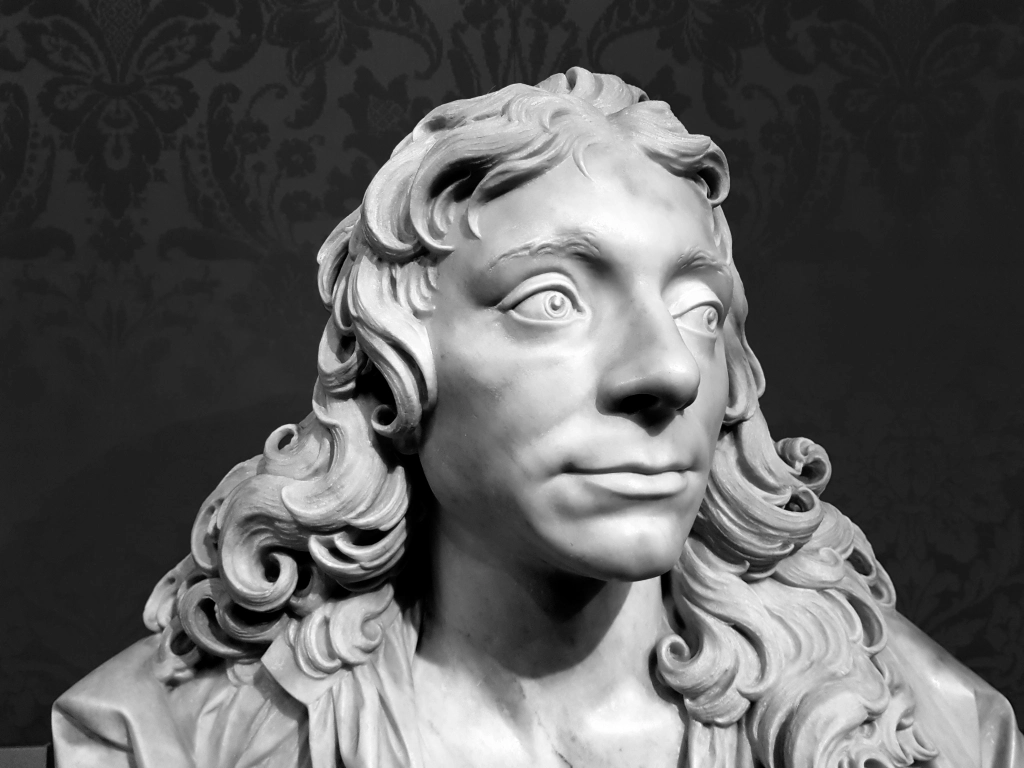
Very sad news from Magdalene College, Cambridge that Duncan Robinson has died:  an exceptionally nice, warm, interesting, and wonderful person.   He introduced me to art history by teaching a course on ‘Painting in Central Italy 1300-1350’ in 1975, which I took and it introduced me to the pleasures of intensive research on fourteenth-century Italian painting, which for a time I pursued before switching to architecture.   At the time, he was an Assistant Keeper at the Fitzwilliam and was said to serve behind the bar in the pub in Great Shelford to supplement his income (this could be apocryphal).   In 1981, he went to be Director of the Yale Center for British Art, where he had done graduate work as a Mellon Fellow in the mid-1960s and, in 1995, he returned as Director of the Fitzwilliam.   Someone was saying recently that he was one of those people who did a ton of work without ever showing off about it and he managed to combine being Director of the Fitzwilliam with being Master of Magdalene as well (his Wikipedia says he was also Deputy Lieutenant for Cambridgeshire, but if so, he doesn’t mention it in Who’s Who).   He was a predecessor of mine as Chairman of what was then the Prince’s, now the Royal Drawing School – always benign, but also very orderly, and unlike many art historians, good with money.   A great and very sad, irreplaceable loss.

Copyright: Lucy Dickens/NPG

https://www.magd.cam.ac.uk/news/mr-duncan-robinson-cbe-1943-2022

Standard

Ken Howard RA

It was Ken Howard’s Memorial Service today, conducted by Ayla Lepine who I discovered had done her PhD on Bodley and Garner – good subject.

The service was unusual in somehow conveying Ken’s infectious and enthusiastic bonhomie, able to paint at incredible speed and to sell everything he painted, as well as lead a very sociable life in London, Cornwall and Venice, in all of which he had studios.   I remember reading his autobiography which was dictated in a few days while he was ill and conveyed what it was like to be trained as an artist in the early 1950s.   He had great skill as a painter – particularly good at conveying sunlight and the streets after rain.  

We were encouraged to raise an imaginary glass in his memory and I assume we all did.

Standard

72 Upper Ground (1)

I’m so glad to see that Rowan Moore has taken up the cudgels to attack the massive (and monstrous) building proposed for a site nearly immediately next door to the National Theatre, right opposite Somerset House, and equidistant between the Palace of Westminster and St. Paul’s ie bang at the centre of London and bound to look vast and hideous from Trafalgar Square as well as all the way in a boat or on the footpath along the Thames.

Why has it got this far ? The answer, as Moore makes clear, is that it is in Lambeth and the heart of Lambeth is Brixton Town Hall. They care not for the more distant parts of the Borough and are happy to use the fringes of Lambeth as a cash cow for development nearer its heart.

There is no longer any unifying agency which cares about the look of London as a whole, so each borough has allowed big blocks without paying any systematic attention to how this might affect Westminster or Somerset House or river traffic on the river or what it might look like as one crosses Hungerford Bridge.

Moore provides a good account of how this has happened. Ken Livingstone thought he would be able to keep a balance, as advised by Richard Roger’s who had a good feel for the ecology of the city when wearing his town planner’s hat. Boris Johnson then promised to stop big development (‘Dubai-on-Thames’) and did the precise opposite: we have surely learned by now that whenever he used a fancy phrase, he was using it to mask his more sinister intent and employed Lord Lister and Simon Milton to glad hand the developers and take them to lunch. Sadiq Khan doesn’t seem to be much interested in the quality and character of the City which is odd as it’s his job.

So, it’s now up to Michael Gove who has promised us beauty and may just be the only politician with the spunk to stop it. It could be his legacy.

https://www.theguardian.com/artanddesign/2022/dec/04/thames-london-riverside-developments?

Standard

Sydney Modern

I had faintly hoped to be able to make it to see the new building of the Art Gallery of New South Wales at the time of its opening this weekend, a project long planned. They won the competition in 2015, having previously won the competition to design Sydney’s Museum of Contemporary Art in 1997 which would have been their first international project after their 21st. Century Museum of Contemporary Art in Kanazawa and before they did the Louvre-Lens, the New Museum in New York, and much else.

It was nearly the last museum building I saw under construction before lockdown – a very lightweight building on the hillside immediately north of tte AGNSW’s very conservative original classical building which first opened in May 1897, with a series of three square pavilions, mostly glass. It looks interesting: a building that is hard to judge in photographs because it’s about the experience of exploring it. I like the fact that its architect, Ryue Nishizawa, says ‘We want [people] to use our architecture in ways we don’t anticipate’.

https://www.theguardian.com/australia-news/2022/dec/03/the-sydney-modern-project-is-finally-open-has-the-art-gallery-of-nsws-344m-expansion-paid-off?

Standard

4Cose

One of the pleasures of going to Vyner Street was rediscovering 4Cose, an unbelievably wonderful source of temptation, most of which I am disallowed by my new, self-imposed food regime. But I could hardly resist their panforte in a huge slab, like I have never seen:-

Standard

East London Cloth

This morning, I read about East London Cloth, a new shop on Vyner Street, in the newsletter of Inigo and since the weather was fine, I went to investigate.

It is indeed a very nice artisan warehouse-cum-workshop, a very East London phenomenon, stocked with a mass of desirable linens, a little out of the way perhaps, but worth tracking down, particularly now Christmas approaches:-

Standard

The Fitzwilliam Museum

I was pleased, if that is the word, to read the attached article about the funding cuts to the Fitzwilliam because I had tried to find out about how badly it had been cut after the ACE round was first announced, but unsuccessfully because the focus was so much on the dramatic cut to ENO. I can’t help but mourn what has happened, although I don’t envy the task that Nicholas Serota faced in having to choose where to wield his axe. He apparently protected Kettle’s Yard – good; but has slashed the University Museums – bad.

Oddly, we were in Fitzwilliam’s ceramics galleries a week or so ago for the Hazel Press display and I thought how good they looked – traditional yes, but traditional museum cases means that the whole history of ceramics is on display. I suspect the V&A is about to re-invent this type of display in V&A East in order to show off what it has in store, as in its new ceramics galleries on the top floor.

https://www.apollo-magazine.com/fitzwilliam-museum-cambridge-luke-syson-interview/?s=09

Standard

Tom Phillips RA (2)

There is a very nice obituary of Tom Phillips by Charles Darwent in this morning’s Guardian (https://www.theguardian.com/artanddesign/2022/nov/29/tom-phillips-obituary). Two things strike me in reading about him. One is the quality of state education in the 1950s, which encouraged him to learn about art at his primary school, Bonneville Road Primary School in Clapham, and then learn several musical instruments including the violin and bassoon at his secondary school, Henry Thornton Grammar School, Clapham. The other is the extent to which he was an intellectual as much as an artist, attending Edgar Wind’s lectures on iconography when he was at Oxford and in some ways a conceptual artist in the 1960s. He describes himself as ‘painter, writer, composer’ in Who’s Who, spent time at the Institute of Advanced Study in Princeton, was Slade Professor in 2006 and a judge of the Man Booker Prize in 2017. He was also very good at ping pong.

Standard

Tom Phillips RA (1)

I have just heard the very sad news that Tom Phillips, the polymathic painter and much else, has died – as I understand it, very peacefully after all his systems had begun to pack up. He was 85.

I always admired him. He was one of the first artists I got to know in the mid-1970s and he became one of my trustees at the National Portrait Gallery where he was an incredible fount of knowledge about sitters, including especially musicians, as he was nearly equally knowledgeable about music as he was about art.

He read English at St. Catherine’s College, Oxford, where he was an honorary fellow, and then went to Camberwell School of Art, where he did evening classes with Frank Auerbach. While teaching at Ipswich School of Art, he met Brian Eno and, in the 1960s, he was involved in a great number of avant garde musical events of one sort or another, including writing an opera and showing his paintings at the Ikon Gallery in Birmingham.

This is what he looked like in 1976, which is more or less when I first met him (copyright NPG):-

By the time I got to the NPG in 1994, he was already very well established as a portrait painter, one of the best, partly because he had such wide-ranging intellectual interests. For example, he painted Iris Murdoch for the NPG which I hope I am allowed to reproduce (copyright NPG):-

He was asked to paint my portrait for the NPG and so my first year at the National Gallery involved going for early morning sittings once a week in his studio in Peckham, an experience which was filmed by Bruno Wollheim and documented in the attached article (https://www.theguardian.com/artanddesign/2004/jan/14/art).

He was also a big figure at the Royal Academy as a long-standing chairman of its Exhibitions Committee, invaluable for his encyclopedic knowledge and himself curator of the 1995 exhibition Africa: The Art of a Continent:-

He was an important artist from the 1960s who was a big figure in his time, but has not been nearly so visible in the last two decades. He deserves a proper retrospective.

This is how I remember him in his studio, surrounded by objects with a little kitchen off it where we would stop at half-time during the sittings and chat:-

Farewell, Tom !

Standard

Heritage

A long railway journey to Bishop Auckland has given me a chance to settle into James Stourton’s new and invaluable book on Heritage: A History of How We Conserve Our Past (London: Head of Zeus, 2022).

I’m pleased to find reference both to the long-running battle over the Whitechapel Bell Foundry – if the Bell Foundry had come onto the market in the 1970s when there was such an appetite for industrial archaeology, it might have been saved – and Jonathan Ruffer’s project to save the Bishop’s Palace in Bishop Auckland, together with the set of Zurbaran’s owned by Bishop Trevor, and buying the local railway, and establishing a Gallery of Spanish Painting. It’s altogether a model of creative heritage-led regeneration – the product of individual will, rather than political process, one of Stourton’s themes.

Standard