One of the pleasures of going back to King’s was a piano recital in the Provost’s Lodge by Susan Tomes of work by female composers only – Hélène de Montgeroult, Fanny Mendelsssohn, Judith Weir (she was the year below), Amy Beach – very fine -, Cécile Chaminade and Raise da Costa. Now I am reading Susan Tomes’s book on The Piano: A History in 100 Pieces, which includes detailed analysis of the music in a way that even I, not very musical, can half follow, as well as a lot of historical information which I can and am very much enjoying:
I spent some of the time at dinner trying to figure out the pictures hanging on the other side of the hall, many of which were easily recognisable, but not all.
They were, from right to left:-
Montagu Rhodes James, artist not identified.
Goldworthy Lowes Dickinson by Roger Fry. They were friends and both Apostles.
Eric Milner White, the Dean of King’s from 1918 to 1942, responsible for the Service of Nine Lessons and Carols.
Lydia Lopokova, painted in 1923 by Duncan Grant in a dress that he had designed based on Ingres’s Portrait of Mademoiselle de la Rivière.
Julian Bell playing chess with Roger Fry, painted by Vanessa Bell presumably at Charleston c.1930.
Maynard Keynes by Duncan Grant (1908). This was the one I didn’t immediately recognise, less familiar than other later portraits of Keynes.
Dadie Rylands by Romi Behrens, an artist based in Cornwall.
Morgan Forster by Edmund Nelson, a strong portrait. Nelson had trained at Goldsmith’s, lived in Hampstead, and painted quite a few portraits of Cambridge figures after the war.
A.C.Pigou, the economist, also by Nelson
It’s a pretty impressive group, so much better than the Victorian worthies who used to be hung in the hall, and demonstrating the close links between King’s, the Bloomsbury Group and the Apostles from just before the First World War through to the 1920s, maintained into the 1960s by the presence of Rylands and Forster.
I travelled back to Cambridge for the 50-year reunion of the Class of 1972, of which I was a member, and also the fiftieth anniversary of the admission of women. The strange thing is that I don’t remember it feeling such a big deal at the time. Maybe I was just obtuse and assumed that it took women. I had a female tutor and a female Director of Studies and came from a school which itself had gone partially co-educational (15 girls, 800 boys). Now, in retrospect, it was obviously historically very significant, as one of three colleges – the others being Churchill and Clare – to change their statutes after the students themselves had lobbied for the change: it’s still the cause of discussion, debate and, it became apparent, some considerable residual ill-feeling:-
I have just had pointed out to me the attached short article in the New Statesman which reproduces the official version of the John Ward picture of the opening of the Ondaatje Wing at the NPG, of which I reproduced a detail of a different version a couple of days ago. John Ward stood on the balcony overlooking the scene painting it in situ and, as Pippa Bailey rightly suggests, it is a good record of the occasion (her father was Nigel Bailey, the excellent project architect):-
One of the projects that I have been very involved with is a charity called The Watercolour World, established by Fred Hohler to digitise both private and public collections of a medium which, because it is so light sensitive, is much less well known than it should be.
Now, after running it since its inception, Fred has decided to step down and so the Trustees – I am chairman – are preparing to recruit a new Director, who will have the responsibility of maintaining its momentum and raising funds to secure its future. I am posting the job description on the off chance that someone suitable will see it. If anyone knows of someone suitable, could they please let either me or Fred know ? It should be an extremely interesting role:-
The Watercolour World
The Known World before Photography
Director
Anticipating the retirement of its Founder and current CEO, Fred Hohler, the Trustees of The Watercolour World now seek an energetic and committed Director, knowledgeable about the history of watercolours and well-informed about the history of the period, to lead the project under the guidance of its Trustees into the next stage of its development.
The purpose of The Watercolour World is to create from private and public collections globally a freely available digital record of watercolours to help illuminate all aspects of the historical period 1750 to 1900. Launched in early 2019, great progress has already been made towards this goal. As currently constituted, the charity employs two full-time members of staff working under the Founder, supported by a dedicated team of volunteers. There is adequate funding for the next two years, but funds will need to be raised to support the project thereafter.
Whoever is appointed will have considerable freedom under the Board of Trustees to develop the charity. It will require someone of energy and determination to make this happen. In addition, good social skills are required to work with private owners, together with an ability raise money and management experience to ensure that the charity is run in an efficient, cost-effective and appropriate way.
Application should be by email, including a cv and statement of intent, to the Founder, Fred Hohler (fred@fredericksplace.org.uk).
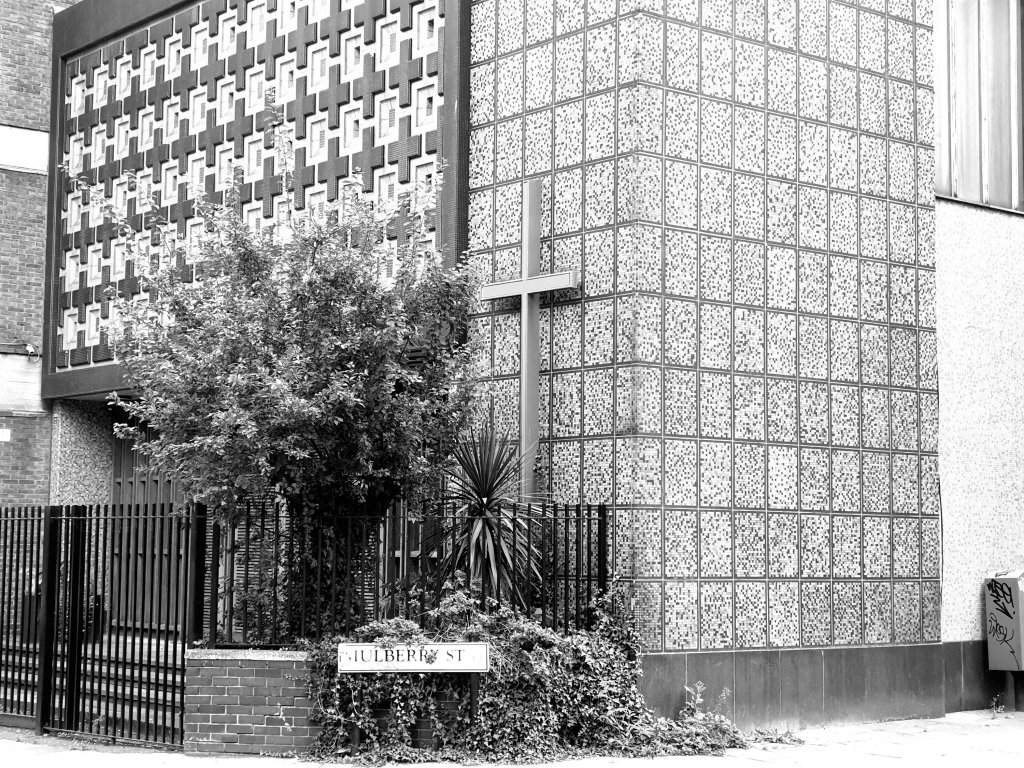
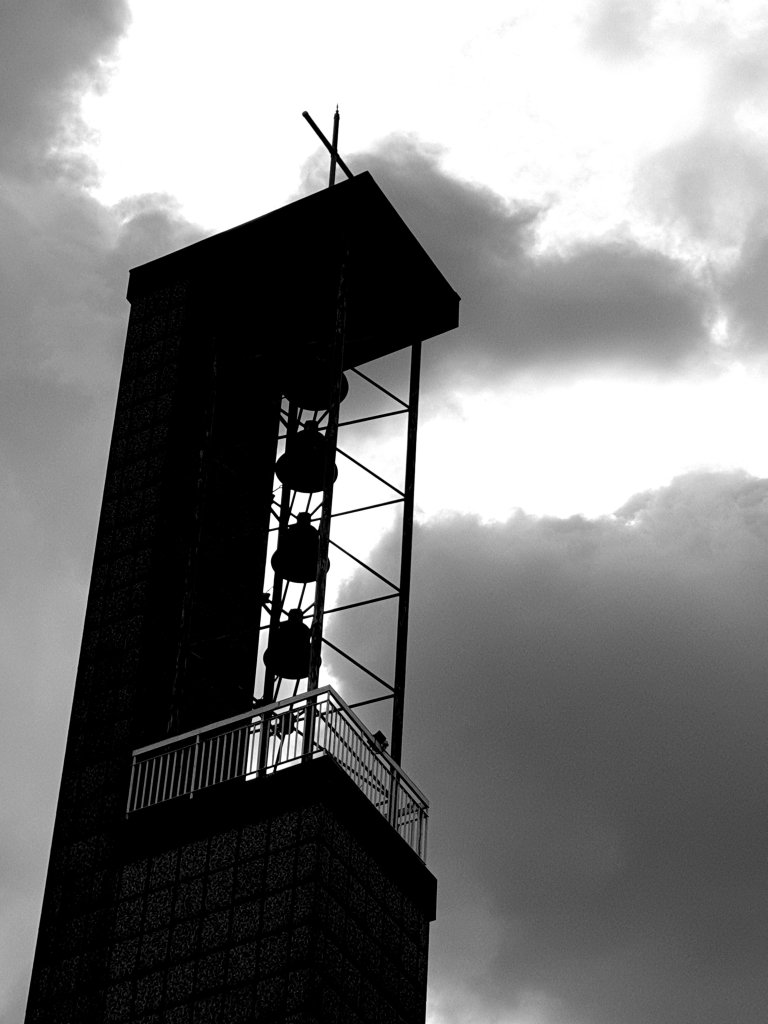
I have been reading the two-volume new Survey of London volumes on Whitechapel – at least so far only the first – which tell one so much about the complex pattern of its development, including a good, detailed chapter on the Bell Foundry.
It encouraged me to go out exploring, not least to see St. Boniface, the German modernist church at the junction of Adler Street and Mulberry Street behind the Bell Foundry, designed by Donald Plaskett Marshall as a third scheme, after an even more modernist one by a German architect, Toni Hermanns, had been rejected:-
I always like the Eastern Dispensary, a grand piece of Victorian civic classicism, designed by G.H. Simmonds, the secretary of the dispensary:-
The Princess of Prussia in Prescot Street was redesigned in 1913 by the inhouse architect of Truman, Hanbury & Buxton and is dominated by strong architectural lettering:-
St. Paul’s Primary School, which replaced the Danish Church in Wellclose Square, was designed by Reuben Courtnell Greatorex and Simeon Greatorex, brothers of the rector, Dan Greatorex, who, on taking over the parish, had been worried about the possible extension of the Anglo-Catholic influence of the rectors of St. George-in-the-East:-
Only the lettering survives from the building occupied by Raine’s School after it moved from Wapping to New Road:-
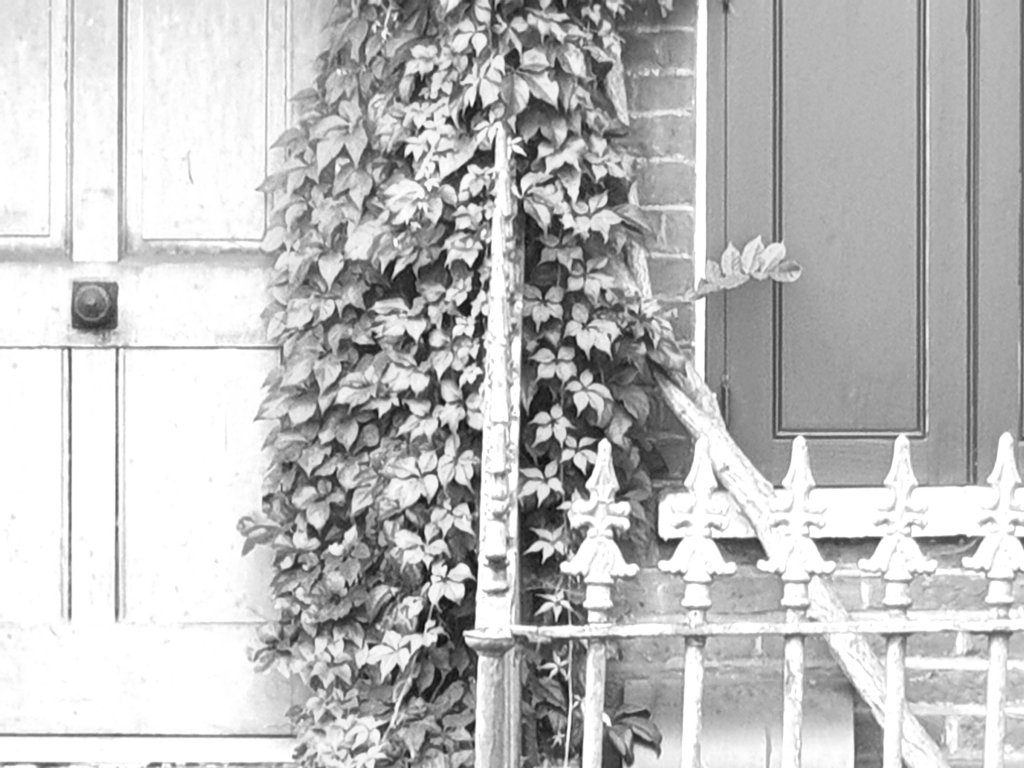
And I was pleased to find that New Road continues to resist being poshed up:-
Very sad news about the death of Andrew Edmunds, who I think of at least as much as an exceptionally knowledgeable print dealer, always with a rich stock of eighteenth-century prints and with a stall at the London Original Print Fair. Also, he always seemed to be sitting at the next door table at the Academy Club, where the food, as in the restaurant below (they share a kitchen), feels eighteenth century too, as if shot in the fields of Somerset. The Literary Review has its office upstairs, Merchant Ivory was in the back, now Karsten Schubert has beautiful rooms on the second floor, Factum Foundation was in the basement, all the beneficiaries of Andrew’s hospitable temperament, maintaining the rabbit-warren and properly bohemian character of Soho intact.
Over the weekend after her death, I was asked to record what I knew of the Queen for the Spanish newspaper, ABC. It has now been published in an abbreviated form in the main paper and in full online.
Since I assume that not all my readers know Spanish, I attach the text in its original form. Many people have repeated a version of my views, possibly ad nauseam, but I am reproducing it as a minor document of the last ten days:-
HM THE QUEEN
I belong to a generation which was brought up to be very royalist. I was born in May 1954, a year after the Coronation. Every Christmas, we would stand round the television set and watch her annual Christmas broadcast, delivered in those days in a much more cut-glass accent than her accent later (this was true of everyone as the idea of standard English pronunciation disappeared in favour of regional accents). At the end of my first visit to the cinema to see Cliff Richard’s ‘Summer Holiday’ in 1963, we stood at the end of the performance to sing the National Anthem. My father had worked for the British civil service [actually, the Indian Civil Service, but it seemed too complicated to have to explain this] and was instinctively deferential, born with a strong sense of hierarchical order, with the Queen very definitely at the top and everyone else a long way below. Although he adapted to a more democratic social order after the Second World War, as indeed she did, he retained certain attitudes to class and a belief in civic ceremony which were universal in Britain before the Second World War.
Attitudes to the monarchy began to change during the 1960s, along with so much else, but the Queen remained very much a representative of her generation: she had served in the war; she had a strong sense of national duty; she liked to listen to what she probably still called the wireless; she is said to have had some of the parsimony of those who had endured rationing, turning off the lights in Buckingham Palace to save money. She did not believe in the expression of public emotion, famously staying up in Scotland following the death of Princess Diana, not realising that by August 1997, the British had given up on the stiff upper lip and were piling flowers outside the gates of Buckingham Palace. I have a faint suspicion that she might have regarded the universal expression of public emotion following her death as a little bit over-blown, since she had already put everything in good order for her successor and was probably looking forward to joining her husband in another place. She had survived just long enough to do her duty in welcoming a new Prime Minister and then may have felt — quite legitimately — that she had had enough.
I met her a few times, but she was not someone it was easy to know. That was her great strength. She was interested in everyone equally, but treated everyone all on the same level, although I had a sense that she was able to be more friendly to the guests she invited to stay for the weekend at Windsor Castle.
She came to open the new Wing of the National Portrait Gallery in May 2000. The Duke of Edinburgh was a bit grumpy, but I have never heard anyone say that of her. She was always immaculately professional, totally able to control her emotions, although I guess she was able to joke with the Duke about the day’s events over a private supper.
When I was Secretary and Chief Executive of the Royal Academy, I was expected to see her every year with the President, although it turned out to be more like every other year. The first time I went, I was told by her Private Secretary that she would be interested in our constitutional reforms, but she turned out to be deeply and passionately interested – and surprisingly well informed – about the difficulties we had had in organising an exhibition of French art from Russian museums. She had read about it, but she wanted to know the details, including the gossip.
I always had a sense of someone who was exceptionally well informed, reading the newspapers in depth every morning over her breakfast, just as carefully as the papers she would have been given in red boxes to prepare her for the day’s meetings. Her room was austere. I don’t think she would have wanted it modernised. There was a sense of systematic order. After exactly half an hour, it was clear that the time had come to leave — I never figured out how it was done. Everything ran like clockwork, punctilious to the end.
The only time I saw just a glimmer of her real personality below the surface was when we went to present her with four drawings which had been done by painters of the Royal Academy to mark her Diamond Jubilee. One was of a group of Kenyan birds, Birds at Ngong, by the artist, Humphrey Ocean. The President of the Royal Academy told her that she would no doubt recognise and be able to identify them. She raised her eyebrow just a touch to indicate that this was unlikely given the style in which they had been painted. But I could have imagined the faint suggestion of humour.
It is clear now that everyone recognised her extraordinary sense of devotion to public duty for 70 years, an exceptionally long reign, even longer than that of Queen Victoria. People admired her for her sense of order, the amazing number of public occasions she attended, travelling round the world tirelessly, totally devoted to the nation and the Commonwealth. Much of it must have been very boring, endlessly ceremonial. But she stuck at it for the full seventy years, never exhibiting a trace of boredom right up to the end when she saw out Boris Johnson and welcomed Liz Truss. Every Prime Minister has said that she was an unexpected source of good advice, standing above the political fray and no doubt shrewd and sensible in her views and quietly independent minded.
Everyone already misses what she represented because she was a symbol of such extraordinary continuity, able to combine a belief in tradition with a recognition that the world had changed. It was this combination of a deep sense of tradition and considerable flexibility in accepting change that made her monarchy so stable.
I have been to Serge Hill once before, Tom and Sue Stuart-Smith’s magical garden in a surreal part of Hertfordshire of dangerous country lanes just off the M1.
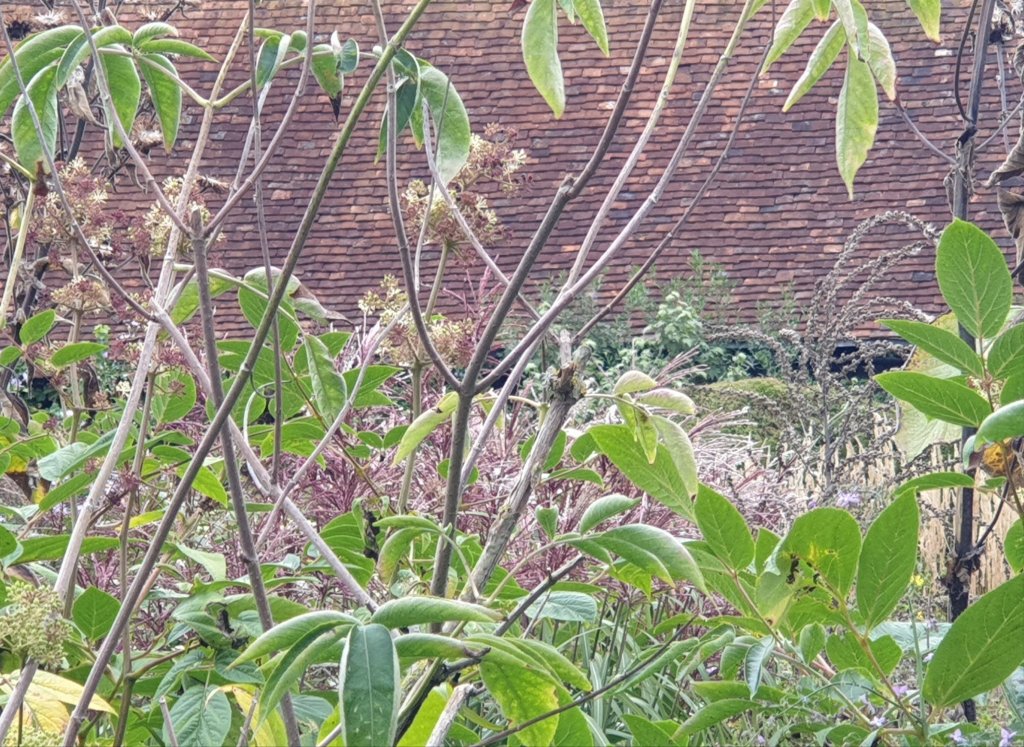
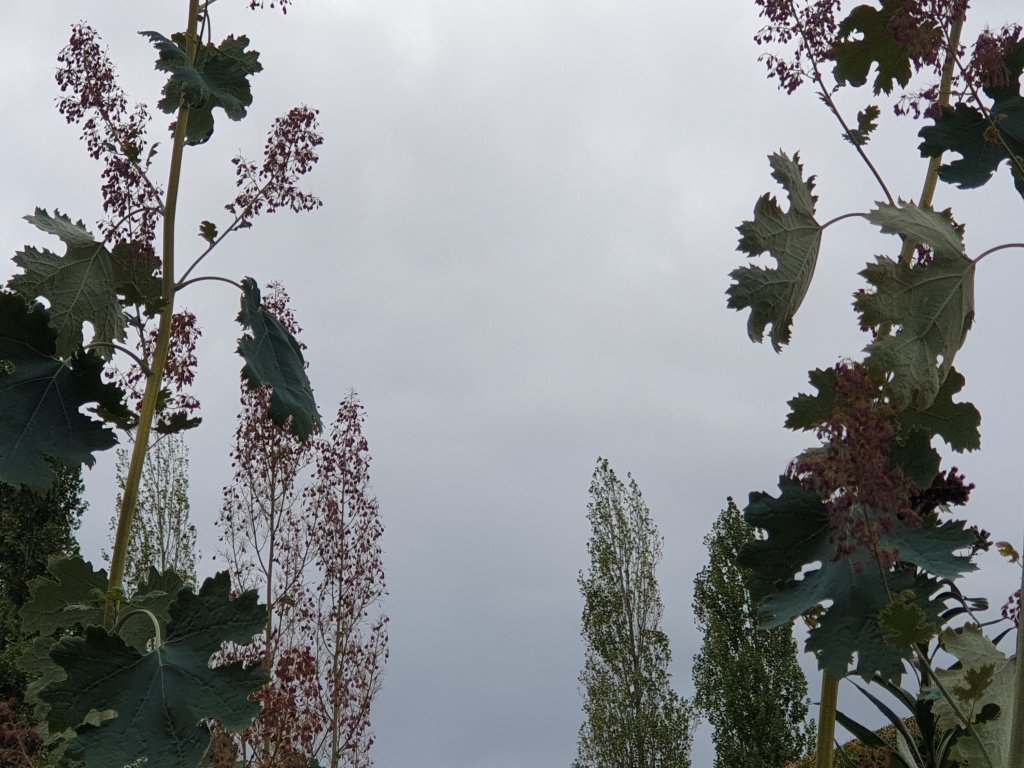
I am no gardener, so I could not tell you how the artful mix is achieved, nor, in most cases, what the planting is. I just enjoyed the colour mix, the sense of autumnal near-disorder, but restrained. I start with the front garden – big borders amongst clipped hedges:-
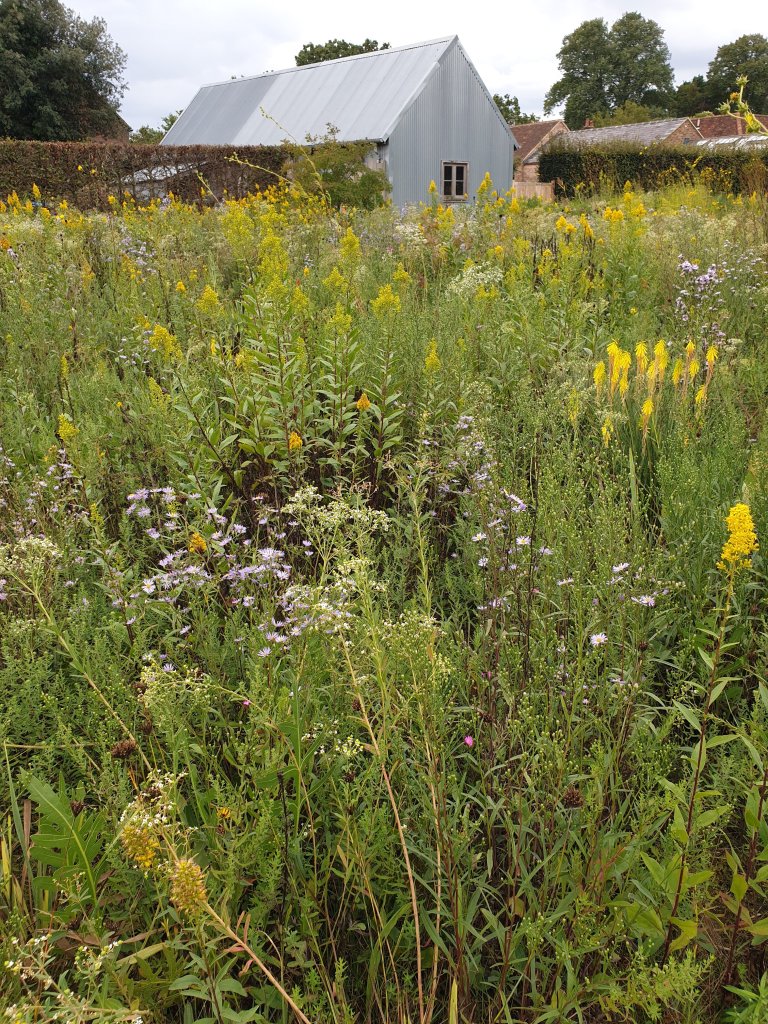
Then, there is the side garden – a sea of yellow in front of Ptolemy Dean’s perfectly configured shed :-
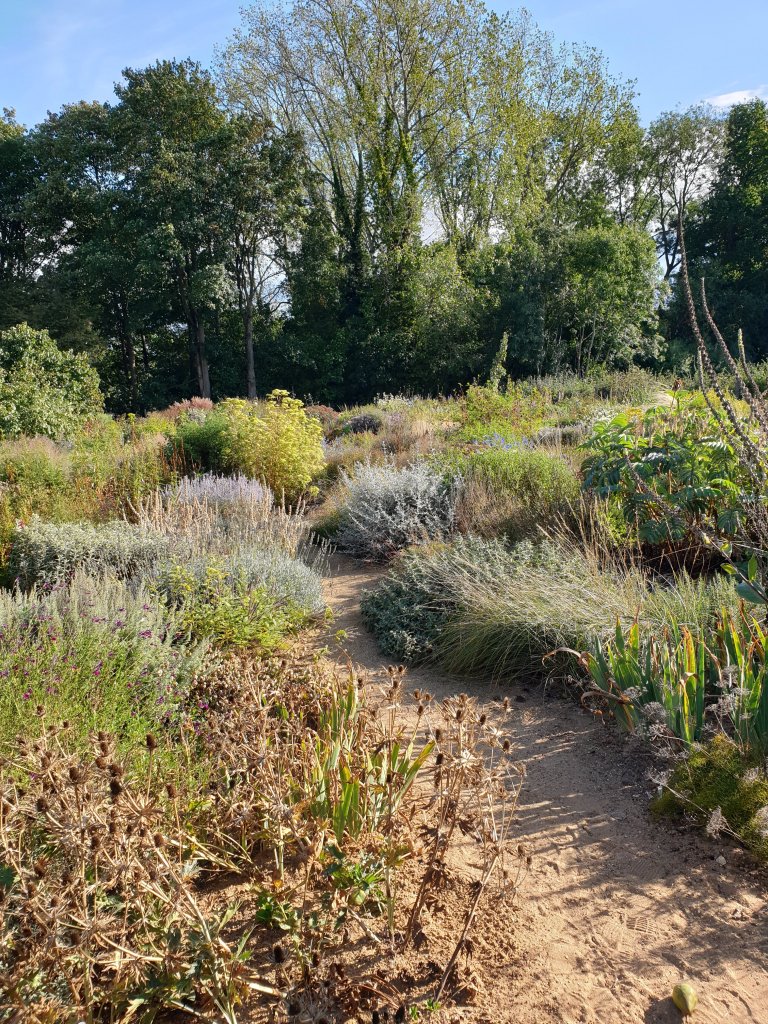
There is a new plant library laid out during Covid:-
And a new building under construction, designed by OKRA Studio:-
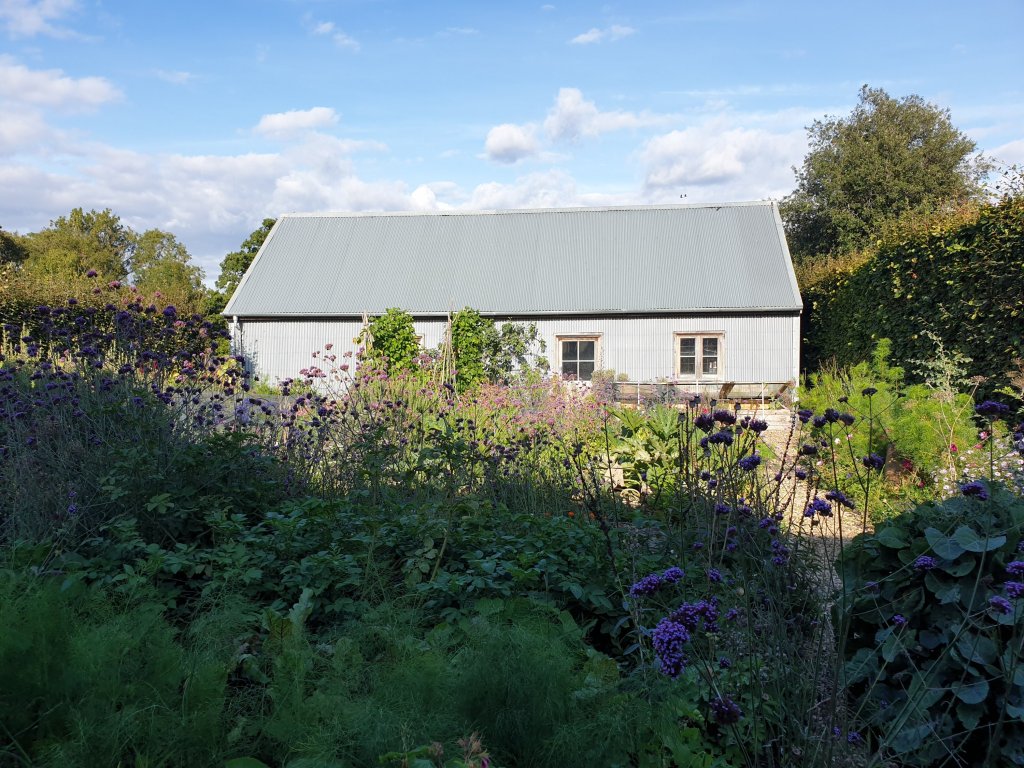
There are vegetables, like something from Beatrix Potter:-
I thought it was best when the sun came out, but now I’m not so sure:-

















You must be logged in to post a comment.