The Dig (3)

I am a tiny bit bemused by the exceptional amount of interest my anodyne, but enthusiastic comments about The Dig have had, most especially, it appears, in Alaska.

By way of postscript to what I have already written, I have been interested to discover what an exceptionally interesting person Peggy Piggott (née Preston) was, a formidable and remarkable archaeologist in her own right, entirely independently of her husband Stuart, who she divorced in 1954 (he spent the war years in India), when she married a Sicilian, Luigi Guido, who she then nursed after he had a psychotic breakdown. She was also, not coincidentally, the aunt of John Preston, who wrote the novel on which the book is based, although he apparently did not know her well because his father did not get on with her.

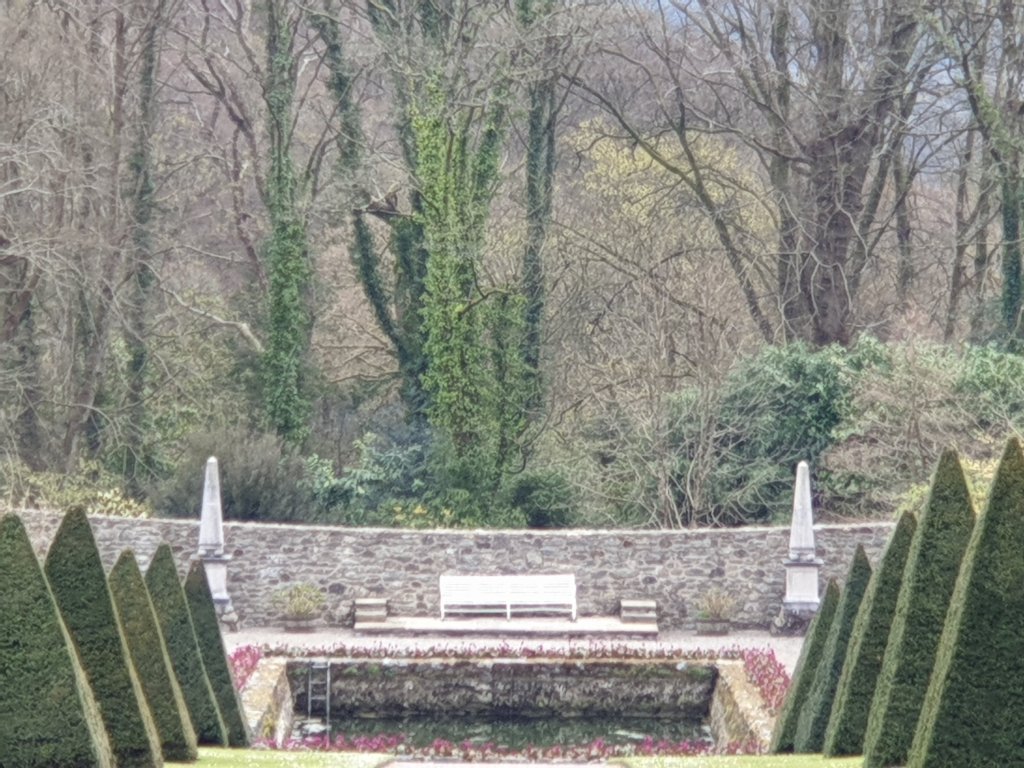
I was also a bit baffled by the house in the film because it is so evidently not Tranmer House, the rather dull Edwardian house where the real Sutton Hoo is based, but is instead, as several people have pointed out, Norney Grange in Shackleford near Godalming, a house designed by Charles Voysey with its incredible Vanbrugh-ian entrance porch, so prominent when Basil Brown arrives at the house to be interviewed:-

Norney Grange | Shackleford
Standard

The Dig (2)

The more I read about The Dig, the truer it seems to be – at least to the dynamics of the key players and the personality of Basil Brown. Someone has kindly alerted me to the attached account of Basil Brown, which quotes liberally from his diary:-

https://britainisnocountryforoldmen.blogspot.com/2021/01/is-britain-country-which-finally.html?m=1

Standard

The Dig (1)

We watched The Dig last night, a perfect piece of lockdown therapy exploring the circumstances surrounding the excavation of Sutton Hoo just before the outbreak of the Second World War. I wasn’t sure how close it is to what happened, based as it is on John Preston’s fictional account. Carey Mulligan is definitely a great deal more attractive than the real Edith Pretty. Ralph Fiennes is totally convincing as the rustic excavator. Stuart Piggott who joined the dig at the invitation of Charles Phillips was definitely gay. So, it feels convincing, but possibly only in the way that The Crown is convincing, taking liberties with the truth in the interests of dramatic invention. Anyway, it’s extremely enjoyable, not least for its depiction of the intellectual snobbery of Charles Phillips, the Cambridge archaeologist who arrives to supervise the excavation and take all the credit.

Standard

Vaccination

So, after a long wait, not knowing quite what was happening and not being able to find out, I got the call last night and we went this morning to the Queen Mary vaccination centre in Arts One and we were done – the merest pinprick, but the most enormous relief, like a large dark cloud which now is half removed, the endless anxiety and precautions, not that they stop, but they feel suddenly less a matter of life and death.

The snowdrops are out in the garden:-

Standard

Anglesey Bedspread

In our mourning for not being able to travel to Wales and missing the view of the mountains under snow, we have taken delivery of a bedspread which has our favourite places embroidered:-

Standard

The City (2)

My picture of the City now completely transformed by skyscrapers such that its distant profile bears not the faintest relationship to how it previously looked prompts the question how and why this has happened. After all, there was a moment not so long ago when the idea was that Canary Wharf should be the new Manhattan in order to allow the City itself to retain its character and integrity as a low-rise city, comparable to Paris, but without the boulevards, clustered round St. Paul’s. I know that Ken Livingstone was very keen while Mayor on liberating planning controls. But in the end responsibility for what has happened, good or bad depending on one’s point of view, must lie with the city planning authorities which is why I assume Peter Rees bears the greatest responsibility as City Planning Officer who, according to his biography, ‘led the planning and regeneration of this world business and financial centre from 1985 to 2014’.

Standard

The City (1)

I stopped as I was riding round Victoria Park this afternoon to photograph the City as seen from the far end of the park. I’m not sure what to think of it: a mirage ? What’s obvious is the extent to which its profile has changed so that the Gherkin – till recently one of the more recognisable buildings – has disappeared into the general high-rise mélange and the highest of the buildings, described by Edwin Heathcote as ‘the wodge’, is entirely nondescript. It’s what’s called ‘a cluster’. Another similar name springs to mind. All thanks to Peter Rees:-

Standard

Books for the New Year

You have to scroll down a long way to find The Art Museum in Modern Times, but there are lots of tempting books en route: The Crichel Boys, Marina Warner’s new memoir and Richard Wollheim’s Worms now reprinted, Midnight in Cairo, all available by mail order from JdeF. https://mailchi.mp/johnsandoe/books-for-new-year-and-winter-2021?e=2bdc7fa310

Standard