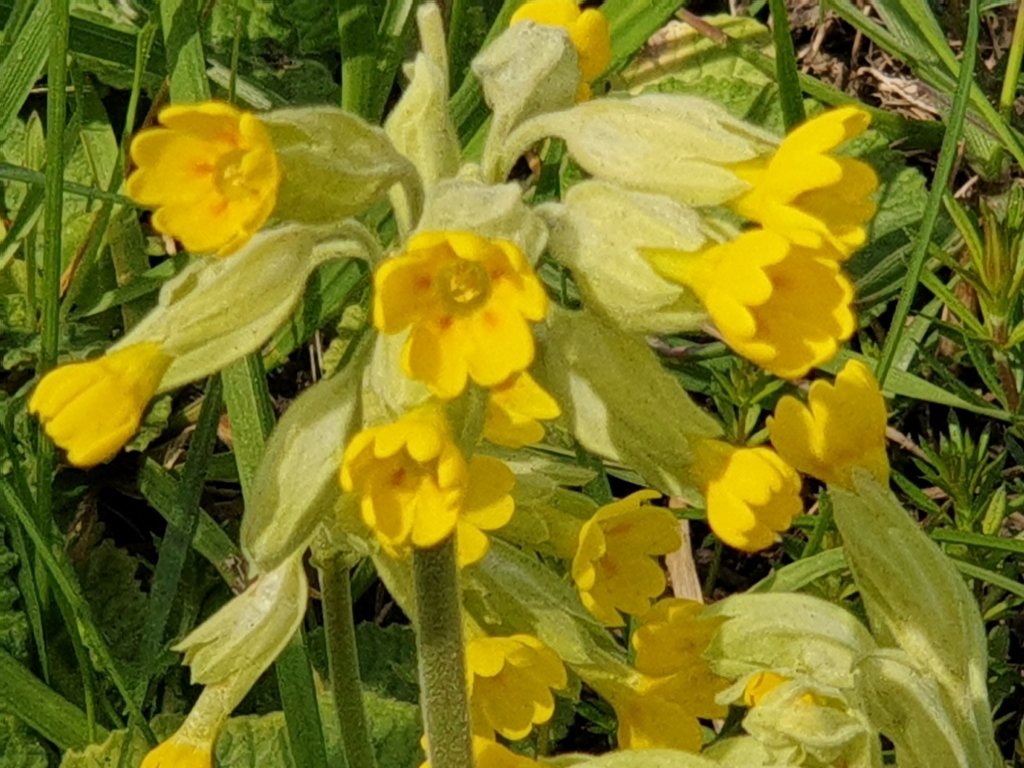
We went for our second vaccination in the Art Pavilion. There were cowslips in the park:-
And bluebells in the Novo Cemetery on the way back:-


We went for our second vaccination in the Art Pavilion. There were cowslips in the park:-
And bluebells in the Novo Cemetery on the way back:-
A very nice review in this week’s Spectator – it says exactly what I would want someone to think of my book as a guide to the known and unknown amongst museums, not wholly logical in the ones I have chosen to write about, except that they are almost universally ones that I admire:-
https://www.spectator.co.uk/article/from-temple-to-labyrinth-the-art-museum-today
There was a lively discussion last night organised by the Bard Graduate Centre about issues of museum display. Richard Rand, the Associate Director of Collections at the Getty Museum, spoke particularly interestingly about attitudes to display both at the Getty itself, where they are attempting to deal with the strange disjunction between the white austerity of Richard Meier’s architecture and the interior design by Thierry Despont, which was always an odd mismatch; and at the Los Angeles County Museum, where the new galleries are planned to be ahistorical – the works of art as ‘floating signifiers’. It looks like the new displays at Frick Madison are going to have a big impact on gallery thinking and gallery design. See the attached thoughtful article by Anne Higonnet on the differences between a psudo-historical and an ahistorical setting.
https://www.artforum.com/slant/anne-higonnet-on-the-frick-madison-85430
The campaign to save the Whitechapel Bell Foundry has entered a new phase, demonstrating how, if kept as a proper working Foundry, not just a tourist attraction attached to a boutique hotel, it can work with local artists on bell-related projects. What could be a better way to celebrate the easing of lockdown than for Robert Jenrick, the Minister responsible, to announce the salvation of the Bell Foundry and the repudiation of its development as a redundant luxury hotel ? Then, Big Ben and church bells throughout the country can ring out in celebration.
This, post is really for my American readers. In advance of the publication of my book, I am involved in a seminar this afternoon (Eastern Summer Time) organised by my friend, Ivan Gaskell, Professor of Cultural History and Museum Studies at the Bard Graduate Center in New York (https://www.bgc.bard.edu/events/1216/07-apr-2021-museum-conversations). I will be discussing the book with Ivan and Richard Rand, the Associate Director of Collections at the Getty Museum. I wasn’t sure how far it was a private event, but have now learned that others are allowed to join if interested, but you need to register in advance before 3pm (EST). Of course, it is possible to join this side of the Atlantic as well, but you will need likewise to register and it starts at 10pm (BST).
This is a slightly esoteric post, but I have been writing something about the historiographical difficulties of writing about museum architecture and was about to exempt the two great art museums by Louis Kahn – the Kimbell in Fort Worth and the Yale Center for British Art, both of which have been already much studied and are admirably well documented, partly thanks to an art historian, Patricia Cummings Loud, who wrote a big monograph on the Kimbell and then a subsequent book on The Art Museums of Louis Kahn, published by Duke University Press, of which I luckily have a battered copy. I have discovered that she only died quite recently (https://www.sah.org/about-sah/news/member-news/2021/03/09/obituary-patricia-cummings-loud-(1930-20212)), not, it appears, of COVID, so I salute her memory as a notable pioneer in the study and documentation of museums and I wish there had been more like her.
My book is published in the States on April 13th. I had hoped to be there to help launch it in New York at the time of the Frieze Art Fair in early May and even to see some of the museums I haven’t in New England, not least because so much of the book is an American story. It begins with the Museum of Modern Art in New York, and includes the Guggenheim (of course), the Whitney and the glories of the Kimbell and the Yale Center for British in its first chapter; then going on to such great monuments as the National Gallery of Art in Washington, the Menil Collection in Houston and the Getty Center in Los Angeles; I included the Neue Galerie in New York, one of my favourites, and Dia:Beacon upstate; and, in the last chapter, I look at the reinvention of the Barnes and the Whitney and the building of The Broad in LA. Now, I am really pleased that the book has been picked up by Publisher’s Weekly, which I hope will give it a boost:-
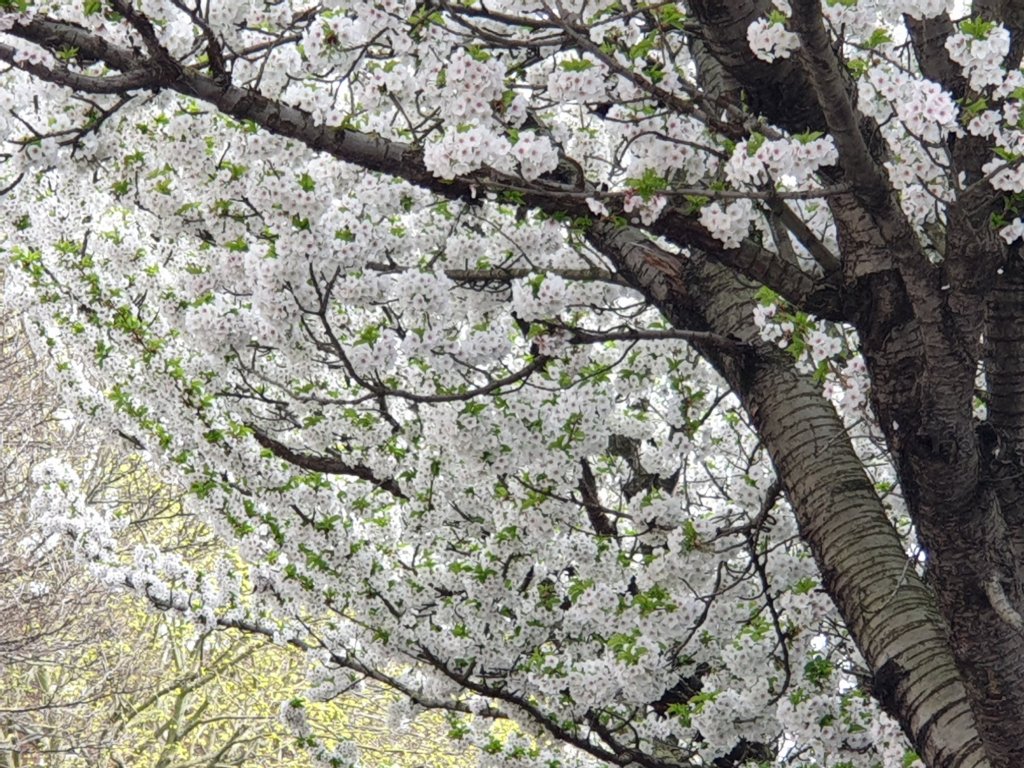
I know the Gentle Author has beaten me to it, but the quality of the blossom in the streets of East London is briefly spectacular, so that the dullest of local streets looks Japanese:-




You must be logged in to post a comment.