Peabody Housing, Silvertown

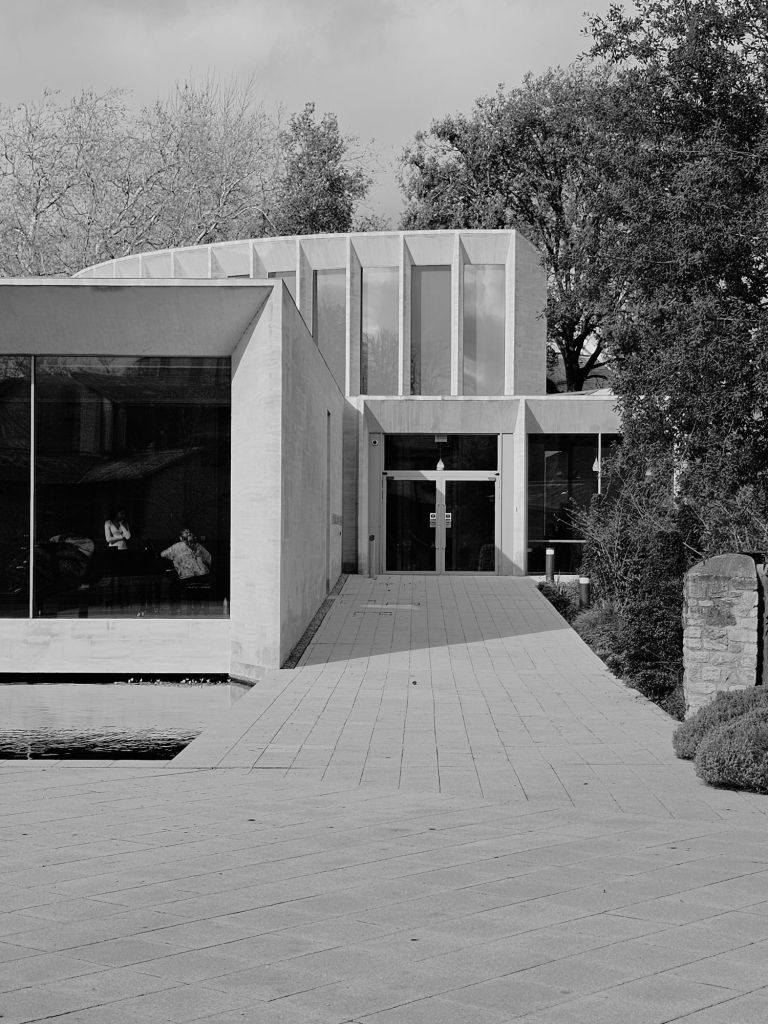
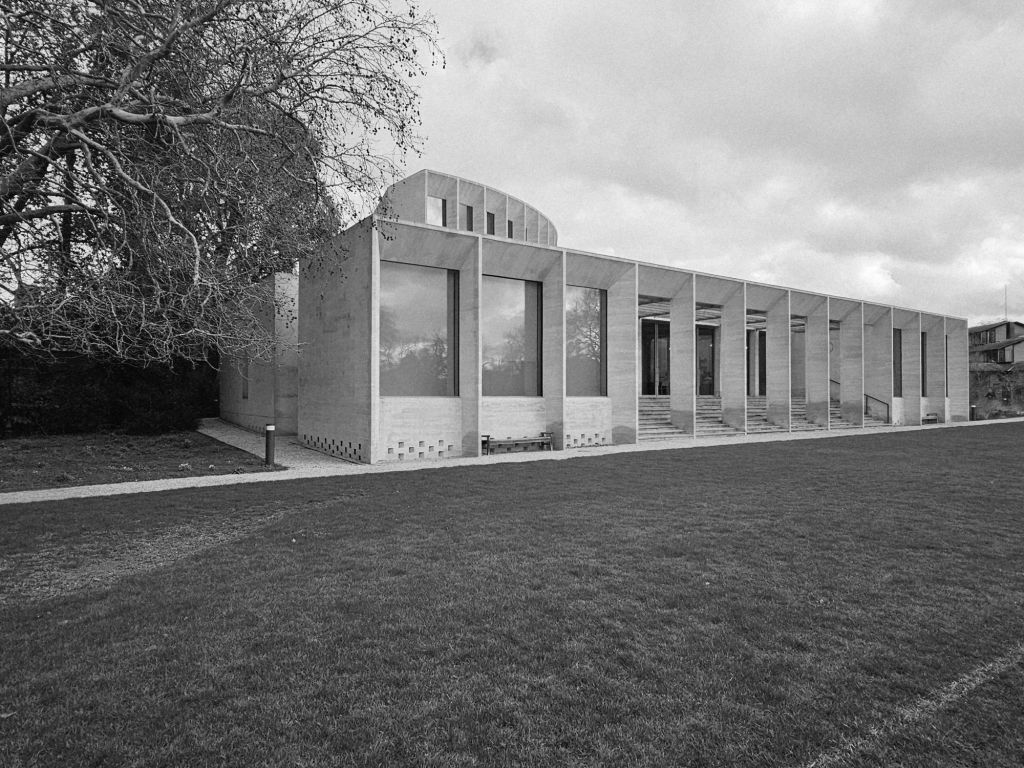
Following the award of the RIBA Gold Medal to Níall McLaughlin, I thought I would have a look at the housing scheme he did for the Peabody Trust, a relatively early work, commissioned in 2001 following a competition restricted to young architects.

It’s in Silvertown which feels a long way away, just south of Royal Victoria Dock, next to the vast and still undeveloped Millennium Mills and surrounded by housing from the 1980s. It was done in collaboration with an artist, Martin Richman, who suggested the dichroic film panels. It’s a little bit surreal – a piece of experimental modern architecture in an area of urban wasteland:-

Standard

John Vanbrugh: The Drama of Architecture (21)

I have kindly been sent the following screenshot by a friend who is a publisher:-

I’m glad that I’m up there with Rich Dad Poor Dad and so grateful to Lund Humphries for doing such a brilliant job of the book’s production.

Standard

South Library, Islington

I walked past Islington’s South Library this afternoon with its beautiful brickwork and monumental entrance, an unexpected piece of English baroque detailing.

Perhaps unsurprisingly, I find it was designed by Mervyn Macartney, who was Surveyor of St. Paul’s Cathedral, so an expert on Wren, publishing a book on Later Renaissance Architecture in England in 1901.

The library was finished in 1916, not a good year for architecture and was immediately taken over as a Food Control Office:-

Standard

The Vicar’s Library

In revisiting Marlborough, I surprised the librarian by asked about the seventeenth-century library which was concealed behind a locked door of one of the classrooms.  I could see that he was a bit sceptical.

I have managed to verify its existence.  It was the library of the vicars of St. Mary’s, Marlborough bequeathed to the town by the Rev. William White in 1678.  It must have been stored by the school and was looked after by Edwin Kempson who taught maths (before my time), had been a mountaineer, and was Mayor of Marlborough.

It was transferred on loan to the Bodleian in 1985 which is why its existence in the School has been forgotten.

Standard

Littlecote Manor

Littlecote is a big rambling Elizabethan house in the Kennet valley, the majority of it built by William Darrell from 1583.

We approached from the west.  The chapel to the north (left in the picture) is medieval: the conservatory to the south was added in 1809:-

There is topiary in the garden:-

Inside, we started in the Dutch parlour, a fascinating room with seventeenth-century genre paintings on the walls and what look like a more sophisticated, Italianate painting on the ceiling.  The Dutch paintings are traditionally said to have been done by Dutch prisoners-of-war during the second Anglo-Dutch War.  Recently, it has been suggested that they are later and could conceivably have been painted by the young Hogarth which looks implausible.  Either way they are fascinating. 

The ceiling painting:-

The wall paintings:-

Then you come into the Brick Parlour which has a surreal installation which the guide books don’t mention and date back to Peter de Savary’s attempts in the 1980s after all the armour collection was bought by the Royal Armouries to turn the house into some kind of folk museum:-

Beyond, the chapel is also fascinating, a Cromwellian survival:-

It altogether looks as if it deserves more investigation, since the entry in Pevsner does not give much information about the recent history of the house, nor the paintings.

Standard

Mildenhall Church

It’s a long time since I’ve been to Mildenhall Church, down a lane in the Kennet valley – so beautifully preserved with its Gothick or early Gothic revival pews and twin pulpit, half way between Batty Langley and Pugin.

As one comes in the church:-

The chancel:-

And details of the pews:-

Standard

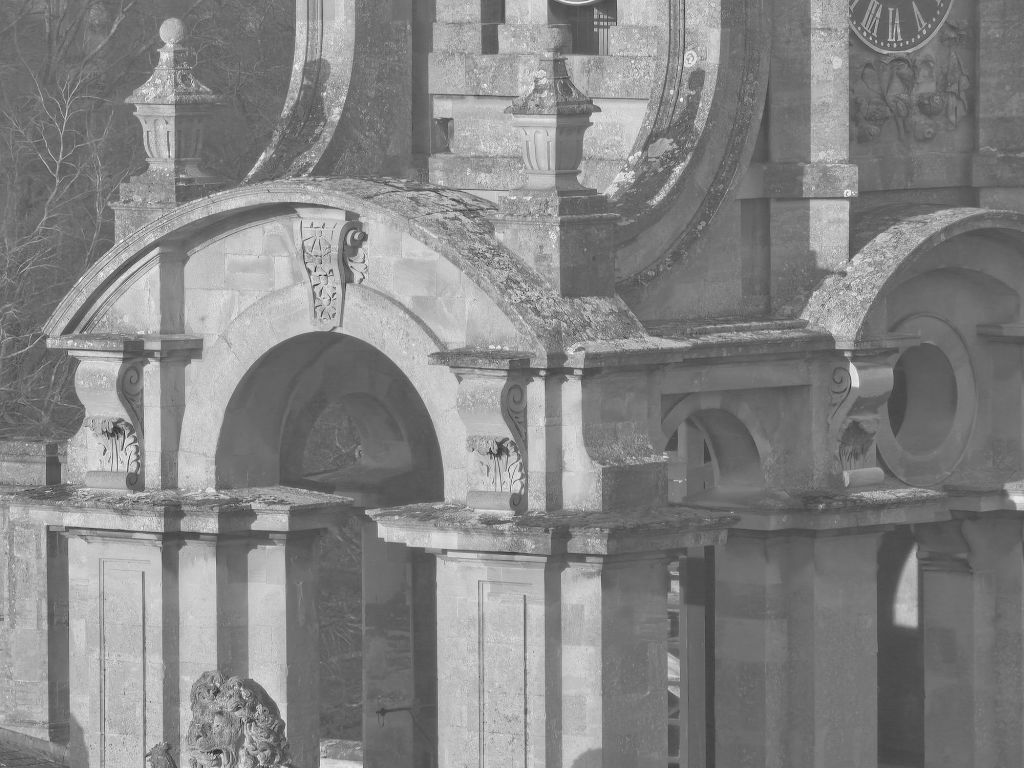
Seaton Delaval

I spent the day trawling through our photograph albums looking for photographs of our holidays in Scotland.

In amongst far too many photographs of people no longer with us, I was pleased to discover two photographs of Seaton Delaval, a house whose character is hard to convey photographically.

The first is an occasion when we made a detour driving down from Scotland in August 2000:-

The second was when I arranged to visit all the greatest Vanbrugh houses over a long weekend – was it in December 2008 ?

If I had remembered, I could have used them in my book….

Standard

Liverpool Street Station (37)

John McAslan has kindly send me an exploded axonometric of his design as I felt (and feel) that a drawing gives a better feel for the elegance of what he proposes, not just to architects.

It’s an arched structure which, rather amazingly, sits free of the train sheds:-

Standard

St. John, Horsleydown

I forgot to mention that I went to see the former rectory of Sr. John Horsleydown at the weekend.

I had no idea that it still survived only a couple of blocks south of Tower Bridge – an early eighteenth-century rectory, designed by Nicholas Hawksmoor, at the junction between Fair Street and Tower Bridge Road.

St. John Horsleydown was one of Hawksmoor’s later, and less monumental, churches, designed jointly with John James when the Fifty Churches Commission was winding down and had lost its enthusiasm for spending a lot of money on new churches. It was badly bombed in the war, but was only closed in 1968:-

Anyway, the Rectory survives next door, fairly intact, in what was the churchyard, now a public garden:-

Standard

Liverpool Street Station (36)

My blog post on the way home last night was possibly a bit too telegraphic even by my standards.

The event was extremely interesting and I thought completely persuasive.

First, there were two presentations on the last very clever and historically sensitive upgrade of the station during the 1980s when Simon Jenkins was a member of the British Rail Board. It was done by Nick Derbyshire who at the time was head of British Rail’s Architecture and Design Group (ADG). He extended the train sheds to cover the concourse and reconstructed the Victorian romanesque building immediately to the east of the Great Eastern Hotel. So, it is clear that it is perfectly possible to protect the original Victorian character of the station while at the same time modernising it.

John McAslan’s scheme is clever in that it accepts the need for new offices as required by the brief from Network Rail, but then provides a solution which is entirely in the spirit of the original train sheds, a piece of modern engineering, designed in partnership with Chris Wise, equivalent to the way they upgraded King’s Cross so successfully.

The current scheme by Acme which is vast and totally insensitive goes to the City’s planning committee in either February or March. They apparently approve 98% of schemes presented to them as compared to Maldon which only approves 40%.

So, the issue is: are the members of the City’s planning committee going to pay attention that there could be a better, more interesting and more ecological alternative scheme as designed by John McAslan ?

Could the board of Network Rail be encouraged to look at the alternative, not least its costing ?

As has been demonstrated at the Custom House, the City’s planning committee can on occasion come up with an alternative and better way forward which protects the character of the City while still allowing good quality new development. They should do the same at Liverpool Street.

Standard