Alongside the Priory is the dovecot, thought to be c.1600, a beautiful plain structure with a corbelled beehive dome:-

Inside, the nesting holes are spaced irregularly, with a round pillar in the middle on which to gather eggs:-

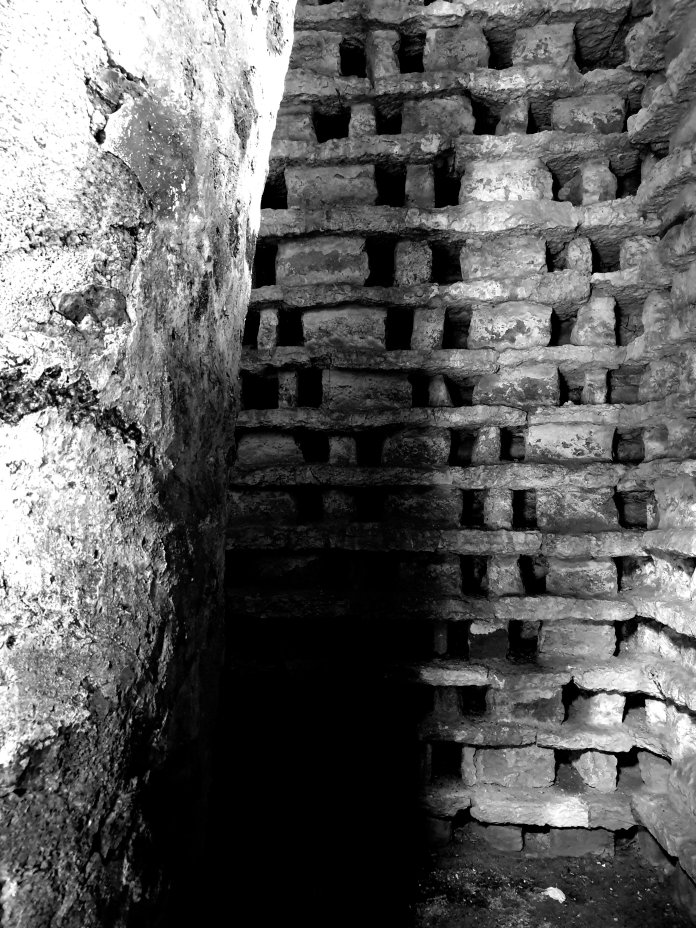

Alongside the Priory is the dovecot, thought to be c.1600, a beautiful plain structure with a corbelled beehive dome:-
Inside, the nesting holes are spaced irregularly, with a round pillar in the middle on which to gather eggs:-
We went out to Penmon Priory, a magical spot, founded by St. Cynlas, who gave it to his brother St. Seiriol in the sixth century, refounded by the Augustinians in the twelfth century:-

Good and robust Norman carving, as the Shell Guide says, on the tower arches:-


And a nicely carved corbel:-

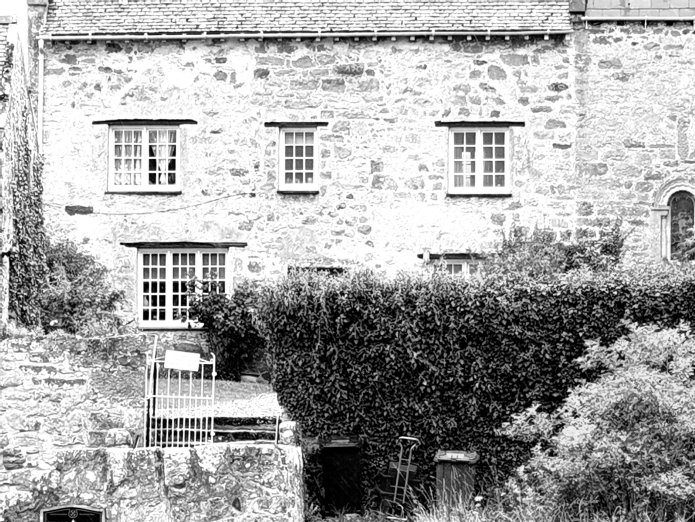
Next door, the Prior’s House, thought to have been rebuilt in the early sixteenth century:-
There is a little path close the the church which leads past a monastic fish pond full of reeds:-
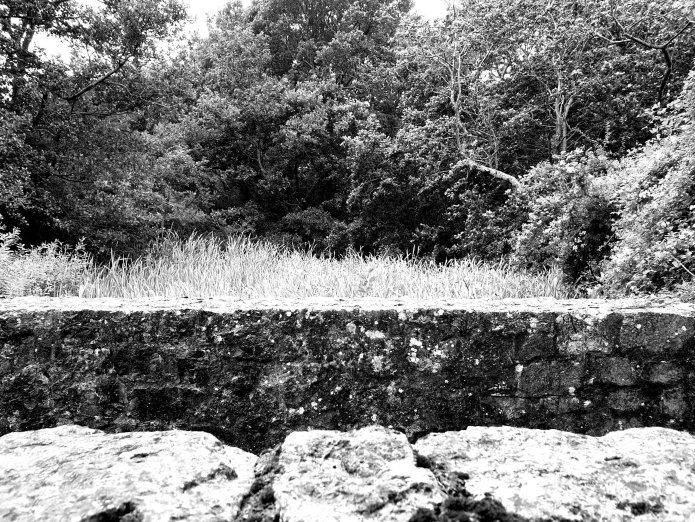
It leads to St. Seiriol’s Well:-


A calmer or more meditative spot is hard to imagine.
As has been pointed out on my Comments section, our involvement in the InterRail scheme has been reinstated, following the intervention of Grant Shapps, the Transport Minister, who presumably realised – or was encouraged to realise – that it was a massive own goal at this stage of planning for No Deal, a gratuitous emblem of how we are expecting to disconnect from Europe.
I have been criticised for thinking that this might be viewed as a symptom of insularity: that Brexiteers may love Europe, they just don’t like the EU. But I’m not sure that I buy this argument. The discussions about the EU and the vote to leave have surely not been purely about it as a political institution, but have been infected by a rhetoric that we will be better if we go it alone: that we should treat the English Channel as a barrier not a bridge. And No Deal will presumably have consequences vastly much more problematic in our casual, cultural relationships and our ability to travel freely across borders than just the abolition of our involvement in InterRail.
We haven’t been to the beach at Aberffraw for at least ten years as, not surprisingly, it is not exactly disabled friendly, being at least a mile from the nearest road. But this did not stop us from trying to walk along the track by the Afon:-
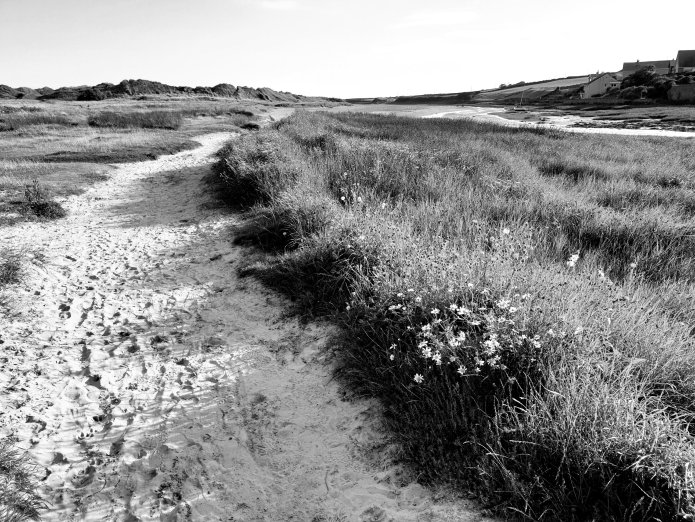
Past the cottages:-
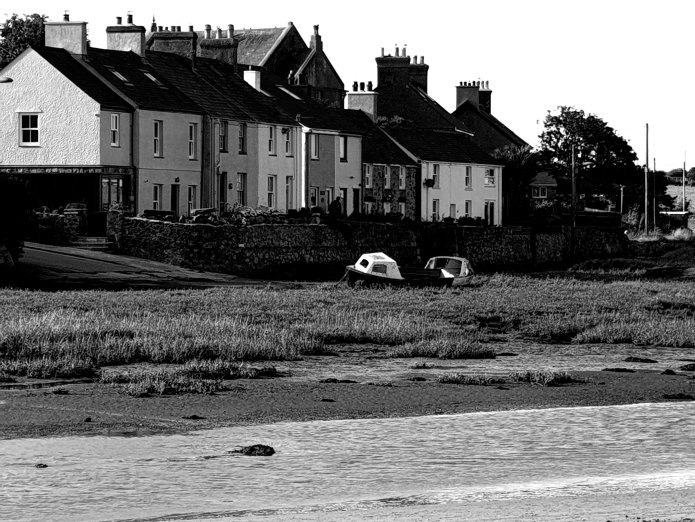
We got as far as the bend in the river with a small, fragile glimpse of the mountains beyond:-

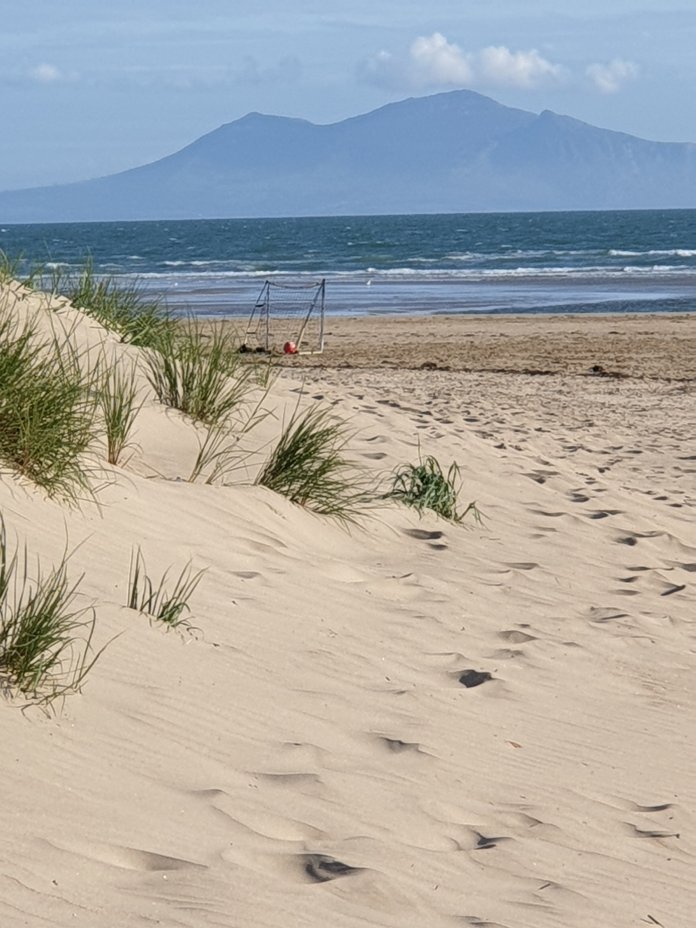
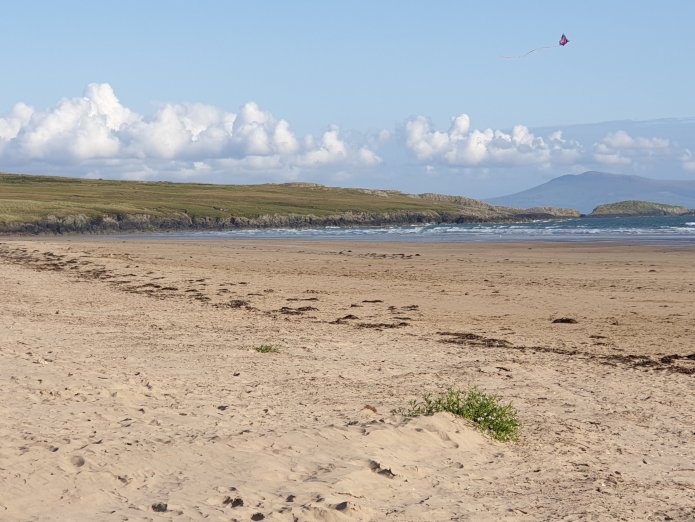
It wasn’t straightforward. I crept round to see an abandoned goal post, the great expanse of pristine sand and a single kite flying in the wind:-
I have just read that Britain is pulling out of the InterRail scheme which enables young people to travel round Europe in their gap year. A sign of the times. I bought an InterRail pass in 1972, its first year of operation, to travel round Eastern Europe, starting in Split in what was then Yugoslavia, travelling south to Dubrovnik, then on a single track train which took ten hours from Skopje to Lake Ochrid and on to Belgrade, Budapest, Prague, Warsaw and Berlin, often sleeping overnight on trains.
It was part of my education, learning about the culture of other countries and the kindness of strangers.
It was also part of the process of Europeanisation, breaking out from the narrow horizons of a childhood of almost no foreign travel.
I don’t know why it is being axed, but it is emblematic of the current retreat to neo-1950s insularity by those who have enjoyed, but not apparently learned from, decades of European travel.
A brief moment of transcendence with bright sun shining through fierce rain and a rainbow on the other side of the river and fields, and nearly two:-

Last night, we listened to a programme which we had been recommended (we missed it when it was first broadcast) about the wilful destruction – but it is not know by whom – of engravings and petroglyphs in a sacred cave belonging to the Wauja, indigenous people living in the Amazon whose way of life, music, and sacred rituals are under threat owing to Bolsanaro’s encouragement of the destruction of the rain forest and tolerance of pollution by mercury of the rivers. Factum Foundation, who are involved in the preservation of the Whitechapel Bell Foundry, had gone on an expedition in January 2018 to survey the cave. When they returned in September much of the cave had been destroyed.
I have stopped commenting recently on the fate of the Whitechapel Bell Foundry because I thought there was nothing left to say as we await with trepidation the decision of Tower Hamlets planning committee, now delayed, apparently because of the discovery of Roman remains under the Foundry.
But out of the blue, the Daily Mail has just published a succinct and pithy summary of the importance of the Foundry and the risk that it might be turned into ‘a prospective party pad for hedge-funders in search of a poolside mojito’.
The only thing missing from this account is that Historic England, the government agency responsible for the preservation of historic building, is supporting the Foundry’s destruction.
Maybe with the support of the Daily Mail, a few MPs might look into why this should be.
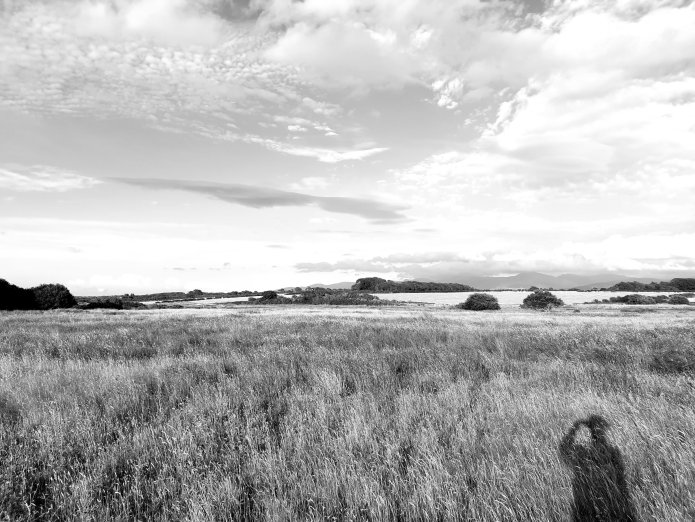
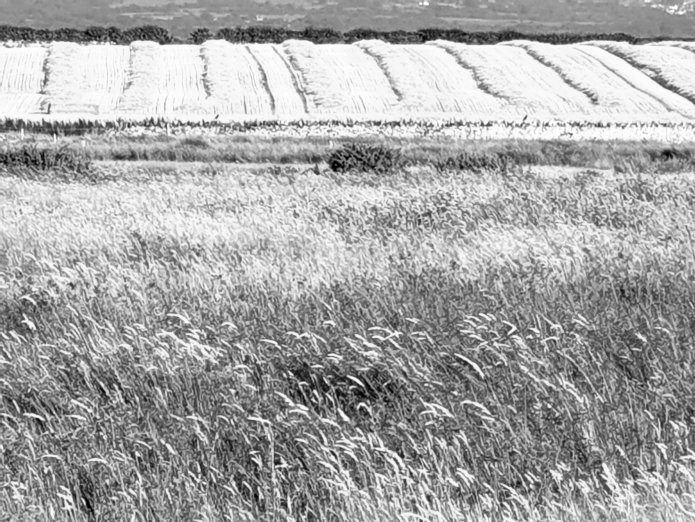
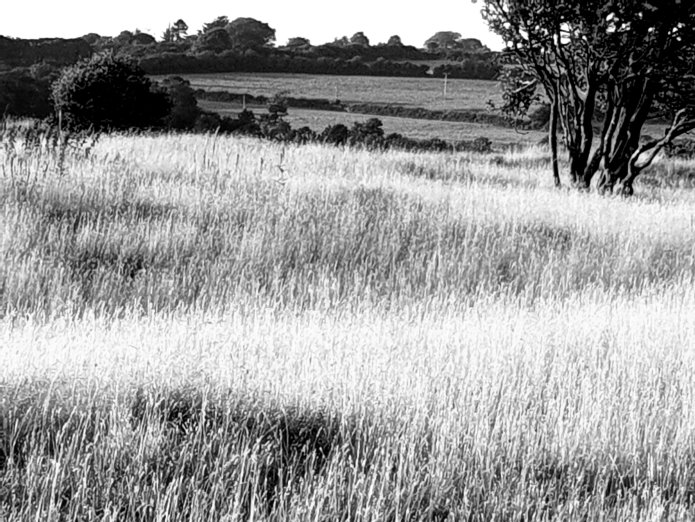
There’s a beautiful evening light tonight out on the fields after the recent harvest:-



I stopped on the way back to admire Basil Spence’s nuclear power station, designed in 1959 on the banks of an artificial lake on the recommendation of Dame Sylvia Crowe, the landscape consultant. I remembered that it looks particularly fine glowering from the south side of the lake:-

It’s impressive close up, too:-

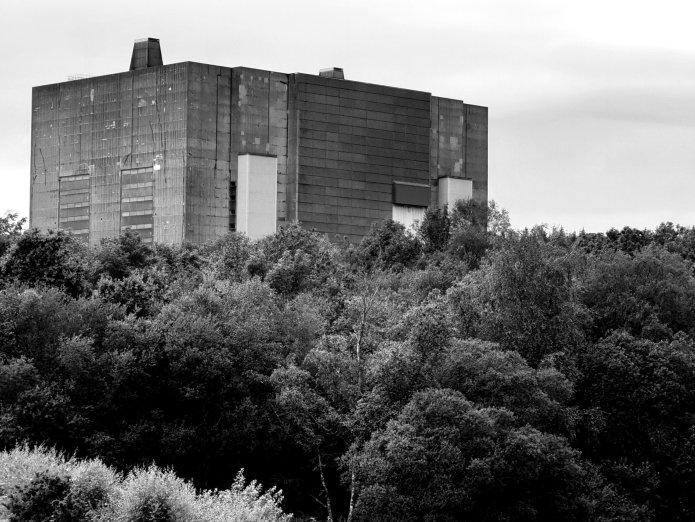

Long decommissioned, there has been an occasional threat of demolition.


You must be logged in to post a comment.