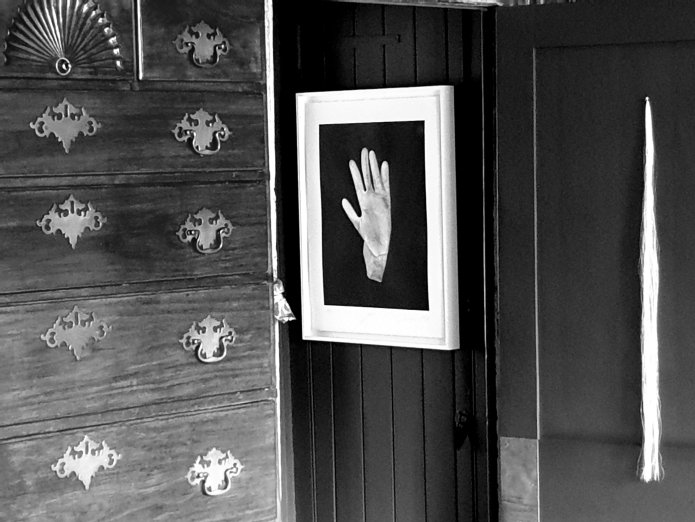
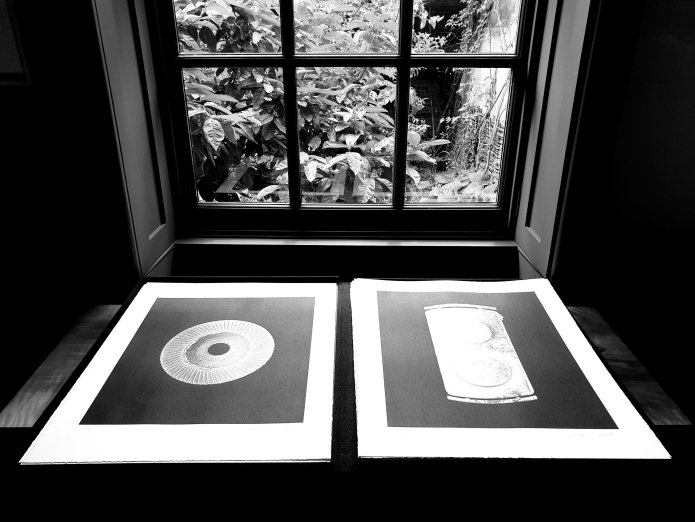
I visited Roubaix, or more properly, Tourcoing, to see Mat Collishaw’s Thresholds, which I missed when it was first shown in Somerset House in 2017. It reconstructs in VR Fox Talbot’s first exhibition, put on by the British Association for the Advancement of Science at King Edward’s School in Birmingham. I haven’t always been persuaded of the virtues of VR, but on this occasion it has the surreal and convincing ability to make one able to see the original display cases as they were in 1839, a remarkable effect of simulation.
Author Archives: Charles Saumarez Smith
La Piscine
I have been to the Musée d’Art at d’Industrie de la Ville de Roubaix at least once before, housed in the old municipal swimming pool, opened by Jean-Baptiste LeBas, the socialist mayor:-

The pool closed in 1985 and re-opened in 2000 as a museum, redesigned by Jean-Paul Philippon, who was one of the architects who worked on the Gare d’Orsay. It has a very nicely casual feel to it, born of the fact that the collection was originally planned as a source of inspiration to the local textile workers, housed in the local National High School, and that the building was not purpose-built, but is the conversion of a local civic amenity, full of good nineteenth-century sculpture, textile sample books and daylight:-


This is the reconstruction of the Atelier of Henri Bouchard, a beaux arts sculptor who was discredited by accepting an invitation from Goebbels to visit Germany:-


Musée des Beaux Arts, Lille
The Musée des Beaux Arts in Lille has, not surprisingly, a very strong French collection.
A wonderful Chardin:-

A set of very beautiful portraits by Louis-Léopold Boilly, including a study for his portrait of his close friend Jean-Antoine Houdon:-

Others are unnamed:-


Here he is doing a more finished portrait of M d’Aucourt de Saint-Just:-

The Unwritten Constitution
I have found it helpful to discuss the nature of the current constitutional crisis with my friend, Ivan Gaskell, in the Comments section of the blog.
The big problem is obviously that the Prime Minister has chosen to treat the result of the 2016 referendum as constitutionally binding whatever its consequences and without the need either to seek a further mandate for her more detailed proposals, nor to have discussed them in any great depth or secured support for them from either her party or parliament, assuming that what she now proposes is what the people wanted in 2016. So, there is a constitutional impasse. Of course, she may now secure a vote in parliament with the threat – actually, it’s blackmail – that the alternative is No Deal.
But does her deal have a democratic mandate in representing the natural and inevitable outcome of the referendum? I doubt it. People were not asked what sort of out they wanted, irrespective of the consequences. So, to secure a proper and effective mandate for what is now proposed should require a second referendum, on May 2, alongside the local elections, as happened (we may have forgotten) in 2011.
The Painted Hall
Although I have already seen the success of the conservation of Thornhill’s great Painted Hall at the Royal Naval College (vide my previous blog on the subject), I was still pleased to have been invited to celebrate its completion in advance of the public opening and admire the sophistication with which James Thornhill, who had been trained in the artisan tradition of late seventeenth-century painting, apprenticed to the Painters-Stainers’ Company in 1689, undertook such a gigantic and monumental task.
Here he is admiring his handiwork in the corner of the west wall, complete with the tools of his trade, maybe painted by Dietrich Andre, one of his assistants:-

George I, surrounded by his children and grandchildren – ‘a new race of men from Heaven’ (ie Hanover):-

And scenes from the great painted ceiling which show ‘The Triumph of Peace and Liberty over Tyranny’ (in these uncertain times, it is worth remembering that parliament has at least twice, if not three times, been responsible for kicking out a brutal autocrat in the interests of liberty, prosperity and democracy and against mob rule, which is alien to our constitution):-


The Address to the Nation
We sat crouched over the computer waiting for the address from the Prime Minister as we waited for our supper. She was late. Very late. Twenty five minutes late. Then, she appeared on screen in order to appeal to those people who voted in favour of Brexit nearly three years ago, as if she is their sole representative, not the House of Commons as a whole (let us not forget that the whole point of the vote was to reinstate the sovereignty of parliament).
She appears to have forgotten that there has been a General Election, which she called, more recently than the Referendum. She blames the House of Commons for not supporting her Deal, whilst ignoring that they voted against her Deal by an overwhelming majority, the biggest ever, and she has repeatedly refused to allow them to consider and discuss what the alternatives might be – and she seems to have been nearly equally as obtuse and negligent towards the Brexiteers as she has been towards the Remainers, let alone Her Majesty’s Opposition.
So, appealing to the country at this juncture in a broken voiced, pseudo-Churchillian manner, twenty five minutes late, does not seem the obvious best way to gain the support she – and the country – so desperately need.
Edmund Capon
I sometimes think my blog is at risk of becoming an obituaries column.
Anyway, I have just read of the death of Edmund Capon, the former Director of the Art Gallery of New South Wales, who I got to know a bit on visits to Australia in the late 1990s, when I was twice a judge (actually, I think I was the one and only judge) for the Moran portrait awards and once a guest of Gordon and Marilyn Darling, who knew him well.
Edmund struck me as a sort of folk hero: very dry, extremely knowledgeable, funny and very hospitable. We once played as partners in billiards and easily defeated whoever our opponents were. One could buy versions of his socks at the Art Gallery and he went on walking holidays with the Prime Minister. He was a candidate to be Director of the V&A in 1988, but claimed to have disqualified himself by saying that he wanted to direct it, rather than be a poodle of the Trustees.
It’s probably unlikely that someone so outspoken and intellectually unorthodox would nowadays be appointed as a museum director, but museums will be the poorer if they don’t have such powerful and effective (and unorthodox) advocates.
Kevin Roche
In reading the recent obituaries of Kevin Roche, the Irish American architect who had worked for Maxwell Fry in London before going to study under Mies van der Rohe at the Illinois Institute of Technology, I had forgotten that it was Roche who was hired by Thomas Hoving on becoming Director of the Metropolitsn Museum in 1966 as architect. The brief from Hoving was that he wanted, ‘a new attitude…Hospitality above all’. Roche greatly endeared himself to Hoving by describing the Museum as ‘a bleeding mess; it’s more an open storeroom than a series of open galleries’. And it was Roche who proposed creating the steps at the front of the Museum which most people assume have been there forever, but are actually a creation of the democratic 1960s.
Eileen Hogan
We were sent a copy of the catalogue of Eileen Hogan’s exhibition Personal Geographies at Yale Center for British Art in May. It includes a reproduction of the middle portrait of the triptych Eileen did of Romilly SS between March 10 and April 17, 2010 (the catalogue information is wonderfully precise) in oil, wax and charcoal on medium, rough, white paper mounted on board. I reproduce it, partly in celebration of the book and forthcoming exhibition, which together will be a meticulous record of Eileen’s work as a portrait painter (occasional), but more as a topographical painter recording the secret gardens of London with passionate visual intensity; and, also, because I discovered last night that Yale Center for British Art allows anyone to reproduce any work in their collection, providing it is out of copyright (ie more than 70 years old), without fear of the copyright police, in the interests of free scholarly knowledge and investigation of their collections:-

Bauhaus in Britain
In the intervals of going to the Maastricht art fair, I have been reading Alan Powers’s book on the reception of bauhaus ideas in Britain in the 1930s – Bauhaus Goes West: Modern Art and Design in Britain and America. The myth is that Britain provided an inhospitable environment to Gropius & co., but Powers demonstrates very clearly how Gropius was greeted on his arrival at Victoria Station by a welcoming party, consisting of Jack Prichard, who housed him and Ise at little or no cost in the Lawn Road flats, found him work and introduced him to other architects, and P. Morton Shand, who had already written extensively on German architecture in Architectural Review and was to translate Gropius’s New Architecture and the Bauhaus, published by Faber and Faber in 1935. When Gropius left for Harvard in 1937, Prichard organised a dinner for 100 of his artist and scientist friends at the Trocadero with a menu designed by László Moholy-Nagy. So, it’s hard to view Gropius and the many other graduates of the Bauhaus who emigrated to London, including Breuer and Moholy-Nagy as wholly unappreciated.
You must be logged in to post a comment.