The Revamp

I was pleased to see that Olly Wainwright listed the changes at the RA amongst his top ten architectural buildings of 2018:-

https://www.theguardian.com/artanddesign/2018/dec/19/top-10-architecture-of-2018.

We’ve had over a million visitors in the seven months since Burlington Gardens opened on May 19th. – not bad for an institution which normally only gets a million visitors in a year as a whole – and over 100,000 to the new Collections Gallery.

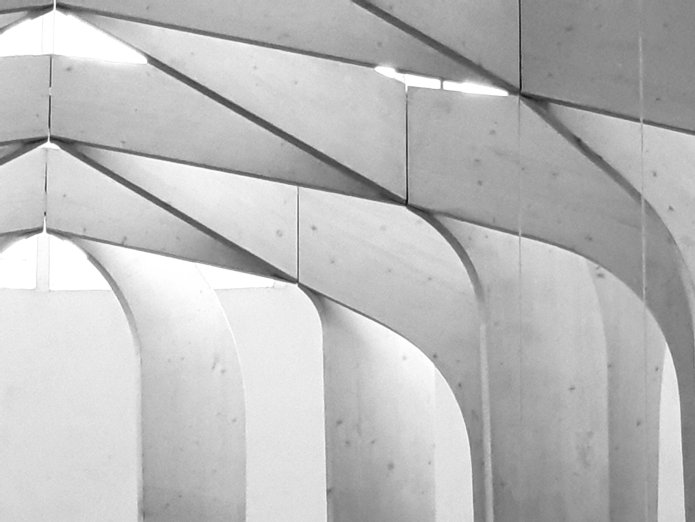
I’m also pleased that he acknowledges the symbolic significance of opening up the Royal Academy Schools.   This was always at the heart of David Chipperfield’s idea for the project, based on his belief that American museums needed to encourage an understanding of art as a practice, not just a finished result.

Standard

The New Jerusalem Bible

As a footnote to the comments and complaints (my own included) about modern translations of the Bible, I remembered that my father was in some way involved with the New Jerusalem Bible. He was. After retiring from his job with the C of E, he was employed as an editorial consultant to Darton, Longman and Todd, responsible for updating the Jerusalem Bible in line with modern biblical scholarship, basing the translation as far as possible on the original Hebrew. In the summer of 1978, he recruited Dom Henry Wansborough, a monk at Ampleforth, to look over the Letter to the Hebrews and he took over the project as a whole, taking seven years on the project, four hours a day. The problem with the translation seems to have been that it was done for purposes of scholarly study, not reading aloud, concentrating on archaeological accuracy in its use of language, not resonance, clarity and sonority.

Standard

Westminster Cathedral (2)

I omitted to mention that one reads the lesson from the gigantic Cosmatesque pulpit, enlarged in 1934 by L.H. Shattuck to accommodate the retinue of clerics who accompanied Cardinal Francis Bourne, the fourth Archbishop, as he preached, and that the effect of the bright lighting is that one can see nothing of the large congregation. This maybe is an advantage.

Standard

Westminster Cathedral (1)

I was asked to read the final lesson in one of Westminster Cathedral’s annual carol services, a slightly terrifying experience for a non-Catholic to read the opening of St. John’s gospel in a modern translation (the New Jerusalem Bible) when the St. James’s version is so well known. But everything else was wonderful: the full panoply of the modern Catholic church, with two Bach cantatas (140, translated by Richard Stokes, and 110), a long Excelsis by Haydn sung by a treble solo, and a beautiful Poulenc Christmas Responsory, all performed with full choir and orchestra in J.F. Bentley’s chancel.

Standard

Tom Monnington PRA

We had a visit this morning from the son of Tom Monnington PRA, a realist painter who was trained at the Slade by Henry Tonks, turned to geometrical abstraction after the war and was elected President of the Royal Academy in 1966 (as became clear from the minutes of his election, by only a narrow margin over Carel Weight):-

My impression is that Monnington began the modernisation of the RA, by encouraging public visits to what had previously been treated as a purely private institution, celebrating its 200th. anniversary with an exhibition on the Bauhaus, and, not least, encouraging Bryan Kneale to do the exhibition British Sculptors ’72, a landmark.

These were his notes for speeches:-

Standard

Co-education

I took slightly longer than usual to get into work today because I became unexpectedly engrossed in my old school magazine, which, since it happened fifty years ago, is devoted to the advent of co-education at Marlborough College.   The girls were described as ‘the icing on the cake’.   ‘This school is a boys’ school and will remain a boys’ school, but it will be a better boys’ school for having a few girls in it’.   The attitudes towards co-education were, in retrospect, antediluvian, but it was at least a small step in the right direction.   Fifteen girls arrived amongst 800 boys.   I was at a disadvantage being small, stunted and scrofulous.   It was September 1968.

Standard

Succession Planning

I was interviewed for this piece some time ago and missed it on its appearance yesterday.   It sounds a bit Goody Two-Shoes, when I was still thinking of the issues surrounding succession in theory, rather than its reality next week:-

https://www.theguardian.com/stage/2018/dec/14/kiln-royal-academy-artistic-director-indhu-rubasingham-charles-saumarez-smith-vicky-featherstone?CMP=Share_AndroidApp_WordPress

Standard

Mantegna Bellini

We went to see the exhibition Mantegna Bellini in the Sainsbury Wing, which allows one to compare the two great masters of the second half of the fifteenth century in Venice and Padua – Mantegna, academic and austere, Bellini schooled in his father’s workshop, more sacred, less innovative. It’s amazing to start with their two versions of The Presentation in the Temple: Mantegna’s from Berlin, Bellini’s, twenty years later, from Venice: Mantegna’s tight and fierce and close, Bellini’s sweeter and more lyrical. The contrast between their two depictions of Agony in the Garden, both in the National Gallery, is less extreme: Bellini’s landscape broader, less parched and less condensed. Bellini comes out of the comparison better than expected – tougher as an artist, and with more emotional depth, a brilliant draughtsman, as in his Lamentation in the Uffizi. Of course, many of the best Bellinis come from the collections of the National Gallery itself, bought on Charles Eastlake’s buying sprees in the 1860s or, as in the case of The Assassination of St. Peter Martyr, presented by his widow after his death. A beautiful, thoughtful, well presented exhibition.

Standard

House of Lords Debate

While the 1922 Committee was overseeing the vote for the planned, but failed, putsch against the Prime Minister, the House of Lords was engaged in a much more civilised activity, celebrating the 250th. birthday of the Royal Academy:-

https://hansard.parliament.uk/lords/2018-12-12/debates/3CD3342F-22E6-4985-82C4-229D33805EF5/RoyalAcademyOfArts250ThAnniversary

I always find it interesting reading their debates – the curious mixture of nineteenth-century civility with often well informed and not necessarily anticipated comments.   

Reading the debate on the Royal Academy, I am pleased to see that two of the current issues facing the Academy on my departure were both raised:  one is the ability of the Royal Academy Schools to continue to accept European students post-Brexit;  the second is whether or not the Heritage Lottery Fund might consider reintroducing its Catalyst fund to help it to raise funds for its endowment, since it was the availability of matching funds which made it possible for the Ashmolean, for example, to embark on its successful endowment campaign.

I was also glad that three great supporters of the Academy – Lords Cormack, Crathorne and Luce, all three of whom have been frequent visitors – all acknowledged the importance of the government’s support of what is essentially an independent institution by providing government indemnity, without which its exhibition programme would be unsustainable, and the advantage of a long-term lease of Burlington House, which gives it security of tenure and the ability to plan for its long-term future.

Standard

Plaster Monuments

I had the pleasure of showing Mari Lending, the author of Plaster Monuments:  Architecture and the Power of Reproduction, round not just Burlington Gardens, but Burlington House as well.   It made me realise how powerfully David Chipperfield has made use of the echoes and original form of Pennethorne’s building and through Pennethorne to Palladio’s Teatro Olympico, whose design may have informed his Lecture Theatre;  but also the way that even quite modernist architects, like Jim Cadbury-Brown RA who designed the library and Norman Foster RA who designed the Sackler Galleries, made reference to, and were deferential to, the sense of history in the palimpsest of buildings which is the modern RA. 

We went first through the Schools where the casts were apparently nearly eradicated in 2000:-

image

image

image

image

image

image

image

Then up to the Sackler Galleries:-

image

image

image

Standard