The Marram Grass

Off to The Marram Grass for lunch:-

image

image

Everything is local:  Anglesey seabass, Anglesey mackerel, Menai mussels.   Anglesey water ‘filtered by an ancient layer of glacial gravel’. Snowdon Lager. Local wines from the Conwy Valley (£60 a bottle, so I’m not trying it for lunch).    They’ve got grapes growing on the veranda outside:-

image

This is the Mackerel Mousse with sheep’s yoghurt, goat’s cheese, Jaspel’s cider jelly and preserved local fruit:-

image

And mussels:-

image
I used to go there for breakfast to use the wifi.

Standard

Museum Numbers

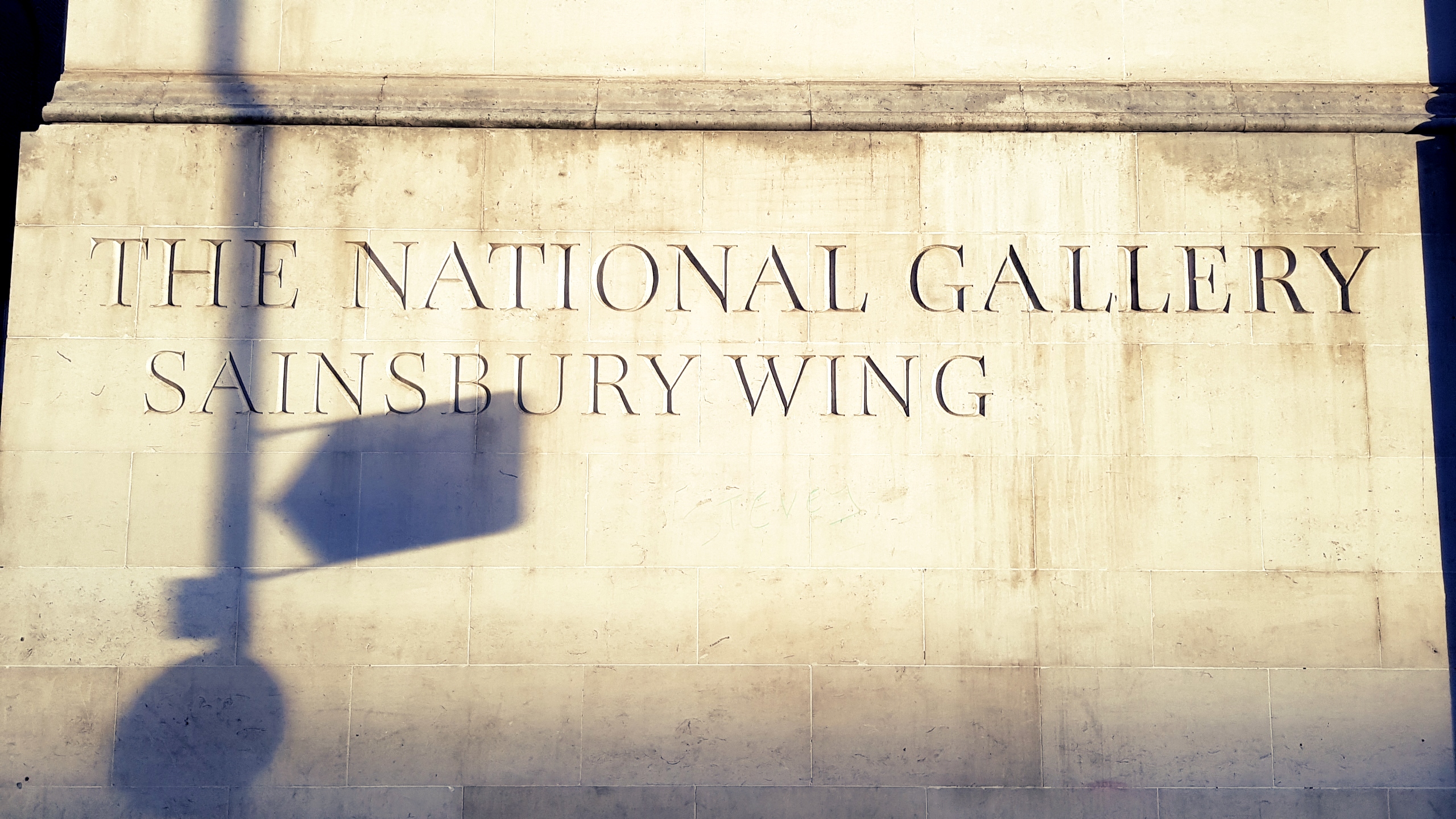
I have been pondering the report in today’s Times that museum chiefs are perplexed that the numbers of people visiting the London museums are down. But this is surely inevitable given anxieties about terrorism: nobody from Tunbridge Wells is going to be particularly keen to come to London if there is a chance of being blown up, even if they can get there, given the state of Southeastern trains (it may not have escaped people’s attention that the teenager recently prosecuted for terrorism had been planning to blow up the British Museum). The other issue which is more problematic is the way that international tourism gradually creates its own special places, which domestic tourists and people living in cities then try and avoid. I feel this myself when I come out of Westminster tube station. You are in tourist-ville. The National Gallery has generally managed to avoid this atmosphere, but Trafalgar Square has not. The answer surely is what one does to attract non-metropolitan visitors, rather than lament their absence.

Standard

Bodorgan

I have always been fascinated by Bodorgan, a house which stands prominent on the Malltreath Estuary, but is very severely secret, closely guarded from all forms of public access by the fierceness of its gamekeepers.

The house was apparently designed by Samuel Cooper, who moved to Beaumaris in 1776 and worked as assistant and clerk of works to Samuel Wyatt at Baron Hill, the other big house on the island. After finishing work at Bodorgan in 1783, he drew up designs for Plas Newydd.

I had been told that one gets a good view of the house from the footpath on the other side of the estuary. This is not strictly true. There is a gap in the trees from which one gets a very distant view of the garden façade and the boathouse on the shore below, but this view leaves one not much the wiser as to the character of the house (and this is taken with the nearest I have to a telephoto lens):-

image

But at least we had a nice walk through the woods:-

image

image

And got a good view of the estuary itself:-

image

Standard

Caspar Purdon Clarke

I have been reading about Caspar Purdon Clarke, the fourth Director of the V&A, who took over from John Henry Middleton in 1896 and left in 1905 to become – unsuccessfully – the Director of the Metropolitan Museum.

I hadn’t realised that he began life as a student of the National Art Training School in South Kensington before joining the Office of Works as an architect, working on the Houses of Parliament before transferring to the Works Department of the South Kensington Museum and travelling to Egypt to help on the construction of James Wild’s Church of St. Mark in Alexandria. In June 1874, he went as Superintendent of Works on the Legation in Teheran, where he was able to act as an agent for the acquisition of Persian objects for Christopher Dresser and recommending the creation of plaster reliefs of the Achaemenid stone reliefs at Persepolis. In 1876, he applied for a post as Assistant Keeper, but was turned down. It was only in 1883 that he became Keeper of the Indian Museum, transferring to the art collections in 1892.

He was interested in inherited design traditions and how they are passed down within the building profession through practice and word-of-mouth (this was part of the philosophy of the National Art Trining School), which, not surprisingly, made him a popular figure as a Freemason on both sides of the Atlantic.

Standard

Jan Morris

One of the things that I have done on holiday is to listen to Jan Morris, aged 91, talking about her attitude to the British Empire, which she has written about in her great trilogy of books on the subject and describes as equivocal in her role as a journalist and historian, but is actually deeply romantic and suffused with the experience of Empire, now increasingly remote and nearly impossible to recover, except through her voice and choice of accompanying music.

I strongly recommend it:-

https://www.bbc.co.uk/programmes/b0b7fps6

Standard

Newborough

The weather is not so good in Anglesey, so I thought that I would walk to the local village to buy some bread and see what had changed since we were last here.

I stopped at the Marram Grass, the restaurant in the local caravan park, which is now listed in the Good Food Guide.   It’s acquired its own pop-up potting shed with a home distillery and bar:-

image

On the other side of the road is their farm project, where you can see what you eat:-

image

image

Then, I walked up the road past the Wesleyan Chapel, which says 1785 on the front, but was rebuilt in 1861:-

image

The cemetery at the back has good slate tombs:-

image

image

But the house next door is now unoccupied:-

image

image

The great Prichard Jones Institute, too, is closed:-

image

And the little post office is now a café:-

image

Standard

Llanddwyn Beach (1)

We went down to the beach at the end of the day.   Llanddwyn Island was apparently a place of pilgrimage in the fifth century, when young lovers came to pay their respects to St. Dwynwen, the patron saint of lovers (the Welsh apparently now celebrate St. Dwynwen’s Day on 25th. January instead of St. Valentine’s Day in February):-

image

image

image

Standard

The Stepping Stones

We walked down to the Stepping Stones, said to be Roman in origin, but renewed for the coastal path a few years ago, to watch the birds on the river – peewits and flocks of geese, two egrets and in the distance the hills of the Lleyn Peninsula:-

image

Standard

The Dovey Valley

I stopped on the way back from the Centre for Alternative Technology to take a photograph of the green fields of the Dovey Valley, looking across the valley towards Penegoes, where Richard Wilson was born in 1714, son of the rector and taken off to London when he was fifteen by his uncle, Sir George Wynne:-

image

Standard