I thought I remembered that there was a branch line beyong Epping to Ongar. There was. It was operated by steam until 1957 when the line was electrified, but the trains were only four carriages long. The loop at North Weald was closed in 1976. Blake Hall was officially closed in 1981, although drivers were apparently willing to make unauthorised stops on request. And the branch was finally closed in September 1994, so is no longer available to take the Cabinet to their nuclear bunker in Kelvedon. I find it odd to think how much the tube map has been quietly doctored during my lifetime without anyone, except maybe railway fanatics, and perhaps the Cabinet, noticing.
Author Archives: Charles Saumarez Smith
Epping Forest
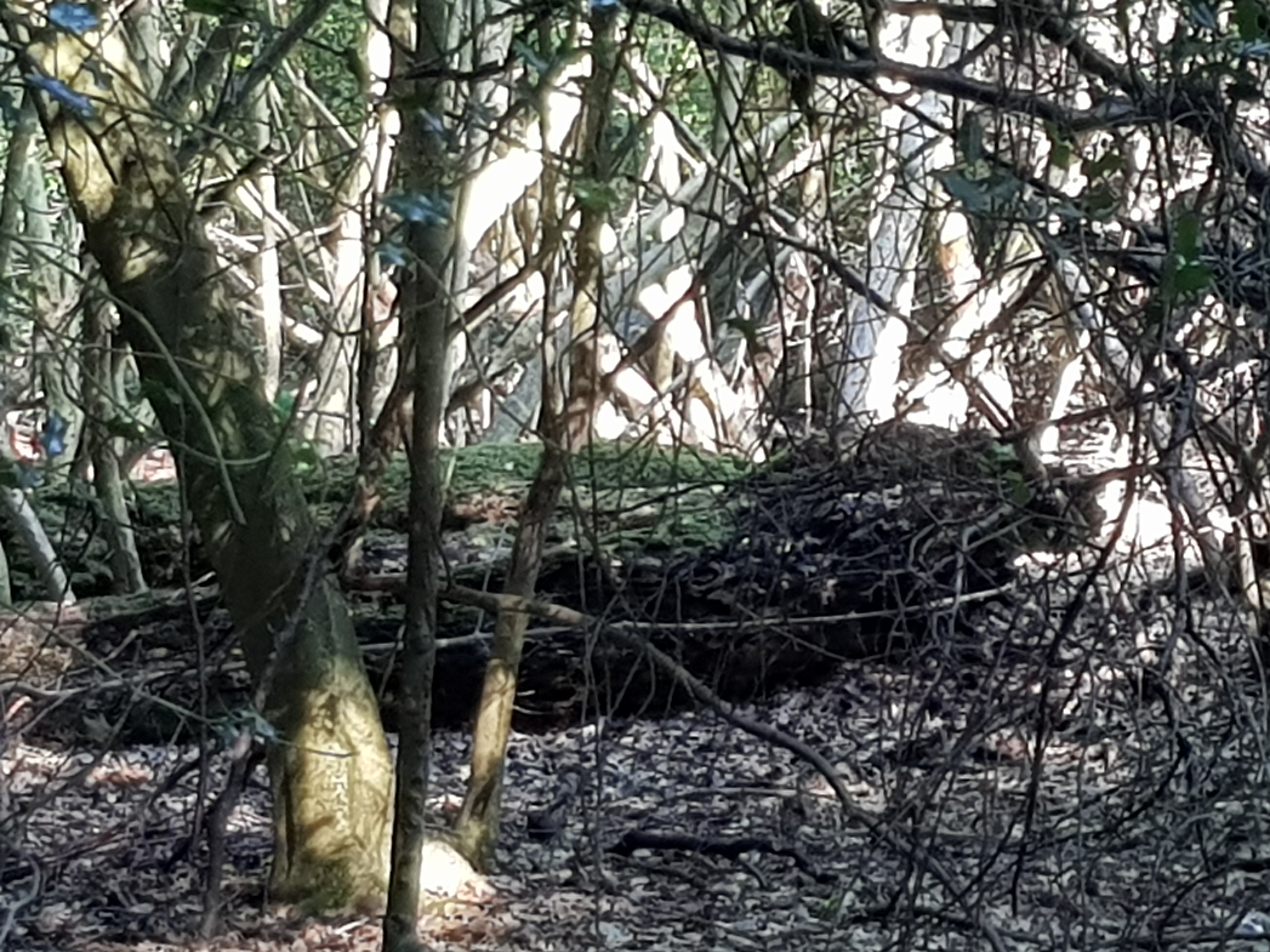
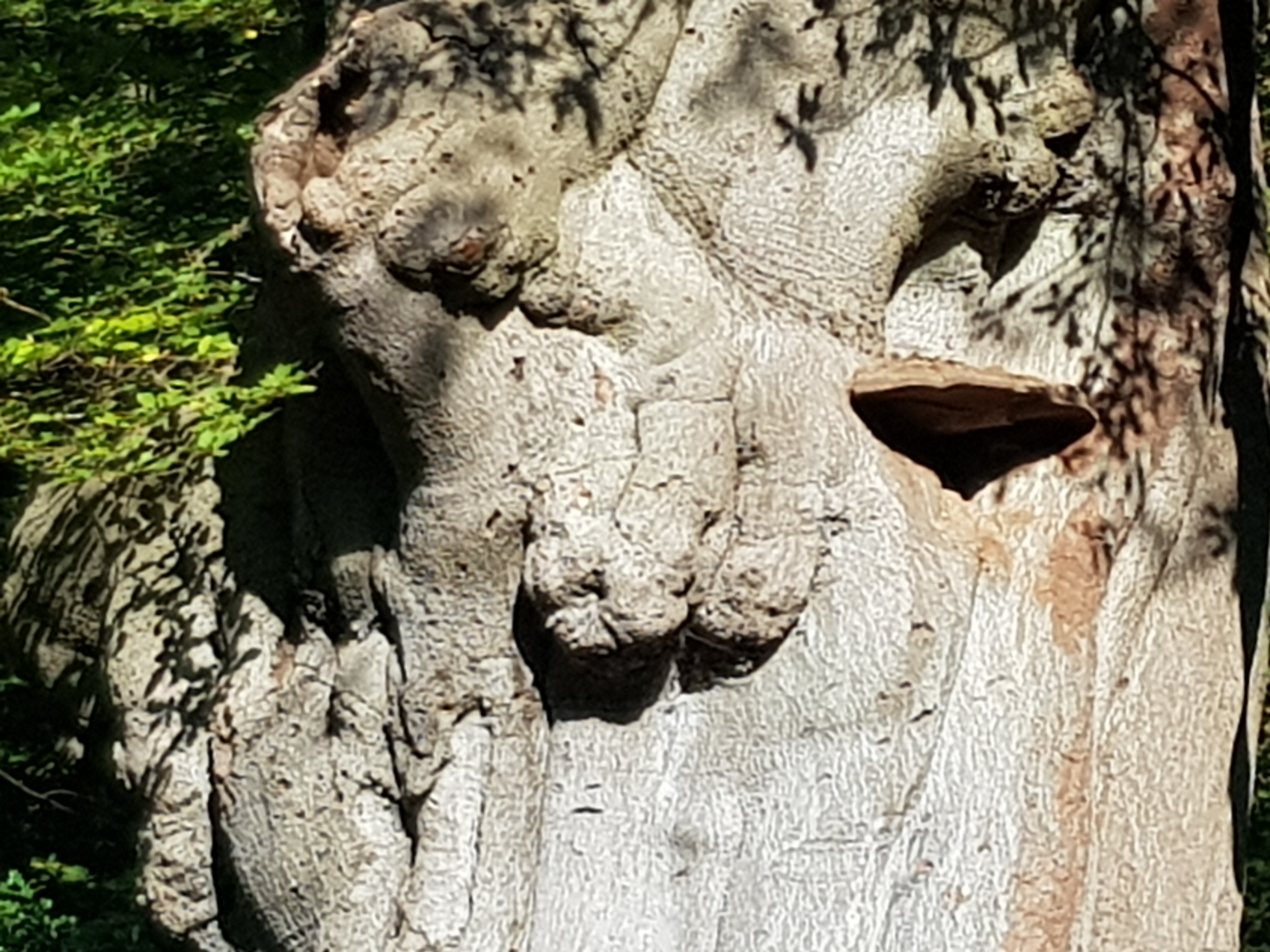
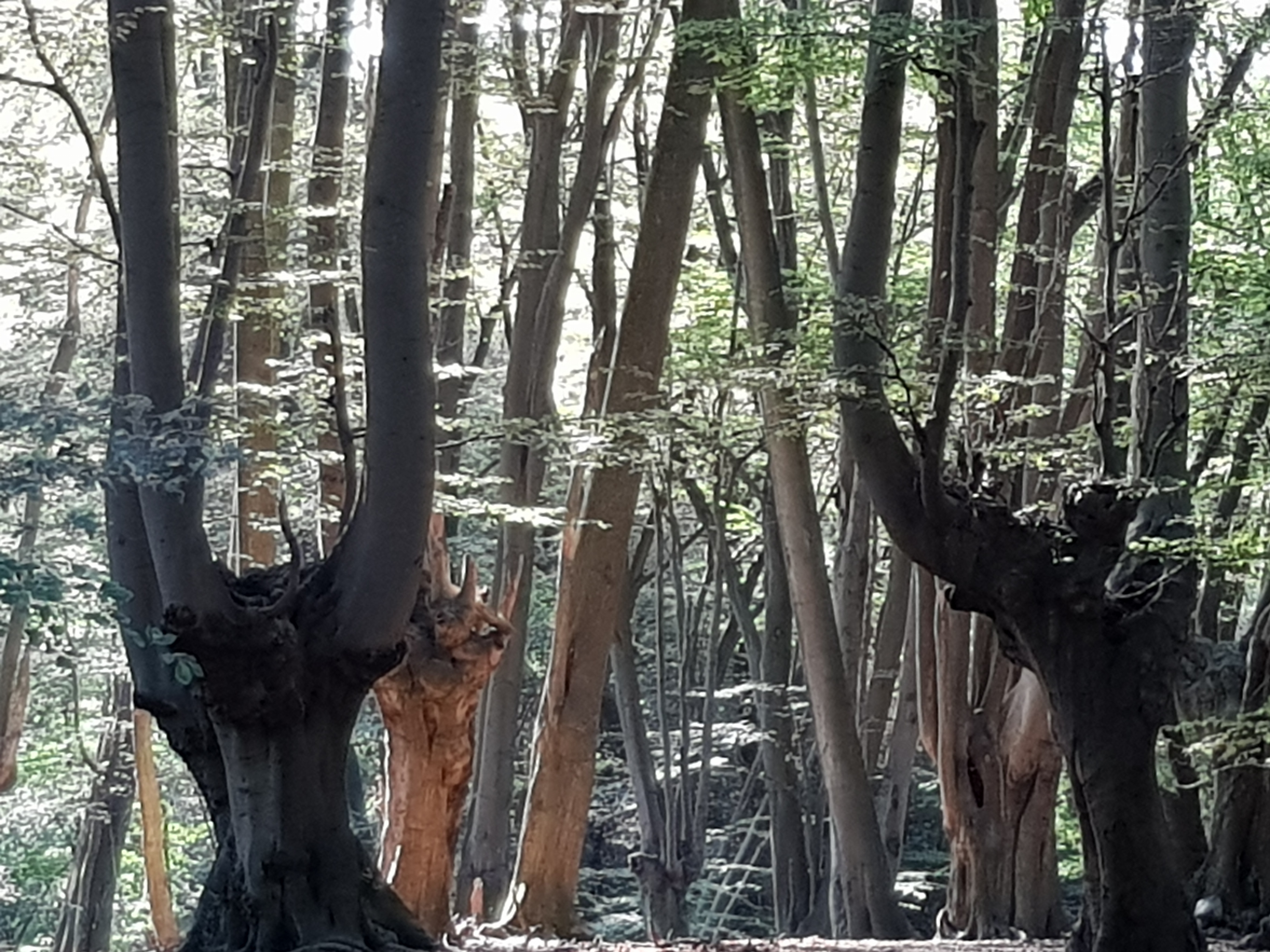
In reading Will Ashon’s book Strange Labyrinth: Outlaws, Poets, Mystics, Murderers and a Coward in London’s Great Forest, I realised how little I know Epping Forest in spite of living within easy reach of it for nearly forty years. So, I took the Central Line to Epping, the end of the line, past Theydon Bois where the underground runs alongside fields, and found my way, not without difficulty (it’s a while since I’ve had to rely not on Google, but the Ordnance Survey) out into the long rides of the forest, mostly deserted, apart from over-equipped runners, across the occasional road, to Chingford in the distant south where I was able to get a cup of coffee next to Queen Elizabeth’s Hunting Retreat:-



St. Pancras Station
I know that I have posted photographs of St. Pancras Station before, but as I was crossing the street from the British Library this evening, I was struck by the amazing quality of its architectural detailing, the way the late afternoon light fell on the columns, and wandered through to the booking hall, which has become a fancy restaurant. I saw someone who looked uncannily like Peter Ackroyd. Maybe it was:-




The Westminster Jews Free School
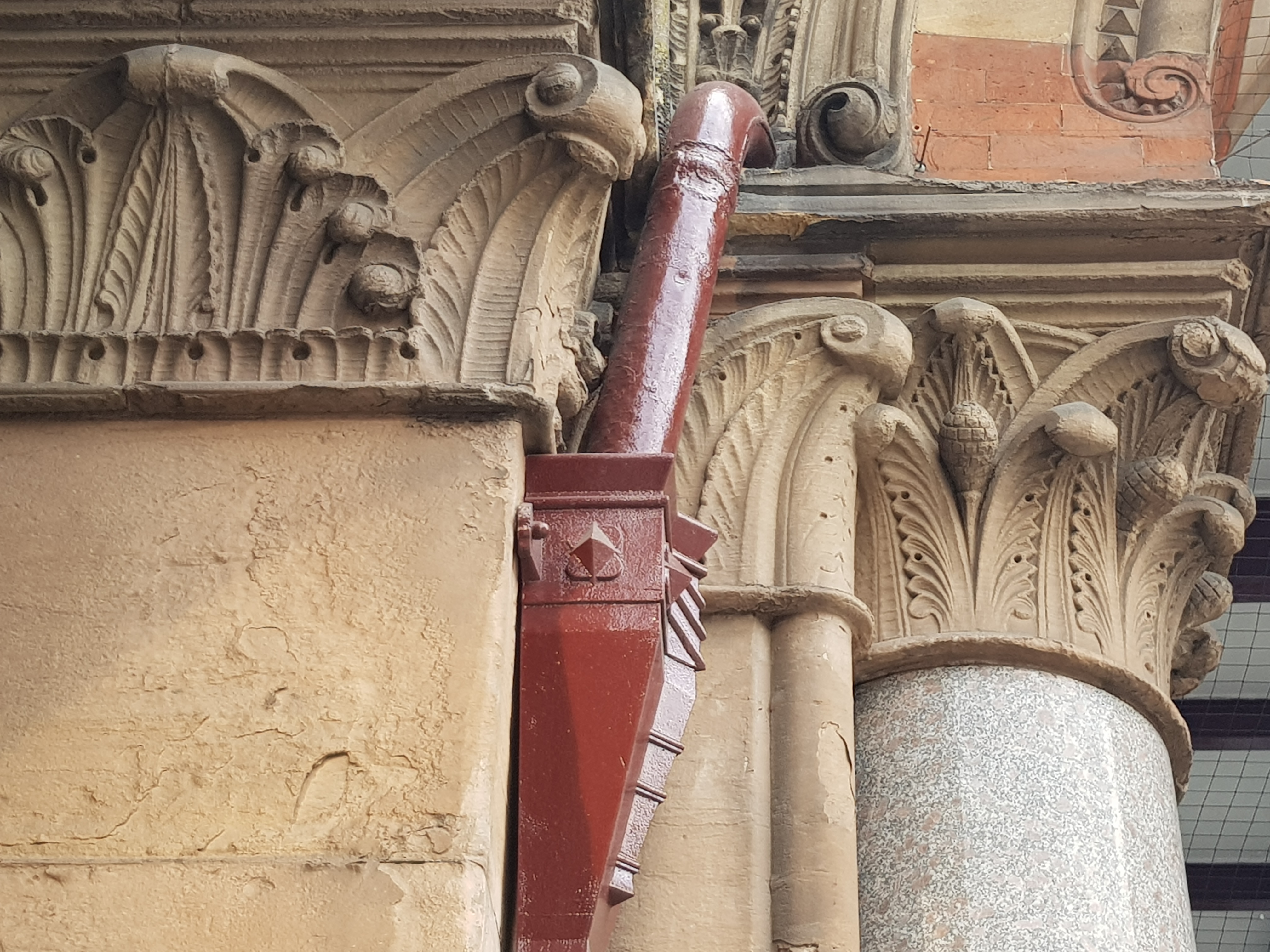
Another bit of curiosa I spotted yesterday was the lettering for the former Westminster Jews Free School on the north side of Hanway Place. The school was established in 1811 under the auspices of the Western Synagogue to teach Hebrew, English, writing and arithmetic. Originally in Greek Street, it moved to new premises in Hanway Street in 1883 in a building with good terracotta decoration and lettering:-


The French Protestant Church
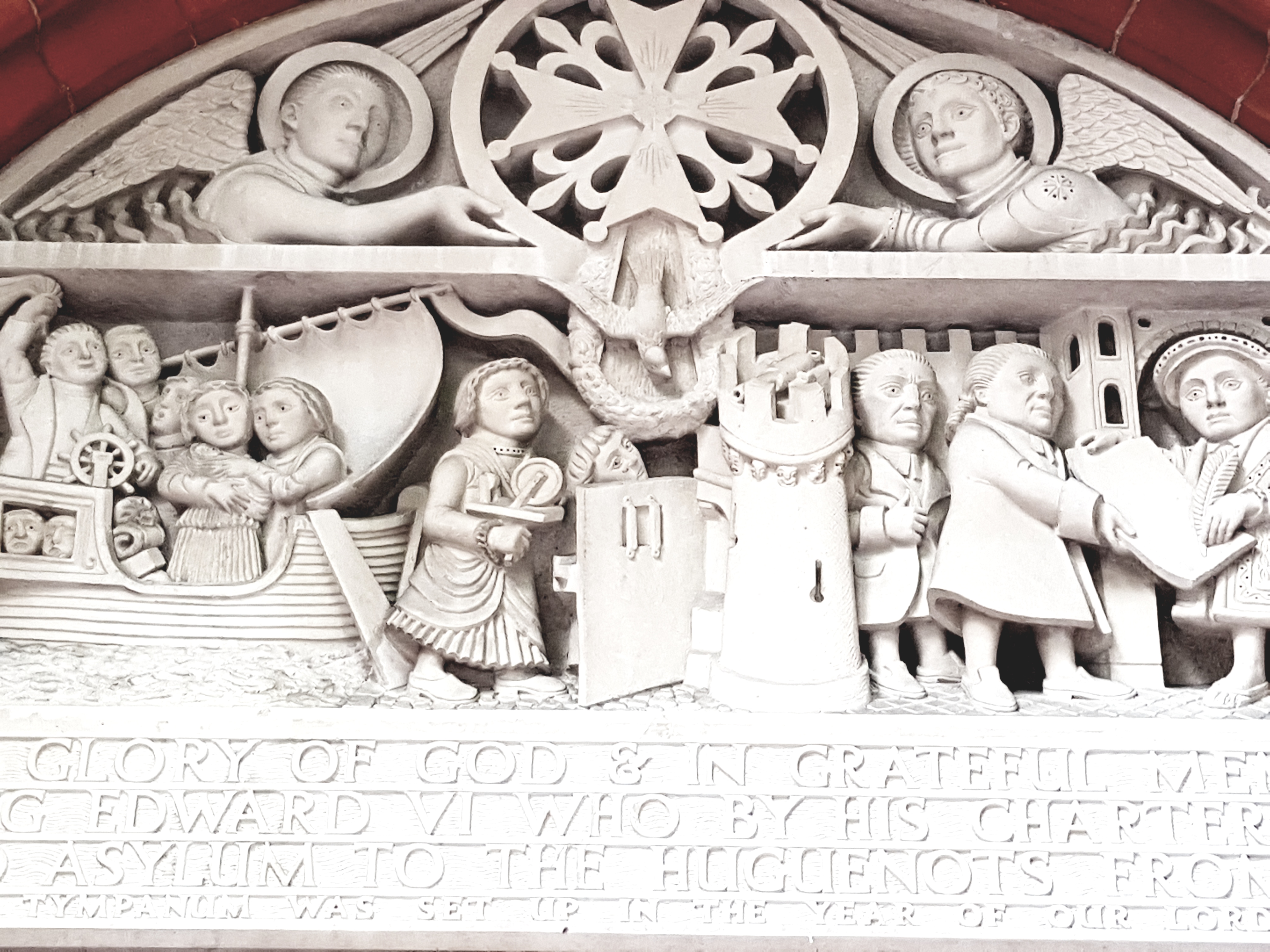
On my way to the party to celebrate the big book about the RA’s collection, my eye was caught by the curious, but attractive carved relief over the entrance to the French Protestant Church in Soho Square. It is dated 1950, done to celebrate the 400th. anniversary of the establishment of the Huguenots in London, when Edward VI signed letters patent for the foundation of a Strangers’ Church in London. The church itself was designed by Aston Webb, the carving by J. Prangnelli, who seems to be otherwise undocumented:-
Leonard McComb (3)
It’s been a day of remembering Leonard McComb, or Len as most people called him and McComb like a comb, not a coombe.
There was a Requiem Mass at Westminster Cathedral where he did two mosaics in small apses on either side of the entrance – St. Francis preaching to the Birds:-

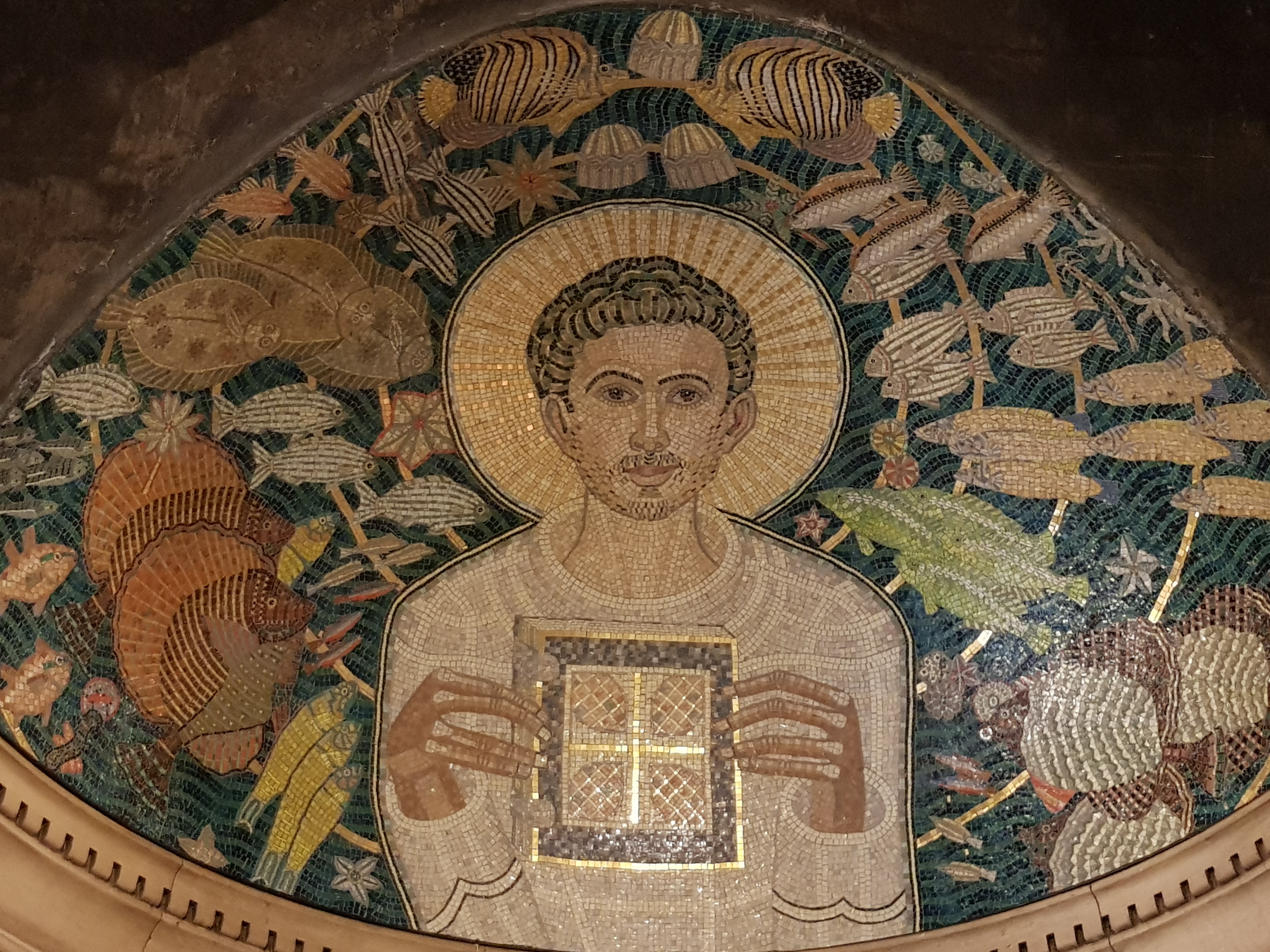
And St. Anthony to the Fishes:-
His father was a commercial artist in Manchester and he started out driving a milk van, although he hadn’t learned to drive.
He was Keeper of the RA Schools from 1995 to 1998 and I realise that many of the characteristics of the Life Room, including the boxes containing casts up the west wall, were not an inheritance from the St. Martin’s Lane Academy, but a creation of Len’s.
The Whitebait Dinner
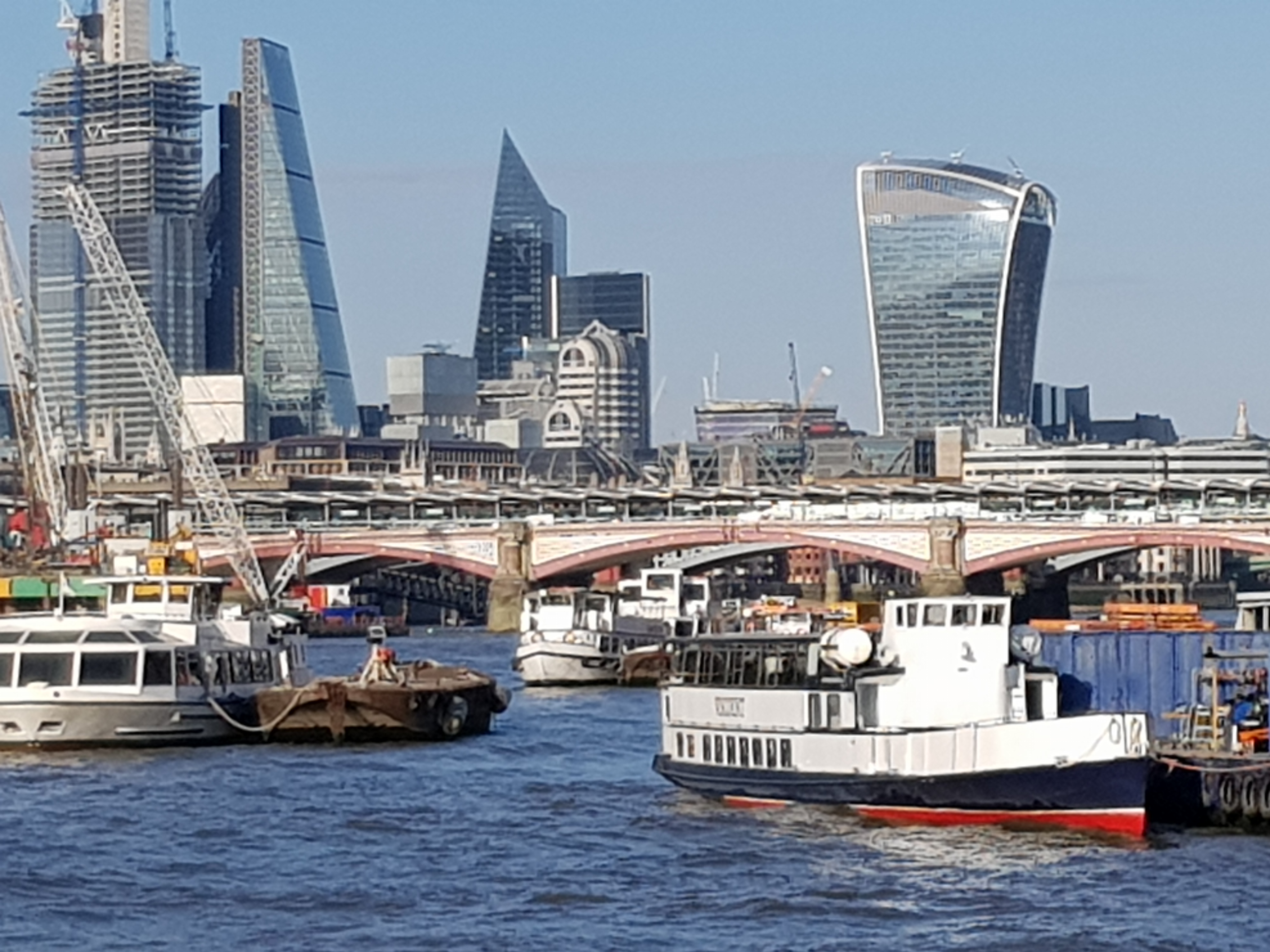
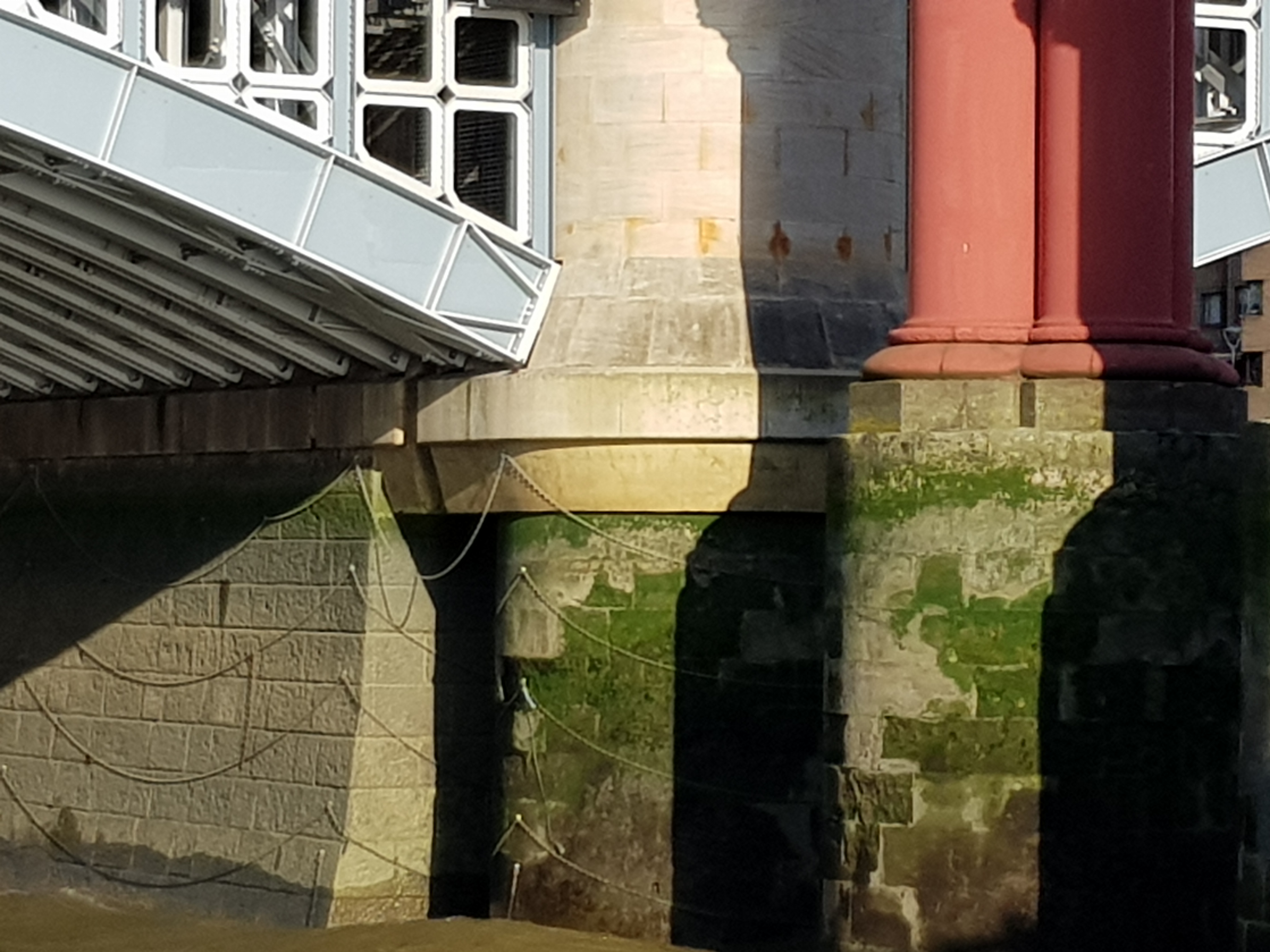
We had our annual Whitebait dinner which is normally a raffish occasion with memories of Tuner and his friends going downriver to consume fresh whitebait in a pub in Greenwich, but this year was held in Fishmonger’s Hall, so the boat ride from Westminster to the Tower was short:-




Antony Gormley/Rowan Williams
I have been asked whether or not the conversation between Antony Gormley and Rowan Williams last week was recorded. It was. This is the link:-
Peter Carrington
I’m extremely sad to hear of the death of Peter Carrington, a great survivor who was in some obscure way which I do not understand a distant cousin.
I first got to know him, but not at all well, when he was chairman of the V&A, touring the departments as he had the Empire. He was co-chair of the fund-raising committee at the National Portrait Gallery together with the late Drue Heinz. This only involved asking for money from Sir Christopher Ondaatje, which he did very effectively over a memorable lunch. He was Secretary for Foreign Correspondence at the Royal Academy and an Emeritus Trustee.
When I was appointed Secretary, he lifted me up by the lapels and told me I was completely mad, but he did this, as he did everything, with charm and humour.
Boris Johnson MP
I don’t pay much attention (as readers may have noticed) to current affairs, so did not react when I was told last week that Boris Johnson was about to resign because he needed more money to support his families. At the time, I thought it was mere scuttlebutt. But now that he has actually resigned, I wonder.


You must be logged in to post a comment.