
I have been reading the fascinating and revealing new biography of John Rothenstein by Adrian Clark, which by dint of good research in the Tate Gallery archive, Treasury papers and Douglas Cooper’s correspondence does much to elucidate why Rothenstein was such an extraordinarily divisive figure at the Tate in the early 1950s: starting well on his appointment in June 1938 aged 37, helped by his family friendships with artists; mysteriously taking a prolonged trip to the United States in the early years of the war; making a succession of disastrous appointments, including a South African adventurer, Le Roux Smith Le Roux; getting rid of Humphrey Brooke, who became Secretary of the Royal Academy and an implacable enemy; and persecuted by a gang led by Douglas Cooper and Denis Mahon. It makes the twenty-first century art world seem comparatively peaceful.
Author Archives: Charles Saumarez Smith
Architectural Education
I was asked yesterday what impact the Royal Academy Schools had on architectural education. The short answer was that I don’t know. Thomas Sandby RA was the first Professor of Architecture and held the post for thirty years from 1768 to 1798. What did he teach ? According to the Instrument of Foundation, he was ‘required to read annually six public Lectures, calculated to form the taste of the Students, to instruct them in the laws and principles of architectural composition, to point out to them the beauties or faults of celebrated productions, to fit them for an unprejudiced study of books, and for a critical examination of structures’. This is quite a challenging brief, presumably written by William Chambers on the basis of his experience of teaching in Paris. Sandby gave his first series of six lectures in 1770, illustrated by his drawings. There is one copy in the RIBA and another in the Soane Museum (and they were the subject of a recent research paper by Sigrid de Jong at the RA which I missedp). Soane was amongst the first pupils in the Schools, admitted as a student in October 1771. So, the long answer is that it introduced the first system of semi-professional training in architectural drawing and the critical examination of buildings.
David Chipperfield RA
I have just discovered that David Chipperfield’s interview with Jan Dalley, the arts editor of the FT, due to appear in tomorrow’s Life & Arts, is already available online (google David Chipperfield ft). It provides a characteristically thoughtful analysis of the state of architecture today – or, more especially, the impoverishment of architecture’s current ambitions for social reinvention through the design of housing, schools and cities; and how his philosophy has been applied to our project in Burlington Gardens, which he describes as not doing exactly what the client wants, but listening instead to the ambitions of the users, unlocking the potential of the institution: a mixture of architectural modesty and social and creative ambition. I think I recognise this combination of unexpected physical reticence and highly focussed, strategic intervention.
4Cose
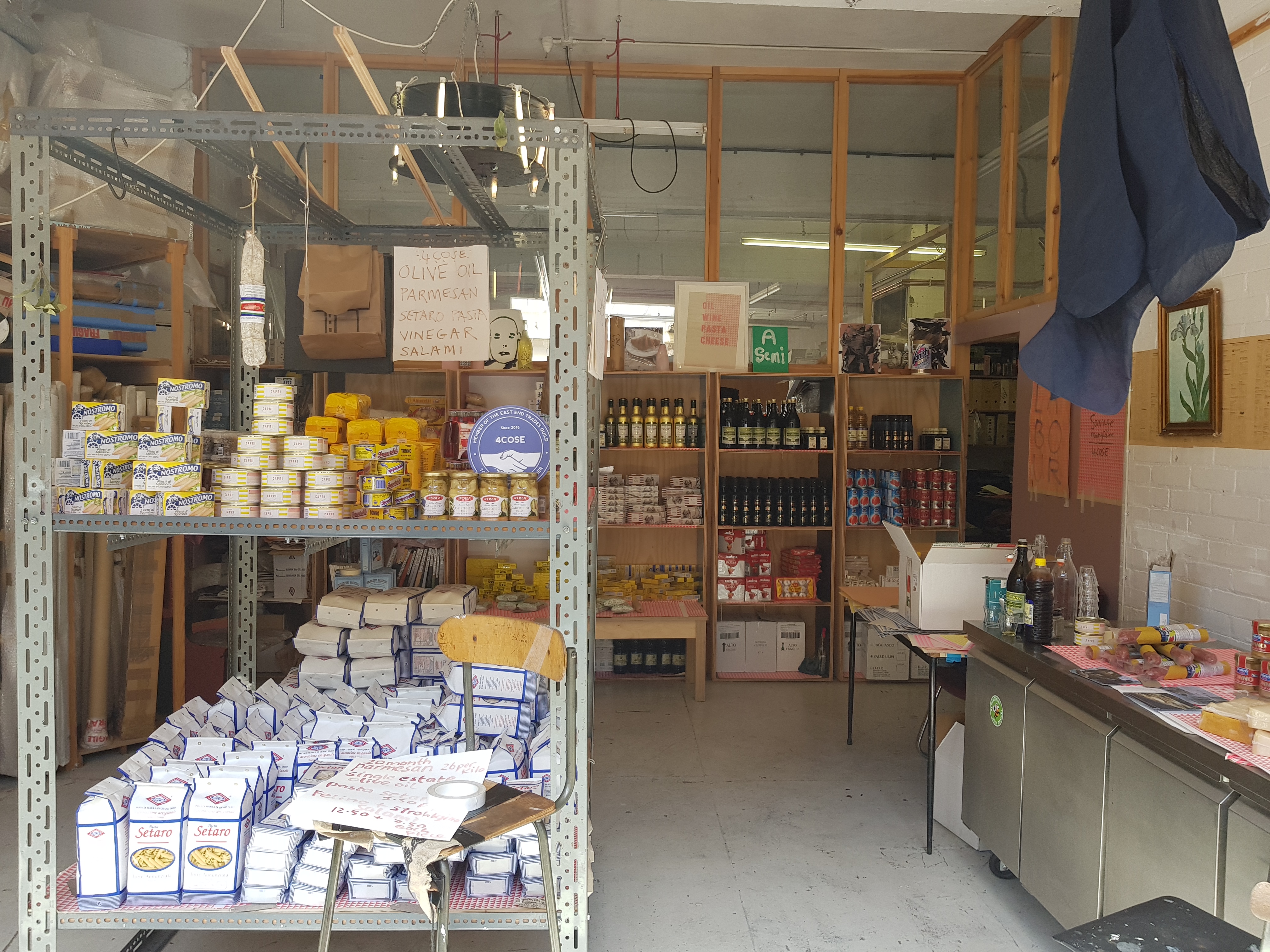
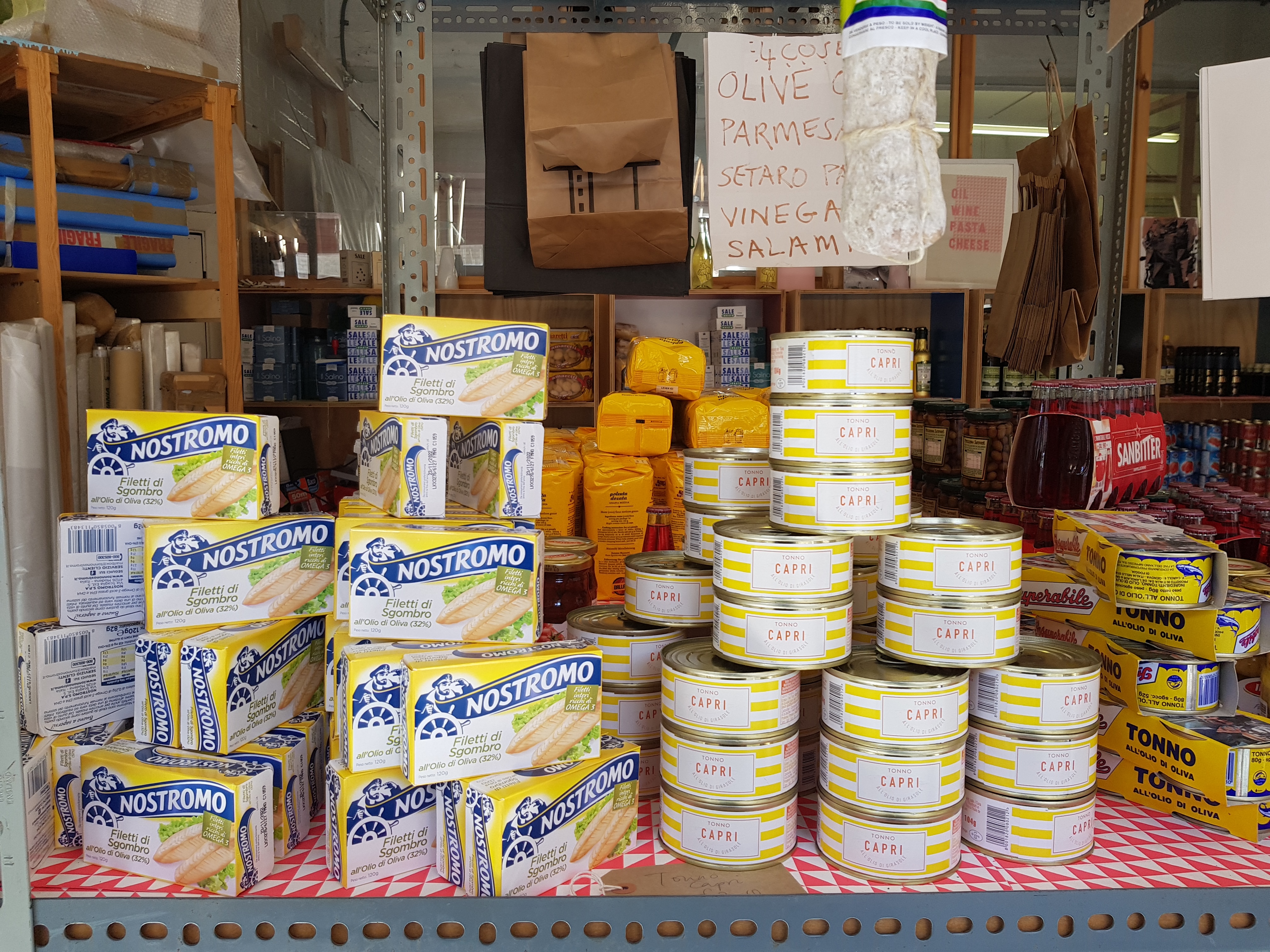
I should spend more time in Vyner Street, not least because it has an unexpected, but charming Italian delicatessen called 4Cose, intermingled with an artist’s studio, so that bags of spaghetti and parmesan sit amongst the paint pots, displayed as if it’s an art exhibition:-
Eva Rothschild RA
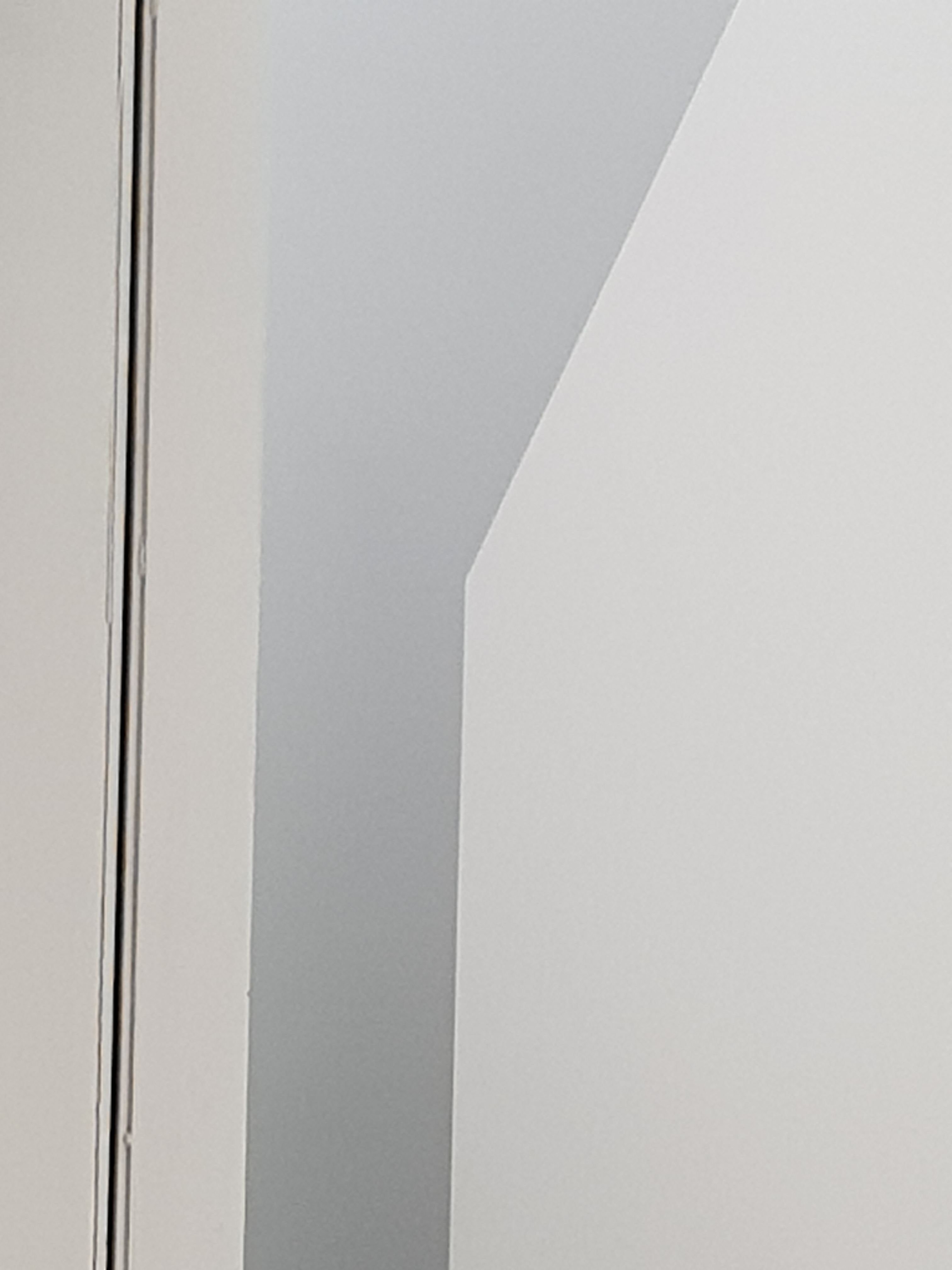
I realised that Eva Rothschild’s exhibition at Modern Art in Vyner Street was about to close, so arranged to see it. The gallery is at the far end of Vyner Street, as reticent and indistinguishable as it’s possible to be, but with beautiful top-lit space inside:-
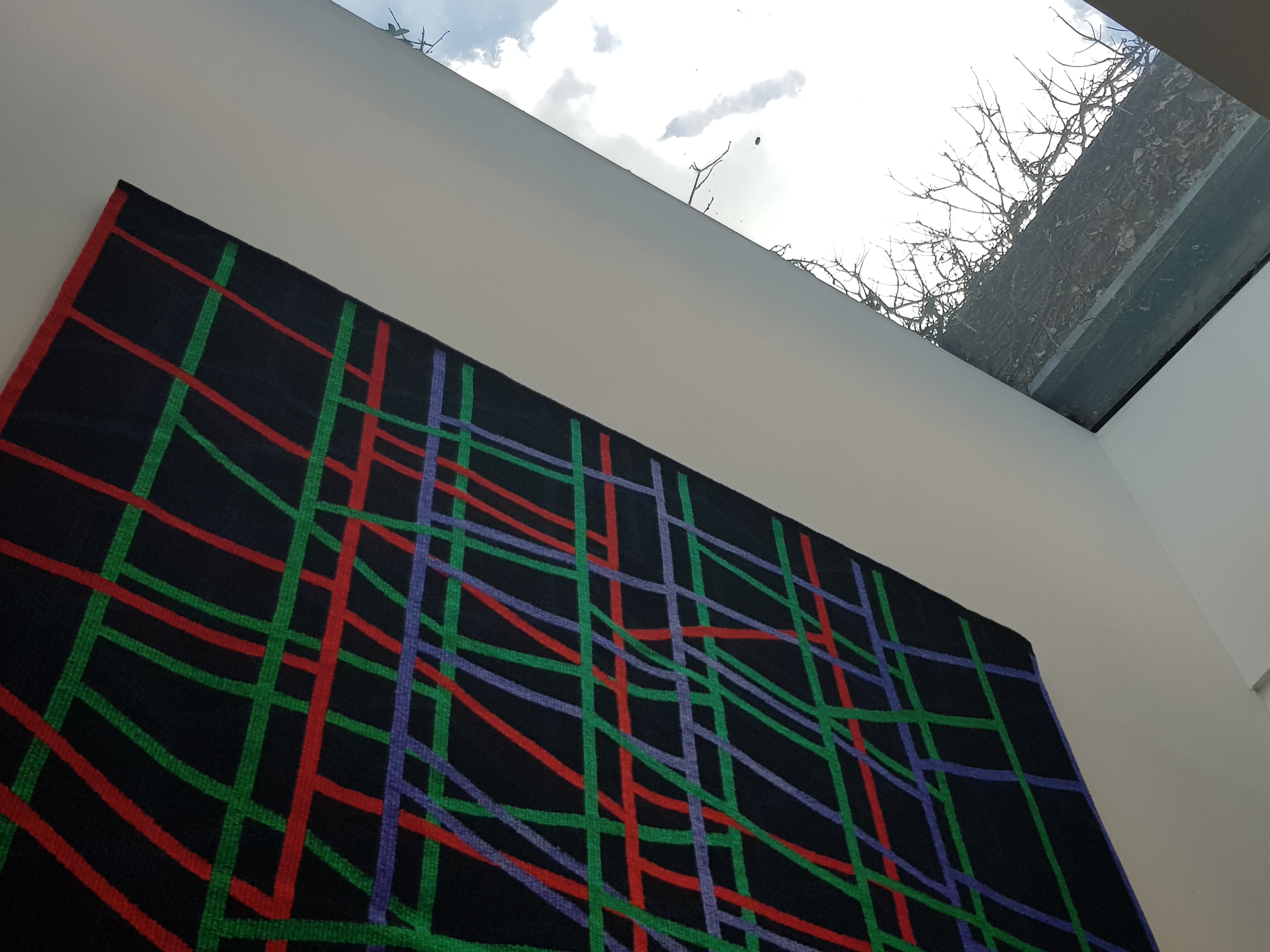
The first work on entry is a textile piece made at West Dean:-
Downstairs, I admired the big punch bag, nearly, but not quite touching the floor:-

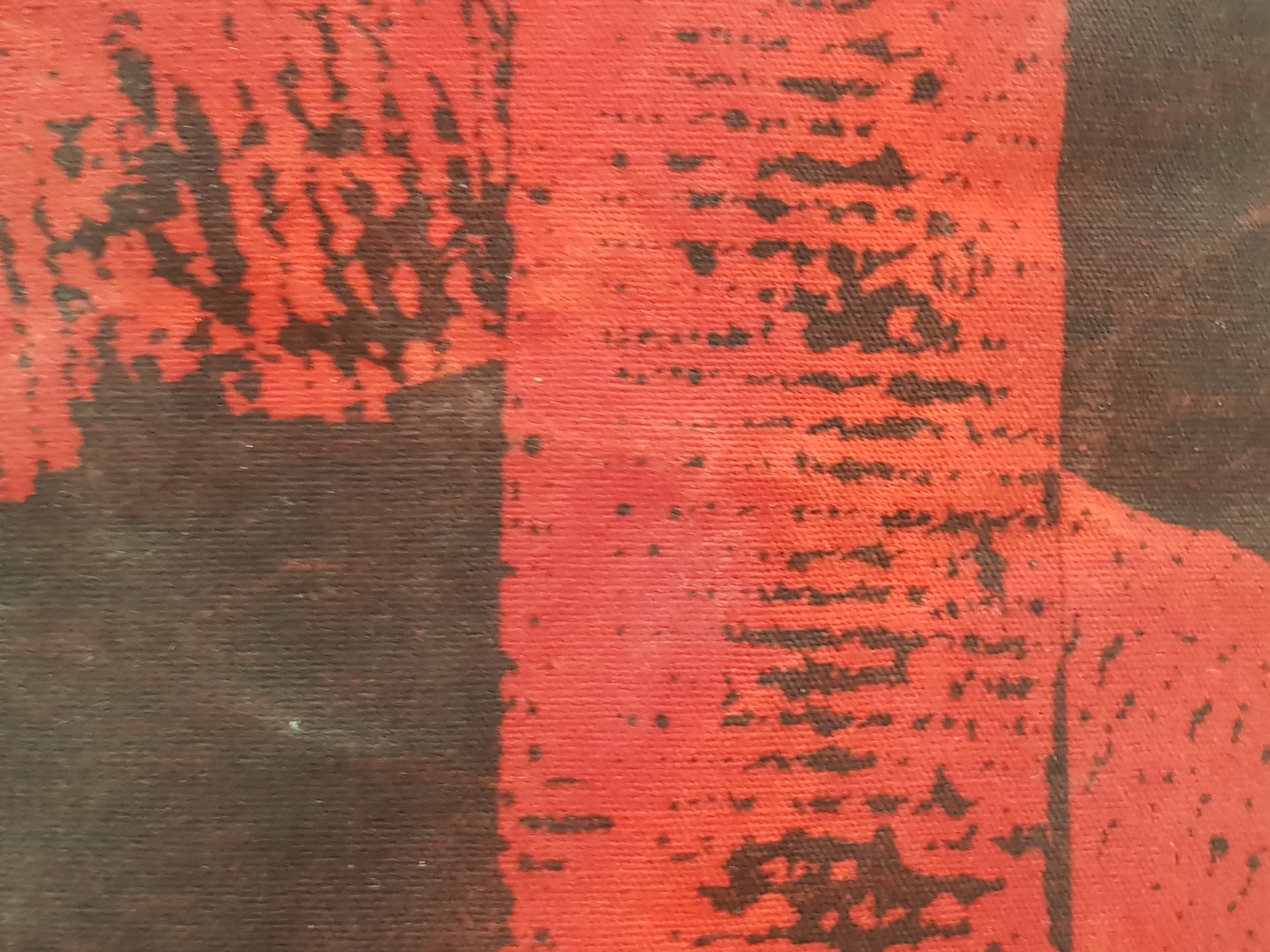
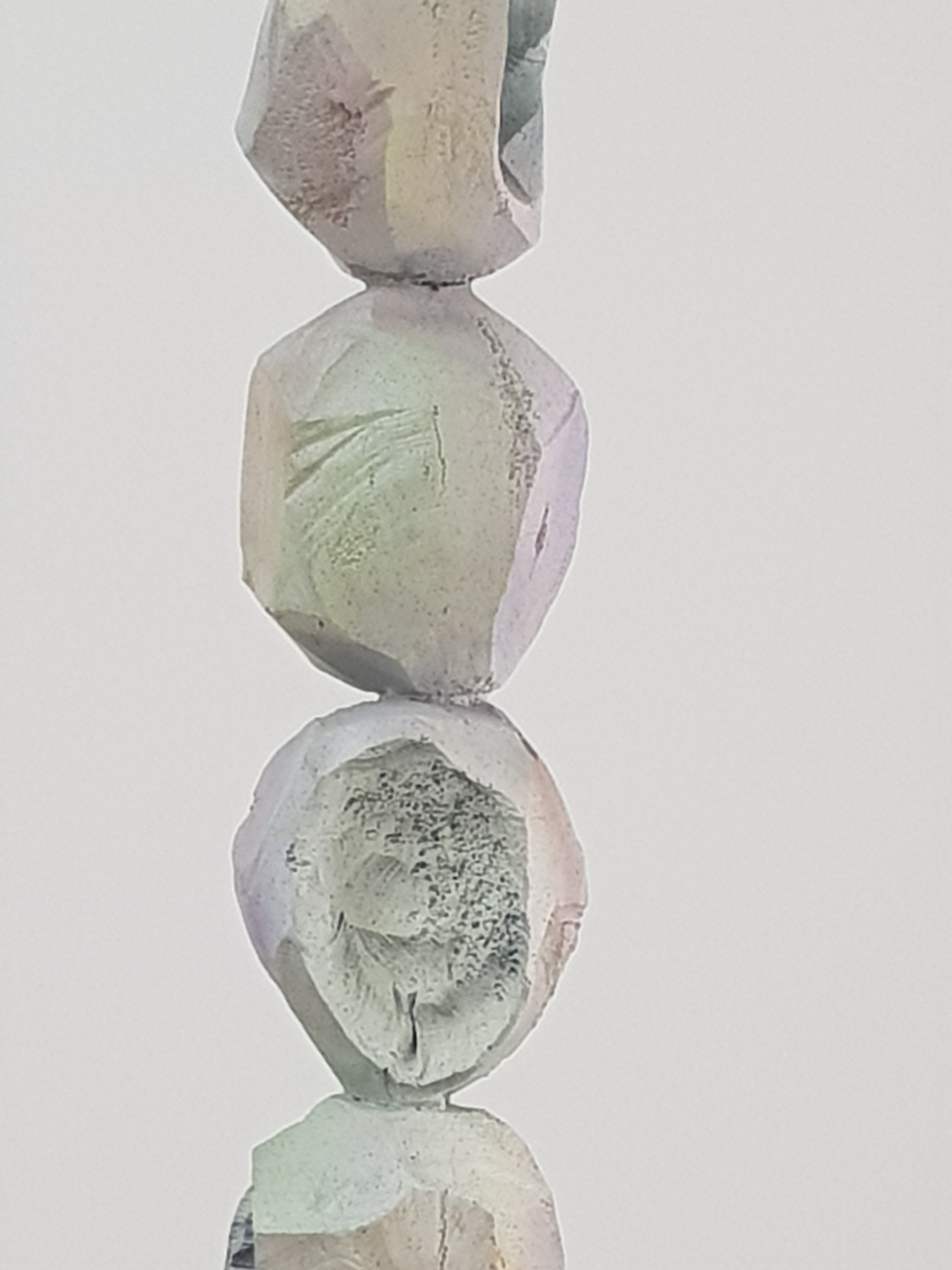
And upstairs a work made of cast styrofoam, playing on the ambiguity of different types of material and colour and the way styrofoam fragments into craters:-
Red Collars
I have got into trouble with everyone who has so far seen the film The Private Life of the Royal Academy for not knowing the history of the so-called ‘Red Collars’ who run the security of the institution and for saying that I thought that they were based on the eighteenth or nineteenth-century uniform of the domestic servants at Buckingham Palace. I seem to have been wrong on most counts. The RA has employed porters from the beginning, who doubled as models in the Life School. John Russell did a beautiful pastel of one of them, thought to be John Withers, which was exhibited in the Summer Exhibition in 1792 (and will be exhibited again in our exhibition The Great Spectacle which opens in June). Meanwhile, Paul Sandby, the watercolour painter, is depicted in Zoffany’s portrait of the Academicians wearing what is called ‘The Windsor Uniform’, which was introduced by George III and consisted of a blue jacket with red facings. Apparently, the Porters of the RA first wore a version of ‘The Windsor Uniform’ at Reynolds’s funeral, which was held in St. Paul’s Cathedral on Saturday 3 March 1792 (I owe this usefully recondite information to a chance conversation with Mark Pomeroy, our archivist, at the London Original Print Fair).
Burlington Gardens
I am very much hampered in writing about our building project in Burlington Gardens, owing to the blanket ban on the posting of any photographs in order to maximise the impact of the public opening which is on Saturday 19th. May. But having been round two and a half times today, it’s getting on. Sydney Smirke’s vaulted undercroft under the main floor galleries is particularly amazing with a cast of the Farnese Hercules installed where the goods lift used to be. Architectural casts are being hung in the Dorfman Architecture Court outside the lecture theatre. And the Thornhill copies of Raphael’s Cartoons are being touched up before three of them are hung in the Collections Gallery. Oh, and the Laocoön has appeared, too.
A Block of Flats
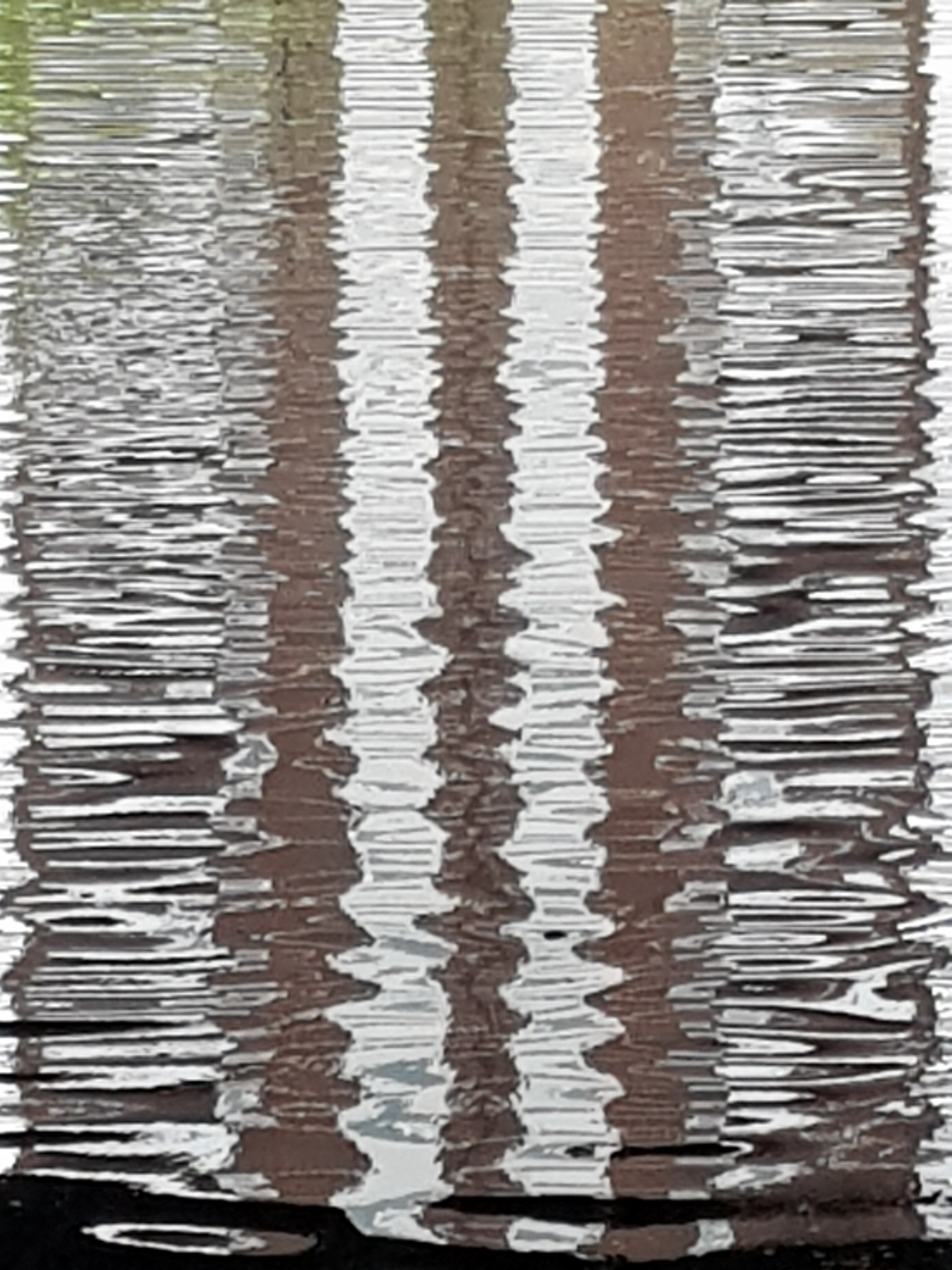
I was struck by the stillness of the water on the canal this morning and took a photograph from under one of the bridges, but instead of the water it shows the reflection of a 1970s block of flats, an odd optical illusion:-
Modernists & Mavericks
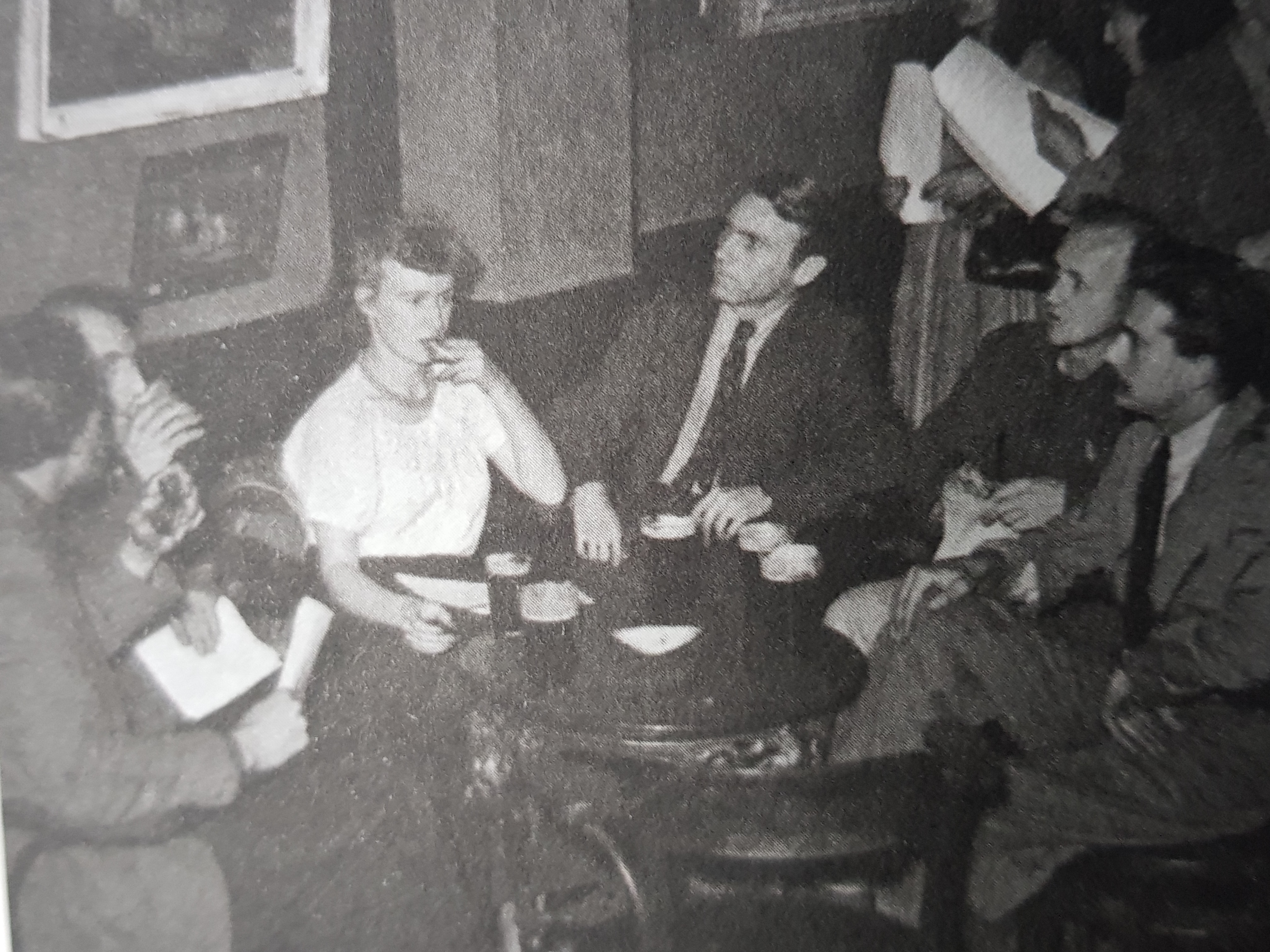
I have been reading Martin Gayford’s admirable and extremely readable Modernists & Mavericks: Bacon, Freud, Hockney & the London Painters which has taught me a great deal about the London art world in the 1950s and 1960s, which I didn’t know. Not least, it has made me understand the milieu in which Gillian Ayres was trained, as depicted in a photograph of her sitting in a Camberwell pub surrounded by earnest (and possibly admiring) young men:-
And later in her studio in Chiswick Mall:-
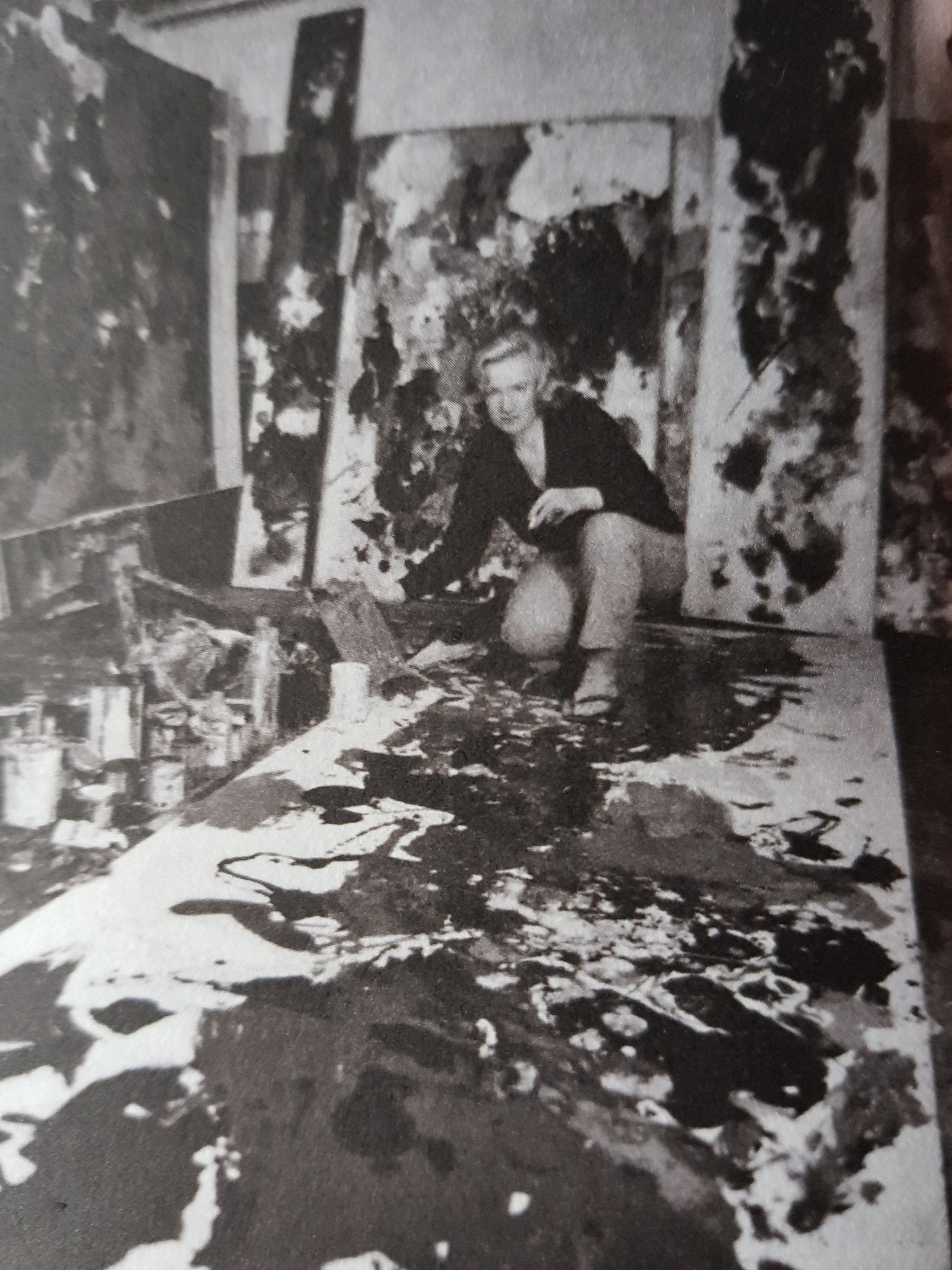
I like the description of Carnaby Street by the Menswear Association as ‘codswallop fashion of perverted peacocks’ and Francis Bacon’s quotation of Paul Valéry that ‘modern artists want the grin without the cat’. It gives as a whole a sense of the interrelatedness of the London art world, its smallness, and how some of the great figures, including Freud and Hodgkin, took so long to be recognised.
The Bouquet
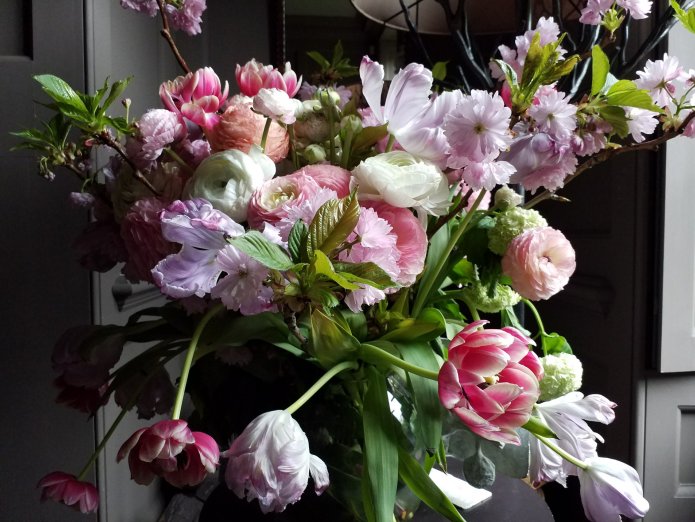
A week ago, we were invited to lunch by some people who were going the next day to Hong Kong. They offered us a bouquet of flowers which they were not going to be able to enjoy of such extraordinary magnificence that I wish to preserve its memory:-



You must be logged in to post a comment.