The Arbour, Waltham Forest

Having got interested in the issue as to how the government is going to fulfil its pledge to build 1.5 million new houses in the next five years, I went to visit one of the other housing developments in the London RIBA awards: a private development on a former industrial site in deepest Walthamstow.

At first I thought it was a wasted trip because being a private development it is not accessible:-
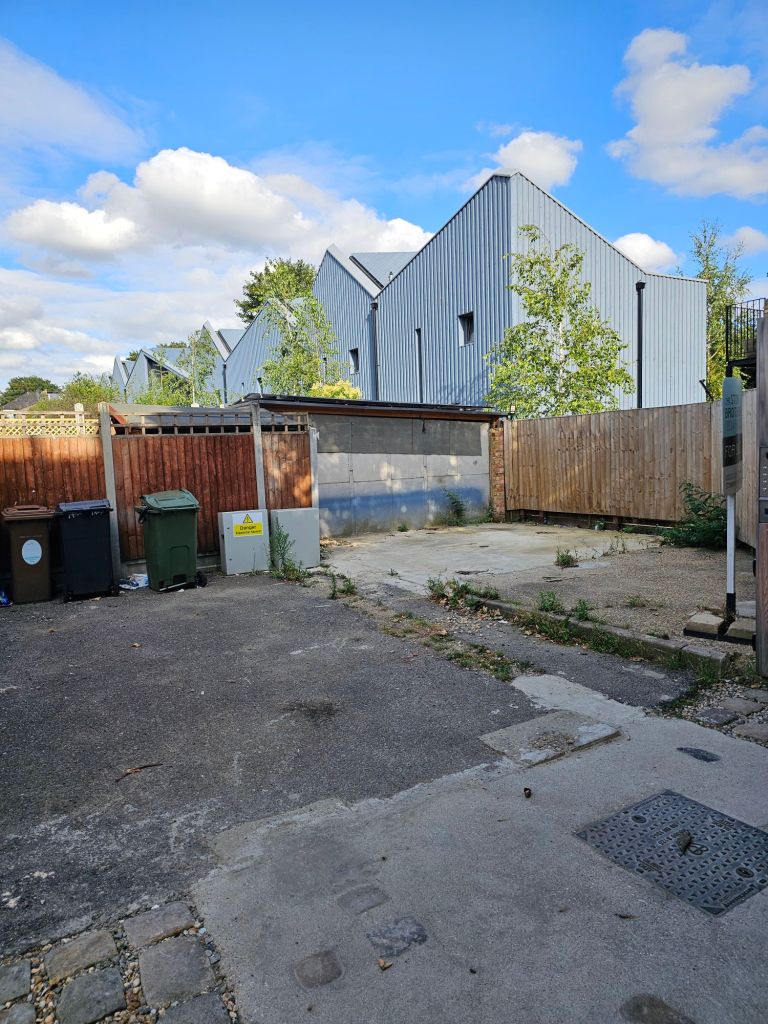
But then one of the owners kindly let me have a peak behind the gate:-

I thought it was impressive: all wood; reusing some of the onsite industrial materials; very heavily insulated; with a particularly charming communal area in the middle:-

It would not have made it on to the final shortlist because it is more eco than strictly architectural and has been done by a developer, not the public sector.

But if the government is going to lift planning controls, then it should surely find a way of encouraging inventive adaptations of brownfield urban sites in a way which is ecologically sustainable.  This is a good model.

So, I salute the architects, Boehm Lynas, the developer GS8, and am very grateful to the residents who kindly allowed me to see it. 

I am also relieved that my guesstimate of what the unit cost might be was not way out.

https://www.ribaj.com/buildings/riba-awards-2024-london-east-the-arbour-boehm-lynas-gs8-housing-waltham-forest

Standard

Will Labour build back better?

The Critic has very kindly already posted the article I wrote for their August/September issue, because I am conscious that the government is deeply immersed in formulating its plans for solving the housing crisis, including how and where to build the new towns it proposed in its manifesto.

Its not going to be easy for them, as the last government found, because of the strength of opposition to large-scale new development in the places where it is most needed. The big issue is how to provide big tracts of new housing without overloading the existing infrastructure, which is why it is sensible to think of planned new towns, including new schools and community facilities, instead of just tacking new housing schemes onto green field sites which is what developers tend to prefer.

https://thecritic.co.uk/will-labour-build-back-better/#:~:text=I%20hope%20Labour%20will%20resist,by%20unplanned%20light%20industrial%20building.

Standard

Mandeville Street

While in South Clapton, I took the opportunity to see the other project by Al-Jawad Pike, very close to Chowdhury Walk which has been shortlisted for the Stirling Prize: also well done, thoughtful brick architecture, slightly variegated by using different bricks.  Both Al-Jawad and Pike worked for David Chipperfield.  You can see the influence in the use of simple forms and care in the detailing:-

Standard

Chowdhury Walk

I went to see Chowdhury Walk, a set of eleven, nearly identical brick terrace houses in an obscure area of East Hackney which has been shortlisted for the Stirling Prize.  It’s very well done:  calm, thoughtful, pared back, slightly sculptural, good use of materials, excellent craft detailing.  It’s interesting seeing it in a sea of post-war social housing, much of it apparently reasonably successful.  But the type was abandoned in the 1980s so is now having to be reinvented.  Its project cost hasn’t been revealed.  I would think that the project cost needs to be taken into consideration:-

Standard

Stonebeck Wensleydale

I bought some Wensleydale from Leila’s this morning and was treated to a lyrical account of where it comes from on a farm in Nidderdale where only fifteen shorthorns graze in wildflower meadows, the taste of which is said to be evident in the cheese.  I now can’t wait for lunch.

https://www.stonebeckcheese.co.uk/

Standard

Daphne Astor (3)

I am so pleased that the London Review Bookshop is doing a memorial display of the Hazel Press.  Daphne loved the London Review Bookshop.  It was her base in London: somewhere to meet, buy books, gossip.  It was amazing to have got the Hazel Press going during COVID – wide-ranging, beautifully produced, but also Eco.  Very characteristic.  We must all go to pay our respects.

https://www.londonreviewbookshop.co.uk/booklists/hazel-press?utm_medium=email&utm_campaign=20240801%20Bookshop%20Newsletter&utm_content=20240801%20Bookshop%20Newsletter+CID_61111570283f48dfd197d7afa9b9de03&utm_source=Bookshop%20email&utm_term=Remembering%20Daphne%20Warburg%20Astor

Standard

The City (3)

I have just caught up with Oliver Wainwright’s article in this morning’s Guardian about the latest high-rise in the City (it’s one of the benefits of waiting two hours for a non-arriving train).

He says what many people think: that is everyone except those in charge of the City.

But it is now probably too late to halt what is happening.  Someone was asleep at the helm.  It was Peter Rees who was responsible for the idea of the high-rise Square Mile in a glorious and magnificent cluster.

https://www.theguardian.com/commentisfree/article/2024/jul/31/city-of-london-office-towers-planning-architecture?CMP=Share_AndroidApp_Other

Standard

The trains (2)

I have been instantly castigated for my negativity about privatisation by someone who, as it happens, used to work in HM Treasury (but not the person who first lectured me on its virtues).

He points out that numbers using the train service have boomed and that the faults may lie in Wales where the service has been renationalised.

Maybe I am viewing it through rose-tinted spectacles, but it happens that I am currently waiting for a train due at 6.19, now expected at 8.10, a mere two hours delay, not for the first time on a ten-day holiday.

Standard

The trains (1)

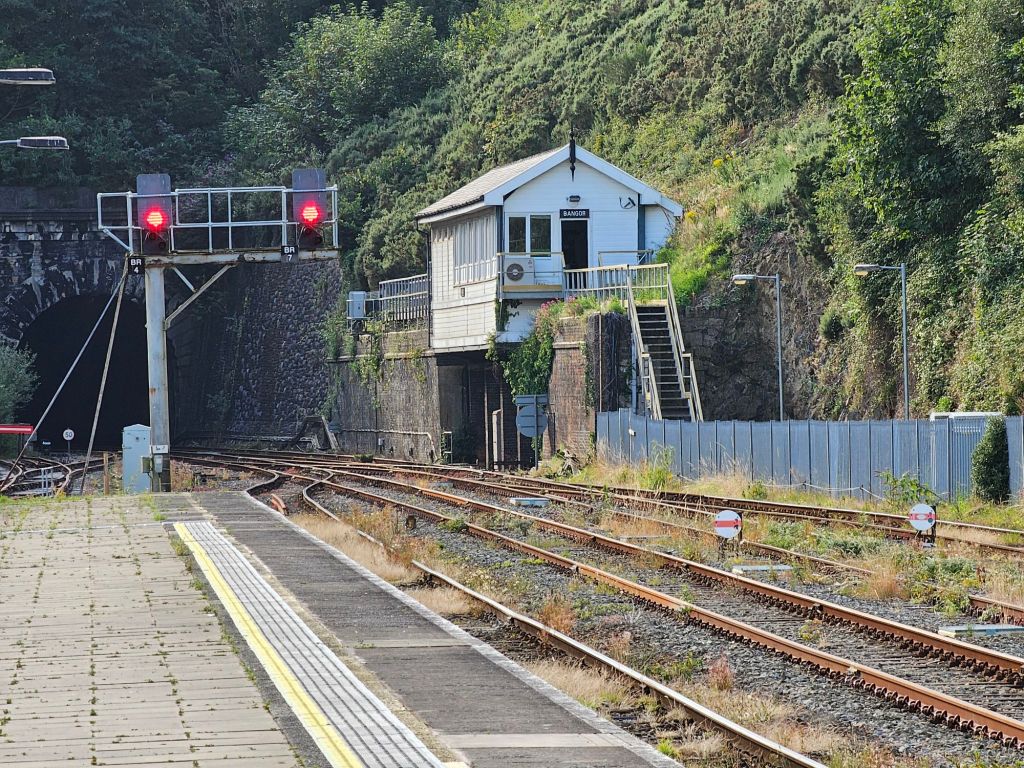
When we’re in Wales, we are very dependent on the train service to collect visitors from Bangor station (occasionally Bodorgan) travelling from London. 

Over the last decade, the service has declined from being somewhat unreliable to lamentable with only a small number of through trains every day, sometimes cancelled. 

I may have exaggerated my memories of the service in the 1990s, but I seem to remember being able to catch a 5.20 on a Friday evening from Euston, being able to eat supper on board, and arrive for a weekend away at 8.20.  It is probably not quite as simple as this, but it feels like a systematic decline which hits not just the likes of me, but the wider sense of connectedness, because, of course, the cost has increased in direct proportion to the unreliability. 

North Wales is now probably further from London psychologically than it was in 1858 when the Chester and Holyhead Railway merged with the prestige London and Northwestern Railway to run the Irish mail service to Dublin.  The mail service was reliable.  So were the trains.

I mention this partly because I have a very vivid memory of travelling from London to Cambridge with someone senior in the Treasury in about 1998 who explained how privatisation would revolutionise the train service.  It was bound to be so much better because it was underpinned by economic theory.  There would be more investment, stimulated by competition between the franchises.  Everything was bound to get better.

I can’t help wondering what went wrong with this very simple idea.

Standard

Stirling Prize 2024 (2)

I have a small number of suggestions on how the Stirling Prize is administered if the RIBA is interested in combating the impression of London-centricity, in a Prize where four of the current shortlist are in London (the same is true most years):-

1.  It would be relatively easy to announce the regional awards all at the same time instead of staggering them through the spring and early summer.  Then you could make more of the interesting projects by less well known practices outside London and you would get a better sense of architecture as a national practice, not so dominated by the big London firms.

2.  It should also be possible to produce an online map of the long-listed projects, indicating which projects can be visited.  This would be helpful in creating more public interest in, and knowledge of, contemporary practice which it is the role of the RIBA to support.

3. I realise it would be tricky to organise, but it would be good to get the short-listing committee to visit the regional winners, because otherwise the key part of the process is conducted in London.

I have made these suggestions previously, but not in a considered way and probably not to the right people, so I am now publishing them in the hope that they might be considered, not least by the incoming President.

Standard