Merfyn Jones

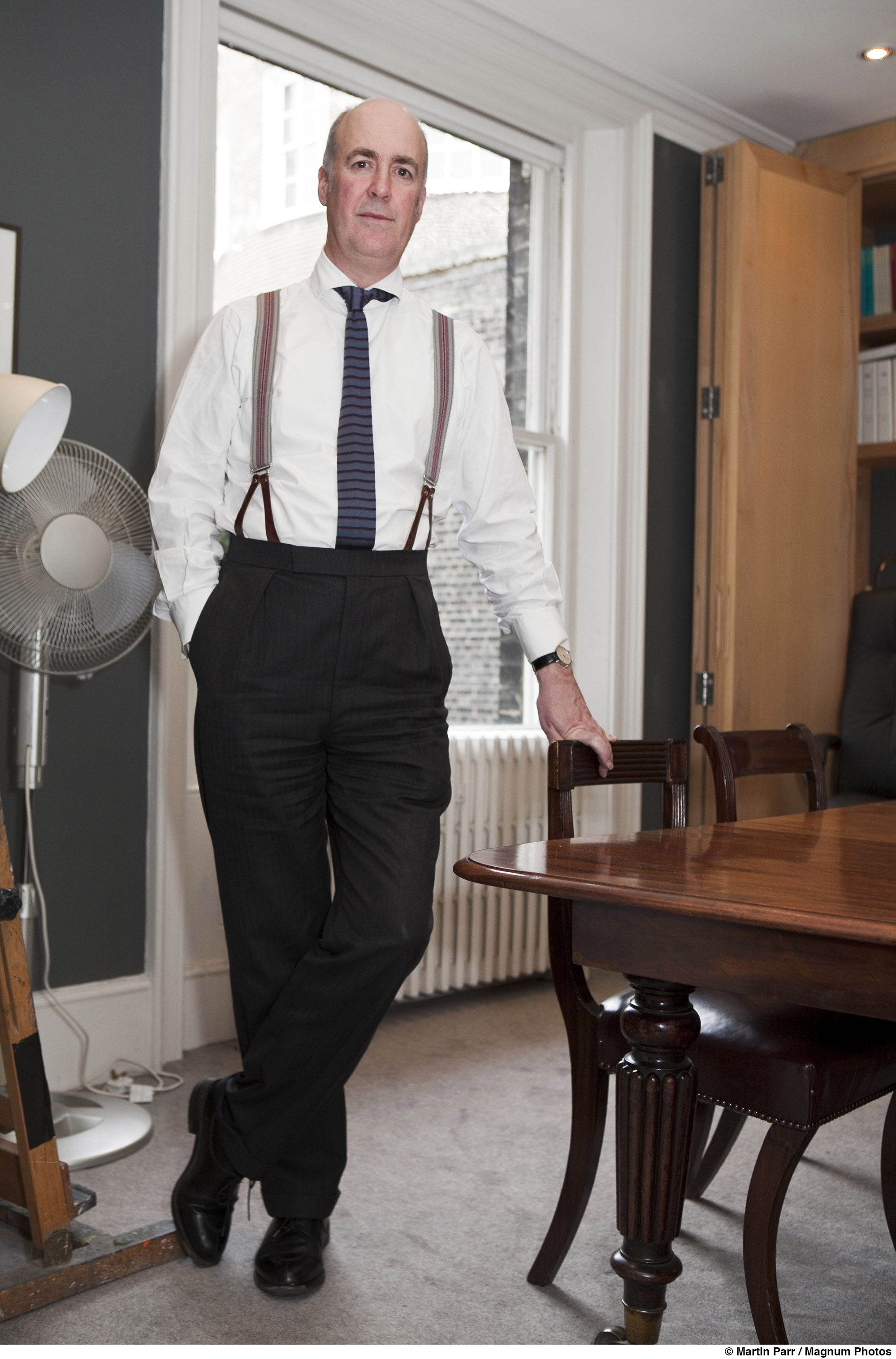
Long-standing readers of my blog will know that whenever we go to Anglesey, we visit the wonderful antique shop run by Merfyn and Trish Jones in Castle Street, which is always full of unexpected Welsh treasures, informed by Merfyn’s shrewd eye and encyclopedic knowledge of Welsh furniture makers, as well as where to acquire them. It was as if the furniture makers of the past had been his friends, which in a way they were. He was also a fund of local information as a long-standing local councillor and, more recently, the founder of the Menai Food Festival.

Now we have heard the sad news of his death. He was diagnosed with cancer some time ago, which he bore with characteristically cynical stoicism, still surprisingly cheerful a month or so ago when I took photographs of him, knowing it was likely to be the last time we would see him:-
Standard

Frank Auerbach

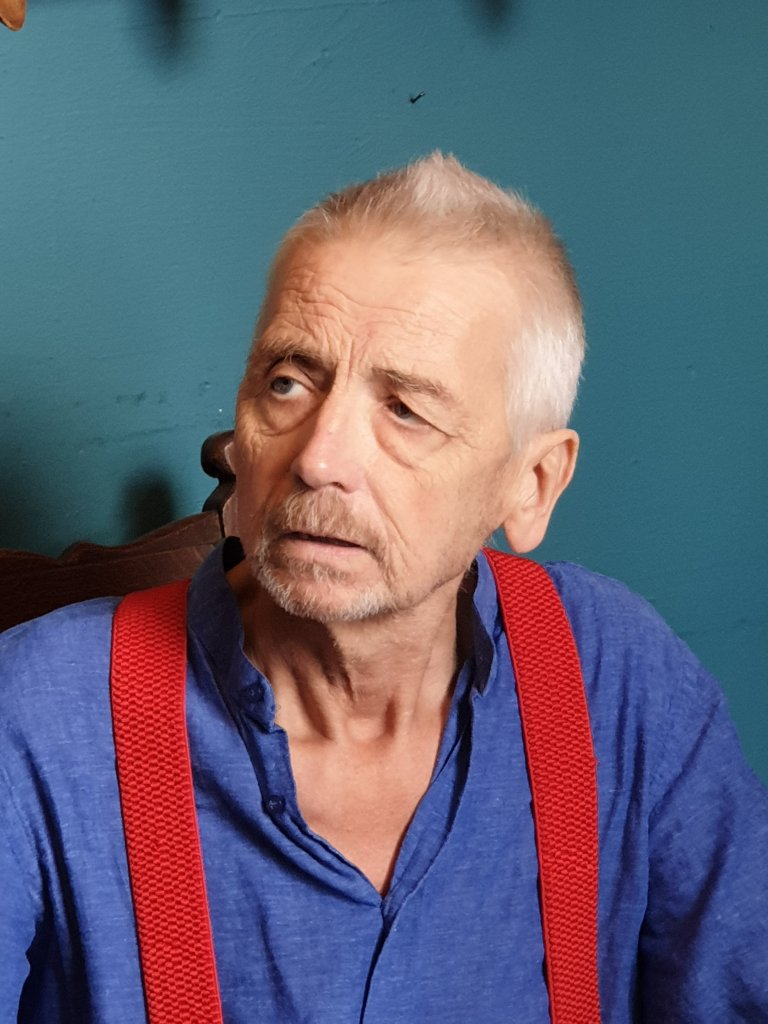
We went to a private screening last night of a film that Jake Auerbach persuaded Hannah Rothschild to make about his father, a healthily reluctant, indeed sceptical, subject for Jake’s camera. I wish I had seen it before because it is so illuminating about his early life, his upbringing in Germany, his attitude to drawing and to his long-standing sitters, one for every day of the week, his total, absolute dedication to his art, with only a day away in Brighton once a year.

I have now been told that it is available on Jake’s website. I very strongly recommend it.

Standard

Michael Collins

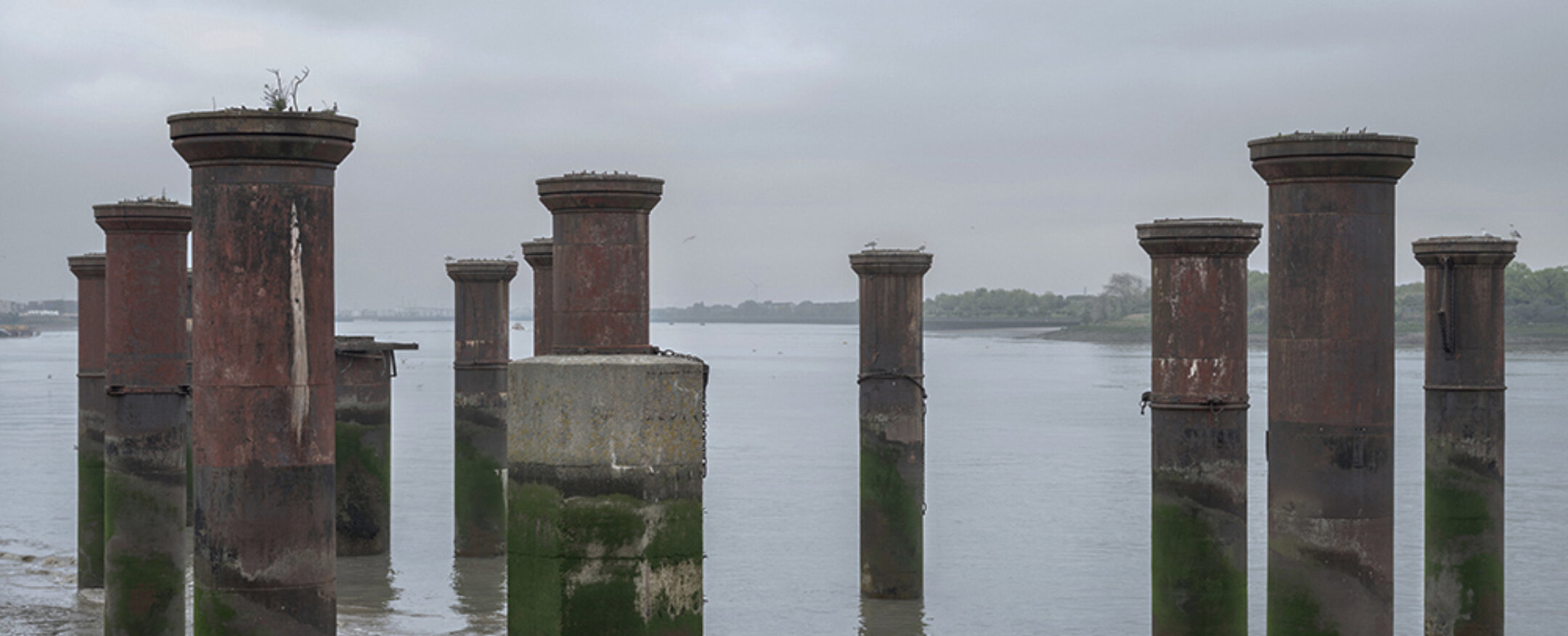
We went down to Trinity Buoy Wharf to see an exhibition of images of the ‘Pillars in the River’ by Michael Collins, a photographer who likes to document modern industrial remains in a studiously deadpan documentary style:

He takes the pictures digitally – they are apparently multiple images in order to get the precision in the depth of field and the element if surrealism in the images, documenting detail in a way that would not ordinarily be visible to the eye. The pillars are all that remain of Beckton Gas Works, described by Ian Nairn as ‘a magic world of plant and pipes, holders and small hills of coal – even wharves and funnels, for good measure, at the far end’, all of it now gone. Collins is documenting these twentieth-century survivals of the industrial economy before they too have gone.

Standard

The London Bell Foundry (4)

If you want to hear what is happening to the Whitechapel Bell Foundry, I am giving a talk on it alongside Dickon Love, a campanologist, at the Horse Hospital on Thursday 24th. November. It was organised some time ago when all hope was dead, but now that the hotel scheme has been abandoned, we need public support.

https://salonforthecity.blogspot.com/2022/09/salon-no98-london-bells.html?m=1&s=09

Standard

The London Bell Foundry (3)

It is incredibly heartening to see so much online support for the offer the London Bell Foundry has made to rent the Whitechapel Bell Foundry in order to reinstate its use.

But, it is less heartening that the offer, which is at market value, has so far not been accepted.

The owner may choose to lease it to someone else and hope that Tower Hamlets will allow change of use. Let’s hope they make it clear that they won’t. Or he may just choose to sit on it whilst property values change and the property continues to decay. Or there may be an unexplained fire which would enable redevelopment, as can happen in such situations.

There is no indication that he will accept the offer.

Standard

The Sainsbury Wing (6)

Following Annabelle Selldorf’s lecture at the RIBA last week, I wrote an article for the online edition of The Critic in support of what she proposes.

Obviously, she does not want to desecrate the original building, but instead, she is making changes to accommodate the large crowds which fill up the ground floor of the Sainsbury Wing, now that the National Gallery has chosen to use it as its primary entrance, probably as much for purposes of security, allowing bag searches in a single place, as for allowing everyone, including wheelchair users, to enter at the same level (the original entrance, however noble, is designed for the gentry of the late 1830s, not six million visitors, half of them tourists).

Eight former Presidents of the RIBA have attacked what she is doing, which seems odd since it is a modification of the street entrance and retains the great bulk of the original first-floor floor plate, which creates the compression which was an important feature of the original design. I know that the Twentieth-Century Society has studied what is proposed with the utmost care and has suggested a number of modifications, many of which, although not all, have now been adopted.

I hope that the ex-Presidents might look at what is now proposed, not the CGI which was widely and in retrospect probably mistakenly published in June and which made the proposals look more radical and less in sympathy with the original than they now are.

https://thecritic.co.uk/what-next-for-the-sainsbury-wing/

Standard

The London Bell Foundry (2)

The London Bell Foundry which is hoping to take over the Whitechapel Bell Foundry in order to re-instate its operation as a working Foundry has just launched an excellent website demonstrating its credentials (see below). It would like to lease the foundry. It is said that there is another, better offer. But have the owners perhaps forgotten that changes to the fabric of the building were made conditional on re-instating a Foundry, as required by current planning legislation, which would surely prevent it being turned into a nightclub/discotheque/art gallery/club, as may be proposed ?

Let’s hope that Tower Hamlets will insist on the original conditions as required by the Planning Inquiry, as it is legally required to. And Historic England too.

Otherwise, it could face a judicial review.

h0ttps://www.thelondonbellfoundry.co.uk/

Standard

Victor Margrie (1)

I had been told that Victor Margrie had died in early October (on October 5th.) and was bemused that there was absolutely no mention of it online because I have always regarded him as an exceptionally interesting and significant figure in the crafts revival of the late 1970s/early 1980s, when there were grants for graduates and the gallery in Waterloo Place, designed by Terry Farrell, was mainstream, before it migrated out to Islington.

Margrie had a strong belief in the relationship between the crafts and creativity/innovation/the avant garde and supported good writing in Crafts Magazine, when it was edited by Martina Margetts. There was a Crafts Council shop in the V&A and I think Margrie was himself a member of the V&A’s Advisory Council. There were craft demonstrations in the galleries of the V&A. Margrie stood down from directing the Crafts Council in 1984 and was then replaced by a man who was appointed because he refused to comment on the objects which were placed on the table in front of him – he said it wasn’t part of the job. The Crafts Council has never recovered.

https://www.theguardian.com/artanddesign/2022/nov/11/victor-margrie-obituary

Standard

Queen Alexandra (2)

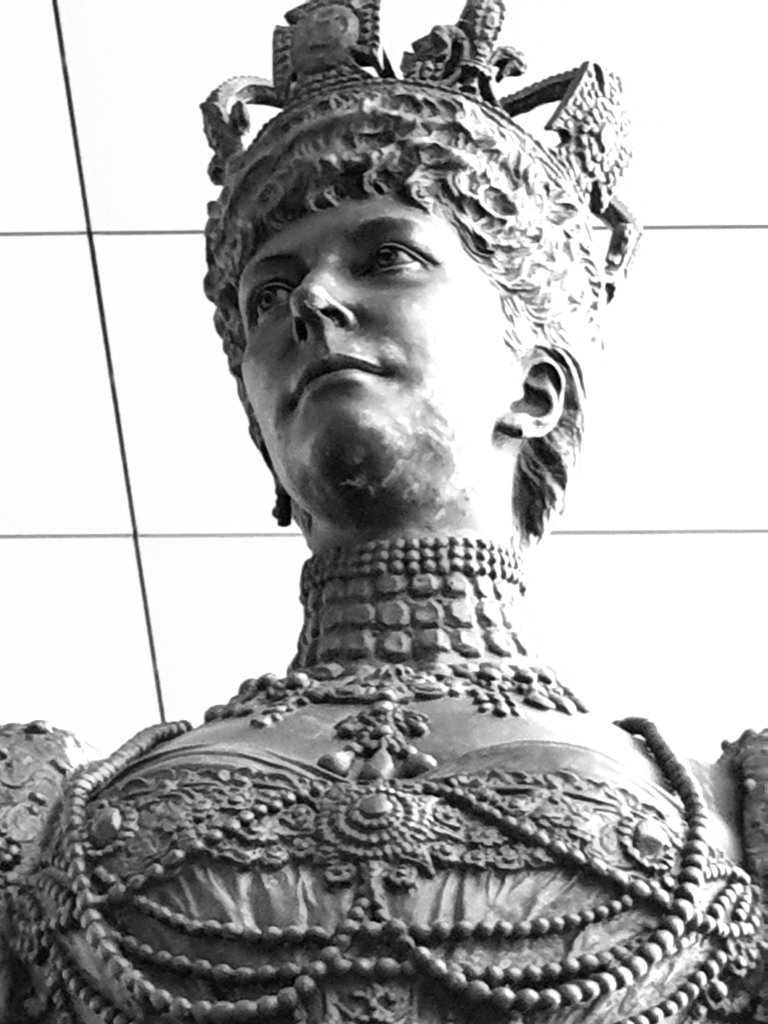
Since Queen Alexandra was on my mind, I went to visit her. She’s currently a bit neglected, but will be in a better place when the new Tower Hamlets Town Hall opens and the park to its south. She is as I remembered: stately:

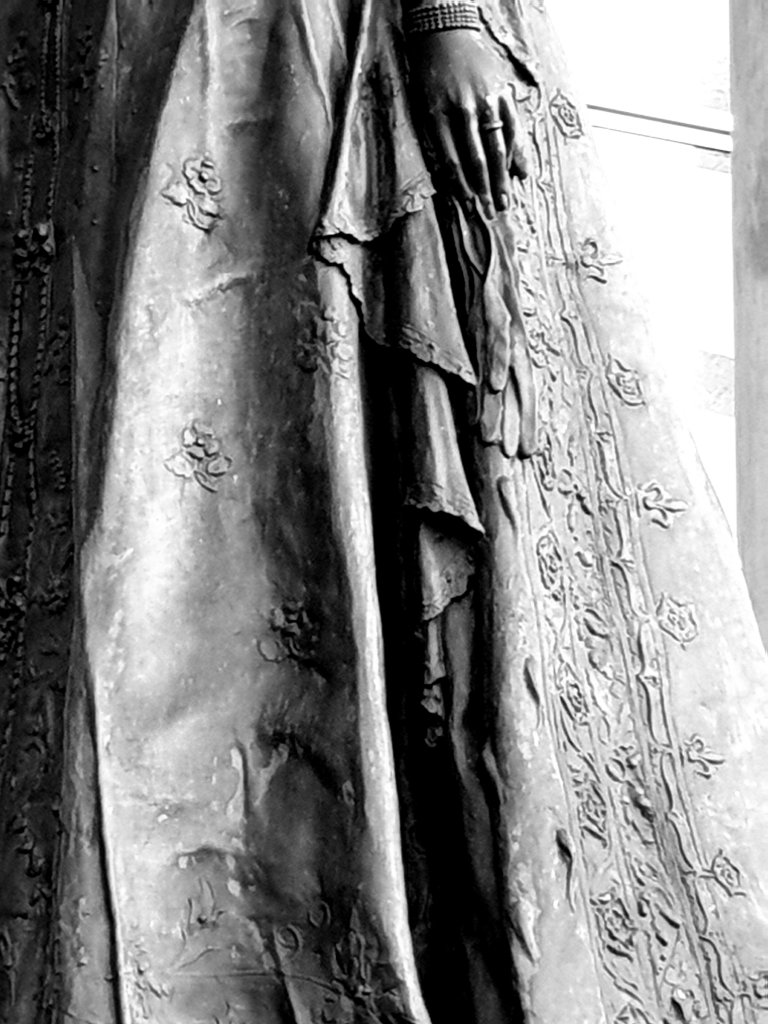
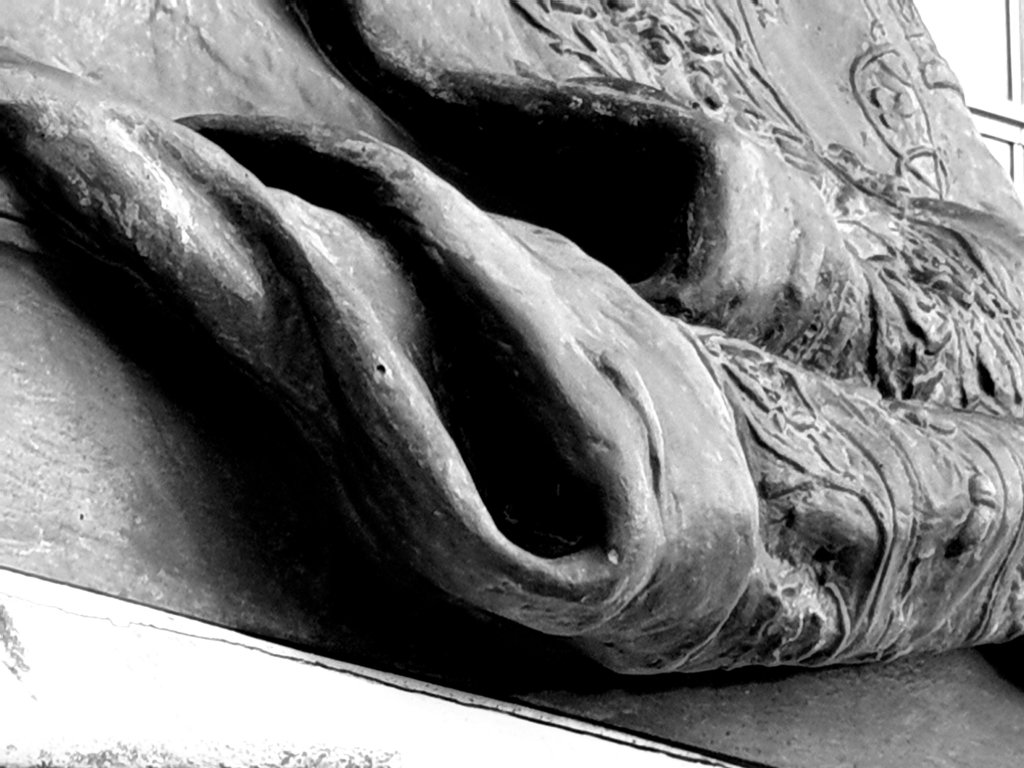
Good modelling of her robes:-

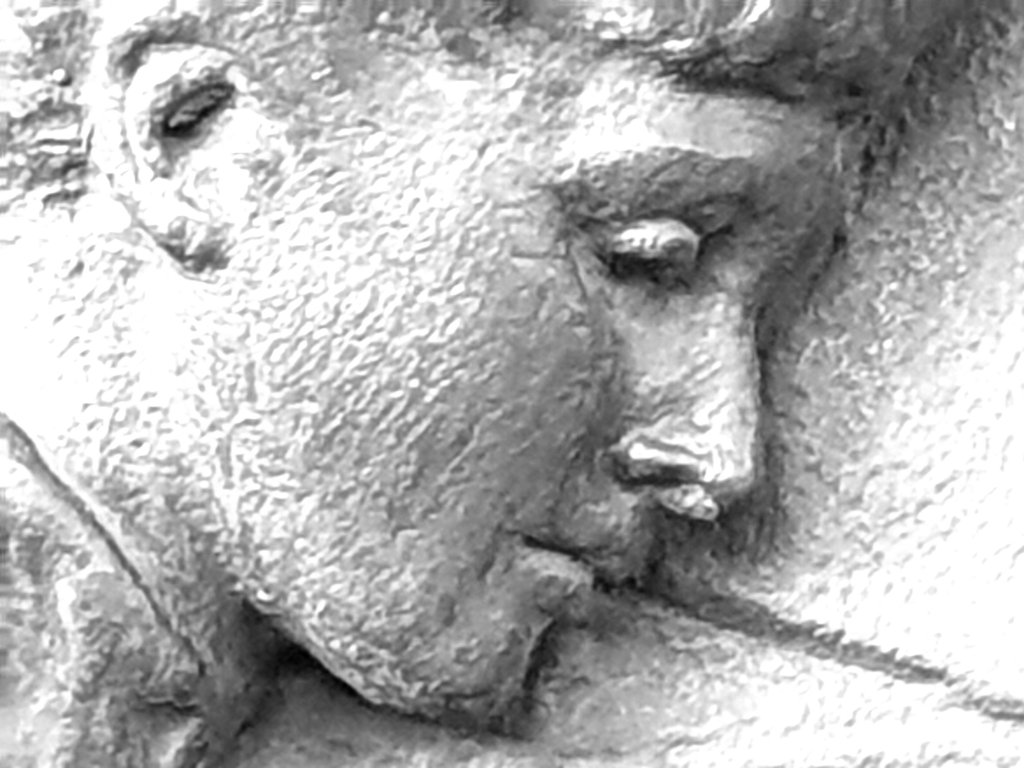
She appears again on the plaque below:

1904:

Standard

Queen Alexandra (1)

I was asked by the Public Statues and Sculpture Association (PSSA) to choose a public sculpture that I particularly admired (see below). I chose the fine statue of Queen Alexandra, which is on Stepney Way at the back of the new London Hospital, not perhaps an obvious choice, but deriving from a time when sculpture was a normal part of public commemoration, in a way that it can now feel a touch unnatural or forced – and there are not many artists who can do it effectively:-

Standard