To the Lighthouse

It’s a long time since I’ve walked out the full distance from the cottage to the lighthouse, if ever, a distance of five miles as the crow flies.

I set out early:-

There was no-one on the beach:-

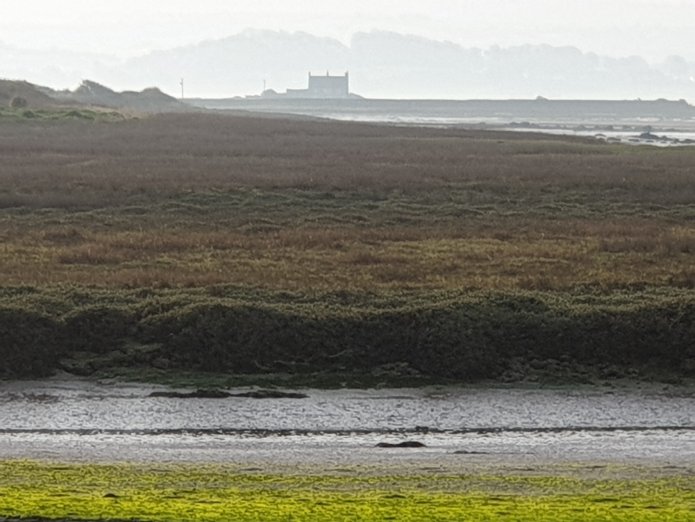
You see the lighthouse in the distance, framed by the ruins of St. Dwynwen:-

Then the Pilots’ cottages:-

Twr Mawr was built in 1824, by order of the Caernarvon Harbour Trustees:-

Standard

Llangeinwen

I stopped to admire the bluebells on the verge beside the local church, which describes itself as being in Llangeinwen, a village which otherwise scarcely exists apart from the church itself and the nearby garage:-

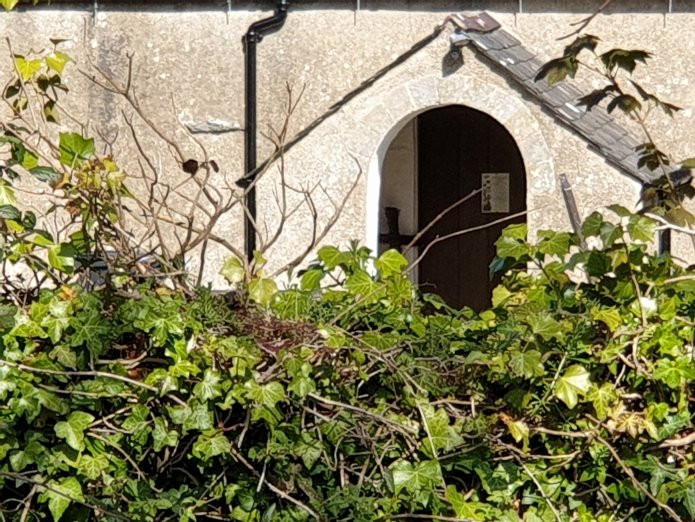
I realised that I had never actually been into the church, which was founded by St. Ceinwen in the sixth century, is partly Romanesque, restored in 1838, and with a pretty churchyard:-

Standard

Maundy Thursday (1)

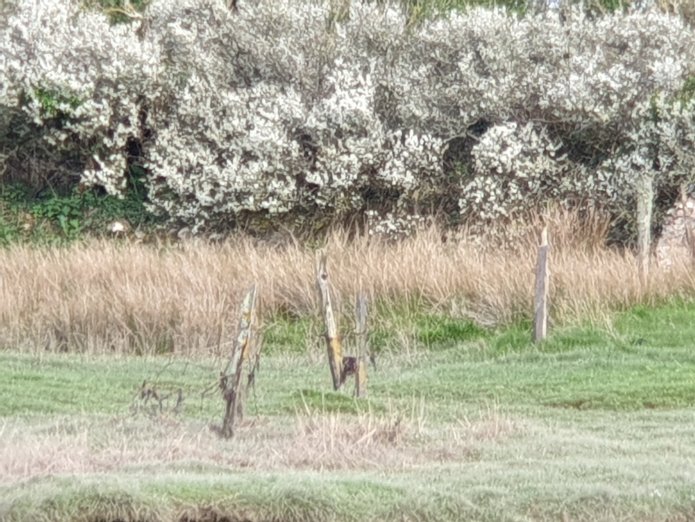
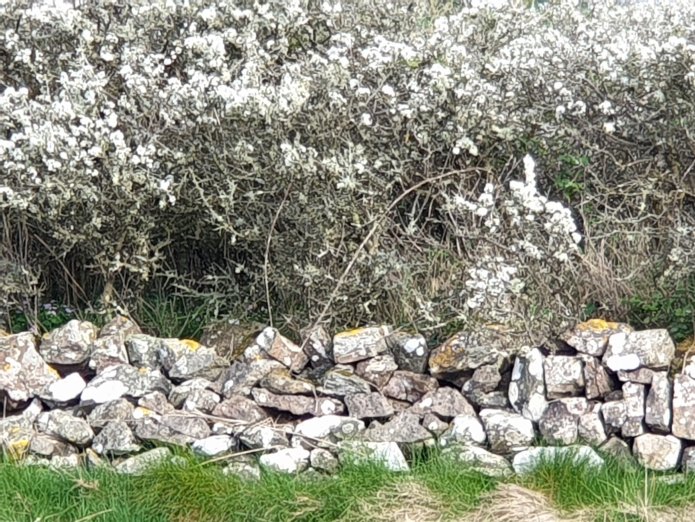
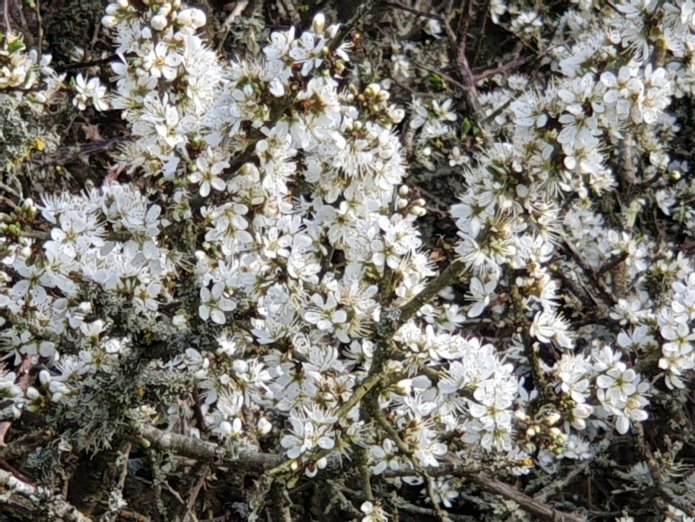
It’s a long time since we’ve been in Anglesey for Easter and Easter is so late this year. The hedgerows are covered in May blossom and there are bluebells by the roadside:-

They’ve made the new slate fence beautifully:-

And re-hung the old gate:-

Standard

Arturo di Stefano

The artist I went to visit in an ACME studio by the canal was Arturo di Stefano, whose work I have much admired ever since he did a commissioned portrait for the NPG of Sir Richard Doll, the doctor who demonstrated the link between smoking and lung cancer (more recently, he did another of Jan Morris). He was showing me big works of the shadows on Sicilian monasteries:-

Standard

Cowslips

I went to see an artist whose studio is on the edge of the canal by Mile End Park.

I was amazed to discover that the park was full of cowslips, which I think of in countryside and woodland, not the heart of the city:-

Standard

Merce Cunningham

Yesterday was the centenary of Merce Cunningham’s birth. We went to the celebratory Night of 100 Solos at the Barbican – an astonishingly visually exciting, abstract, composite performance, with Dada-ist backdrops by Richard Hamilton, organised by dancers from Cunningham’s company, including Siobhan Davies.

I had not realised how important London was to an appreciation of Cunningham when his Dance Company performed at the Phoenix Theatre in 1964, the year that Rauschenberg won the Golden Lion at the Venice Biennale. All will be revealed in Alla Kovgan’s forthcoming 3D film.

Standard

Notre-Dame de Paris

It’s hard to escape the horrendous pictures on breakfast television of fire ballooning through the nave of Notre-Dame, demonstrating, as if it was needed, how much more vulnerable buildings are during restoration projects.

But it’s also worth remembering the extent to which Notre-Dame is a nineteenth-century reconstruction by Viollet-le-Duc – meticulous and scholarly as it was – after the acts of gross destruction during the French Revolution, when it was rededicated to the Cult of Reason and most of the statues on the façade were smashed. So the putative medieval spire and bell tower are, in fact, later reinventions.

It doesn’t reduce the catastrophe, just reminds one that buildings can and do go through disasters and their spirit and history survive.
Standard

A German Life

In the various discussion as to how far, if at all, current political circumstances bear any relationship to Germany in the early 1930s – the drift to the far right, the rise of extremism, a referendum with illegalities which the government chooses or prefers not to investigate – it was a pleasure to see A German Life at the Bridge Theatre which is precisely about how easy it was to be complicit with the rise of fascism: to laugh at it, or ignore it and pretend it isn’t happening or is just a part of normal life, dominated by the smiling faced and always polite villains of the right, who seem in many ways so normal. It’s an amazing and totally convincing tour-de-force by Maggie Smith, directed by Jonathan Kent.

Standard