
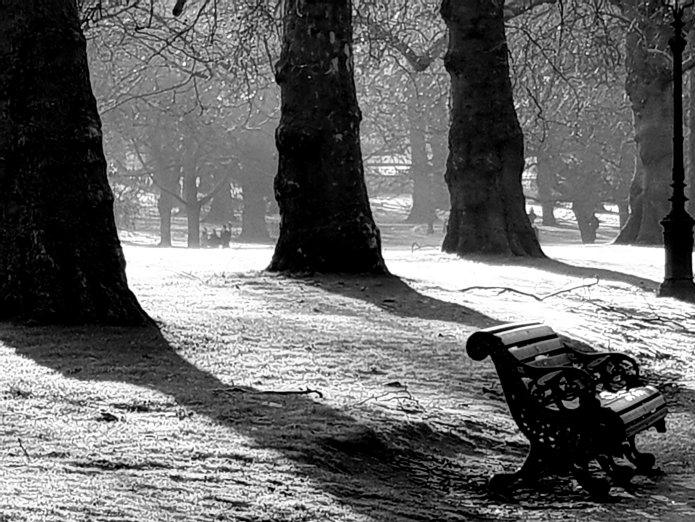
It’s hard to resist the view out of the bedroom window:-

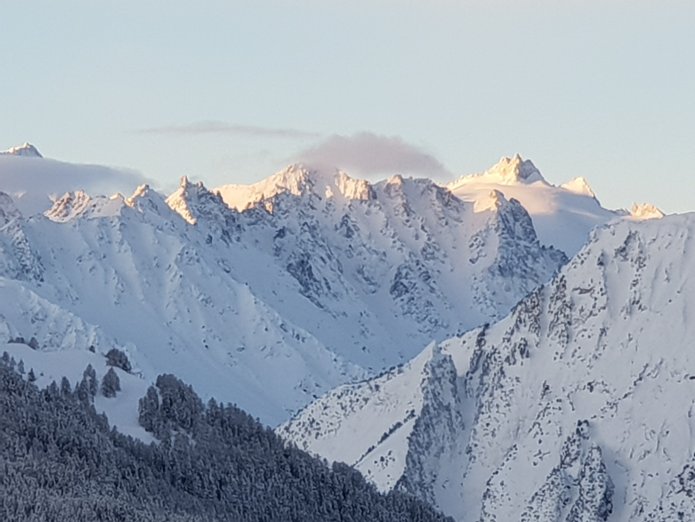
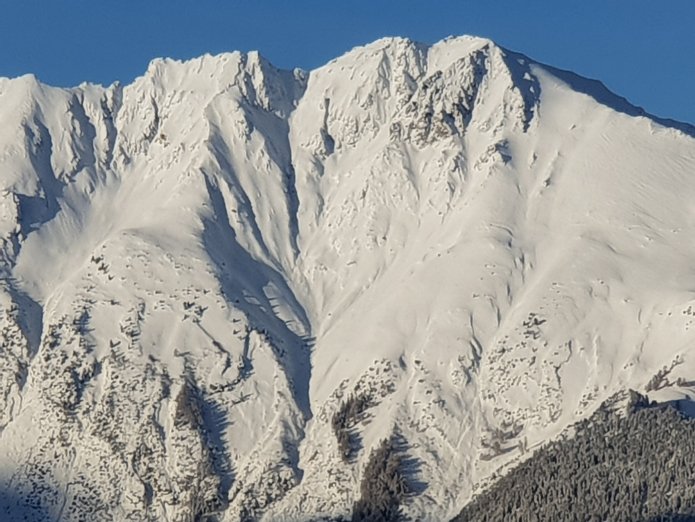
A long day travelling to the Verbier Art Summit – made longer by the fact that my flight from City Airport was cancelled – enabled me to read quite a lot of Éric Hazan’s The Invention of Paris, an admirable and highly detailed exploration of the quartiers of Paris through the eyes, mostly, of nineteenth-century writers, including Baudelaire and Balzac. For much of his career, Hazan was a cardiovascular surgeon and his approach to the study of the city is surgical, approaching its streets with a literary stethoscope, listening to its heartbeat. He has done a more recent book, A Walk through Paris, which is full of reminiscence, but the Invention of Paris is a deeper historical analysis, which enabled me to escape Heathrow into the seventeenth-century Marais, the nineteenth-century arcades, and the destruction of Les Halles by Pompidou.
Having attended not one, but three launches of Watercolour World yesterday, I learned a great deal more about how widespread its use was as a medium of documentary record.
The first was the extent to which its use was pioneered by the army in the 1740s, following Thomas Sandby’s appointment as private secretary and draughtsman to the Duke of Cumberland, who took him with him to record the Battle of Dettingen and made records of the enemy encampments at the Battle of Culloden. In the late eighteenth century, it was regarded as a useful skill in the arsenal of an army officer, making it possible to document and survey military fortifications.
The next key development was the establishment of the Whatman paper milk in Maidstone in 1740 which led to the production of good quality wove paper in 1756.
The third key development was the invention of the paint cake in 1781 by William and Thomas Reeves, which made it possible for amateurs and professionals to go out into the world with a box of watercolours in their pocket to record the appearance of volcanoes and balloons and all other forms of natural phenomena.
As an occasional observer of grand, ceremonial events, I have been to few grander or more ceremonial than the Memorial Service for Lord Carrington in Westminster Abbey which was filled by the purple of Tory grandees, but enlivened by the recollection of Carrington’s own sense of humour and self deprecation, downplaying his role as a tank commander at the Battle of Arnhem, and a junior minister in what Winston Churchill called his shoot. Carrington was celebrated – rightly – by Lord Luce for being what Harold Macmillan called ‘the last of the Whigs’, his belief in public service, and his support for Britain’s entry into the EEC.
We had the press launch this morning of a new digital website http://www.watercolourworld.org, which, as its name implies, makes freely available the watercolours, which have hitherto been difficult to locate in private and public libraries throughout the world. Of course, the collections of the V&A, the national collection of watercolours, are available online. But who would have known that Winchester College owns a watercolour showing the construction of the London to Brighton railway ? It will open up an unfathomable wealth of images of the late eighteenth- and nineteenth-century world.
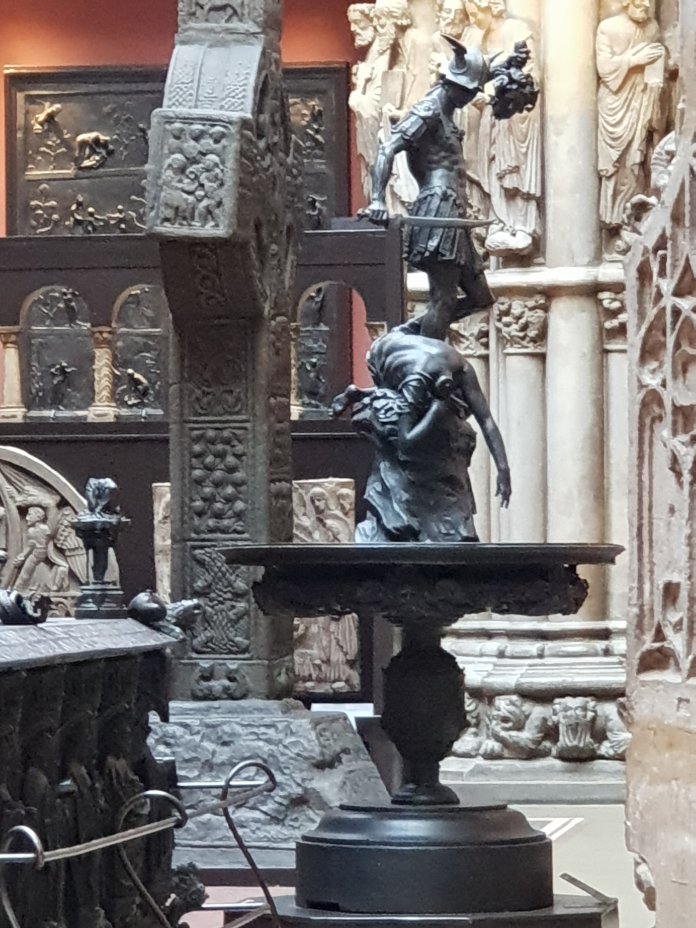
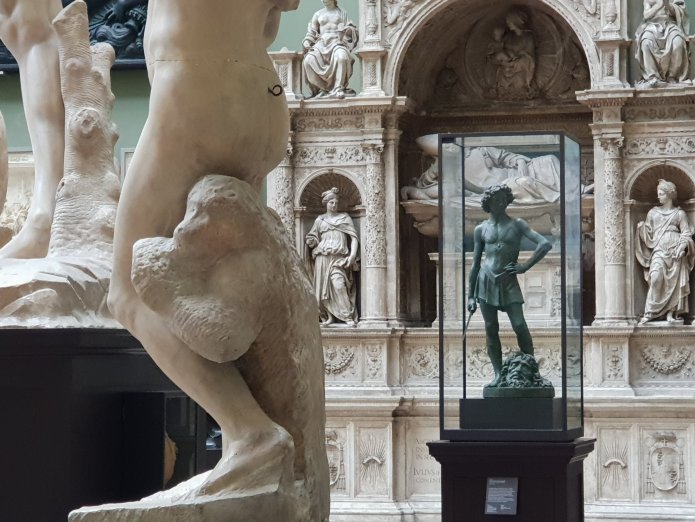
I went to see the new displays in the Cast Courts at the V&A, which were opened in November with funding from the Weston Foundation.
First opened in 1873, the Cast Courts were originally known as the Architectural Courts, full of both originals and copies, conceived by Henry Cole and designed by Major-General Henry Scott, the architect of the Albert Hall. It was intended partly to provide source material for students in the National Art Training School (I note that there was already a ‘Female antique class room’).
They were spared from destruction by the innate conservatism of the V&A, although the classical casts were transferred to the BM and, in 1947, a big collection of electrotypes was sold to Metro Goldwyn Mayer to be used as film props, as they were in Indiana Jones and the Last Crusade (1989).
They were last redisplayed in 1982, but in those days, the gallery in the middle was of fakes, whereas now it is full of interpretation:-
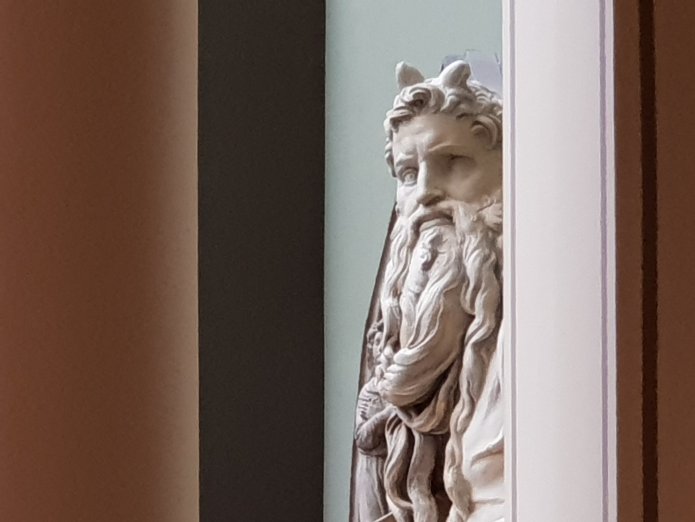
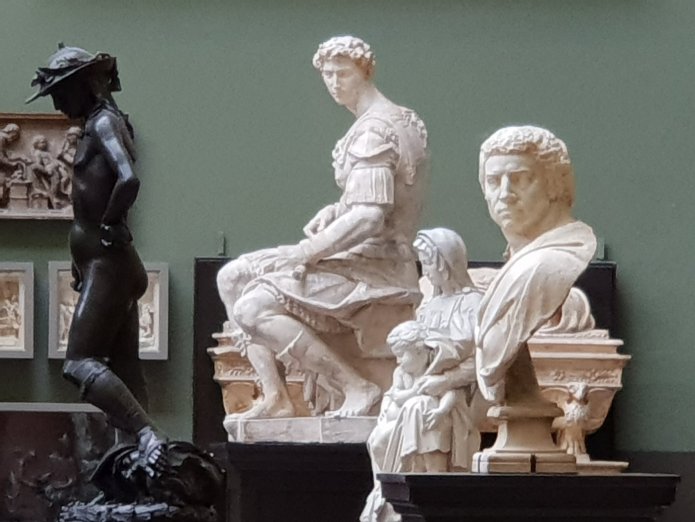
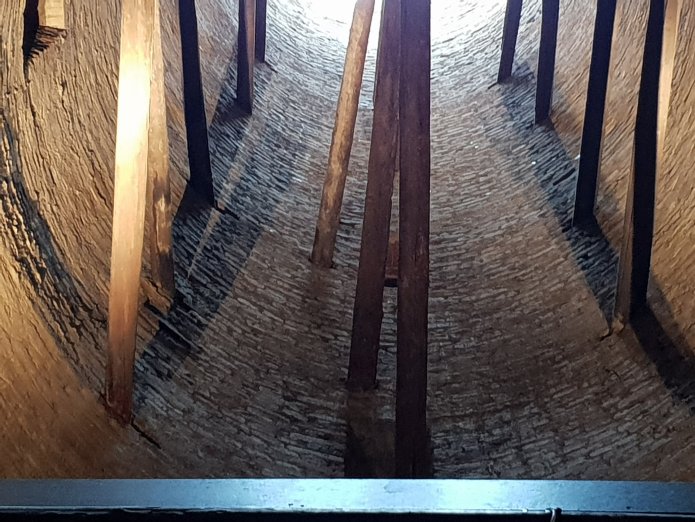
The inside of Trajan’s Column:-
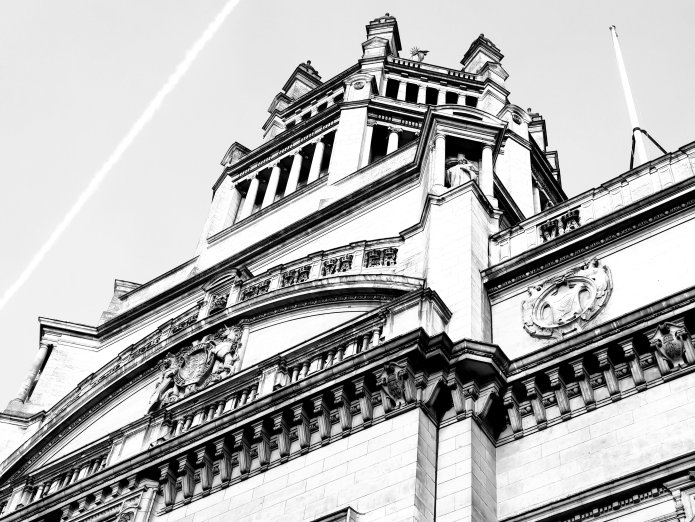
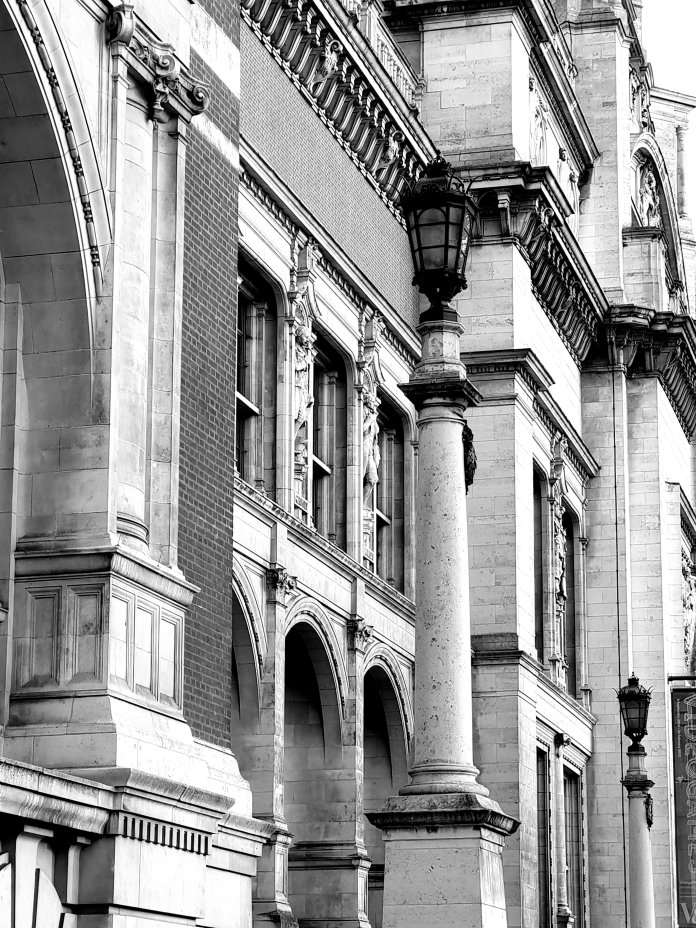
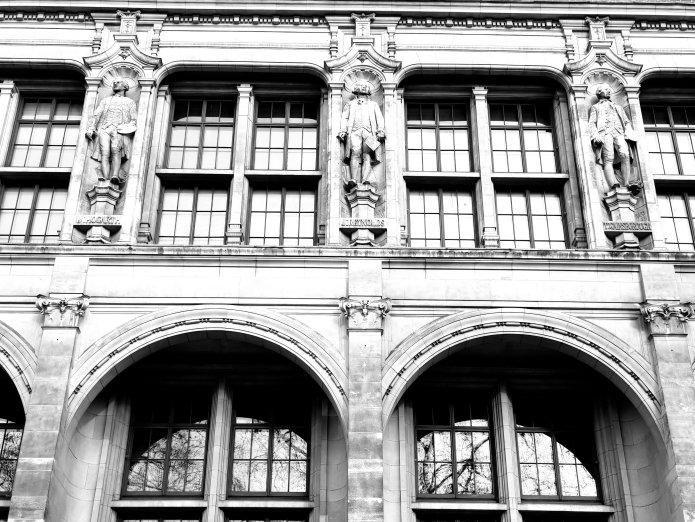
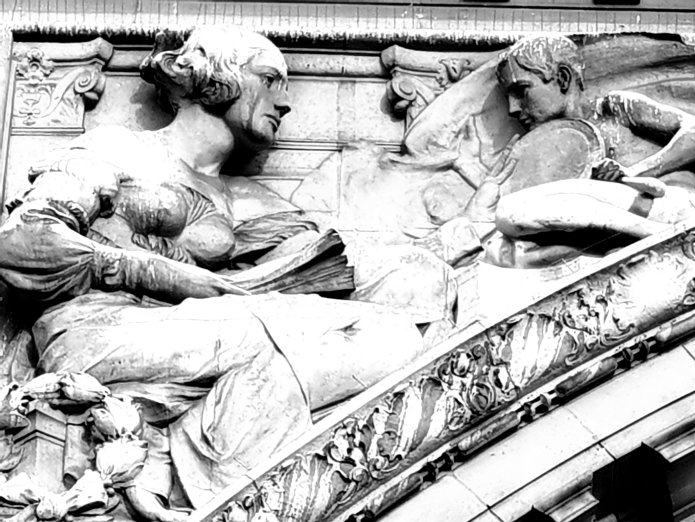
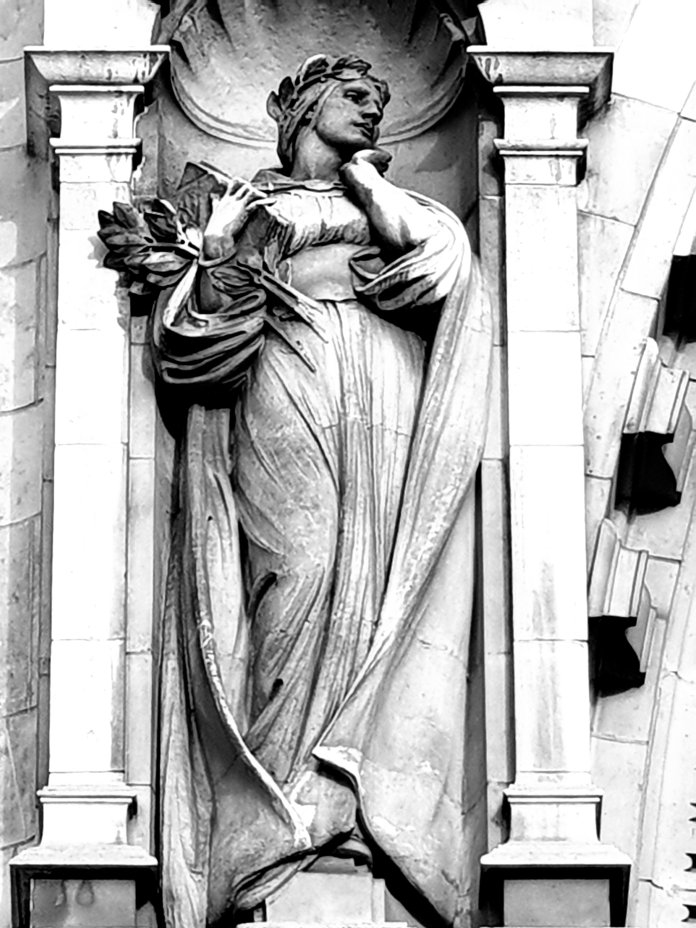
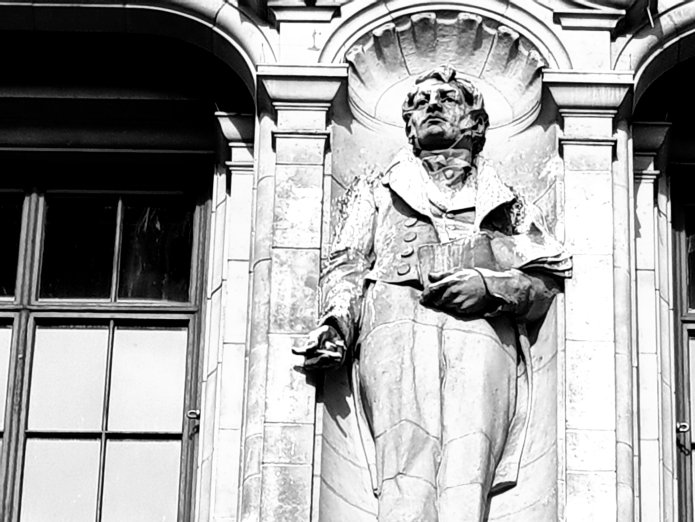
Standing outside the Aston Webb façade of the V&A waiting for the museum to open, I was struck by the extent to which the sculpture on the façade of a highly international museum of design consists of a pantheon of British artists, all painters:- Hogarth, Reynolds, Gainsborough, Romney and Cosway to the left of the main entrance and Turner, Constable, Watts, Leighton and Millais on the right. They were put out at almost exactly the moment that the Tate Gallery was established as the National Gallery of British Art. Was it the V&A’s bid for supremacy in the field ?
I was encouraged by a friend who does not agree with my views on Brexit to watch the television programme on the origins of the Referendum last night. It was in many ways salutary, demonstrating the relentless and well organised pressure from the right of the conservative party and from UKIP on Cameron and that Cameron was not especially keen on Europe himself, always having to argue for Britain’s exceptionalism. What came across was how much it was, and is, an argument purely within the conservative party and that there is never any reference or awareness of another half of the country; nor did anyone at that stage make the argument for remaining within Europe, not even Nick Clegg, a committed Europhile. So, it’s no wonder we are where we are.
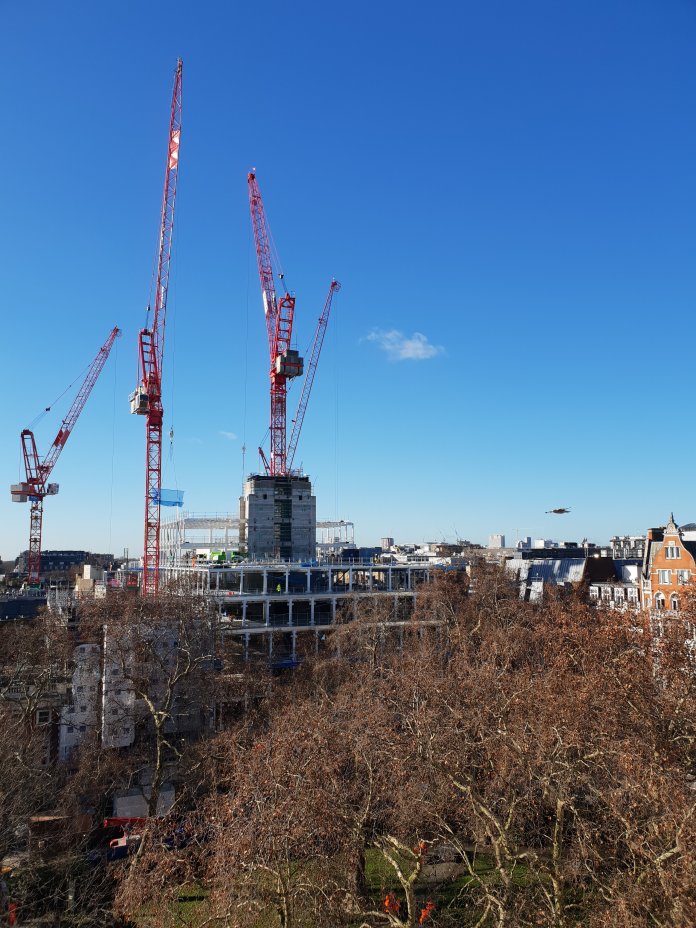
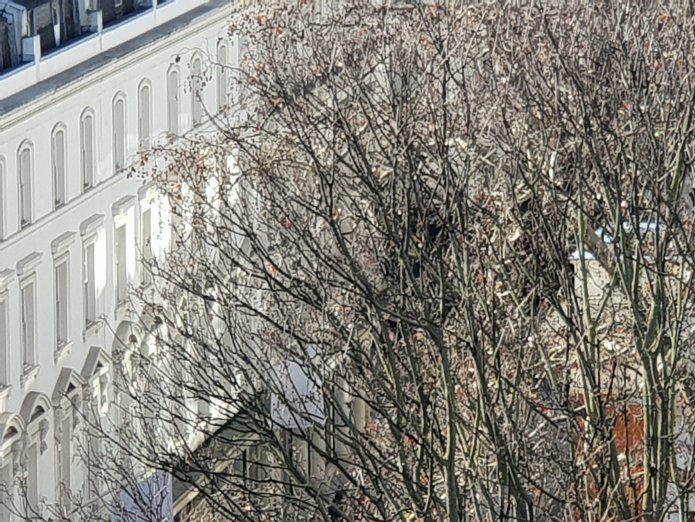
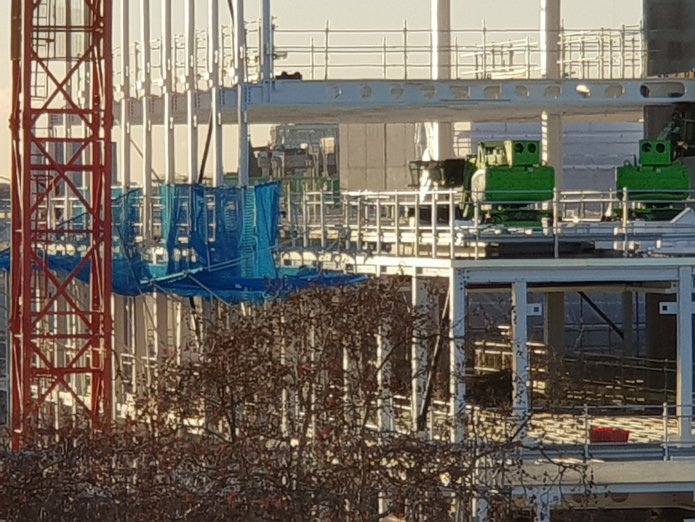
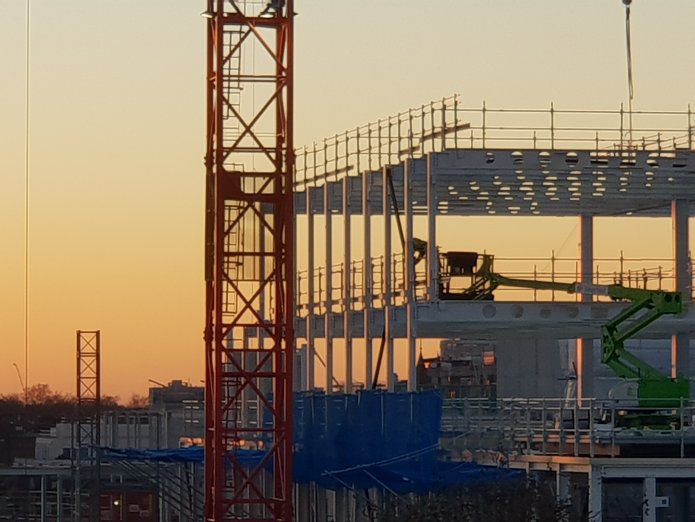
One of the pleasures of working at Blain|Southern is the view from my office window over the gigantic building site which will be Crossrail, as the seagulls circle overhead:-
 | Charles | Saumarez | Smith |
You must be logged in to post a comment.