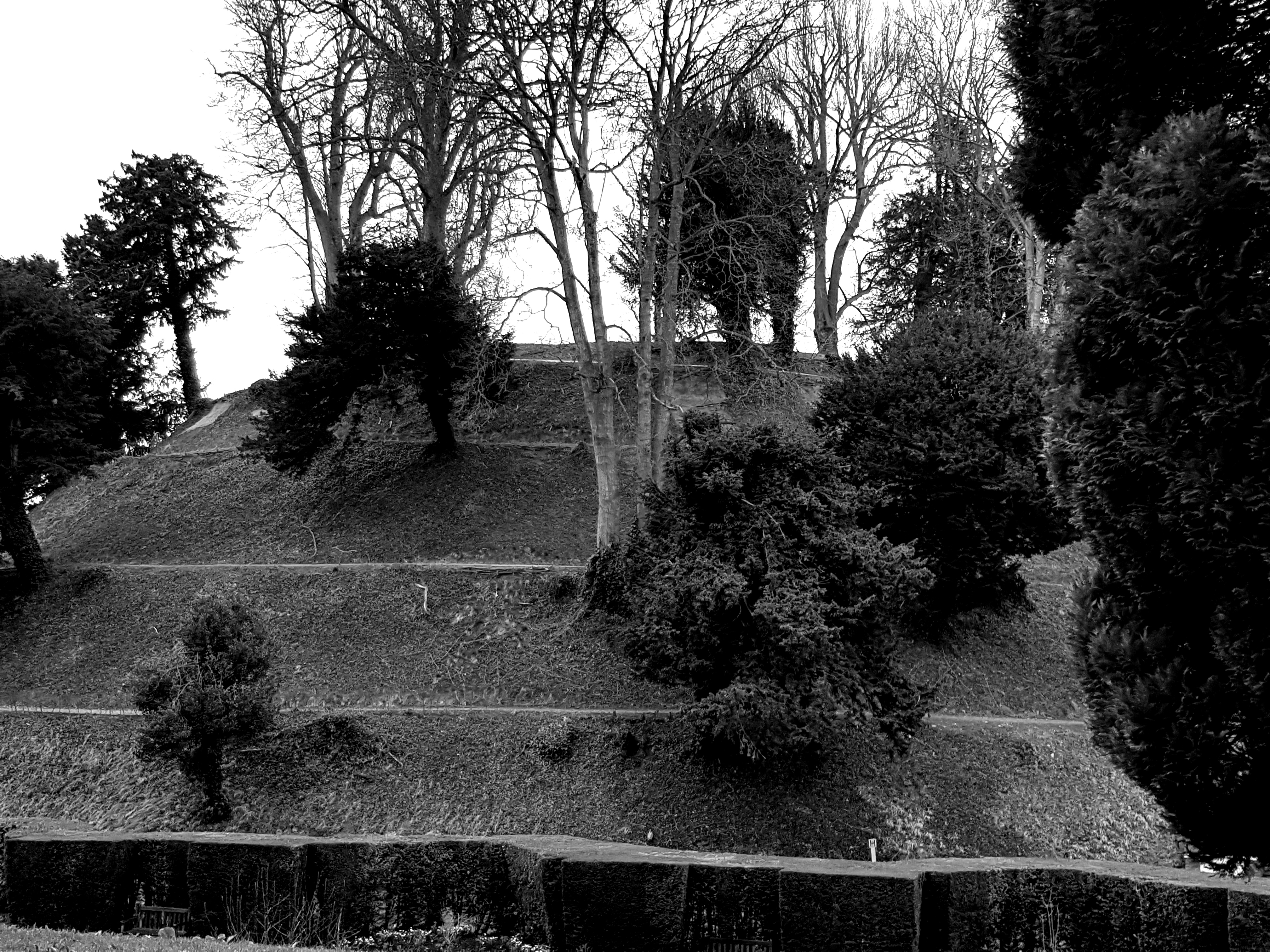
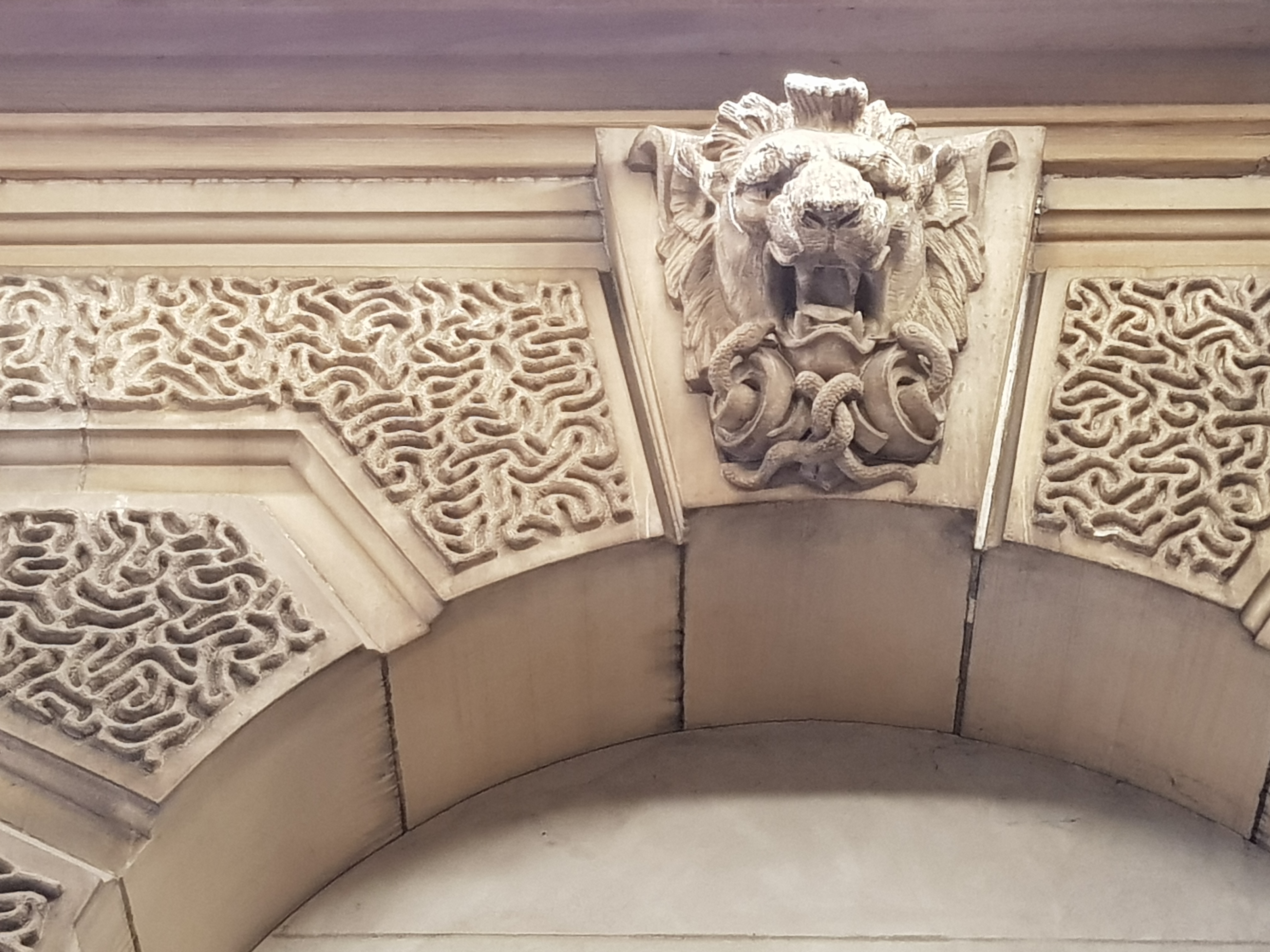
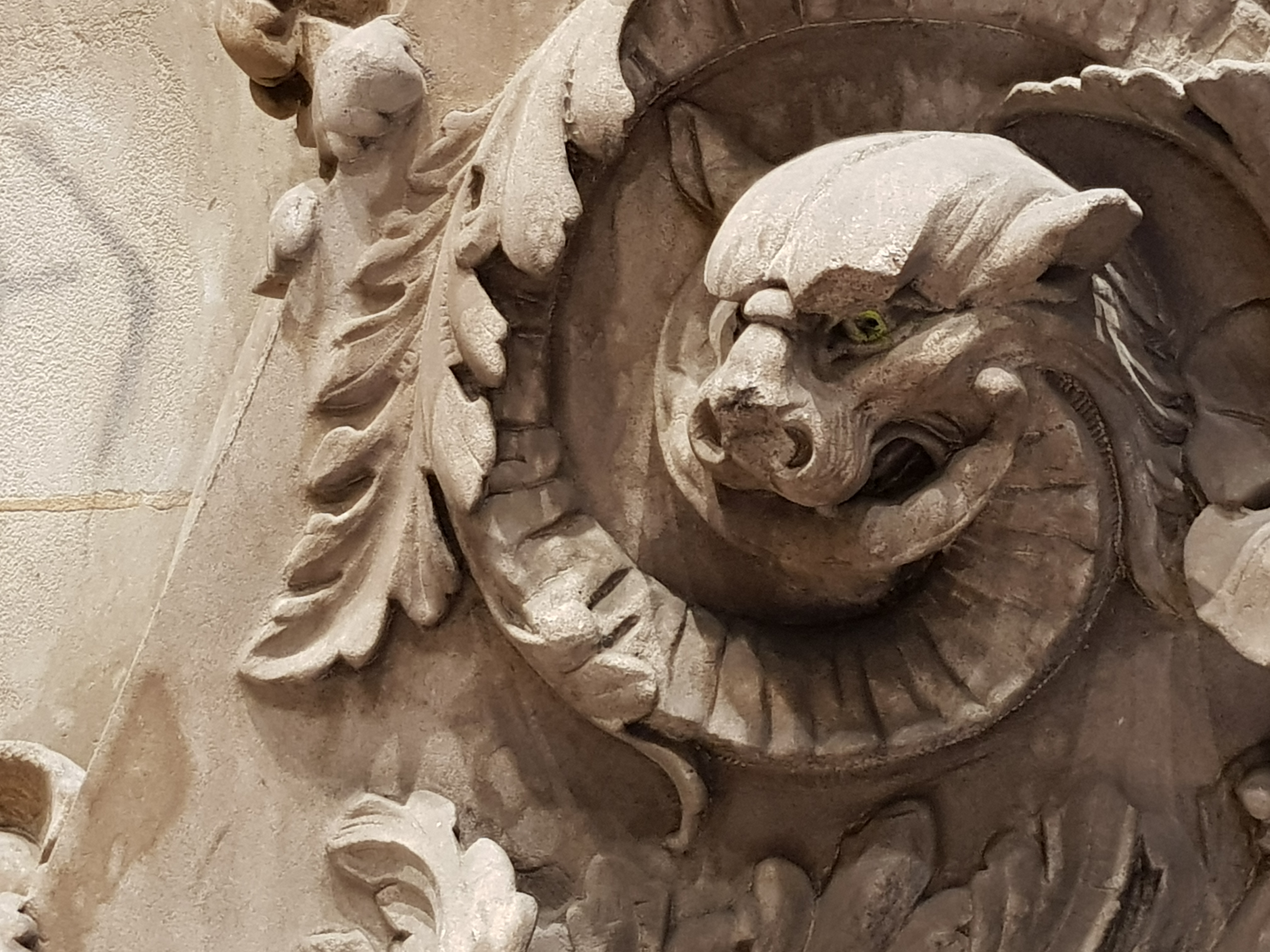
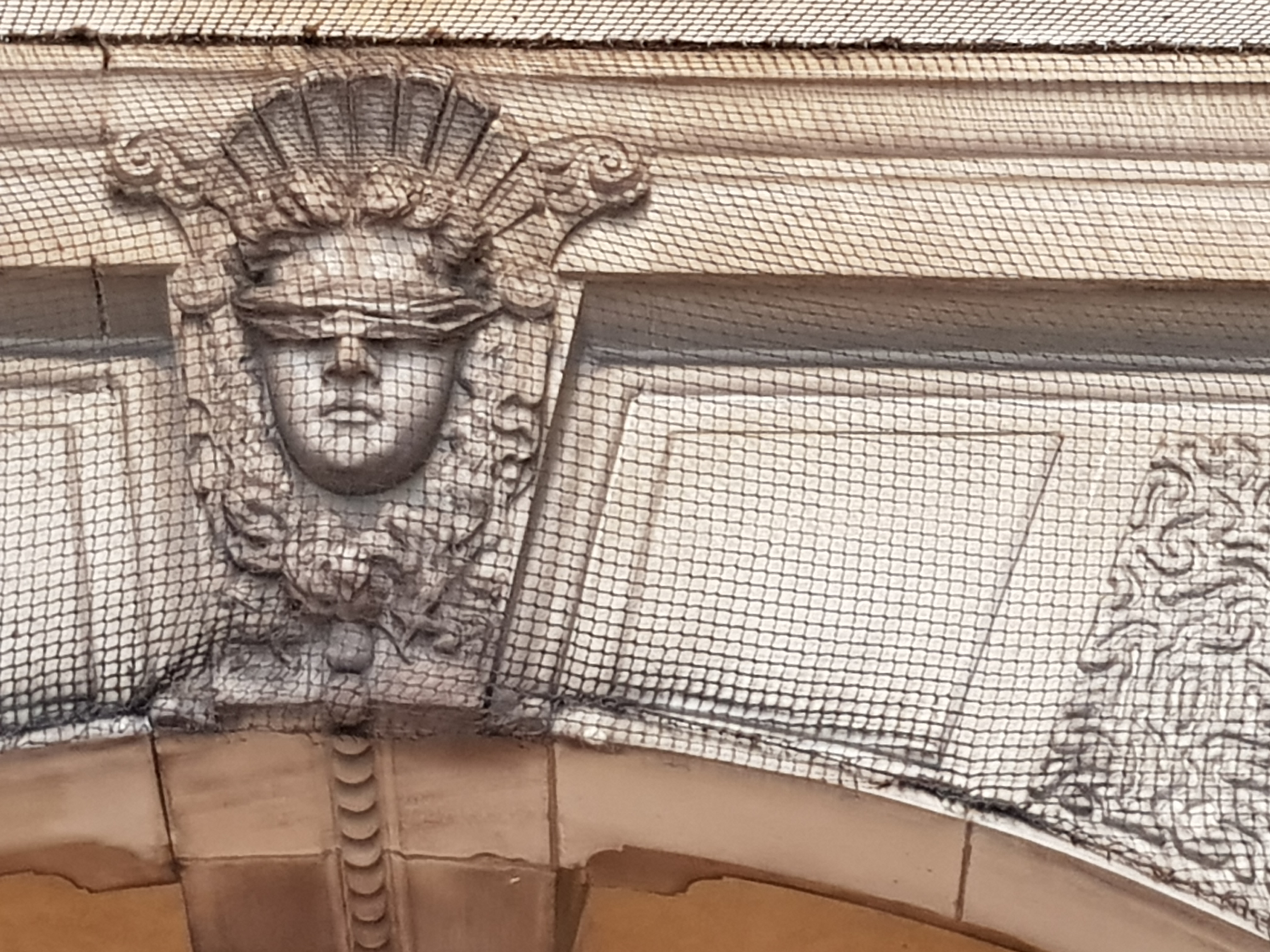
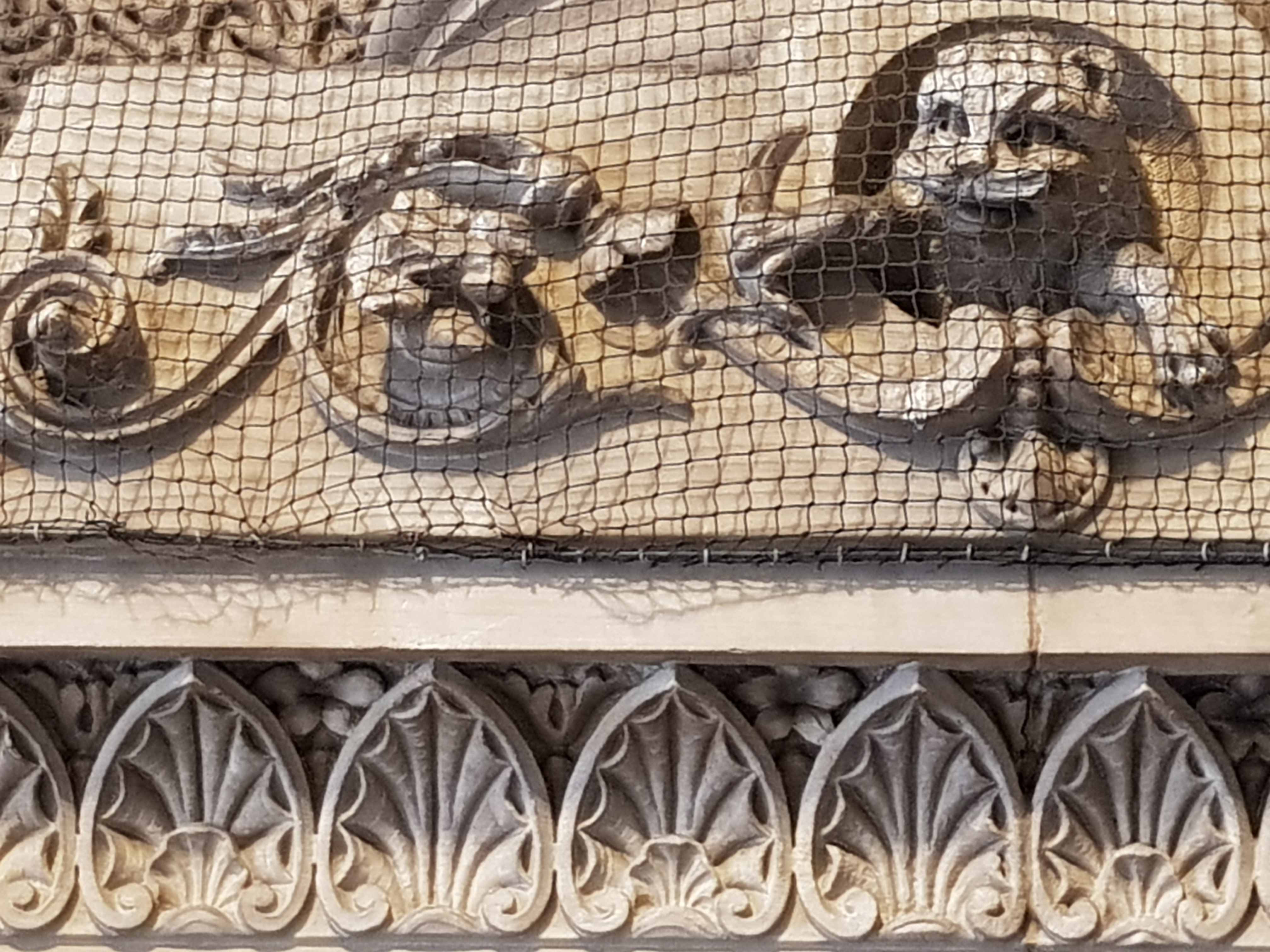
I’m pleased to discover that the Mound – that mysterious, small, round, landscaped tump in the backyard of Marlborough, which was pretty disregarded by the school, apart from the eighteenth-century grotto which was a convenient place for smoking – has been revealed to be not Merlin’s grave or a Norman motte, but an authentic archaeological remain, as old as Silbury Hill:-
Marlborough College
I was asked to give a talk at my old school – somewhere in Wiltshire, as we used to say. The topic, by request, was my career, a rather boring subject, I decided, by the end of the talk. But the questions were good. What did I think about the return of the Elgin marbles ? What did I think about modern art ? What did I think about museum charges ? What did I think about the toppling of statues in the southern States ? What did I think about the school’s sale of its Gainsborough ? Is a copy a legitimate substitute for an original ? All the questions that I’ve got used to not being asked or, alternatively, not answering.
Burlington Gardens
I’ve gone quiet on our building project of late because there is a blanket ban on all photographs pending the formal public opening on May 19th. There is a vast amount of work going on ahead of the opening. Indeed, it feels a bit like the pyramids must have done, pending the death of a pharaoh, with hundreds of workmen putting the finishing touches on the tasteful shade of pearl grey, slightly purple-ish paint. Wonderful top-lit galleries at the back. And the vaults. Roll on May 19th.
Civilisation
Since my post on Civilisations has had exponentially more readers than anything I have written before, I am doing a follow-up post on the television original. I write as a deep admirer of Kenneth Clark, the quality of his writing and of his mind, his wide frame of cultural reference, including music and literature (he could quote Burns from memory) and his ability to communicate with a global audience about the qualities and characteristics of European art and culture. But his cultural attitudes and beliefs were formed at Winchester and Oxford in the early 1920s and then by working under Bernard Berenson in the late 1920s. His description of Civilisation was not merely Euro-centric, but omitted much of northern Europe, the whole of Spain, and Eastern Europe as well, not to mention India, China, Japan and America. He was mournful of his inability to relate to art after the second world war. So, it is surely wrong to be too nostalgic about his view of Civilisation, and right to celebrate a broader and more international view of Civilisations in the plural.
Civilisations (1)
A week or so ago I was encouraged to write a letter to the Times commenting on an article which implied that the new, multi-part series on Civilisations was a sad letdown from the cultural authority and certainty expressed by Kenneth Clark in the original 1969 television series on Civilisation (in the singular). I refused on the grounds that I could not possibly comment on something I hadn’t seen, other than the short clips shown at its launch. I have now watched the first episode, Second Moment of Creation, which I thought was wholly admirable: extraordinarily wide-ranging (I don’t think I have been to a single one of the places filmed), beautifully filmed and delivered with appropriately intelligent and avuncular authority by Simon Schama. So, I disagree with the many people who have been disparaging about it.
Fiske Kimball
In finding out about Henry McIhenny and his time as a curator of the Phildelphia Museum, I have also been finding out more about Fiske Kimball, its long-serving Director, who was appointed by McIhenny’s father, who apparently described him as a ‘Germanic boor’. McIlhenny half-jokingly claimed Kimball to have caused his father’s death. But he wasn’t German, although married to one. He was trained as an architect, helped establish the Institute of Fine Arts, and was appointed Director of the Philadelohia Museum in 1925, so was responsible for the installation of all those period rooms. He wrote a good description of public attitudes to curators in 1935:
To the unreflective outsider, one fears, museum work consists in guarding and perhaps dusting the objects. On a little higher plane, the curator is thought of as a man with a long beard who sits in a littered office, occasionally peering through a lens at some old curio, ultimately rendering a verdict on its great age and fabulous value. The galleries, once arranged, sink gradually into drab stagnation, in which the echoing footsteps of a rare, intruding visitor arouse the resentment of the somnolent guardian. The museum official might be forgiven if, in a moment of weariness, he wished it were actually so….
Downtown Philadelphia (4)
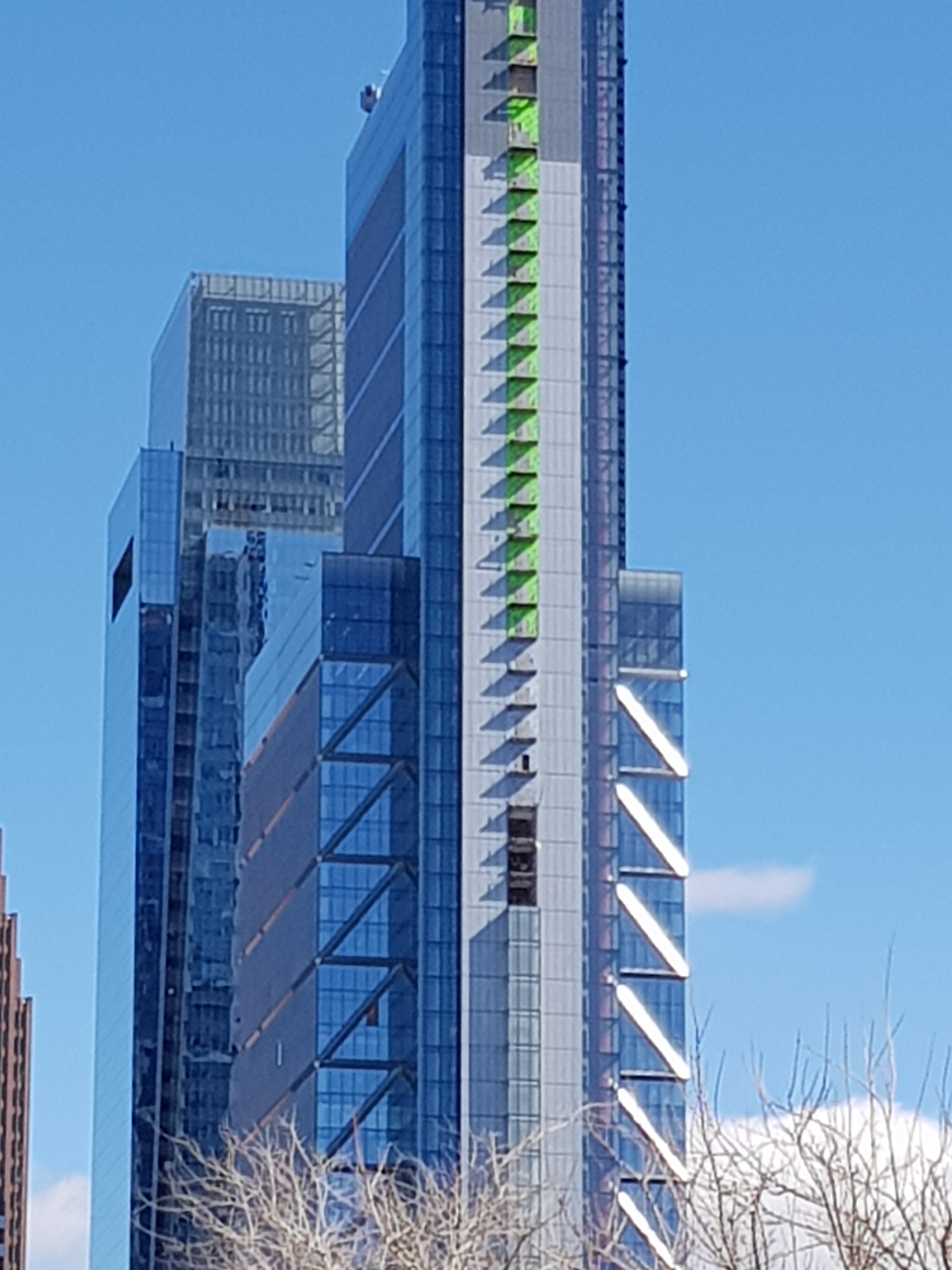
We walked from the Museum along the river Schuykill, looking east towards the Philadelphia skyline, now dominated by Norman Foster’s elegant new skyscraper for Comcast:-
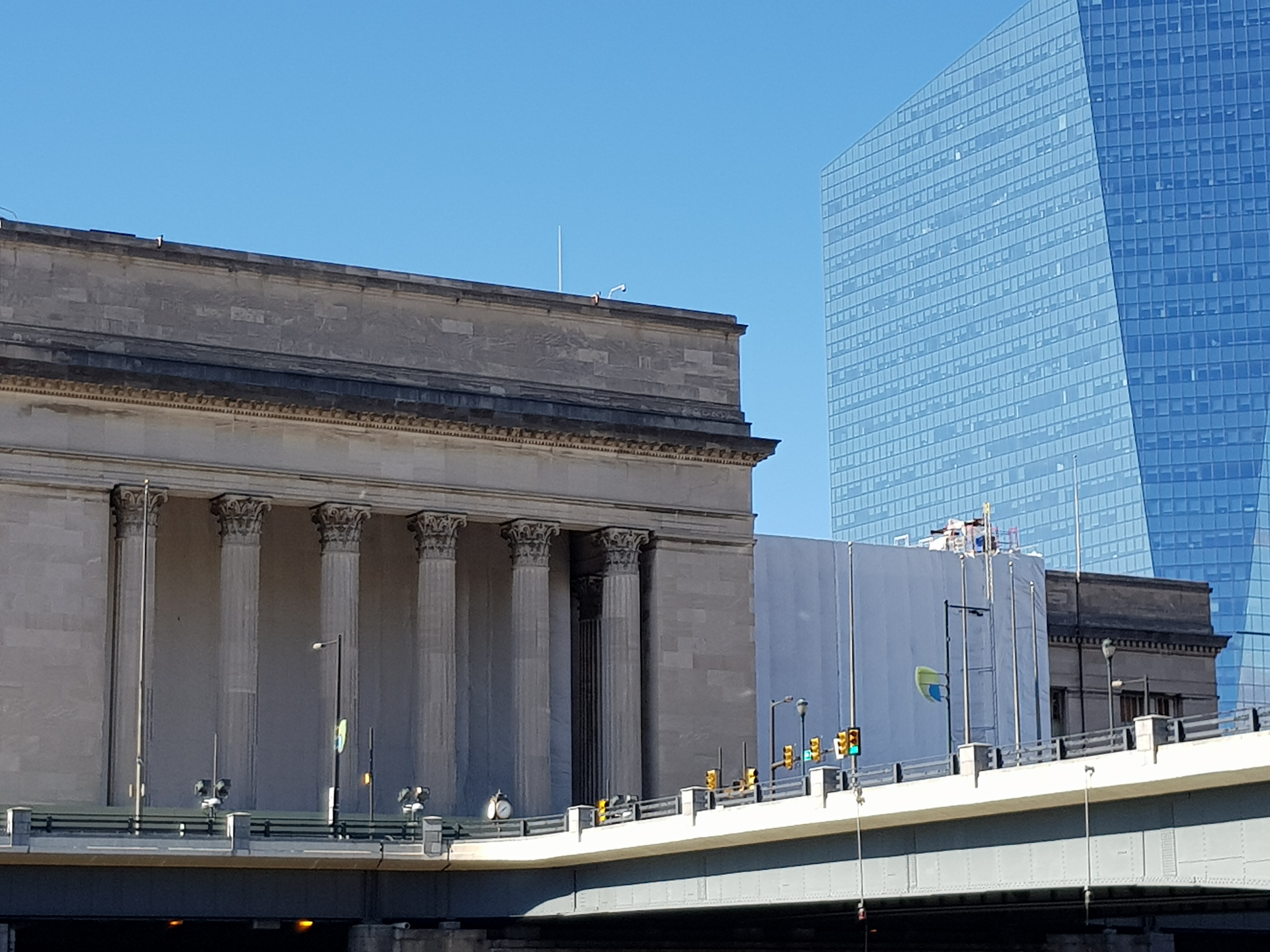
Across to the 30th. Street Station, a monument to the great age of the railroad, begun in 1927 and opened in 1933:-
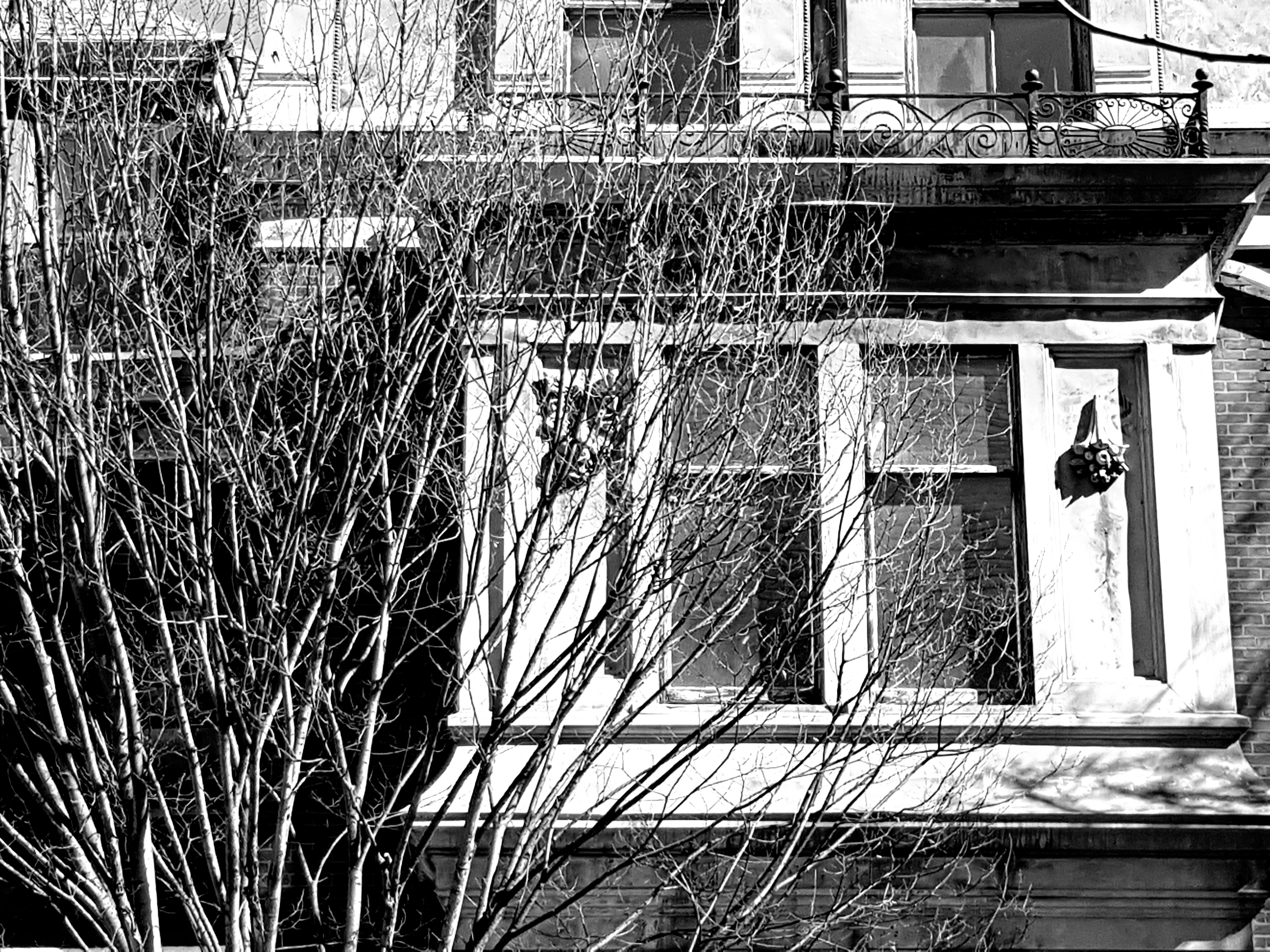
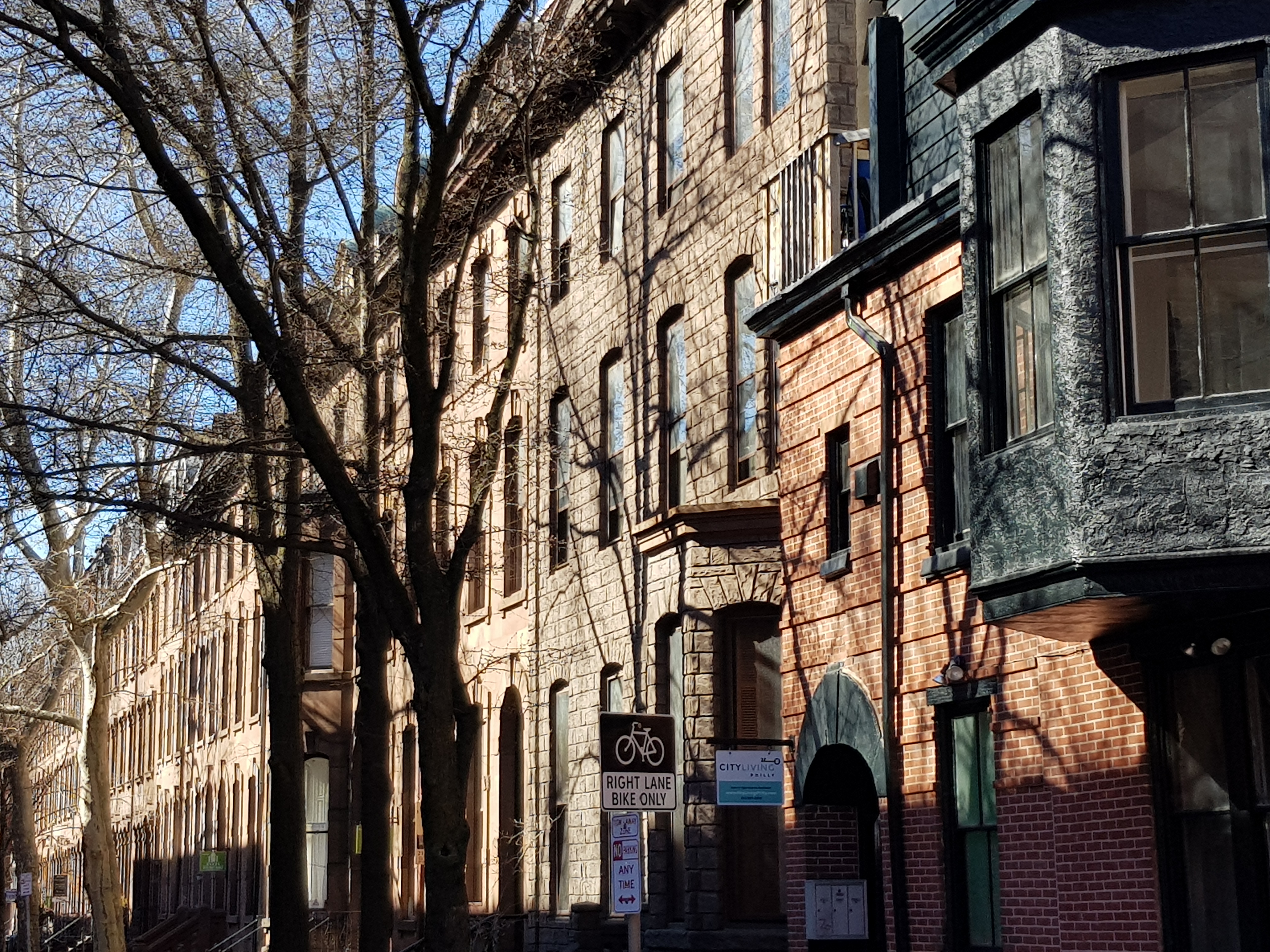
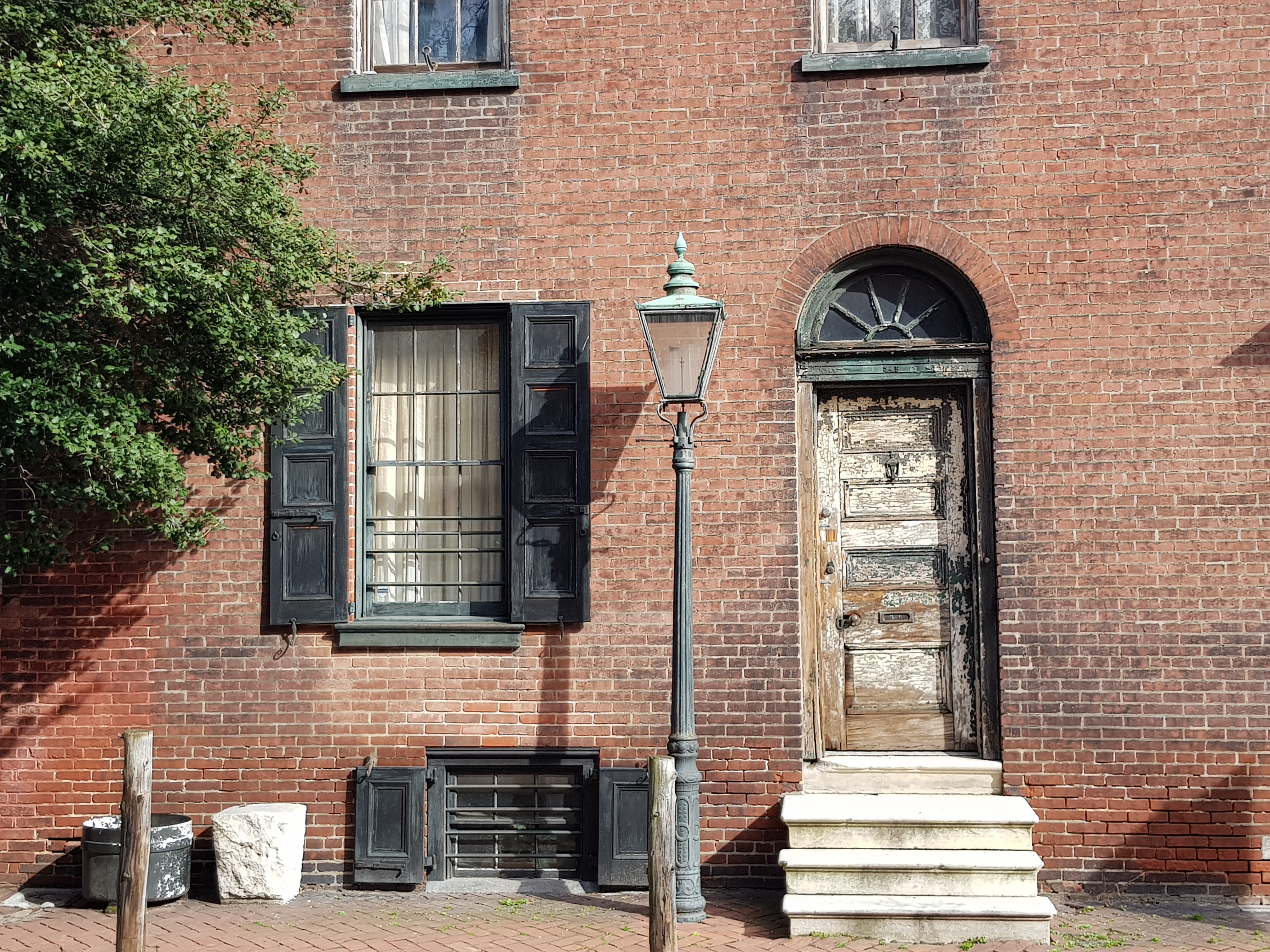
And down to the grand area of nineteenth-century housing down 23rd. Street, round Fitler Square and Spruce Street:-
Philadelphia City Hall
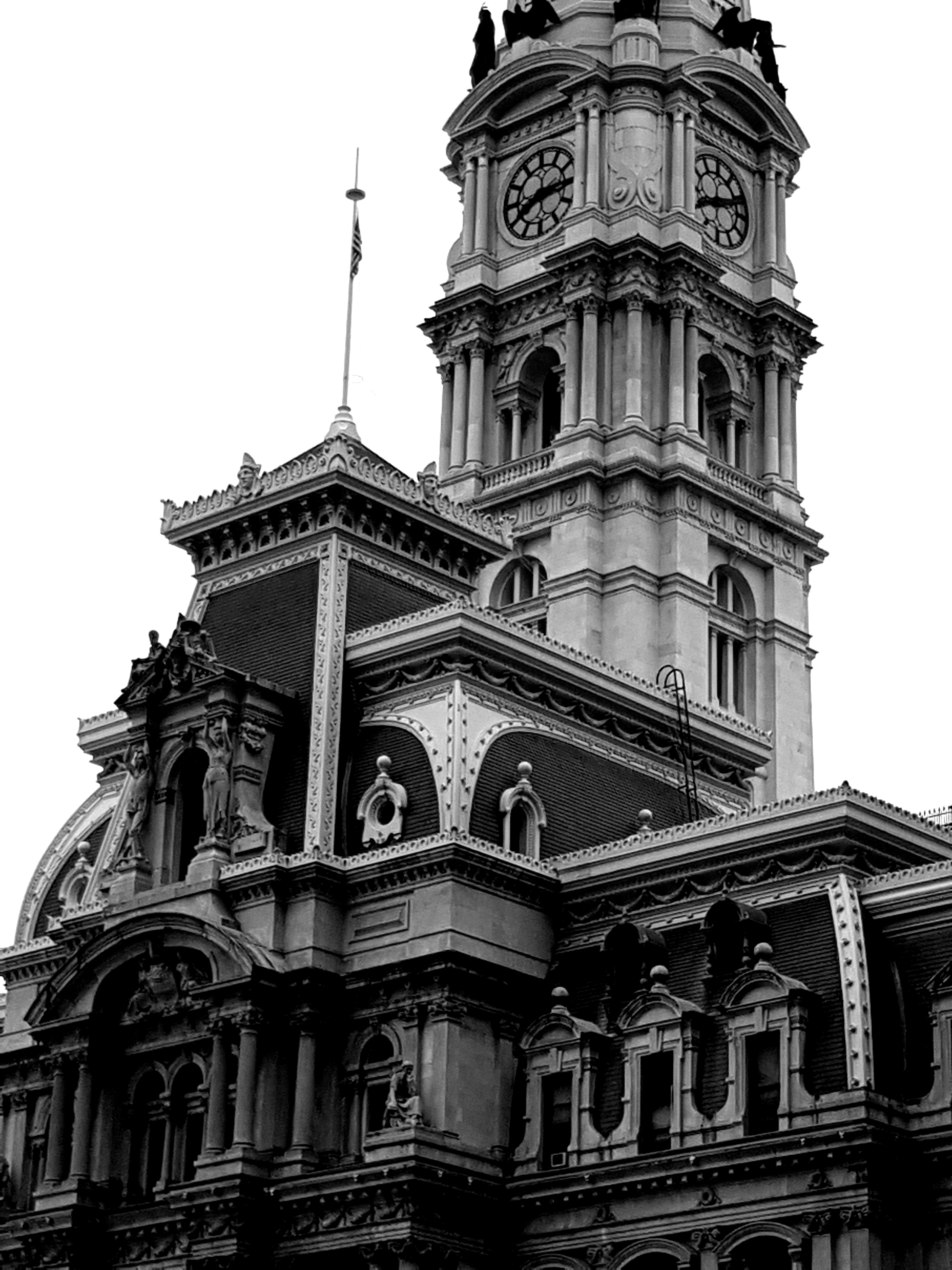
There can surely be no grander or more ostentatious City Hall than Philadelphia’s, designed by John Macarthur Jr. in 1871 and, once the tower had been completed in 1894, the world’s tallest building:-
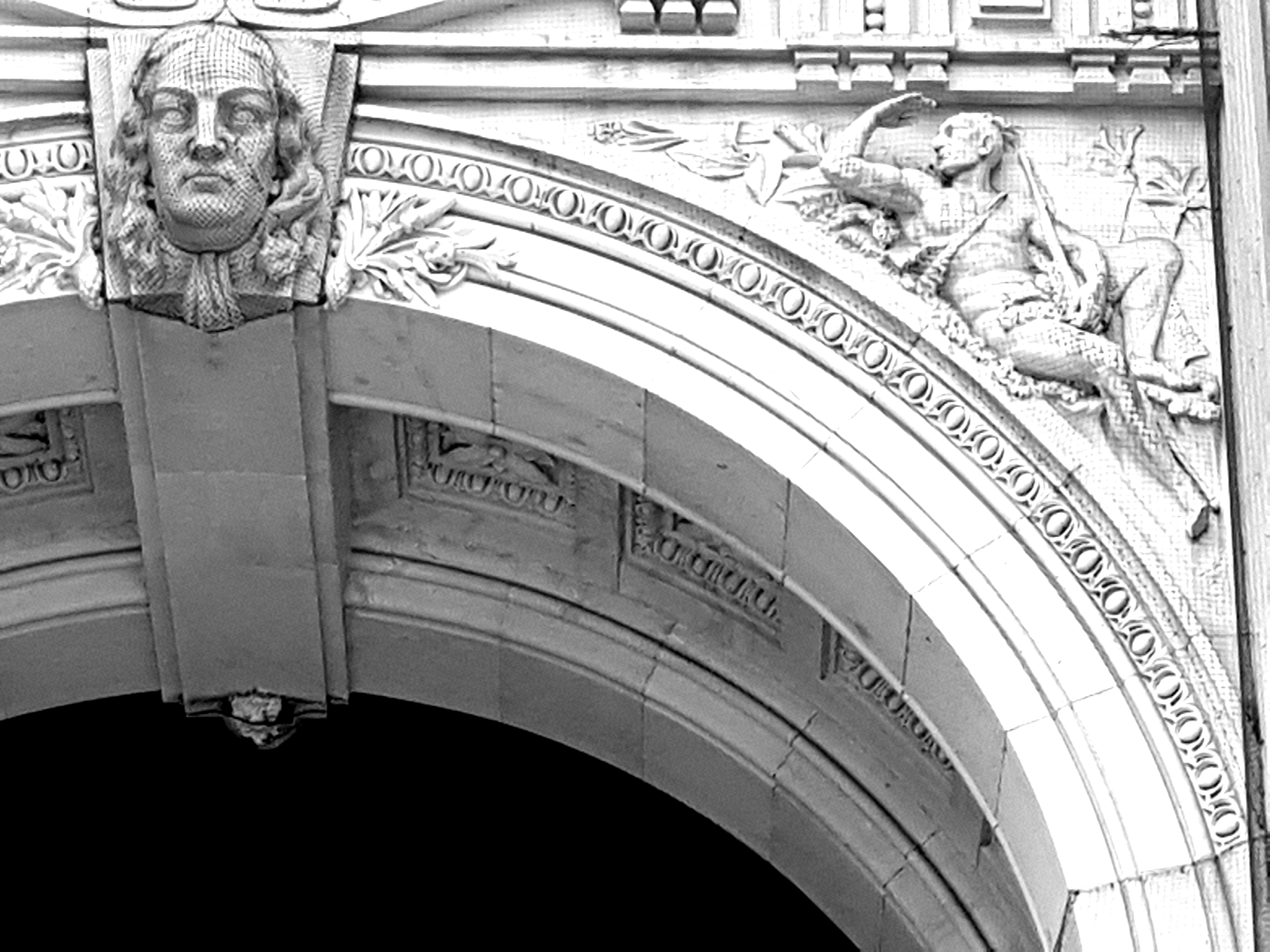
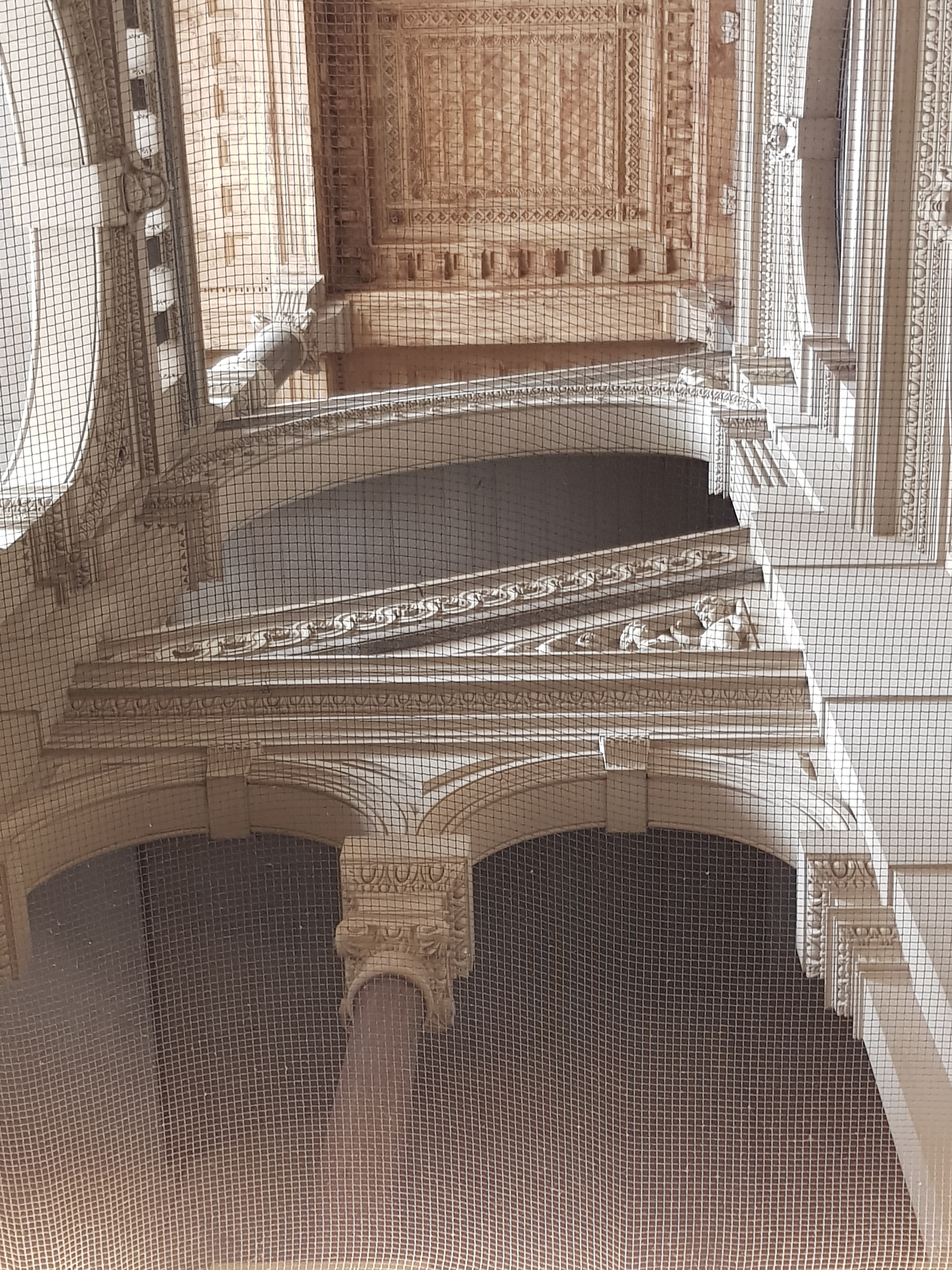
It is festooned with fine beaux arts carving:-
Washington Monument
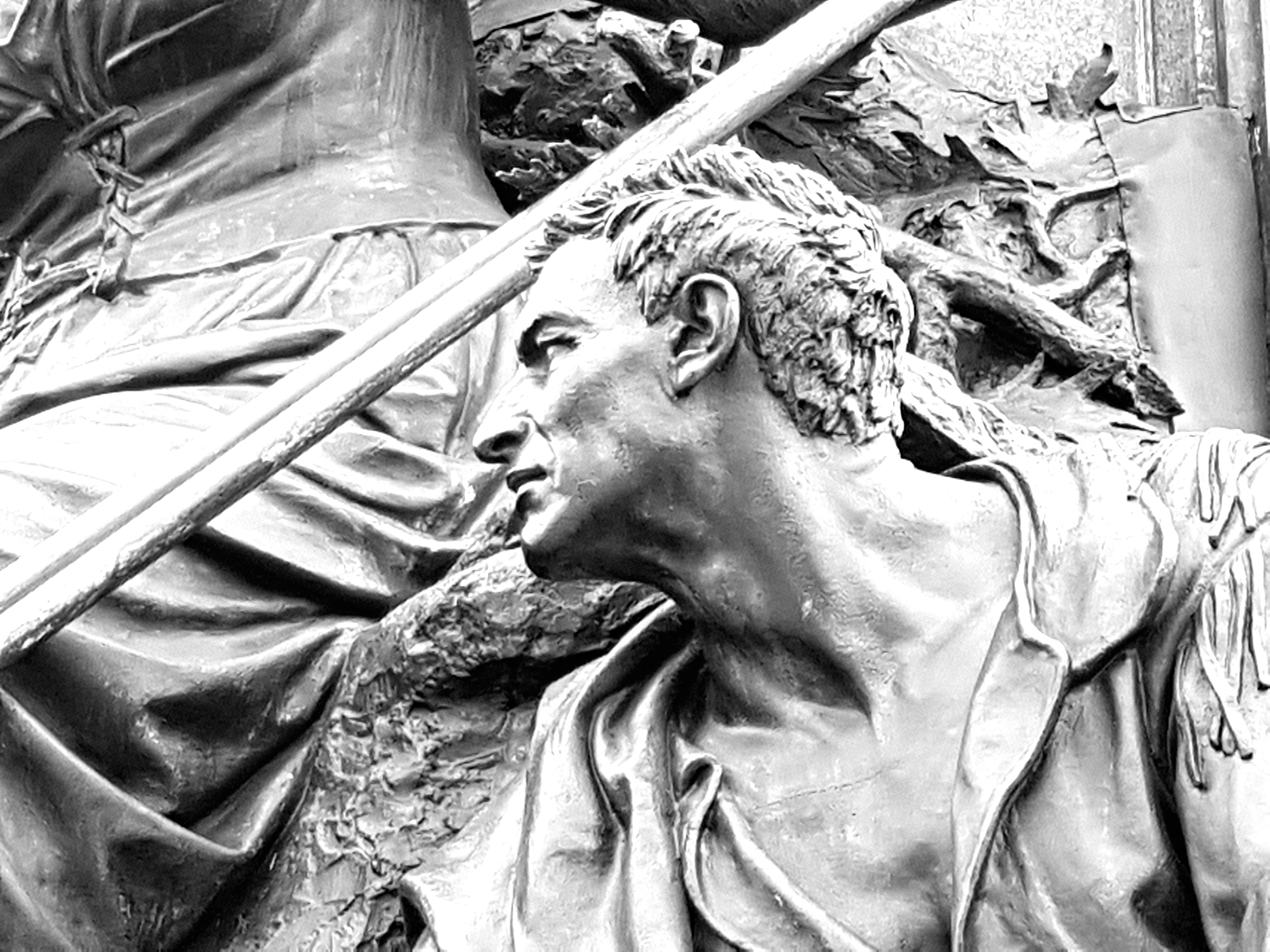
I have been meaning to find out about the Washington Monument, the piece of heroic monumental sculpture in the middle of the roundabout below the Philadelphia Museum of Art. Apparently the idea of commemorating Washington dates back to 1810. In 1824, a fund was estsblished to place a monument in Washington Square. Eventually, Rudolf Siemering was commissioned in 1881 and the monument was unveiled first in Fairmont Park in 1897 and moved to its current location in 1928:-
Downtown Philadelphia (3)
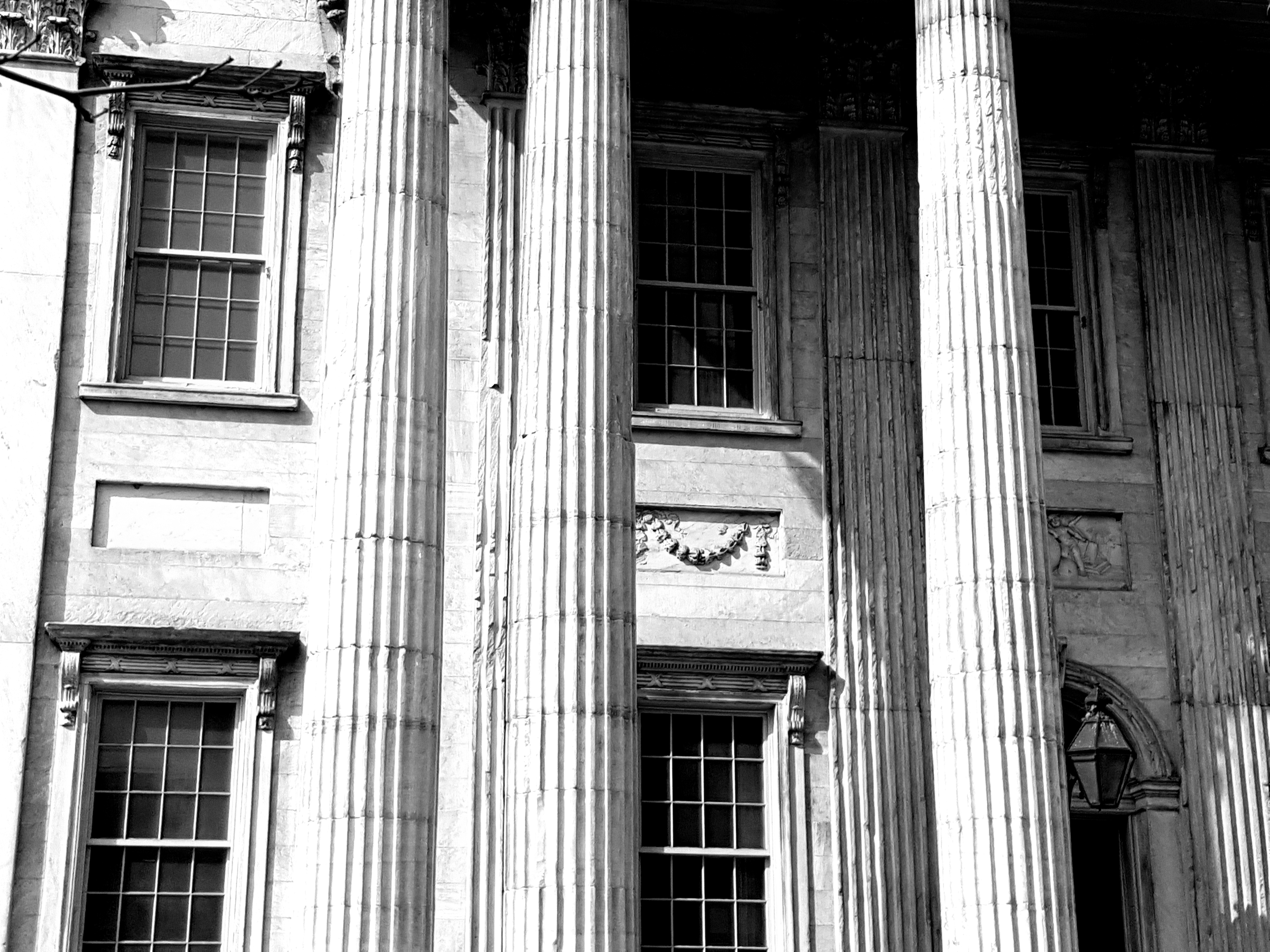
We explored the area round Independence Hall, the centre of Benjamin Franklin’s city, close to the river and sacred space for American tourists. I preferred the muscularity of the two neoclassical banks: the First Bank of the United States, designed by Samuel Blodget jr., who also produced designs for the Capitol:-
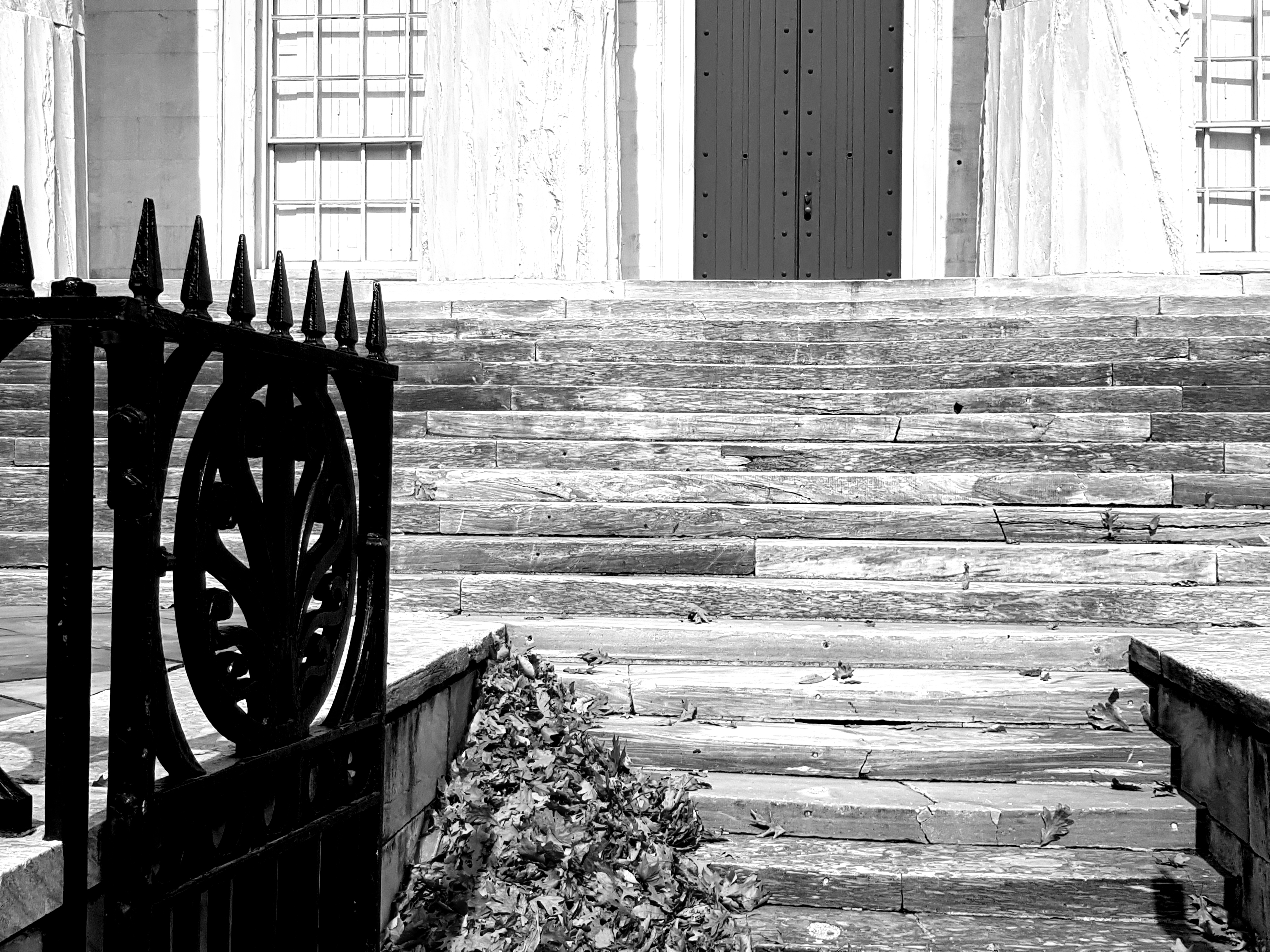
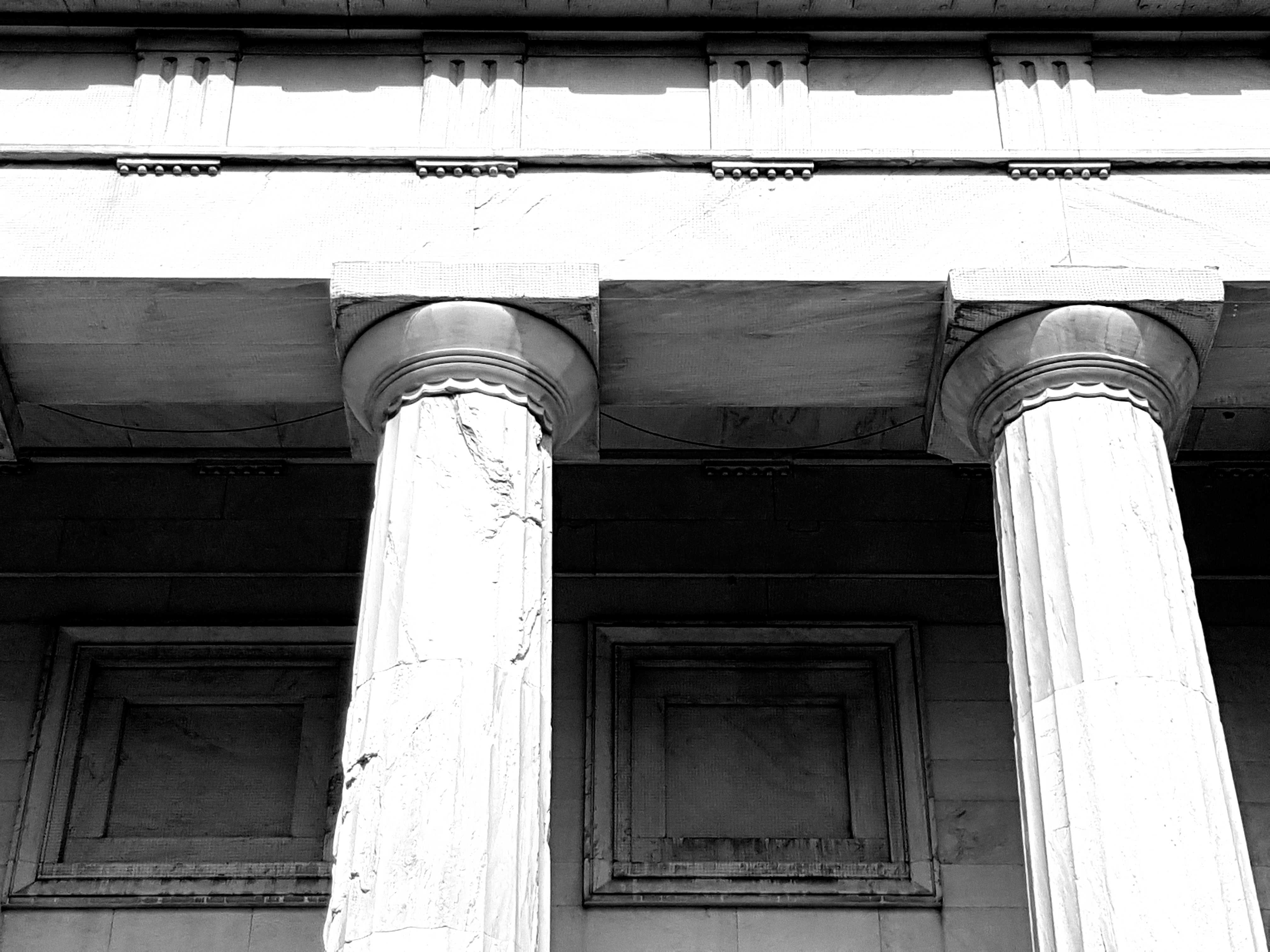
And the Second Bank, based on the Parthenon:-
Then we walked through Society Hill, with its surviving row houses:-
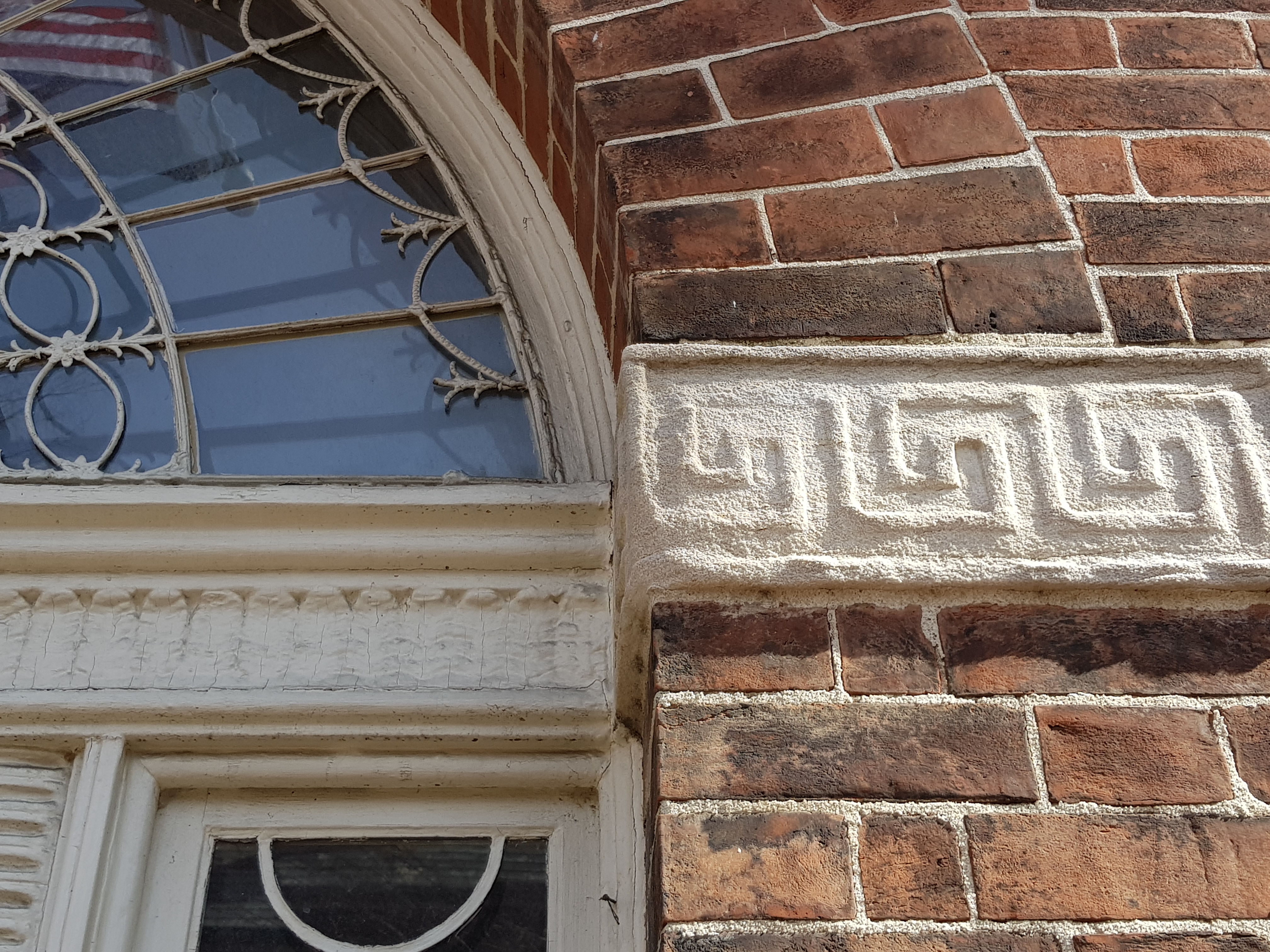
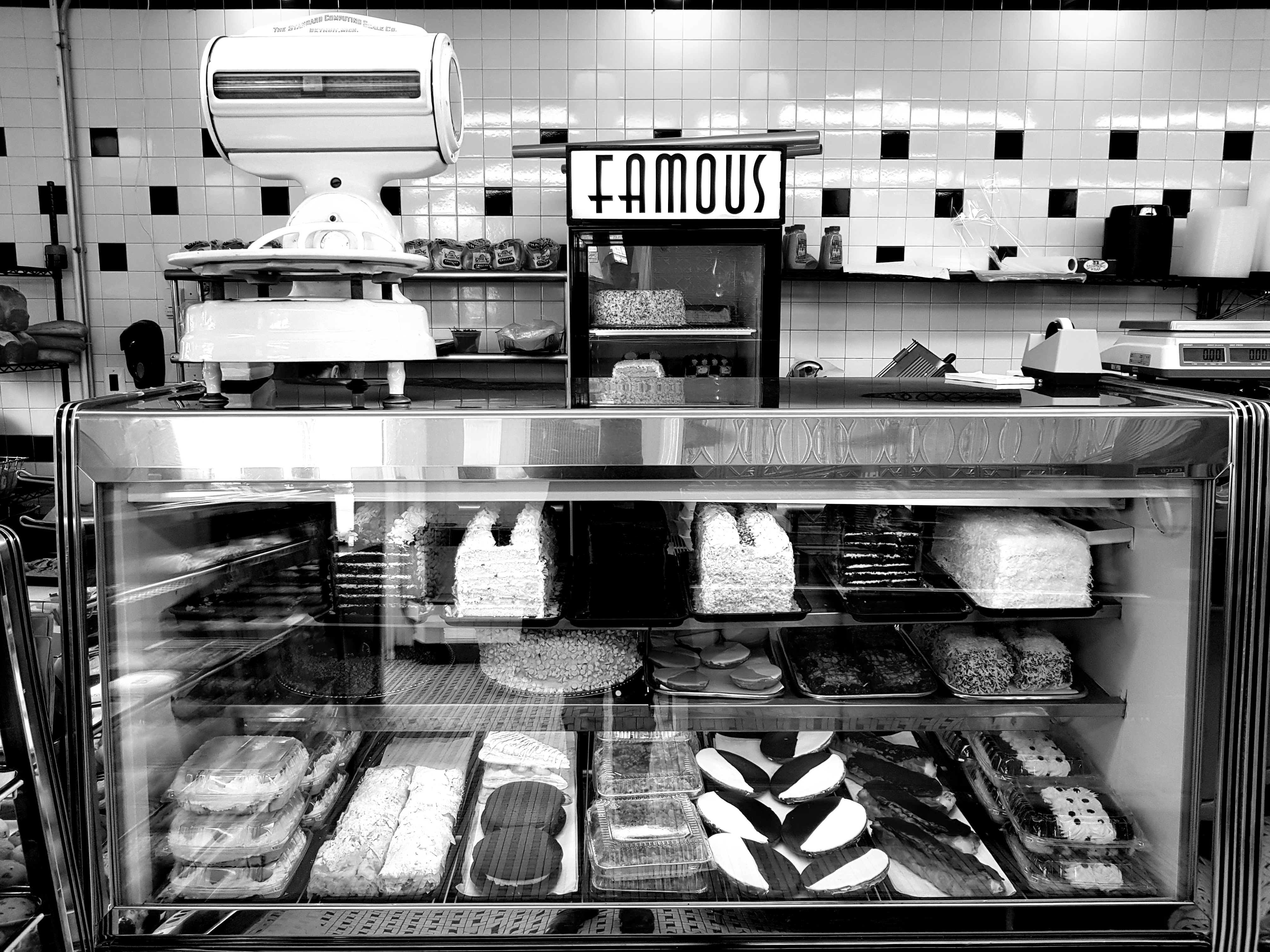
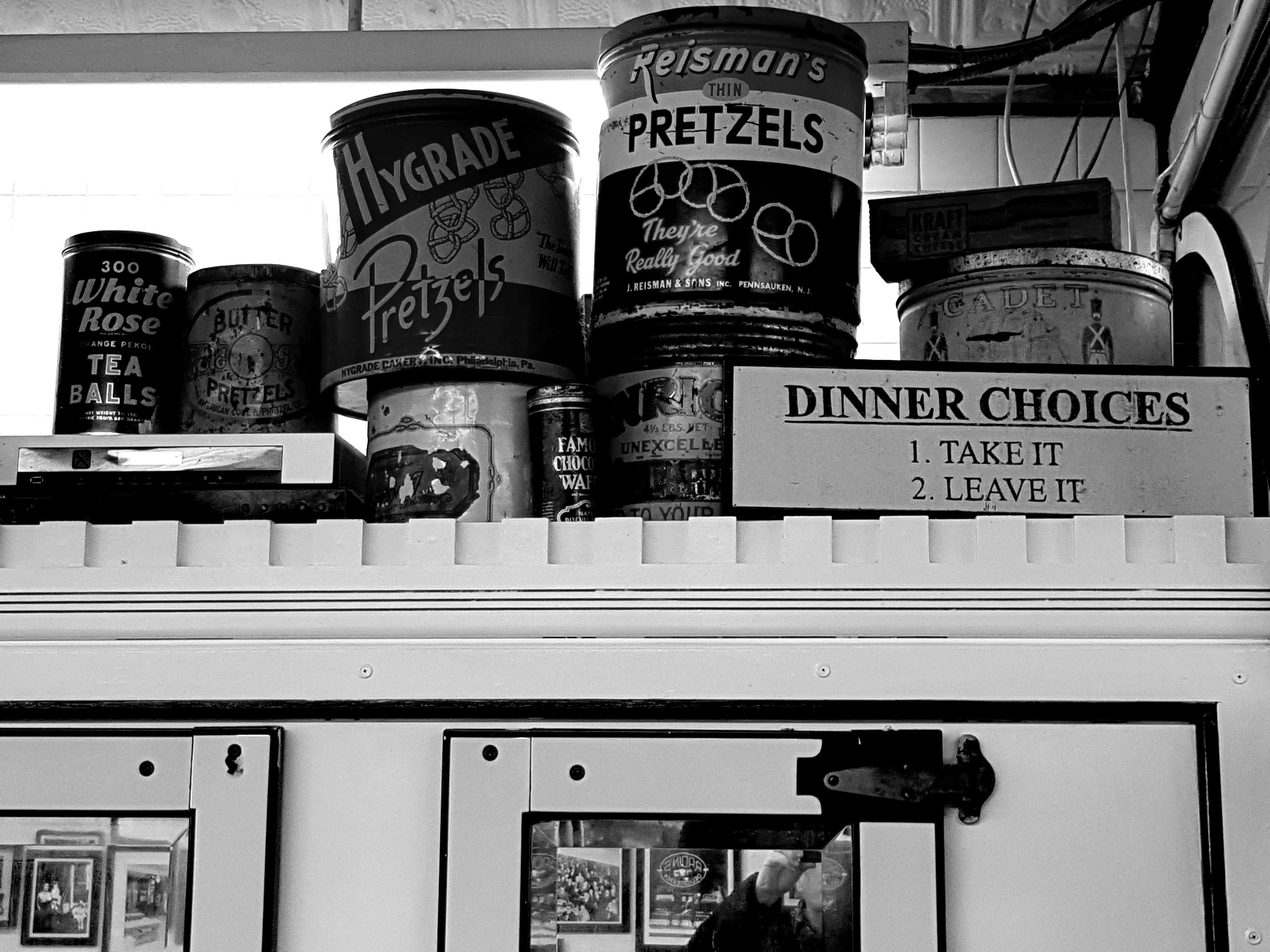
Lunch at the Fourth Street Delicatessen:-
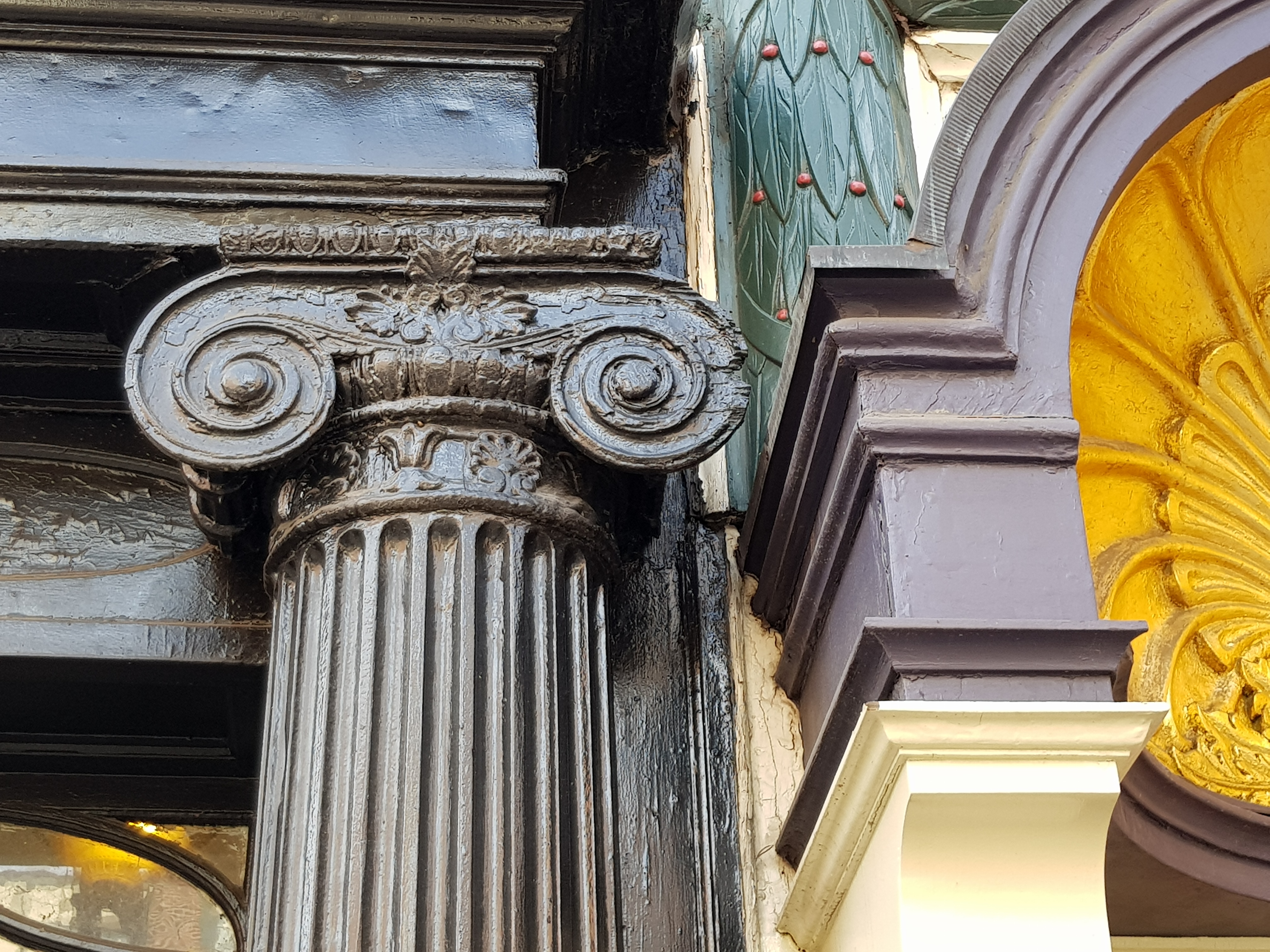
And back through what survives of the early nineteenth-century city, up Pine Street and Antique Row:-


You must be logged in to post a comment.