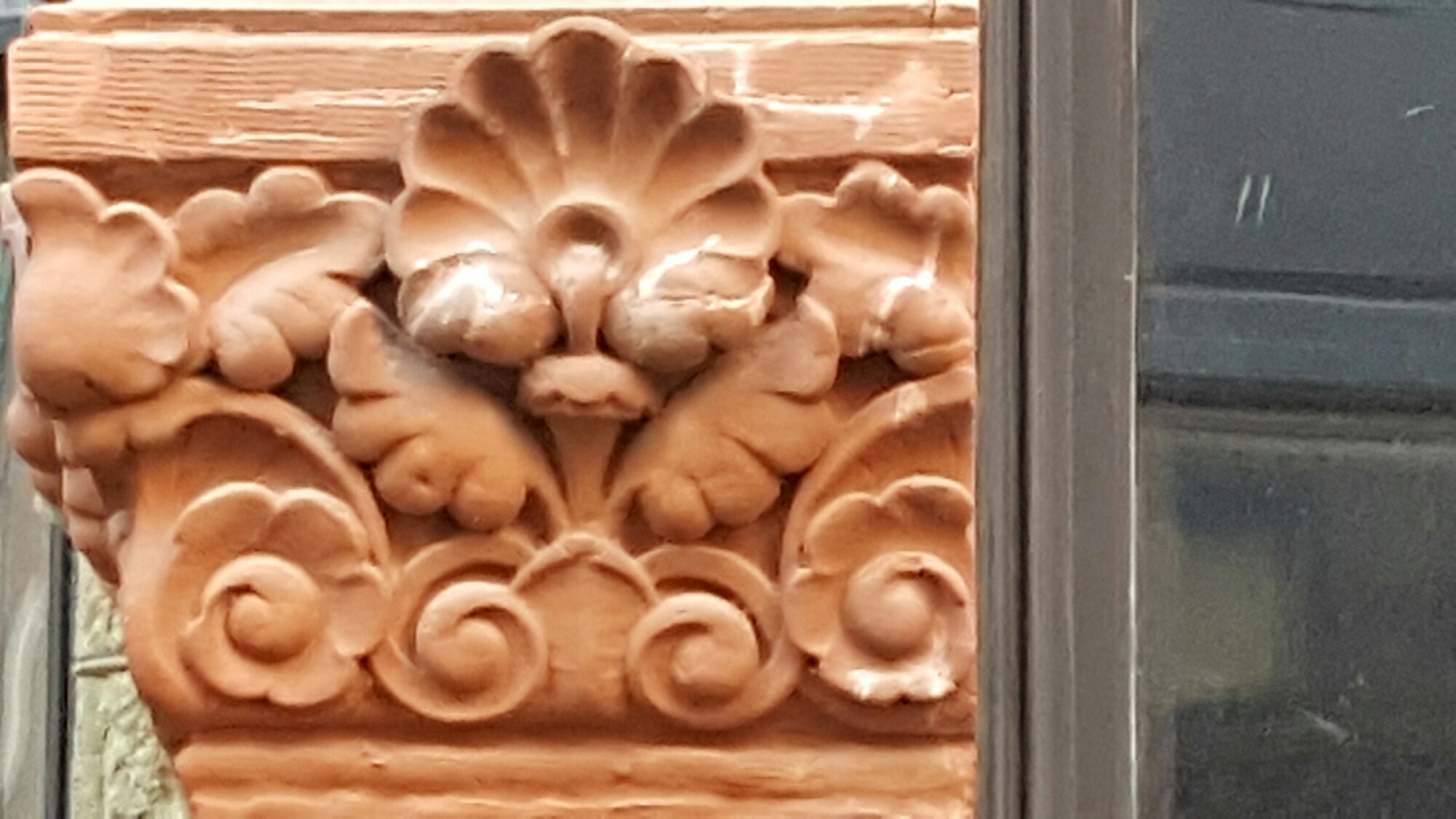
The comment by Oliver Domeisen on my blog about the Charnley House has made me realise the extent to which the role and function of ornament is a live topic in Schools of Architecture. Domeisen himself has taught the history of ornament at the AA and now at the Bartlett, based on Owen Jones’s The Grammar of Ornament (1856) and Louis Sullivan’s A System of Architectural Ornament (1924), as well as doing an exhibition ‘Re-sampling Ornament’ at the Swiss Architecture Museum in Basel and then at the Arkitekturmuseet in Stockholm. Of course, I was aware that ornament was creeping back into architecture, as in Caruso St. John’s new façade to the Bethnal Green Museum of Childhood and the façade of their Nottingham Art Gallery and in the work of Farshid Moussavi. But I wasn’t aware that the debate goes back to whether or not one interprets the Charnley House as an example of Louis Sullivan’s approach to ornament or as a proto-modernist composition.
James Charnley House
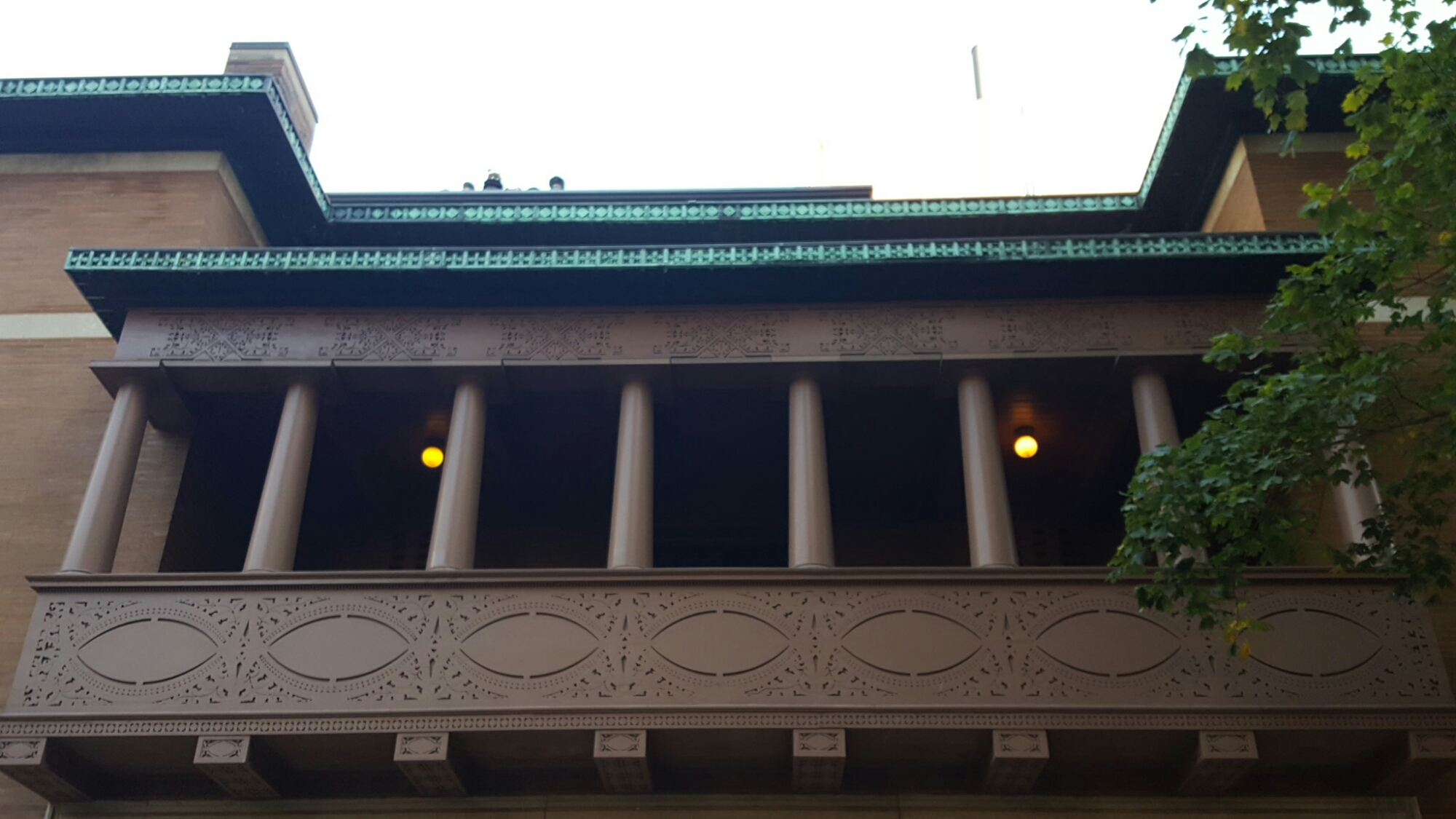
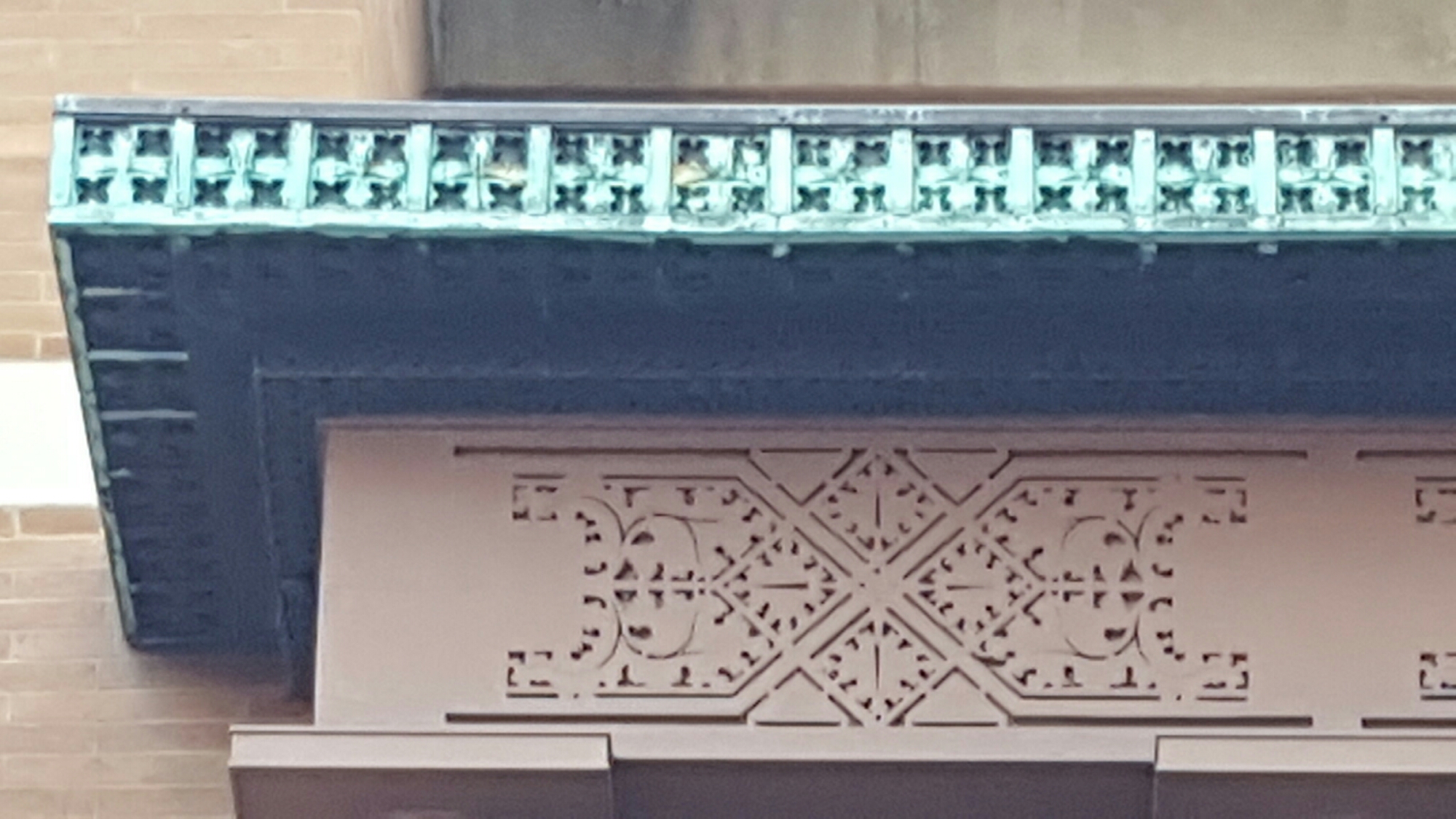
The best 0f the houses on Astor Street is the James Charnley House, designed by a combination of Louis Sullivan (‘form follows function’) and Frank Lloyd Wright, who from 1887 was a draughtsman in the office of Adler and Sullivan, for Charnley, a prosperous lumberman:-
The Gold Coast
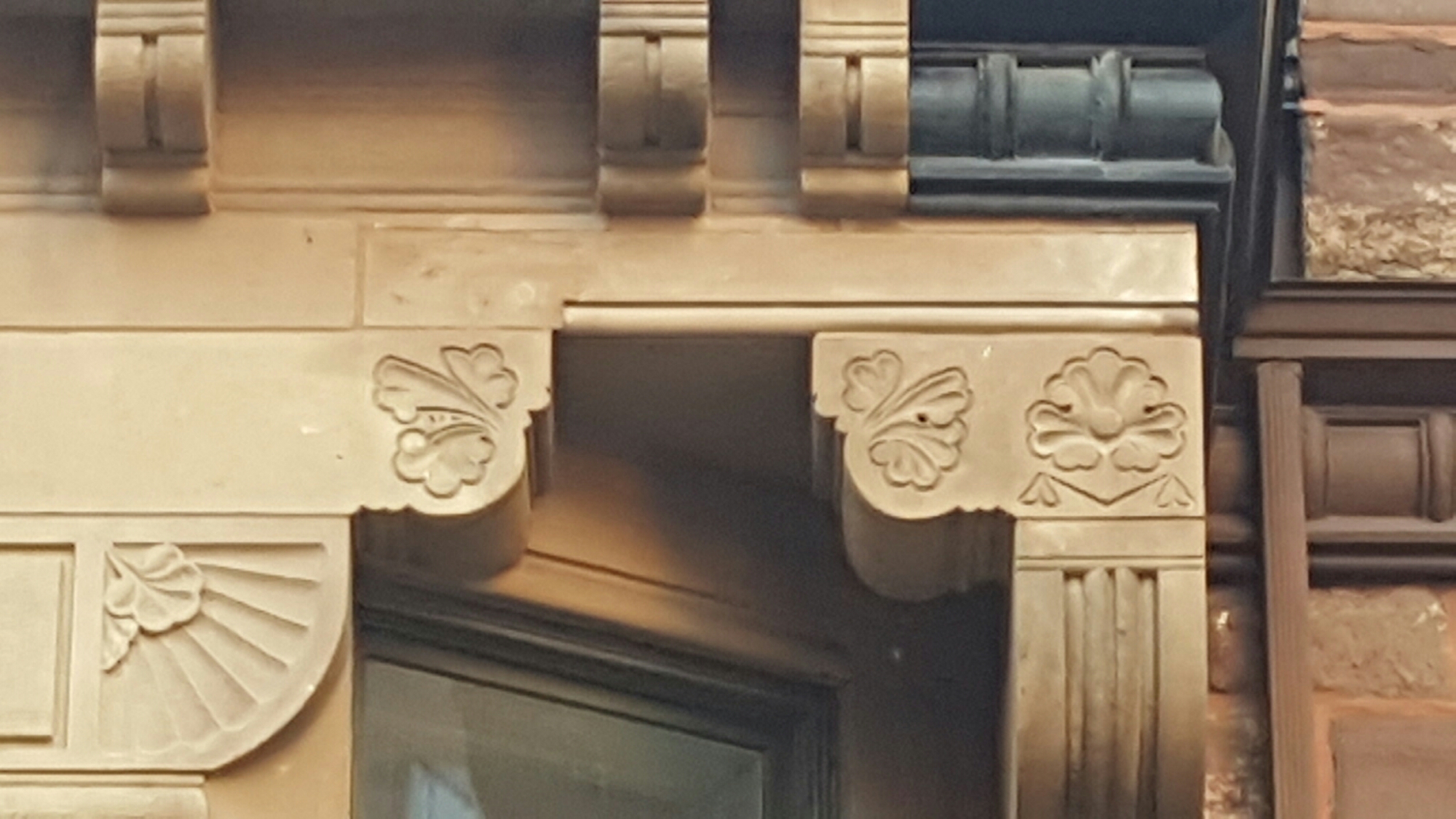
I spent the afternoon walking up Astor Street, the grander part of Chicago, where there is a wealth of individual houses in a medley of architectural styles with correspondingly eclectic detailing, beginning with two houses on Schiller Street:-
Ethel Paine Moors
Before leaving Boston, I thought I would try and find out about my Bostonian step-grandmother, Ethel Moors, whom I never met because she died ten days after marrying my grandfather in the year of my birth (in fact, she was dead before my parents met her off the boat at Southampton). Thanks to the glories of the internet, I have been able to find out much more than I have ever known previously. That she came of an old Boston family, I knew. She married John Cabot Moors, who was a nonconformist banker and member of the Harvard Corporation. Both were liberal progressives and worshipped at Trinity Church. When they were not in Back Bay, they summered either in a house on the South Shore at Cohasset or in a farmhouse out in Heath in the Berkshires, where she encouraged fellow radicals to settle. ‘Unconventional iconoclasm and a radical devotion to social justice were the unspoken requirements’. On this day of all days, I am pleased to discover that they were vigorously internationalist and hostile to the ‘bigoted isolationism of so much of America’s political classes’.
Carpenter Center for the Visual Arts
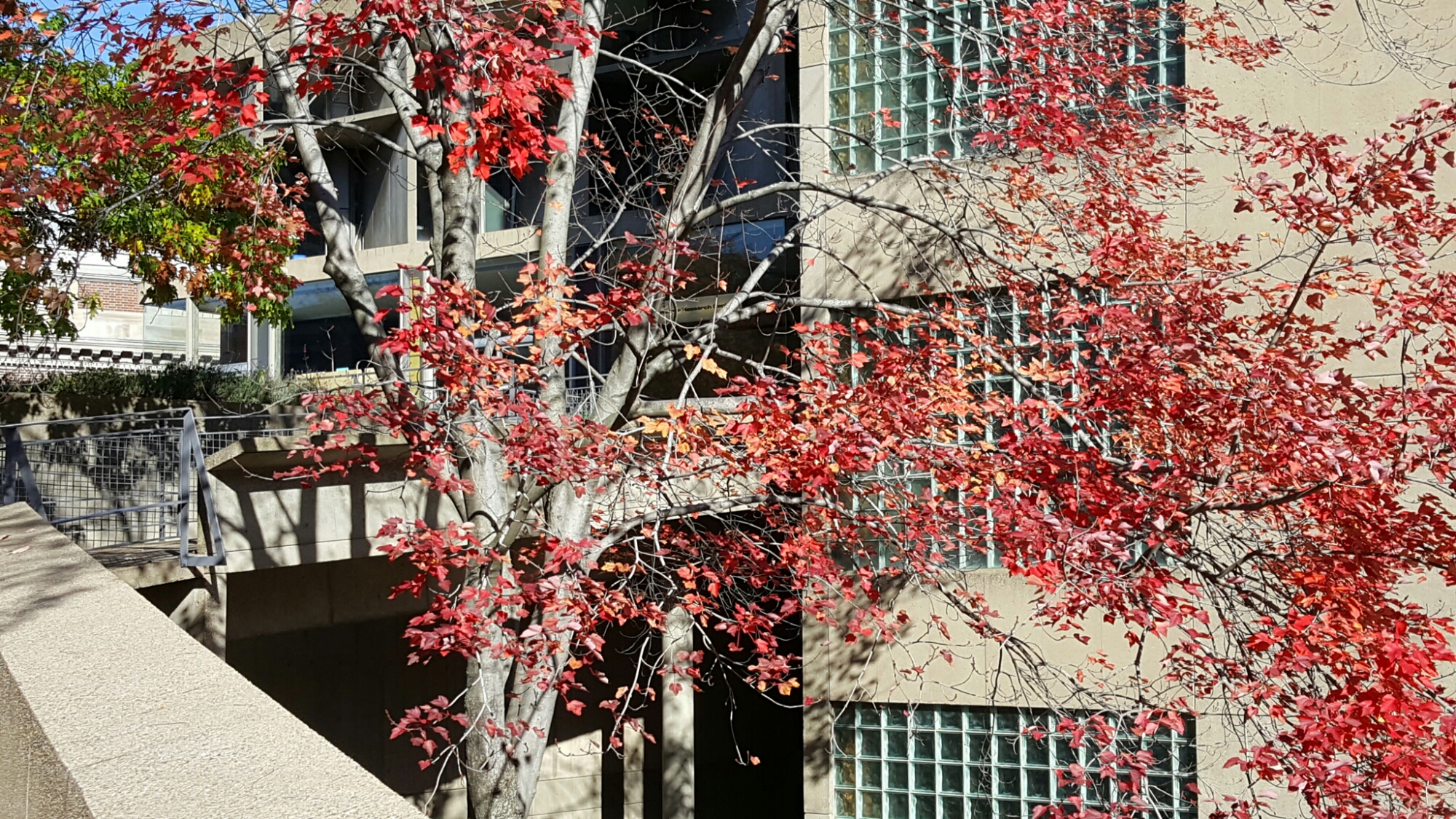
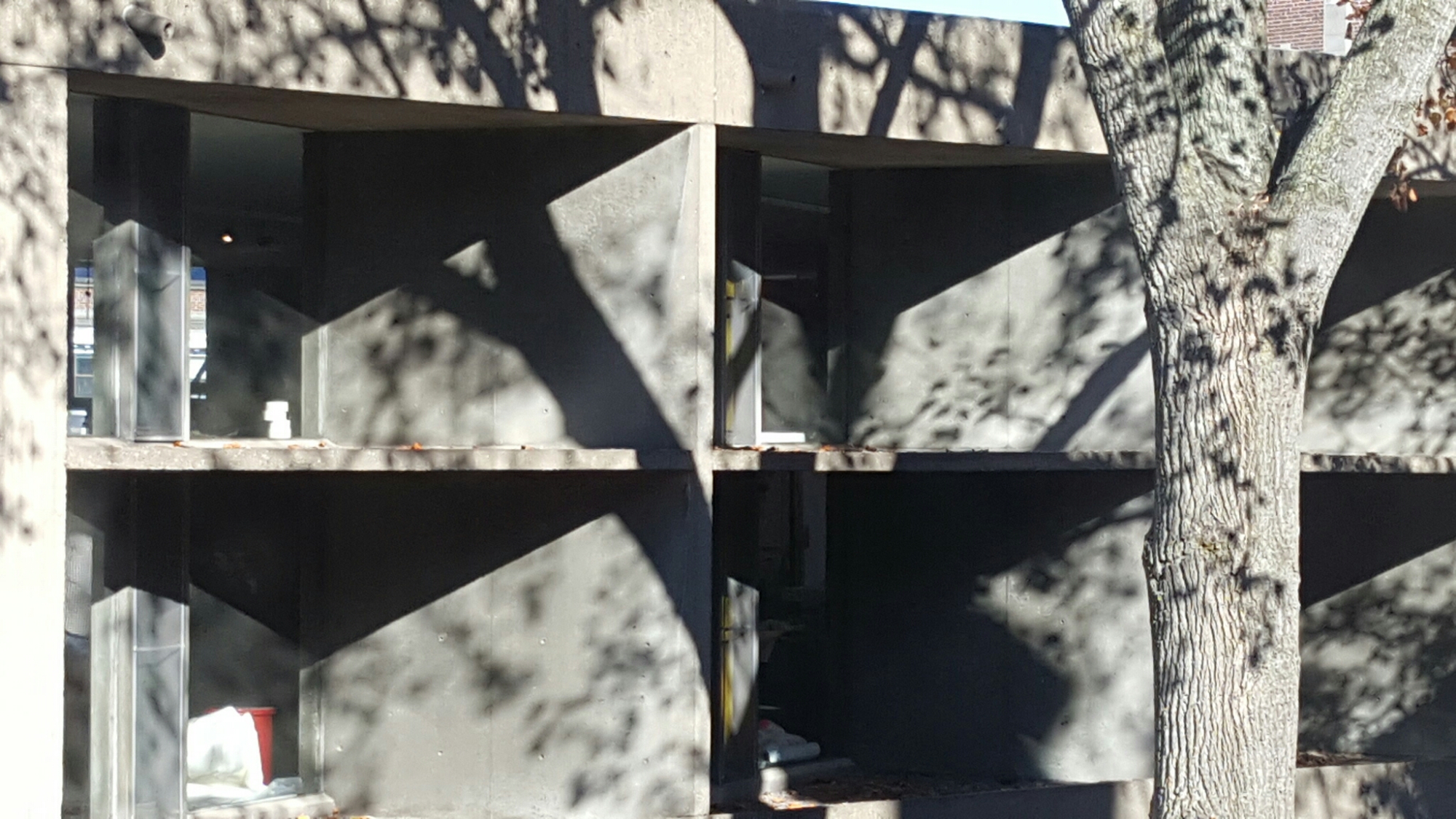
The last of my posts from Boston is the Carpenter Center for the Arts, the only building designed by Corbusier in North America, sandwiched between the Fogg and the Faculty Club and designed to be ‘une demonstration des théories de le Corbusier’, including ‘a wealth of his lifelong basic ideas’:-
ICA Boston
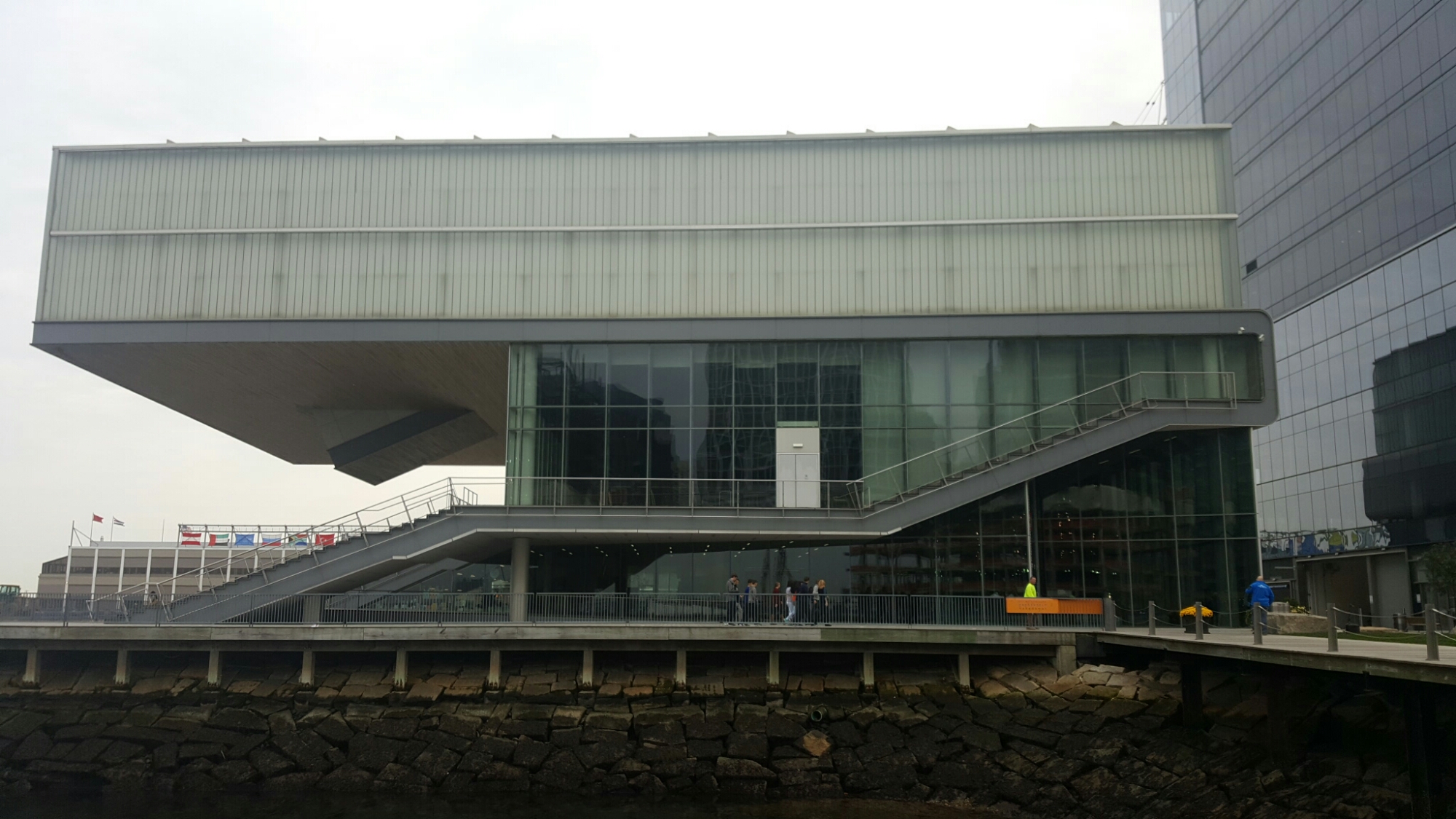
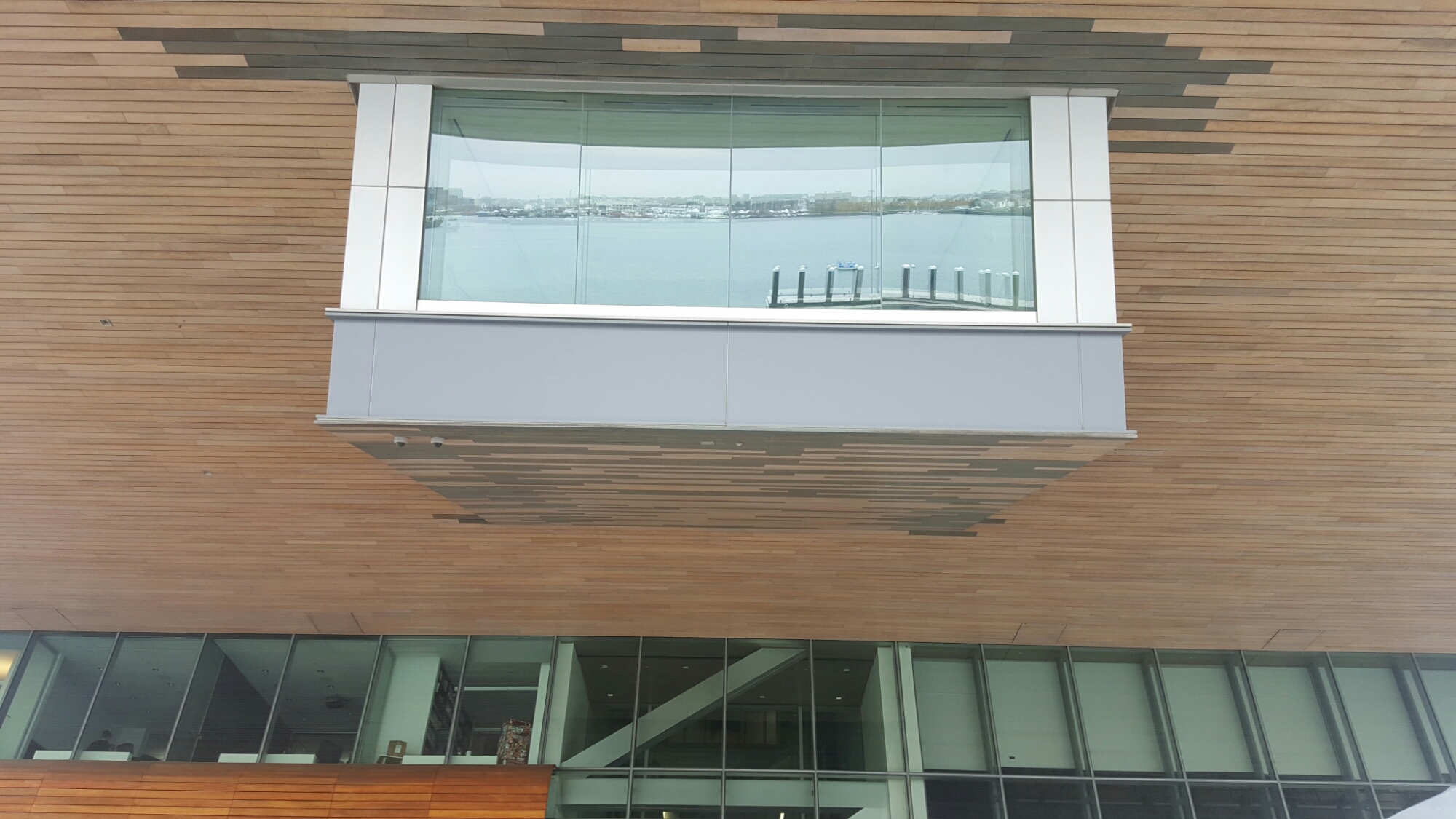
The morning after, we headed off to the seafront in South Boston where the ICA (founded 1936) acquired a small area of land and commissioned Diller Scofidio when they were relatively unknown. It’s a clever building – very spacious, with big, high-ceilinged galleries, all on the top floor and a huge central void filled by the passenger and service elevator:-
Election Day (2)
I suppose I should record, since it is one of those things that will probably be remembered – where one was on the night of the election – that I spent the evening in an Iranian restaurant, Lala Rokh, on Beacon Hill where people were watching television lined up silently at the bar. I had my back to the television in order not to be perpetually distracted, but at 9.10 it was pretty obvious that Trump was winning and by 10.30 when we left that Ohio and Hillary were lost, inducing the deepest uncertainty and, in the only voter in the party, the most wretched gloom, not improved by a parking ticket on the car.
Harvard Art Museums
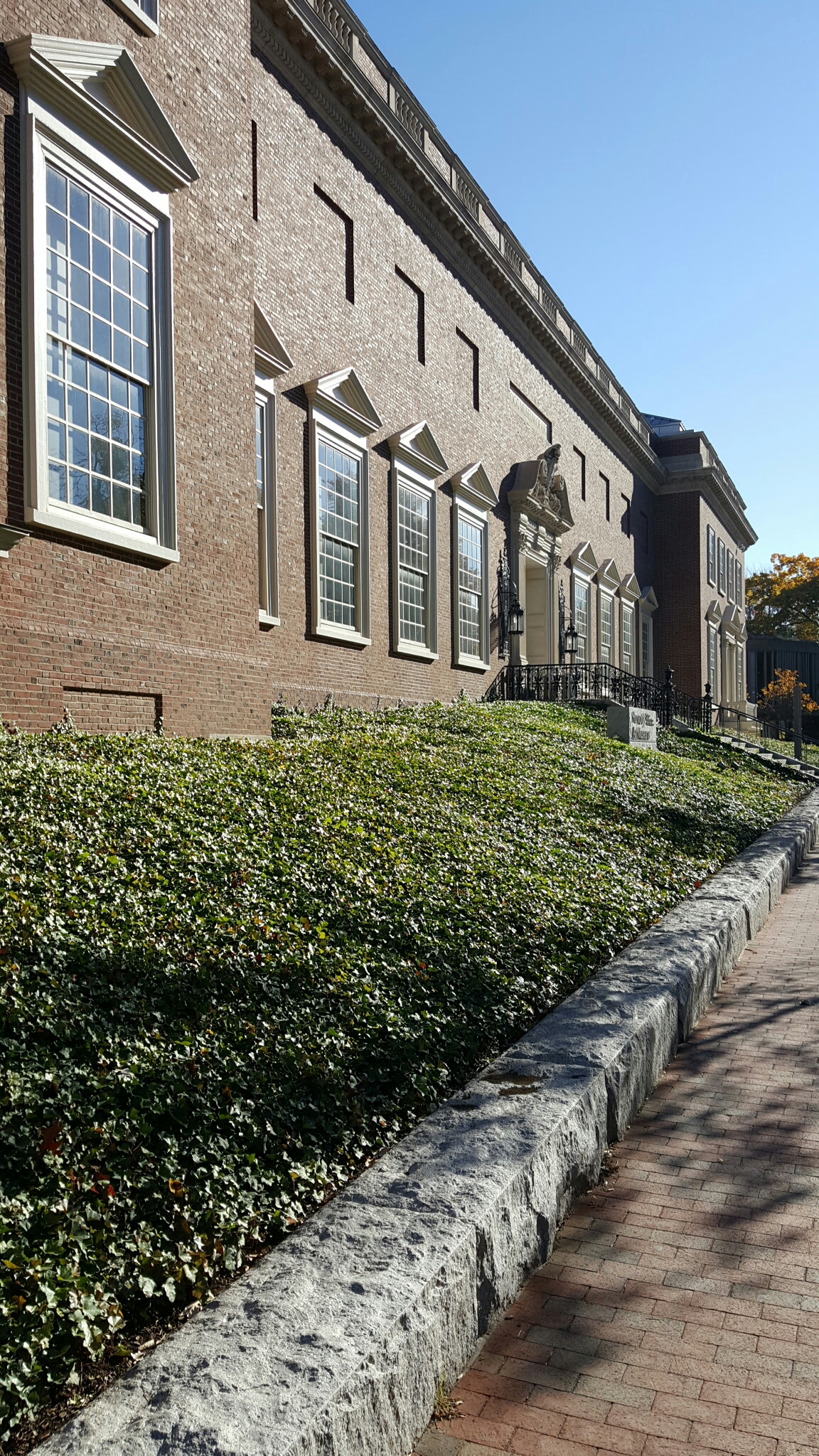
We spent the afternoon at the Harvard Art Museums. I hadn’t seen them since the Fogg was closed, gutted and radically reinvented by Renzo Piano, who has transformed it from a traditional Italian palazzo into a high-tech laboratory of Italian, German, French and contemporary art, beautifully and intelligently displayed in relatively small-scale galleries.
This is the old 1920s neoclassical entrance on Quincy Street where one enters from Harvard Yard:-
Back Bay
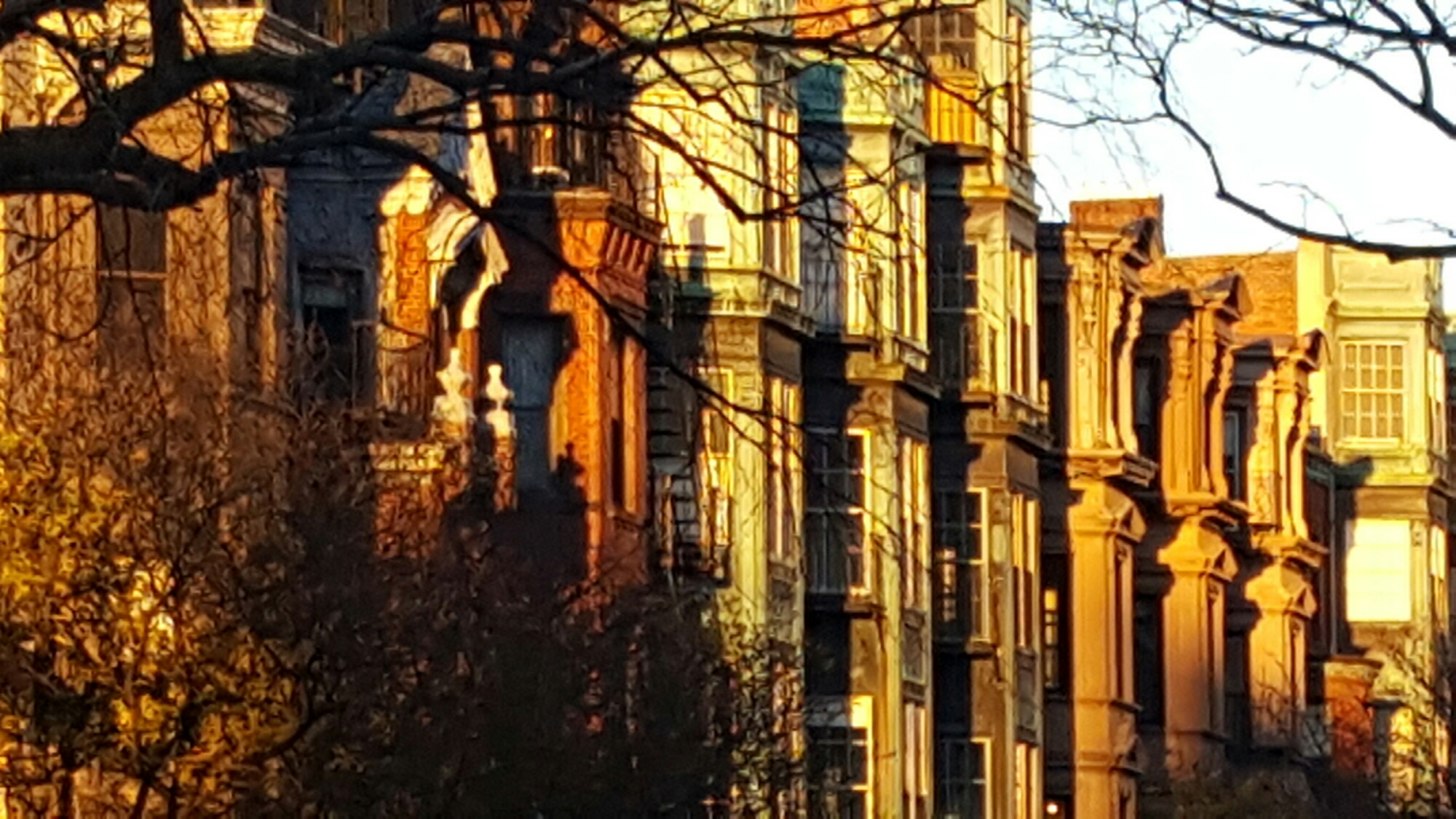
We’re staying in the Back Bay, an area of grand Victorian houses laid out after 1870 on what had previously been tidal flats.
The view down Newbury Street:-
Election Day
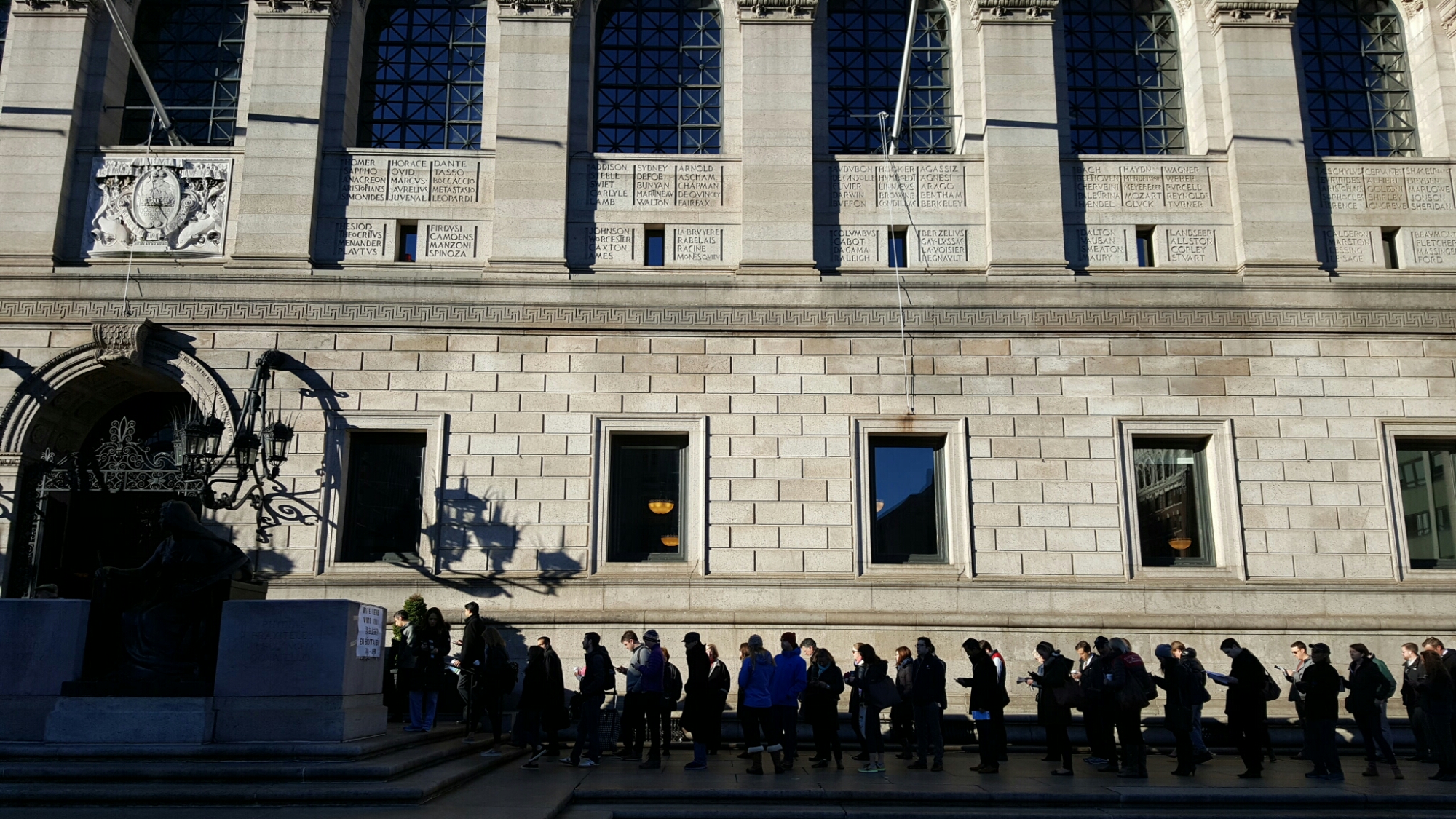
I went out early in order to get a feel of what it was like on the streets of Boston. Of course, one can tell nothing of what is going to happen, just parents taking children to school and people lining up to vote outside the Charles Street Meeting House, no hint that their vote will decide the fate of nations for the next four years. There was a long queue outside the Boston Public Library:-
 | Charles | Saumarez | Smith |
You must be logged in to post a comment.