Burlington Gardens

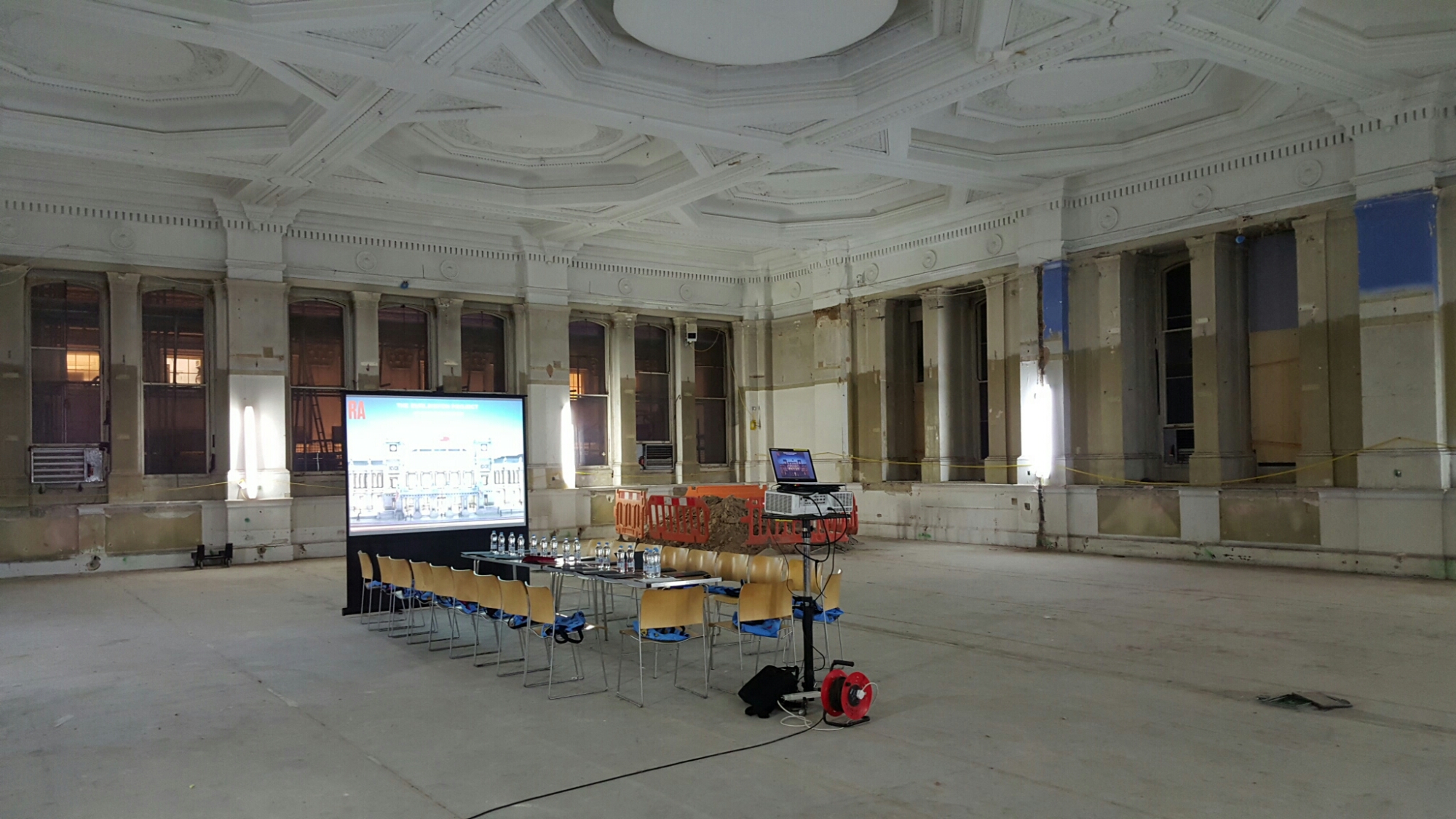
We had a meeting yesterday of the trustees of the Royal Academy Trust in the empty space due to be occupied by our new lecture theatre.   It was faintly surreal sitting in the cold uninhabited space wearing high visibility vests whilst discussing the finances:-

image

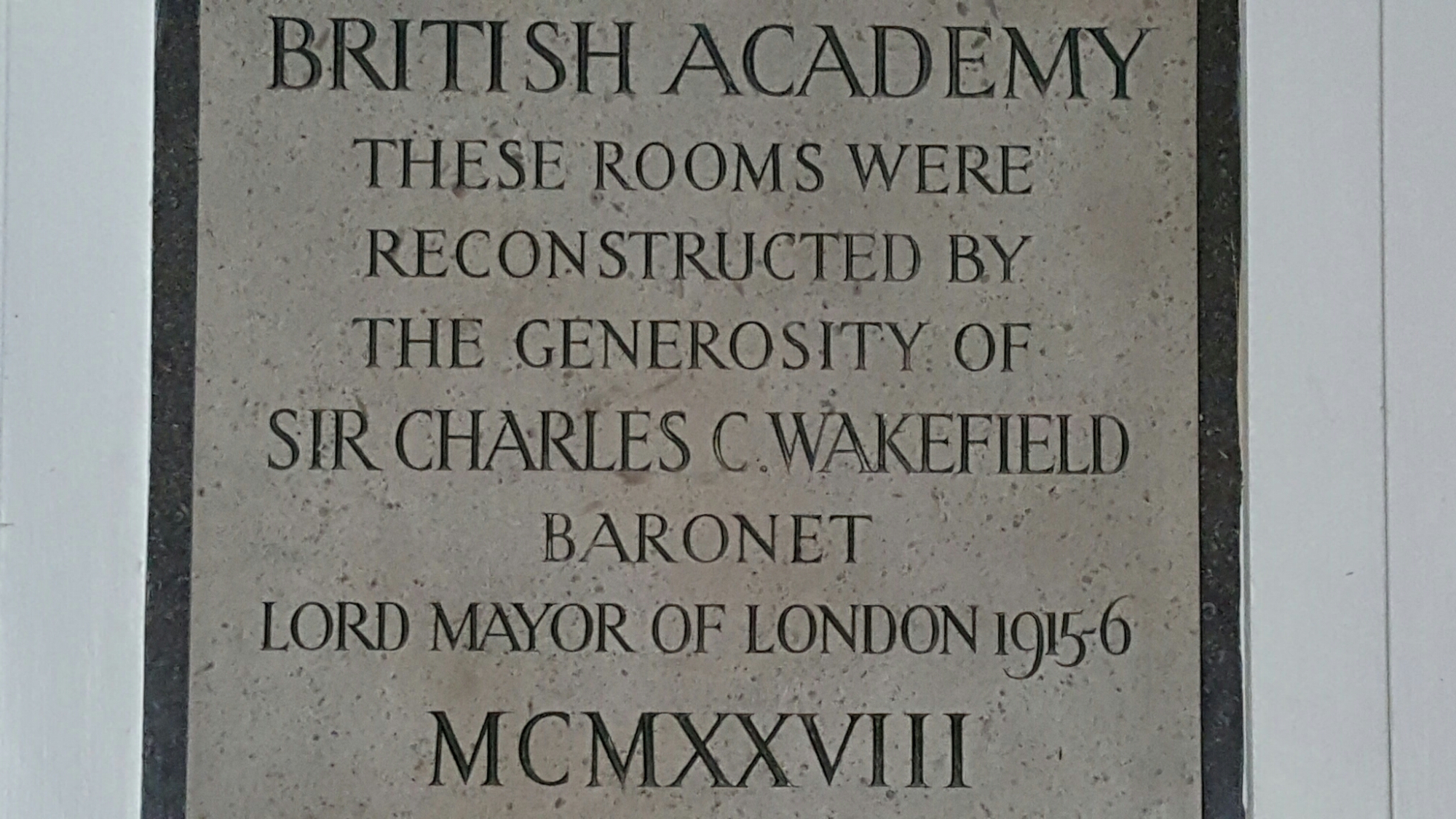
Meanwhile, the British Academy Room has been stripped to the bone.   I felt the ghost of Sir Mortimer Wheeler, with his large moustaches, who used to smoke his pipe by the fire:-

image Continue reading

Standard

Tony Cragg RA

I went tonight to the annual Art, society and medicine lecture held jointly by the Royal Society of Medicine and the RA.   It was given this year by Tony Cragg who gave an extraordinarily and enjoyably robust defence of the specialness and autonomy of art:  against commentators who do not understand art even when they write about it;  against scientists;  against architects even though his daughter is an architect;  against designers;  against anyone who is creating something for a particular purpose rather than through pure invention of form.   It was refreshing hearing someone who had such a clearly stated and explicit view about art and its practice.

Standard

The Lost Caravaggio

I have just done a short piece on Sky News about the Mystery of the Lost Caravaggio, a programme about the Caravaggio which was stolen from an oratory in Palermo – it’s assumed by the mafia – and then stored in a barn where it was eaten by pigs or rats.   Now Factum Arte has been commissioned to create a replica using the latest three-dimensional digital technology.   The question is whether or not this will effectively replace the original.   The answer in this instance is surely no because however brilliantly its done, it’s based on a small number of old photographs and a great deal of guesswork based on close study and analysis of the painting technique of other, earlier works by Caravaggio.   But I find the issue trickier with three-dimensional works which have been studied in situ with the latest digital technology, as has happened with the Tomb of Tutankhamun where the replica is expected to replace the original and the original, like the Caves of Lascaux, will be closed.   Not to mention the Temples of Palmyra which have been destroyed forever and henceforth will only ever be experienced as replicas.   Can the aura described by Walter Benjamin as belonging only to the original transfer to the replica ?

Standard

Painting the Modern Garden

I have been watching Painting the Modern Garden be installed, not an easy process, with more garden benches than usual.   The designer is Robert Carsen, the Canadian opera director, who has also done quite a number of exhibition designs, including L’Impressionisme et la Mode at the Musée d’Orsay and Bohèmes at the Grand Palais.   This morning was the press view when Ann Dumas and Bill Robinson from the Cleveland Museum of Art, the two curators, walked us round and revealed the full glory of the exhibition:  not just Monet himself, as passionate a horticulturalist as he was a painter, settling in Giverny, getting up at 4 in the morning to contemplate his lily pond, but also so many of the other artists of the era, including Sargent, Matisse and Klimt, all of them in different ways fascinated and passionate about the look of flowers and their cultivation.

Standard

Edward Ardizzone RA

Mention of Ardizzone in the Comments section yesterday reminded me of Little Tim and the Brave Sea Captain which I was given for Christmas when I was, I guess, six.   I assumed it was newly published, but it actually first came out in 1936.   Born in Tonkin – now Haiphong – in Vietnam in 1900, he was brought up in Ipswich, worked as a clerk for the Eastern Telegraph Company, and attended evening classes at the Westminster School of Art before becoming a full-time artist in 1926.   He served as a war artist, lived in Maida Vale and 5, Vine Cottages, Rodmersham Green in Kent, was elected an ARA in 1962 and an RA in 1970.   We don’t seem to have a diploma work, just a large collection of his illustrated books.

Standard

Ron Costley

Discussion of book design has made me check whether or not Ron Costley, the former  designer at Faber and Faber, is still alive.   Sadly, he’s not.   He died in March last year.   He it was who introduced me to the pleasures of book design and how images can and should be combined with page layout, paying close attention to the content of the text.   In order to do the design of The Building of Castle Howard, we spent a day walking round the estate, so that he could get a feel for its history,  which then informed the design of the text.   I hadn’t realised also the extent to which he collaborated with Ian Hamilton Finlay on the typographic episodes of Little Sparta.

Standard

Monocle Radio

Some time last week, I was summoned to Midori House at the top end of Manchester Street (I nearly missed it as I was just sitting down to scrambled eggs in the new Ivy Café) to be lightly grilled by Robert Bound, their Culture Editor, about all aspects of the Royal Academy and its operation.   Half an hour is a long time:-

http://monocle.com/radio/shows/the-big-interview/25/play/

Standard

Illustrated Book Design

I have been encouraged to put together a list of the illustrated books whose design I most admire.   I have enjoyed the challenge.   This is my list:-

1.  I would choose my early paperback edition of Rings of Saturn, but I can’t locate my copy, so will have to opt for the first edition of Austerlitz, when Sebald switched to being published by Hamish Hamilton.   The typographic designer isn’t credited, but I assume it was Michael Mitchell, the dentist who established Libanus Press in a house on the Green at Marlborough and was responsible for the distinctive combination of text and black-and-white illustration which is so important to the experience of reading Sebald.

2.  Edmund de Waal, The White Road.   This is a Sebaldian combination of text and black-and white illustration, designed by John Morgan, who worked for Derek Birdsall.   It’s a typographically very intelligent book, using a mixture of an elongated font and italics (Morgan also does all the graphics for David Chipperfield).

3.  Antony Gormley, On Sculpture.   Thames and Hudson have been producing very beautiful books recently.   I first noticed a different order of attention to quality of typography and layout in Alexandra Harris’s Romantic Moderns.   Gormley’s book of his lectures and broadcasts was designed by Jesse Holborn, who I assume is related to Mark Holborn who edited the book.

4.  Orlando Gough’s Recipe Book.   This was published in 2012 by Toast.   I assume it was designed by Jamie Seaton, the proprietor of Toast who has a good eye for design and typography.

5.  The Cereal Guide to London.   I’m an admirer of the layout of books produced by Cereal, a company based in Bristol.   The designer is Rich Stapleton, who was trained in engineering and product design and is one half of the duo who established Cereal.

6.  Eating With The Eyes by Harry Pearce.   More photography than text, but both text and photography beautifully laid out by Harry Pearce of Pentagram and published by Unit Editions.

7.  The Company of Artists:  The Origin of the Royal Academy of Arts in London.   This was designed, incredibly beautifully, by Derek Birdsall who has now retired to Deal.   He’s the maestro.

8.  Tess Jaray, The Blue Cupboard.   I haven’t got a copy in front of me (my books have been shipped to Bedford), but I remember being very admiring of the design and layout which was done by her daughter, Georgia Vaux.

I realise that the great majority of these books, Sebald apart, are recent, which suggests a renaissance in book design and typography.   I also notice that designers and typefaces are too often not credited.

Am happy to receive other nominations.

Standard

Stoke-by-Nayland

Lunch in Stoke-by-Nayland, in prosperous country high above the Stour valley.   No time for anything more than a furtive glimpse of its great Perpendicular church with its flint walls and brick tower through the yew trees of the churchyard:-

image Continue reading

Standard

Fairlight Hall

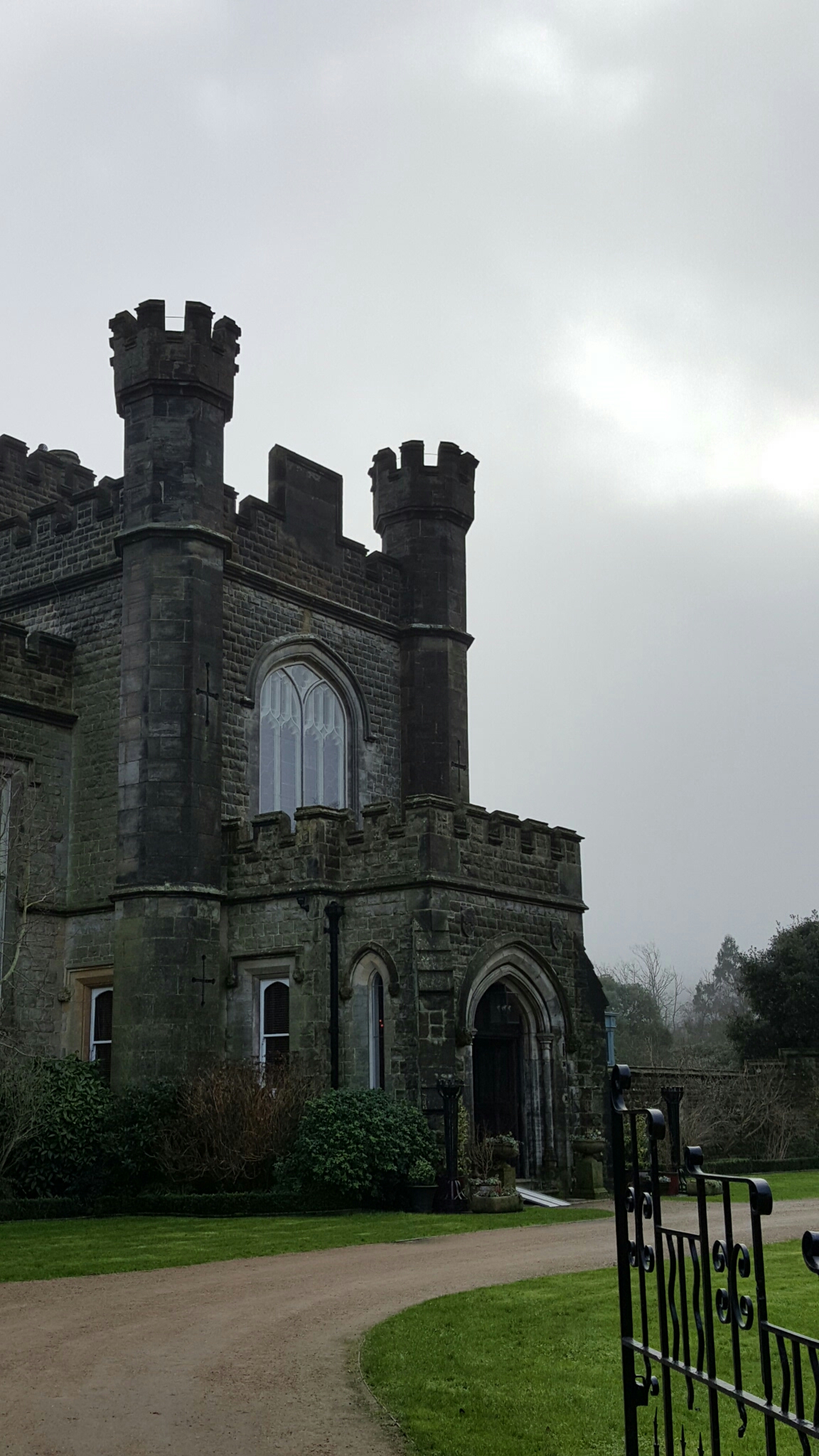
We sped through the foggy Sussex countryside to attend a morning concert by Garam Cho, a young Korean concert pianist who came second in last year’s Hastings’ International Piano Concerto Competition.   She played Bach, Beethoven, Mendelssohn and Liszt.   The concert was held in Fairlight Hall, a large Victorian castle in the hills east of Hastings, designed by John Crake, a pupil of Decimus Burton.   The original owner was William Drew Lucas Shadwell, born Drew, who took his uncle’s name on inheriting his fortune (his uncle had developed Hastings, including its racecourse).   His wife Florentia was fiercely devout and wrote evangelical novellas for the Religious Tract Society.   The estate was alcohol-free.   But William turned to Catholicism and died in Florence en route to Rome:-

image Continue reading

Standard