
The question asked at tonight’s private view was why it is that an artist who is so well represented in American collections (he currently has an early work hanging in the White House) should be so ill represented in British collections (one print in the Tate). The answer is that our view of American art is refracted through the New York galleries, who preferred the work of first generation Abstract Expressionists; and that the work is in short supply because it was bought early by Californian collectors, so that when Nick Serota and Richard Morphet went in search of good examples in the early 1990s, it was either not available or too expensive.
Richard Diebenkorn (1)
I have spent the day preoccupied by, and enjoying, the work of Richard Diebenkorn, whose work is so unfamiliar this side of the Atlantic and which I have only ever seen properly in the exhibition at the Whitney in 1997. It is shown to great and calm effect in the Sackler Galleries, which have recovered their original pristine appearance. Diebenkorn’s paintings hover between figuration, collage and abstraction with a sense of the space and light of New Mexico, where he was a student under the GI Bill, Berkeley, California where he lived in the 1950s, and later in Ocean Park, LA. A key influence on the current generation of RAs, as is evident in Ian McKeever’s thoughtful piece in the current issue of the RA magazine, he was made an Honorary RA in 1992, the year before his death and following an exhibition at the Whitechapel Art Gallery.
Burlington House
In recent weeks, I have been preoccupied by the floor in the entrance hall of Burlington House. One of our donors pointed out that it didn’t seem quite right for the space, too shiny, as if it belonged to a 1930s bathroom rather than the entrance hall of what was originally a seventeenth-century urban mansion. It crossed my mind that it might indeed have been put in during the 1930s by someone like Albert Richardson. The answer, as so often, comes from our archivist. The RA’s annual report for 1899 states:- ‘Another great improvement which has been successfully carried out is the alteration and decoration of the Entrance Hall. The common red and black tiles with which this Hall was paved had long been in a very bad condition, and at the end of 1898 the Council determined to repave it with black and white marble slabs after the pattern of the old pavement in the hall of Burlington House, as seen in the entrance passage of the Keeper’s House. Early in the following year the attention of the Council was called to some paintings by Angelica Kauffman, R.A., which formerly decorated the ceiling of the Council Room in Somerset House, and subsequently at Trafalgar Square, but which , since the removal of the Academy to Burlington House, had lain neglected in the basement. After inspecting them it was resolved that they should be cleaned and relined, and Mr. [T.G.] Jackson [R.A.] was asked to make a design for having them put up in the Entrance Hall ceiling. This he did, and it was approved and ordered to be carried out in the Autumn at the same time as the repaving of the Hall’. So, the entrance hall – ceiling and floor, including the installation of the paintings by Angelica Kauffmann – is the work of T.G. Jackson, whose architectural style is known as Anglo-Jackson, architect of the Examination Schools in Oxford and Treasurer of the Royal Academy from 1901 to 1912.
John Singer Sargent RA
We went to an evening viewing of the wonderful exhibition, Sargent: Portraits of Artists and Friends, organised by Richard Ormond at the National Portrait Gallery to show Sargent’s relative informality and modernity when painting the circle of artists and writers who were his friends in Paris, London and, to a lesser extent, in the United States where he painted murals for the Museum of Fine Arts in Boston and the Boston Public Library. I had never seen the portrait of the children of Édouard Pailleron, so strange, intense and adult, as if drawn from the pages of The Turn of the Screw. What was his relationship to the Royal Academy ? He exhibited his portrait of Dr. Pozzi at Home in the Summer Exhibition in 1882, his Carnation, Lily, Lily, Rose was bought by the Trustees of the Chantrey Bequest in 1887, but he only became an ARA in 1894 and a full RA in 1897. Did they resent his wealth, his success, his American-ness or his support for the New English Art Club ? He became a dutiful RA, taught Vanessa Bell in the Schools, and was invited to stand as President in 1918. Following his death, he had a Memorial Exhibition which led to the review by Roger Fry which destroyed his reputation.
Warburg Institute (2)
I have been reading with the utmost interest an article written by Adam Gopnik about the current issues surrounding the Warburg Institute (http://www.newyorker.com/magazine/2015/03/16/in-the-memory-ward). He quotes liberally from a conversation held over our dinner table in the autumn. The thing which I had only half known was the extent to which Kenneth Clark was influenced by Aby Warburg. I knew that Clark had attended a lecture given by Aby Warburg at the Biblioteca Hertziana in Rome on 19 January 1929, because it is referred to (with the wrong year) in his autobiography. I knew that his book, The Nude, is very evidently influenced by Warburgian ideas. I also knew, which Gopnik does not refer to, that it was always said that, on his one and only visit to the Warburg, Clark was turned away because he did not have a reader’s ticket. What I did not know, and have never seen referred to, is that Clark gave the Slade Lectures in Oxford in 1961/2 on the subject of ‘Motives’, that these lectures still survive in the Tate archive where Gopnik was able to read them, and that they are, as one would expect from the title, an exposition of Warburgian beliefs.
Cambridgeshire (3)
We went for a walk on the gallops looking southwards across the whole of Hertfordshire towards London and had a lesson in rural estate management: the thinning of the woodland, the replanting of the hedgerows, the benefits of organic grassland, combined with the damage done by the deer population and the ever present litter of plastic balloons, making evident the fragility of a farmland’s ecology:-

Cambridgeshire (2)
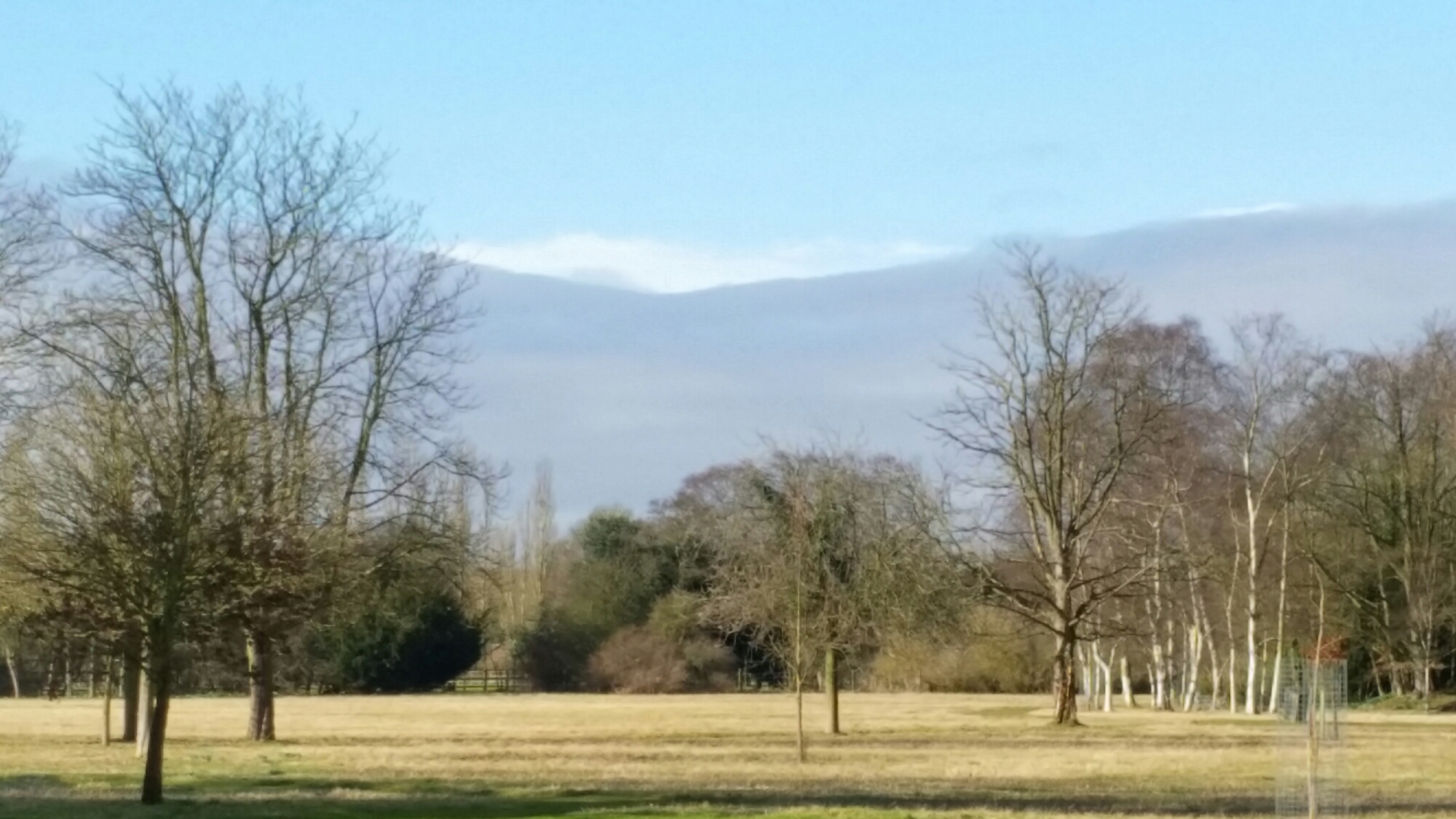
The garden was beautifully crisp and clear in the morning light before the clouds assembled:-

Cambridgeshire (1)
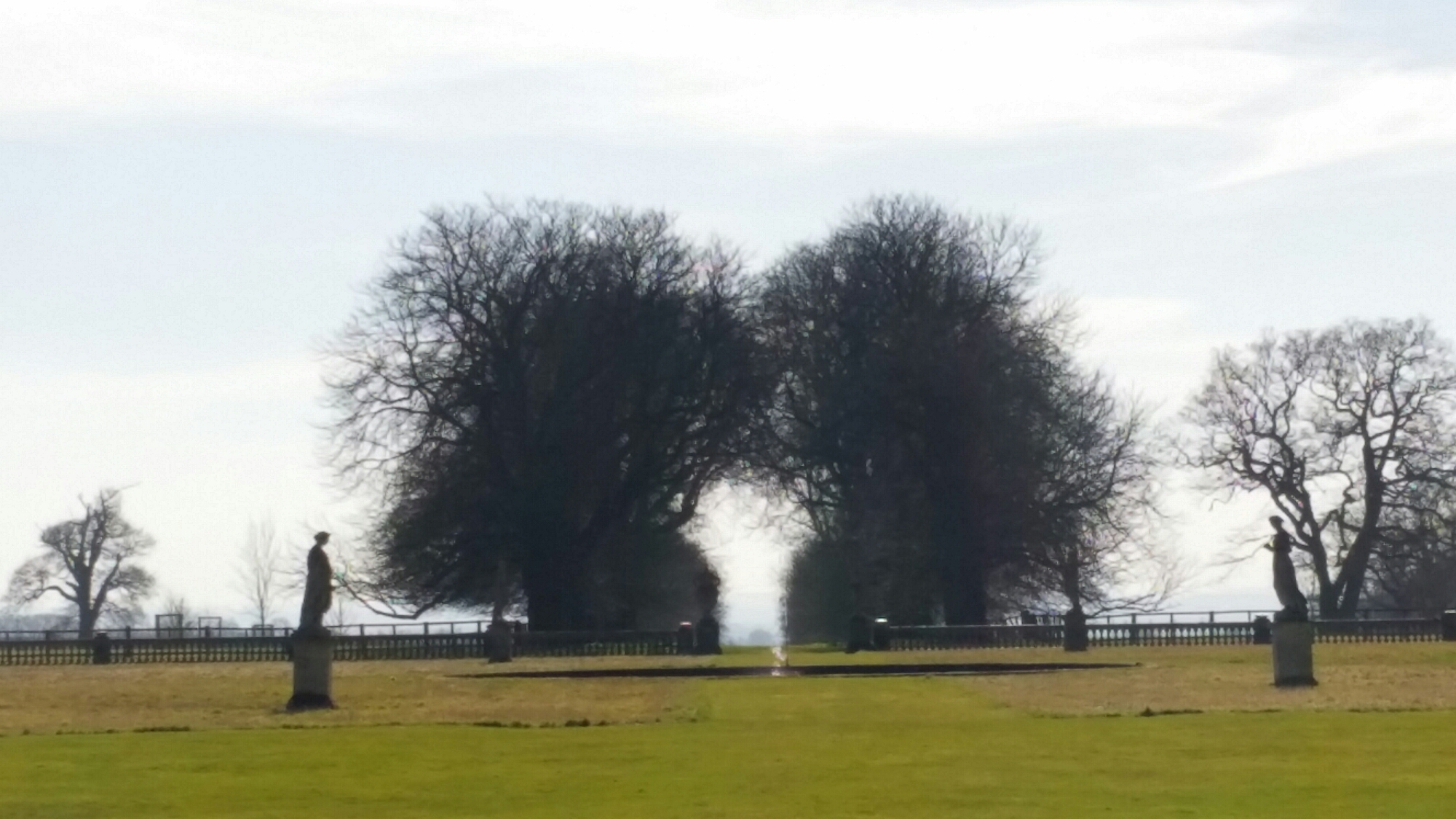
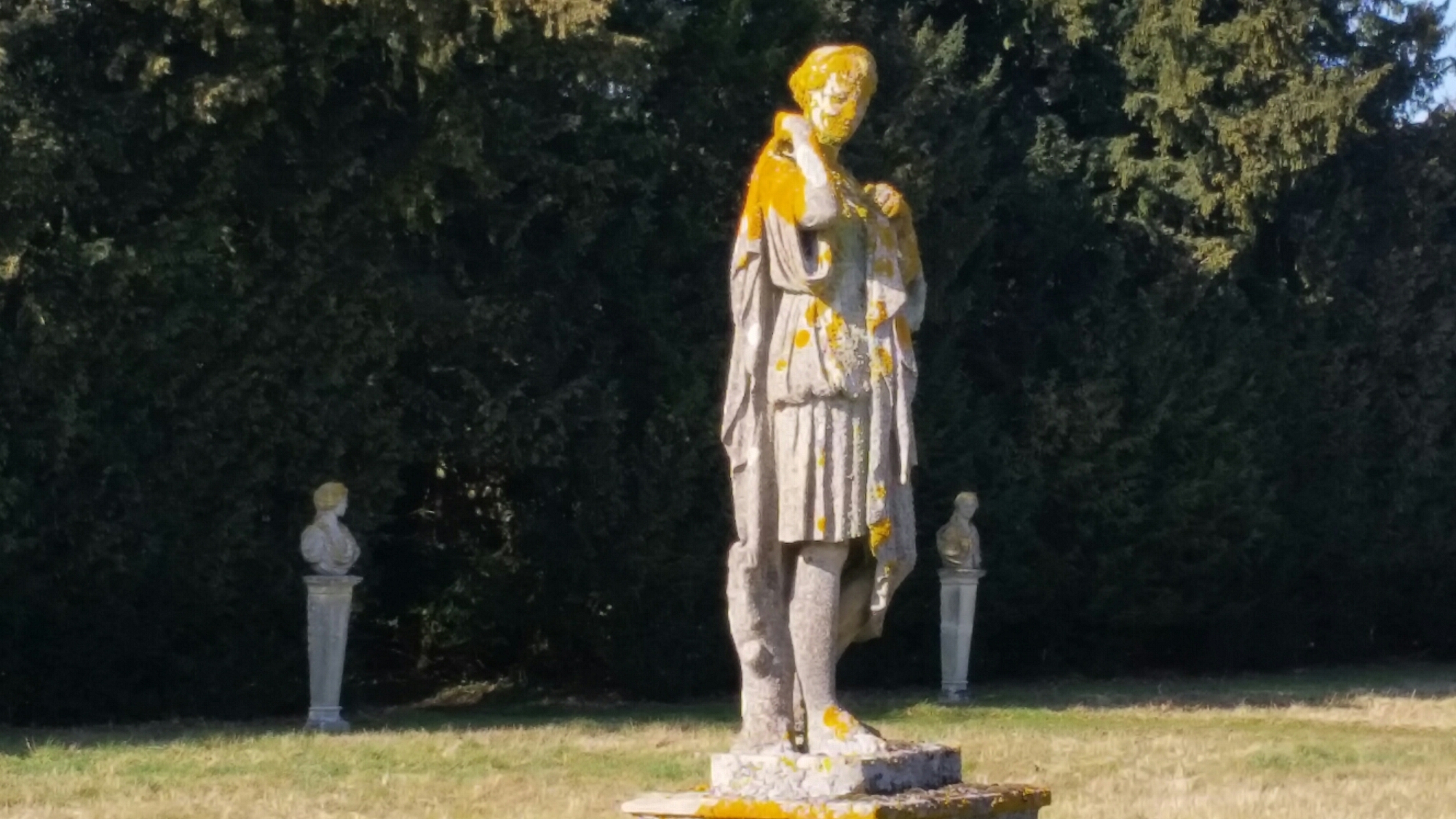
We bumbled up the M11 to the flat and nondescript, but unexpectedly unspoilt, landscape of southwest Cambridgeshire, beyond the radio telescopes of the University Observatory, where we stayed the weekend in old parkland once depicted by Kip and Knyff. The statues of the four seasons were bought after the war from Harrods, the gardens used to be tended by seven gardeners, we looked out over ornamental yew trees puffing yellow pollen, and the greenhouses were now decayed:-
RA Schools
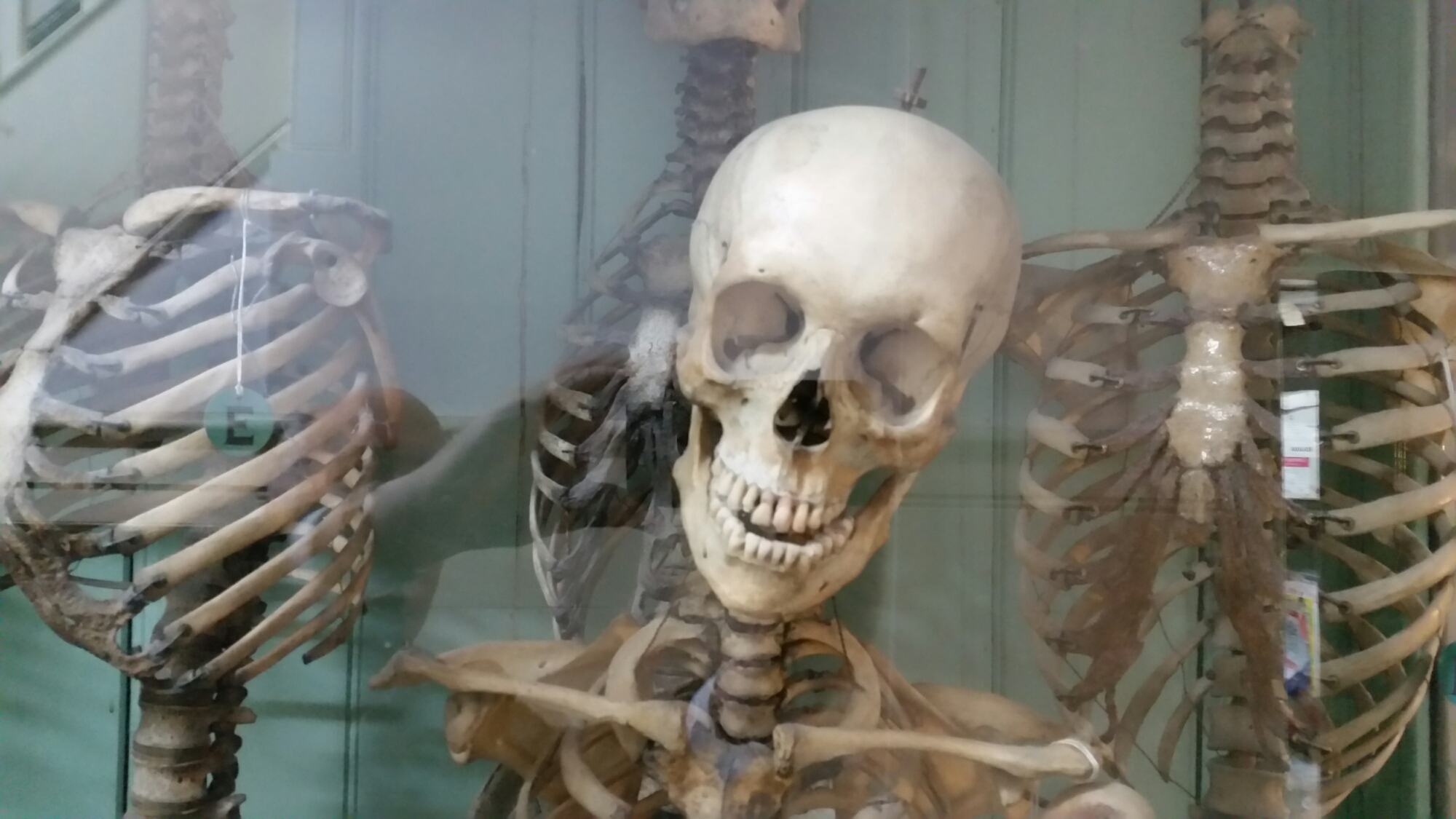
As I walked round the Royal Academy Schools last night, I realised that, as work on our major building construction looms and as the casts will have to be moved from the Cast Corridor during the summer, we should document their appearance before it is too late, in order to be able to remember their deep patina, the dust of ages, the eccentric pipework, as the Schools are themselves necessarily and beneficially transformed:-

Sidney Hutchison
Every year, the Royal Academy has an event to celebrate the memory of Sidney Hutchison. Not Reynolds, or Chambers or any of the founding fathers. Not Lord Leighton or Francis Chantrey or J.M.W. Turner. Not Hugh Casson or Roger de Grey who helped to reinvent it. Only Sidney Hutchison is routinely commemorated for his fifty two years service, joining as a junior clerk in 1929, apparently thinking it was the Royal Academy of Music, serving in the Royal Navy in the war, returning to the Academy as its librarian in 1949, becoming Exhibitions Secretary in 1955, Secretary from 1968 to 1982, and ending up as Honorary Archivist and Antiquary, publishing its history in the year of its bicentenary in 1968.
 | Charles | Saumarez | Smith |
You must be logged in to post a comment.