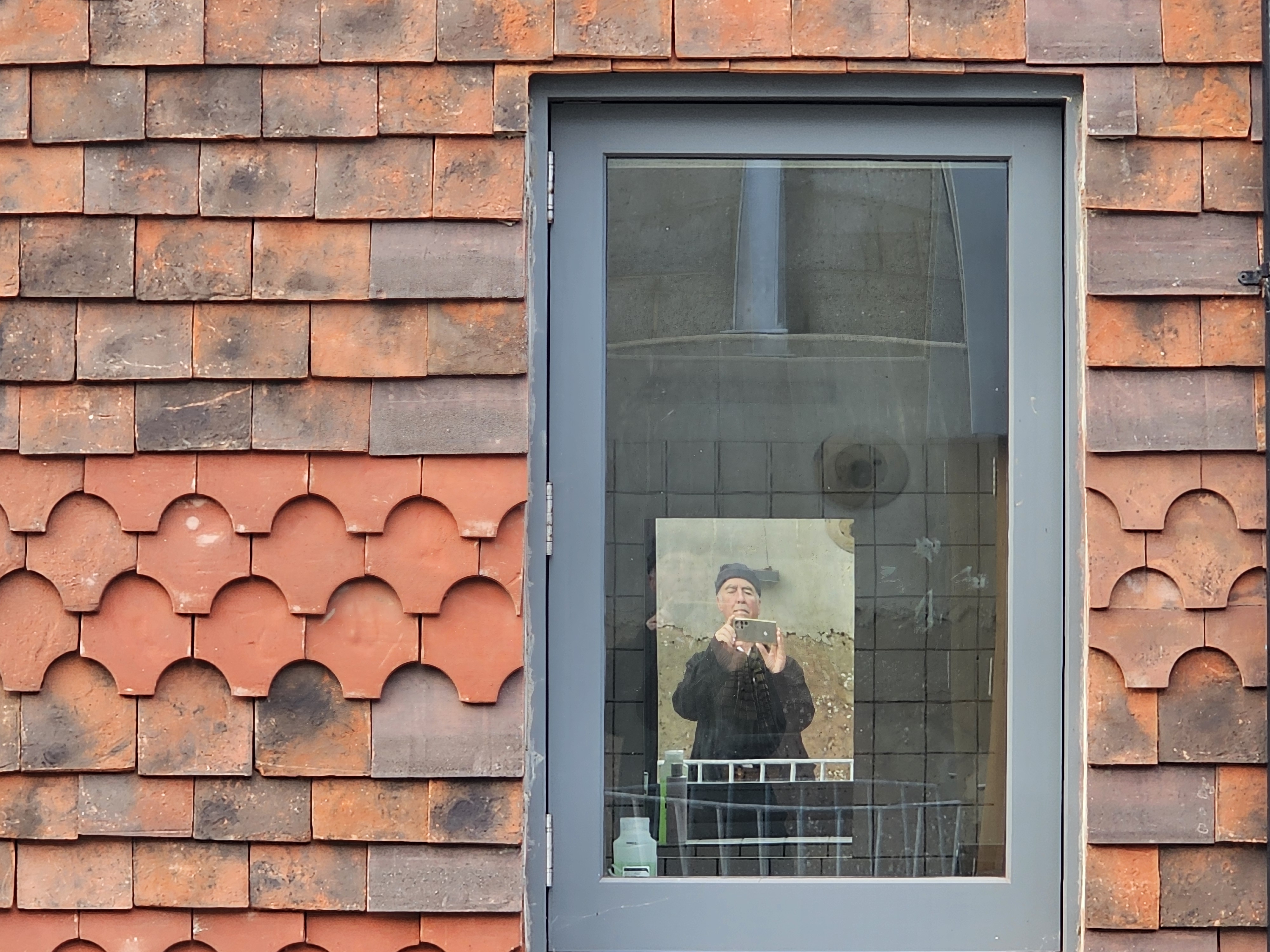
We had lunch high above Lake Como, on the hills above Lenno:-


There were five-hundred year old olive trees:-

We had lunch high above Lake Como, on the hills above Lenno:-
There were five-hundred year old olive trees:-
I did not know that the Villa Carlotta on Lake Como, very close to where I am staying, contains one of the great collections of work by neoclassical sculpture.
The Marble Room on the ground floor is dominated by Venus and Mars by Luigi Acquisti:-
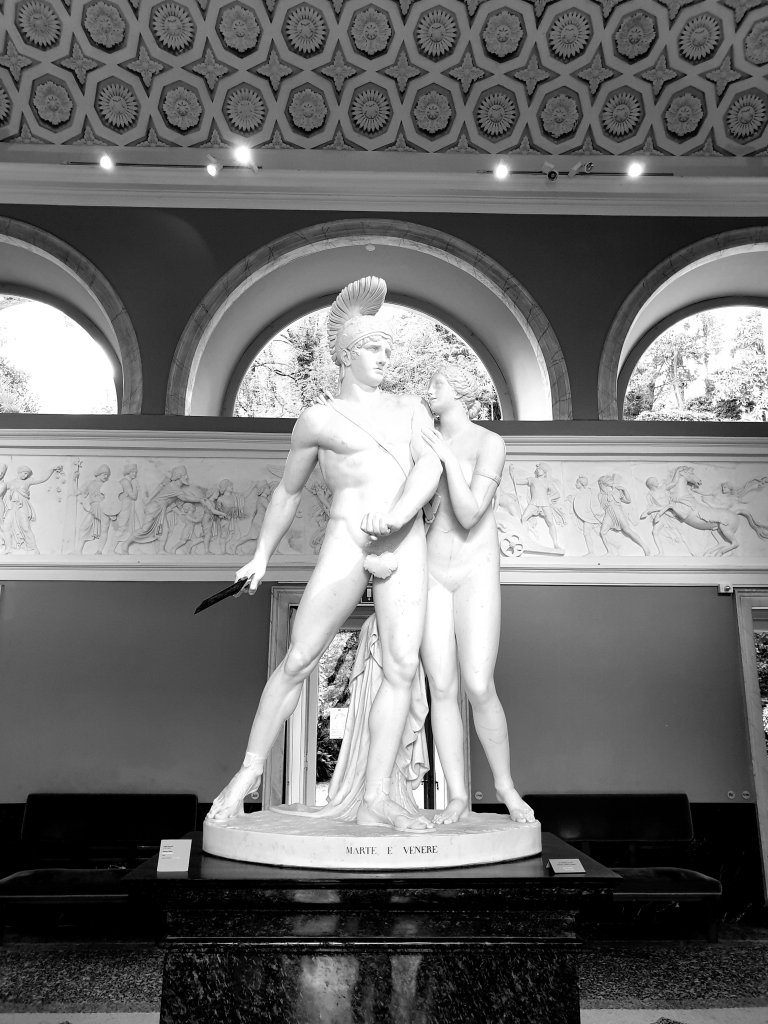
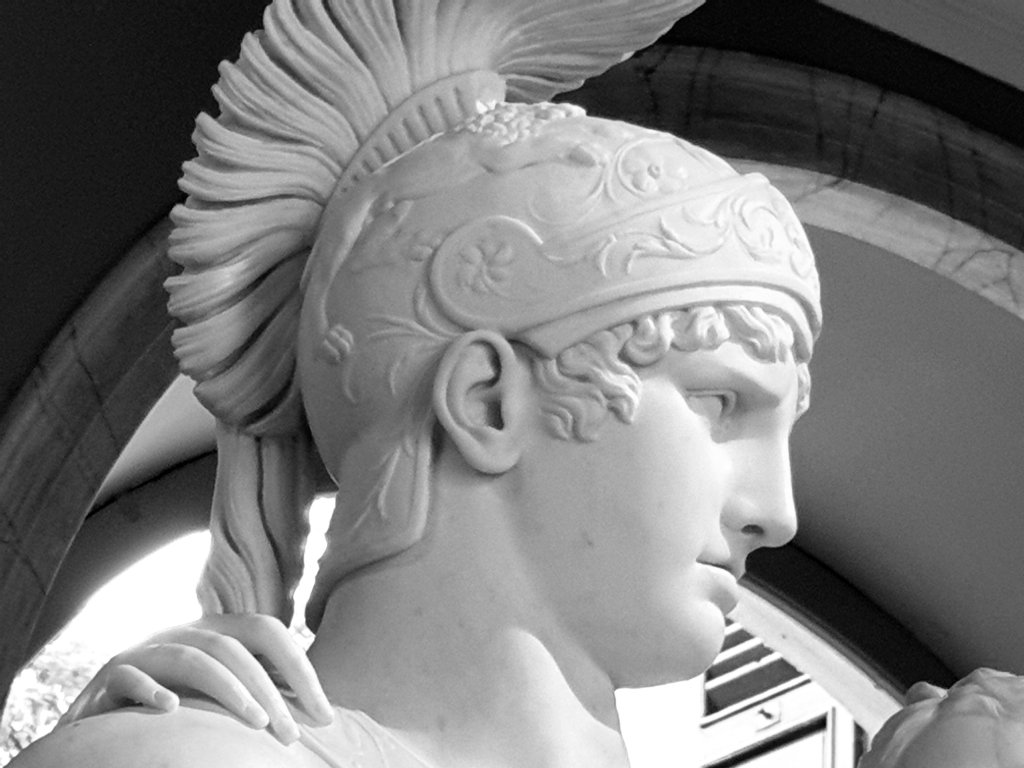
The frieze by Thorvaldsen.
Next door is the Muse Terpsichore by Canova (1811):-

In a small room, there is a large collection of cameos. Opposite is a room dominated by Canova’s Palamedes (1803-1808):-
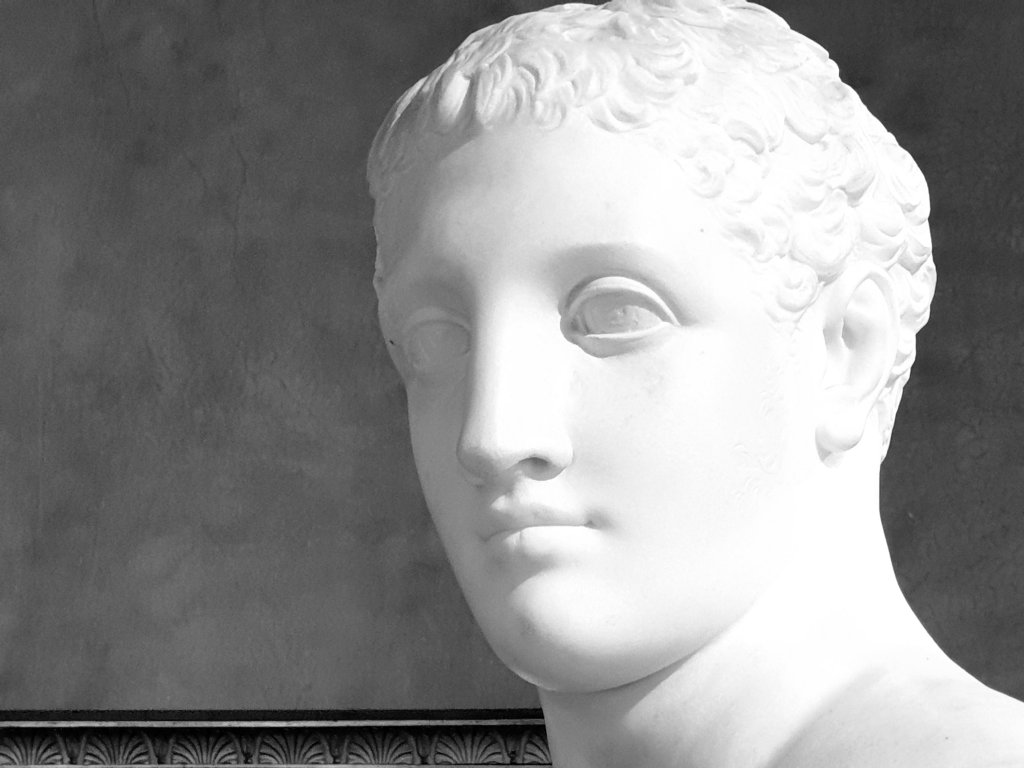
Then on the opposite side is Cupid and Psyche, an early copy done in the 1830s:-

The whole place is remarkably well preserved, thanks to Giovanni Battusta Sommariva, a politician and collector, and the fact that it was taken over by a foundation in 1927:-

I was pleased to see Rowan Moore’s long and complimentary review of the new Tower Hamlets Town Hall in yesterday’s Observer: he, like me, admires the way it combines the characteristics of the old hospital building with the new requirements of local democracy. Façadism generally has a bad name, but on this occasion feels a sensible re-use of so much of what was there before:-
I have never previously been to Lake Como, a long pencil-thin lake surrounded by mountains, stretching up to the Alps and running parallel to the southern part of Switzerland. It was beloved of nineteenth-century travellers and so is surrounded by late nineteenth-century villas and palazzi.
So, I woke up this morning with a view across the lake to Bellagio:-
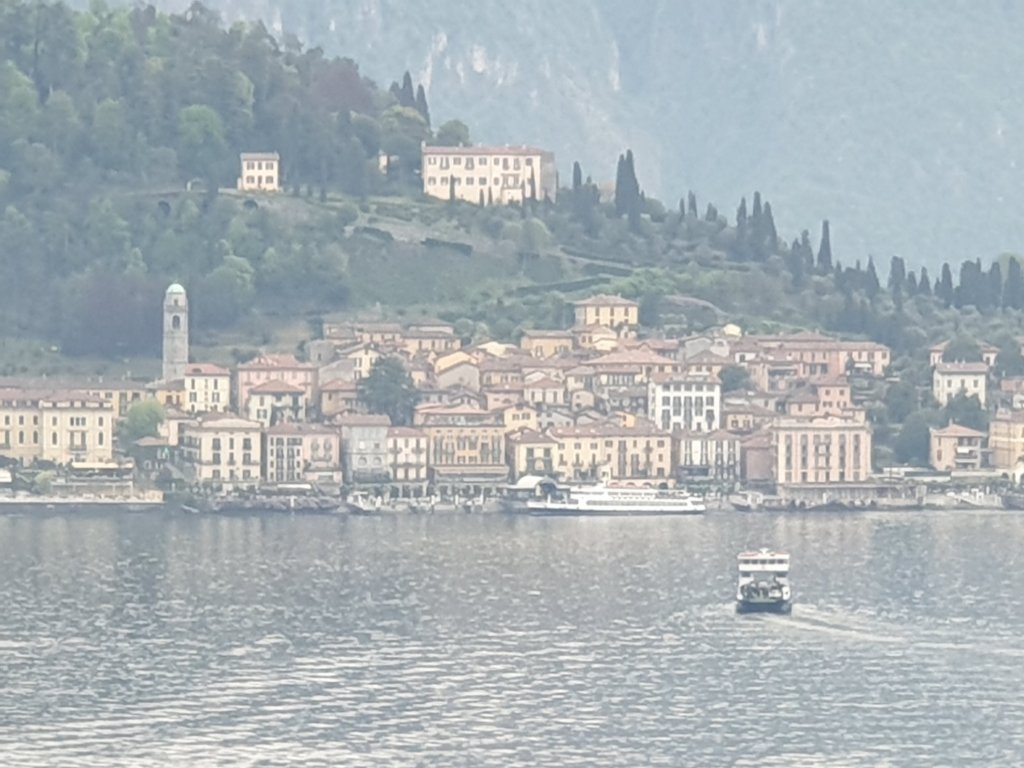
And a distant view of the mountains beyond:-


I’m very sorry to read of the death of John Newman, the architectural historian and former Deputy Director of the Courtauld Institute (1989 to 1994). When I was doing a PhD. at the Warburg, I was encouraged to take Newman’s classes at the Courtauld which were a very good discipline. He had been a school teacher at Tonbridge School and remained, in some ways, a school teacher – very precise, scholarly, intellectually broad ranging, unpretentious. He had been Pevsner’s driver as a mature student and went on to do the two volumes of Kent, not once, but twice, models of their kind. I liked him and owe him a debt of gratitude.
I have never previously seen the Roubiliac statue of Isaac Newton in the ante-chapel at Trinity, as grand a piece of commemorative sculpture as I’ve seen. Newton had died in 1727, so it is long posthumous, a deeply impressive piece of memorialisation, conveying all of Newton’s intellectual authority, not least by its placing:-


I went to the memorial service for Duncan Robinson at Great St. Mary’s.
What came across was how much he managed to do. While an Assistant Keeper, then Keeper at the Fitzwilliam, he taught a course on early Italian painting, wrote a book about Stanley Spencer, served on the Arts Council, wrote a catalogue about Morris and Company in Cambridge and was Director of Studies at his old college, Clare. At Yale, he obviously entertained a host of people while director of the Yale Center for British Art and, incidentally, saved me from death from cerebral meningitis. Then, coming back to the Fitzwilliam, he managed to do a double act as Master of Magdalene, something only M.R. James has done before him, whilst still teaching and doing a great deal of entertaining. He did it all with apparent ease, combining hospitality with administration.
Anyway, Cambridge gave him a good send-off, including an exhibition about his life and work in the new gallery in Magdalene, which he sadly never saw.
Just to clarify my previous post.
After looking at the plans for developing the station, I went outside to look at the reality of its impact.
These, strangely, are the 1980s, heritage additions which would be totally swept away:-

This is the Victorian hotel. Everything which is blue in the photograph would be filled by a brand new tower block built on top of, not adjacent to, a historic listed building:-

The developers of the new plans for Liverpool Street Station, Sellar, are, once again, holding a public consultation which this time is relatively easy to find if you know where to look – it’s in a booth under the escalators opposite Boots on the way out to Broadgate.
There is an illuminating model and some of the most amazingly sophisticated computer graphics that I have ever seen, showing exactly how the 1980s additions will be swept away in order to create a double deck passenger concourse and a gleaming new twenty-first century entrance from the south.
Having now looked at the scheme, I can see some benefits:-
1. The current station is very overcrowded.
2. Disabled access is pretty appalling.
3 The run of shops which were put in during the 1980s block the wonderful views of the original nineteenth-century railway sheds.
4. Opening up public access to the ballroom of the Great Eastern Hotel is a public benefit.
It is, I think, incontestable that the station would benefit from a bit of rethinking and a lot of investment.
But there is one simply gigantic problem with the scheme as currently proposed which the consultation does not, for obvious reasons, make clear. The way of paying for it is by building gigantic tower blocks directly on top of the station and the Great Eastern Hotel.
The precedent used to justify this is the work the same developers, Sellar, have done at London Bridge Station and are now doing at Paddington. But there is a big difference. At London Bridge, the Shard has been built alongside but independent of the station. At Paddington, the new building, The Cube, is separate from the station. The idea of just building tower blocks on top of a Victorian building is frankly repulsive and perhaps not surprisingly is not shown anywhere in the glamorous promotional video.
I feel John O’Mara of Herzog de Meuron should go back to the drawing board and come up with a plan which is elegant, as is the Shard, and not lumpen – monster slabs dropped on top of two historic buildings:-


 | Charles | Saumarez | Smith |
You must be logged in to post a comment.