The latest on the Whitechapel Bell Foundry has appeared online (see below, but it may be behind a paywall). Our legal advice suggests that any lessee will need to reinstate a Bell Foundry in order to satisfy the requirements of the existing planning consent and we hope that Tower Hamlets will insist on this, assuming that some level of change is required to the existing fabric. So, we look forward to hearing what the alternative is to the proposal from The London Bell Foundry which has made an offer to lease the building from the current owners, Raycliff, and would move in forthwith.
Category Archives: Uncategorized
Cambridge Literary Festival
If you’re in Cambridge this evening, I see there are still tickets available for Edmund de Wall in conversation with Norman McBeath, talking about the beautiful small book they have produced together, Perdendosi (https://www.cambridgeliteraryfestival.com/events/edmund-de-waal-perdendosi/).
The Red House (1)
I’m pleased to see that David Kohn’s Red House has been shortlisted as House of the Year – a very well-deserved accolade.
I’ve written about it for the December issue of The Critic, due to hit the newsstands probably at the end of next week.
Martin Parr
I came across a fascinating and vehement debate on Twitter about the virtues or otherwise of Martin Parr’s photography, based on the the work he did in New Brighton in the 1980s (see attached). This gives me the opportunity to thank him for allowing me to post a photograph he took of me in about 2008 at the RA (it’s one of the photographs in my headers). I had wanted him to take photographs of the RA’s Summer Exhibition which I felt would have suited his style of sardonic social photography as I was an admirer of the immediacy of his photographic style – social realism which I can now see might be regarded as possibly lacking in sympathy for his subjects. He’s surely both an interesting and important photographer with a very identifiable and, in its time, new approach.
https://www.magnumphotos.com/arts-culture/society-arts-culture/martin-parr-the-last-resort/
Merfyn Jones
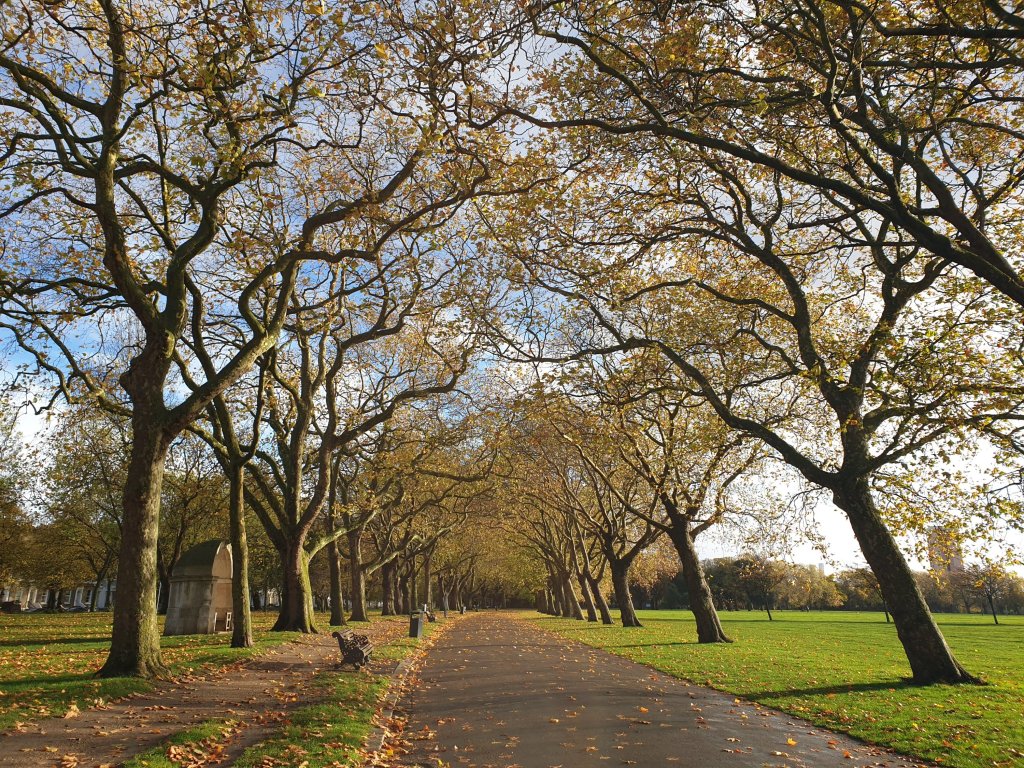
Long-standing readers of my blog will know that whenever we go to Anglesey, we visit the wonderful antique shop run by Merfyn and Trish Jones in Castle Street, which is always full of unexpected Welsh treasures, informed by Merfyn’s shrewd eye and encyclopedic knowledge of Welsh furniture makers, as well as where to acquire them. It was as if the furniture makers of the past had been his friends, which in a way they were. He was also a fund of local information as a long-standing local councillor and, more recently, the founder of the Menai Food Festival.
Now we have heard the sad news of his death. He was diagnosed with cancer some time ago, which he bore with characteristically cynical stoicism, still surprisingly cheerful a month or so ago when I took photographs of him, knowing it was likely to be the last time we would see him:-
Frank Auerbach
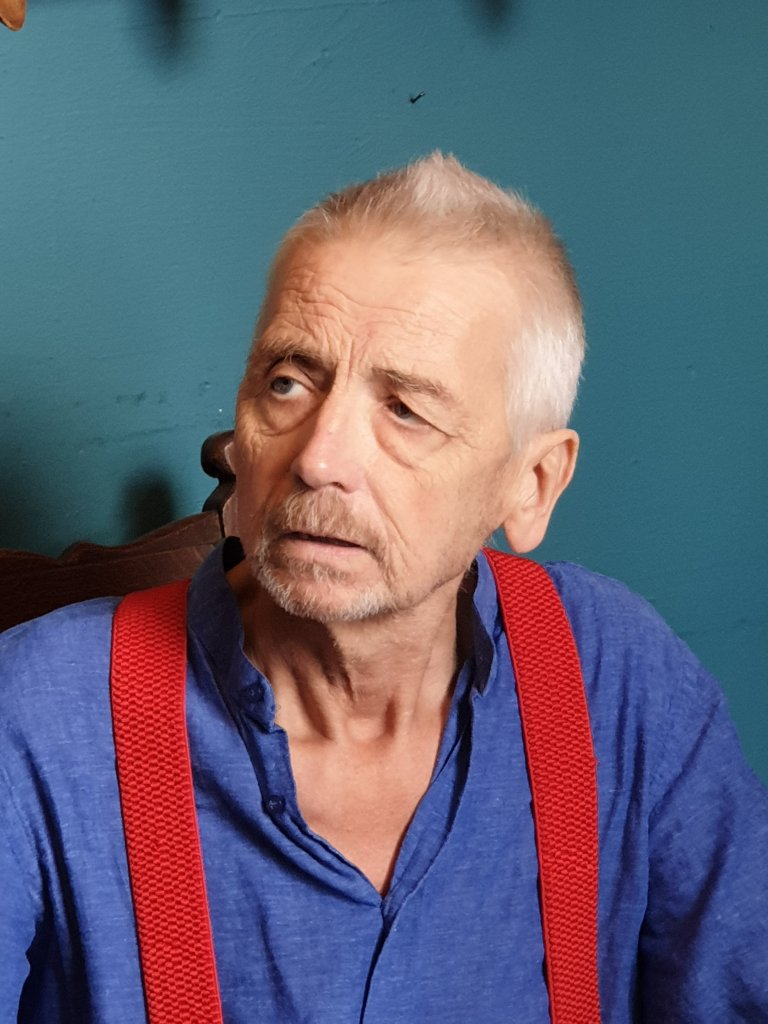
We went to a private screening last night of a film that Jake Auerbach persuaded Hannah Rothschild to make about his father, a healthily reluctant, indeed sceptical, subject for Jake’s camera. I wish I had seen it before because it is so illuminating about his early life, his upbringing in Germany, his attitude to drawing and to his long-standing sitters, one for every day of the week, his total, absolute dedication to his art, with only a day away in Brighton once a year.
I have now been told that it is available on Jake’s website. I very strongly recommend it.
Michael Collins
We went down to Trinity Buoy Wharf to see an exhibition of images of the ‘Pillars in the River’ by Michael Collins, a photographer who likes to document modern industrial remains in a studiously deadpan documentary style:
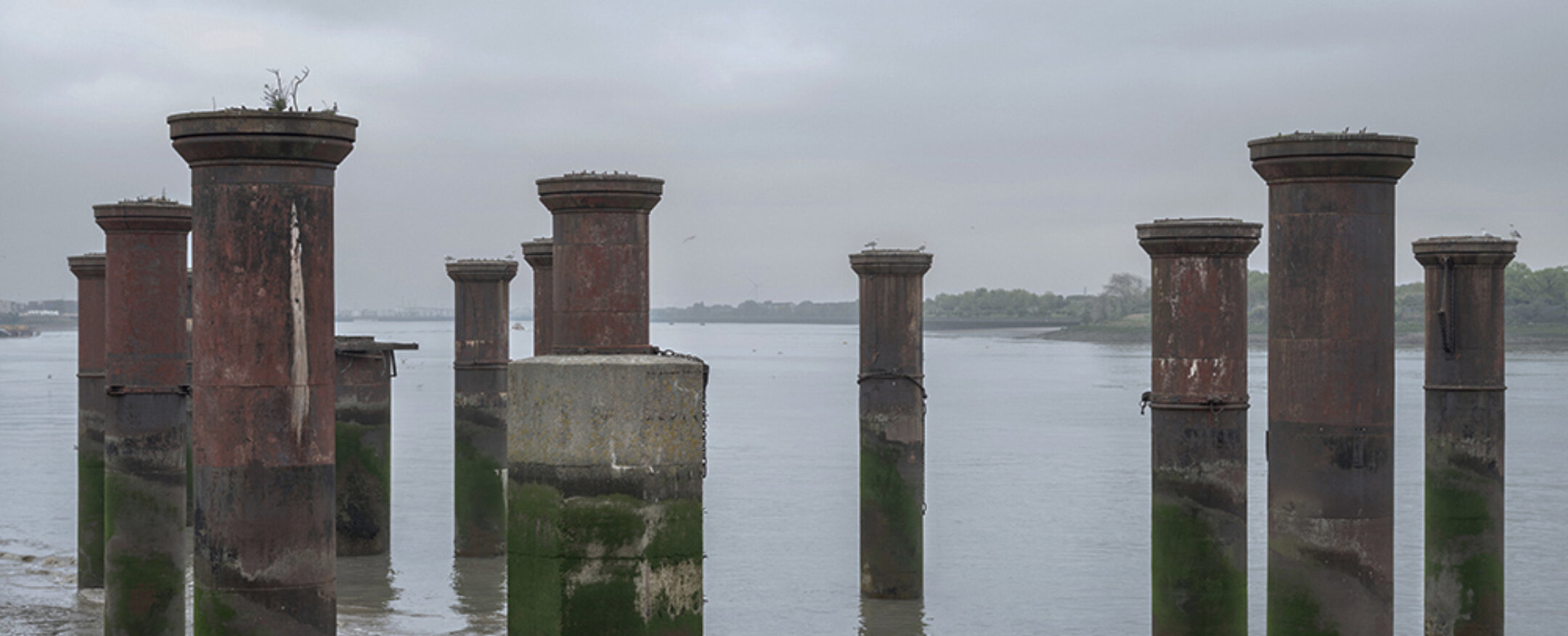
He takes the pictures digitally – they are apparently multiple images in order to get the precision in the depth of field and the element if surrealism in the images, documenting detail in a way that would not ordinarily be visible to the eye. The pillars are all that remain of Beckton Gas Works, described by Ian Nairn as ‘a magic world of plant and pipes, holders and small hills of coal – even wharves and funnels, for good measure, at the far end’, all of it now gone. Collins is documenting these twentieth-century survivals of the industrial economy before they too have gone.
The London Bell Foundry (4)
If you want to hear what is happening to the Whitechapel Bell Foundry, I am giving a talk on it alongside Dickon Love, a campanologist, at the Horse Hospital on Thursday 24th. November. It was organised some time ago when all hope was dead, but now that the hotel scheme has been abandoned, we need public support.
https://salonforthecity.blogspot.com/2022/09/salon-no98-london-bells.html?m=1&s=09
The London Bell Foundry (3)
It is incredibly heartening to see so much online support for the offer the London Bell Foundry has made to rent the Whitechapel Bell Foundry in order to reinstate its use.
But, it is less heartening that the offer, which is at market value, has so far not been accepted.
The owner may choose to lease it to someone else and hope that Tower Hamlets will allow change of use. Let’s hope they make it clear that they won’t. Or he may just choose to sit on it whilst property values change and the property continues to decay. Or there may be an unexplained fire which would enable redevelopment, as can happen in such situations.
There is no indication that he will accept the offer.


You must be logged in to post a comment.