Eye to Eye

I received through the post this morning a copy of an exhibition catalogue, Eye to Eye: Selected Works from the Lambirth Collection, being held at the Djanogly Gallery in Nottingham. Since I am unlikely to make it to Nottingham, I can at least encourage others to in order to see such a thoughtful group of works by neo-romantics including John Craxton and more contemporary figurative artists whose work is often overlooked – amongst them, Maggi Hambling, Arturo du Stefano and Robert Dukes. Not least, I was intrigued to find my blog amongst the footnotes to the catalogue essay on Peter Coker’s print of his son, Nick, the tragic anti-hero of Joanna Hogg’s film, The Souvenir. I have never been able to reproduce the print, but can now:-

Standard

Sands End Arts and Community Centre

It being so blistering hot and not wanting to spend the whole of the hot weather in our back garden, I thought I would bicycle to see the Sands End Arts and Community Centre, the fourth of this year’s Stirling Prize nominees in London (one does slightly wonder how the shortlist is drawn up: the longlist is done by well-established regional committees and provides a wide conspectus of projects from all over the country, but it looks distinctly as if the shortlist is drawn up by the awards committee sitting in Portland Place without nearly such strong regional representation. I am happy to be corrected on this).

Anyway, Sands End Arts and Community Centre is a nice, small-scale urban project by Alex Ely of Mae Architects: very community oriented, with a big top-lit space for events (there were children in it this morning) and a café looking out onto a grove of walnut trees and a totally parched small urban park. It’s a bit of the city I don’t know: Parson’s Green – quiet and residential.

I can see why it’s been included on the shortlist because it is much more akin to what most architects do than bigger, flashier public projects and it fits well into its surroundings, replicating the form of the glasshouse which apparently previously occupied the site. I can’t quite see it winning, but who knows ? It will depend on the judges and I don’t think the judges have yet been announced, but are likely to include last year’s winner (Grafton Architects), Simon Allford, the President of the RIBA, and a celebrity.

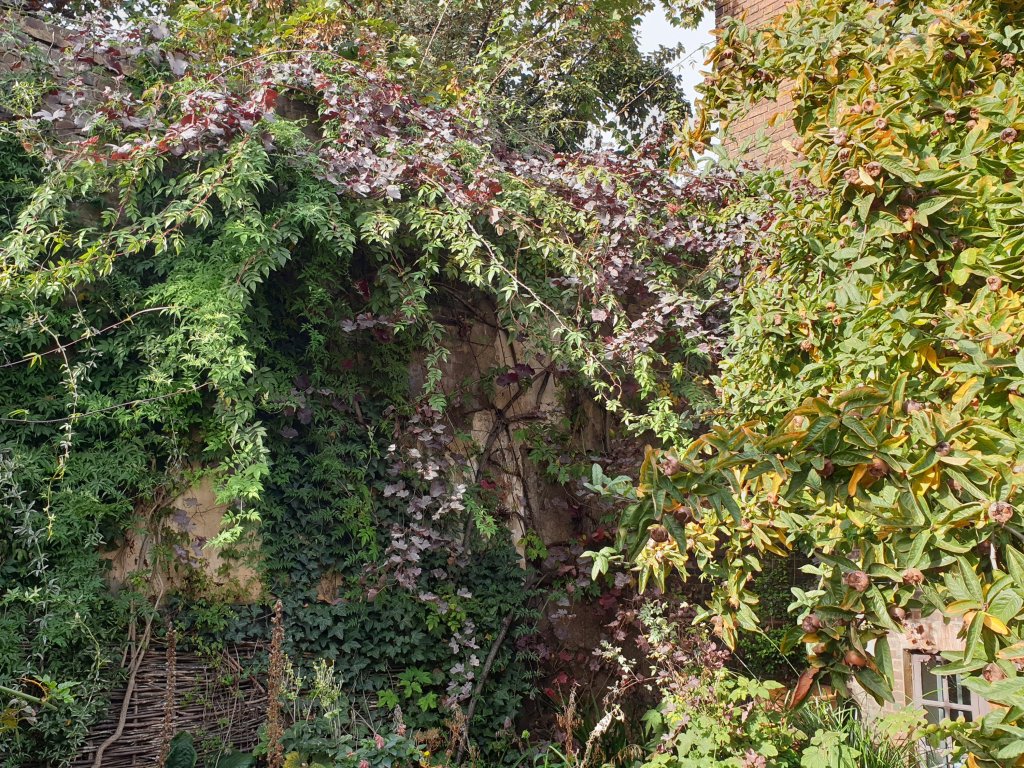
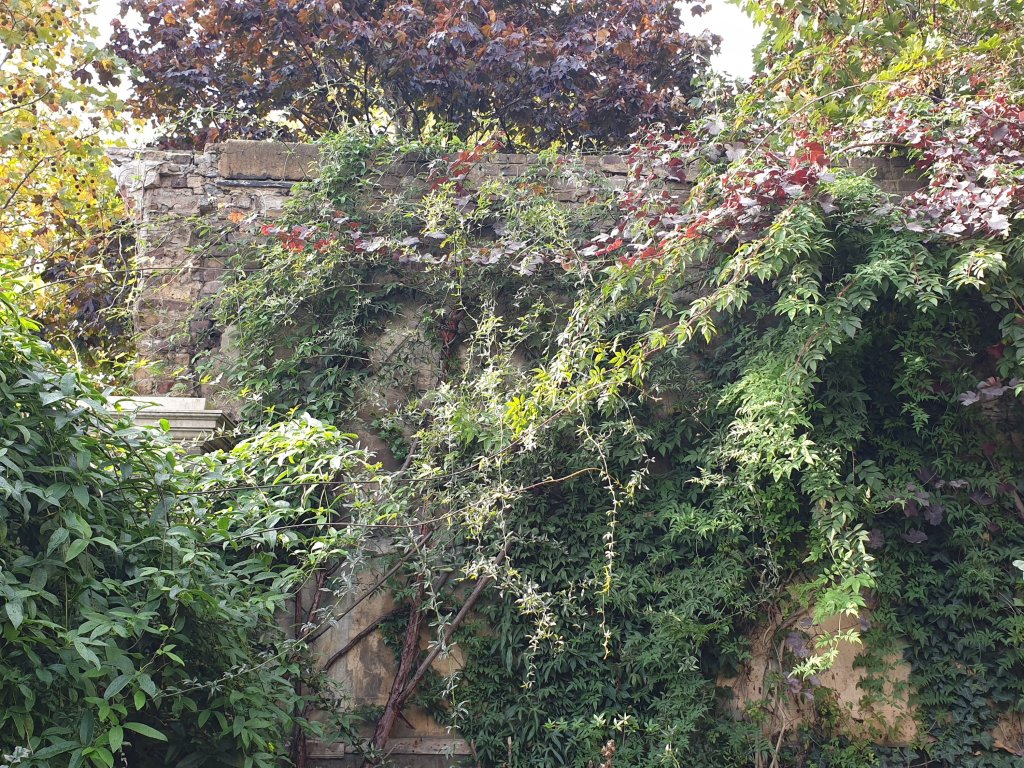
This is what it looks like from the street, set behind a retained brick wall:-

These are views from the adjacent park:-

And this is the clerestory of the big flexible space:-

Standard

John Wonnacott: A Biographical Study (6)

I got an email from Amazon this morning suggesting I purchase a book that I might be interested in. Indeed I am.

https://amzn.eu/d/9m4HR5M

Standard

Issye Miyake

Some of Issye Miyake’s obituaries, but by no mean all, mention 21_21 Design Sight, the experimental gallery which he established in a small lightweight building designed by Tadao Ando in the heart of Roppongi, the most fashionable part of Tokyo. I remember being incredibly impressed by the adventurousness of its programme, the fluidity of its boundaries between art, craft and fashion – what it classifies as ‘everyday life – at a time when experiential exhibitions were much less common than they have since become. If I had had more space in my The Art Museum in Modern Times, I maybe should have included it for pioneering the cross-fertilisation of design ideas, of which Miyake was a, now much lamented, master.

Standard

Chris Dyson

There’s a very nice interview with Chris Dyson in BD today, assuming it’s not behind a paywall (I managed to read it). I knew that he had worked with Jim Stirling (Stirling’s office attracted a lot of historically minded architects, not least, Léon Krier), but not that he had been trained by Isi Metzstein in Glasgow. As is clear from.the interview, there is no-one more knowledgeable about Spitalfields and its urban environment and he has also been a great supporter of artists, hosting exhibitions in his gallery in Princelet Street which I hope might one day be re-established:-

https://www.bdonline.co.uk/buildings/interview-chris-dyson-listen-to-what-the-site-and-place-have-to-say/5118652.article

Standard

John Wonnacott: A Biographical Study (5)

A big day for me today with the appearance through the morning post of an advance copy of my book about John Wonnacott. One never knows quite how a book will look in the flesh so-to-speak, on paper – good paper, slightly parchment-like – rather than on screen.

The design is by two designers, Luke Hall and Jason Wolfe, based in Walthamstow and they have done a really beautiful job of it, using two fonts, one Starling, a classical font designed by William Starling Burgess in 1904, and the other Quadrant Mono, which is like a typewriter font and gives a liveliness and immediacy to John’s many emails which I reproduce. Printed in Estonia.

It’s not a big book. I wrote it with a great deal of help from John in the early stages of lockdown as a way of documenting his long career, which has been so much less visible since Agnew’s shut up shop. I hope it will enable people to rediscover the great variety and strength of his work.

You can order it online via https://www.lundhumphries.com/products/john-wonnacott or https://www.amazon.co.uk/John-Wonnacott-Charles-Saumarez-Smith/dp/1848225911:-

Standard

Spitalfields Tour

I went on one of the tours of Spitalfields organised by – and currently still delivered by – the Gentle Author, who has published the blog Spitalfields Life since August 2009 when he pledged to write a post a day for thirty years.

I found the tour incredibly moving because he knows the area so intimately and cares about it so passionately, not least from fighting so many campaigns to save it (he is currently awaiting the verdict on the judicial review of the battle round the Truman, Hanbury and Buxton site in Brick Lane).

We started at Christ Church.

Then The Soup Kitchen for the Jewish Poor:-

Then, down Parliament Court, a passageway I don’t know:-

We walked at a fantastically brisk pace through Spitalfields Market to Elder Street:-

Then, to Hanbury Street, down Fournier Street, Puma Court and back to Christ Church with stories at nearly every street corner animating its past. I thought I knew the area reasonably well, but as nothing:-

https://www.thegentleauthorstours.com/

Standard

Oslo City Hall

I somehow missed seeing Oslo City Hall last time I was there, although it is very dominant on the harbour edge, a fine example of the Scandinavian abstracted classicism which was so influential in England as an alternative to French and German modernism. The result of a competition held in 1918, it was largely completed by 1936, although not inaugurated till 1950:-

Standard

The National Museum, Oslo (3)

Upstairs on the first floor where the fine art collections are displayed is as impressive as the ground floor: the same attention to a broad narrative, interspersed with occasional display cases holding decorative arts, a reverse of the policy on the ground floor; some sculpture; they decided to keep a broadly chronological layout.

Johan Christian Dahl studied in Copenhagen, taught landscape painting in Dresden and encouraged the establishment of Norway’s National Gallery:-

Caspar David Friedrich, Greifswald in Moonlight (1817):-

Adolf Tidemand, Portrait of a Farmer from Vossevangen (1855):-

I like Karl Jensen-Hjell’s portrait of the artist Kalle Løchen, At the Window (1887):-

Christian Krohg, Sick Girl (1881):-

I don’t recommend trying to see it all at once !

Standard

The National Museum, Oslo (2)

I have been trying to digest the character – and quality – of the new National Museum in Oslo. Its architect, Klaus Schuwerk, is not modest about it. ‘I’ve always wanted to design my own pantheon’, he is deeply interested in the proportions of the rooms, he views himself as working in a tradition going back to Michelangelo and Frank Lloyd Wright, and he has required the museum to issue a disclaimer, making clear everything for which he was not responsible (see below). Actually, by the standards of most museum architects, he has achieved an incredible amount of control over the quality of the materials, the quality of the construction and its detailing, including shallow marble sinks in the Gents and a beautiful long, Neapolitan café, looking out onto the square outside:-

https://www.nasjonalmuseet.no/en/visit/locations/the-national-museum/clarification-from-the-architect-klaus-schuwerk/

Standard